Before WWII, there was a carved Momotaro figure in the transom of the main shrine building at Kehi Jingu Shrine.
I looked into why Momotaro would be there in the first place.
Kehi Jingu is regarded as the guardian shrine of the Hokuriku region. “Hokurikudo” was one of the four major ancient routes/regions, covering what are now Fukui, Ishikawa, Toyama, and Niigata. Sanyodo, meanwhile, covered Hyogo, Okayama, Hiroshima, and Yamaguchi.
Around the time of Emperor Sujin (not definitive, but roughly the 2nd century), expeditions were led by generals assigned to these regions. For Hokurikudo it was Ohiko-no-Mikoto, and for Sanyodo it was the Kibitsu clan.
Later, in the 3rd century, there were campaigns to Izumo in the San’in region and to the Kanto area, carried out by an alliance of Yamato Takeru and the Kibi clan.
Yamato Takeru is thought to have been strongly influenced by the Korean Peninsula. It’s believed there was trade with immigrants who brought iron weapons, horse culture, and so on by large ships across the “Northern Sea” (the Sea of Japan) to Wakasa (Tsuruga and Obama). The Kibi clan is also said to have had ironmaking technology.
Iron swords outperform bronze swords, and to bring a wide area under control, cavalry forces were essential.
There’s also a theory that the Kibitsu clan governed Sanyodo, while Hokurikudo was governed by the younger brother of the Kibitsu clan.
The Kibitsu clan in Okayama is considered the original home of the Momotaro legend, but Yamato Takeru is enshrined as one of the seven deities at Kehi Jingu.
You could say Yamato Takeru and the Kibi clan helped build the foundation of Yamato power.
And as for why Kehi Jingu is in Tsuruga—when you look back over 2,000 years of history, you can see just how important this area was.
Kehi Jingu Shrine | Review by 奥田竹志
Other Reviews by 奥田竹志
-
Marusanya Tsuruga Station Front
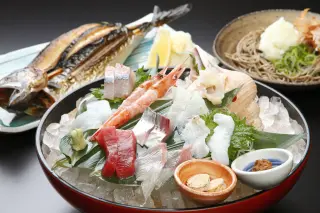
“Marusanya Tsuruga Station Front” is a locally loved seafood restaurant. It’s in a great location-just a 5-minute walk from Tsuruga Station-so it’s also recommended for a meal between sightseeing stops. Skilled chefs bring out even more flavor from top-quality, ultra-fresh ingredients you’d expect from a fish wholesaler, creating truly outstanding dishes. In addition to sashimi, the menu includes Fukui specialties like hamayaki saba (grilled mackerel), Echizen soba, heshiko-yaki, and sauce katsu-don.
Ever since the Hokuriku Shinkansen opened, I’ve been seeing this place pop up in a lot of YouTubers’ videos.
It’s a popular spot, and it just keeps getting busier.
The other day we went as a group for a banquet, and they served not only seafood but also dishes that felt almost like French cuisine.
That kind of surprise was seriously delicious—I was impressed. -
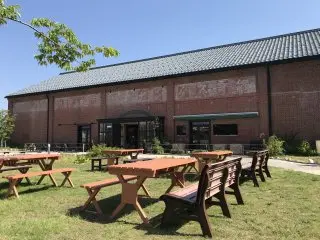
Tsuruga Red Brick Warehouse
Throughout the Meiji and Showa period, the city of Tsuruga was an international city that bridged Russia, and eventually Europe. This warehouse represents the international nature of the city. In 1905, the warehouse stored fossil fuels.
Tsuruga is a town of railways and a port.
It went through three air raids, but I was really glad I could see a diorama of what the town looked like before the war.
My dad and mom lived their lives in this town.
My father worked as an engineer in this rail yard.
That was more than 70 years ago now. -
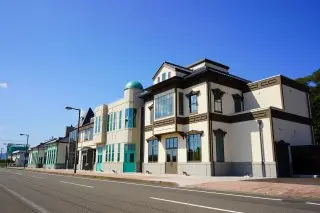
Port of Humanity Tsuruga Museum
Tsuruga Port was developed as an international port to connect Japan and Europe via the Siberian Railway from the Meiji Period through early Showa Period. In the 1920s, Polish orphans came here who lost families in Siberia during the chaos of the Russian Revolution. In the 1940s, Jewish refugees landed here who were saved with the “Visa for Life” issued by Chiune Sugihara.
This is a place where you can learn how precious life and peace are.
When you look at the world today, it feels like peace—the most important thing of all—is being left behind.
I hope this place will keep sharing a message of peace with the world.