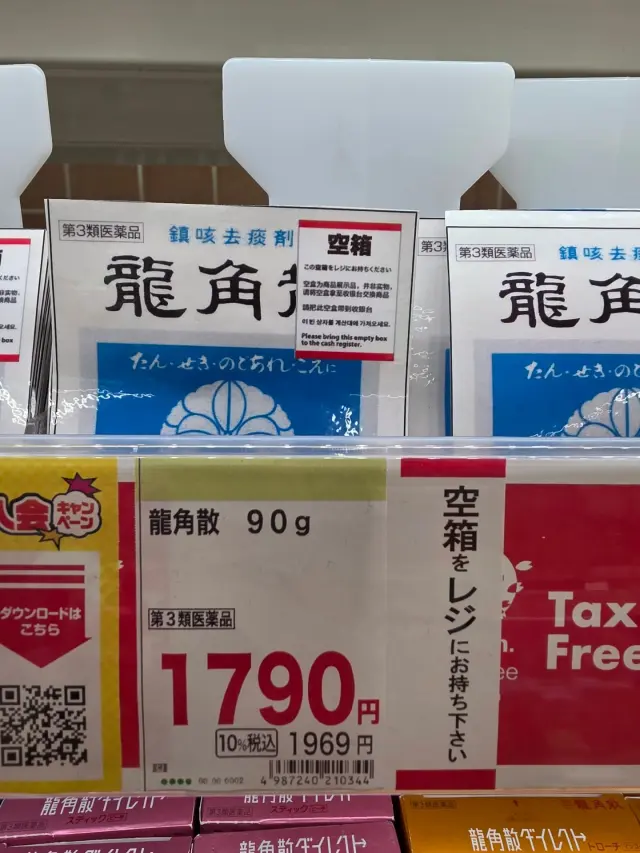
Whenever I go to Japan, older relatives always tell me, “Don’t forget to buy Ryukakusan for me!”
I used to think it was just a must-buy for tourists, but once I got to Japan, I realized that a lot of Japanese people carry a pack around with them too. Ryukakusan has been around since the Edo period and has over 200 years of history. It’s a classic throat-soothing and cough medicine that many households keep on hand.
When my throat feels dry or I’ve been talking too much, taking a packet really helps. No wonder friends and family always ask me to bring some back. These days, if I go to Japan and don’t bring a few boxes of Ryukakusan back to Taiwan, it feels like I missed one of my shopping missions!
Ryukakusan | Review by 王小鈞
Other Reviews by 王小鈞
-
Oasis 21
The Oasis 21 is famous for its symbolic glass roof, also known as the “Spaceship-Aqua ”. The facility has a bus terminal and is also connected to the subway and the Meitetsu line .Located within the heart of Nagoya city, the facility is known to be a photogenic location due to the illuminations lighting up the skyline.
I had been looking forward to walking around Oasis 21, but it rained that day, so I could only take a quick look while holding an umbrella. That was a bit disappointing.
Even though the weather didn’t cooperate, the glass-roofed Spaceship-Aqua was still distinctive, and the rain gave it a different kind of atmosphere. I’ve heard the nighttime illumination is gorgeous, and you can photograph it together with the nearby Nagoya TV Tower. Unfortunately, I couldn’t stay long this time. I’ll have to come back on a sunny day for a leisurely stroll and take the photos I missed. -
-
Menya Itto
Their special thick seafood tsukemen is particularly popular among all of the available options, and it quickly becoming a representative dish for “Itto.”
This isn’t a place you just stop by—it’s worth making a special trip! It’s a little far from central Tokyo, but once you see the line, you’ll know everyone came for this bowl.
The signature rich seafood tsukemen has incredibly chewy noodles, and the thick seafood dipping broth is so addictive you won’t be able to stop eating. Best of all, you can add more noodles to suit your appetite. Medium, large, and extra-large portions only cost a little more, so you’ll definitely leave full.
The wait felt a bit long, but afterward, all I could think was, “I’m so glad I came—I would’ve regretted missing it!” -
-
Gyukatsu Kyoto Katsugyu Pontocho Main Store
Located along the narrow Pontocho alley, which runs about 500 meters north to south along the Kamo River, this main store of the gyukatsu (beef cutlet) restaurant chain was established in 2014. The interior, reflecting Kyoto's aesthetic, features a calming design reminiscent of a kappo (Japanese-style fine dining) restaurant with a base of white wood, providing a serene dining experience.
While waiting in line, I wondered, “Is it really that good?” After eating, all I can say is: yes, it’s worth it!
The beef at Gyukatsu Kyoto Katsugyu was tender and flavorful. There were so many condiments—wasabi, sansho pepper salt, gyukatsu sauce, and dashi soy sauce. Trying them all felt like a fun tasting challenge.
Dip it in Kyoto-style curry at the end, or mix a soft-cooked egg into your rice for yet another twist. One set meal offers so many flavors that it never gets boring. If you love beef and are visiting Japan, definitely add this place to your list! -