Asahikawa isn't just for shopping and eating ramen. I also highly recommend visiting the museum to learn about a different side of Hokkaido's history and culture.
Although the Asahikawa City Museum isn't very large, with only one floor above ground and one below, it has more to see than expected. On the first floor, you can see scenes of traditional Ainu life and the tools they used, giving you a more concrete understanding of Ainu culture. The basement focuses on Hokkaido's natural environment and settlement history, with many animal specimens and historical artifacts on display. It isn't tiring to walk through and is also a good place to take your time.
It happened to be drizzling the day we visited, which was a little disappointing at first, but then we realized that an indoor attraction like this is perfect for a rainy day. Without having to walk too much, you can learn about Ainu culture, Hokkaido's natural environment, and its settlement history all at once. If it happens to rain while you're in Asahikawa, this is a good backup plan.
Asahikawa City Museum | Review by 楊雅雯
Other Reviews by 楊雅雯
-
Starbucks Coffee Dazaifu Tenmangu Omotesando Store
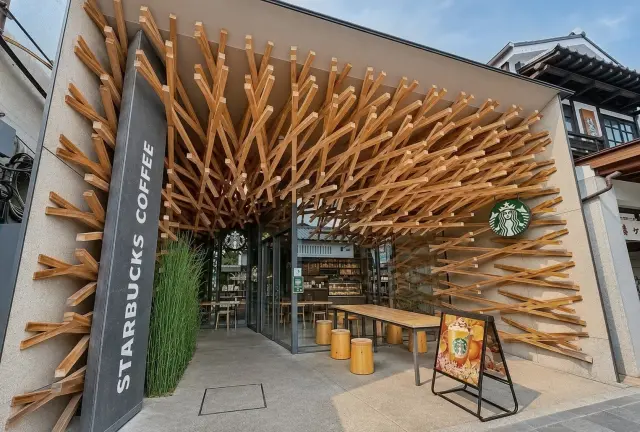
Starbucks Coffee Dazaifu Tenmangu Omotesando Store opened in 2011, right next to the torii gate facing the Omotesando Avenue of Dazaifu Tenmangu Shrine. This is one of the "Regional Landmark Stores," originally designed by Starbucks in iconic locations throughout Japan to promote the attractive local culture to the rest of the world.
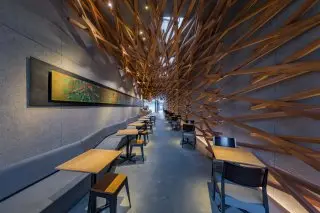
When visiting Dazaifu Tenmangu Shrine, after walking along the lively Omotesando approach, of course you can't miss this distinctive Starbucks! Before I even entered, the exterior caught my eye! The most unique feature of the entire store is the design made from a large number of interlocking wooden beams. It stands out even from a distance, and I couldn't help stopping to take photos.
This is the work of renowned Japanese architect Kengo Kuma, who used about 2,000 wooden beams to create a uniquely layered space. Once inside, you can really feel the warmth created by the wooden architecture. Looking up at the ceiling, the interlocking lines of the beams are truly beautiful, and together with the natural light, they give the entire space an artistic atmosphere.
I originally just wanted to take a look at this distinctive Starbucks, but I didn't expect both the exterior and interior to be so interesting. Every angle is perfect for photos, and it doesn't feel at all like an ordinary coffee shop.
Although it's a chain coffee shop, it has its own unique architectural appeal. When visiting Dazaifu, in addition to worshipping at Tenmangu Shrine and eating umegae mochi, this Starbucks is also well worth adding to your itinerary! Even if you aren't particularly interested in having coffee, I still recommend stepping inside to experience this special space.
-
-

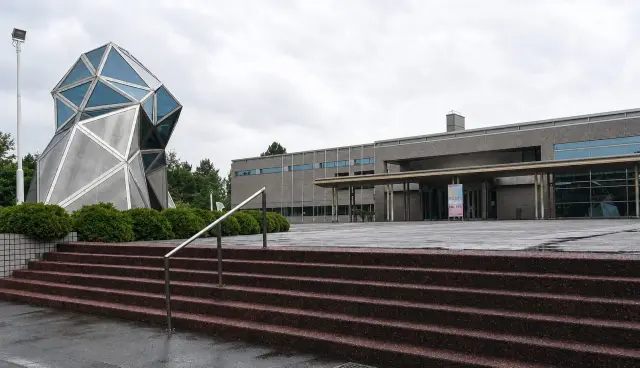
Kyushu National Museum
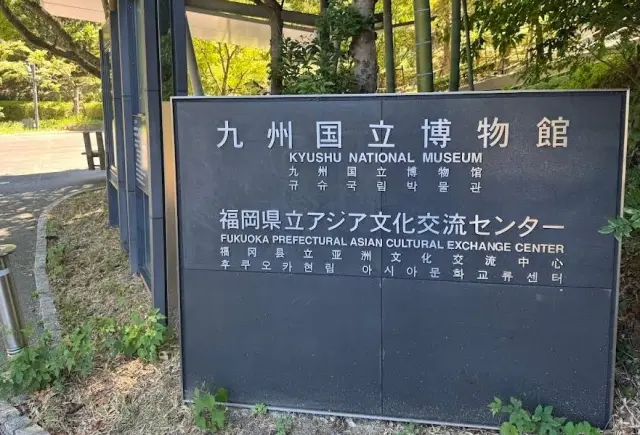
Dazaifu, where the Museum stands, is an important hub in Japanese ancient history. It was a place to govern the Kyushu Region where lots of exchanges with the world were taking place. With that background, this 4th national museum was opened in 2005 with the unique concept “Understanding Japanese culture formation in the Asian historical view.”
Following Tokyo, Nara, and Kyoto, this is Japan’s fourth national museum, and it’s also an attraction well worth adding to your Dazaifu itinerary!
When I visited the Kyushu National Museum this time, the first thing that struck me was its distinctive architecture and how spacious the entire place was. Before even entering the exhibition area, I was impressed by the tunnel leading up to it. Walking through it felt special. There’s also an interactive area on the first floor that was pretty fun and added a little more enjoyment to the visit.
The museum mainly presents the history of cultural exchange between Japan and other Asian countries. Unfortunately, there were no special exhibitions during our visit, but the regular permanent exhibition alone was already very extensive! The exhibition area is huge, with more than a dozen galleries, and if you take your time, you can see many historical artifacts and cultural displays.
If you’re just casually walking around and looking, you can finish in about an hour. But if you carefully explore every section, you could easily spend more than two hours here.
After visiting, I felt that it was even bigger than I had imagined, and time passed quickly as I walked around. The only unfortunate thing is that the museum closes at 5:00 p.m. If you don’t plan your time well, it’s easy to feel like you didn’t get to see enough.
Overall, I really liked this place. You can not only see historical artifacts but also learn about cultural exchange between Japan and different parts of Asia through the exhibitions. Besides visiting Tenmangu Shrine and Omotesando in Dazaifu, I also recommend adding this museum to your itinerary. If you like museums, it’s worth checking out!
-
-
Ichiran Dazaifu Sando
Located on the path to Dazaifu Tenmangu Shrine, Ichiran Dazaifu Sando is famous for its "Ramen Focus Booth," where you can enjoy your tonkotsu ramen without distractions. This popular tonkotsu ramen chain has expanded both domestically and internationally, and the Dazaifu Sando branch is known for its unique "Success Ramen," which prays for the success of students.
When visiting Dazaifu, besides exploring Tenmangu Shrine and eating desserts, I also made a special trip to this very distinctive Ichiran ramen location!
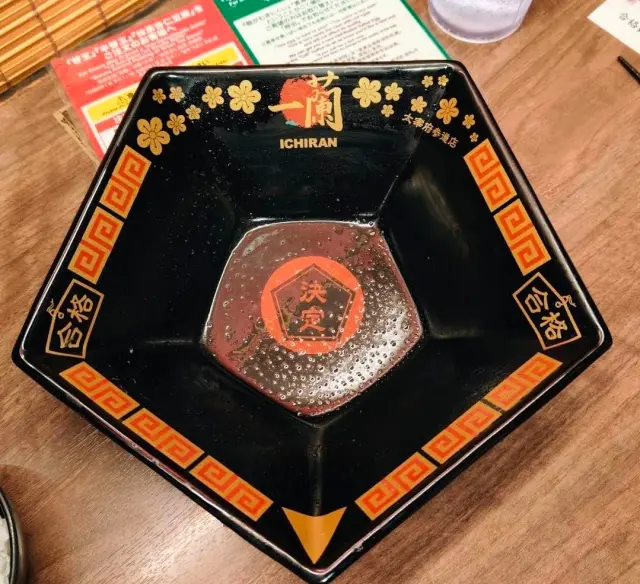
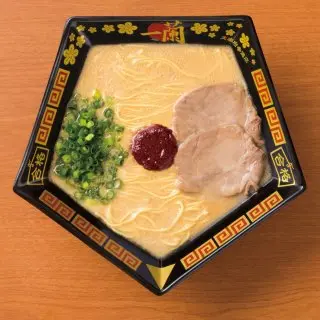
The biggest difference between this location and a regular Ichiran is its Dazaifu-exclusive “Success Ramen,” served in a special pentagonal bowl. In Japanese, the word for pentagon sounds like “passing,” symbolizing success on exams and achieving excellent results. Since I was in Dazaifu, of course I wanted to try this exclusive version!
However, what left a deeper impression on me this time was the wait. After arriving at the restaurant, you first have to get a numbered ticket. Then you can walk around Dazaifu Omotesando, and the system will notify you in advance when it’s time to return. I originally thought that once I had the ticket, that was pretty much it. I didn’t expect that after receiving the notification and returning to the restaurant entrance, I would still have to wait in line. This time, I waited about another 20 minutes.
Just a reminder: the numbered ticket only guarantees that you can enter. It doesn’t mean you won’t have to wait in line! When I finally sat down and got my ramen, the first thing I looked at was, of course, the special pentagonal bowl. Its design really is distinctive, and it also makes for a memorable photo.
As for the flavor, it’s the familiar Ichiran ramen! The broth is rich, and the noodles maintain the chain’s usual quality. It goes down smoothly, and anyone who likes Ichiran should find it familiar. But honestly, after finishing it, other than the distinctive design of the exclusive bowl, the flavor wasn’t very different from a regular Ichiran.
My biggest takeaway from this visit was that I spent quite a bit of time waiting for this exclusive bowl of ramen. It tasted good, but not to the point where I felt it was a must-try.
-