

I really love the vibe of these old neighborhoods. The streets are super clean and the buildings are really well preserved.
Mameda-machi | Review by 廖子香
Other Reviews by 廖子香
-

Sengan-en, a Nationally Designated Place of Scenic Beauty
Sengan-en is a Japanese garden built in 1658 by Shimadzu Mitsuhisa as a villa for the Shimadzu family. It covers 50,000 square meters. This borrowed-scenery garden incorporates Kagoshima’s magnificent landscape, with Sakurajima as its artificial hill and Kinko Bay as its pond.
Besides enjoying the garden, the nearby Shoko Shuseikan Museum has exhibits about Japan's Meiji Restoration and early industrialization. It's also the site of Japan's first Western-style factory.
-

Munakata Taisha
One of Japan’s oldest shrines, Munakata Taisha even appears in Japanese mythology. It enshrines the Three Goddesses of Munakata, daughters of Amaterasu Omikami, the ancestral deity of Japan’s Imperial Family. It is the head shrine of approximately 6,200 shrines throughout Japan, including Munakata and Itsukushima shrines and other shrines dedicated to the Three Goddesses of Munakata. Long revered for safeguarding the prosperity of the Imperial Family and protecting the nation, the goddesses are now worshipped as the foremost deities of all paths, including safe travel by sea and road, as well as one’s path through life, the arts, and health.
This is a very old temple in Kyushu with lots of excavated relics on display. It's also a UNESCO World Heritage site.
-
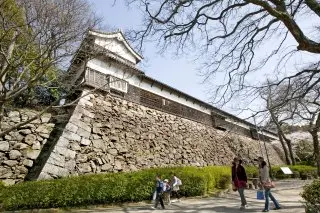
Fukuoka Castle Ruins
Kuroda Yoshitaka (Kanbei) and his son Nagamasa built the castle over a period of 7 years beginning in 1601. Also known as Maizuru Castle, it served as the residence of the Kuroda clan, who ruled the Fukuoka Domain throughout the Edo period. One of the largest castles in Kyushu, it is said to have had large, medium, and small castle keep bases and 47 turrets.
Ohori Park is one of the few waterfront parks in Japan, and it's really spacious. Walking around the lake is super relaxing.