

The ginkgo avenue attracts lots of visitors when the leaves are at their best, so it's better to go in the morning or on a weekday to avoid the crowds.
Meiji Jingu Gaien (Outer Garden) | Review by 箐箐
Other Reviews by 箐箐
-
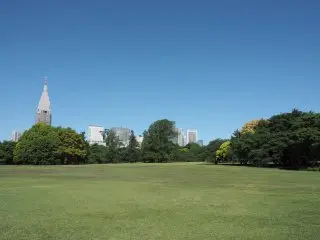
Shinjuku Gyoen National Garden
Shinjuku Gyoen once stood as an estate of the Naito family, the hereditary vassals of the Tokugawa family in the Edo period before being established as an imperial garden in 1906.
There are several themed areas in the garden, like a Japanese garden, a French formal garden, and an English landscape garden. You can enjoy different styles of beautiful scenery.
-
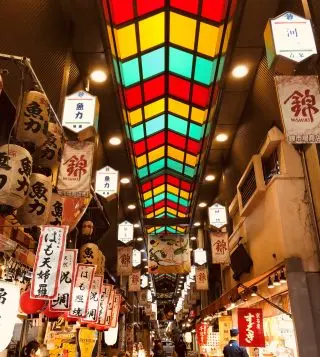
Nishiki Market
Nishiki Market is located on Nishikikoji Street, north of Shijo Street, Kyoto’s main street. The fish market thrived here, and in 1615, it received official permission from the Edo Shogunate to expand. It is called “Kyoto’s kitchen” and offers a wide range of foods such as Kyoto vegetables, fresh-water fish from Lake Biwa, Hamo (conger pike), Guji (tilefish), Sasakarei (half-dried flounder), Yuba (tofu skin), Namafu, and pickles. Most of Kyoto’s special ingredients can be found here.
Markets in Japan are generally super clean, and there are tons of snacks to try. Kyoto especially has a huge variety of pickled foods. Worth checking out!
-
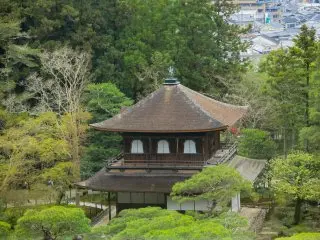
Ginkaku-ji
This temple was built by Ashikaga Yoshimasa, the eighth shogun of the Muromachi Shogunate, as a villa called "Higashiyama-den". Along with Kinkakuji Temple, this temple is a pagoda temple outside of Shokokuji Temple (i.e., a hermitage built in a different location from the main temple after his retirement). After Yoshimasa's death, the temple was named Jishoji after his Buddhist name.
Ginkaku-ji and Kinkaku-ji really complement each other. Ginkaku-ji isn't as flashy as Kinkaku-ji, but the dry landscape garden design gives it a unique charm.