
First-Time Guide to Kenrokuen Garden: A 60-Minute Model Course for Scenic Views and Photo Spots
Kenrokuen Garden can feel overwhelming on your first visit because of its size and the number of things to see.
But if you know the Approx. time needed and an efficient route in advance, you can still enjoy it fully even with limited time.
This article introduces scenic photo spots, highlights, seasonal ways to enjoy the garden, and nearby sightseeing information.
In particular, the 60-minute model course that fits easily before or after sightseeing in Kanazawa is a must-see.
Even with limited time, make the most of your visit by taking in the essential scenery and photo-worthy moments.
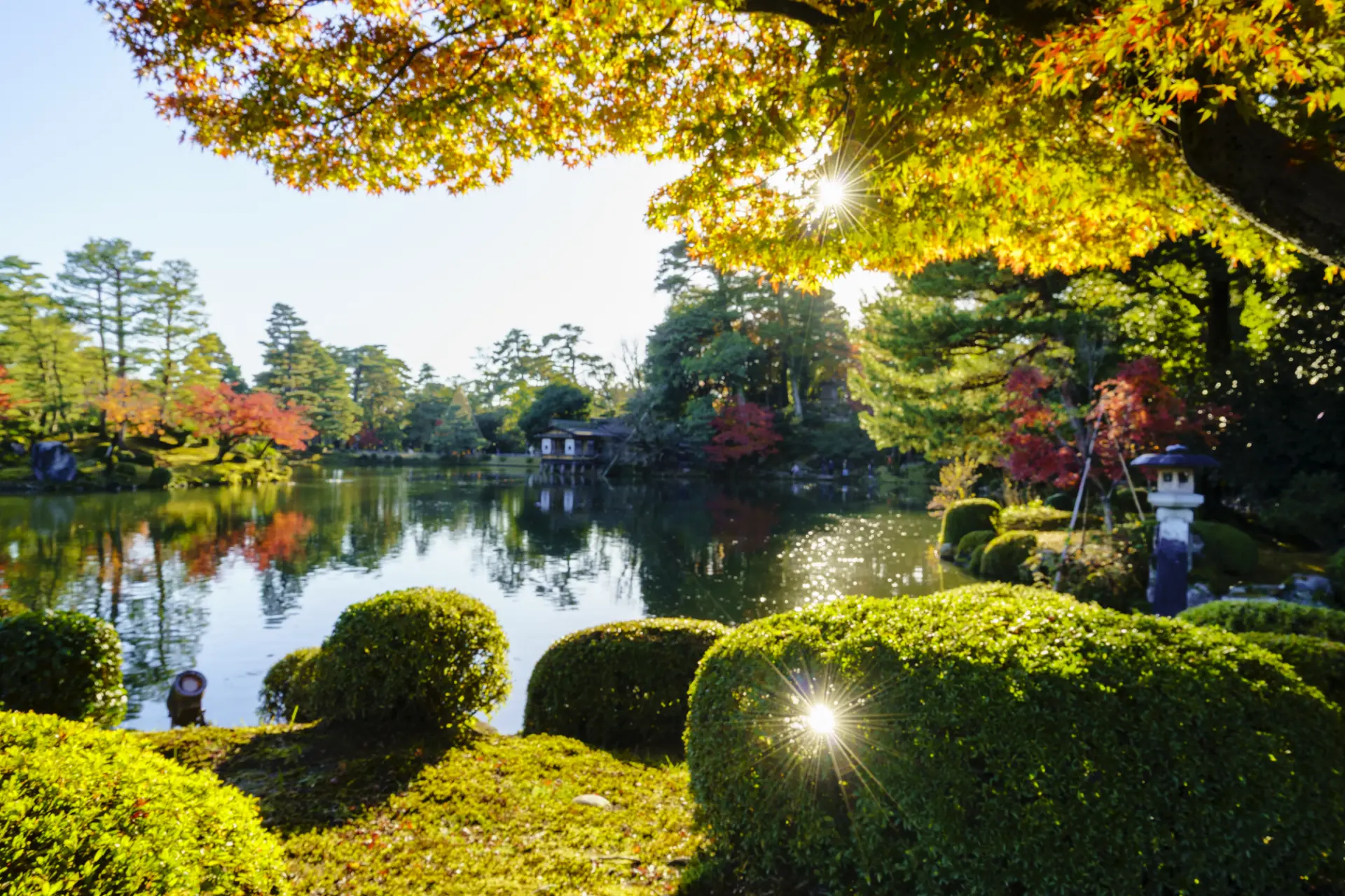
What is "Kenrokuen" Like?
Kenrokuen is counted among Japan’s three most famous gardens.
It is a strolling-style landscape garden built over Approx. 200 years by successive lords of the Kaga Domain, and one of its defining features is how the scenery changes as you walk.
The garden covers Approx. 11.7 hectares, with ponds, artificial hills, tea houses, and other elements skillfully arranged throughout.
The garden’s name comes from the "six sublime attributes" (spaciousness, seclusion, artifice, antiquity, water features, and panoramic views).
It expresses that this is an outstanding garden that combines six contrasting types of scenic beauty.
The Approx. time needed for "Kenrokuen" is about 60 minutes if you focus on the main highlights, or about 2 hours if you want to explore the garden at a leisurely pace.
Even if you have limited time, it is a spot where you can fully experience its charm by covering the key highlights.
How to Enter "Kenrokuen" and Admission Fees
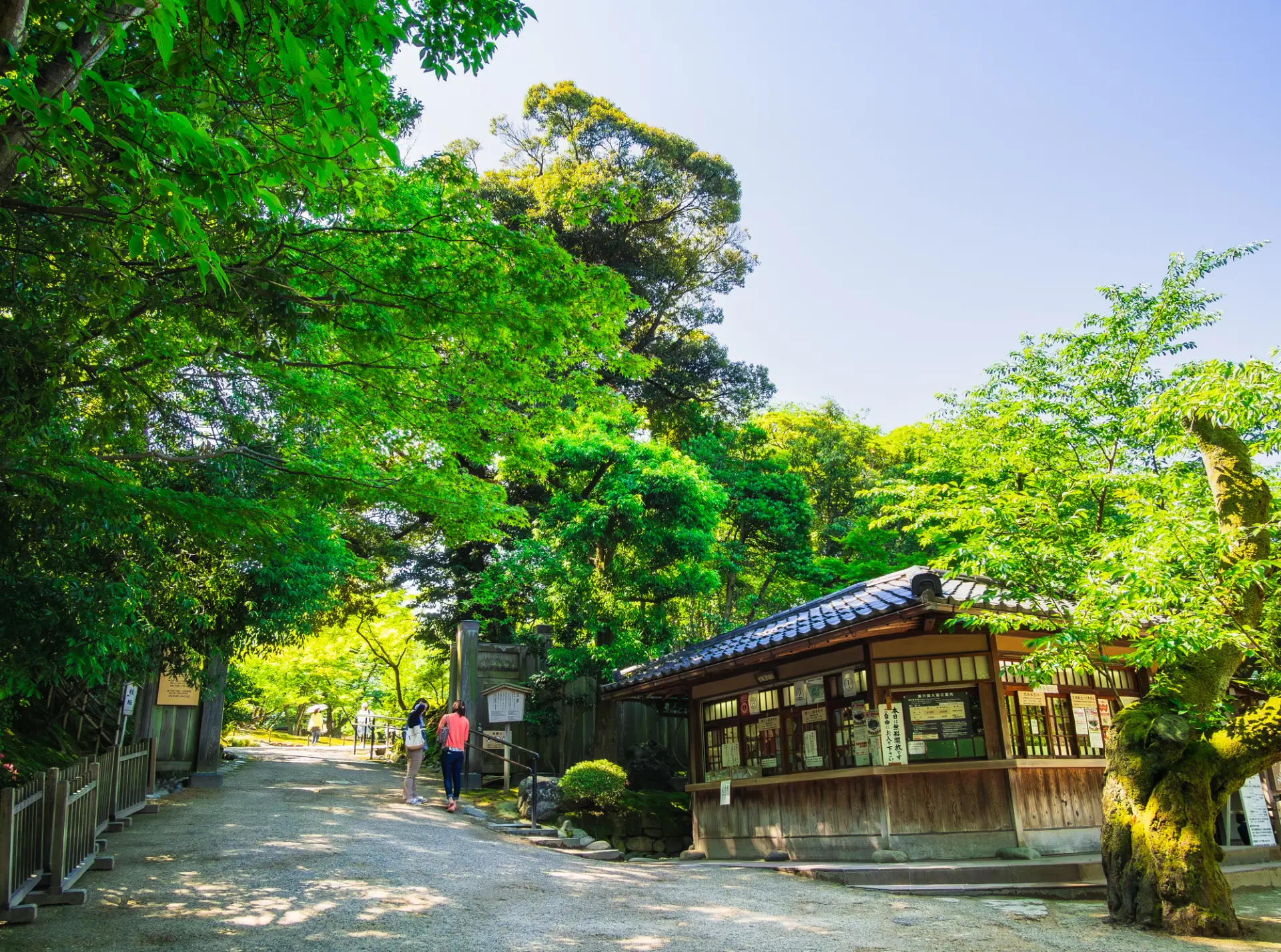
To enter the garden, you purchase a ticket at the ticket booth by each entrance. There are also times, such as cherry blossom season and light-up periods, when admission may be free.
- Admission
-
Adults: 320 yen, children: 100 yen, free for ages 5 and under
※Free for Ishikawa residents aged 65 and older only
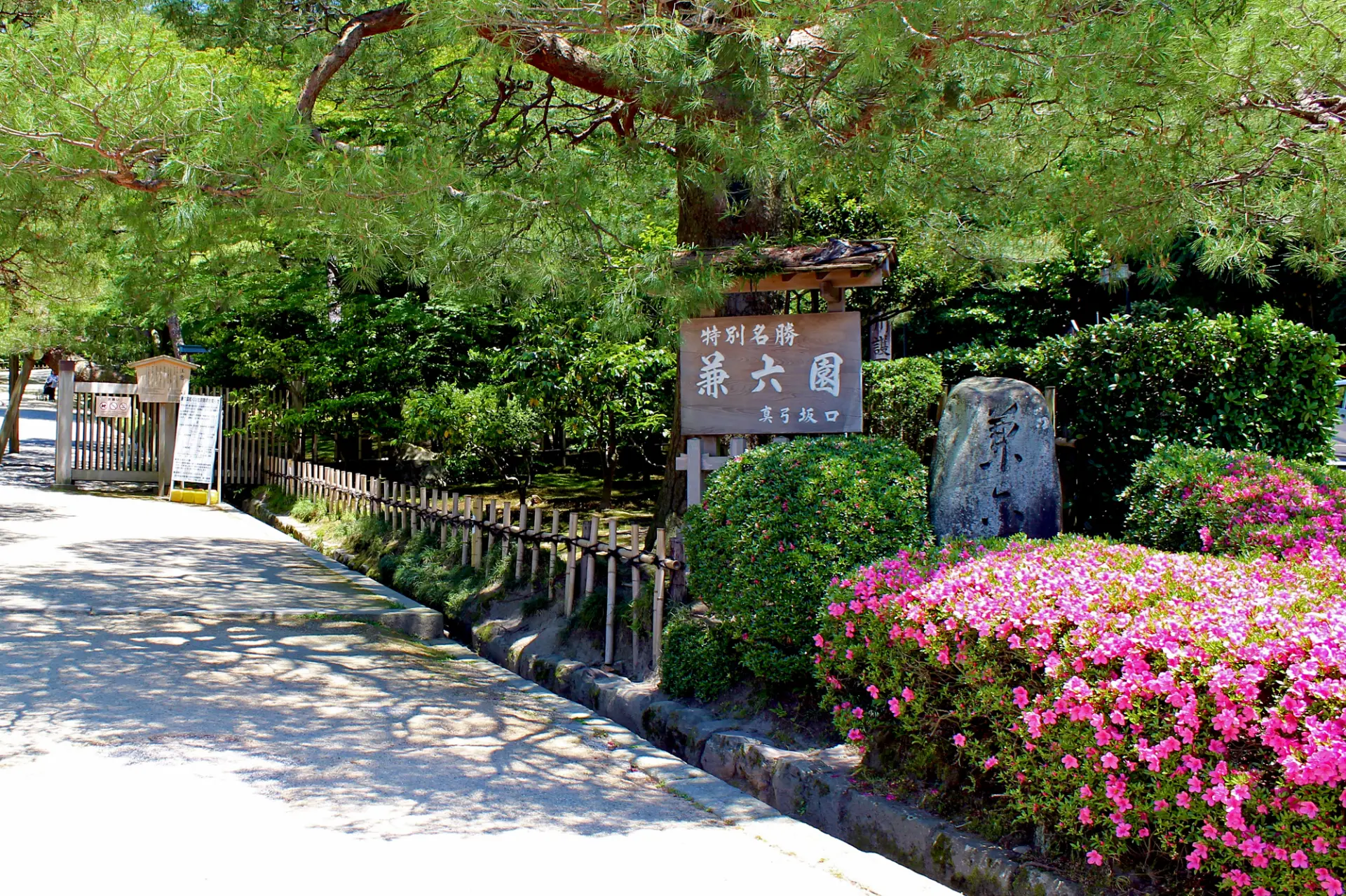
There are multiple entrances, but if it’s your first visit, Katsurazaka Entrance, near "Kanazawa Castle Park," is easy to find and fits well into a sightseeing route.
If you want to avoid crowds, visiting in the morning is a good option.
11 Highlights of the Beautiful Famous Garden "Kenrokuen"
The vast grounds of "Kenrokuen" are dotted with highlights including ponds, artificial hills, tea houses, and charming bridges.
The scenery changes with the seasons, and its beauty is carefully designed down to the finest detail, allowing you to fully appreciate its appeal.
First, get to know 11 of the garden’s representative highlights and what makes each one special, so you can enjoy the model course that follows even more deeply.
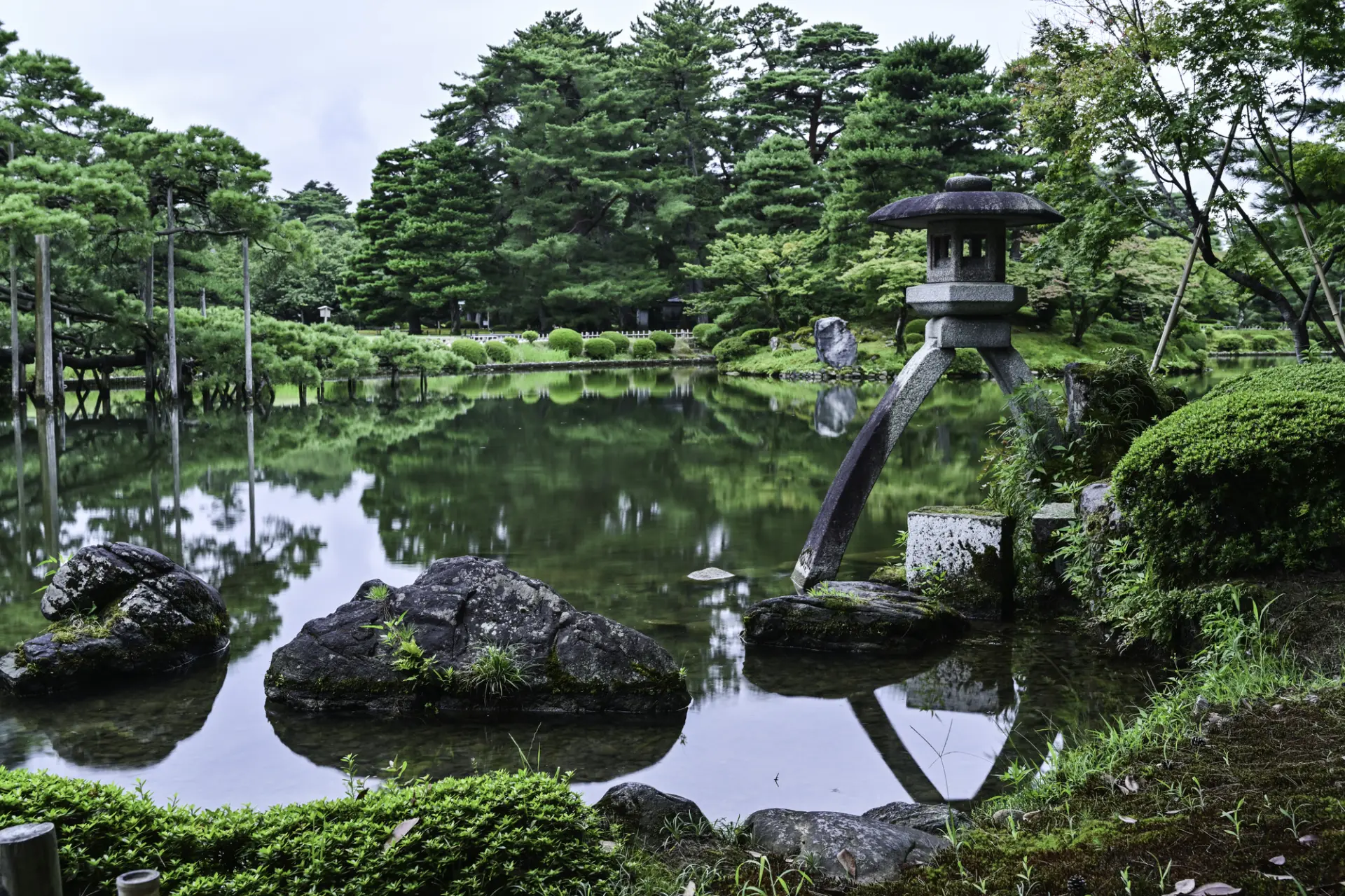
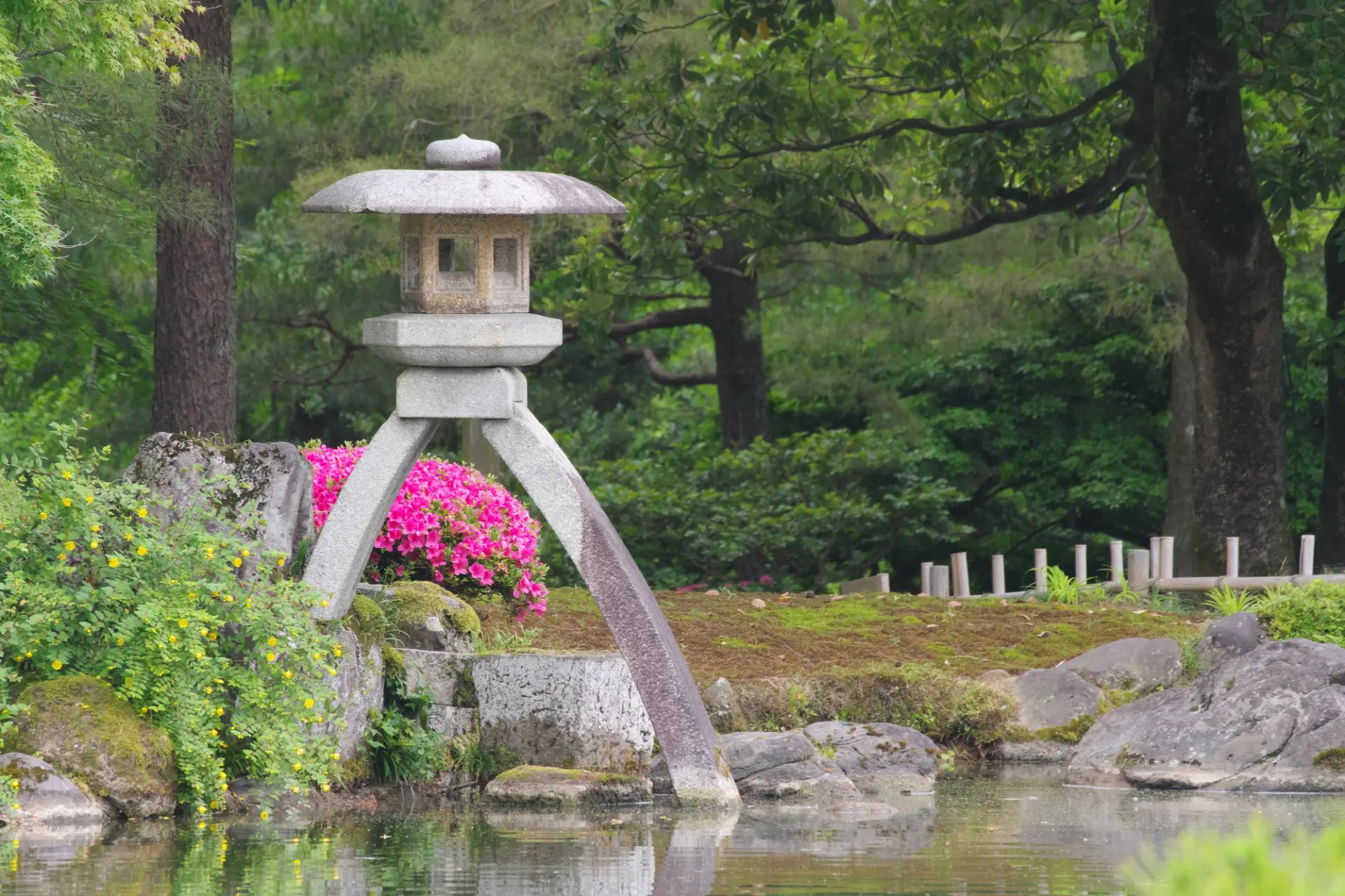
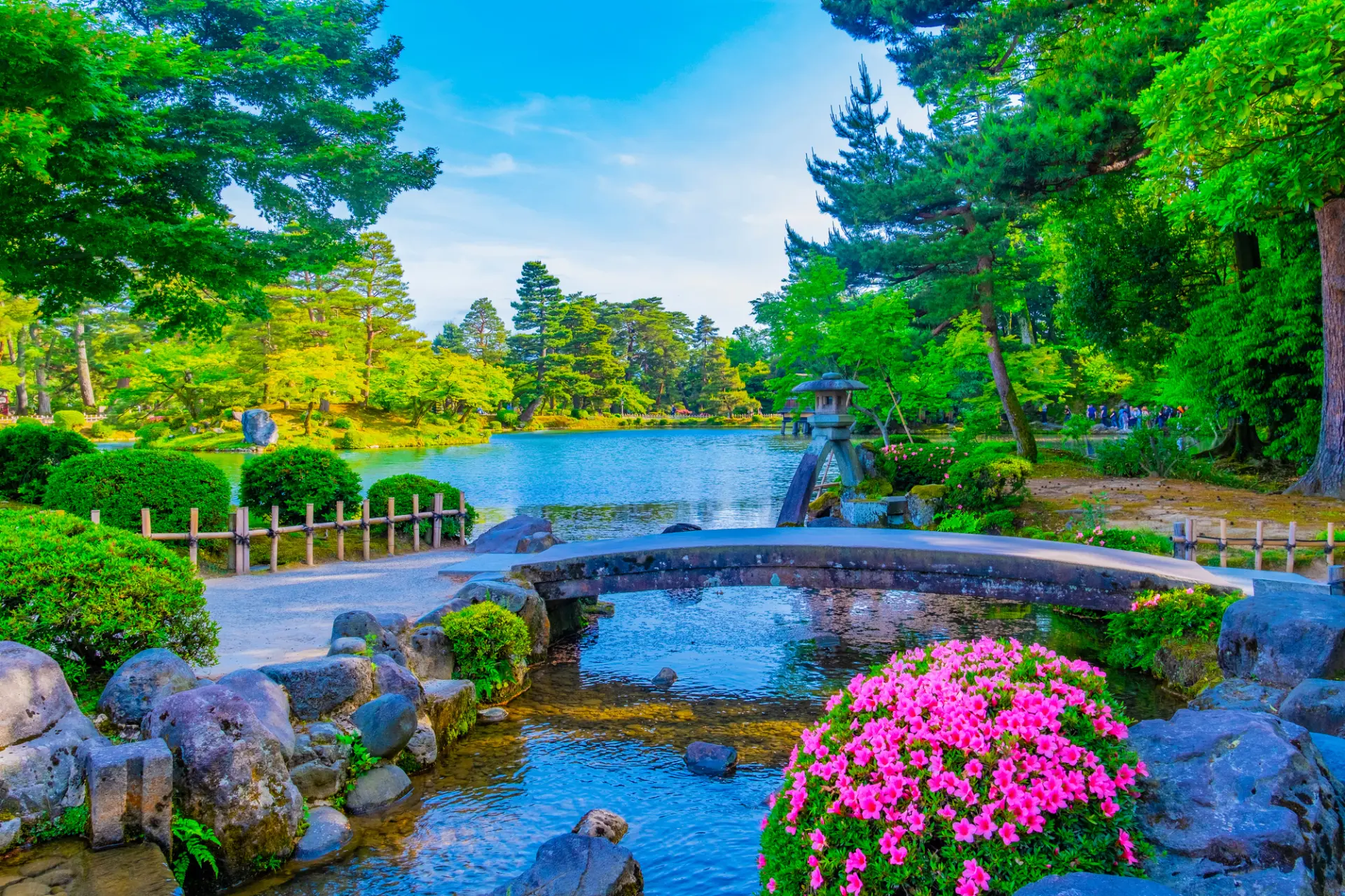
1. The Iconic Scenic Beauty of "Kenrokuen" | Kotoji Toro Lantern
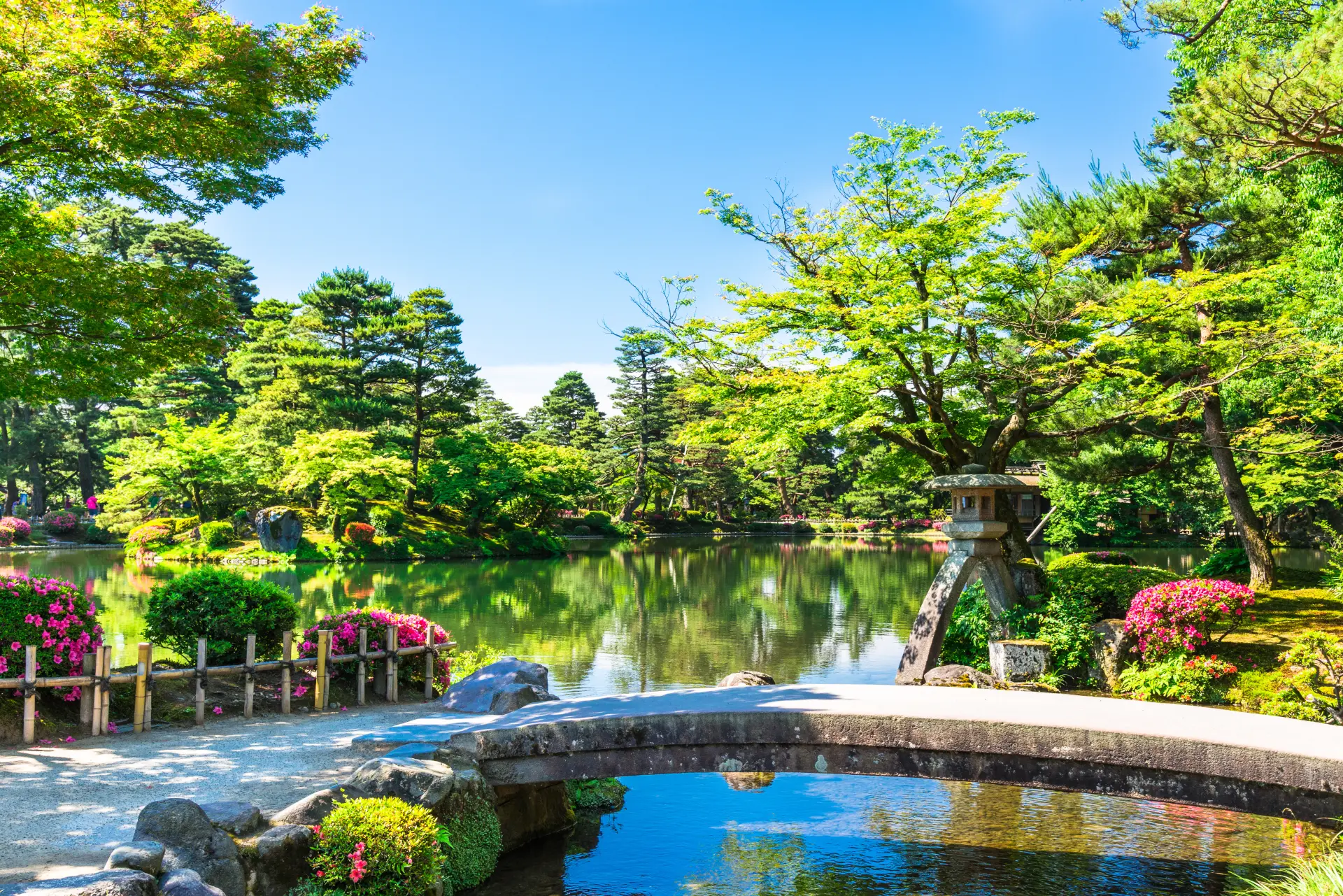
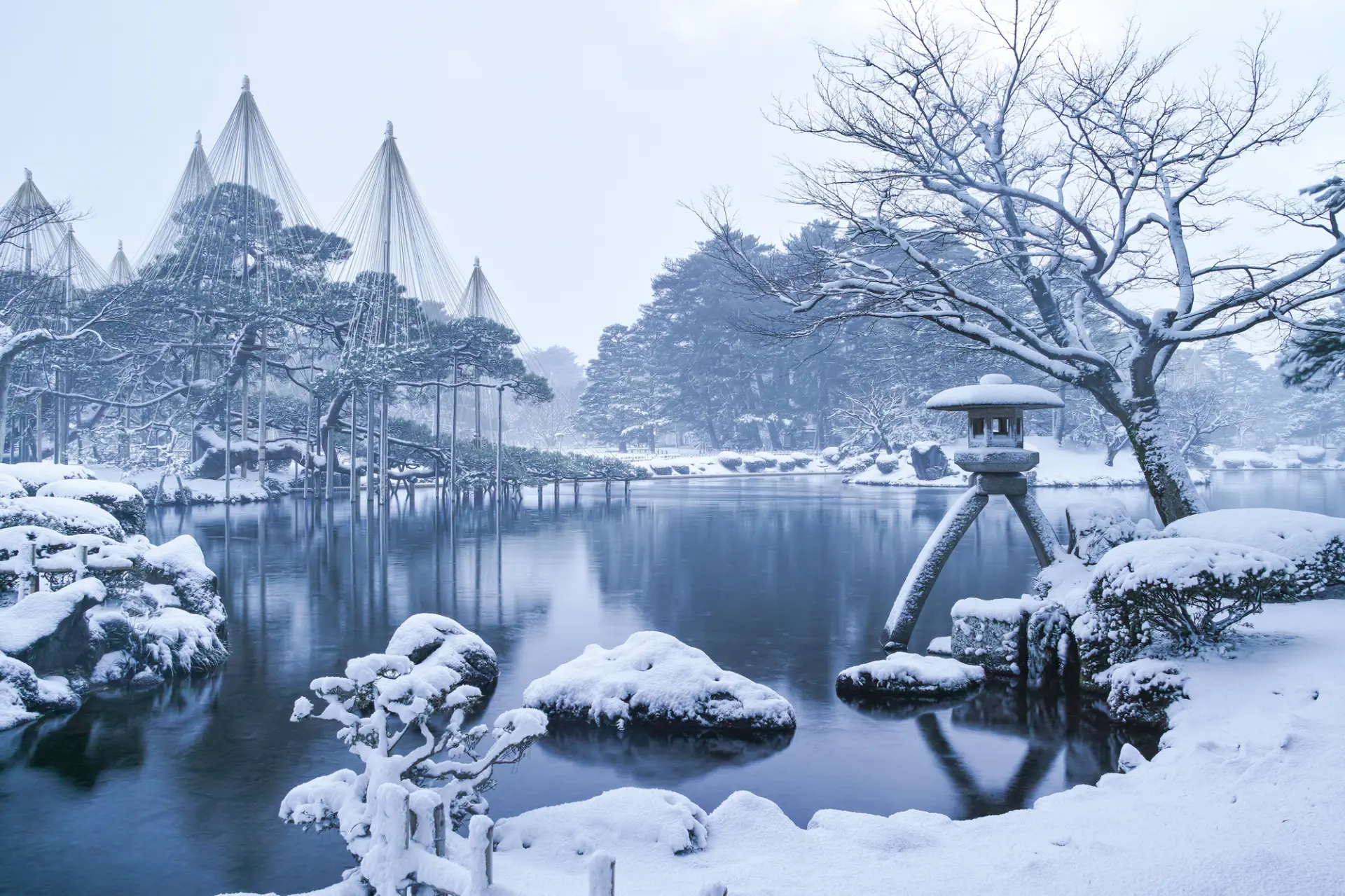
Standing by Kasumigaike Pond, the Kotoji Toro Lantern is a stone lantern known as one of the most iconic symbols of "Kenrokuen."
Its most distinctive feature is its two-legged shape, said to resemble the bridges that support the strings of a koto, and its asymmetrical structure creates a unique beauty.
Combined with its placement along the water and the texture that reflects the passage of time, it has long been cherished as one of the garden’s most symbolic landscape elements.
2. A Graceful Curve in Harmony with the Lantern | Nijibashi Bridge
Nijibashi Bridge is a stone bridge on the north side of Kasumigaike Pond, known for its gently arching form.
Together with the Kotoji Toro Lantern, it forms one of the garden’s most memorable scenes.
The bridge’s curve naturally guides the eye and plays an important role in giving the garden a soft rhythm and sense of depth.
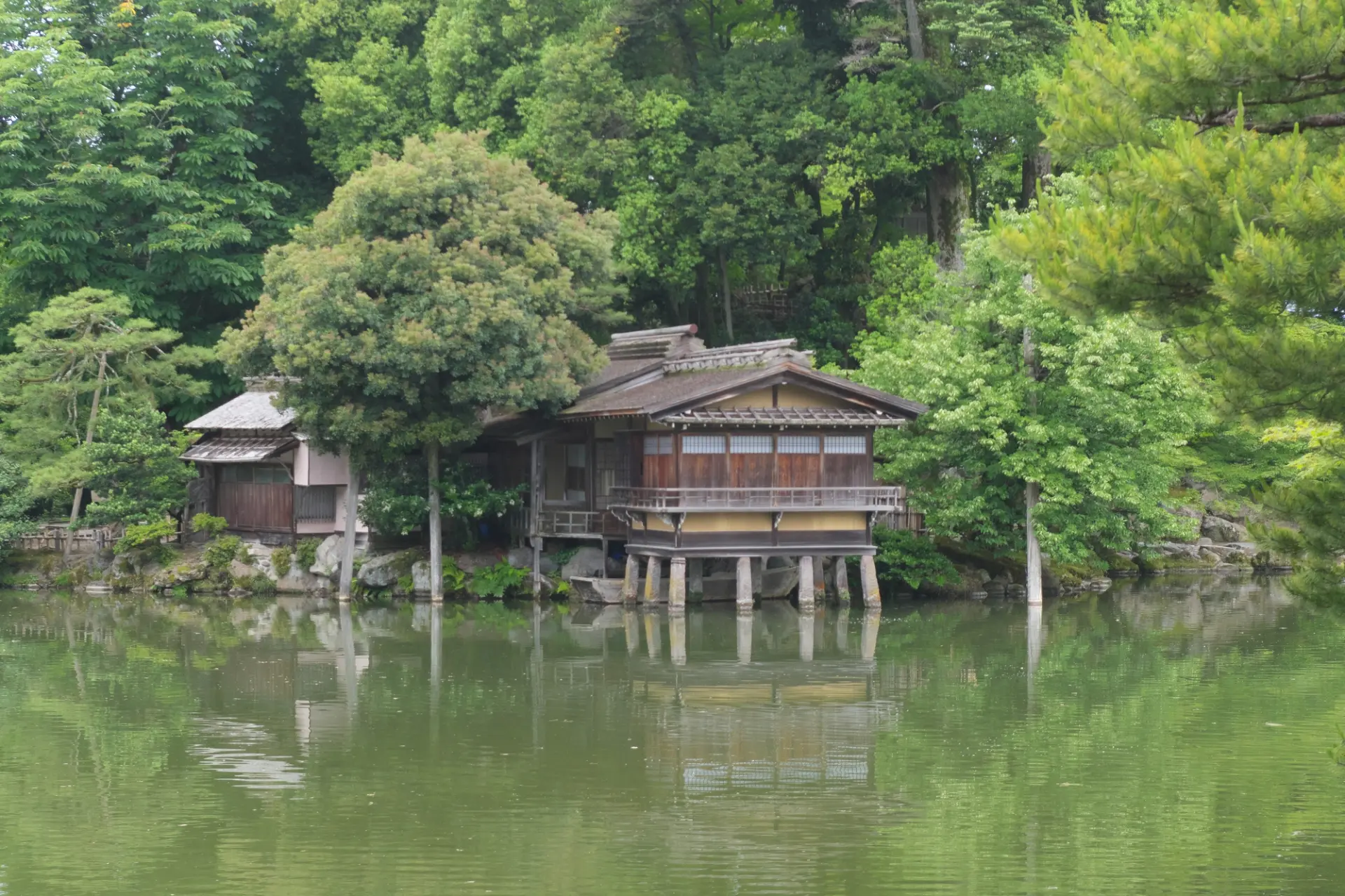
3. A Teahouse Space That Blends with the Pond | Uchihashitei
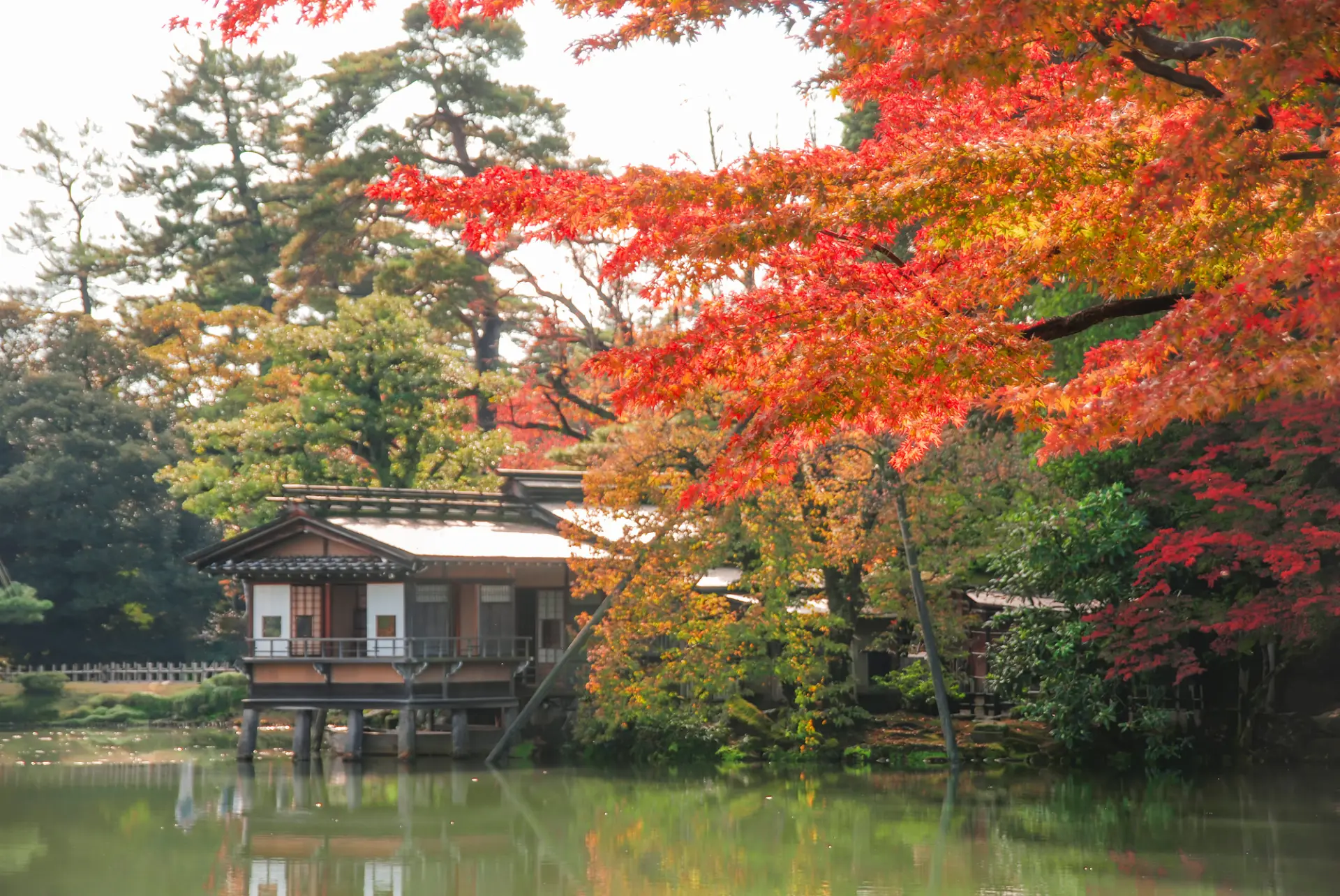
Uchihashitei is a teahouse built facing Kasumigaike Pond, with a structure that seems to jut out over the water.
Its design integrates architecture and garden scenery into one harmonious whole, and that beauty can be appreciated even from the outside.
It is also a resting spot to stop by during your stroll, preserving a teahouse culture that has continued since the Edo period.
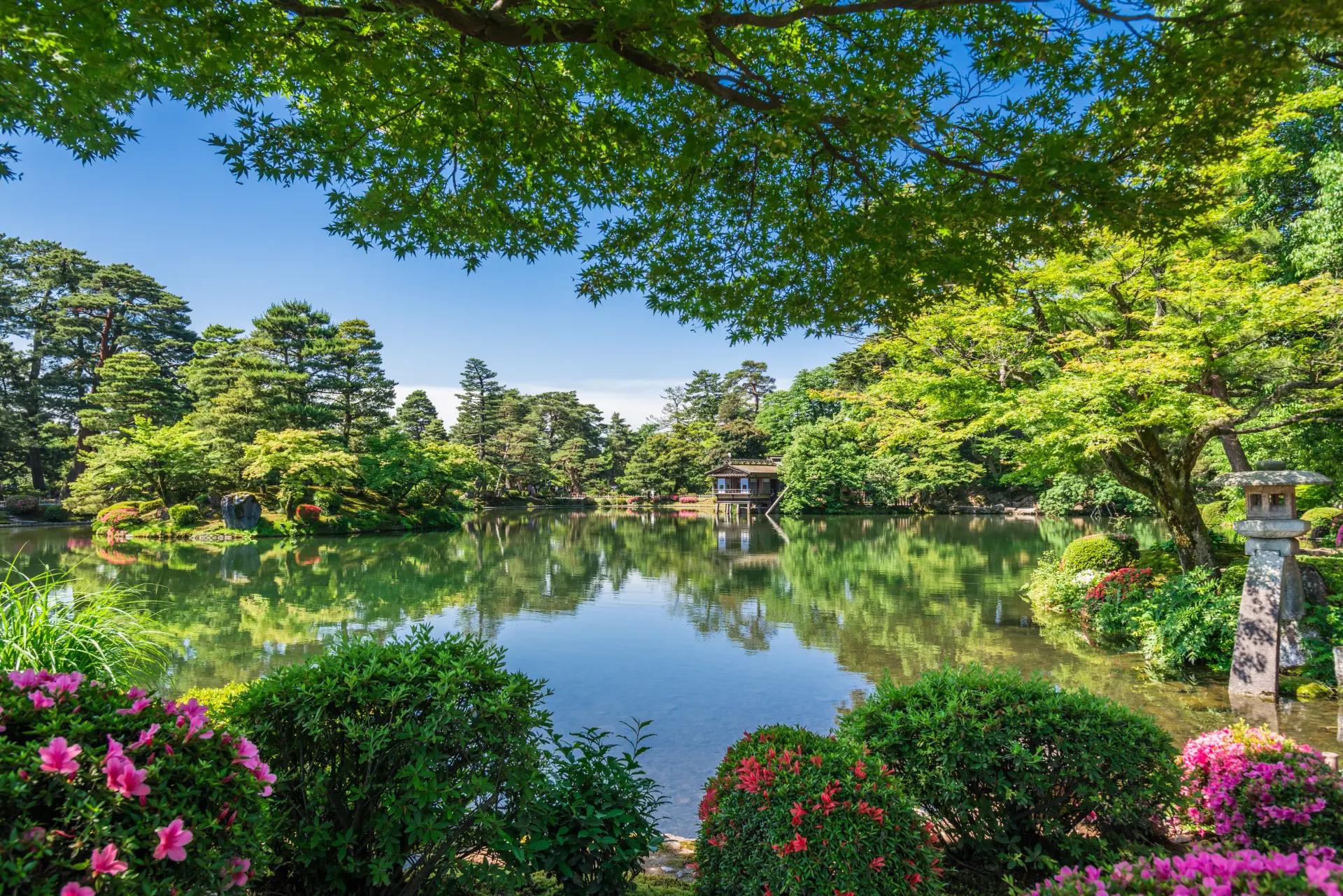
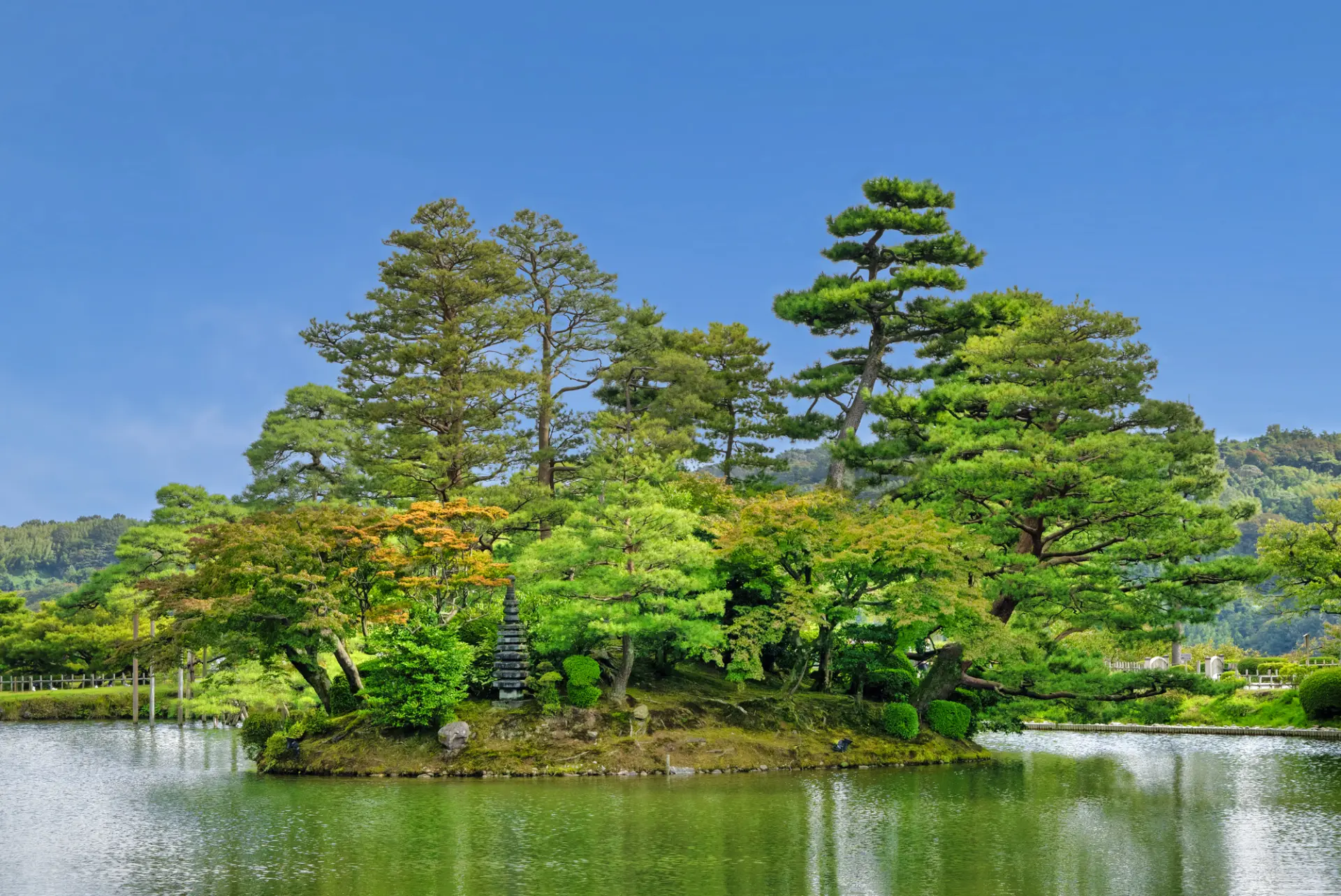
4. Ever-Changing Views at the Garden’s Center | Kasumigaike Pond
Kasumigaike is the largest pond in the garden and serves as the core of "Kenrokuen’s" scenery.
Horai Island floating in the pond symbolizes eternal youth and longevity, and together with the surrounding artificial hills and trees, it creates a wide variety of views.
Because its appearance changes greatly depending on where you walk and what angle you view it from, it plays an important role as an area that symbolizes the appeal of the entire garden.
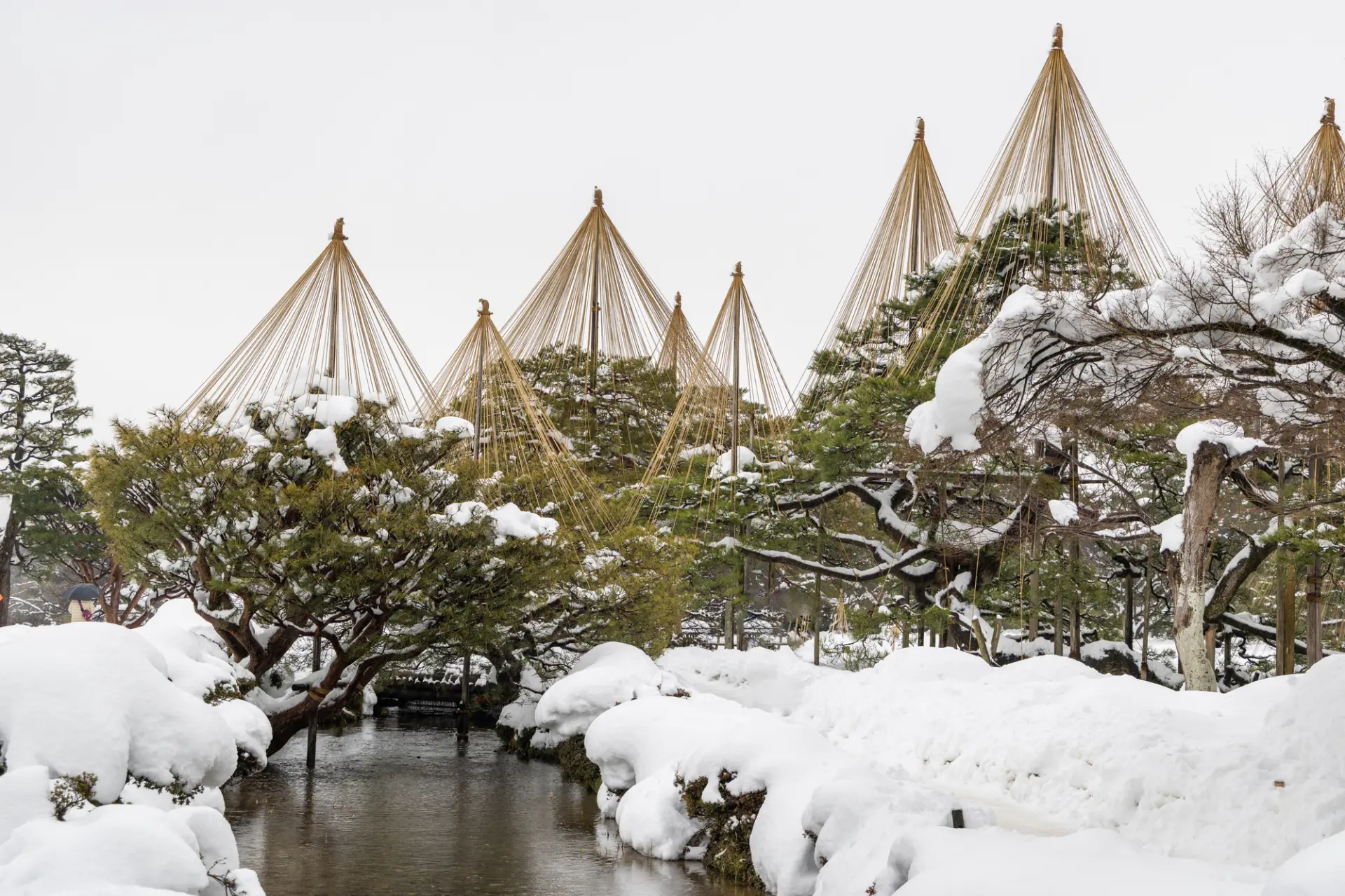
5. A Famous Pine Also Known for Winter Snow Ropes | Karasaki Pine
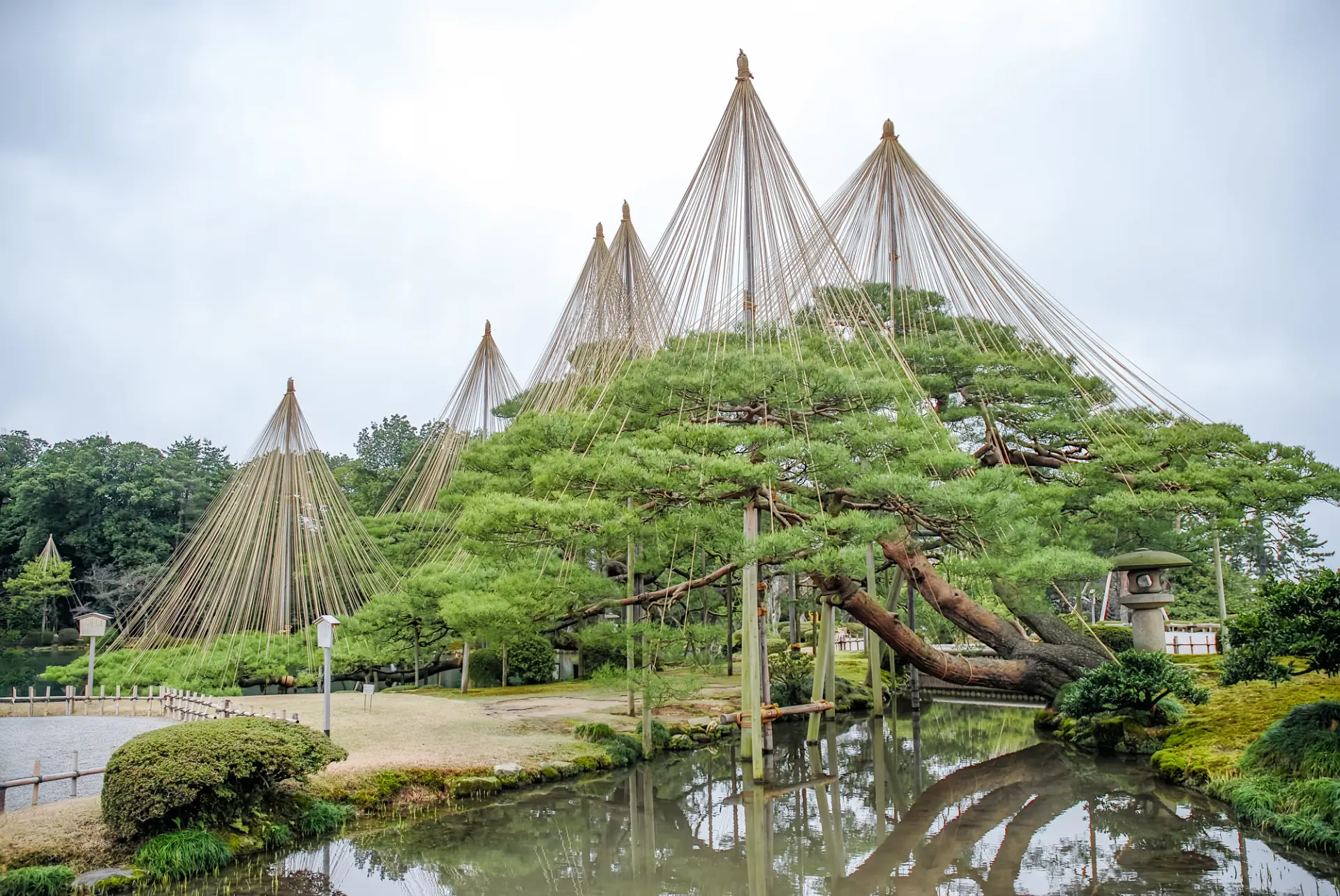
Karasaki Pine is a black pine grown from seeds brought from Karasaki in Omi, and its estimated age is Approx. 180 years.
Known for its beautifully shaped branches and meticulous care, it is one of the most striking trees in the garden.
It is especially famous in winter for its yukitsuri snow-support ropes and remains one of the garden’s representative scenic elements throughout the year.
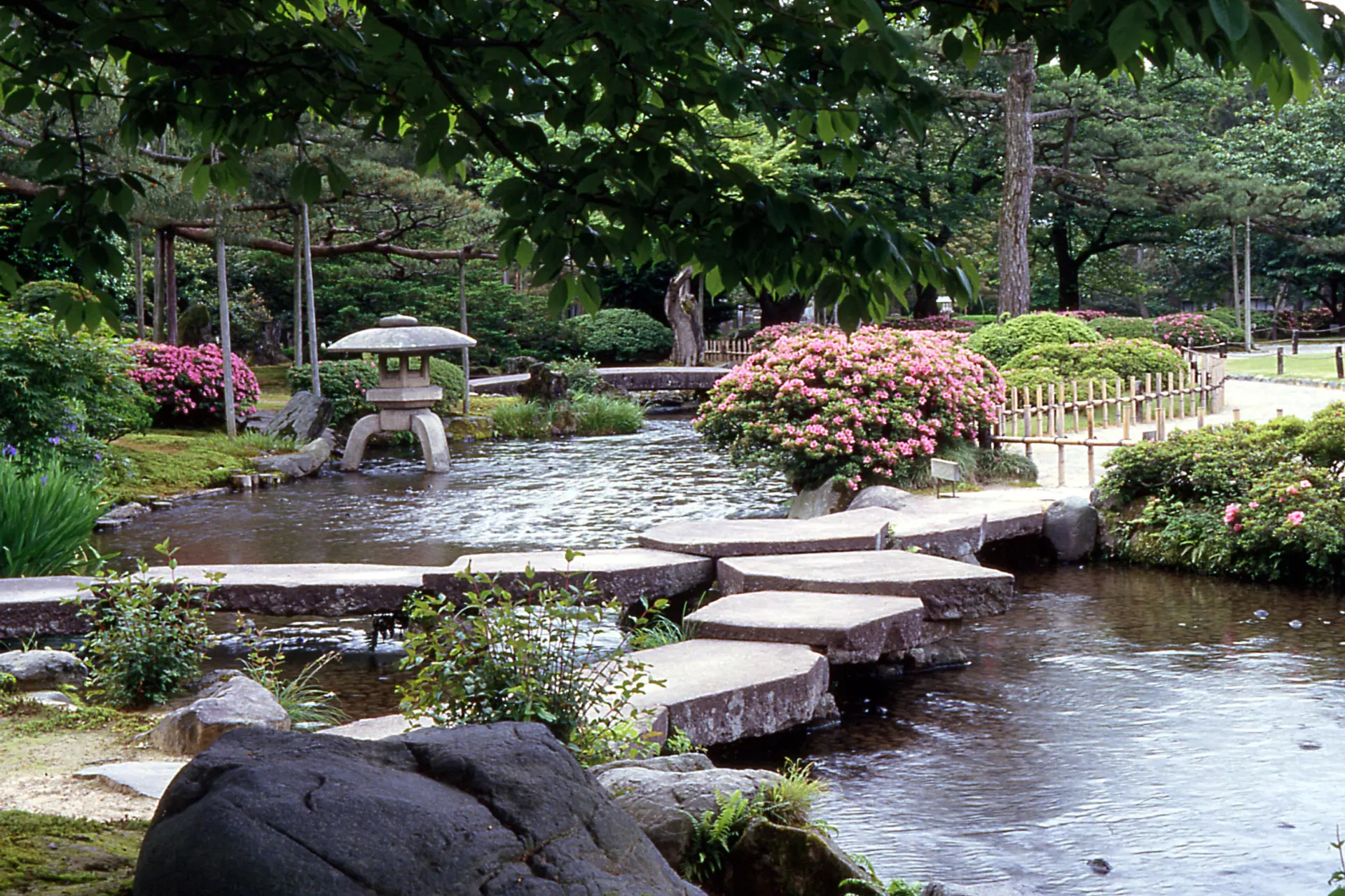
6. A Rhythmic Landscape Created by Stepping Stones | Gankobashi Bridge
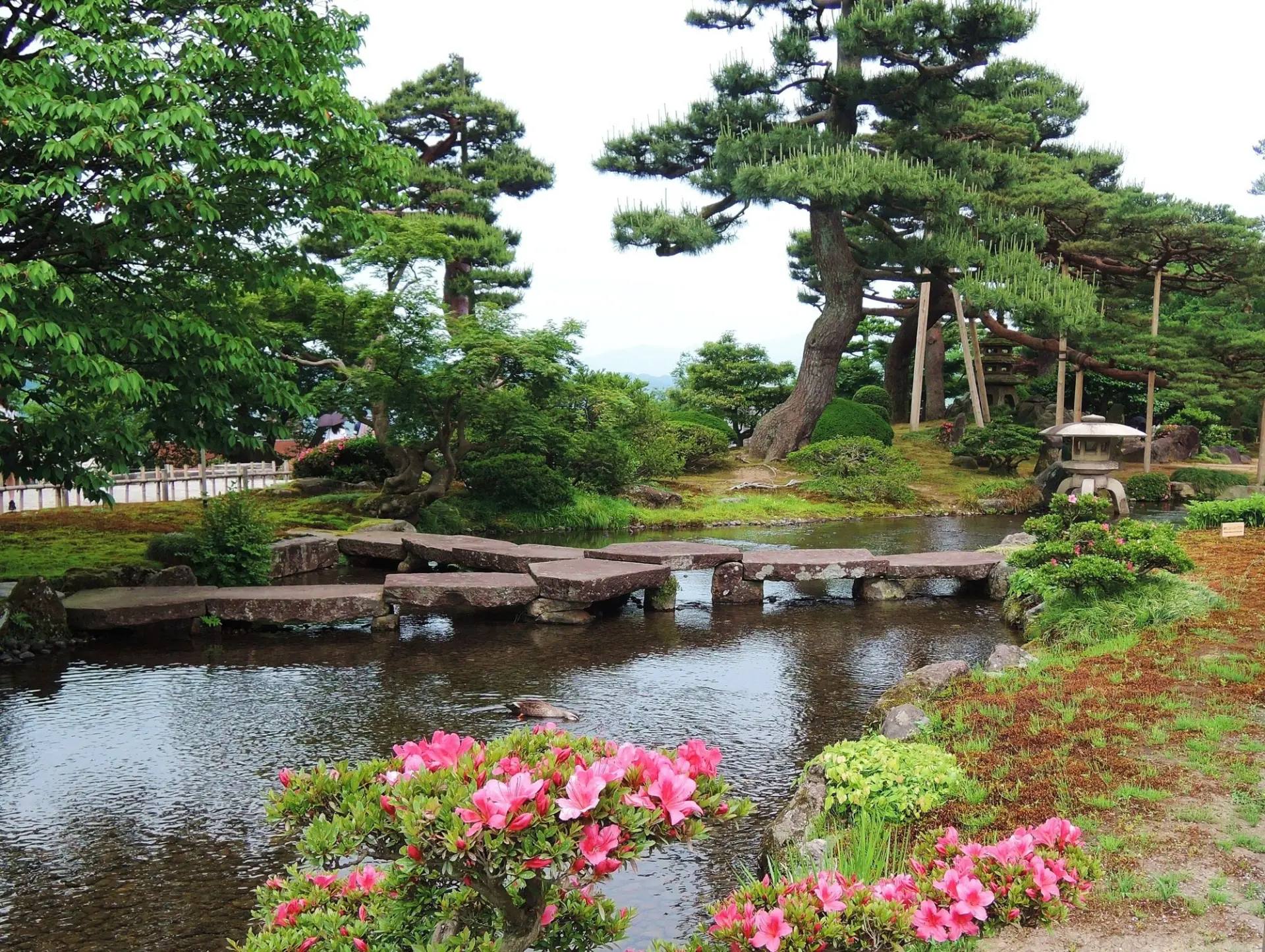
Gankobashi is a stepping-stone bridge set in Kasumigaike Pond and was named for the way its 11 stones are lined up like a flock of geese in flight.
The arrangement of the stones, varied within a sense of regularity, gives the garden rhythm and movement.
Combined with the surrounding water and scenery, it plays a role in creating visual depth and change.
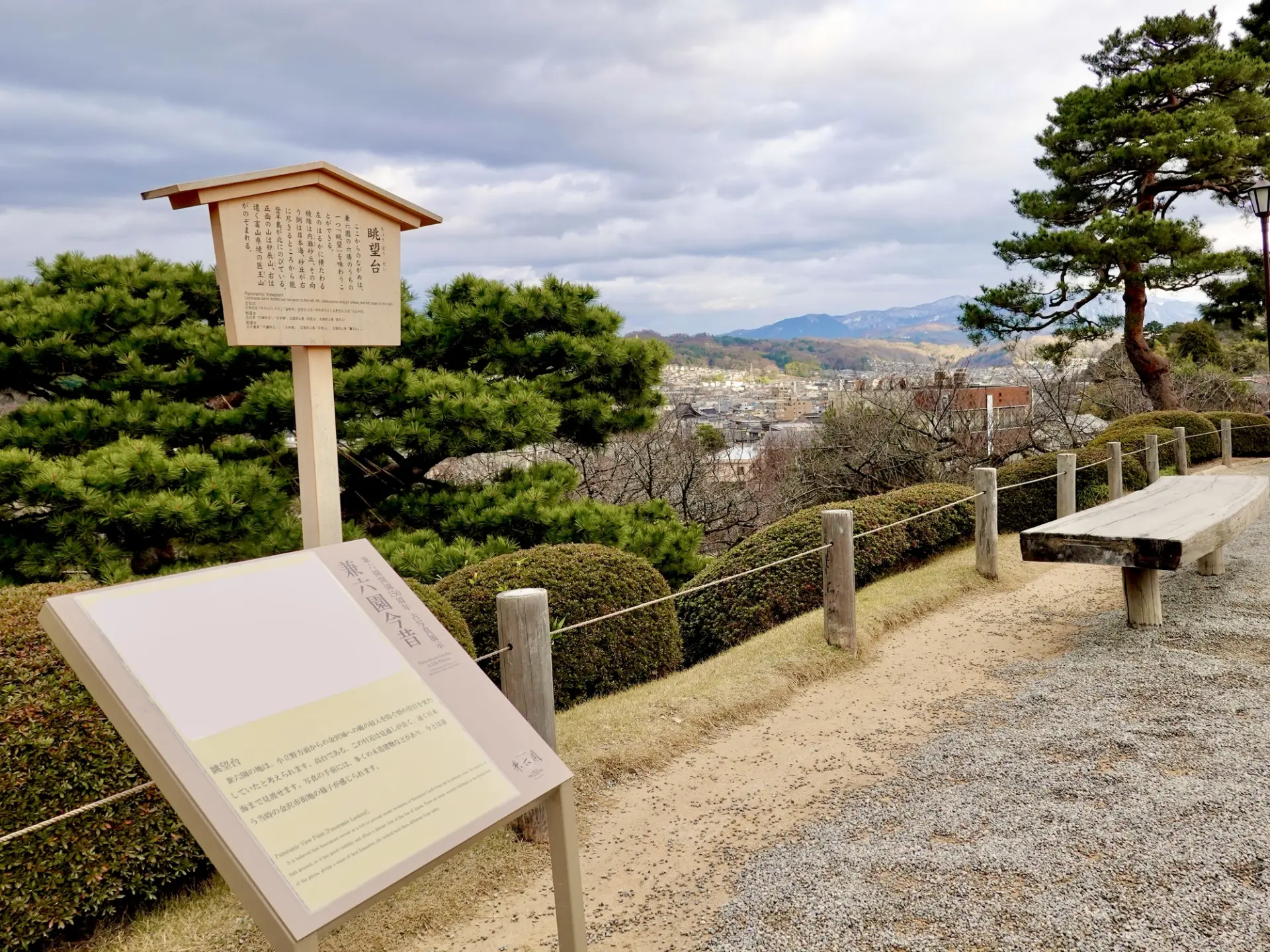
7. An Open Hilltop Overlooking the City | Viewpoint
The Viewpoint sits on a hill at Approx. 53 meters above sea level and is one of the spots in the garden with the widest open view.
From here, you can look out over Kanazawa city and the distant landscape, offering a broader sense of scale than the delicate scenery within the garden itself.
Because your vantage point suddenly becomes much higher, it plays an important role as a place where you can physically feel the shift in space.
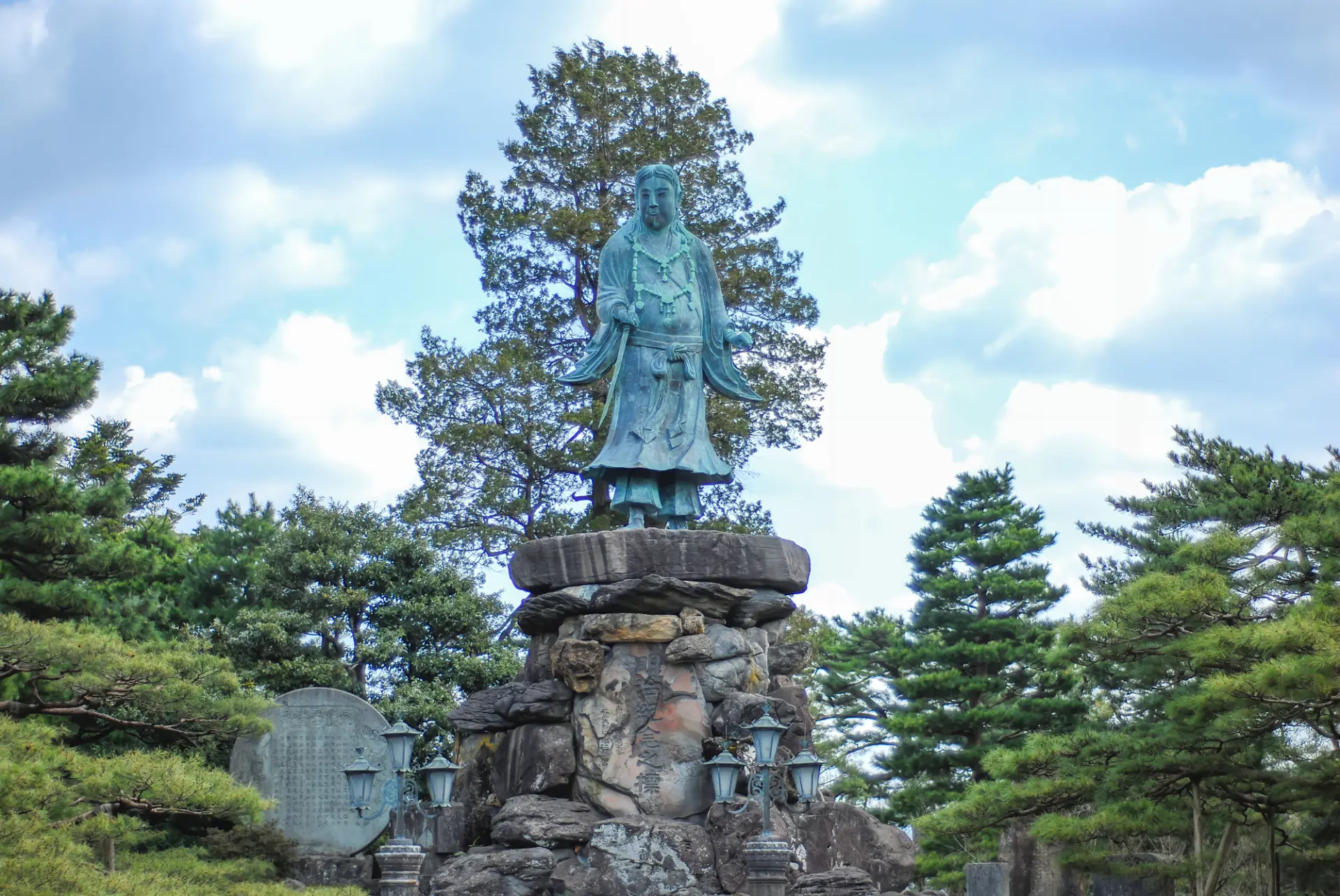
8. A Monument That Evokes History and Story | Meiji Kinen no Hyo Monument
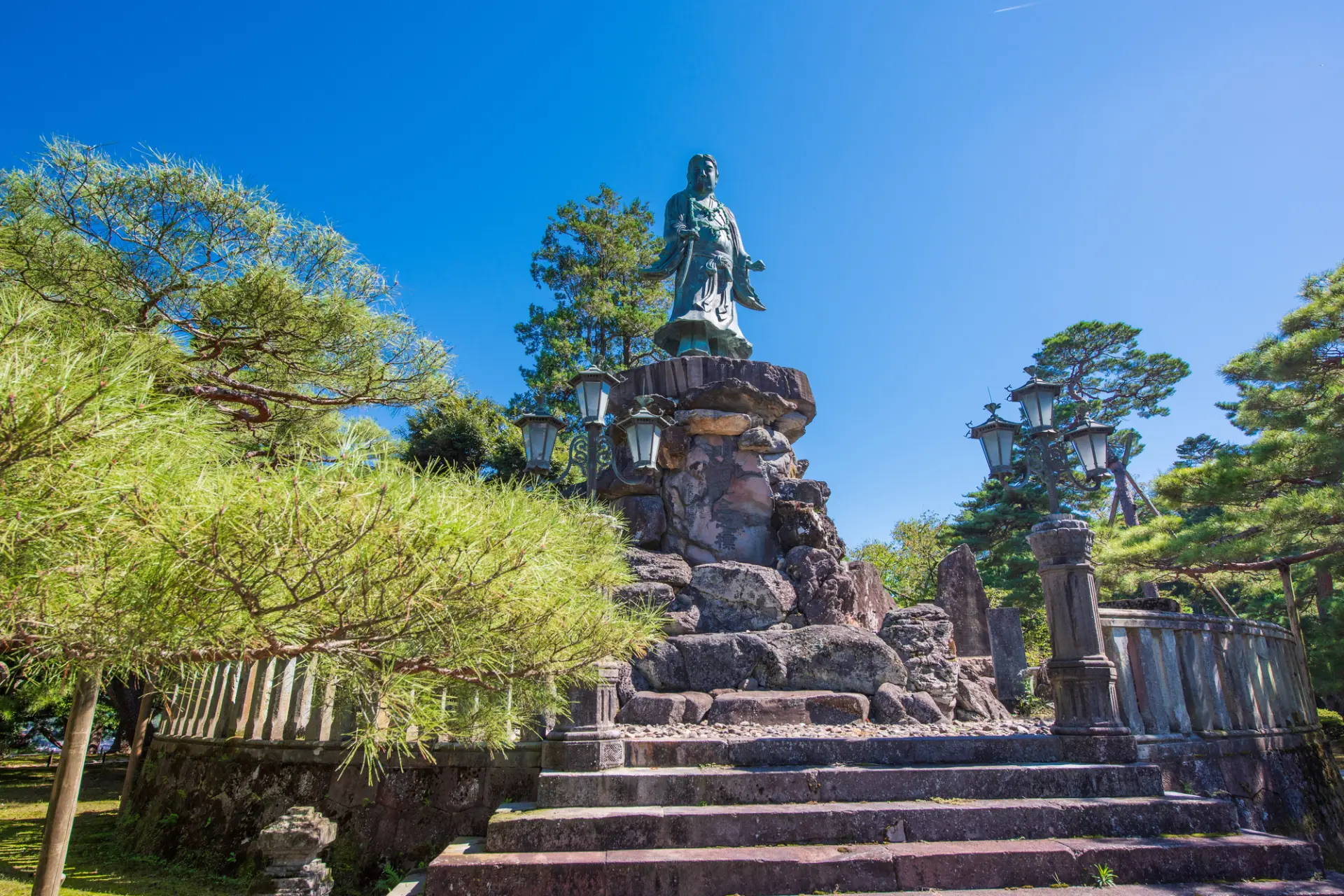
The Meiji Kinen no Hyo Monument is a memorial centered on a bronze statue built to honor those who died in the Satsuma Rebellion, with a statue of Yamato Takeru at its center.
Integrated with the surrounding pines and stonework, it forms a space within the garden that carries historical meaning.
By layering human history into the natural scenery, it adds a deeper sense of richness to the garden.
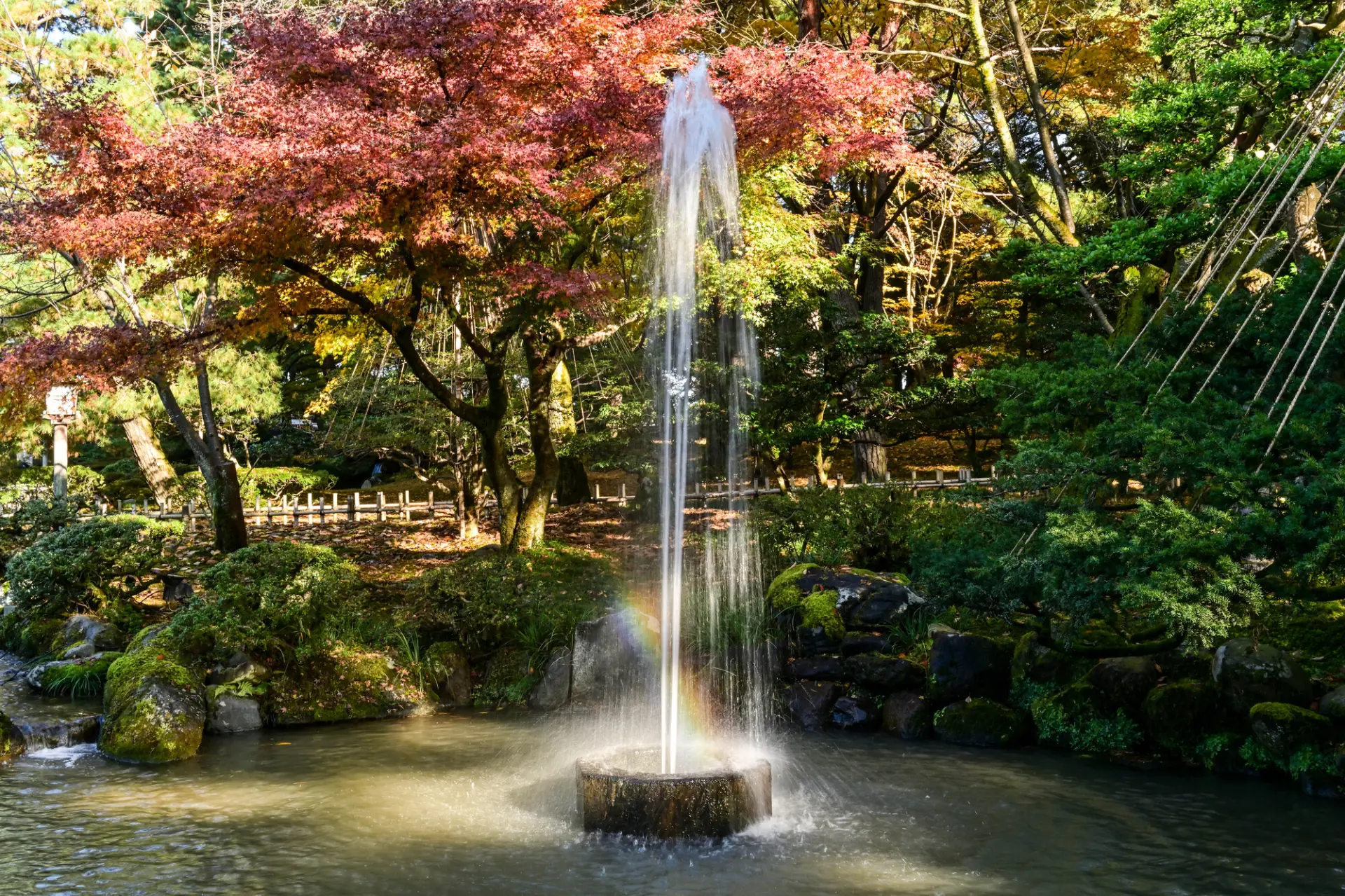
9. A Dynamic Water Feature Powered by Natural Water Pressure | Fountain
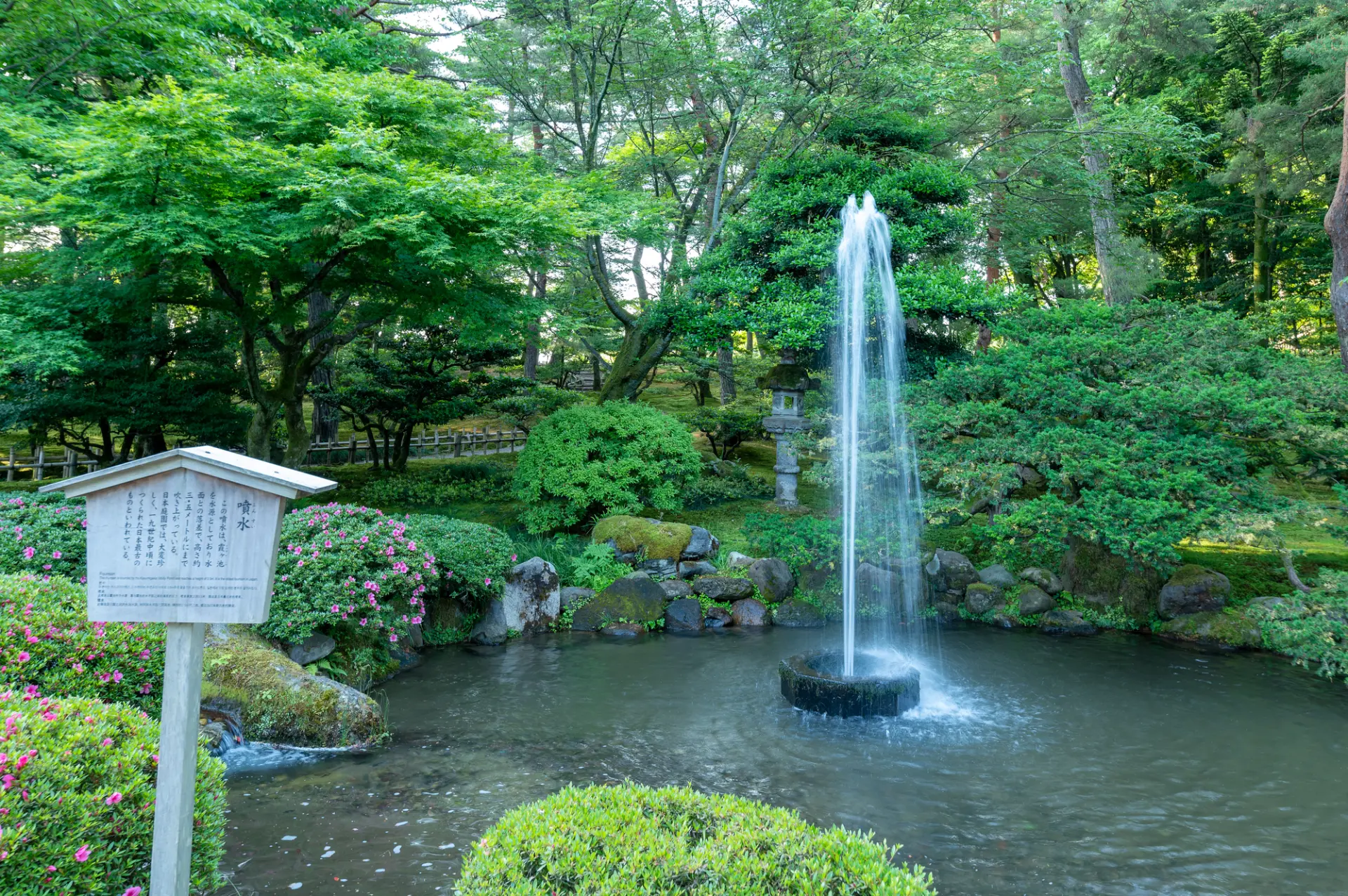
This fountain stands on a sloped area between Hisagoike Pond and Kasumigaike Pond.
It is said to be one of the oldest fountains in Japan and operates by using natural water pressure created by differences in elevation.
Because the height of the spray changes depending on the water level of Kasumigaike Pond, it offers a different look each time you visit.
As an element that introduces movement into the otherwise tranquil garden, it brings rich variation to the scenery.
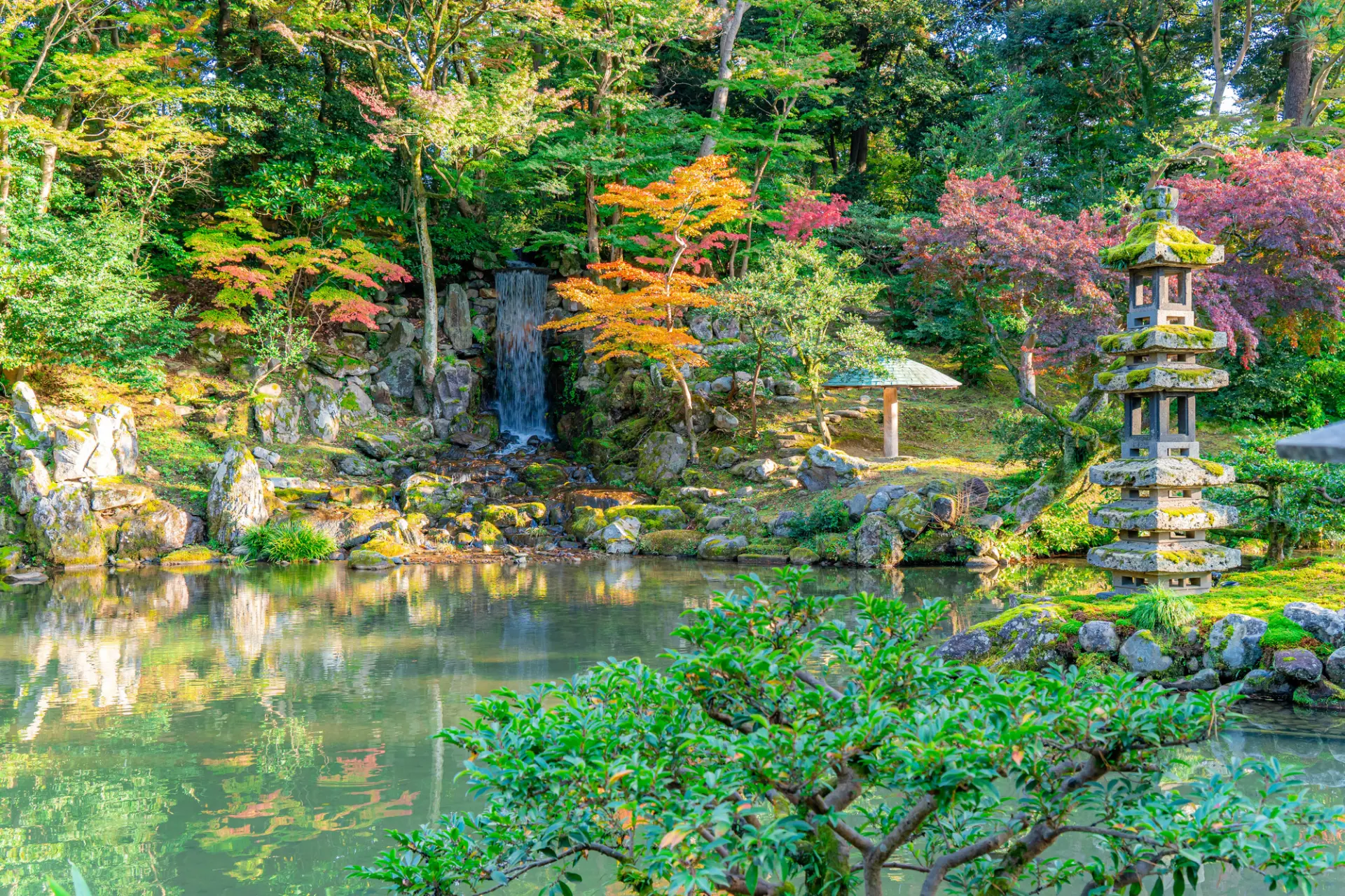
10. Depth Created by a Gourd Shape | Hisagoike Pond
As its name suggests, Hisagoike is a gourd-shaped pond located in one of the oldest areas of the garden.
Its curved shape creates variation in your line of sight and, while harmonizing with the surrounding scenery, forms a space with a strong sense of depth.
It is a place where you can feel the tranquil atmosphere and profound beauty that are unique to "Kenrokuen."
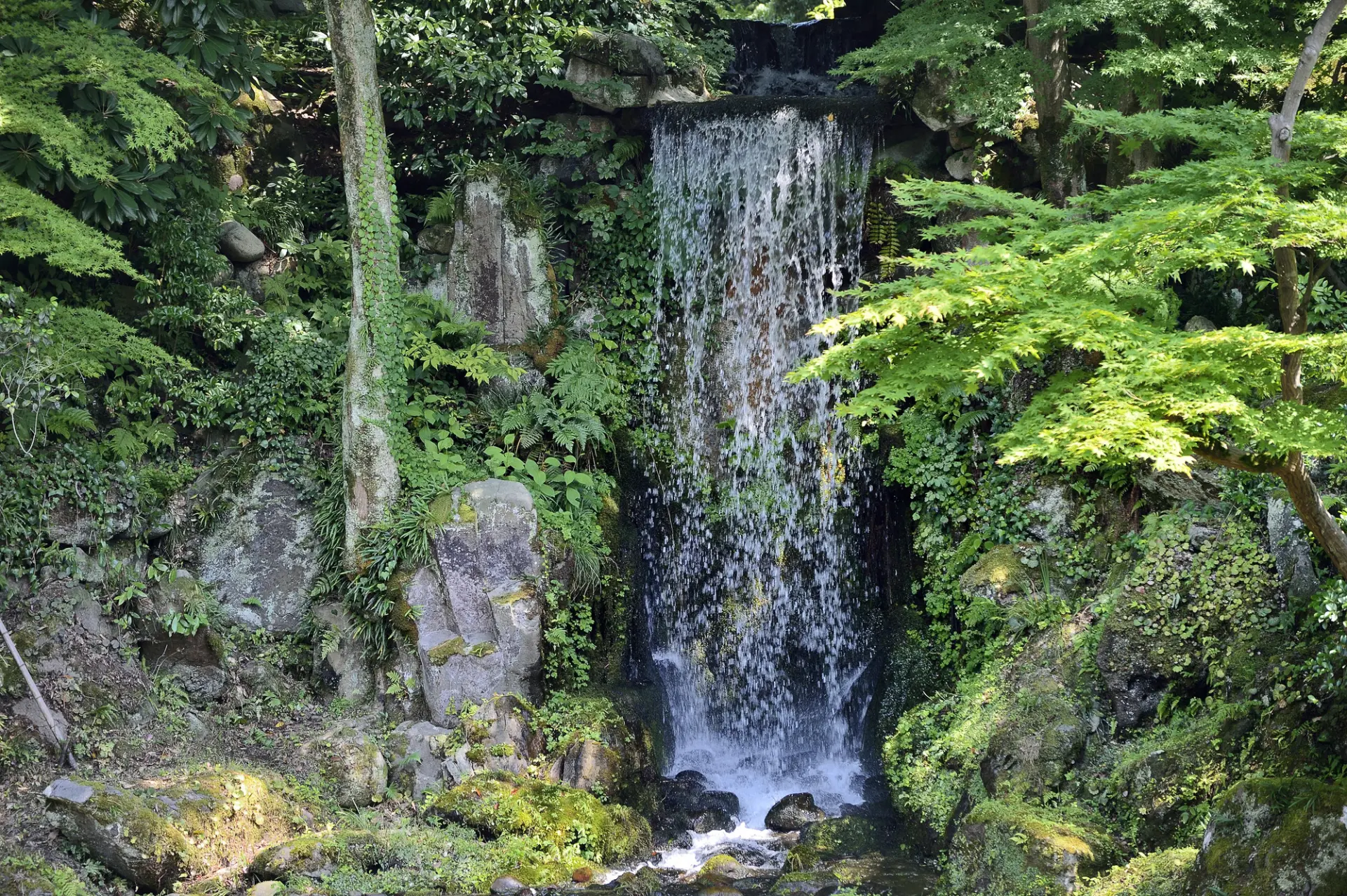
11. A Powerful Waterfall Echoing Through the Silence | Midoritaki Falls
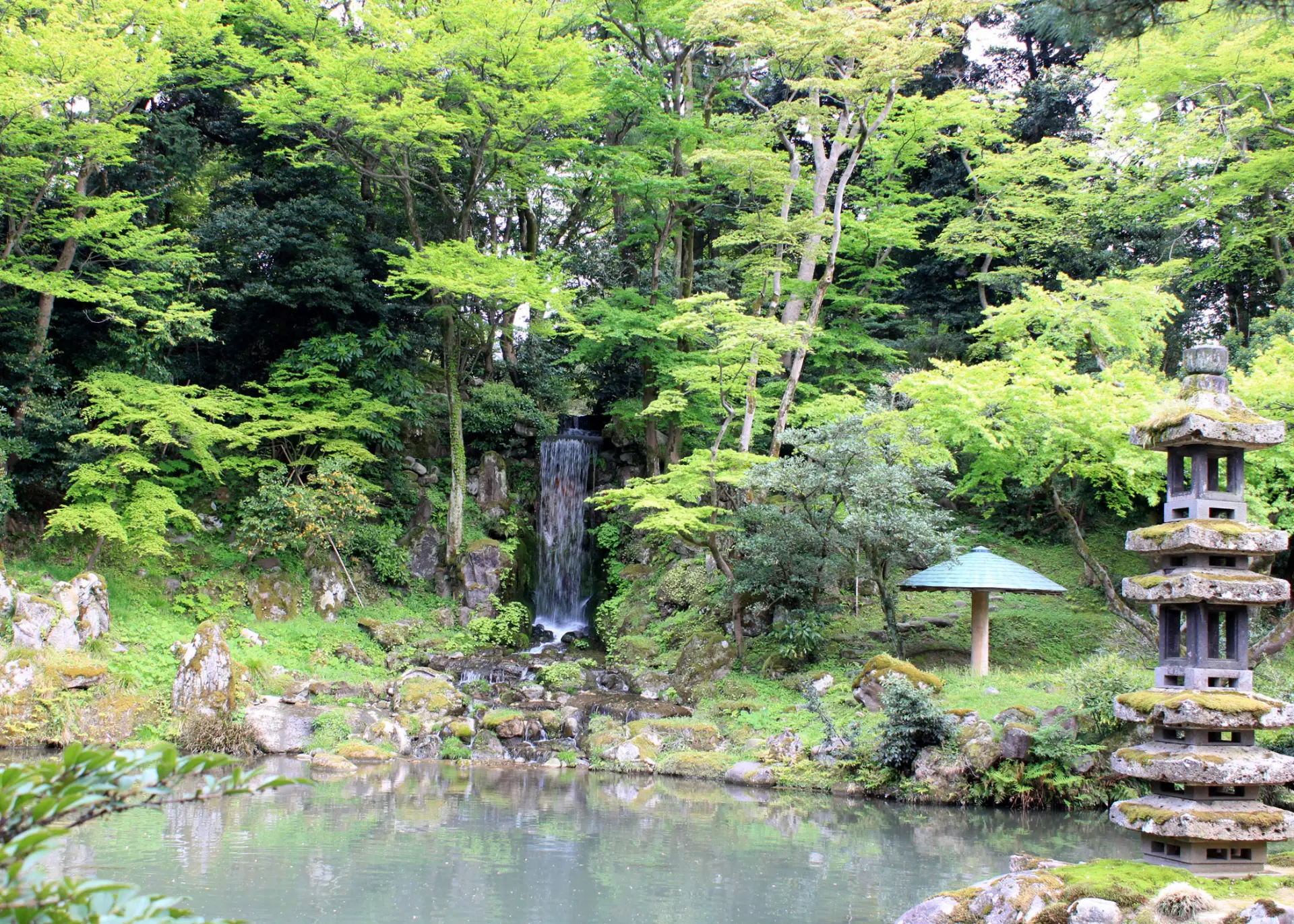
Midoritaki Falls, also known as "Momijidaki," is an artificial waterfall with an Approx. drop of 6.6 meters and is known as the largest water feature in the garden.
It was designed without a typical waterfall basin, allowing the water to strike the rocks directly, creating a clear and pleasant sound that echoes through the area.
It is one of the garden’s most unforgettable highlights, with a striking and powerful presence.
Tour It in 60 Minutes! A Model Course of Scenic Photo Spots in "Kenrokuen"
When you actually walk through it, "Kenrokuen" feels even larger than expected, so deciding on your route in advance makes it much easier to get around.
Here, we introduce an efficient route for photographing the garden’s beauty as you explore.
With a camera in hand, simply being a little mindful of where you stand and what you include in the frame can dramatically change the impression of the same view.
Take your time, pause along the way, and enjoy finding a shot that feels uniquely yours.
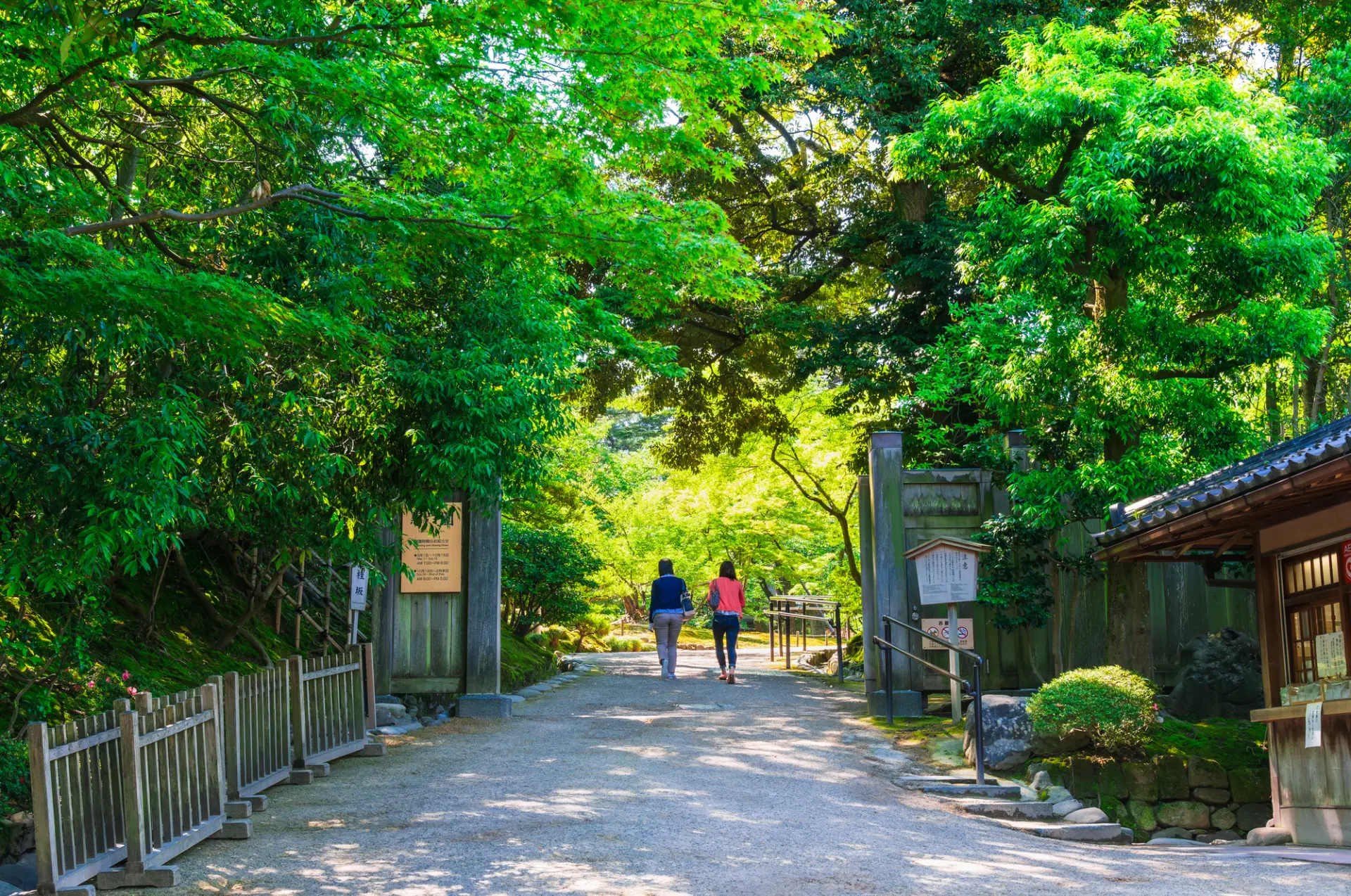
1. Enter from Katsurazaka Entrance (Start)
Katsurazaka Entrance, close to the Kanazawa Castle side, is the starting point of this course.
It is easy to find even for first-time visitors, and once you enter, it naturally leads into the garden’s walking route.
After buying your ticket at the ticket booth, get your camera ready and start walking.
2. Kotoji Toro Lantern and Nijibashi Bridge 【5 min】
As you walk up the slope from Katsurazaka Entrance, the expansive Kasumigaike Pond opens up before you.
By the pond stands the two-legged Kotoji Toro Lantern, with the gentle curve of Nijibashi Bridge stretching out in front of it.
It is one of those signature "Kenrokuen" scenes that makes you want to stop in your tracks.
If you’re taking photos, try placing the lantern slightly to the right with Kasumigaike in the background to create a balanced composition of water, stone, and bridge.
Then take a few steps back toward the entrance side of the bridge and include the curve in the foreground to add even more depth.
Move back and forth a little and find the position that feels best to you.
3. Uchihashitei 【5 min】
Continue along Kasumigaike Pond and you’ll come across Uchihashitei, standing as if it extends out over the water.
If you stand at a diagonal angle to the pond and frame the whole building with the water in the foreground, it creates a dreamlike composition that makes the teahouse look as if it’s floating on the surface.
You can also enjoy tea and meals inside, so if you have extra time, it’s worth looking out over the pond from within.
From the lower viewpoint, you’ll discover a different side of Kasumigaike than you see from outside.
4. Around Kasumigaike Pond (Karasaki Pine, Gankobashi Bridge) 【20 min】
After leaving Uchihashitei, continue around Kasumigaike Pond and make your way toward Karasaki Pine and Gankobashi Bridge.
For Karasaki Pine, don’t get too close, viewing it from a distance where the full spread of its branches fits into view helps you appreciate the beauty of the form shaped over many years.
For Gankobashi Bridge, stand at an angle where the stones appear diagonally and it becomes easier to sense both the rhythm of the 11 stones and the depth of the pond at the same time.
5. Viewpoint 【10 min】
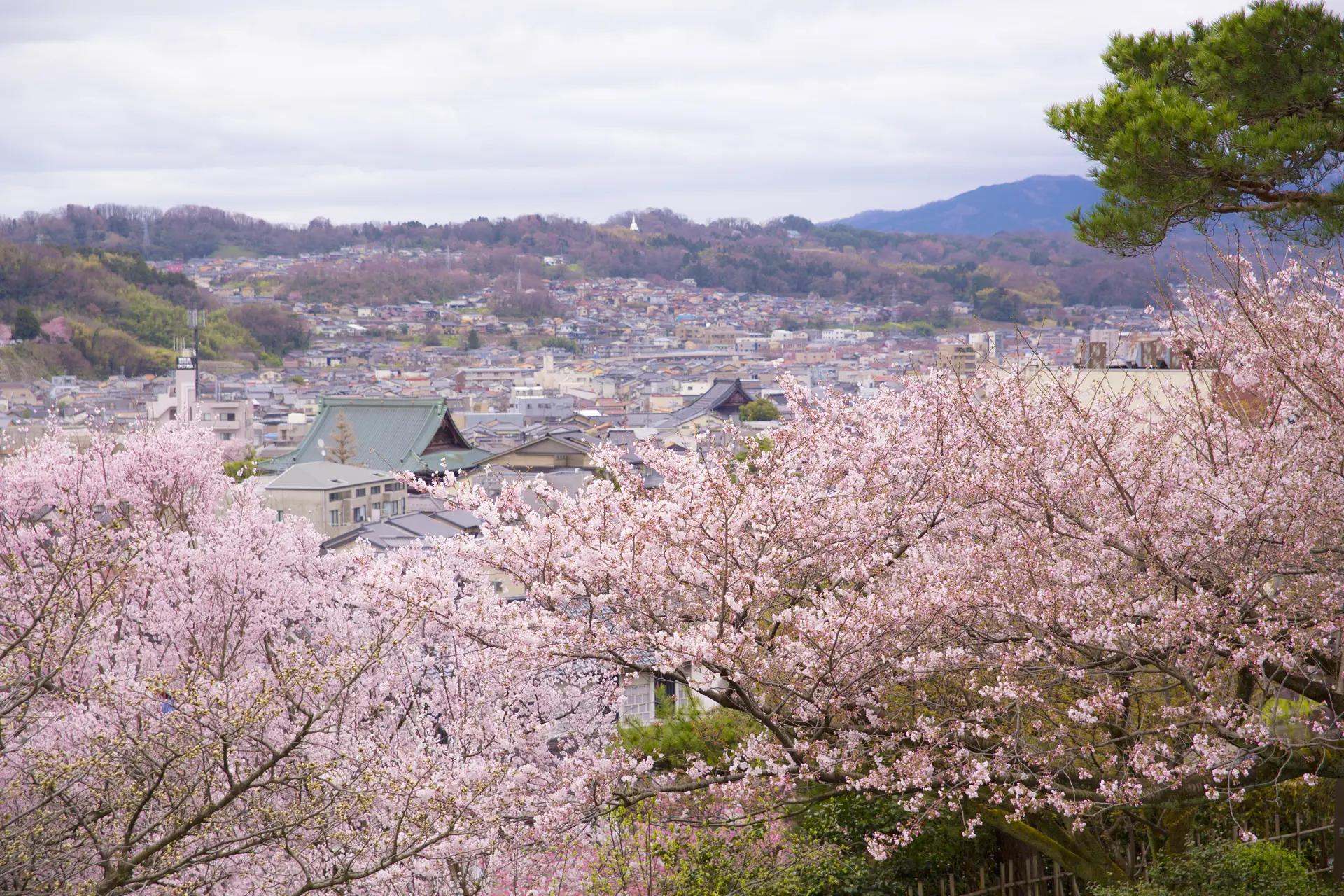
From around Gankobashi Bridge, follow the inner garden path and head up the gentle slope, and suddenly the view opens up.
The view over Kanazawa city from the Viewpoint, Approx. 53 meters above sea level, offers an open sense of space quite different from the garden’s delicate scenery.
Keeping the horizon in mind, layering trees in the foreground, the cityscape in the middle distance, and the sky in the background will create a natural sense of depth.
6. Meiji Kinen no Hyo Monument 【5 min】
After coming down from the Viewpoint, continue south to the Meiji Kinen no Hyo Monument, surrounded by pines.
The Approx. 5.5-meter statue of Yamato Takeru towering above a massive stone base has a distinctive presence.
Stand directly in front of the statue and frame the pines evenly on both sides for a stable composition.
If you step back a little and include the stone base as well, the photo gains more depth and conveys a stronger sense of history.
In addition to its fame as a scenic feature, it has also been designated a Special Place of Scenic Beauty of Japan.
7. Fountain 【5 min】
Near the end of the course, head south to one of the oldest areas of "Kenrokuen," once known as the Hasuike Garden.
The fountain here changes height day by day depending on the water level of Kasumigaike Pond, so how high it will spray is part of the day’s surprise.
If you step back a little and frame the whole fountain with the water in the foreground, the difference in height between the water surface and the spray comes across clearly.
Placing the water jet in the center creates a calm composition, while shifting it toward the edge gives the image more energy.
8. Hisagoike Pond & Midoritaki Falls 【10 min】
Head west to the area around Hisagoike Pond, where the mood shifts completely from the open scenery of Kasumigaike to a quiet setting wrapped in deep trees.
The Approx. 6.6-meter Midoritaki Falls pours down powerfully here, creating a view that makes a fitting finale to your stroll.
If you shoot from the front of the pond with the water surface in the foreground and the falls directly ahead, the image gains a strong sense of depth.
Try aiming for the reflection on the water as well for an even more striking shot.
9. Exit from Mayumizaka Entrance (Goal)
Mayumizaka Entrance, just beyond Hisagoike Pond, is the goal of this course.
It is a convenient exit for heading toward places like the "21st Century Museum of Contemporary Art, Kanazawa" and the Korinbo area, Hokuriku’s largest downtown district, so you can keep enjoying shopping and contemporary art after leaving the garden.
If you board at the nearest bus stop, "Hirosaka, 21st Century Museum," you can reach Kanazawa Station in Approx. 20 minutes.
Map of the Scenic Photo Spot Model Course in "Kenrokuen"
By Season, How to Enjoy "Kenrokuen"
From here, let’s look at how to enjoy "Kenrokuen" by season.
"Kenrokuen" shows a wide variety of expressions throughout the four seasons, and that is part of its charm, you can enjoy its atmosphere in different ways no matter when you visit.
Use this as a guide and visit in the season that interests you most.
Spring | Scenic Walks Surrounded by Flowers (late March–April)
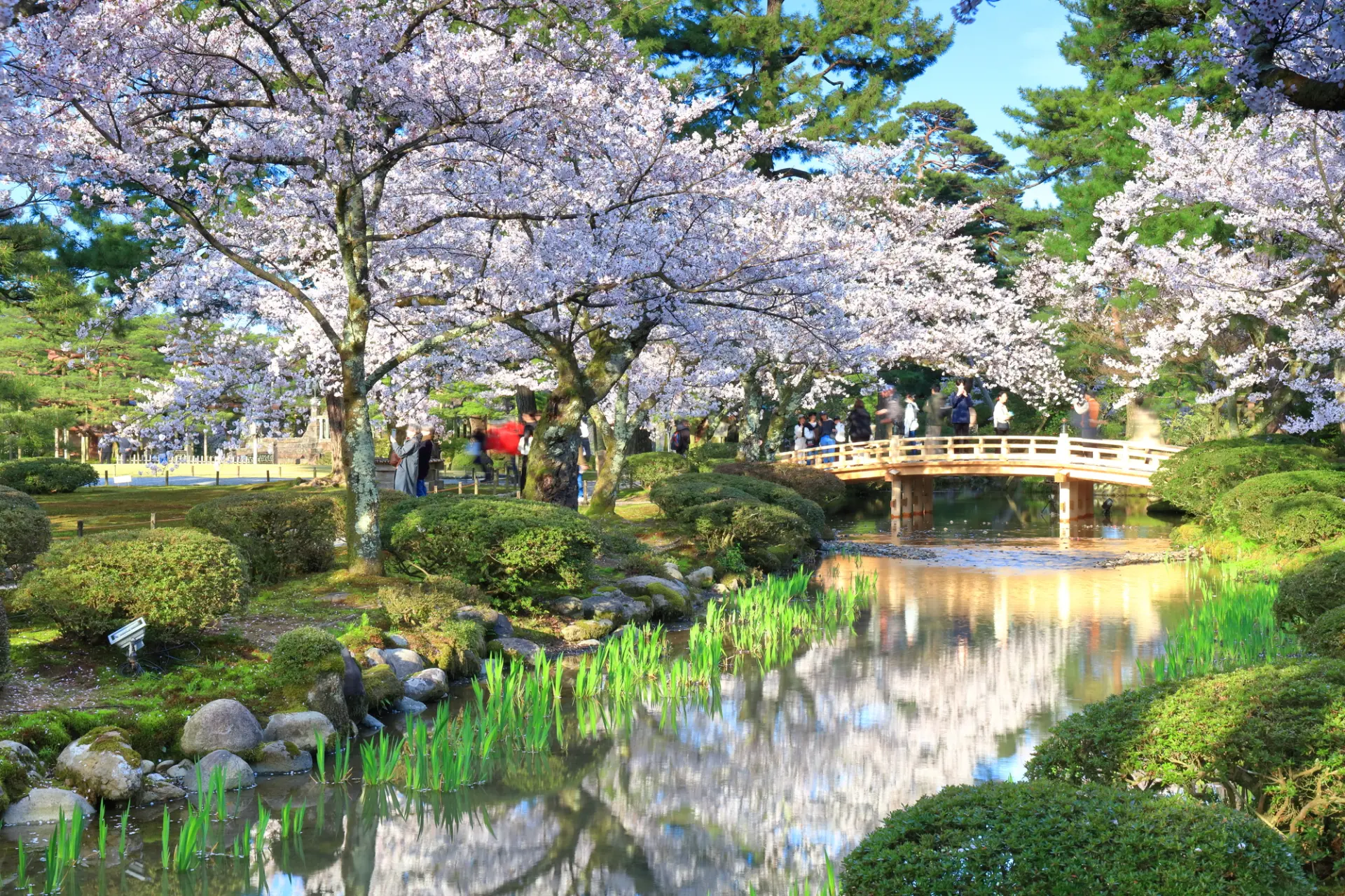
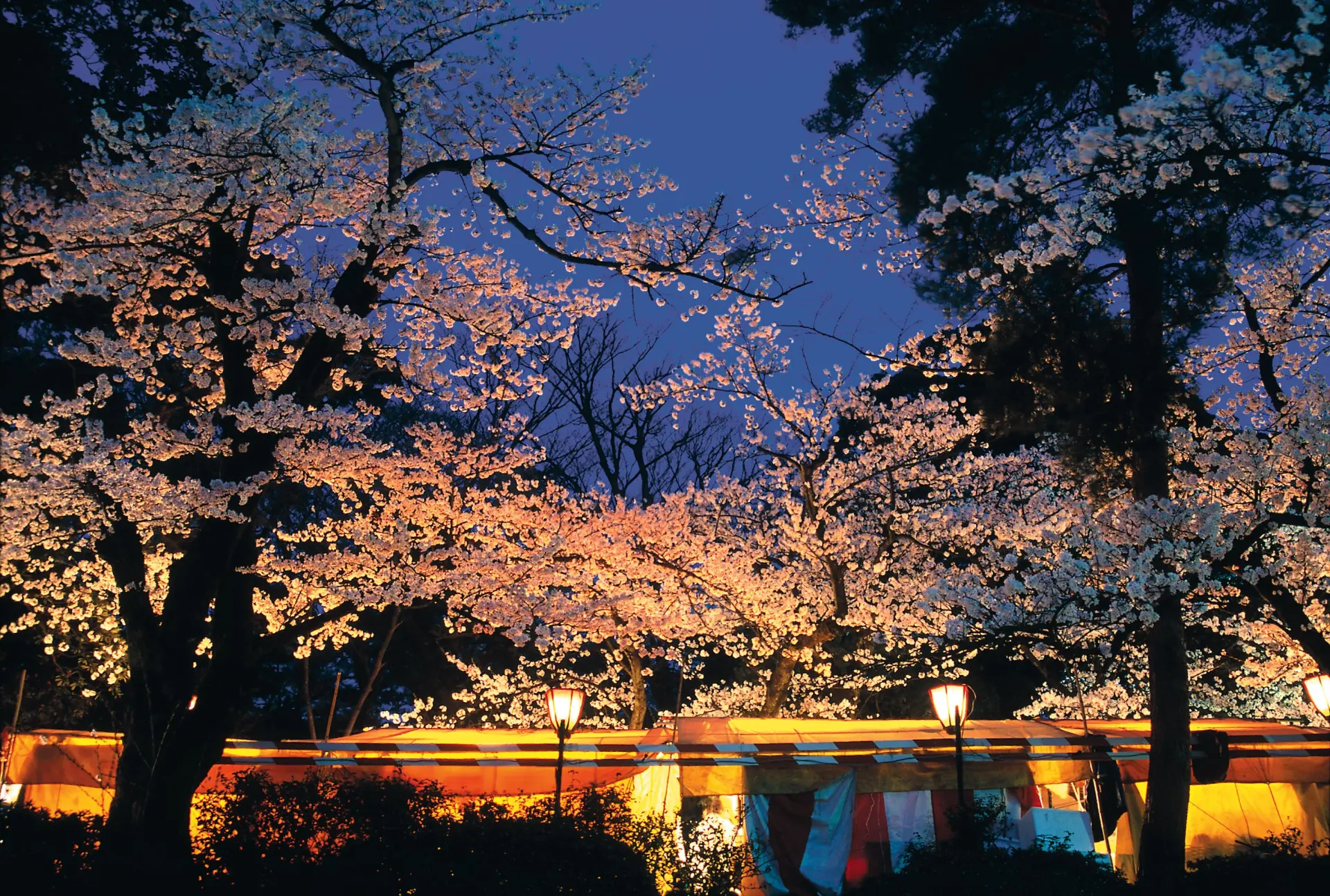
Cherry blossoms take center stage in spring at "Kenrokuen."
Viewing spots such as Kenrokuen Kikuzakura and Sakuragaoka are scattered throughout the grounds, turning the vast garden pink.
The plum grove, where you can feel the refined arrival of spring, is another seasonal pleasure.
The Cherry Blossom Season Light-Up, usually held around early April, is also not to be missed.
During this period, admission is free, and you can enjoy enchanting night cherry blossoms.
Summer | A Soothing Escape with Fresh Greenery and Cool Water (May–August)
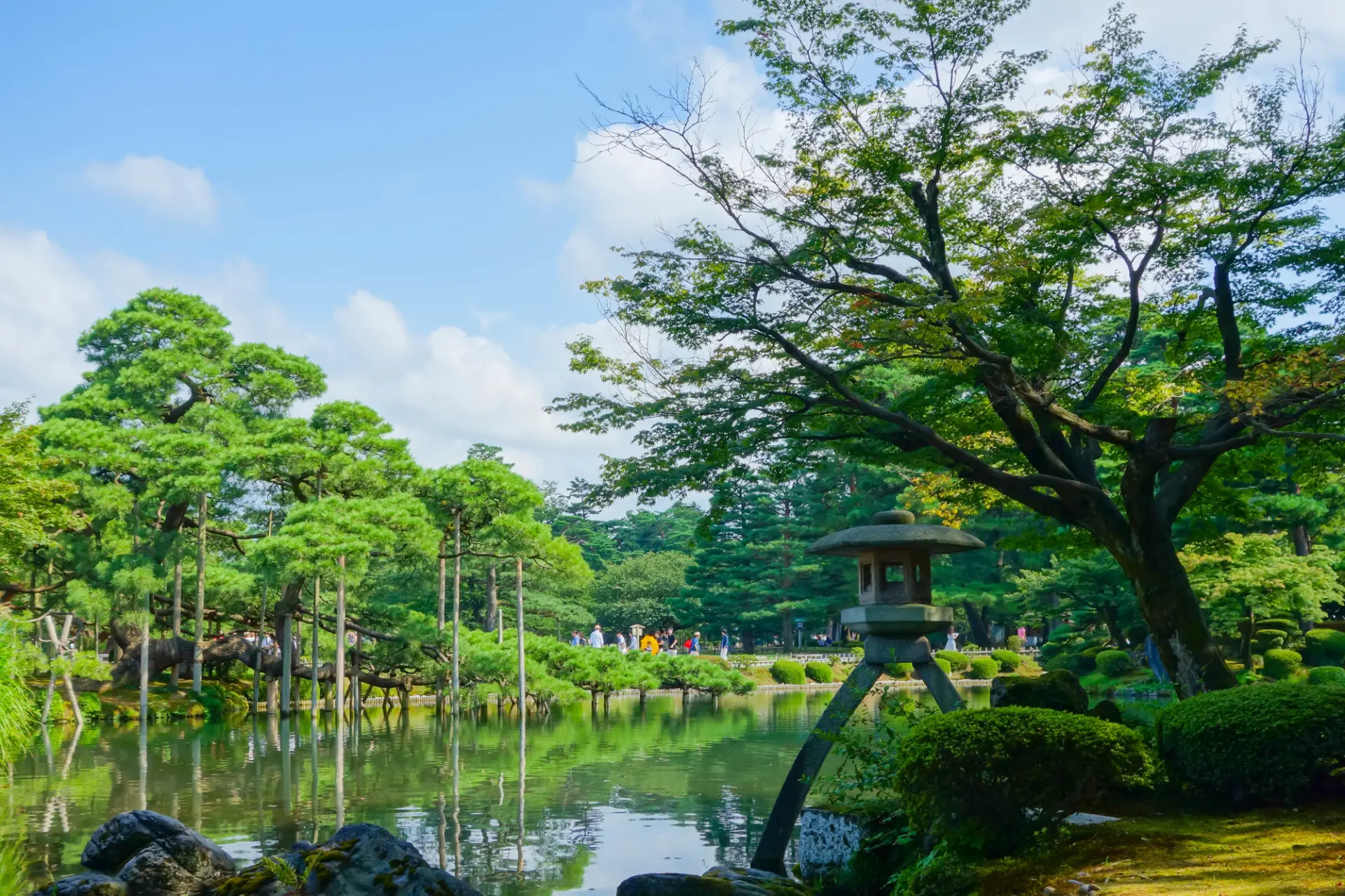
Summer is when the fresh greenery of "Kenrokuen" is at its most beautiful.
The deep greens around Kasumigaike Pond and the strong branching form of Karasaki Pine shine in the sunlight, while cool breezes feel especially refreshing in the shade.
The murmuring waters of Midoritaki Falls and the winding streams also offer a pleasant sense of coolness that helps you forget the heat.
From mid to late May, kakitsubata irises bloom in full glory, and the way their bluish-purple flowers sway on the water looks almost like a painting.
Autumn | Photograph and Savor a Garden of Color (October–November)
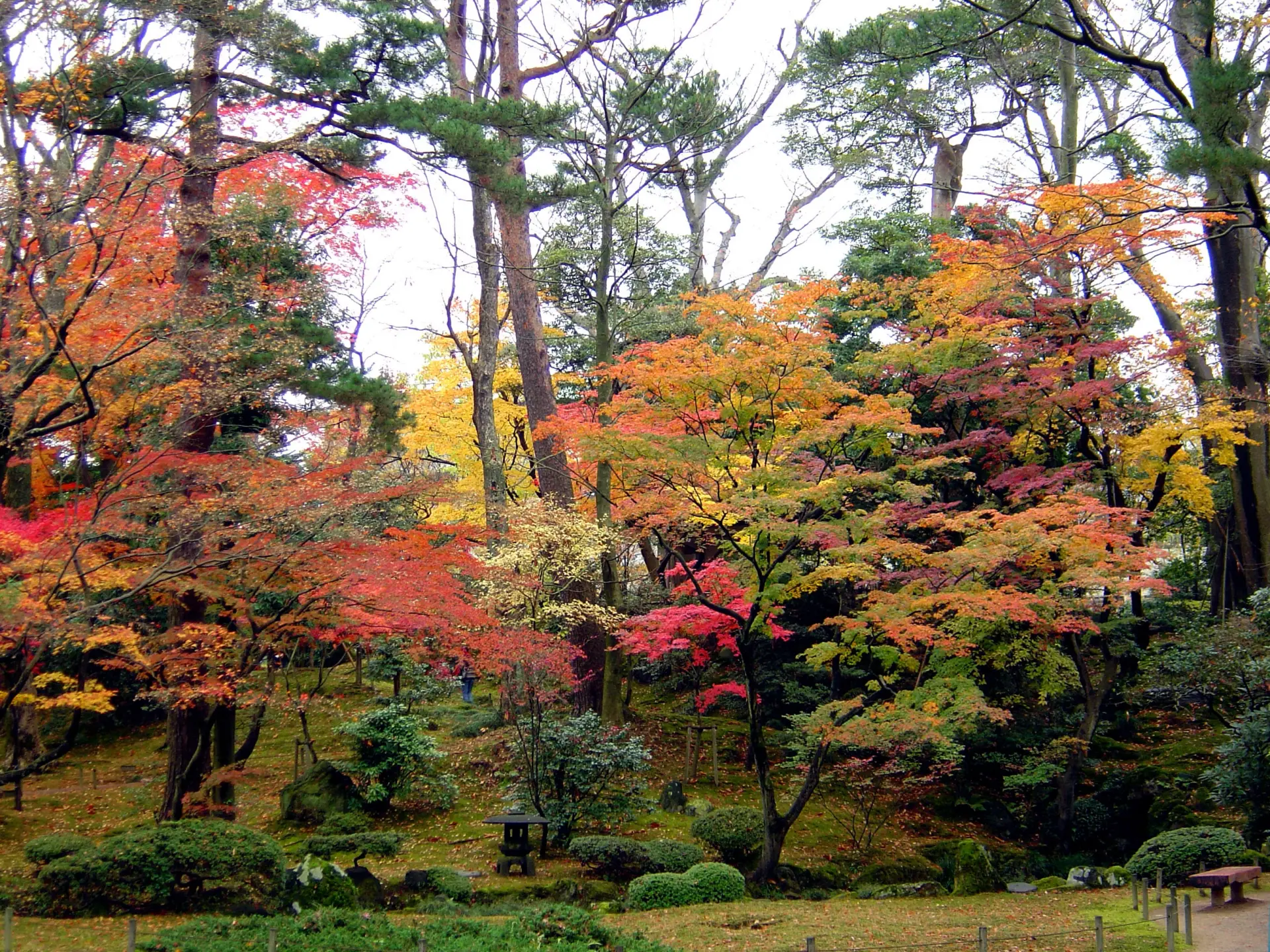
Autumn in "Kenrokuen" is captivating for its spectacular fall foliage in shades of red and yellow.
One recommended spot is Yamazakiyama, also known as "Momijiyama," where the contrast between green moss and autumn leaves is especially beautiful.
The area around Shiguretei is also vivid, and together with the calm presence of the teahouse, it lets you enjoy the mood of autumn.
Since the slanting morning light brings out the colors of the leaves well in photos, visiting in the morning is recommended.
Winter | An Enchanting Garden Experience Framed by Yukitsuri (December–February)
Winter in "Kenrokuen" creates a special landscape where a dignified beauty dwells in the silence.
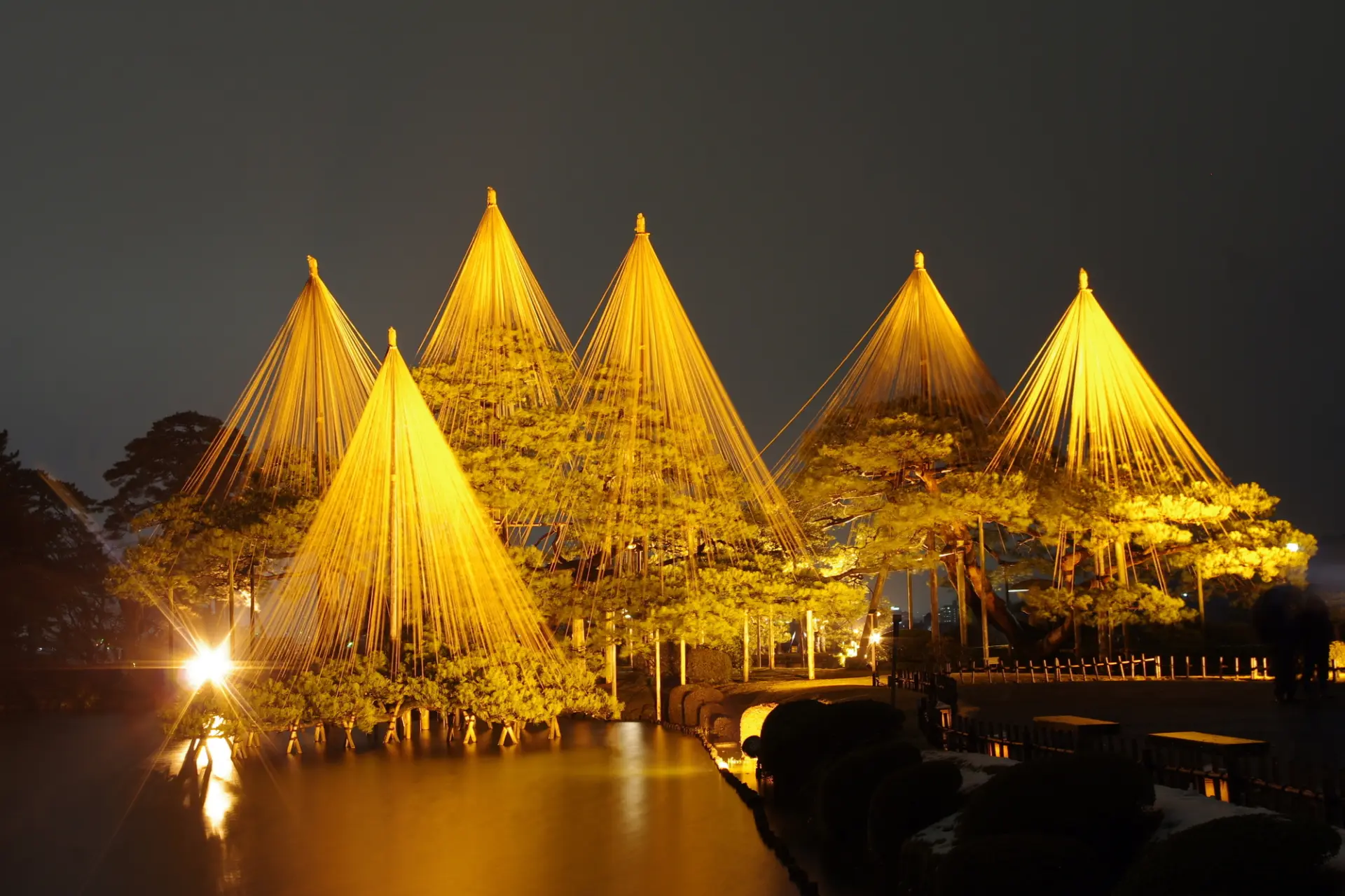
Above all, the seasonal tradition of yukitsuri is one of the garden scenes unique to "Kenrokuen" and especially moving to see.
The many ropes stretched to protect the pine branches gather snow and form striking conical silhouettes.
The biggest highlight is the yukitsuri on Karasaki Pine, where Approx. 800 ropes rise neatly into the sky, a scene worthy of being called winter art.
3 Tips for Making the Most of "Kenrokuen"
Here are three tips for making the most of sightseeing at "Kenrokuen."
If you keep these in mind before exploring the garden, you can enjoy it more efficiently and appreciate its appeal even more.
They are also helpful when planning your Kanazawa trip, so be sure to use them as a guide.
1. Aim for Early Morning or Light-Up Hours
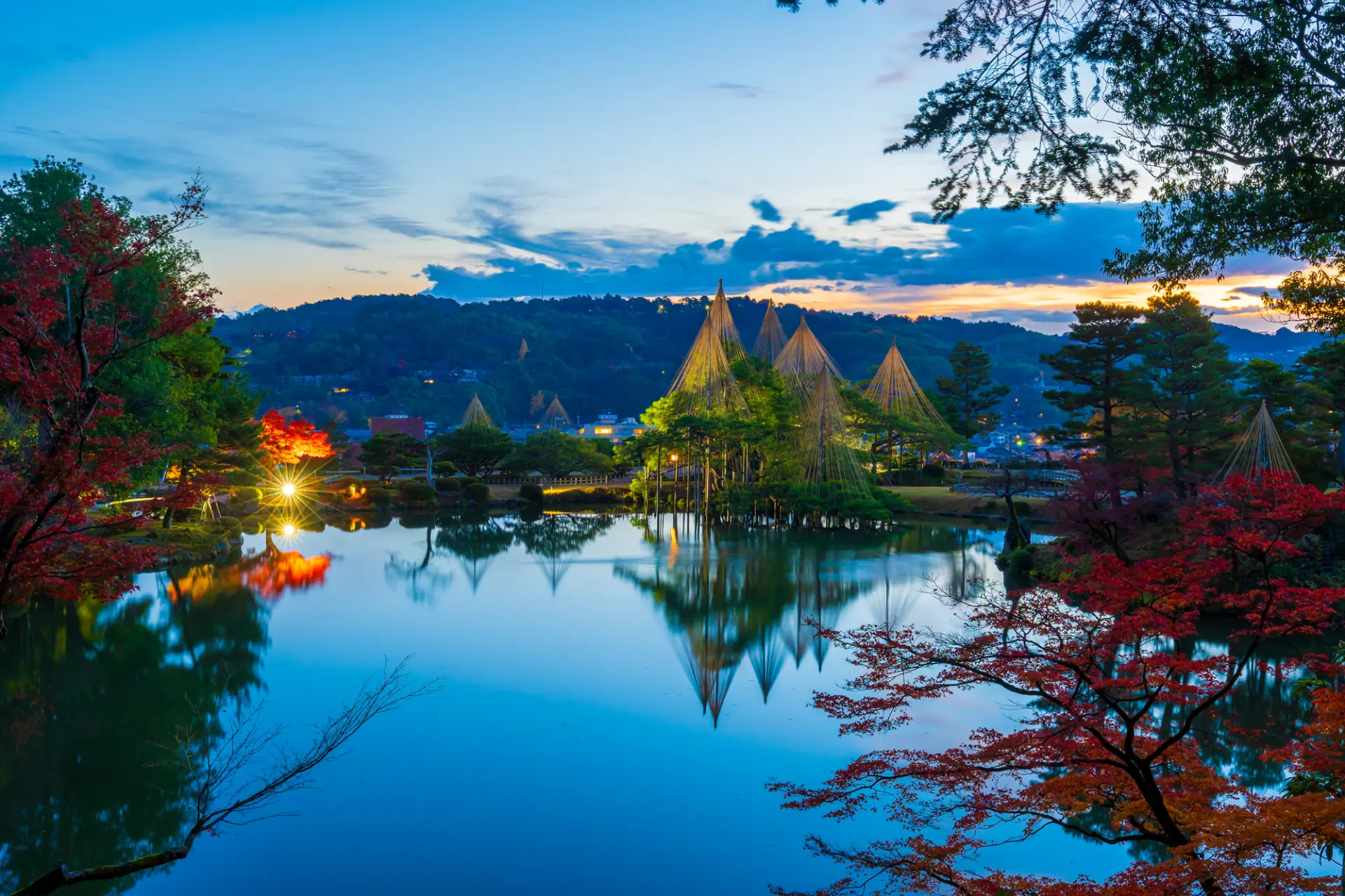
If you want to enjoy "Kenrokuen," it is recommended to enter either in the early morning, when you can have the natural beauty almost to yourself in the quiet, or during the light-up hours, when the garden takes on an enchanting atmosphere.
Both times often include free admission, allowing you to fully savor the garden’s charm in a special setting.
2. Walk with the "Six Sublime Attributes" in Mind
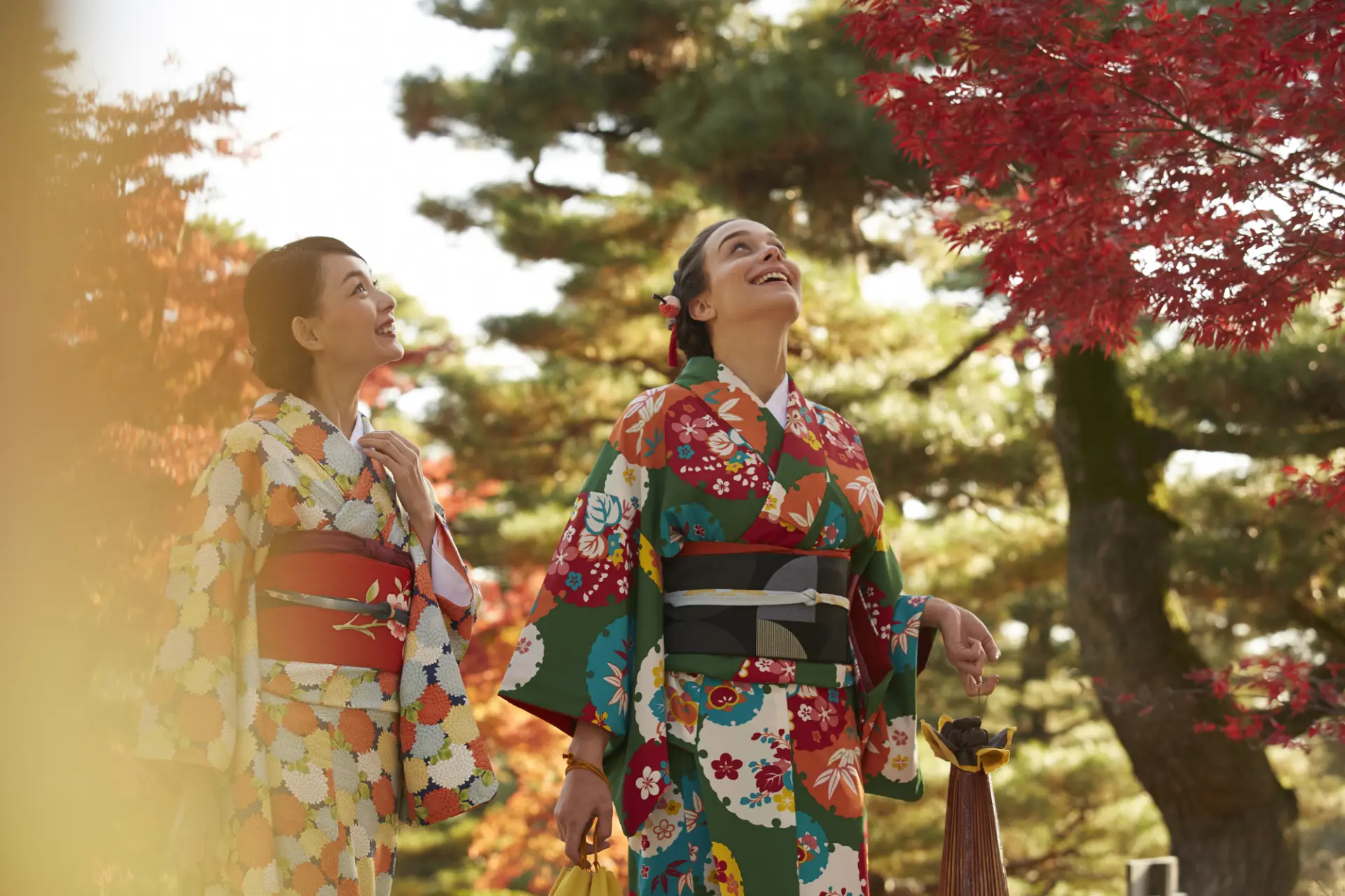
As you walk through the garden, try keeping in mind the "six sublime attributes" that inspired its name: spaciousness, seclusion, artifice, antiquity, water features, and panoramic views.
Broad openness and quiet depth, refined man-made technique and weathered elegance, waterscapes at your feet and views stretching into the distance.
These qualities are originally contrasting, yet all are condensed into a single garden.
For example, it is easy to understand by noticing the contrast between the open view of Kasumigaike Pond and the stillness around Hisagoike Pond.
Walking with this perspective will let you feel the deeper charm of "Kenrokuen" even more strongly.
3. Choose Entrances Strategically for an Efficient Visit
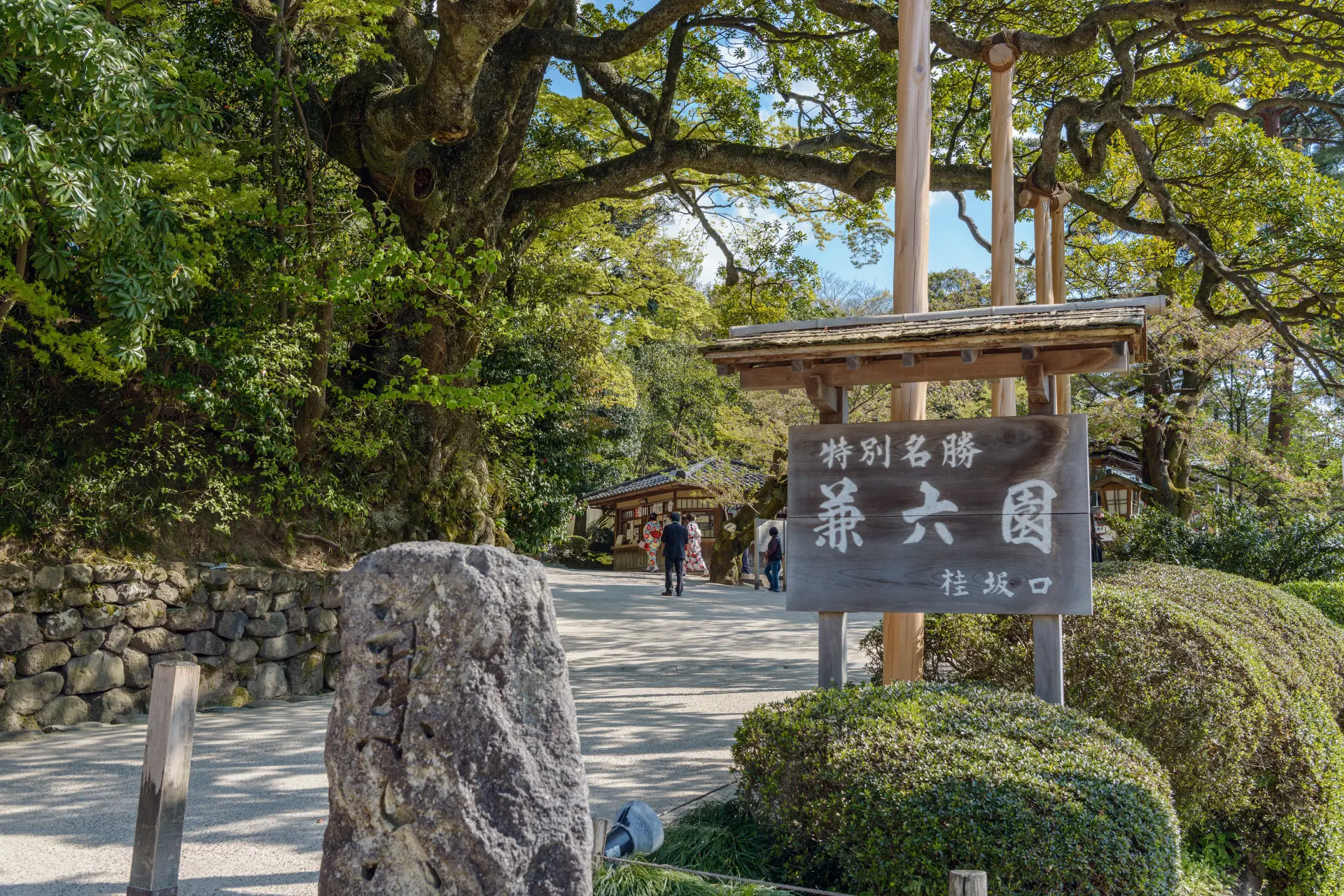
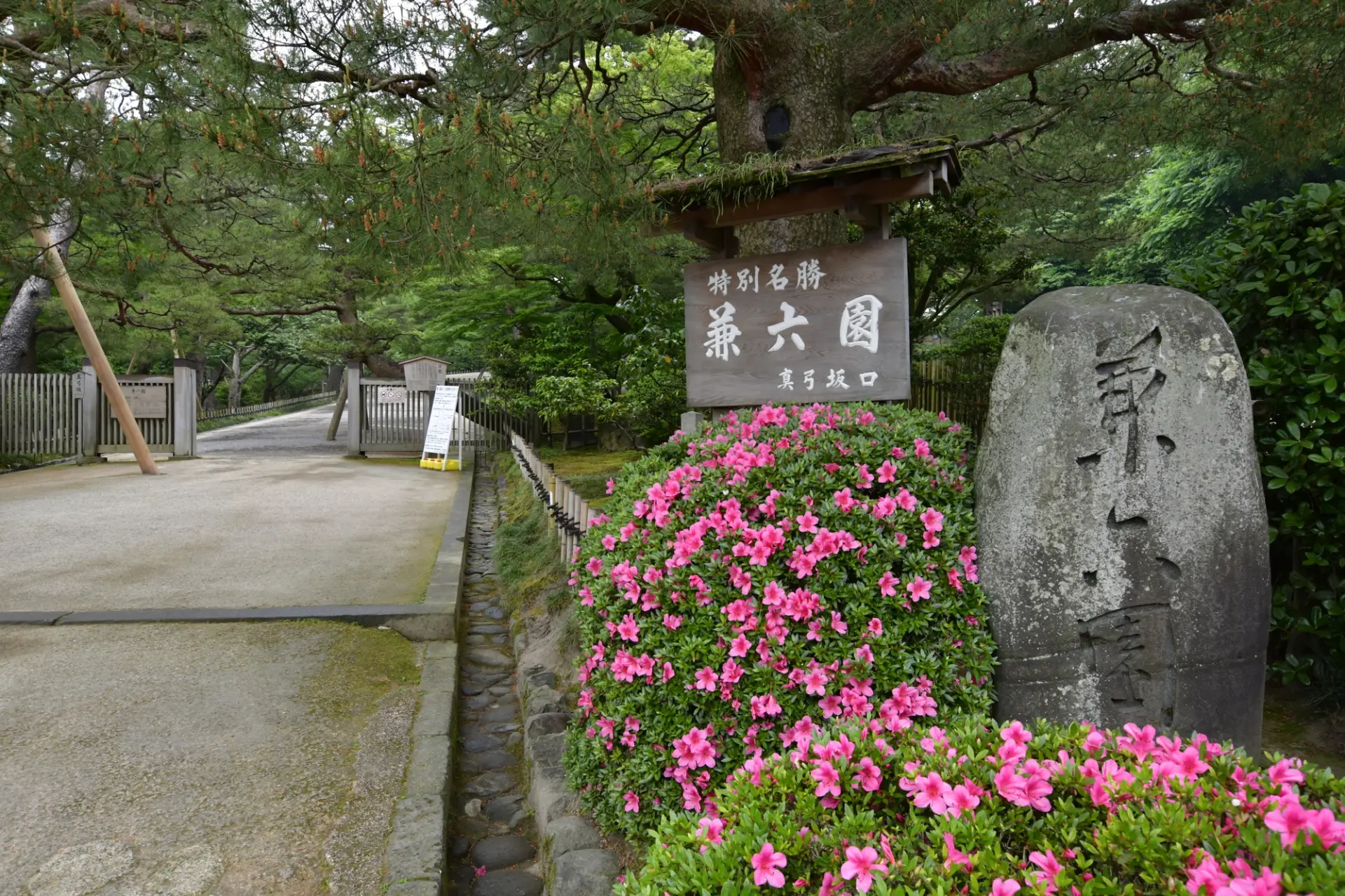
"Kenrokuen" has multiple entrances.
Since the impression of the garden and your route to nearby spots changes depending on where you enter, choosing the right one is key to enjoying Kanazawa efficiently.
Two entrances worth remembering are Katsurazaka Entrance, which is convenient if you are visiting together with Kanazawa Castle, and Mayumizaka Entrance, located diagonally across from the 21st Century Museum of Contemporary Art, Kanazawa.
After leaving from Mayumizaka Entrance, it is also recommended to stop by "Kanazawa Castle Park," which is within walking distance.
The Kanazawa Castle and Kenrokuen Light-Up Event "Shiki Monogatari"
At "Kenrokuen," a light-up event called "Kanazawa Castle, Kenrokuen Shiki Monogatari" is held seven times a year (from 6pm or 7pm to around 9pm).
From spring cherry blossoms to winter yukitsuri, the colors and arrangements change with each season, filling the entire garden with enchanting light.
The biggest attraction is being able to experience a mysterious world completely different from the daytime, free of charge.
The scheduled dates for 2026 are as follows.
As the dates get closer, announcements will be posted on the official website and elsewhere, so be sure to check.
- Cherry Blossom Season
- April 2–April 8
- Spring Session
- May 2–May 5
- Early Summer Session
- June 6
- Firefly Viewing Event
- June 26 and 27, July 3 and 4
- Autumn Session
- September 19–25, November 7, 14, 15, 21, 22, 28, and 29
- Winter Session
- February 6–February 10, February 13, 20, and 27
7 Popular Sightseeing Spots around "Kenrokuen"
Around "Kenrokuen," you’ll find sightseeing spots where you can experience history, culture, and art.
Many are within walking distance, making them easy to enjoy together with a stroll through the garden.
Here, we introduce seven classic spots worth knowing for a first trip to Kanazawa.
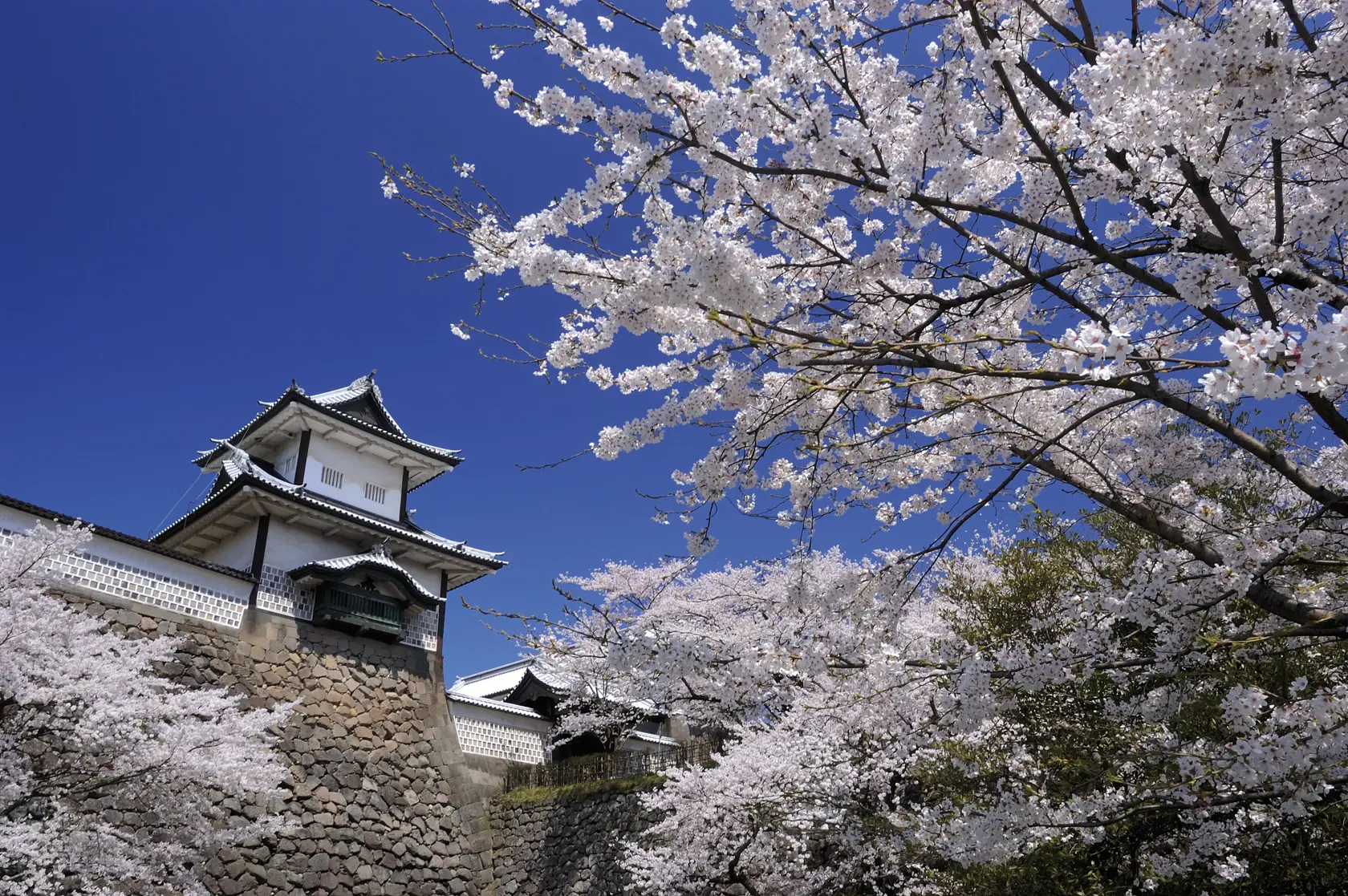
1. Kanazawa Castle Park
The former residence of the Maeda family, lords of the Kaga Domain, whose full-scale castle construction began after Maeda Toshiie entered Kanazawa Castle in Tensho 11 (1583).
Although many buildings were lost to natural disasters and fires, the surrounding area has now been restored and maintained as "Kanazawa Castle Park."
In addition to Ishikawa Gate and Sanjukken Nagaya Warehouse, which remain from the Edo period, places such as Kahokumon Gate, Imori Moat, and Gyokuseninmaru Garden have been restored one after another, gradually bringing back the appearance of the past.

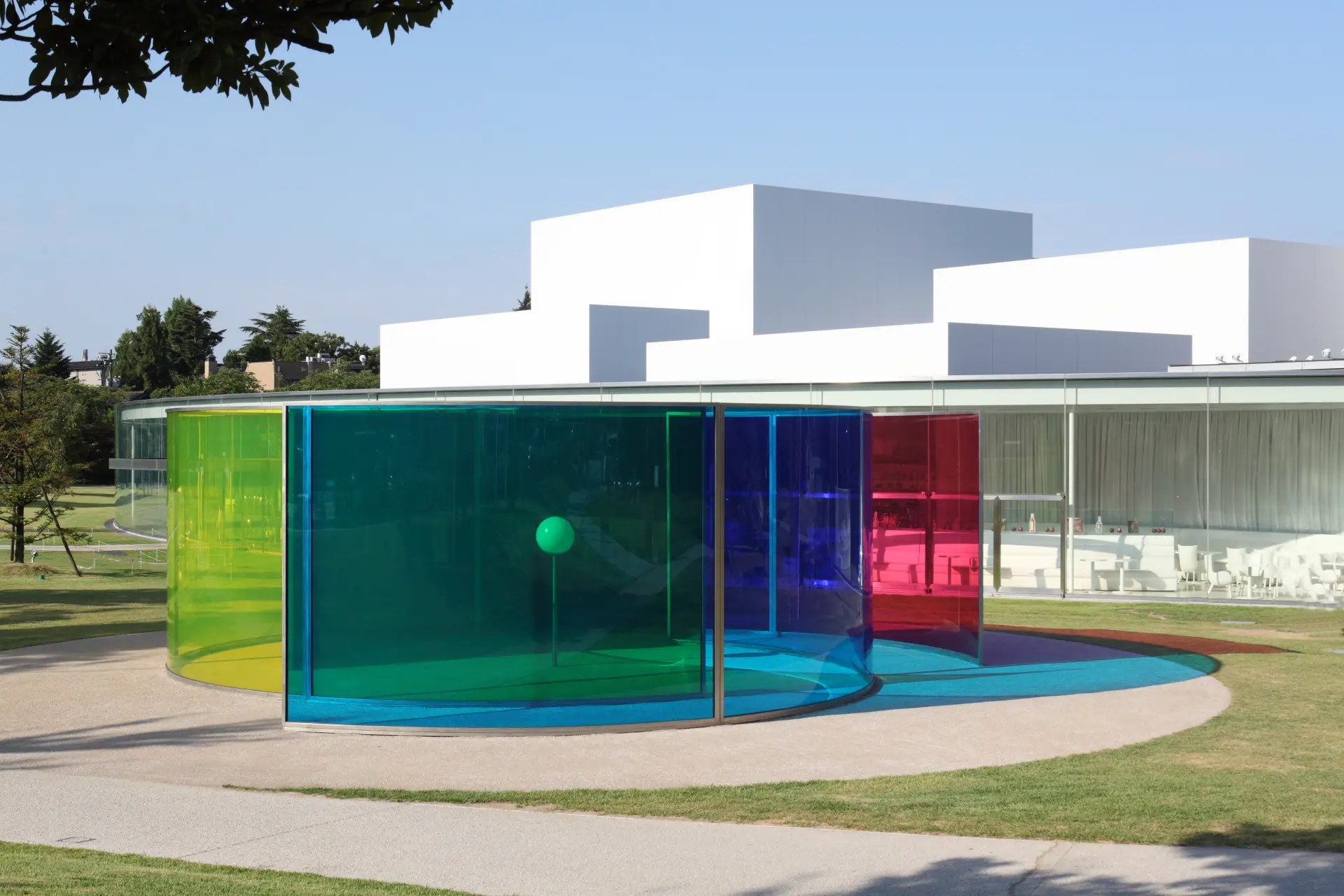
2. 21st Century Museum of Contemporary Art, Kanazawa
Since opening in 2004 with the concept of an "open museum," it has become one of Japan’s most popular museums, drawing attention for exhibition methods that challenge conventional ideas of what a museum can be, and serving as a central symbol of "Kanazawa = art."
You can enjoy a variety of contemporary artworks that "propose new values," including works that capture passing light through cut-out ceilings, and an installation in the garden that looks like a pool but is actually water spread over transparent glass, allowing visitors to look up at it from the space below.
3. Higashi Chaya District
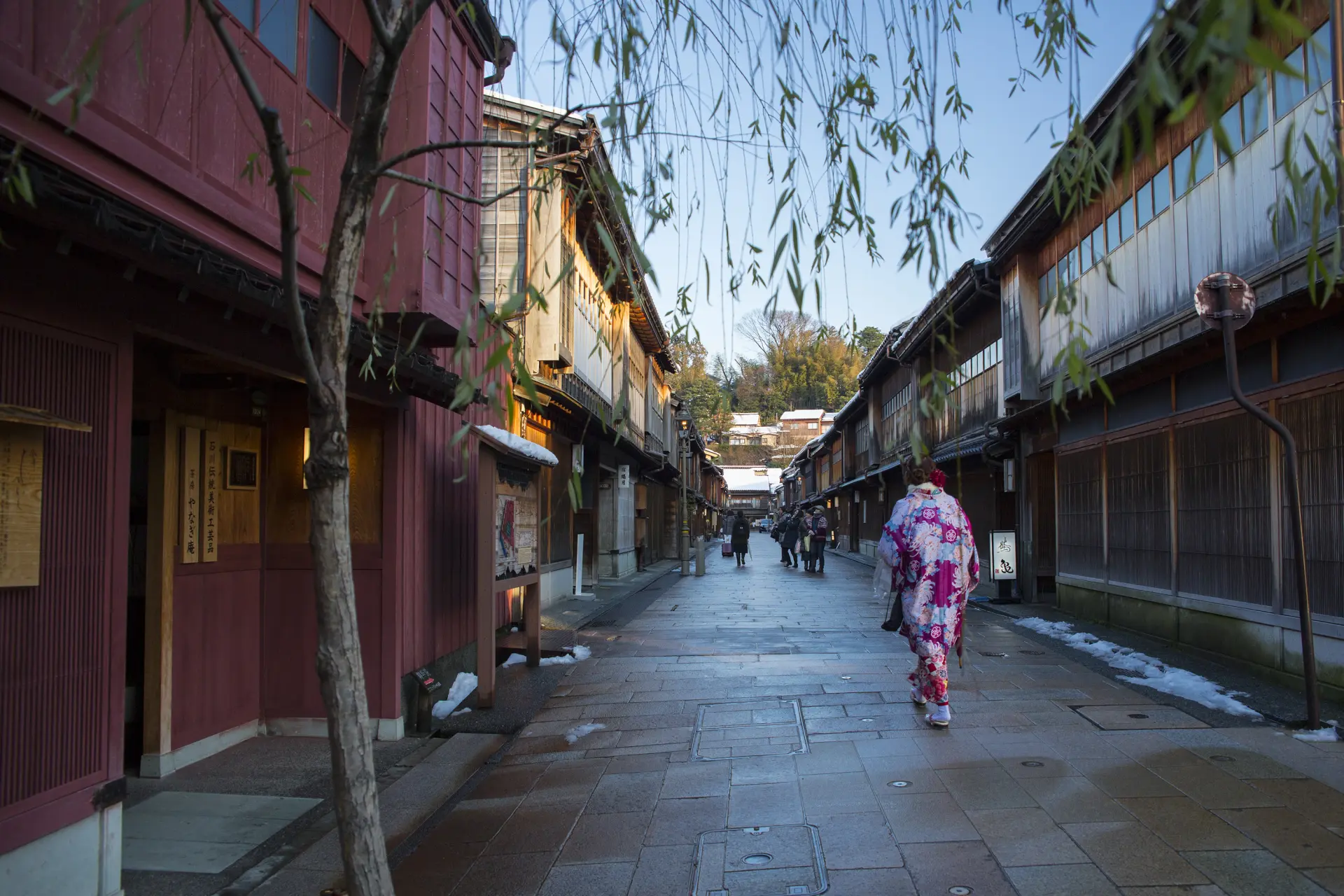
One of Kanazawa’s best-known sightseeing areas, this historic district is lined with beautiful wooden lattice facades and stone-paved streets, and has been selected as an Important Preservation District for Groups of Traditional Buildings.
Its origins go back to Bunsei 3 (1820), when Maeda Narihiro, the 12th lord of the Kaga Domain, gathered teahouses that had been scattered around the castle town to create a dedicated teahouse district.
You can enjoy shopping and dining amid its charming streetscape.
At dusk, the lamps under the eaves are lit, creating yet another atmospheric scene.
Every angle feels picture-perfect, making it a pleasure simply to wander.

4. Omicho Market
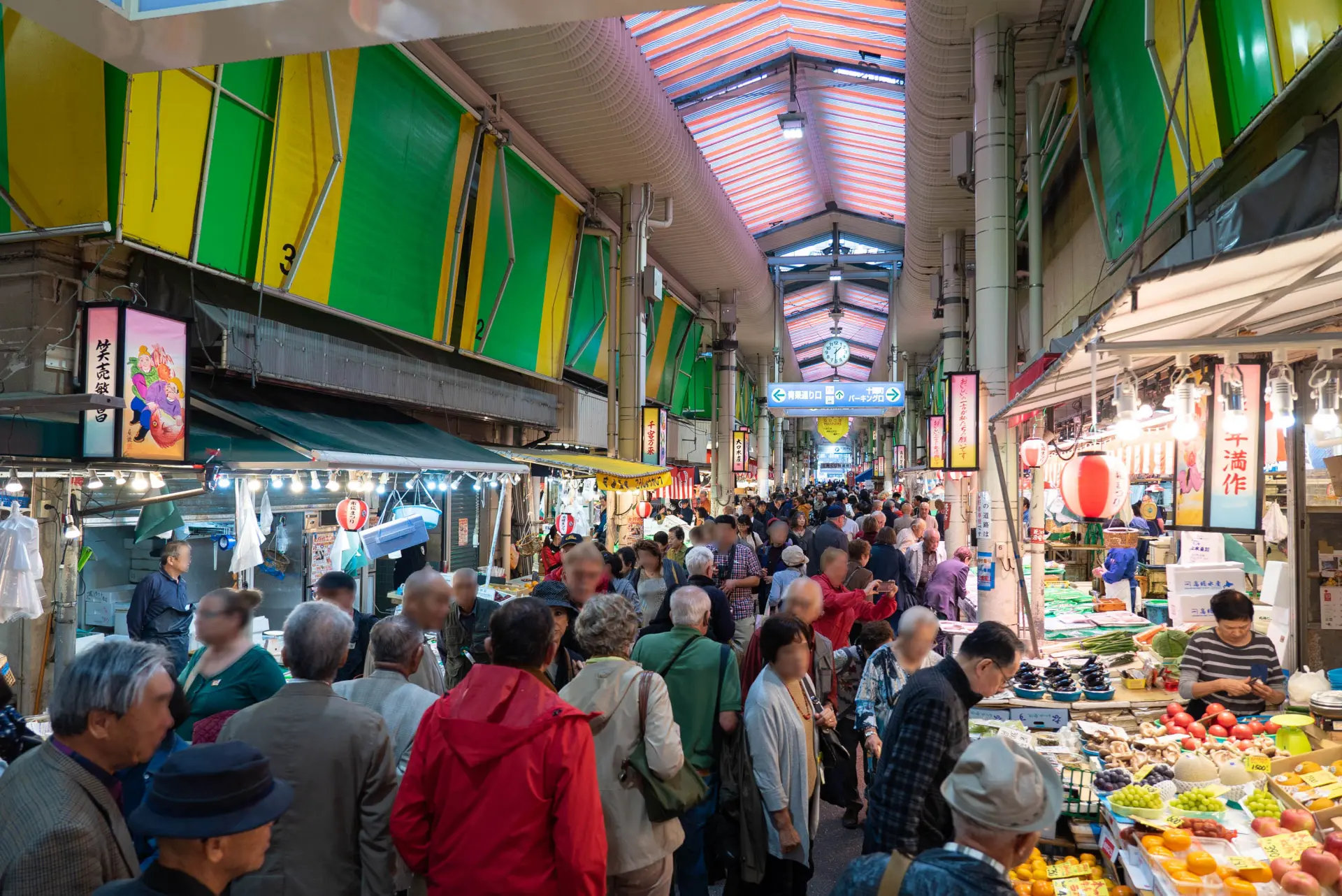
For Approx. 300 years, this market has been loved as "Omicho" and is known as Kanazawa citizens’ kitchen.
Around 170 shops line its narrow alleys, selling fresh seasonal seafood, vegetables, prepared foods, souvenirs, and more, creating a lively atmosphere.
Some shops cook food right in front of you, and others have eat-in seating, so you can enjoy seasonal gourmet food on the spot.
Popular items often sell out before noon, so it’s best to visit in the morning.
5. Ishikawa Prefectural Museum of Art
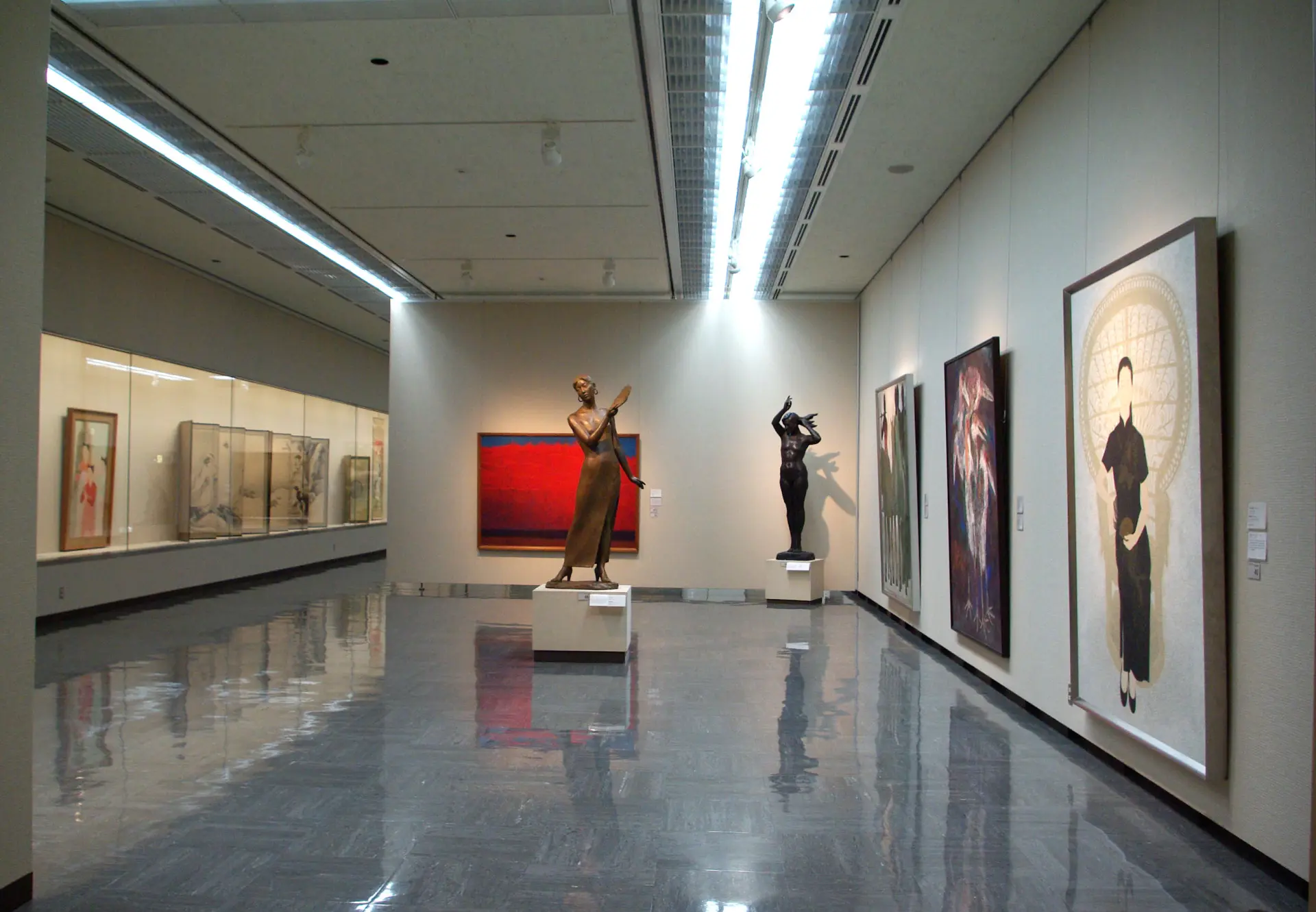
This art museum displays many treasures passed down through the Maeda family of the Kaga Domain as well as works by artists connected to Ishikawa Prefecture.
It originally opened in 1958 at the site of the Ishikawa Prefectural Traditional Arts and Crafts Museum, then moved to its current location in 1983 to accommodate larger-scale and more diverse exhibitions.
Inside, there are Exhibition Rooms 1 through 9, showcasing more than 3,900 works in the collection, including classical art, modern and contemporary paintings, and sculptures.
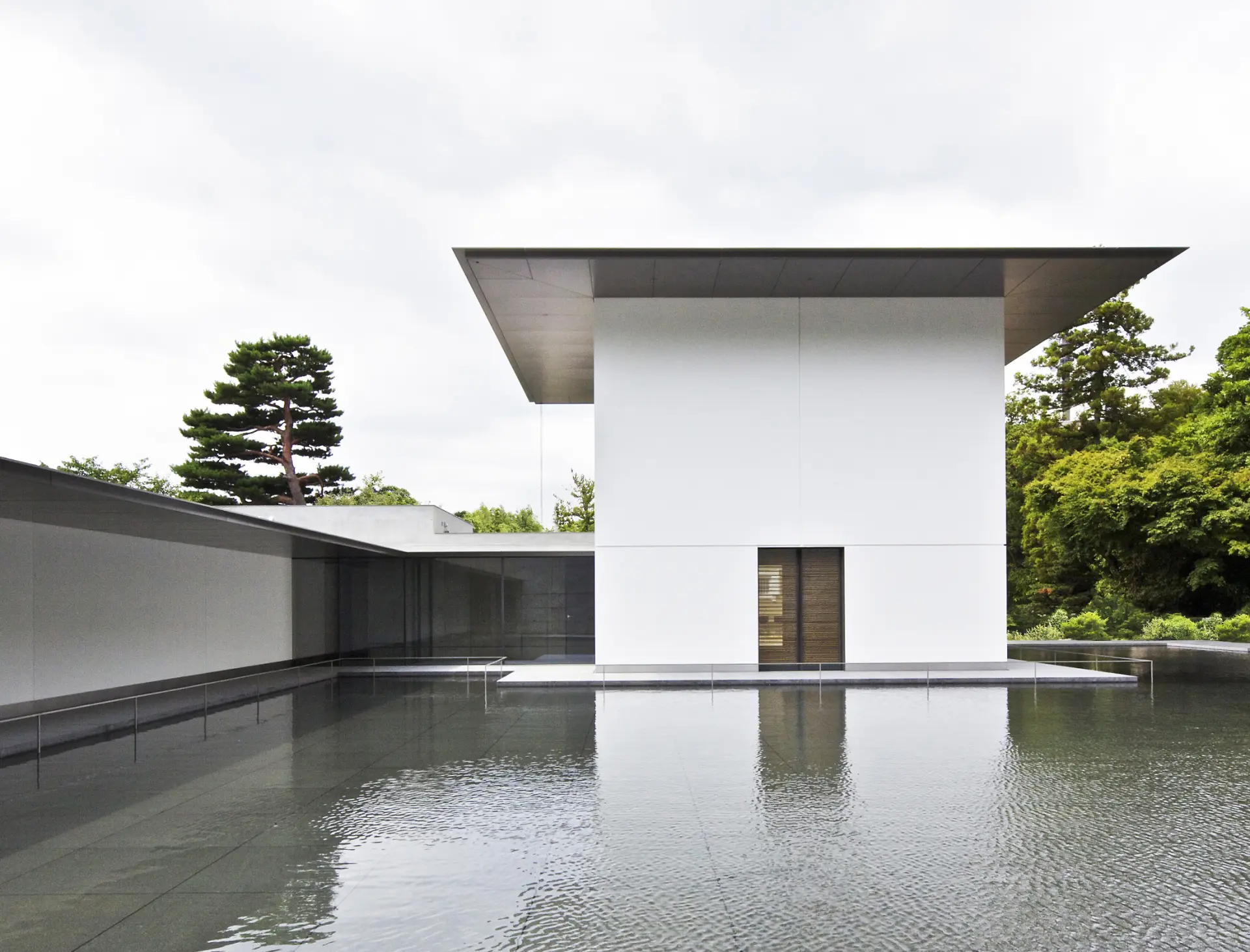
6. D. T. Suzuki Museum
This museum introduces the thoughts, ideas, and life of Buddhist philosopher D. T. Suzuki, who was born in Kanazawa and is known worldwide as "D. T. Suzuki."
It opened on October 18, 2011, Suzuki’s birthday, with the hope that while learning about him, visitors would also find it a place for their own contemplation.
A deep silence fills the museum, allowing you to lose track of time as you spend time there.
7. Myoryuji Temple
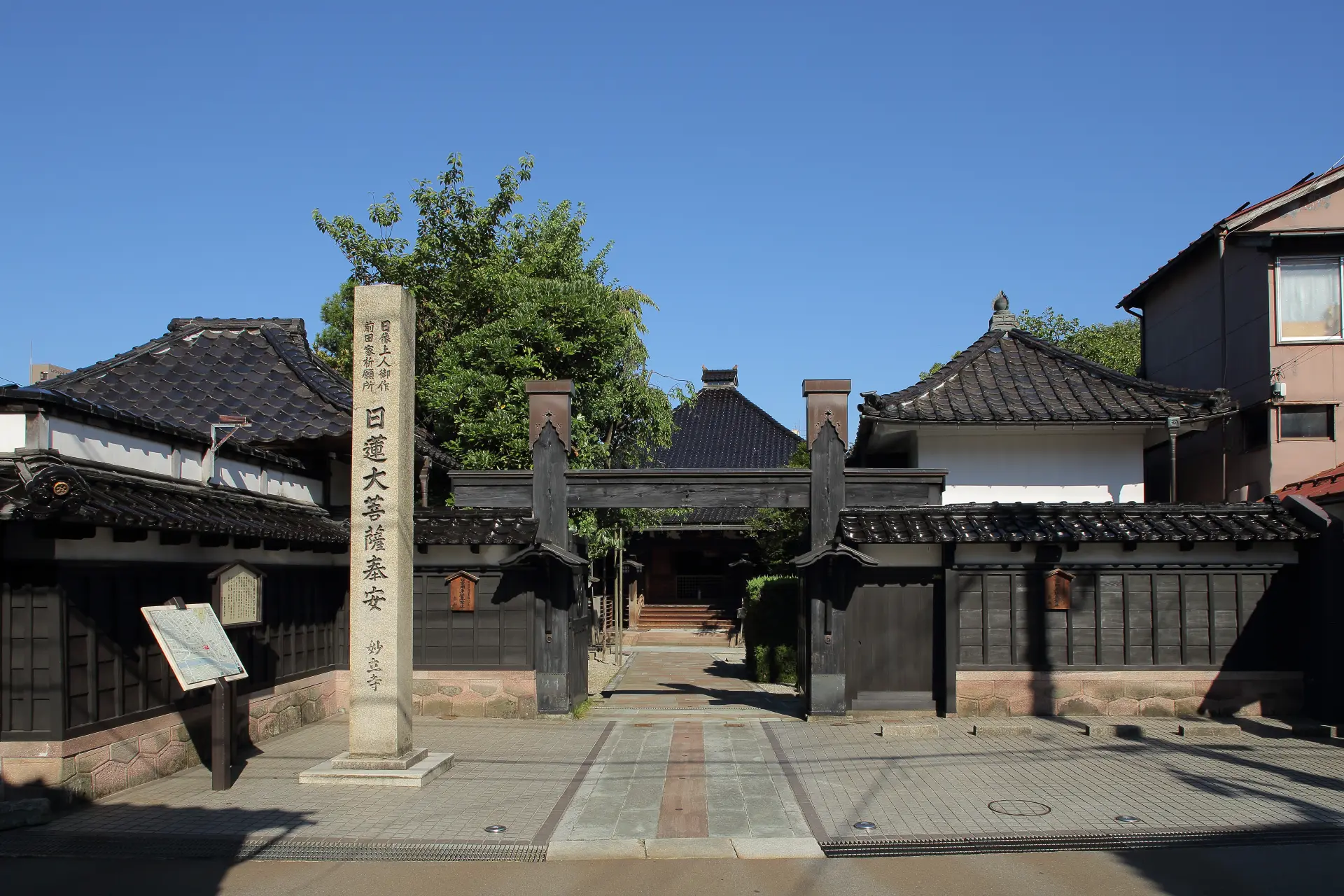
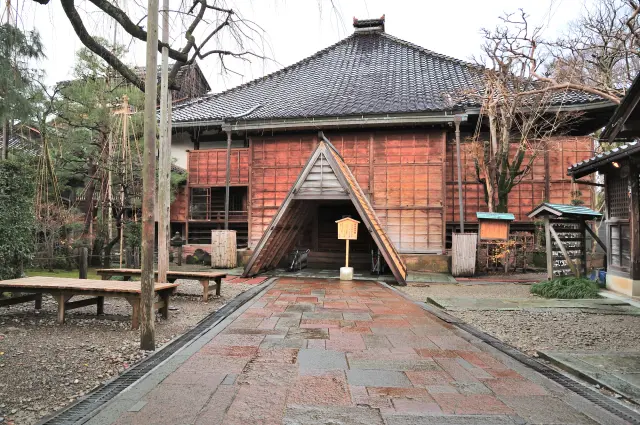
A Nichiren Buddhist temple founded in Kan’ei 20 (1643) by the third lord of the Kaga Domain, Maeda Toshitsune, who relocated a prayer hall near Kanazawa Castle.
It enshrines a statue of the founder made by Nichizo Shonin, a direct successor in the Nichiren lineage.
Because it also served as an emergency outpost in case of crisis, the entire building has a complex structure filled with devices designed to deceive enemies, including hidden staircases, hidden rooms, and trapdoors.
3 Popular Gourmet Spots around "Kenrokuen"
The area around "Kenrokuen" is full of places where you can enjoy Kanazawa’s distinctive food culture.
From market food featuring fresh seafood to long-established local flavors and popular sweets, there is a wide range of options.
Here are three easy-to-visit spots where you can fully enjoy the taste of Kanazawa between sightseeing stops.
1. Hakuichi Higashiyama Store
A shop operated by Hakuichi, built on the former site of Higashiyu, a public bathhouse once beloved in the Higashi Chaya District.
Inside, the open atrium from its bathhouse days has been preserved, creating a spacious atmosphere where you can shop at a relaxed pace.
You’ll find a wide range of souvenirs, including gold leaf crafts, original cosmetics, and food items.
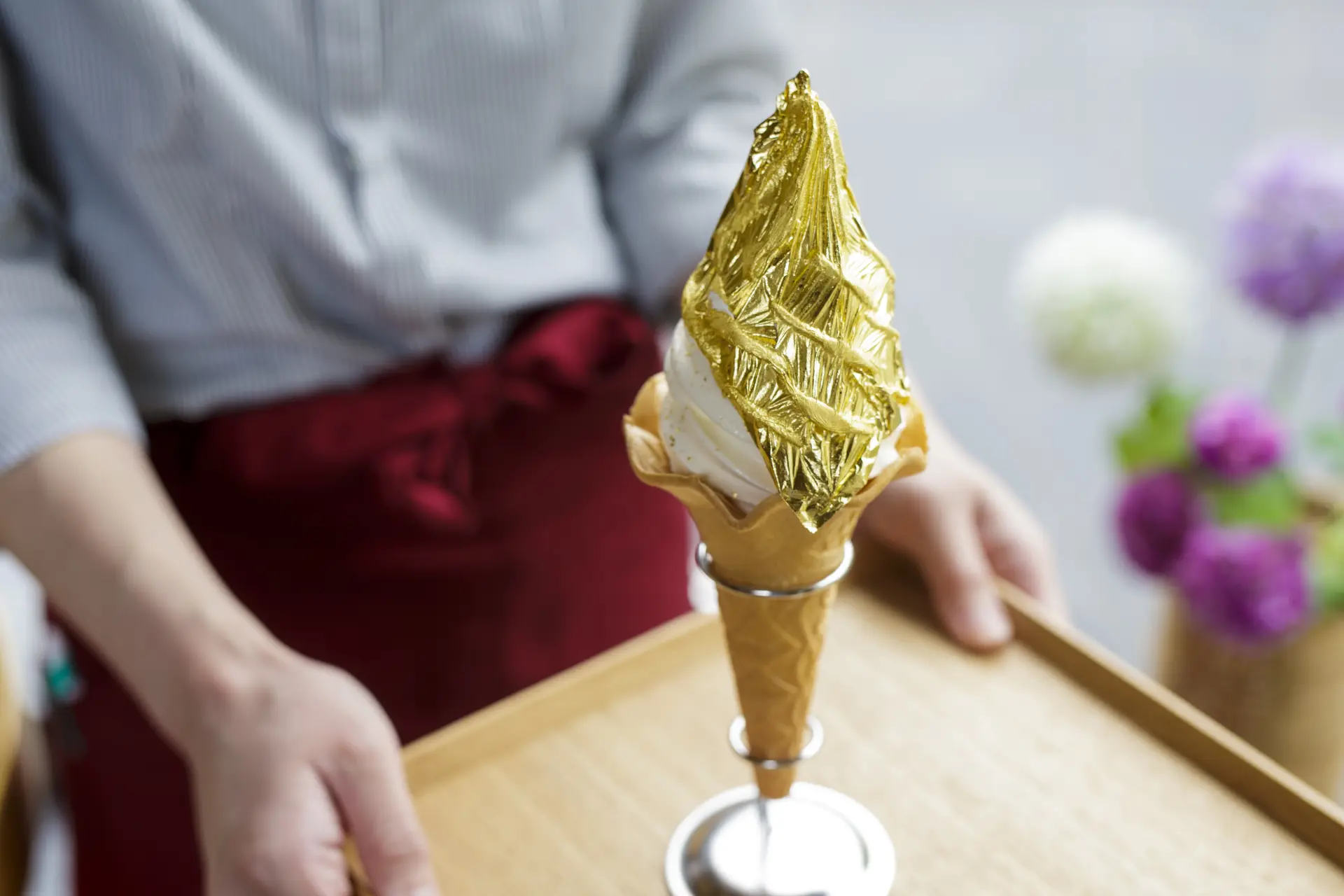
The attached café also serves soft-serve ice cream lavishly topped with a full sheet of gold leaf.
2. Kuroyuri
Founded in 1953, this restaurant specializes in Kanazawa oden along with Kaga regional cuisine and local sake.
It is located inside Anto at Kanazawa Hyakubangai, directly connected to JR Kanazawa Station.
Its signature dish is Kanazawa oden, made with broth combining two kinds of bonito flakes, dried sardines, and kelp.
Representative ingredients include umigai whelk from Kanazawa and the Sanin region, and kurumafu, grilled wheat gluten wrapped around a stick.

3. Sashimiya (Kanazawa)
An izakaya run by a former fishmonger inside Omicho Market, where so many shops line the streets that it is often called "Kanazawa citizens’ kitchen."
Every morning, the restaurant sources fresh seafood from Yamaka Suisan within the market, and all of it is exceptionally fresh, with a rich selection of seasonal seafood as well.
The recommended menu item is the kaisendon, generously piled with seafood and toppings so large they spill over the bowl.


Access to "Kenrokuen"
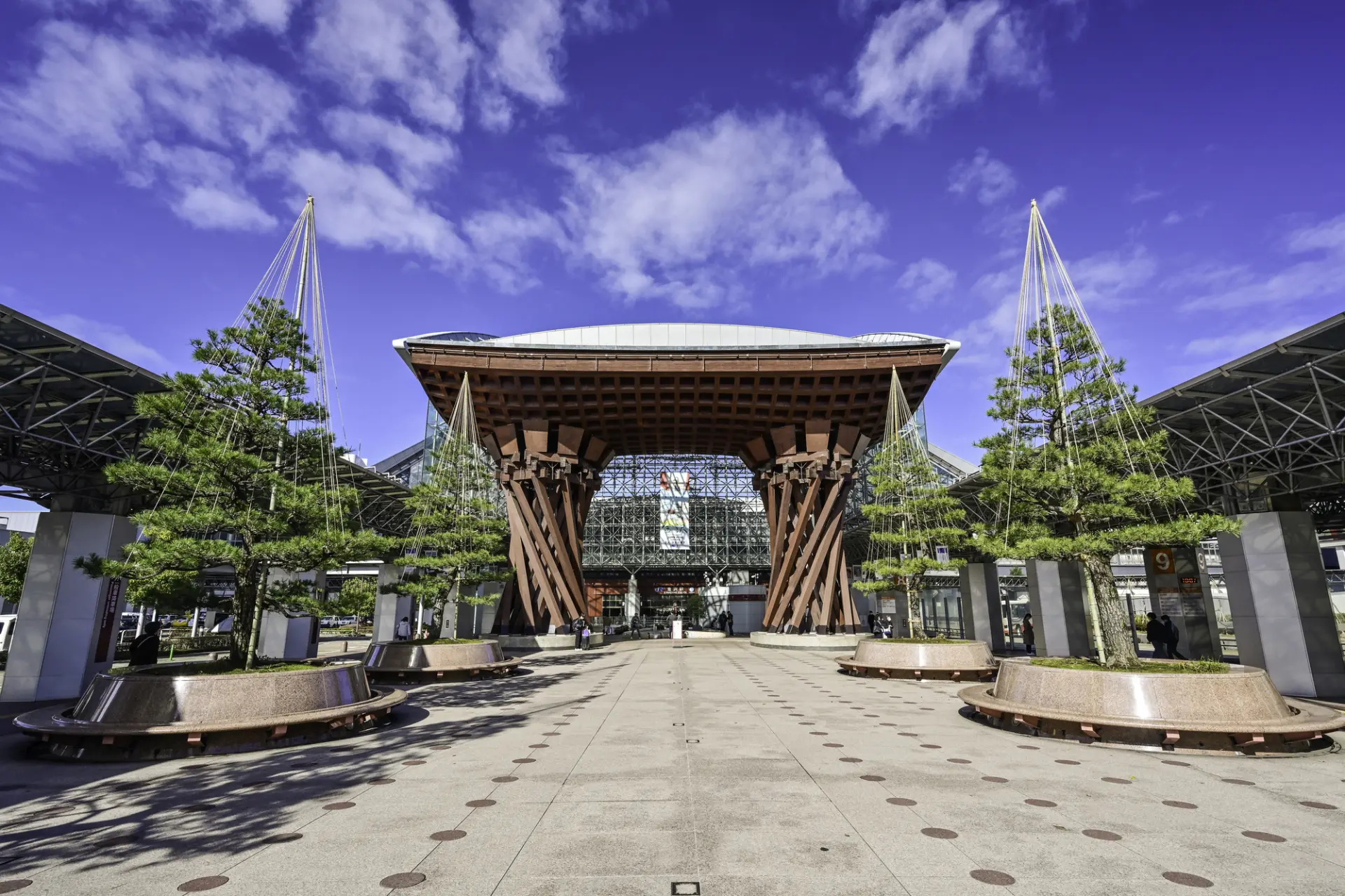
The nearest station to "Kenrokuen" is Kanazawa Station on various lines.
The table below summarizes the most common access options by local bus and by car.
Since it is about a 30-minute walk from Kanazawa Station to "Kenrokuen," walking there while enjoying the cityscape is also recommended.
| Transportation | Route | Approx. Time | One-way Fare |
|---|---|---|---|
| Local bus | From Kanazawa Station Kenrokuen Exit Bus Stop, board the Castle Town Kanazawa Loop Bus, right-loop route, from bus stop No. 7 at Kanazawa Station, get off at "Kenrokuen-shita, Kanazawa Castle (across from Ishikawa Gate)," then walk Approx. 3 minutes ※The left-loop route and Hokuriku Railroad buses are also available | Approx. 20 minutes | 220 yen |
| Car | Kanazawa Station East Exit → Musashigatsuji, Omicho → parking lots around Kenrokuen ※Main parking lots: Kenroku Parking Lot, Hondanomori Parking Lot | Approx. 10 minutes | Around 1,500 yen (taxi) |

FAQ about "Kenrokuen"
Q
Is "Kenrokuen" one of Japan’s three most famous gardens?
Yes. "Kenrokuen" is one of Japan’s three most famous gardens, alongside Kairakuen in Ibaraki Prefecture and Korakuen in Okayama Prefecture.
Q
How long does it take to get around "Kenrokuen"?
If you focus on the main highlights, it takes about 60 minutes. If you want to cover the whole garden at a slower pace, it takes about 2 hours.
Q
Can I still enjoy it on a rainy day?
Yes, you can enjoy a different kind of atmosphere from a sunny day. The moss and trees become even richer in color when wet with rain, creating a beautiful, tranquil mood that is especially recommended if you like a more serene atmosphere.
Q
When is the nighttime light-up?
It is held seven times a year as "Kanazawa Castle, Kenrokuen Shiki Monogatari," with events in each season. The dates and periods vary each year, so please check the official website for the latest information.
Q
Can visitors using wheelchairs tour the garden?
Yes, but some parts of the garden have slopes, steps, and unpaved paths, so having an assistant with you is recommended.
Summary
This article introduced the overview, highlights, and model course of "Kenrokuen," one of Japan’s most famous large strolling gardens.
The beauty of this garden, created over Approx. 200 years, brings visitors a deep sense of satisfaction.
It can be enjoyed year-round, but for a first visit, spring, when cherry blossoms and plum blossoms are in bloom, and winter, when the seasonal yukitsuri decorations transform the scenery, are especially recommended.
If you visit Kanazawa, be sure to stop by its iconic symbol, "Kenrokuen."