

Enjoy Epic Natural and Cultural Scenery! 7 Classic Tourist Spots in Ehime
When sightseeing in Ehime, you can’t miss its historic castles and spectacular natural scenery.
From attractions scattered with historic buildings and Important Cultural Properties to spots where you can fully enjoy the nature of the Seto Inland Sea, there are so many ways to explore.
Dogo Onsen, said to be Japan’s oldest hot spring, is also a popular destination.
Here are must-visit sightseeing spots, places to stay, local food, and shopping areas for an Ehime trip full of charm.
What is Ehime Like?
Ehime Prefecture is located in the northwest of Shikoku.
Blessed with impressive nature, it’s home to seas known as the “Mediterranean of the East” and mountain ranges connected to Mt. Ishizuchi, the highest peak in western Japan.
If you want to enjoy Ehime’s breathtaking natural scenery, the “Shimanami Kaido,” which connects Honshu and Shikoku, is recommended.
It’s a spectacular spot where you can take in Ehime’s sea and mountains while cycling.
Ehime also has many attractions that let you feel its history, including historic structures and what’s said to be Japan’s oldest hot spring.
Centered around Matsuyama Castle, a local landmark, and Dogo Onsen with its 3,000-year history, you can also enjoy exploring historic sites.
If you’re visiting Ehime, local cuisine featuring seafood is also a must.
Among local dishes, the especially famous “tai meshi” (sea bream rice) can be enjoyed in two different styles.
One is rice cooked together with sea bream, and the other is sea bream sashimi marinated in a special sauce, served over rice and enjoyed as ochazuke (tea poured over rice).
Even though both are tai meshi, the two styles are completely different, so be sure to try them.

What’s the best season to visit Ehime?
Ehime has something to offer year-round, but spring is the most recommended season thanks to its many famous cherry blossom spots.
Every April, Matsuyama Castle hosts the spring tradition “Matsuyama Spring Festival,” drawing crowds who come to admire the cherry blossoms.
The scenery at Dogo Park, where countless cherry blossoms bloom in full force, is also not to be missed.
Why not visit Ehime in spring, when the season is painted in cherry blossoms?
What to wear in Ehime by season
- Spring (March - May): Light jacket and a thin sweater
- Summer (June - August): Light clothing, short sleeves
- Fall (September - November): Light jacket, coat
- Winter (December - February): Coat, thick sweater or jacket
How do you get to Ehime?
Ehime has Matsuyama Airport, so you can get there from Tokyo or Osaka (which also have airports) in about 1 hour.
It also has international flights, making it easy to access from overseas.
Main transportation options for sightseeing in Ehime
Ehime’s transportation network is also well developed.
With trains, local buses, ferries, and other options, you shouldn’t have trouble getting around.
Enjoy Ehime’s History and Nature! 7 Classic Tourist Spots
When sightseeing in Ehime, you can’t miss places where you can feel its history, such as Matsuyama Castle, famous as an impregnable castle and a National Important Cultural Property.
On the “Shimanami Kaido,” which connects Honshu and Shikoku, you can also enjoy beautiful natural scenery.
When you visit Ehime, be sure to stop by these classic attractions where you can fully enjoy both history and nature.
1. Matsuyama Castle
Matsuyama Castle is a symbol of Matsuyama City and is also famous as an impregnable castle.
It has 21 Important Cultural Properties, including the main keep, and plenty of highlights such as the keep, Ichino-mon Gate, and Shichiku-mon Gate.
Inside the main keep, valuable historical materials are also on display.

2. Uwajima Castle
Uwajima Castle was built in 1601 on a hilltop at an elevation of 80 m by the famed castle builder and warlord Todo Takatora.
Later, starting in 1661, the Uwajima Domain lord Date Munetoshi carried out major renovations over about 11 years. It is one of the 12 original surviving castle keeps in Japan and is also designated as a National Important Cultural Property.

3. Giant Ferris Wheel Kururin
The giant Ferris wheel “Kururin” has a 45 m diameter and reaches a height of 85 m at its highest point from the ground, and it has become a new symbol of Matsuyama.
During the day, you can look out over Matsuyama City and see Matsuyama Castle towering in the city center, the clusters of hot spring inns in Dogo Onsen, and the Iyo-nada Sea from inside the Ferris wheel.
At night, you can also enjoy the illuminations, and the Ferris wheel offers panoramic views of the city’s nightscape.

4. Shimanami Kaido
The “Shimanami Kaido” is an approx. 60 km route connecting Honshu and Shikoku.
It links Onomichi City in Hiroshima Prefecture with Imabari City in Ehime Prefecture, and you can cross six islands floating in the Seto Inland Sea via bridges.
It consists of the Nishi-Seto Expressway, Ikuchijima Road, and Oshima Road.

5. Saka no Ue no Kumo Museum
Ryotaro Shiba’s novel Saka no Ue no Kumo features three protagonists from Matsuyama: “Saneyuki Akiyama,” “Yoshifuru Akiyama,” and “Shiki Masaoka.”
The Saka no Ue no Kumo Museum was built around this novel.
The museum has one basement level and four stories above ground, designed by world-renowned architect Tadao Ando with careful attention to the history and nature around Matsuyama Castle.

6. Mt. Ishizuchi
Mt. Ishizuchi is one of Japan’s Seven Sacred Mountains and is known as a mountain of spiritual worship.
The name “Mt. Ishizuchi” refers to the range that includes Tengu-dake, the highest peak in western Japan, Misen where Ishizuchi Shrine’s mountaintop sanctuary stands, and the southern peak. There are many hiking routes, from courses for experienced climbers and hikers to paths that are perfect for beginners.

7. Botchan Karakuri Clock
This karakuri clock was built in 1994 in Hojoen, in front of the “Dogo Onsen” streetcar stop, as part of the centennial project commemorating the construction of Dogo Onsen Honkan. It performs in time with the clock’s music every hour from 8 am to 10 pm (every 30 minutes on weekends and holidays, in March, April, August, and November, during Golden Week, and during the year-end and New Year holidays), giving a festive welcome to visitors to Dogo Onsen.

Enjoy Natural Scenery and History Even While Getting Around! 2 Recommended Transportation Options in Ehime
With so many great attractions, Ehime also makes the journey itself part of the experience.
The view of the Iyo-nada Sea from JR Shimonada Station is spectacular.
The scenery is so beautiful that sightseeing trains even stop for a few minutes so passengers can enjoy it—definitely not to be missed.
Plus, a train modeled after a steam locomotive that ran for 67 years is sure to make the ride even more exciting.
1. JR Shimonada Station
A beautifully located station where you can look out over the majestic Iyo-nada Sea from the platform. It has appeared as a filming location for numerous movies and dramas, and it is also often featured on JR posters. During the day, sunlight sparkles on the sea surface. And the view of the ocean dyed orange by the setting sun is an unforgettable, breathtaking sight.

2. Botchan Train
The Botchan Train was created based on a steam locomotive that operated for 67 years starting in Meiji 21 (1888), shortly after Iyo Railway opened. The name “Botchan Train” comes from the fact that characters in Natsume Soseki’s novel “Botchan” used it. With “train” added to that title, the name has remained and is still loved today.

Taste Ingredients Raised by the Bountiful Sea! 3 Popular Restaurants in Ehime
With its mild climate and abundant nature, Ehime is blessed with many appealing ingredients.
In Ehime, local dishes made with fresh seafood are especially recommended.
Here are some popular restaurants where you can enjoy Ehime’s local cuisine.
1. Goshiki (Local Cuisine)
A historic Japanese restaurant founded in 1635. You can enjoy local dishes made with generous amounts of regional ingredients such as fresh red sea bream, Iyo Wagyu beef, and Hime Pork.
The signature tai meshi uses only exceptionally fresh sea bream purchased that day. There are two styles of tai meshi—Uwajima tai meshi <served with sashimi on top> and Matsuyama tai meshi <cooked with sea bream>—and both are available here.

2. Kadoya Okaido Branch
“Kadoya” opened in 1955 in Uwajima City, Ehime Prefecture, as a local diner. Kadoya Okaido Branch is one of its locations in Matsuyama City. In a great location with easy access to Matsuyama Castle, Dogo Onsen, and downtown Matsuyama, it serves local cuisine with a focus on “seasonal feel,” “ingredients,” and “sense of being there.”
When you visit, the first thing you’ll want to try is “Uwajima tai meshi,” one of Ehime’s 대표 local specialties.

3. Tanimoto Kamaboko Dogo Branch
Tanimoto Kamaboko is a long-established kamaboko shop founded in 1916.
A popular item is “jako-ten,” now a classic, simple souvenir from Ehime.
Jako-ten is a type of fried fish cake made by grinding small fish caught in nearby waters—bones and skin included—shaping it flat in a wooden frame, and frying it in canola oil.
Because the bones and skin are used as ingredients, it’s also rich in nutrients such as calcium. It has a soft springy texture, a distinctive flavor, and an addictive crunch from small bones.

Best Places to Shop in Ehime: 3 Must-Visit Shopping Spots
Ehime has plenty of shopping spots and shopping areas.
Here are carefully selected picks, including one of Shikoku’s largest shopping malls and places where you can shop for Ehime specialties and souvenirs.
1. Iyotetsu Takashimaya
Iyotetsu Takashimaya offers a wide range of seasonal items, from trend fashion to “depachika” sweets (department store basement food hall treats).
Made up of the Main Building and South Building, the Main Building is a station building integrated with Matsuyama-shi Station.

2. Emifull MASAKI
Emifull MASAKI is a large commercial facility in Masaki Town, Iyo District, Ehime Prefecture.
One of Shikoku’s largest shopping malls, it features over 200 unique shops, from fashion and goods to dining and a movie theater.
A major renovation from fall 2020 to spring 2021 added popular stores and brought even more new appeal, and it continues to evolve.

3. Dogo Shopping Street (Dogo Haikara-dori)
Dogo Shopping Street, also known as “Dogo Haikara-dori,” is adjacent to the Dogo Onsen Honkan building. It’s an L-shaped arcade stretching approx. 250 m, linking the last stop of Iyotetsu’s streetcar line, Dogo Onsen Station, with Dogo Onsen Honkan.
Many souvenir shops and restaurants line the street, and after enjoying Dogo Onsen, it’s a classic hot spring town pleasure to stroll around in a yukata.

3 Recommended Places to Stay in Ehime
If you’re staying in Ehime, choose a great accommodation where you can enjoy hot springs.
There’s a wide range of facilities in the hot spring town, and here are a few especially recommended places to stay.
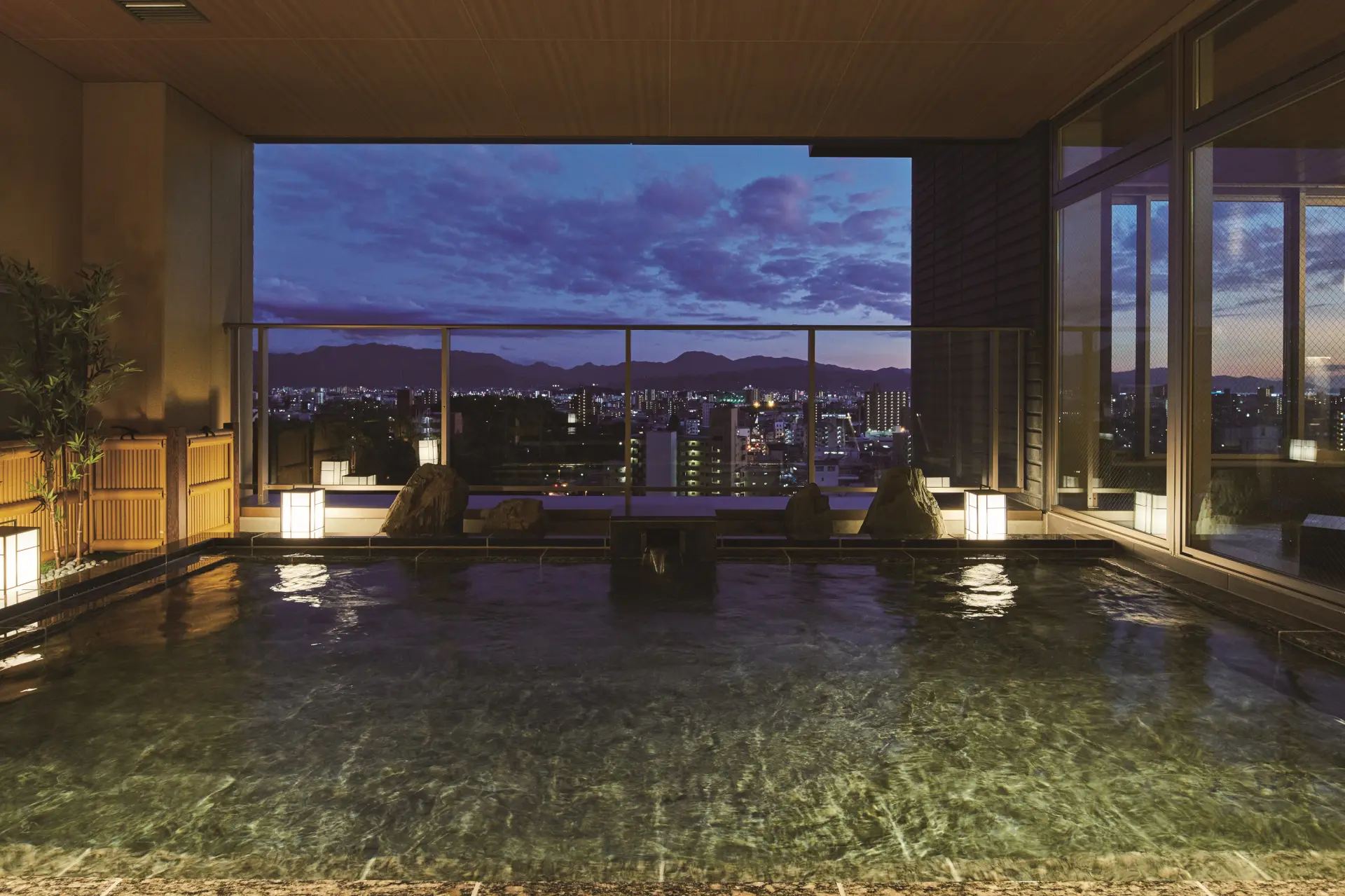
1. Hotel Kowakuen Haruka
Grand opened in 2019 on a hill in the heart of the Dogo Onsen hot spring town, with an outstanding location overlooking Dogo Onsen Honkan.
Not only does it balance the relaxation of a hot spring inn with the comfort of a hotel, it’s also a cutting-edge hotel that uses clean energy as its main energy source, based on the concept of a “people- and eco-friendly hotel.”
2. Dogo Onsen Funaya
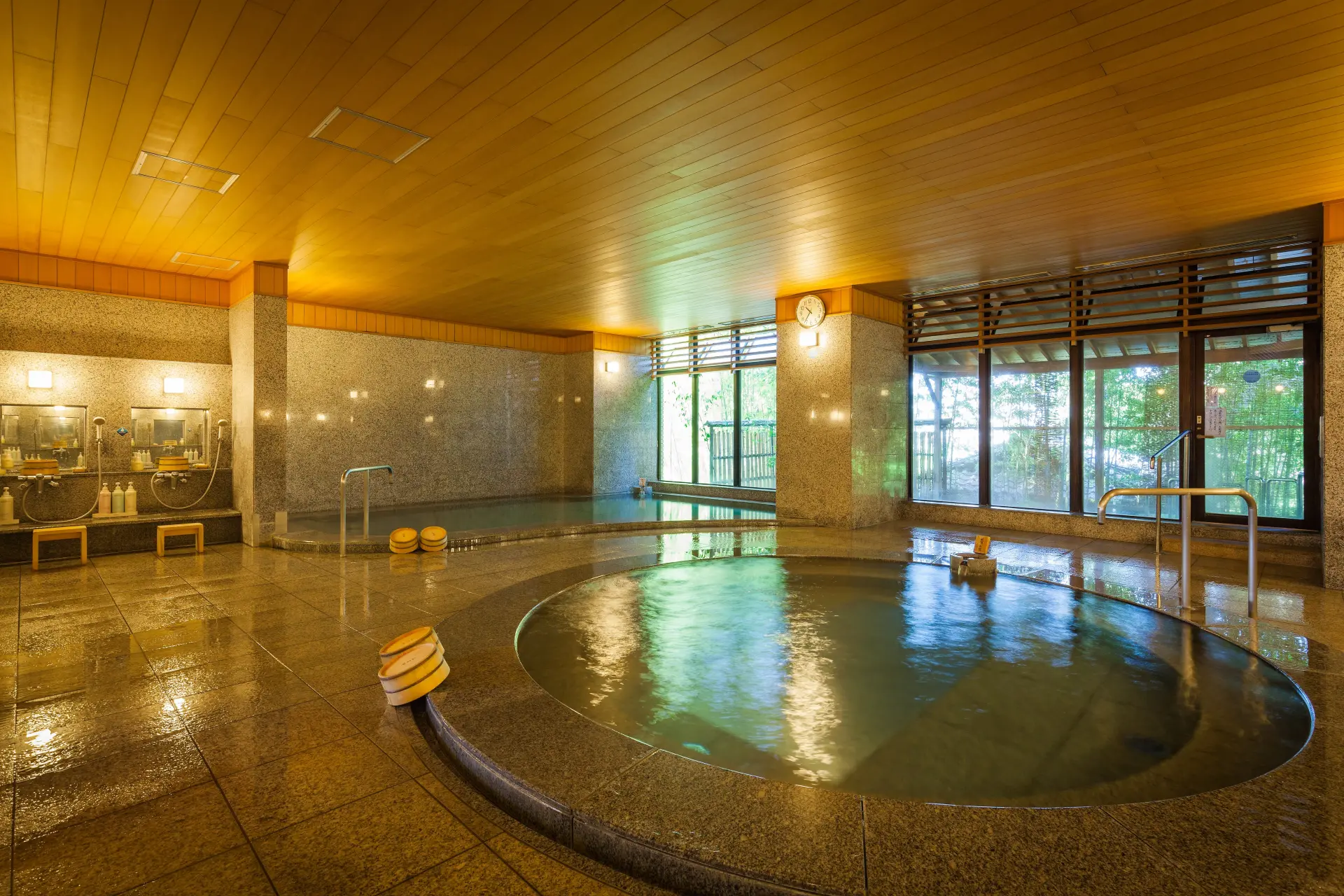
Founded around 1627, in the Edo period.
Dogo Onsen Funaya is a long-established hot spring ryokan that hosted many writers and famous figures, including Matsuyama-linked author Natsume Soseki and haiku poet Shiki Masaoka.
Its 58 guest rooms come in a variety of styles, including special sukiya-style rooms, Japanese-style rooms, Japanese-western rooms, and western rooms.
It offers a comfortable stay.
3. Chaharu
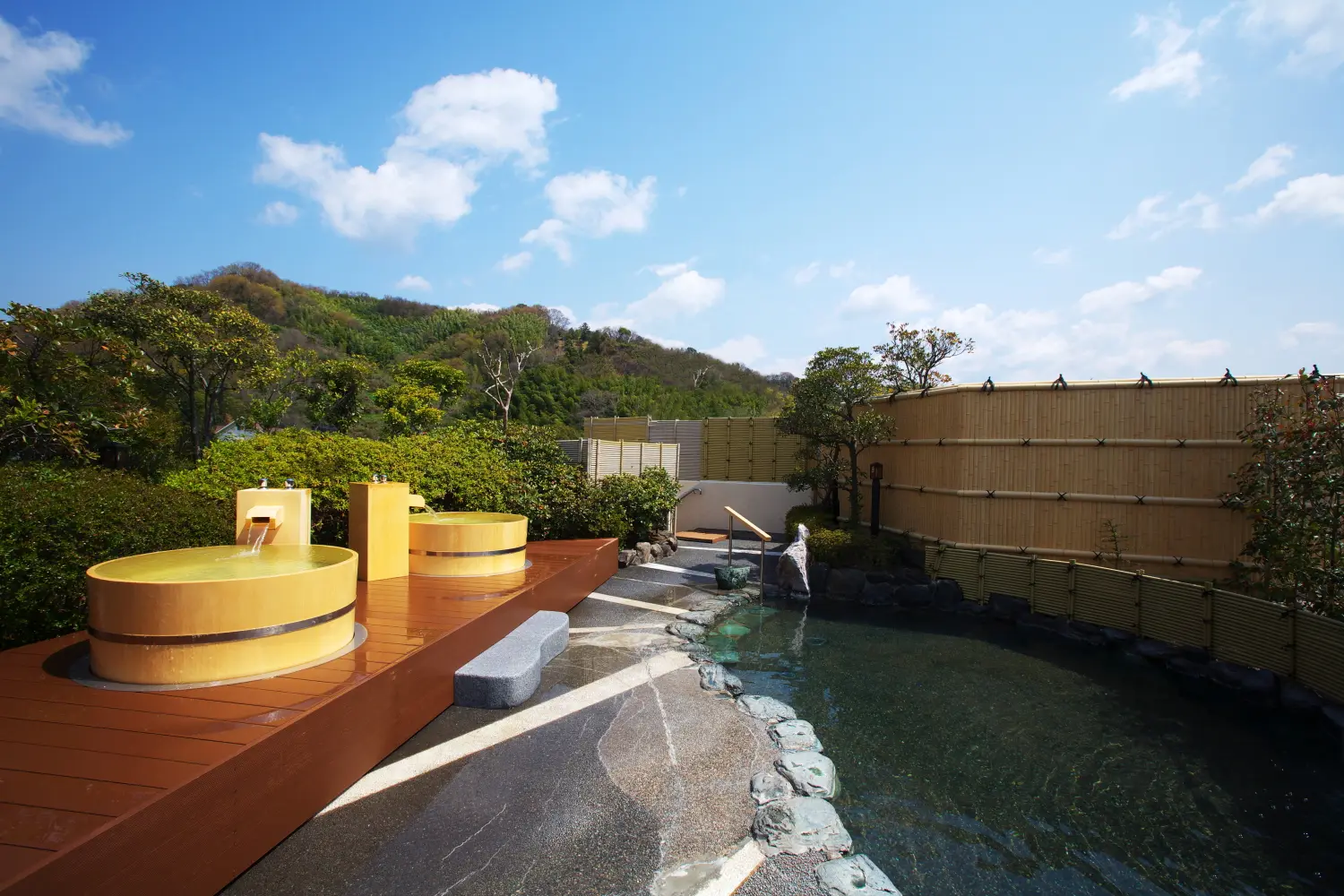
Located in the center of the hot spring town near Dogo Onsen Honkan, this hot spring inn was the first in Dogo Onsen to feature an open-air bath.
The signature open-air bath is on the top (10th) floor, with views of Matsuyama Castle and Mt. Ishizuchi, among others.
At night, you can enjoy bathing while looking up at a sky full of stars.
Also, the women’s bath offers an open-air rose bath on Saturdays and Sundays from 5 pm to 10 pm.
Summary
Ehime offers many ways to enjoy your trip, from historic castles and what’s said to be Japan’s oldest hot spring to nature-rich scenery of mountains and sea.
With so much to see, you may not know where to start, but we recommend building your plan around the classic spots introduced here.
That way, you should be able to enjoy Ehime’s history and the beautiful, scenic views of the Seto Inland Sea.
After you’ve enjoyed Ehime to the fullest, why not extend your trip a bit and visit Okayama Prefecture, known for its distinctly Japanese scenery?
Enjoy places full of Japan’s unique charm, such as the retro-modern Kurashiki Bikan Historical Quarter and the power spot Kibitsuhiko Shrine, tied to the legend of Momotaro.