
A Travel Guide to Enjoying Kinkaku-ji More Deeply
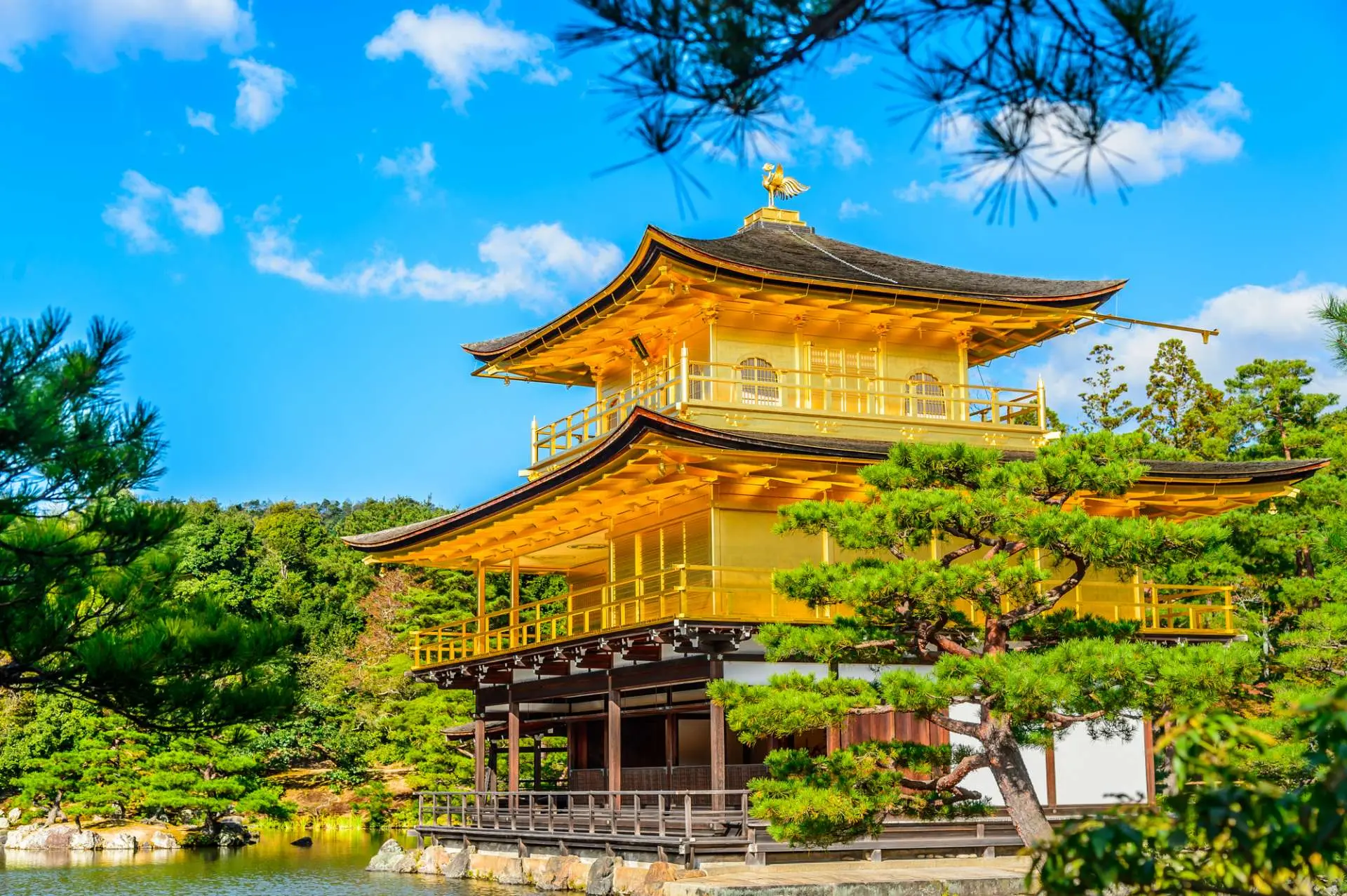
One of the most popular temples in Japan is “Kinkaku-ji.”
The gold-leaf pavilion and gardens, created with the Pure Land in mind, are sure to catch everyone’s eye.
To fully appreciate the beauty of “Kinkaku-ji,” we’ll cover everything you’ll want to know—from must-see highlights and history to access, admission, and nearby sightseeing spots.
What is Kinkaku-ji Like?
Located in Kyoto City, Kyoto Prefecture, “Kinkaku-ji” is a temple of the Rinzai school of Zen Buddhism, Shokoku-ji branch.
Together with “Kiyomizu-dera” and “Ginkaku-ji,” it was registered as a UNESCO World Cultural Heritage site in 1994 as part of “Historic Monuments of Ancient Kyoto.”
In fact, “Kinkaku-ji” is a common name; its official name is “Rokuon-ji.”
Because the brilliantly golden building on the grounds known as the “Kinkaku” became famous, it came to be called “Kinkaku-ji.”
“Kinkaku-ji” is also the title of a work by one of Japan’s leading novelists, Yukio Mishima.
The story focuses on the perpetrator of the 1950 arson incident, tracing in first person how a monk obsessed with the beauty of “Kinkaku-ji” came to commit arson.
This work has been highly praised not only in Japan but also overseas.
Also, in the anime “Ikkyu-san,” “Kinkaku-ji” and Ashikaga Yoshimitsu (あしかが よしみつ), the 3rd shogun of the Muromachi shogunate who built “Kinkaku-ji,” appear in the story.

The History and Origins of Kinkaku-ji
Looking back at the history of “Kinkaku-ji,” it was originally owned as a residence by the aristocratic “Saionji” family.
From the Kamakura period through the Muromachi period, aristocratic power weakened, and as a result the Saionji family had to let go of the land.
In 1397, during the Muromachi period, Ashikaga Yoshimitsu rebuilt the Saionji residence as a villa, and it later became “Kinkaku-ji.”
It became a temple after Ashikaga Yoshimitsu’s death. By his will, it became a Zen temple.
The “Kitayama culture” that flourished in the Muromachi period when “Kinkaku-ji” was built is a culture that fused aristocratic, warrior, and Zen elements, but the influence of aristocratic culture is especially strong.
The characteristics of “Kitayama culture” are strongly reflected in the “Kinkaku.”
The “Kinkaku” and the garden centered around it are said to represent the Pure Land, and are so beautiful they hardly seem like a scene from this world.
“Kinkaku-ji” has suffered devastating damage several times.
In 1467, the “Onin War” broke out and most of “Kinkaku-ji” burned down. However, several buildings, including the “Shariden,” escaped damage.
In 1950, the “Kinkaku,” set on fire by an apprentice monk of “Kinkaku-ji,” was completely destroyed, and its shine disappeared.
However, based on detailed drawings that had been preserved, major restoration work was carried out, and it was rebuilt in 1955.
Access to Kinkaku-ji
There is no station near “Kinkaku-ji,” so access it by bus from Hankyu Kawaramachi Station or JR Kyoto Station.
From either station’s bus terminal, take Kyoto City Bus Route 205 and get off at the Kinkakuji-michi bus stop.
From there, it’s a 3-minute walk to Kinkaku-ji.
- From Hankyu Kawaramachi Station to Kinkaku-ji
- Time needed: Approx. 40 min
- From JR Kyoto Station to Kinkaku-ji
- Time needed: Approx. 50 min
Kinkaku-ji Admission, Hours, and Time Needed
Admission and visiting hours for “Kinkaku-ji” are as follows.
When you enter, you’ll receive an ofuda (temple talisman) instead of a ticket, which you can take home as a souvenir.
- Hours
- 9:00am–5:00pm (open daily)
- Admission
-
Adults (high school students and up) 500 yen
Elementary and junior high school students 300 yen - Time needed
- 40–60 min
To see the highlights around the temple grounds, you’ll need 40 to 60 minutes.
Near the exit of the visiting route, there is a tea spot called “Kinkakuji Fudo Kama Chasho,” where you can enjoy matcha.
Here you can enjoy matcha with a sweet for 500 yen, and there are around 10 table-and-chair seats that can fit 4 to 5 people.
If you’re planning to take a break at the tea spot, budget an extra around 30 minutes.
What’s the Best Season to Visit Kinkaku-ji?
While “Kinkaku-ji” offers seasonal scenery throughout the year, fall and winter are especially recommended.
In fall, autumn leaves color the golden “Kinkaku” and Kyoko-chi Pond in reds and yellows.
In winter, an enchanting world unfolds as snow piles up on the temple grounds.
The snow-covered Kinkaku and the grounds are a must-see.
7 Can’t-Miss Highlights at Kinkaku-ji
At “Kinkaku-ji,” there are many highlights beyond the golden “Shariden (Kinkaku).”
There are also spots known as power spots, so if you’d like to receive good fortune, be sure to visit.
Among the many highlights, here are some of the most popular picks.
1. The Eye-Catching “Shariden (Kinkaku)”
The glow of the “Shariden (Kinkaku),” said to represent the Pure Land, and the beauty of its gardens are sure to captivate everyone.
The “Shariden (Kinkaku)” is a three-story building that stands 12.5 m tall.
Approximately 200,000 sheets of gold leaf, each 10.8 cm square, are applied to the 2nd and 3rd floors.
A shariden is a building thought of as a container for enshrining the bones of Shakyamuni Buddha.
At the top of the roof of the “Shariden (Kinkaku),” a golden phoenix also shines.
The phoenix is a symbol of eternal life and power, and it was displayed with prayers for a peaceful world without conflict.
With popularity so great that “Kinkaku-ji” became its common name, you can’t visit without seeing the “Shariden (Kinkaku).”

2. “Sekka-tei,” Noted for Its Hip-and-Gable Style and Thatched Roof
“Sekka-tei (せっかてい)” is a small tea house of around 3 tatami mats, located on higher ground with views looking down over the “Shariden” and “Kyoko-chi” pond.
The name comes from the beauty of “Kinkaku-ji” lit by the setting sun, as seen from the tea house.
Built in the Edo period, it is also known for its hip-and-gable architecture and thatched roof.

3. “Kyoko-chi Pond,” Where the Kinkaku Shines on the Water
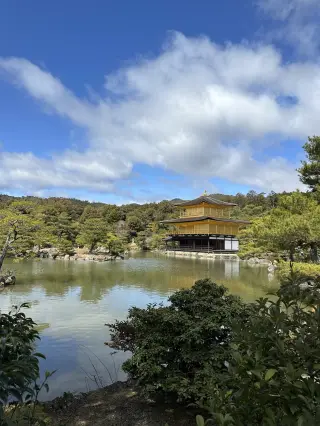
A small pond that reflects the “Shariden (Kinkaku)” like a mirror.
“Kyoko-chi Pond” is said to have been modeled after the jeweled ponds of the Pure Land.
There are islands of various sizes here, including “Ashihara-jima,” and you can see unusual rocks and famous stones.
The sight of the “Shariden (Kinkaku)” and the surrounding islands reflected on the surface is truly spectacular.

4. Ashikaga Yoshimitsu’s Bonsai Pine, “Rikushu-no-Matsu,” Over 600 Years Old
“Rikushu-no-Matsu” has an overwhelming presence.
It is a natural monument designated by Kyoto City and is considered one of the “Three Great Pines of Kyoto.”
It is made from a “goyomatsu” (Japanese white pine), which has a longer age than other pines.
Originally a bonsai planted by Ashikaga Yoshimitsu, it was transplanted and has grown magnificently over more than 600 years.

5. “Fudo-do,” Home to Important Cultural Property Fudo Myo-o
“Fudo-do” houses two statues of Fudo Myo-o designated as Important Cultural Properties.
The “Ishi Fudo Myo-o,” said to have been made by Kukai, and the wooden “Fudo Myo-o” statue created in the Kamakura period are only shown on February 3 and August 16.
As the oldest surviving building at “Kinkaku-ji,” it’s worth visiting even if you can’t see the statues.

6. “Anmin-sawa & the White Snake Mound,” Where Benzaiten’s Messenger Is Enshrined
“Anmin-sawa” is a pond surrounded by woods, about half the size of Kyoko-chi Pond.
The stone gorinto pagoda on the small island in the pond is the “White Snake Mound,” which enshrines the white snake, a messenger of Benzaiten.
Benzaiten is also a water deity and one of the Seven Lucky Gods, and is believed to bring various blessings.
It’s also known as a power spot: if you toss a coin and it lands in the bowl placed in front of the “White Snake Mound,” Benzaiten is said to grant your wish.

7. “Ryumon Falls,” Inspired by the Chinese Legend “Toryumon”
“Ryumon Falls” drops in a single tier from a height of 2.3 m, with the “Rigyoseki” stone placed in the basin to depict a carp that looks ready to leap upward.
It is based on the Chinese legend “Toryumon,” in which a carp becomes a dragon after climbing a waterfall.
Because it represents “Toryumon,” it is said to bring blessings for career success and good fortune.

Ginkaku-ji: Feel the Difference in Cultural Influences
Alongside “Kinkaku-ji,” “Ginkaku-ji” is one of Kyoto’s most famous temples.
“Kinkaku-ji” is in western Kyoto, while “Ginkaku-ji” is on the opposite side in the east.
“Ginkaku-ji” was built in 1482 by Ashikaga Yoshimasa (あしかが よしまさ), the 8th shogun of the Muromachi shogunate.
Like “Kinkaku-ji,” it was built as a villa, but after Ashikaga Yoshimasa’s death it became a Rinzai Zen temple and was named “Higashiyama Jisho-ji.”
“Ginkaku-ji” is a common name; its official name is “Higashiyama Jisho-ji.”
It comes from “Jishoin,” Ashikaga Yoshimasa’s posthumous Buddhist name.
Because they were built in different periods, they were influenced by different cultures.
The “Higashiyama culture” that influenced “Ginkaku-ji” has stronger Zen characteristics than the “Kitayama culture” that influenced “Kinkaku-ji.”
A spirit of finding beauty in simplicity and the aesthetics of wabi-sabi are features of “Higashiyama culture.”
From the name, you might think “Ginkaku-ji,” like “Kinkaku-ji,” is covered in silver leaf.
However, in reality, no silver leaf is applied to “Ginkaku-ji.”
“Ginkaku-ji,” shaped by Higashiyama culture, isn’t flashy, but it has a solemn design that evokes wabi-sabi.
Visit “Ginkaku-ji,” which has a different appeal from “Kinkaku-ji,” and compare the differences between “Kitayama culture” and “Higashiyama culture.”

3 Sightseeing Spots Near Kinkaku-ji
Even after enjoying “Kinkaku-ji,” we hope you’ll continue to fully experience the historic city of Kyoto.
Kyoto has many historic shrines and temples, so you may not know where to start sightseeing.
In that case, try visiting the temples and shrines near Kinkaku-ji that we’ll introduce next.
1. Ryoan-ji
A Zen temple of the Myoshin-ji branch of the Rinzai school, registered as a UNESCO World Cultural Heritage site as one of the “Historic Monuments of Ancient Kyoto.” In 1450 (Hotoku 2) during the Muromachi period, Hosokawa Katsumoto, the shogunate’s kanrei (deputy), received a mountain villa of the Tokudaiji family and founded the temple, inviting Giten Gensho Zenji, the fifth patriarch of Myoshin-ji, as the founding priest. It was later destroyed in the Onin War, but was revived under Katsumoto’s son Masamoto through the efforts of the Myoshin-ji monk Tokuhō Zenketsu. It is said that the hojo (abbot’s quarters) and the rock garden were also built around this time.


2. Ninna-ji
The head temple of the Omuro branch of Shingon Buddhism, registered as a UNESCO World Cultural Heritage site as one of the “Historic Monuments of Ancient Kyoto.”
The Kondo (Golden Hall) at the back of the grounds was relocated in the early Edo period, during the Kan’ei era (1624–1645), from the Shishinden (Hall for State Ceremonies) of the Kyoto Imperial Palace, originally built in the Momoyama period.
As a precious remnant that conveys palace architecture of the time, it is the only National Treasure at Ninna-ji. Inside, it enshrines the principal image of the Amida Triad, along with statues of the Four Heavenly Kings and Brahma, and the walls are vividly painted with Pure Land imagery.

3. Fushimi Inari Taisha
Beloved across Japan as a deity of abundant harvests, business prosperity, household safety, recovery from illness, and wishes granted, this is the head shrine of Inari shrines—said to number around 30,000 nationwide. It was founded in 711.
A particularly popular spot is the “Senbon Torii.” Behind the main hall, vermilion torii gates continue in a tunnel-like line.
They began as offerings dedicated by worshippers with prayers and gratitude, and across Mt. Inari as a whole, there are said to be more than 10,000 gates.

3 Popular Restaurants Near Kinkaku-ji
After enjoying the beautiful gardens through the seasons, treat yourself to Kyoto flavors nearby.
Near Kinkaku-ji, you’ll find plenty of popular dining options for travelers, from long-established Japanese restaurants to stylish cafes.
Here are some recommended food spots to drop by between sightseeing.
1. Sarasa Nishijin
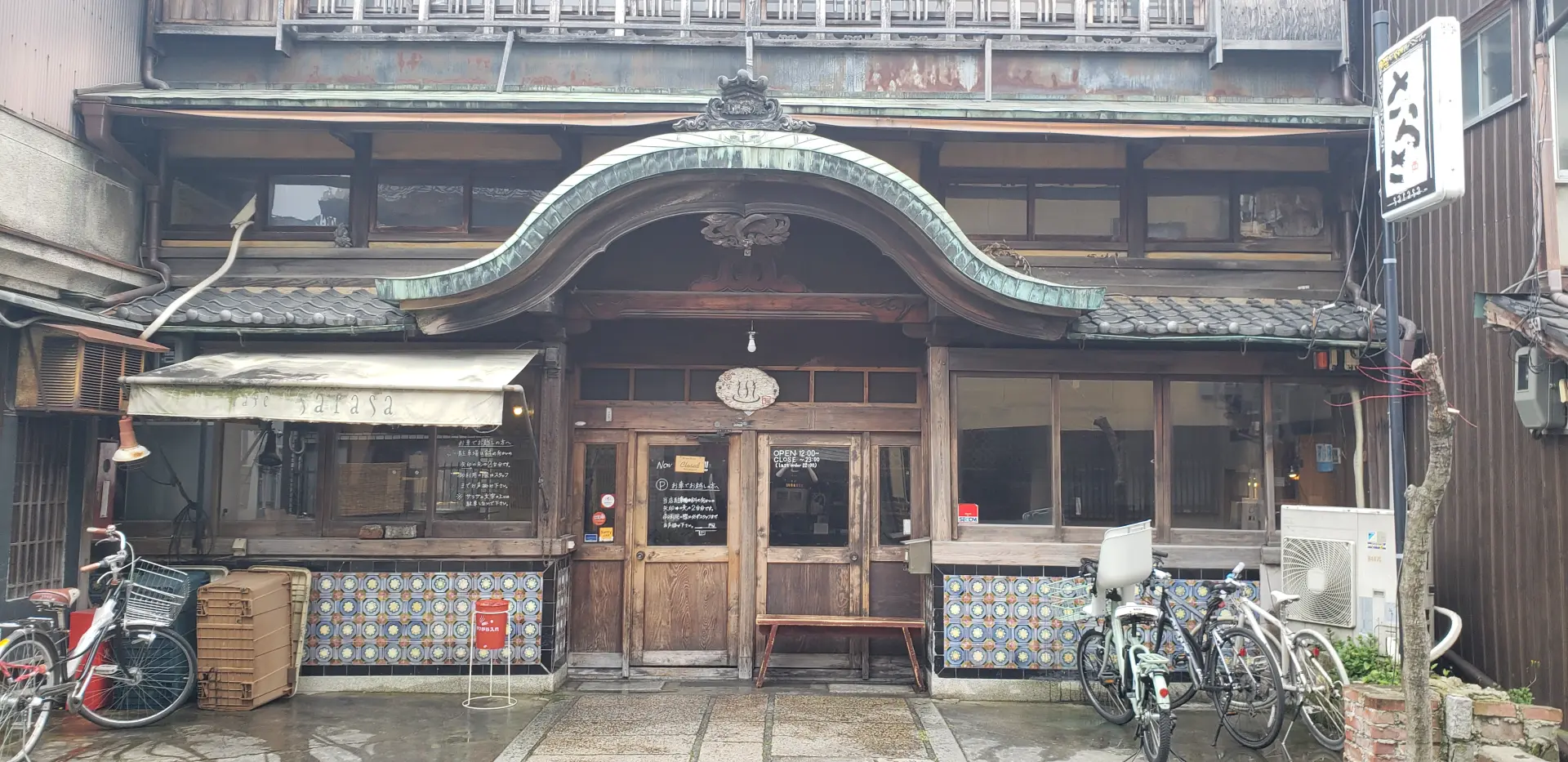
A cafe renovated from Fujimori Onsen, a public bathhouse that was used until 1998.
It opened in 2000 as the second location of the “Sarasa” cafe group, which now has six shops in Kyoto, while making the most of the original building’s charm. It’s a space that feels like a reflection of Nishijin’s Kyoto atmosphere.
2. Unagi Kappo Maehara
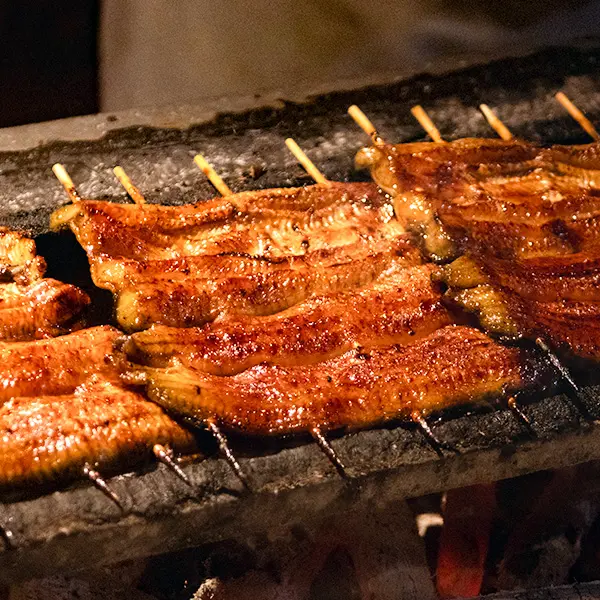
A kappo restaurant where you can enjoy a wide range of dishes made with carefully selected, top-quality Japanese eel, mainly from Mikawa, Aichi, as well as from Tosa, Kochi and Osumi, Kagoshima.
Eel dishes prepared by skilled chefs deliver an exceptional flavor that overturns what you thought you knew.
A signature specialty is “unagi shabu-shabu,” where thinly sliced fresh eel prepared in-house is quickly swished through a richly flavored dashi, then enjoyed with ponzu and yuzu kosho.
3. IN THE GREEN
A garden dining spot surrounded by greenery next to the “Kyoto Botanical Gardens” in Kitayama, Kyoto.
With the botanical garden’s sweeping greenery as a backdrop, you can enjoy authentic Neapolitan pizza baked in a wood-fired oven, seasonal Kyoto vegetable a la carte dishes, house-made sweets, and more.
The spacious interior has 70 seats, plus a terrace with as many as 50 seats.

Also Visit Arashiyama, One of Kyoto’s Top Tourist Areas
Arashiyama, one of Kyoto’s most famous sightseeing areas, is a place where you can enjoy the harmony of nature and history.
There are many Kyoto-like spots, such as the beautiful “Sagano Bamboo Grove” loved by aristocrats in the Heian period and “Togetsukyo Bridge,” often called the face of Arashiyama.
To get from “Kinkaku-ji” to “Arashiyama,” we recommend taking a taxi.
The trip takes around 30 minutes, and the fare is around 3,000 yen.
You can also get there by bus and train, but it requires complicated transfers.

Reviews of Kinkaku-ji (Rokuon-ji)
4.84
Some reviews are AI-translated.
-
Every step in the garden is filled with Japan's unique 'serene beauty.' It's not just about seeing the temple—it feels like a cleansing for the soul.
-
The appearance of Kinkaku-ji is breathtaking. The gold-leaf-covered building sparkles in the sunlight, and its reflection on the Mirror Pond looks like something out of a fairy tale.

FAQ about Kinkaku-ji
Q
What is the official name of Kinkaku-ji?
A
The official name of Kinkaku-ji is “Rokuon-ji.”
Q
What are Kinkaku-ji’s admission fee and hours?
A
Adults (high school students and up) 500 yen, and elementary and junior high school students 300 yen. Hours are 9:00am–5:00pm.
Q
What are the highlights of Kinkaku-ji?
A
Above all, the golden Shariden (Kinkaku) pavilion is the biggest highlight.
Q
What’s the difference between Kinkaku-ji and Ginkaku-ji?
A
Kinkaku-ji was built by Ashikaga Yoshimitsu, the 3rd shogun of the Muromachi shogunate, while Ginkaku-ji was built by his grandson, Ashikaga Yoshimasa, the 8th shogun. While the lavish “Kinkaku-ji” is gorgeous and ornate, “Ginkaku-ji” is a building that evokes wabi-sabi.
Summary
In this article, we’ve introduced everything from the history and charm of “Kinkaku-ji” to nearby sightseeing spots.
If you visit with an understanding of the historical background, you’ll enjoy “Kinkaku-ji” even more.
After taking in “Kinkaku-ji,” we hope you’ll also visit “Arashiyama,” “Ginkaku-ji,” and “Ryoan-ji,” and fully enjoy Kyoto—where rich nature and historic Japanese architecture come together.
If you’re planning a trip to Kyoto, check out this article introducing Kyoto’s classic sightseeing spots as well.