

Enjoy Spectacular Genkai Sea Views and History! 9 Popular Tourist Spots in Karatsu
Karatsu is a place where you can fully enjoy grand, beautiful nature.
It is home to many scenic spots, including Niji-no-Matsubara, counted among Japan’s three great pine groves, and Nanatsugama, a nationally designated Natural Monument.
Karatsu also has historical sites, and the beautiful scenery created by nature and historic architecture is one of its charms.
Here, we introduce some of Karatsu’s most attractive sightseeing spots.
Use this article as your guide and enjoy its history and culture along with its beautiful natural scenery.
What is Karatsu Like?
Karatsu City is located in northwestern Saga Prefecture and faces the Genkai Sea.
It is a scenic sightseeing destination blessed with magnificent nature, including Niji-no-Matsubara, counted among Japan’s three great pine groves, and Nanatsugama, designated as a national Natural Monument.
Historic spots such as Karatsu Castle and the Nagoya Castle Ruins are scattered throughout the area, offering plenty to see.
You can also enjoy Japanese culture through Karatsu ware pottery and the grand festival Karatsu Kunchi, which is registered as an Important Intangible Folk Cultural Property of Japan and a UNESCO Intangible Cultural Heritage.
The area is also rich in seafood, so local seafood cuisine is not to be missed.
Among Karatsu’s local specialties, Yobuko squid is especially famous.
If you visit Karatsu, don’t miss the chance to try its ikizukuri sashimi, prized for its transparency and pleasantly firm texture.

What is the best season for sightseeing in Karatsu?
If you are planning to visit Karatsu, spring to early summer is recommended.
The city becomes even more vibrant and colorful, with many famous spots for cherry blossoms and wisteria.
In particular, the wisteria at Karatsu Castle is said to be over 100 years old, and the beautiful scenery of the castle and the flowers can be enjoyed together.
Be sure to visit from late April to early May, when the cherry blossoms and wisteria trellises are at their best.
What to Wear in Karatsu by Season
- Spring (March - May): Light jacket and thin sweater
- Summer (June - August): Light clothing, short sleeves
- Fall (September - November): Light jacket, coat
- Winter (December - February): Coat, thick sweater or jacket
How to Get to Karatsu
From Tokyo, Nagoya, and Osaka, fly to Fukuoka Airport.
Fukuoka Airport serves as the gateway to Kyushu, with both domestic and international flights, and here we introduce how to get from there to Karatsu.
The basic routes and travel times when using the train or highway bus are as follows.
| Main Transportation | Route | Travel Time |
|---|---|---|
| Train | Take the Subway Airport Line Rapid train (bound for Nishi-Karatsu) and get off at Karatsu Station on the JR Chikuhi Line. | Approx. 1 hour 30 minutes |
| Highway bus | Take the Karatsu-go highway bus (bound for Hoto Pier) and get off at Karatsu BC. | Approx. 2 hours |
By train, the ride from Fukuoka Airport to Karatsu Station on the JR Chikuhi Line takes Approx. 80 minutes.
After departure, the train changes to the JR Chikuhi Line Rapid service after passing Meinohama Station, but no transfer is needed because it goes directly to Karatsu Station.
The bus ride takes Approx. 1 hour 50 minutes. Buses depart from the north side of the domestic terminal.
Main Transportation for Sightseeing in Karatsu
For sightseeing around Karatsu City, getting around on foot and by bus should be enough.
If you use the railway, the JR Karatsu Line lets you enjoy the area’s magnificent natural scenery while visiting sightseeing spots.
Enjoy Dynamic Natural Scenery and History! 9 Popular Tourist Spots in Karatsu
Karatsu is full of attractions, from dramatic natural scenery to historic architecture.
There are many beautiful sightseeing spots, including Niji-no-Matsubara, where black pines and the sea create a stunning landscape, and the graceful Karatsu Castle, which appears to float on the water.
Here are some of the most popular sightseeing spots in Karatsu that you should definitely visit.
1. Niji-no-Matsubara
Niji-no-Matsubara is a pine grove stretching along Karatsu Bay in the shape of a rainbow arc, and it has been designated as a Special Place of Scenic Beauty by the national government.
It began in the early 17th century, when Hirotaka Terasawa, the first lord of the Karatsu Domain, planted it as a windbreak and tide-protection forest. Today, around 1 million black pine trees grow in clusters across a stretch Approx. 4.5 km long and Approx. 500 m wide.
It is now counted among Japan’s three great pine groves along with Miho no Matsubara and Kehi no Matsubara.

2. Kagamiyama (Observation Deck)
This beautiful trapezoid-shaped mountain stands 284 m high.
It also has slopes for hang gliding, so some visitors come here to enjoy hang gliding and paragliding.
At the summit, you will find Kagamiyama Shrine, an observation deck, and a rest area, with views over central Karatsu, the scenic Niji-no-Matsubara, Karatsu Bay, and even the outline of Iki Island on clear days.

3. Karatsu Castle
Karatsu Castle was completed over seven years starting in 1602 by Hirotaka Terasawa, the first lord of the Karatsu Domain and a retainer of Toyotomi Hideyoshi.
It is said that various feudal lords from across Kyushu assisted in its construction, and that materials from the dismantling of Nagoya Castle (in Karatsu City) were also used.
The castle is also known as Maizuru Castle because the pine groves stretching east and west from the castle resemble the wings of a crane in flight.


4. Nanatsugama
Nanatsugama is designated as a national Natural Monument.
It is a scenic spot formed over many years as basalt cliffs jutting into the sea were eroded by the rough waves of the Genkai Sea.
The cliffs have been deeply hollowed out, and as the name suggests, seven caves line the shore.
The largest cave opening is 3 m wide and extends 110 m deep, where you can see columnar joints, rock surfaces formed when lava cools and hardens into regularly aligned pillar-like shapes.

5. Hoto Shrine
This shrine stands on Takashima, a remote island floating in Karatsu Bay.
It was built about 450 years ago to enshrine Tsunayoshi Nozaki Okinokami, who drove away pirates that had been attacking Takashima and protected the island.
In the Heisei era, more and more people began visiting to pray for good fortune because of the shrine’s auspicious name, and after several worshippers reportedly won large lottery prizes, it became known nationwide as a shrine that brings lottery luck.

6. Hado Cape
A small cape jutting out from the Higashimatsuura Peninsula, Hado Cape is famous as a spot where you can feel the sea breeze on the grass and take in panoramic views of the Genkai Sea.
It is located within Genkai Quasi-National Park, a national park area spreading across northwestern Kyushu, and offers plenty of activities including hiking, camping, and swimming.
If you cross to the underwater observation tower connected by a pier from Hado Cape, you can look out over the islands of the Genkai Sea from the deck above the water.

7. Yobuko Morning Market
Yobuko has long been known as one of Japan’s leading port towns and once prospered through whaling. The Yobuko Morning Market, which has continued since the Taisho era, has a history of more than 100 years and is counted among Japan’s three great morning markets alongside Wajima in Ishikawa Prefecture and Takayama in Gifu Prefecture.
The sight of nearly 50 stalls lined up along the Approx. 200 m Morning Market Street near Yobuko Port from 7:30 am to 12 pm is truly impressive! Asking for recommended ways to eat the local foods, negotiating prices, and chatting with the vendors are all part of the market’s charm.

8. Saga Prefectural Nagoya Castle Museum
Hizen Nagoya Castle was built as a military base for Toyotomi Hideyoshi’s continental campaigns (the Bunroku and Keicho Wars).
After that, from the outbreak of war in 1592 until the feudal lords withdrew following Hideyoshi’s death, it served as a base for the campaigns on the continent for seven years.
Because the castle ruins and camp ruins together form one of the largest castle site groups in Japan, they have been designated as the Special Historic Site “Nagoya Castle Ruins and Camp Ruins.”
At the museum next to the ruins, visitors can learn about the castle and the history of exchanges between the Japanese archipelago and the Korean Peninsula through a variety of exhibits.

9. Former Takatori Residence
The residence of Takatori Koreyoshi, known as the “coal mining king of Hizen.”
Built in 1905 as his home and guesthouse, it stands on a spacious site of Approx. 2,300 tsubo, with two large buildings: a grand hall wing and a residential wing.
While mainly Japanese in style, the building also incorporates Western-style rooms, reflecting the characteristics of modern Japanese-style architecture of the time. At the same time, in a bold and highly individual touch befitting Koreyoshi, who loved Noh theater, the grand hall includes a wooden Noh stage.
Also well worth seeing are the 72 cedar door paintings depicting 29 types of subjects such as wisteria and wild cherry blossoms, said to have been painted by a Kyoto artist during a stay of about half a year.

Karatsu’s Biggest Festival, “Karatsu Kunchi”
The autumn grand festival of Karatsu Shrine is held over three days, beginning with the Yoiyama evening float procession on November 2, followed by the Shinko procession to the otabisho on November 3, and the final festival on November 4. This historic festival is said to have begun in the Edo period, and the “Karatsu Kunchi Hikiyama Float Event” is registered as a UNESCO Intangible Cultural Heritage and a nationally designated Intangible Folk Cultural Property.
Fourteen magnificent hikiyama floats parade through the old castle town to the sound of flutes and drums and spirited chants of “Enya, Enya” and “Yoisa, Yoisa.” During Yoiyama, the giant floats are illuminated by lanterns, creating a magical atmosphere.

2 Recommended Places to Stay in Karatsu
From here, let us introduce hotels with spectacular views overlooking Karatsu Bay.
These two open and airy hotels both offer calm sea views over Karatsu Bay.
One thing they share is the chance to relax while surrounded by panoramic views where the sea and sky seem to blend together.
If you want to enjoy a resort atmosphere along with strolling through the castle town, they are well worth considering for your stay.
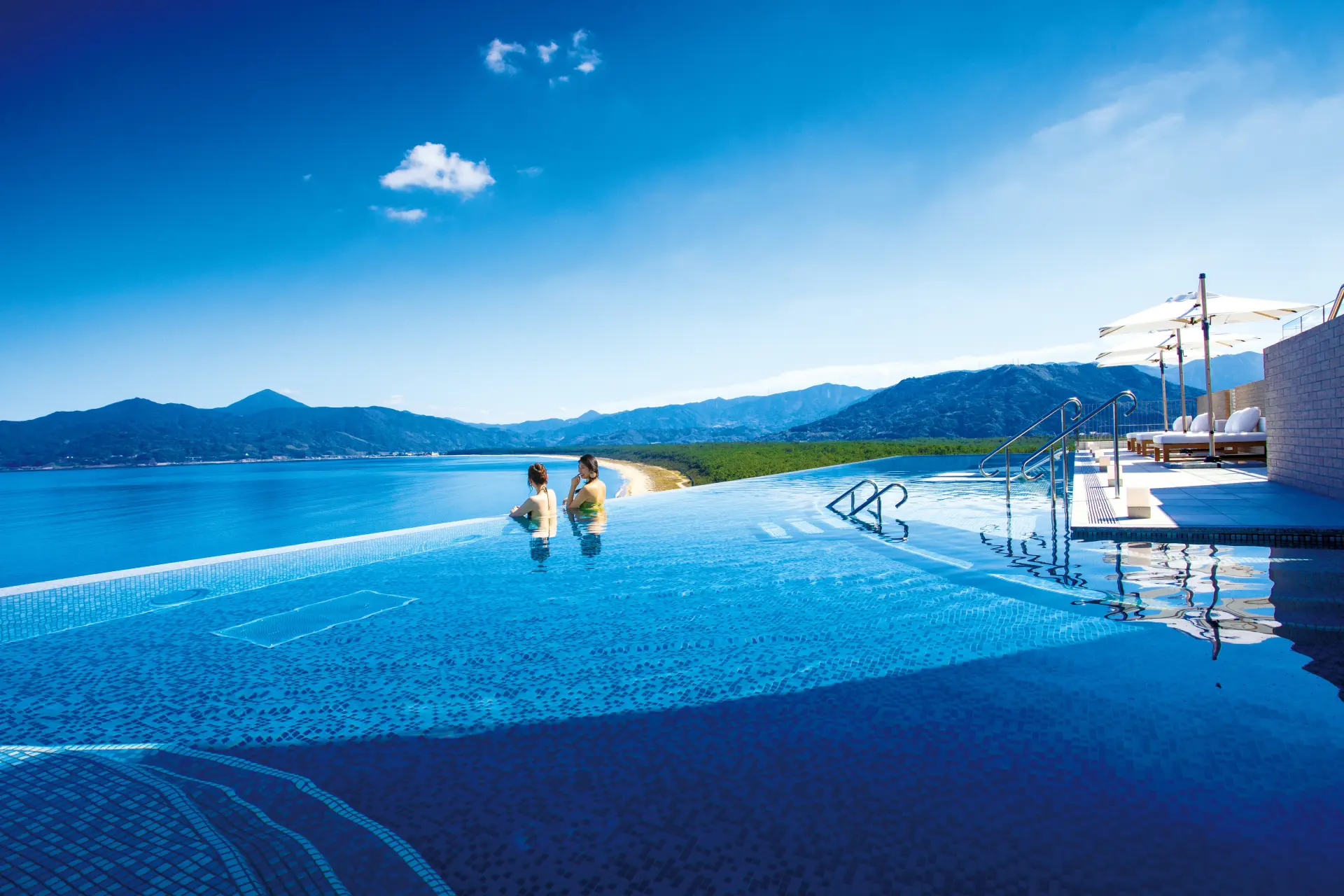
1. Karatsu Seaside Hotel
Karatsu Seaside Hotel is a resort hotel proud of its views, with the grand waters of Karatsu Bay spread out right before your eyes.
It has many fans thanks to its location next to Niji-no-Matsubara, one of Japan’s three great pine groves, where you can enjoy both the sea and greenery.
It offers 139 guest rooms, including Western-style rooms and Japanese-Western style rooms overlooking the Genkai Sea.
The hotel consists of two buildings, the West Wing and the East Wing. The East Wing features an open-air bath with a view and a sauna exclusively for East Wing guests, as well as the rooftop infinity pool “Rooftop Thermal Bath,” where guests enter wearing swimsuits.
Spend a night in Karatsu and enjoy the natural hot spring, a sodium chloride strong saline spring.
2. Mercure Saga Karatsu Resort
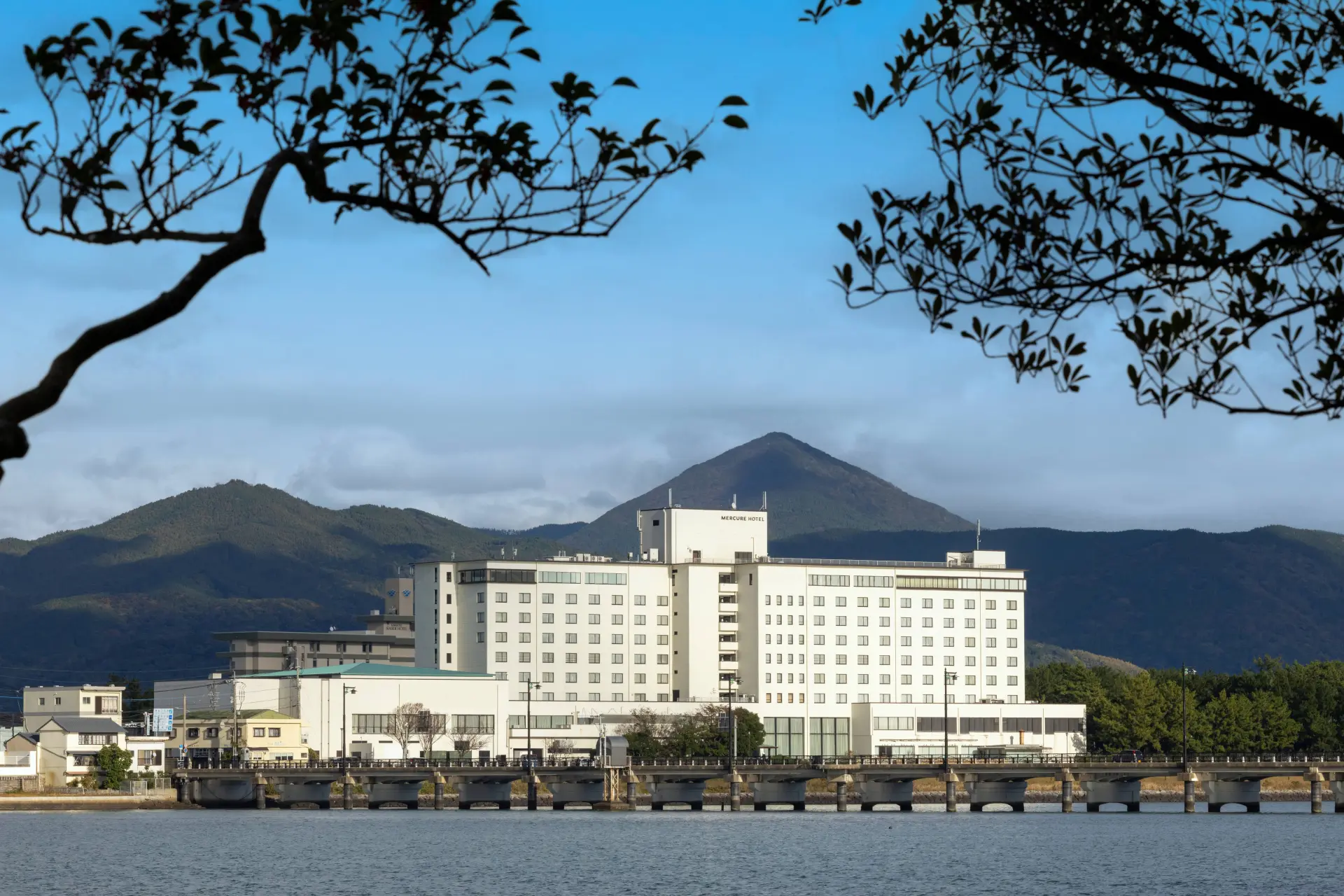
Mercure Saga Karatsu Resort is an accommodation facility located by the sea in Karatsu City, Saga Prefecture.
It is a resort hotel facing Niji-no-Matsubara, one of Japan’s three great pine groves.
From the windows of the guest rooms and restaurant, you can take in sweeping views of the Genkai Sea.
The hotel is equipped with a large public bath, sauna, and relaxation lounge.
At the relaxation lounge, you can freely enjoy drinks after your bath.
FAQ about Karatsu Sightseeing
Q
Where should I go to enjoy Karatsu in a short amount of time?
We recommend strolling through the charming streets from Karatsu Station and visiting Karatsu Castle.
Q
What local food is Karatsu famous for?
Karatsu is famous for seafood dishes such as Yobuko squid and grilled turban shell.
Summary
Facing the Genkai Sea, Karatsu is blessed with magnificent nature and is home to many spectacular scenic spots.
By visiting the places introduced in this article, you can fully enjoy not only its grand natural scenery but also the history and culture that remain in Karatsu.
Beyond Karatsu, Saga also offers many attractive sightseeing spots, delicious local food, and hot springs.
If you want to make the most of sightseeing in Saga, be sure to check out this article featuring a carefully selected list of top spots in the prefecture.