

Gion Travel Guide: One of Kyoto’s Top Entertainment Districts for Experiencing Japanese Beauty and Tradition
Gion is one of Japan’s top sightseeing districts, known for its preserved traditional streetscapes.
Step into the area and you’ll find classic Kyoto scenery that feels almost like traveling back in time.
In this article, we’ll explore the highlights of Gion through its history, charm, and ways to enjoy it.
We’ll also introduce popular sightseeing spots, recommended shopping spots, and places to stay.
If you’re visiting Gion for the first time or planning a trip to Kyoto, be sure to read to the end.
What is Gion Like?
The appeal of Gion lies in how vividly you can experience the elegant scenery that represents Kyoto.
Its more than 1,200 years of history as Japan’s capital are reflected throughout the area.
Another distinctive feature is its dual character: a charming traditional townscape and a place where you can enjoy traditional performing arts and entertainment while dining.
Although Gion is an extremely popular tourist destination, many people may not know its history or exactly which area it refers to.
From here, we’ll take a closer look at the history of Gion and explain in detail which areas are called Gion.

The History of Gion
The name Gion comes from Yasaka Shrine.
When it was founded, Yasaka Shrine was called “Gion-sha” after Jetavana, where Shakyamuni gave sermons, and it owned extensive grounds that included the present-day area.
Against this background, the surrounding neighborhood came to be called Gion, and the name gradually took root.
Built in 656, Gion-sha was worshipped as a shrine enshrining Gozu Tennō, a deity believed to ward off epidemics and evil.
When Kennin-ji Temple was built in 1202, much of Gion became part of its precincts, but under the Meiji-era policy separating Shinto and Buddhism, Gion-sha was renamed the present-day Yasaka Shrine.
If you look at the shrine buildings, which are designated Important Cultural Properties, you can still see traces of the era when Shinto and Buddhism were syncretized.
It is said that the streetscape of Gion as seen today was formed after the Edo period (1603–1868).
A hanamachi entertainment district developed on land created through embankment work along the Kamo River, and many teahouses lined the streets as the area prospered.
Later, in the late Meiji period (1868–1912), the main street was widened into a broad avenue.

What Area Is Considered Gion?
The entertainment district in Kyoto City’s Higashiyama Ward is called Gion.
Centered around Shijo Street and the Kamo River area, it refers to the area stretching east to Higashioji Street, west to Yamatooji Street, north to Shinbashi Street, and south to the border of Kennin-ji Temple.
Shinbashi Street, which forms part of this area, is protected as a nationally designated Important Preservation District for Groups of Traditional Buildings and especially retains the atmosphere of old Kyoto.

Access to Gion
Here’s how to get to Gion (Gion-Shijo Station) starting from Kyoto Station, the main transportation hub for sightseeing in Kyoto.
The city bus is the cheapest option and requires no transfers, but on weekends, holidays, and during peak sightseeing seasons, long lines often form at the bus stop.
You may end up letting buses pass because they are full, and delays due to traffic congestion are also likely, so be aware.
If you don’t want to waste time waiting, take the train or a taxi (Approx. ¥1,500 / Approx. 10 minutes).
Access by City Bus
- Route
-
1. Walk from Kyoto Station to the Kyoto Ekimae bus stop (D2 boarding area)
2. From Kyoto Ekimae bus stop (D2 boarding area), take Kyoto City Bus No. 86 or 206 and get off at Gion - Travel Time
- Approx. 20 minutes
Access by Train
- Route
- 1. Take the JR Nara Line bound for Nara from JR Kyoto Station and get off at JR Tofukuji Station 2. Transfer to the Keihan Main Line bound for Demachiyanagi at JR Tofukuji Station and get off at Gion-Shijo Station
- Travel Time
- Approx. 20 minutes
3 Ways to Fully Enjoy the Charm of Gion
The charm of Gion lies in its streets where Japanese aesthetics and tradition blend into everyday life.
There are many famous sightseeing spots and buildings, but the real value of Gion lies in the entire town, which carries on both tangible and intangible history.
If you’re making the trip to Gion, be sure to try these experiences that you can only have here.
1. Watch Maiko Walking Through the Beautiful Streets
Gion is a fascinating part of Kyoto where tradition and modern energy come together.
Its especially striking feature is the wooden teahouse-style architecture, and beautiful, atmospheric streets spread throughout the area.
Wherever you look, you’ll see elegant scenery that feels like a photograph, naturally putting your mind at ease.
One of the things unique to Gion is seeing maiko walking through these streets.
You’ll likely sense Japanese beauty in the soft sound of their footsteps and the percussion you may hear from behind the windows.
Hanamikoji Street, bustling with international visitors, is one of Gion’s most popular spots.
It is especially known for preserving Kyoto’s old-fashioned townscape, and simply strolling down the street lined with various shops is worthwhile.
Other recommended areas include Ninenzaka and Sannenzaka Streets, lined with souvenir shops and cafés, and Miyagawacho, where there are fewer crowds and you can sightsee at a more relaxed pace.

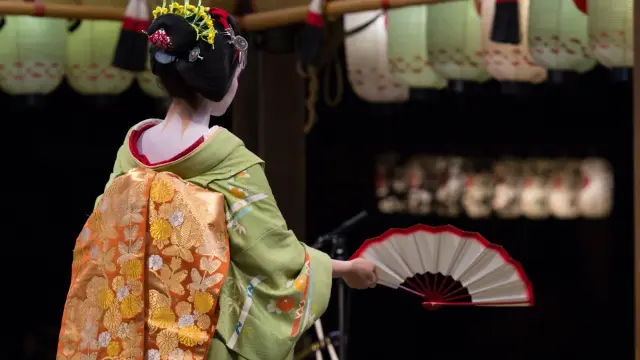
2. Experience Ozashiki Asobi
Ozashiki asobi is one of Japan’s traditional cultural experiences, where guests enjoy interacting with geiko and maiko at ryotei restaurants or ochaya teahouses.
Because geiko and maiko are there to add elegance to the gathering, the experience can include conversation, pouring drinks, taking photos, performing dances, and more.
Among these, games played together with maiko are one of the real highlights of ozashiki asobi.
Some people may not understand what makes it fun, but once you try it, it has a strangely exciting charm that can become addictive.
Another unique feature of ozashiki asobi is the culture of “ichigensan okotowari,” or no first-time customers without an introduction, meaning it has traditionally been an experience only a select few could enjoy.
That said, in recent years more places have begun offering it as part of travel plans or welcoming tourists, so there’s no need to worry.
Main Types of Ozashiki Asobi
Ozashiki asobi includes a wide range of games, from ones enjoyed by 1 to 2 people to those played by 5 to 10 people.
Here are some of the representative games commonly played in Gion.
Even if you don’t fully understand the rules, there’s no need to worry, as the maiko will guide you through them.
- Tora Tora (Tiger Ticket)
-
The rules are the same as rock-paper-scissors.
The two players hide behind a folding screen or similar partition, dance playfully to singing or shamisen music, and then make a gesture at the end to decide the winner. - Konpira Funefune
-
A hand game played to the folk song Konpira Funefune.
The players sit facing each other with a small stand between them, and a sake bottle stand is placed on top.
They are free to either take the stand or leave it there. If the stand is there, they must slap the platform with an open hand; if it is not there, they must use a fist.
The first person to make a mistake loses. - Omawarisan
-
A game in which players hit a drum twice to the call of “omawarisan” and then play rock-paper-scissors.
The loser spins around, the winner beats the drum, and after losing three times, the loser drinks sake. - Yakyuken
-
A game of rock-paper-scissors played to the song and dance beginning with “If you’re going to play baseball…”
The loser drinks one cup of sake. - Tosenkyo
-
A game in which a ginkgo leaf-shaped target is placed on a stand and players throw an open folding fan from several meters away.
The winner is decided by scoring based on how the target falls and how the fan lands open.
Areas Where You Can Enjoy Ozashiki Asobi
Areas lined with ryotei restaurants and ochaya teahouses are called kagai or hanamachi, meaning geisha districts.
These include Kamishichiken, Gion Kobu, Gion Higashi, Pontocho, and Miyagawacho, which are collectively known as Kyoto’s five kagai.
If you visit any of these districts, you may encounter geiko and maiko and enjoy ozashiki asobi.
Each area has its own character, so it’s best to choose according to your preferences.

Rules and Manners to Follow for Ozashiki Asobi
When taking part in ozashiki asobi, be sure to follow the rules and manners.
The culture of “ichigensan okotowari” also exists in part to keep out people who may cause trouble for others.
Travelers and international visitors trying it for the first time may get overly excited, so extra care is needed.
The etiquette you should know is listed below, so please use it as a guide.
- Behave like a gentleman at all times (do not touch kimono or skin)
- Do not encourage geiko or maiko to eat (and be mindful of your limits with alcohol)
- Go in office casual attire (it is safest to avoid T-shirts, denim, and sandals)
- Address geiko and maiko by their names stage names, or call them oneesan
- Give a kokorozuke gratuity depending on the situation ※ not required

3. Stroll Through the Dreamlike Gion at Night
We also recommend walking through Gion at night, when it shows a very different face from the daytime.
The glow of lanterns reflects on the stone-paved streets, and the magical lighting beautifully colors the entire district.
As you take it in, you’ll likely feel as though you’ve slipped back in time and been drawn into a world all its own.
The people passing through the narrow lanes become part of the scene as well, adding to the district’s charm.
The sound of the river and the pleasant evening breeze become the perfect background music, making you notice parts of nature that may escape you during the day.
Hanamikoji Street, Shinbashi Street, and Shirakawa Minami Street are especially enjoyable, with their calm atmosphere and many distinctive shops.
It’s also worth visiting shrines and temples such as Yasaka Shrine and Nishiki Tenmangu to pray or stroll through the grounds at night.


Essential Manners to Follow When Sightseeing in Gion
Gion is highly popular with visitors from Japan and abroad, but in recent years various problems caused by poorly behaved tourists have become more frequent.
In places such as Kosode Koji, a narrow lane just off Hanamikoji, residents have reached their limit after dealing with littering and incidents such as maiko being unable to leave teahouses.
As a last resort, signs prohibiting pass-through have been installed on Kosode Koji, and violators are subject to a ¥10,000 fine.
Depending on how effective this measure is, similar restrictions may be expanded to other private roads.
To protect the wonderful streetscape of Gion, following proper manners is essential.
So that both local residents and travelers can spend time here comfortably, we’ll explain what you should be careful about when sightseeing in Gion.
Do Not Enter or Pass Through Private Roads
Gion is a mix of public roads and private roads, and some of these areas are lined with private homes.
As mentioned above, if you step just one lane beyond places like Kosode Koji, you can quickly end up on private property.
Until now, residents had allowed people to pass through out of goodwill, but with the growing number of tourists, this has in principle been prohibited.
There are signs on private roads banning photography and pass-through, so be sure to follow them and respect residents’ privacy.

No Photography on Private Roads or of Geiko
In the Gion area, more and more visitors began waiting for and chasing geiko to take photos, so the ban on photography has been clearly stated in writing.
As mentioned above, photography on private roads that infringes on privacy is also prohibited.
Of course, please never call out to geiko or maiko or touch their kimono or accessories without permission.
Even if you happen to pass one, the stylish thing to do is keep the moment in your memory as a once-in-a-lifetime encounter.
If you want to take photos, enjoy ozashiki asobi instead.

No Eating, Smoking, or Littering
This is not limited to Gion, but unfortunately there are still some people who do not follow these rules.
Other prohibited behavior includes leaning on fences and walking spread out across the road.
There are illustrated signs at area entrances and elsewhere so that children and foreign visitors who do not understand Japanese can also understand them, so please check them before sightseeing.
To preserve Gion’s unique and captivating culture, each visitor should stay mindful of their behavior.

7 Must-Visit Sightseeing Spots in Gion
Here are seven sightseeing spots you should visit in Gion.
Each is an attractive place that reflects the elegance and tradition of Kyoto, and together with the surrounding area they help shape the district’s townscape.
The beautiful scenery and historic buildings designated as Important Cultural Properties or UNESCO World Heritage Sites are not to be missed.
These places will make you truly feel that you’ve visited Gion and Kyoto, and you’ll be glad you came, so be sure to stop by.
1. Yasaka Shrine
The enshrined deities are Susanoo-no-Mikoto, Kushiinadahime-no-Mikoto, and Yahashira-no-Mikogami, and the shrine serves as the head shrine of Approx. 2,300 related shrines across Japan, including Yasaka Shrines and shrines dedicated to Susanoo-no-Mikoto.
The West Gate, standing at the eastern end of Shijo Street, one of Kyoto’s leading main streets, is a symbolic structure of the Higashiyama area and is designated as an Important Cultural Property of Japan. Its beautiful vermilion appearance stands out even from a distance, making it a popular photo spot.

2. Yasaka Koshindo
A temple in Higashiyama, one of Kyoto’s top sightseeing areas, where Kiyomizu-dera Temple and Yasaka Shrine are also located.
The most eye-catching feature on the grounds is the colorful “kukurizaru,” made of cloth and recently popular on social media. These charms are shaped like monkeys with their hands and feet tied, symbolizing the calming and control of the restless heart that is always moving like a monkey. It is said that if you make a wish on a kukurizaru and give up one desire, your wish will come true. Each kukurizaru is handmade, and visitors write their wish, the date, and their name on it before tying it up.

3. Kodai-ji Temple
A Zen temple of the Kennin-ji branch of the Rinzai sect, located in the foothills of Kyoto’s Higashiyama, northeast of Hokan-ji Temple, which is famous for Yasaka Pagoda.
Under the orders of Tokugawa Ieyasu, temples in this area were relocated and the site was developed, resulting in a temple complex said to have been magnificent in the extreme.
Although many of its buildings were later lost to repeated fires, structures such as the Kaisan-do Hall, Otamaya mausoleum, Front Gate, Kangetsudai pavilion, and the tea houses Kasatei and Shiguretei still remain, preserving the splendid appearance of the Azuchi-Momoyama period.
All of these date back to the time of the temple’s founding and are valuable cultural assets designated as Important Cultural Properties of Japan.

4. Hanamikoji Street
Hanamikoji Street is Gion’s main street, running north to south through the district from Sanjo to Kennin-ji Temple.
Despite the word “koji,” meaning lane, it is a relatively wide street lined with shops and lively with many tourists. The section south of Shijo Street is especially known for preserving the old-time atmosphere of the teahouse district.
At the corner of Shijo Street and Hanamikoji Street stands Ichiriki-tei, a prestigious teahouse used by many important figures and also featured in the kabuki play Kanadehon Chushingura.
From there to Kennin-ji Temple, the street is lined with teahouses, ryotei restaurants, cafés, and restaurants, and beyond that is the Gion Kobu Kaburenjo Theater, where the Miyako Odori dance performances are held.

5. Kennin-ji Temple
Kyoto’s oldest Zen temple and the head temple of the Kennin-ji branch of the Rinzai sect.
Founded in 1202, Minamoto no Yoriie, the second shogun of the Kamakura shogunate, donated the temple grounds, and the temple was established with Zen master Eisai as its founding priest.
At the center of its vast precincts is a temple layout in which the Sanmon Gate, Hatto lecture hall, and Hojo abbot’s quarters stand in a straight line facing the imperial messenger gate, with the main sub-temple adjacent to the east of the Hojo.
The imperial messenger gate at the entrance is a four-legged gate with a gabled roof covered in copper plates, and it is designated as an Important Cultural Property of Japan as a structure that still conveys the style of the late Kamakura period.

6. Kyoto Shijo Minamiza Theatre
Built in the early Edo period, it is said to be Japan’s oldest theater.
It was one of the seven theaters officially authorized by the Tokugawa shogunate during the Genna era (1615–1623), and it is also famous as the birthplace of kabuki.
It is the only theater that has continued its history for more than 400 years and still stages kabuki in Kyoto, where the art form was born.
Minamiza is also known for its distinctive exterior in the Momoyama-style gabled design that captivates visitors, while the lobby and entrance feature lavish architecture with a nostalgic atmosphere.
With 1,088 seats, it hosts performances in a wide range of genres, from traditional kabuki to musicals and concerts.
In particular, the annual “Kichirei Kaomise Kogyo” held every December is a year-end tradition for the people of Kyoto, and many kabuki actors take the stage.
In recent years, it has also presented collaborations with the virtual singer Hatsune Miku (Vocaloid), sharing new ways to appreciate traditional performing arts.

7. Kiyomizu-dera Temple
Founded in 778, it was registered as a UNESCO World Heritage Site in 1994.
Its 130,000-square-meter grounds spread across the middle slope of Mount Otowa and contain more than 30 temple buildings and monuments, including National Treasures and Important Cultural Properties.
Kiyomizu-dera is also stunning in every season, with cherry blossoms in spring, greenery in summer, autumn leaves in fall, and snow in winter.
To the east of the main hall flows Otowa Waterfall, which gave the temple its name. Scoop up the clear water from one of its three streams with a ladle and drink while wishing for purity of mind and the fulfillment of your prayers.

Enjoy Exceptional Japanese Cuisine! 5 Popular Restaurants in Gion
Here are five popular restaurants located within walking distance of Gion.
Each one shows a strong commitment to its ingredients, allowing you to enjoy fresh dishes packed with flavor.
We’ve also included recommended menu items, so when you visit Gion, be sure to stop by one of these well-known spots.
Each restaurant has its own appeal and personality, so choose based on your tastes and mood.
1. Gion Emon
Gion Emon is a sushi and seafood restaurant located 15 minutes on foot from Gion-Shijo Station (or 5 minutes on foot from Higashiyama Station on the Tozai Line).
The ingredients and toppings are carefully sourced from selected production areas, so you can enjoy seafood prepared by skilled chefs while still at its freshest.
At all times, the restaurant offers Approx. 30 kinds of selections, and another attraction is its wide range of drinks, mainly sake and shochu, chosen to complement the food.
The menu includes Approx. 50 types, from classics to rare labels and limited-time offerings, making it a great choice for sake lovers as well.
Another welcome point is its wide price range to suit different budgets, along with three types of seating depending on the occasion: counter seats, tables, and private rooms.
A popular menu item is the omakase course, which includes sea urchin and fatty tuna and requires a reservation.
This satisfying eight-course meal includes not only sushi but also the restaurant’s specialties such as charcoal-grilled dishes and tempura.
If you tell them your preferences when booking, they will accommodate them, so even guests with likes or dislikes can feel at ease.

2. Kyo Gion Hikohachi
Located around a 10-minute walk from Gion-Shijo Station and just near Yasaka Shrine, Kyo Gion Hikohachi is a Japanese restaurant.
The owner personally goes to the central wholesale market and is deeply committed to sourcing domestic ingredients, with a focus on wild-caught seafood.
In addition to its signature sushi, you can enjoy sashimi, tempura, and other seasonal ingredients that change throughout the year.
Another feature of the restaurant is its welcoming, homey atmosphere created by Mr. Abe, the chef who has devoted himself entirely to Japanese cuisine.
It is also well regarded for being easy for international visitors to enter and for its comfortable atmosphere.
The recommended choice is the limited seasonal course menu featuring carefully selected ingredients of the season.
In summer it centers on hamo pike conger, and in winter on crab and fugu blowfish, so you’re sure to be satisfied by the wide variety of dishes.
Its overall reasonable pricing is another part of its appeal, making it easy to enjoy without hesitation.

3. Junidanya Main Branch
Junidanya Main Branch, said to be the birthplace of shabu-shabu, is a famous restaurant where you can enjoy authentic shabu-shabu and sukiyaki.
It is located about a 5-minute walk from Gion-Shijo Station and operates in a classic Japanese house tucked just off Hanamikoji Street.
Inside the chic building, which is Approx. 150 years old, works by master artisans are displayed throughout, drawing guests into a space full of atmosphere.
Another distinctive feature is that since its founding, the restaurant has continued to use a striking style centered on a pot called the hokozu, designed by the first owner.
The shabu-shabu, made with carefully selected sirloin of premium Kyoto black wagyu beef and cooked in a traditional copper pot, is simply exquisite.
It is especially recommended to savor the meat slowly to the very last bite by dipping it in the restaurant’s homemade sesame sauce, which brings out its rich flavor.
The menu is simple, with only four course options across two types: shabu-shabu (Ume, Matsu, and Special Selection) and sukiyaki.
Choose according to your budget and mood, and enjoy a blissful time.

4. Kyoto Gion Anon Kyoto Gion Main Store
A specialty shop for sweet bean paste sweets standing along Kiridoshi Street in Gion, where old Kyoto townhouses can still be found.
It is run by Sazae Shokuhin, famous for its ohagi rice cakes made with Tokachi azuki beans from Hokkaido, known as “red diamonds.” Building on techniques for making sweet bean paste that the company has refined over many years, the shop offers a wide variety of innovative sweets that go beyond the boundaries of Japanese and Western confectionery.
The shop name combines the first hiragana character “a,” the last one “n,” and “no,” the 25th character right in the middle. The name expresses the desire to value connections between people through anko sweet bean paste, just as the Japanese syllabary continues from one character to the next.

5. Kagizen Yoshifusa Shijo Main Branch
A long-established sweet shop in Gion said to have been founded more than 300 years ago during the Kyoho era of the Edo period.
Its signature sweet is kuzukiri, loved for its smooth texture and just the right firmness. For the kuzu starch, the shop carefully selects the finest Yoshino kuzu from Morino Yoshino Kudzu Honpo in Ouda, Nara. Because this simple sweet is made only by dissolving kuzu in water, heating it in hot water, chilling it in cold water, and cutting it into thin strips, the quality of the ingredient shines through in its deep flavor. The clean yet rich sweetness of the black sugar syrup, made with brown sugar from Hateruma, enhances the flavor of the kuzu even further.
The calm interior is also lovely, with design touches throughout that evoke its long history. Relax and enjoy this beloved traditional sweet of Gion in an elegant setting.

Find Souvenirs That Let You Feel Japanese Culture! 5 Shopping Spots in Gion
Here are five carefully selected shopping spots recommended in Gion.
One of their main appeals is the chance to find items unique to Kyoto and Gion, with many products that are perfect as souvenirs.
They carry on tradition while also being practical, so you’re sure to discover a favorite.
Enjoy shopping along with your stroll through the area.
1. Yojiya Kiyomizu Sannenzaka Store
Yojiya is a long-established care brand founded in Kyoto with a history of more than 100 years.
It offers a wide variety of items that add color to everyday life, from beauty accessories to facial and body care products.
With more than 200 products in total, its original items for skincare, dressing up, and grooming are highly regarded.
Among them, the signature oil-blotting paper has long been loved by many people as a classic Kyoto souvenir.
Yojiya’s oil-blotting paper is known for its excellent absorbency, removing only excess sebum and leaving the skin looking fresh and clean with just one sheet.
Made with special high-density Japanese paper, it is also gentle on the skin and is both fragrance-free and color-free.
In addition to the Kiyomizu Sannenzaka Store, located about a 10-minute walk from the Kiyomizu-michi city bus stop, there are nine stores in Kyoto Prefecture, including the Gion Main Store near Gion-Shijo Station and the Sagano Arashiyama Store with an attached café.

2. Maisendo Gion Store
Maisendo Gion Store is a specialty folding fan shop located a 2-minute walk from Gion-Shijo Station.
Inside, you’ll find stylish fans made using the traditional methods of Kyo-sensu folding fans, which have a history of 1,200 years.
With a diverse lineup, each fan is carefully crafted one by one using the sensibilities and techniques of the times, making them items you can truly enjoy using.
Each one captures delicate aesthetics and designs inspired by the changing seasons, allowing you to experience the atmosphere of Gion.
You can have names and other text engraved with a laser, making them great not only for yourself but also as gifts.
The shop also has another side as a sightseeing spot, since you can experience traditional culture through handmade custom-order fans and fan-painting workshops.
Colorful and cute sweets such as Pikomarun (hard candy and konpeito) and Maikoto (cookies shaped like the back view of a cat, with seasonal patterns) are also popular as souvenirs.

3. Kyoto Ceramic Center
Kyoto Ceramic Center is an exhibition facility that continues to share the tradition and appeal of Kyo-yaki and Kiyomizu-yaki ceramics.
It is located at the entrance to Gojozaka, the heart of Kyoto culture since the Heian period (794–1185), about a 15-minute walk from Gion-Shijo Station.
Another nice point is that admission is free.
Inside, ceramics reflecting the trends of various eras are displayed, letting you appreciate Kyoto pottery up close.
In the permanent exhibition area on the first floor, you can actually pick up, admire, and purchase works by master artisans as well as new creations by promising ceramic artists.
In the special exhibition area on the second floor, you can enjoy regularly held solo exhibitions, themed exhibitions, and live demonstrations of the production process.
You’ll likely be deeply moved by works that blend techniques polished through tradition with modern sensibilities.

4. Gion Tsujiri Gion Main Store
Founded in 1860 and operating in Gion as Gion Tsujiri since 1948, this long-established tea shop specializes in Uji tea. In addition to premium Uji matcha, it sells tea leaves such as gyokuro and hojicha.
Inside the shop, marked by a giant object modeled after a chasen bamboo tea whisk used for preparing matcha, you’ll find a wide lineup of tea products known for their rich aroma and flavor, from the highest-grade matcha used by tea masters to tea bags for casual enjoyment.
Beyond tea leaves, the shop also offers a broad selection of items such as Tsujiri no Tsuki matcha gaufrettes, Japanese and Western sweets made with tea, and matcha cosmetics. Stylish packaging, especially the cube-shaped products, also makes them ideal as souvenirs.

5. Giwon Ninigi Main Branch
Kajitsu no Fuku is a line of fruit daifuku created by Ninigi, a Japanese confectionery shop in Kyoto’s Gion district. The lineup includes exquisite sweets made by pairing seasonal fruits such as strawberries and mandarins with white bean paste or whipped cream and wrapping them in soft mochi.
The Gion Potchiri, which wraps five kinds of seasonal fruit, was inspired by the “potchiri” worn by maiko. A potchiri is an ornamental clasp worn on a maiko’s obi sash and is said to be so expensive and precious that people say, “If you fall, protect the potchiri.” This daifuku, unique to the Gion district, is one of the most popular items in the Kajitsu no Fuku series.

3 Recommended Places to Stay for Gion Sightseeing with True Omotenashi Hospitality
Here are three recommended hotels where you should stay when sightseeing mainly around Gion.
Each offers excellent access, of course, but also the kind of warm omotenashi hospitality that lets you feel the spirit of Japan and Kyoto.
The hotels are full of thoughtful touches, and you’re sure to be impressed by interiors designed to evoke Kyoto’s streetscape and atmosphere.
Each offers more than just a place to sleep, so consider staying at one of them.
1. Kyoto Granbell Hotel
Kyoto Granbell Hotel is a designer hotel located a 2-minute walk from Gion-Shijo Station.
Not only is it in an excellent location for sightseeing in Kyoto, but its exterior reminiscent of a Kyoto townhouse and its refined guest rooms, where traditional beauty harmonizes beautifully with modern design, are also outstanding.
Another feature is that it offers six carefully designed room types, allowing guests to enjoy a comfortable stay in stylish surroundings.
Guests also praise the hotel for being clean and easy to use overall, and it offers a chance to experience a different side of Kyoto from the city streets themselves.
The hotel also has a large public bath overlooking a garden, and details such as the lighting help soothe the fatigue of travel.
The breakfast buffet, with more than 50 carefully selected Japanese and Western dishes, is another attraction not to be missed.
If you try Kyoto-style obanzai home-style dishes and side dishes, you’ll start your day in a way that truly feels like Kyoto.
Another welcome point is the 12:00pm check-out, which lets you relax well into the next day.

2. Kyoto Inn Gion No. 2
Kyoto Inn Gion No. 2 is located about a 7-minute walk from Gion-Shijo Station, near Kiyomizu-dera Temple and Nishiki Market.
One of its appeals is the attentive hospitality of each staff member, making guests feel as if they are relaxing in their own home.
The guest rooms are unified in Japanese style so that you can feel Kyoto culture firsthand, and some rooms even feature folding screens and kimono as interior décor.
The hotel also regularly hosts Kyoto-style events for international visitors, such as Gion walking tours and Japanese cultural experiences, which are well worth joining.
By staying here, you can experience traditional Japanese omotenashi and hospitality.

3. Hotel Wing International Premium Kyoto Sanjo
Hotel Wing International Premium Kyoto Sanjo is located a 3-minute walk from Sanjo Keihan Station (Exit 1).
It opened in 2021 and is relatively new, built around the concept of a “doma” earthen-floor space plus a “gallery.”
Inside, items such as ceramics and solid wood are placed throughout to create a calming space that evokes Japanese culture and nature.
The guest rooms are sophisticated spaces that arrange Japanese elements in a modern style, and though compact, they feel spacious and comfortable.
One especially notable feature is the view of Kyoto’s cityscape from the rooms, which spreads out before you the moment you open the curtains.
The breakfast buffet is also highly popular, offering well-balanced dishes made with seasonal ingredients grown in Kyoto.
There are also seasonal menu items, so you’re sure to be satisfied while enjoying the feel of the four seasons.

Gion Sightseeing Map
FAQ about Gion
Q
What does Gion mean?
A
It comes from the fact that Gozu Tennō, the deity enshrined at Yasaka Shrine, was regarded as the guardian deity of Jetavana.
Q
What is the difference between a geiko and a maiko?
A
A geiko is a woman age 20 or older who has completed her maiko training and works professionally by performing traditional arts such as shamisen and dance. A maiko is a young woman between the ages of 15 and 20 who is still training to become a geiko.
Q
What food is recommended for eating while walking in Gion?
A
We recommend Ichikoro (candied strawberries), which is sure to look great on social media, and Imo Pippi’s hugely popular 1mm Silk Thread Purple Sweet Potato and Ice Cream.
Summary
We’ve introduced the charm of Gion, one of Japan’s best-known entertainment districts, along with ways to enjoy it and popular sightseeing spots you should visit.
What we covered here is only a small part of what Gion has to offer, and there are many more wonderful places and ways to enjoy the area.
We hope you’ll experience Kyoto’s traditions and the streets of Gion from many different angles.
Just don’t forget to follow the rules, including not entering private property or taking photos in restricted areas.
Be sure to check out this article as well, which comprehensively covers useful information for your Kyoto trip, including classic sightseeing spots and recommended gourmet food.