Papermaking Experience at Higashichichibu Village Washi-no-Sato

Verified [Verified] denotes information that has been published with confirmation of its owing parties.

Papermaking Experience at Higashichichibu Village Washi-no-Sato

Make your own one-of-a-kind sheet of washi in this hands-on papermaking experience.

3.12 1

Last update :

Washi is traditional Japanese paper. The techniques used to make Hosokawa-shi, a type of handmade washi passed down in Higashichichibu, have been designated an Important Intangible Cultural Property of Japan in recognition of their value. At Washi-no-Sato, visitors can discover the history and appeal of this traditional paper, which has a history spanning 1,300 years, through a hands-on papermaking experience.

Washi-no-Sato
Washi-no-Sato

Choose from Five Items to Make

There are five options: plain washi, patterned washi, postcards, square paperboards, and mini tapestries. For any option other than plain washi, you can add flowers and plants from the Washi-no-Sato garden to create your own original piece.

Time to Get Started!

If you plan to add flowers and plants, you may have trouble deciding which ones to use. The key is to choose brightly colored varieties. Selecting a range of sizes will give your piece greater visual contrast. Once you have decided how to arrange them, it is time to start making your paper.

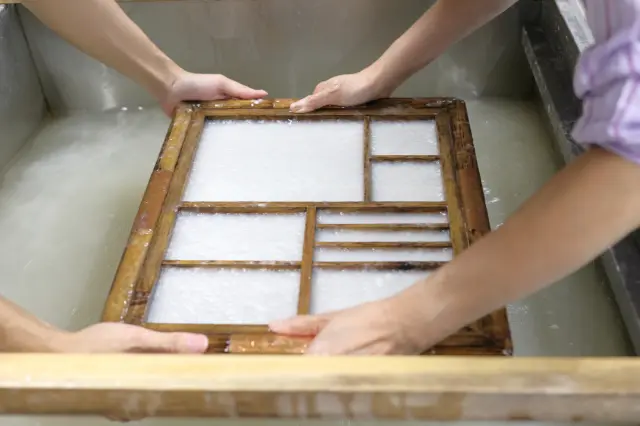
After learning how to move the sugeta papermaking screen, it is time to begin the papermaking experience.
Arrange the flowers and plants you picked on the freshly formed sheet of paper. This is your chance to show off your creativity!

In addition to the hands-on experience facility, the site features thatched-roof houses that make you feel as though you have traveled back to the Edo period (1603–1868), offering an opportunity to learn more about Japanese history and culture. The shop also carries a variety of washi souvenirs, so be sure to stop by!

Photos

  • Washi-no-Sato

    Washi-no-Sato

  • After learning how to move the sugeta papermaking screen, it is time to begin the papermaking experience.

    After learning how to move the sugeta papermaking screen, it is time to begin the papermaking experience.

  • Arrange the flowers and plants you picked on the freshly formed sheet of paper. This is your chance to show off your creativity!

    Arrange the flowers and plants you picked on the freshly formed sheet of paper. This is your chance to show off your creativity!

Reviews

1

Some reviews are AI-translated.

  • See More

    I visited with my usual travel friends while staying in Nagatoro, looking for something to experience. We found out we could try paper-making here. Unfortunately, we didn't check the hours and it was only open until 3:00 p.m., so we had to give up on the first day. We came back the next morning and were able to do the experience.

    The paper-making itself wasn't too hard—you just dip the frame into the already dissolved washi pulp. But placing the flowers and plants we picked onto the paper was pretty tricky. You have to lay them flat so they don't become three-dimensional, but they kept scattering and wouldn't stay in place. I really wished we had tweezers! We were told that white flowers would disappear, but I wasn't sure how much they'd actually fade. It might have been helpful if there were sample postcards, tapestries, or colored paper on display. Overall, I was happy with what I made and it became a great memory.

Facility Information

Name in Japanese
東秩父村 和紙の里
Experience
Papermaking Experience
Address
441 Mido, Higashichichibu Village, Chichibu County, Saitama Prefecture
Phone
0493-82-1468
Available
Year-round except during the New Year holidays
Admission
JPY 600–1,500
Capacity
Up to 15 people
Important Information
Reservations are required for groups of 15 or more.
Official website
Official website (Japanese)
Hokkaido Tohoku Kanto Chubu Hokuriku Kansai Chugoku Shikoku Kyushu Okinawa