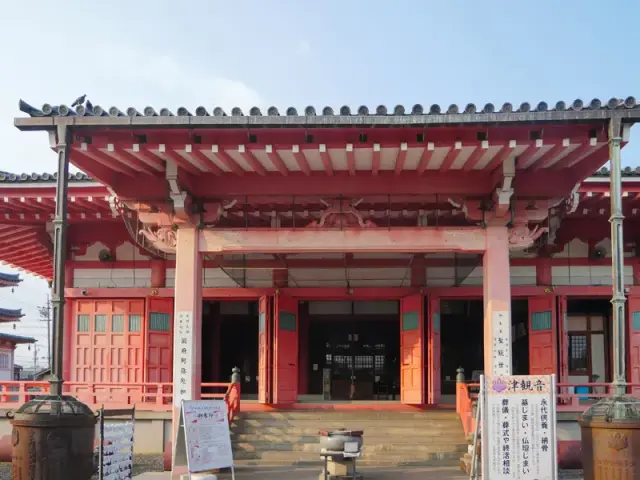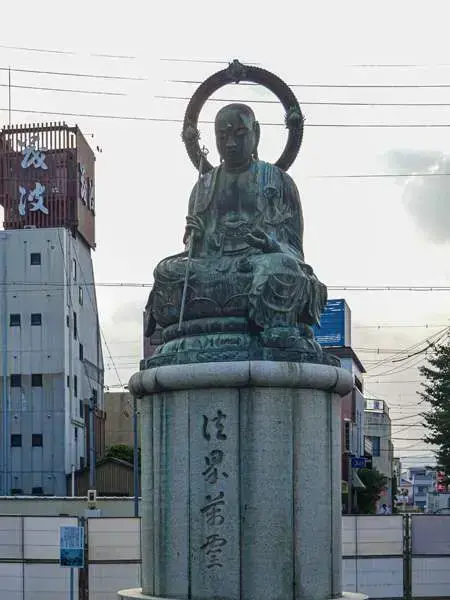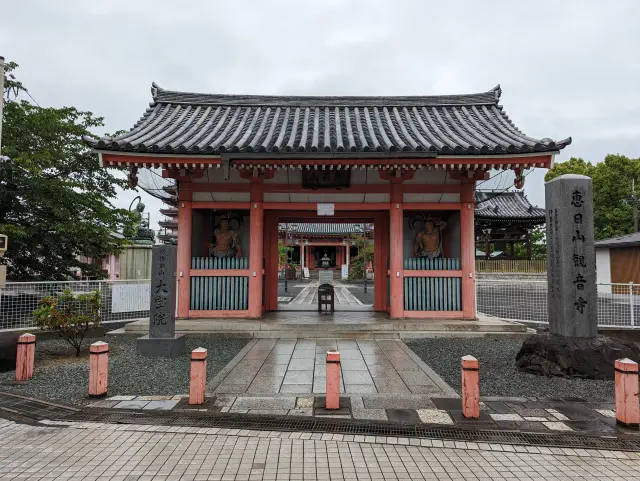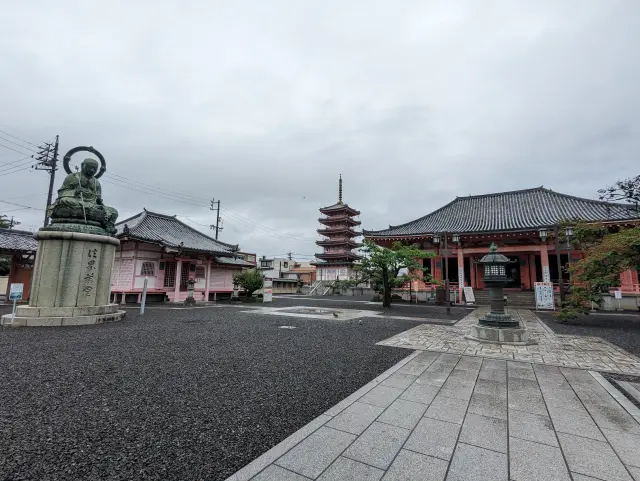
I took a ninja-themed high-speed ferry from Chubu Centrair International Airport to Tsu, then caught a taxi from Tsu Port. The shopping streets around Tsukannon Temple were quite quiet, completely unlike the lively areas around Sensoji Temple and Osu Kannon. Once inside the temple grounds, however, the vermilion five-story pagoda, main hall, Kannon statue, and ceiling paintings were all impressive, lending the temple an even more solemn atmosphere.
The decorations and ceiling paintings inside the main hall are also worth examining closely. The colorful celestial maiden paintings on the ceiling add a gentle, sacred feeling to the space. Other details include a dragon-shaped purification fountain, elements related to devotion to Kobo Daishi, and rubbing stones associated with the pilgrimage. They would be easy to miss on a quick visit.
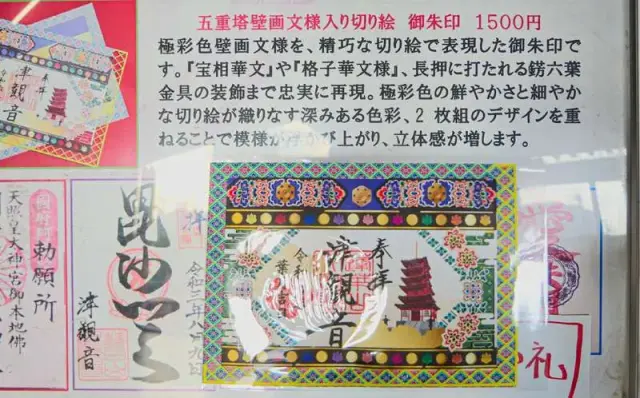
The biggest surprise for me was the intricate paper-cut goshuin featuring patterns from the five-story pagoda’s murals. Its design draws from paintings and decorations inside the pagoda that are normally difficult to see. It is ornate yet dignified. I usually keep paper mementos from my travels in my journal, but this goshuin felt too special for that, so I chose to display it separately on my desk.
Tsukannon Temple may not be the liveliest temple, but it is where I most strongly felt a sense of peace and solemnity. Of the three major Kannon temples, this was the most personal and memorable stop for me.
All Reviews of Tsukannon Temple (Enichizan Kannonji Daihoin)
3.27
2
- Overview
- Photos
- Reviews
- Basic Information
- Newest
- With Photos
- Most Liked
Showing 1–2 of 2
-
-
Tsukannon is considered one of the Three Great Kannon temples, along with Asakusa Kannon and Osu Kannon. But location-wise, if I hadn’t stayed near Tsu Station this time, I probably would’ve skipped it.
After actually visiting, compared with Asakusa and Osu, Tsukannon has a much quieter, more peaceful atmosphere for worship. It made it easier to really focus on the temple’s vibe and history.
-