
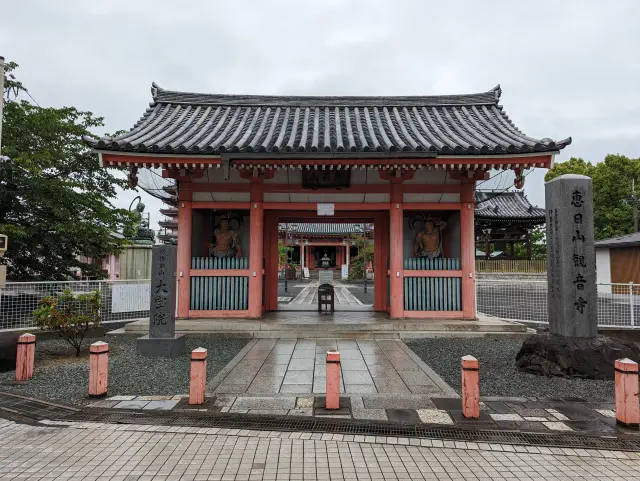
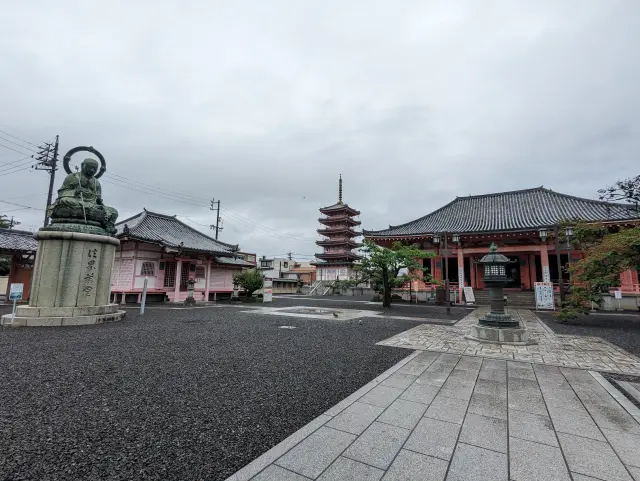
Tsukannon Temple (Enichizan Kannonji Daihoin)

Verified [Verified] denotes information that has been published with confirmation of its owing parties.

Tsukannon Temple (Enichizan Kannonji Daihoin)

Power up at Tsukannon, one of Japan’s Three Great Kannon temples.

4.07 2

Last update :
Supervised by :  Tsukannon Temple

This historic temple is said to have been founded in 709, and its official name is “Enichizan (Enichizan) Kannonji Daihoin.” Locals have long affectionately called it “Kannon-san.” The principal image, “Sho Kannon Bosatsu,” is known as “Tsukannon,” and is counted as one of Japan’s Three Great Kannon temples alongside Tokyo’s “Asakusa Kannon” and Aichi’s “Osu Kannon.” It is said to bring a wide range of blessings, including good fortune and success in business.

The grounds also enshrine “Kokufu Amida Nyorai,” said to be a Buddha form of Amaterasu Omikami, the sun goddess from Japanese mythology. It is usually not open to the public, but you can view it on special occasions, such as the monthly temple fair on the 18th and during the first three days of the New Year.

The temple hosts many annual events, and the “Oni-osae Setsubun” held every year on February 3 is especially well known. It began when a Kannon statue said to hold spiritual power was protected from an oni to keep the subdued oni—restrained by the power of Sho Kannonzeon Bosatsu—from running wild. Today, as a Shinto-style rite, a large-scale “fukumame” bean-throwing ceremony is held. The “Tsukannon Museum,” where around 600 valuable cultural properties such as Buddhist paintings and ancient documents are displayed on an ongoing basis, is also well worth a visit.

Located in a bustling downtown area and easy to access, it’s a great place to stop by.

Highlights

  • A historic temple said to have been founded in 709.
  • The principal image, Sho Kannon Bosatsu, is known as “Tsukannon” and is counted as one of Japan’s Three Great Kannon temples.
  • Kokufu Amida Nyorai, Amaterasu Omikami’s honjibutsu (Buddha counterpart), is on special display on the 18th of every month and during the first three days of the New Year.
  • Famous for the “Oni-osae Setsubun” held every year on February 3.
  • Close to the downtown area and easy to visit.

Photos

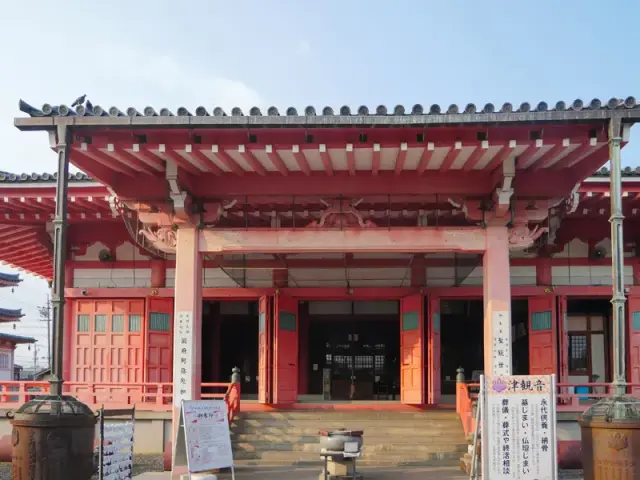
  • A temple known for its striking vermilion five-story pagoda

    A temple known for its striking vermilion five-story pagoda

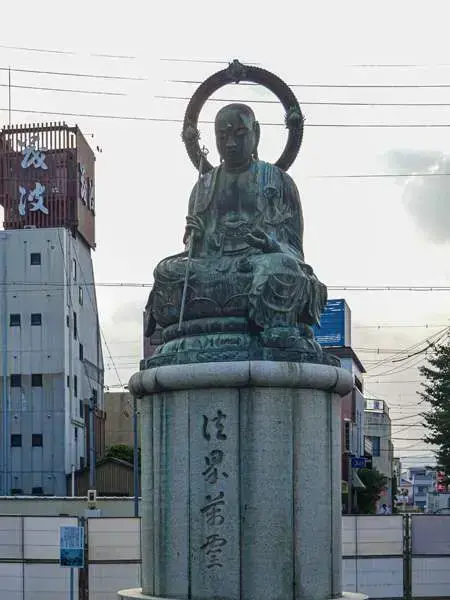
  • The principal image, “Sho Kannon Bosatsu,” is said to bring health, happiness, and better luck at work

    The principal image, “Sho Kannon Bosatsu,” is said to bring health, happiness, and better luck at work

  • “Kokufu Amida Nyorai,” enshrined together here, is only open to the public on the 18th of each month and during the New Year period

    “Kokufu Amida Nyorai,” enshrined together here, is only open to the public on the 18th of each month and during the New Year period

  • At the “Oni-osae Setsubun” held every year on February 3, visitors take part in a bean-throwing ritual

    At the “Oni-osae Setsubun” held every year on February 3, visitors take part in a bean-throwing ritual

  • In October, the city’s largest festival, the “Tsu Festival,” is also held, with a variety of events throughout the year

    In October, the city’s largest festival, the “Tsu Festival,” is also held, with a variety of events throughout the year

Official FAQs

Frequently Asked Questions have been vetted and answered directly by each listing.

Q

Do you offer goshuin temple stamps?

A

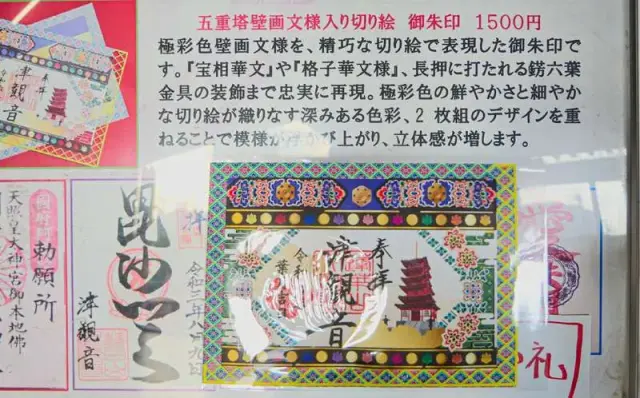
Yes. We offer a wide variety, including rare Swarovski goshuin.

Q

Is there parking?

A

Yes.

Q

Are there coin lockers?

A

No.

Reviews

2

Some reviews are AI-translated.

  • See More

    I took a ninja-themed high-speed ferry from Chubu Centrair International Airport to Tsu, then caught a taxi from Tsu Port. The shopping streets around Tsukannon Temple were quite quiet, completely unlike the lively areas around Sensoji Temple and Osu Kannon. Once inside the temple grounds, however, the vermilion five-story pagoda, main hall, Kannon statue, and ceiling paintings were all impressive, lending the temple an even more solemn atmosphere.
    The decorations and ceiling paintings inside the main hall are also worth examining closely. The colorful celestial maiden paintings on the ceiling add a gentle, sacred feeling to the space. Other details include a dragon-shaped purification fountain, elements related to devotion to Kobo Daishi, and rubbing stones associated with the pilgrimage. They would be easy to miss on a quick visit.
    The biggest surprise for me was the intricate paper-cut goshuin featuring patterns from the five-story pagoda’s murals. Its design draws from paintings and decorations inside the pagoda that are normally difficult to see. It is ornate yet dignified. I usually keep paper mementos from my travels in my journal, but this goshuin felt too special for that, so I chose to display it separately on my desk.
    Tsukannon Temple may not be the liveliest temple, but it is where I most strongly felt a sense of peace and solemnity. Of the three major Kannon temples, this was the most personal and memorable stop for me.

  • See More

    Tsukannon is considered one of the Three Great Kannon temples, along with Asakusa Kannon and Osu Kannon. But location-wise, if I hadn’t stayed near Tsu Station this time, I probably would’ve skipped it.

    After actually visiting, compared with Asakusa and Osu, Tsukannon has a much quieter, more peaceful atmosphere for worship. It made it easier to really focus on the temple’s vibe and history.

Details

Name in Japanese
津観音(恵日山観音寺)
Postal Code
514-0027
Address
32-19 Daimon, Tsu, Mie
Phone
059-225-4013
Closed on
Open daily
Hours
Temple hours: 7:00am–8:00pm
Shop, phone reception hours: 9:00am–4:30pm
Admission
Free
Access
6 min by car from Kintetsu Tsu-Shinmachi Station
Official website
Official website (Japanese)