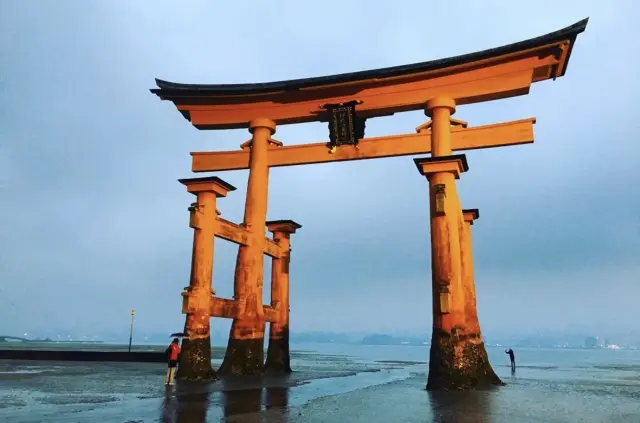
The most breathtaking thing about the great torii gate in the sea at Itsukushima Shrine on Miyajima is how dramatically the scenery changes with the tides throughout the day.
At high tide, this massive vermilion structure seems to float on the deep blue sea, set against the greenery of Mt. Misen in the distance, creating an incredible sense of elegance and sacredness. When the water recedes and the tide reaches its lowest point, you can walk right up to it.
Up close, you can really feel the powerful presence of this all-wooden torii, which has stood for centuries relying on its own weight. The most fascinating detail is on the thick camphorwood main pillars. At low tide, when you get close, you’ll see that the natural cracks in the wood and gaps around the barnacles are packed with Japanese coins pushed in by visitors making wishes! From a distance, they look almost like metallic scales, faintly glittering in the sunlight. The grandeur of the natural tides and the unusual traces left by people’s wishes come together to create the torii’s most unique and thought-provoking sight.
Itsukushima Shrine | Review by Gina C
Other Reviews by Gina C
-
Narita International Airport
The international airport and gateway to Tokyo, visited by 44 million travelers each year (as of 2019). Opened in 1978, this world-famous airport (airport code NRT) has ferried over 6 million flights both in and out of Japan. The airport grounds include 3 different passenger terminals, a freight terminal and is currently planning to open a new runaway in addition to its two runways currently open.
On this trip to Tokyo, we stayed in Oshiage. Getting there from Narita Airport was very convenient. We took the Narita Sky Access Line straight to Oshiage Station without having to drag our luggage around while transferring, which saved time and made the trip easy.
After leaving the airport, we enjoyed the scenery of Tokyo's suburbs along the way as we gradually entered the city. Once we arrived in Oshiage, we could go straight to the hotel and rest. The biggest advantage of staying in Oshiage is being close to Tokyo Skytree. Transportation in the area is convenient, making it easy to get to Asakusa, central Tokyo, and other attractions. For families traveling with children, one less transfer and a little more convenience really make it a great place to stay! -
-
Senjogahara Marshland
Located within Nikko National Park, Senjogahara Marshland is an expansive 400-hectare wetland. It was once a lake, but volcanic sediment gradually accumulated, allowing aquatic plants to take root, eventually forming a marshland under the region’s cool climate. The name "Senjogahara" (meaning "Battlefield Marsh") comes from a legend in which the deities of Mount Akagi and Mount Nantai transformed into a giant centipede and a great serpent, respectively, and fought over control of Lake Chuzenji.
Senjogahara Marshland is a very famous natural attraction in Nikko. Compared with the bustling Toshogu Shrine, it feels more expansive and peaceful. When I visited in the fall, the entire marshland had turned golden, with mountains in the distance creating a spectacular view.
Walking along the wooden boardwalk with the cool mountain breeze, I saw endless grasslands and natural scenery, which made me feel especially relaxed. Although there are no ornate buildings, the soothing feeling of nature left a deep impression. Besides seeing the fall foliage, this is a highly recommended stop when visiting Nikko. -
-
Nikko Toshogu
Nikko Toshogu is a shrine dedicated to the Edo shogun Ieyasu Tokugawa. It is the most visited spot within the World Heritage Site “Shrines and Temples of Nikko,” and here you can see 55 exceptional buildings, including 8 that have been designated as national treasures and 34 that have been designated as Important Cultural Properties.
Nikko Toshogu makes you gasp in amazement as soon as you walk in! The entire shrine is dazzlingly ornate, and the carvings are so detailed that every corner is worth taking the time to admire.
The most famous sights are the “see no evil, hear no evil, speak no evil” carving of the three monkeys and the magnificent Yomeimon Gate. Every part has the atmosphere of classical architecture.
I visited in the fall, and the maple leaves covering the mountains made the entire grounds even more captivating. The intermingling red and yellow foliage complemented the ancient buildings beautifully, truly making it worthy of being a World Heritage Site.
Toshogu not only has a wealth of history and culture, but its fall scenery is also so beautiful that you won't want to leave. It's a classic attraction that you have to include on a trip to Nikko. -