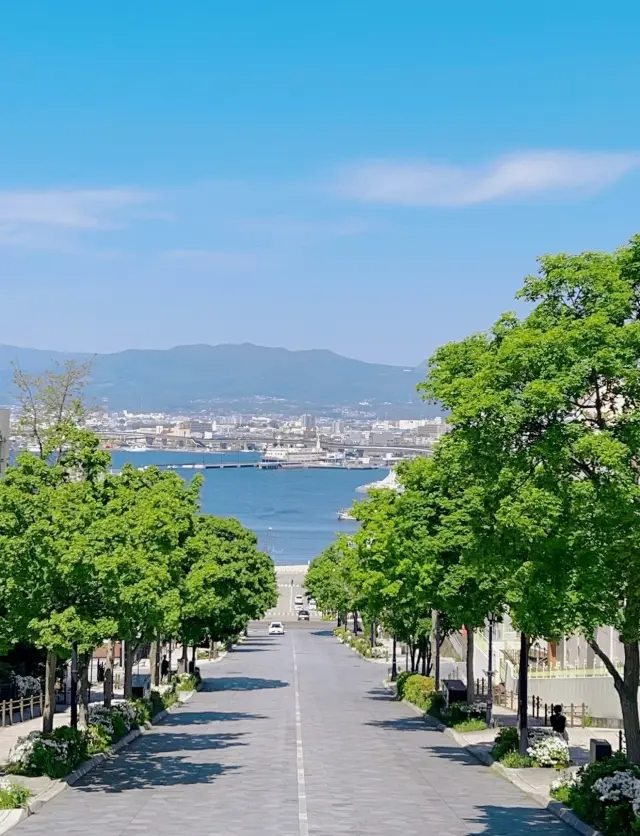
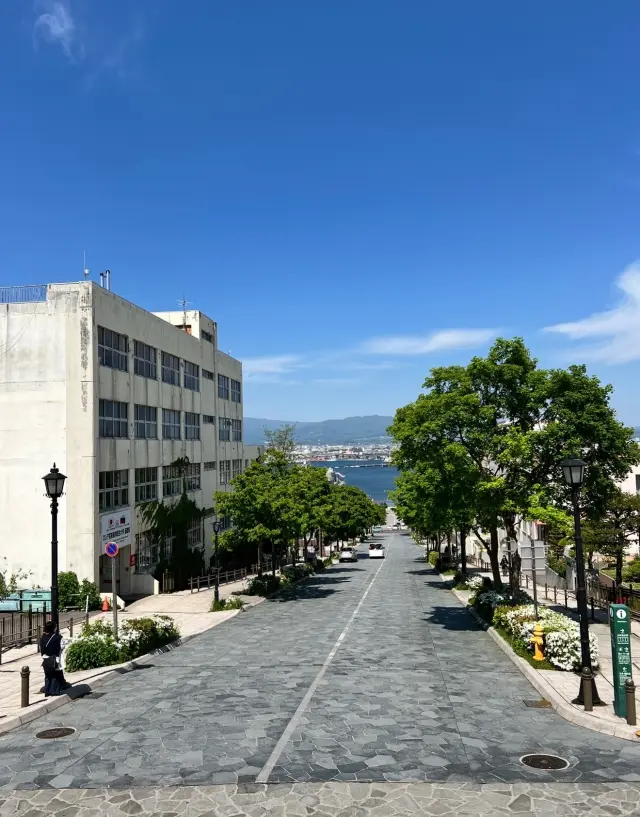
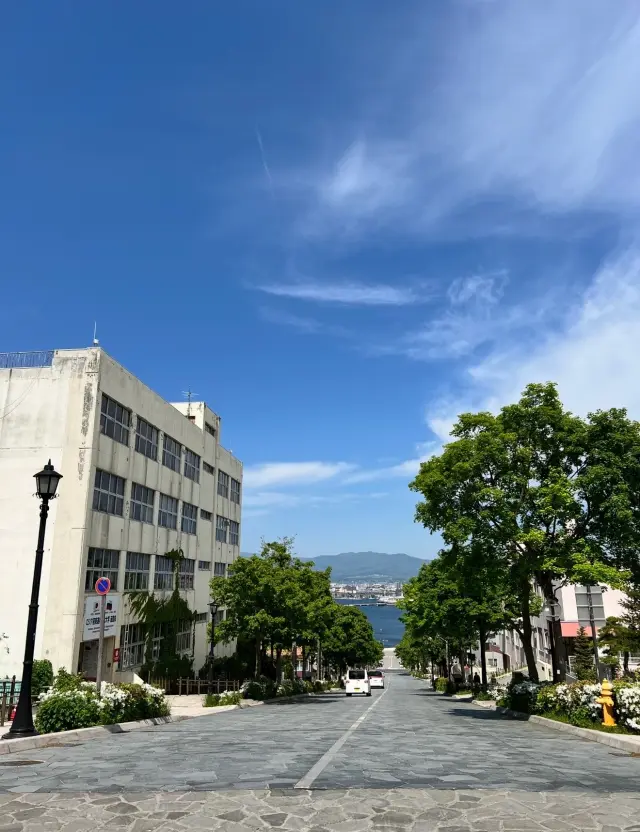
For one of the most iconic romantic street views, Hachimanzaka Slope, which stretches straight toward the harbor, is definitely the top place to visit.
As soon as you reach the top of this famous slope and look down, you’ll see a straight stone-paved road lined with lush green trees. The view extends all the way to the end, where it perfectly meets the deep blue waters of Hakodate Bay and the blue sky.
This uniquely magnificent composition of a straight street leading directly to the sea is not only visually striking, but also a popular filming location for many classic movies and commercials.
Standing on the slope in the sea breeze and looking at the beautiful scene created by the ships in the distant harbor, blue sky, and white clouds makes you want to slow down and take it all in.
I highly recommend including Hachimanzaka Slope in your walking itinerary around Motomachi. Whether you’re admiring the classic view of the seaside slope or capturing the beauty of its straight, far-reaching perspective, it will add a captivating visual experience to your trip!
Hachimanzaka Slope | Review by Jk
Other Reviews by Jk
-
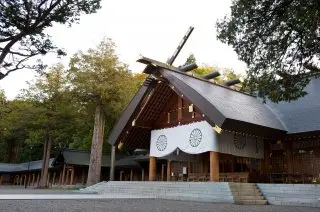
Hokkaido Shrine
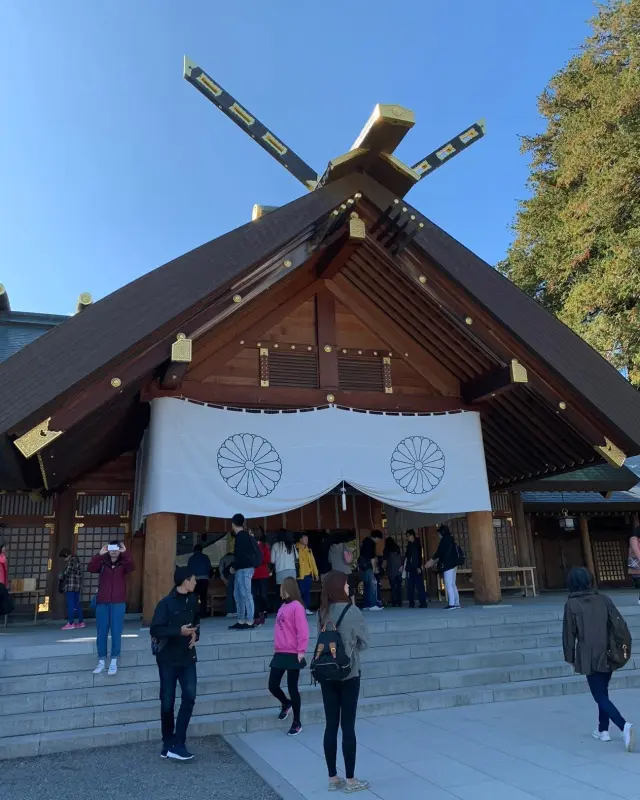
Hokkaido Shrine, one of the most prominent shrines in Hokkaido, is located in Chuo District, Sapporo City. Its history is long, which began in 1869, when the Emperor Meiji directed to enshrine “Kaitaku Sanshin (Developing Three Deities)” here as a place of faith for pioneers.
The moment you step into Hokkaido Shrine, you’re instantly struck by its incredibly quiet and sacred atmosphere! It’s basically the top shrine in all of Hokkaido. The entire shrine is surrounded by towering old-growth trees, and the air is unbelievably clean and fresh. One deep breath wakes you right up. The crunch of the gravel under your feet instantly calms the restless feeling you get from constantly scrolling on your phone. And what’s really crazy is how rich the wildlife is. As you’re walking, a super nimble wild squirrel will often suddenly dart out on a nearby tree, poking its head around looking for nuts. They’re seriously so cute and soothing to see up close!
When you reach the main shrine, the dark wood paired with the green copper roof looks unbelievably cool, both solemn and full of that calm, commanding aura of ancient Japan. After praying, you definitely can’t just turn around and leave. You have to head straight to the Rokkatei teahouse next door! They have Hangankan mochi that’s exclusive to this shrine, freshly grilled right in front of you. It’s piping hot in your hands, with a lightly charred exterior and a hint of buckwheat aroma. When you bite into it, it’s incredibly soft and chewy, and the red bean filling is just the right amount of sweet. Enjoy it on a nearby bench with a hot cup of free roasted tea, and you’ll feel completely recharged in body, mind, and spirit! -
-

Tenka Ippin Honten
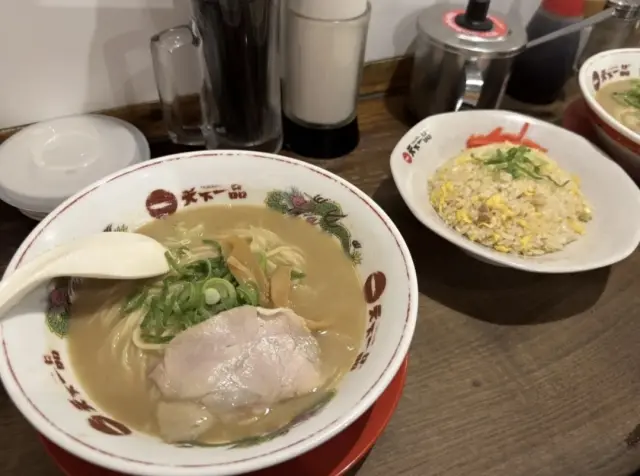
Starting as a street stall in 1971 (Showa 46), Tenka Ippin now boasts over 200 stores nationwide. It holds a special place in the hearts of Tenka Ippin enthusiasts, particularly at its flagship store in the fiercely competitive ramen battleground of Ichijoji, Kyoto, where many famous shops are located.
It started out with a small wooden street cart and has now expanded across Japan, but true food lovers know that the broth made at the flagship store is on a completely different level in terms of depth and intensity. When their signature rich (kotteri) ramen arrives at the table piping hot, the golden broth—simmered for hours with lots of chicken bones and more than ten kinds of vegetables until it’s almost as thick and sticky as jam—makes you start salivating just by looking at it! Lift the noodles with your chopsticks and the rich broth clings tightly to every strand. Each slurp fills your mouth with an explosion of sweet, gelatinous richness and deep chicken flavor. Your lips even feel slightly sticky afterward. That intensely satisfying, heavy-hitting flavor really gets you completely hooked and leaves you unable to stop!
-
-

Himeji Castle
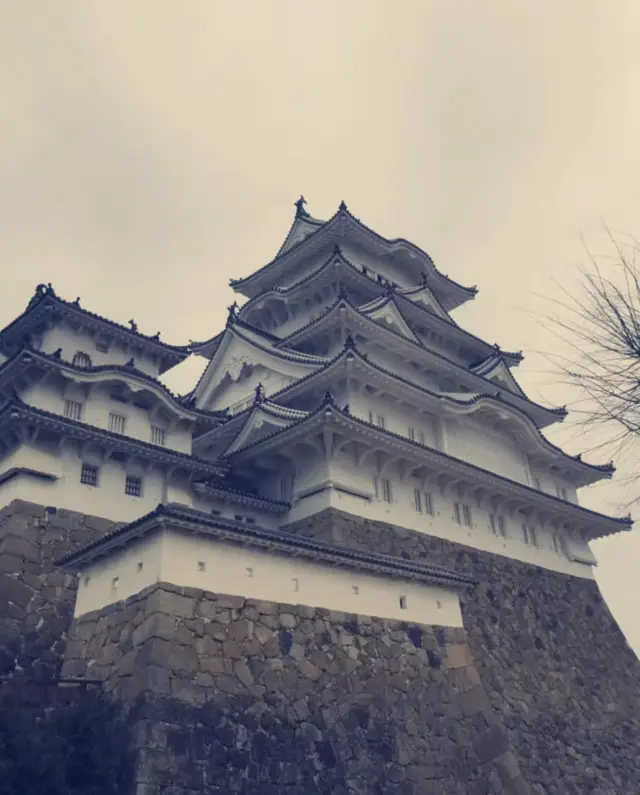
One of Japan's most renowned castles and a UNESCO World Heritage Site. Built by Ikeda Terumasa in the early Edo period, the main keep has five exterior tiers, six aboveground floors, and one basement level. It is the largest surviving castle keep from the Edo period. The castle was constructed using a comprehensive defensive layout known as sokamae, with the entire castle town enclosed within its moats. It was large enough to encompass what is now central Himeji, and the outer moat is said to have been located around present-day Himeji Station.
Walk out of the main entrance of JR Himeji Station and look straight down the wide Otemae-dori Avenue. You’ll immediately be deeply awestruck by the enormous ancient castle gleaming white beneath the clear blue sky. This is Himeji Castle, a national treasure and the first site in Japan to be designated a UNESCO World Cultural Heritage Site! The castle’s most legendary feature is its exterior, completely coated in pure white, high-quality plaster. From a distance, it looks like an elegant white heron about to spread its wings and soar into the sky, earning it the romantic nickname “White Heron Castle.” Even more remarkable, it has survived centuries of warfare and miraculously emerged completely unscathed from the air raids of World War II, making it truly an “immortal castle” favored by fate. After passing through the intricate, maze-like defensive passageways and climbing the steep wooden stairs floor by floor to the top of the main keep, you can look down at the overlapping tiled eaves, intricate onigawara roof ornaments, and the expansive Himeji Plain in the distance. The magnificent feeling of traveling through time will truly leave you breathless and deeply moved!
-