
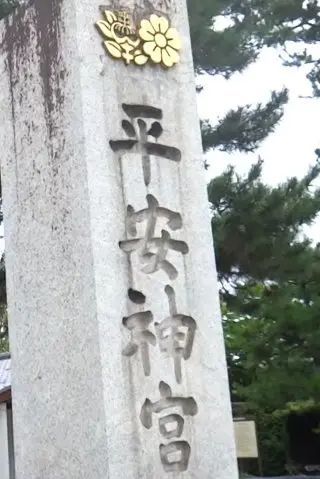
A Sightseeing Guide to Heian Jingu Shrine, Where You Can Experience Deep History and Natural Beauty
Heian Jingu Shrine is known for its beautiful, vividly vermilion buildings.
Even in Kyoto, a city filled with shrines and temples, it is one of the sightseeing spots you should make a point to visit.
Along with historic buildings designated as Important Cultural Properties, it also has a Japanese garden with seasonal beauty, so there is plenty to see.
This article introduces the basic information, highlights, and more about Heian Jingu Shrine in detail.
We’ll also introduce nearby sightseeing spots and local food, so use it as a reference when visiting Heian Jingu Shrine.
What is Heian Jingu Shrine Like?
Heian Jingu Shrine is located in Sakyo Ward in the northeastern part of Kyoto City.
Enshrining Emperor Kanmu and Emperor Komei as its main deities, Heian Jingu Shrine is believed to bring a variety of blessings, and is especially well known as a power spot for matchmaking.
Visitors seeking blessings for love and relationships come here continuously from both Japan and abroad.
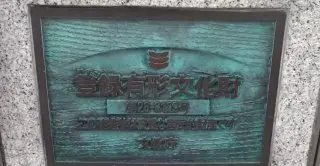
Heian Jingu Shrine is also home to many historically important structures, including numerous buildings designated by the government as Important Cultural Properties, with the Daigokuden Hall as the most notable example.
Just by visiting, you can feel the breath of history and the site’s refined atmosphere firsthand.
Heian Jingu Garden, a representative Japanese garden from the Meiji era, has been designated a Place of Scenic Beauty by the government for its outstanding landscaping techniques.
One of the shrine’s charms is that you can also enjoy the beauty of nature and gardens that have been preserved for more than 100 years.
Held at Heian Jingu Shrine every October, the Jidai Matsuri Festival is one of Kyoto’s three major festivals, alongside the Aoi Matsuri and Gion Matsuri, and draws large crowds.
One of its highlights is watching around 2,000 local participants dressed as historical figures parade through the streets of Kyoto.
The Origins of Heian Jingu Shrine
Heian Jingu Shrine was founded in 1895 to commemorate the 1,100th anniversary of the transfer of the capital to Heian-kyo, making it one of the newer shrines and temples in Kyoto.
This is particularly notable in Kyoto, where many buildings such as Koryu-ji Temple have a much longer history.
Kyoto had declined at the time, partly because the capital had moved to Tokyo after the Meiji Restoration.
The founding of Heian Jingu Shrine was the culmination of efforts to revitalize the city, and it reflects the wishes of Kyoto’s citizens.
Access to Heian Jingu Shrine
Here is how to get to Heian Jingu Shrine from JR Kyoto Station, the gateway to Kyoto and a convenient base for sightseeing.
- Route
-
1. Take a city bus from JR Kyoto Station and get off at Okazaki Koen Bijutsukan, Heian Jingu-mae
2. Walk north for 5 minutes - Travel time
- Approx. 30 minutes
Heian Jingu Shrine Hours and Admission
Please refer to the table below for Heian Jingu Shrine’s visiting hours and admission.
Hours vary depending on the season, so check the official website for details.
- Hours
-
・March 1–September 30 6:00am–6:00pm
・October 1–October 31 6:00am–5:30pm
・November 1–end of February 6:00am–5:00pm - Admission
- Free
Heian Jingu Garden Hours and Admission
Please note that the hours and admission fee for Heian Jingu Garden within the grounds are different from the opening hours and admission for Heian Jingu Shrine itself.
- Hours
-
・March 1–March 14 8:30am–5:30pm (Last admission at 5:00pm)
・March 15–September 30 8:30am–6:00pm (Last admission at 5:30pm)
・October 1–October 31 8:30am–5:30pm (Last admission at 5:00pm)
・November 1–end of February 8:30am–5:00pm (Last admission at 4:30pm) - Admission
-
・Adults: 600 yen
・Children: 300 yen
What Is the Best Season to Visit Heian Jingu Shrine?
If you are planning to visit Heian Jingu Shrine, the best seasons are spring and fall.
That is because it is famous for both cherry blossoms and autumn leaves.
If you can plan your trip timing, try to visit in either spring or fall.
Don’t Miss the Weeping Cherry Blossoms in Full Bloom! Heian Jingu Shrine in Spring
One reason spring is especially recommended is that Heian Jingu Shrine is famous for its cherry blossoms.
The best viewing period is from early to mid-April.
During peak bloom, beautiful cherry blossoms can be seen all over the grounds, and the scenery is so stunning it may leave you speechless.
There are 300 cherry trees planted on the grounds, and the beni-shidare-zakura, which also appears in Junichiro Tanizaki’s novel The Makioka Sisters, is especially worth seeing.
At night, the blossoms are illuminated, creating a magical atmosphere to enjoy.


Heian Jingu Shrine in Fall, Where You Can Enjoy Autumn Leaves and a Magical Atmosphere
Heian Jingu Shrine is also famous for autumn leaves, just like it is for cherry blossoms.
The best time to see the autumn colors here is from early to mid-November, so visit during this period if you want to enjoy them.
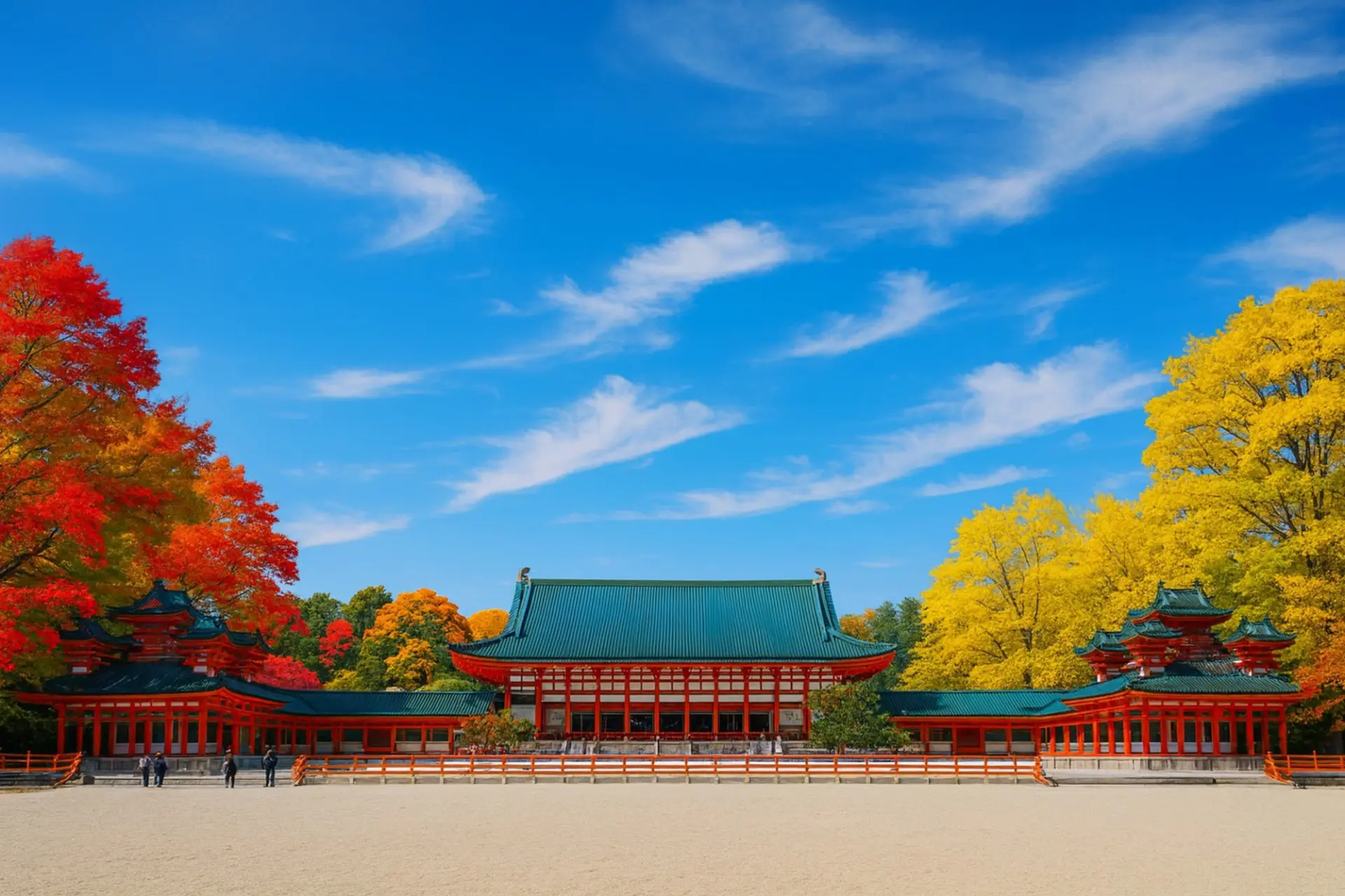
At peak season, you can admire the contrast between fiery red and orange leaves and the shrine’s historic vermilion buildings.
Another reason to visit in fall is the illuminated event NAKED Yorumoude, held from late November to mid-December.
Be sure to join this event as well, where you can walk through the shrine grounds carrying a lantern while enjoying a fantastical space created with light and sound.

Feel the Depth of History and Atmosphere! 5 Highlights of Heian Jingu Shrine
Heian Jingu Shrine has many magnificent buildings, most of which are designated as Important Cultural Properties.
A walk around the grounds offers not only visual beauty but also a real sense of history and atmosphere.
There are so many highlights at Heian Jingu Shrine that it is not unusual to wonder where to start.
With that in mind, here is a carefully selected list of must-see spots when visiting Heian Jingu Shrine.
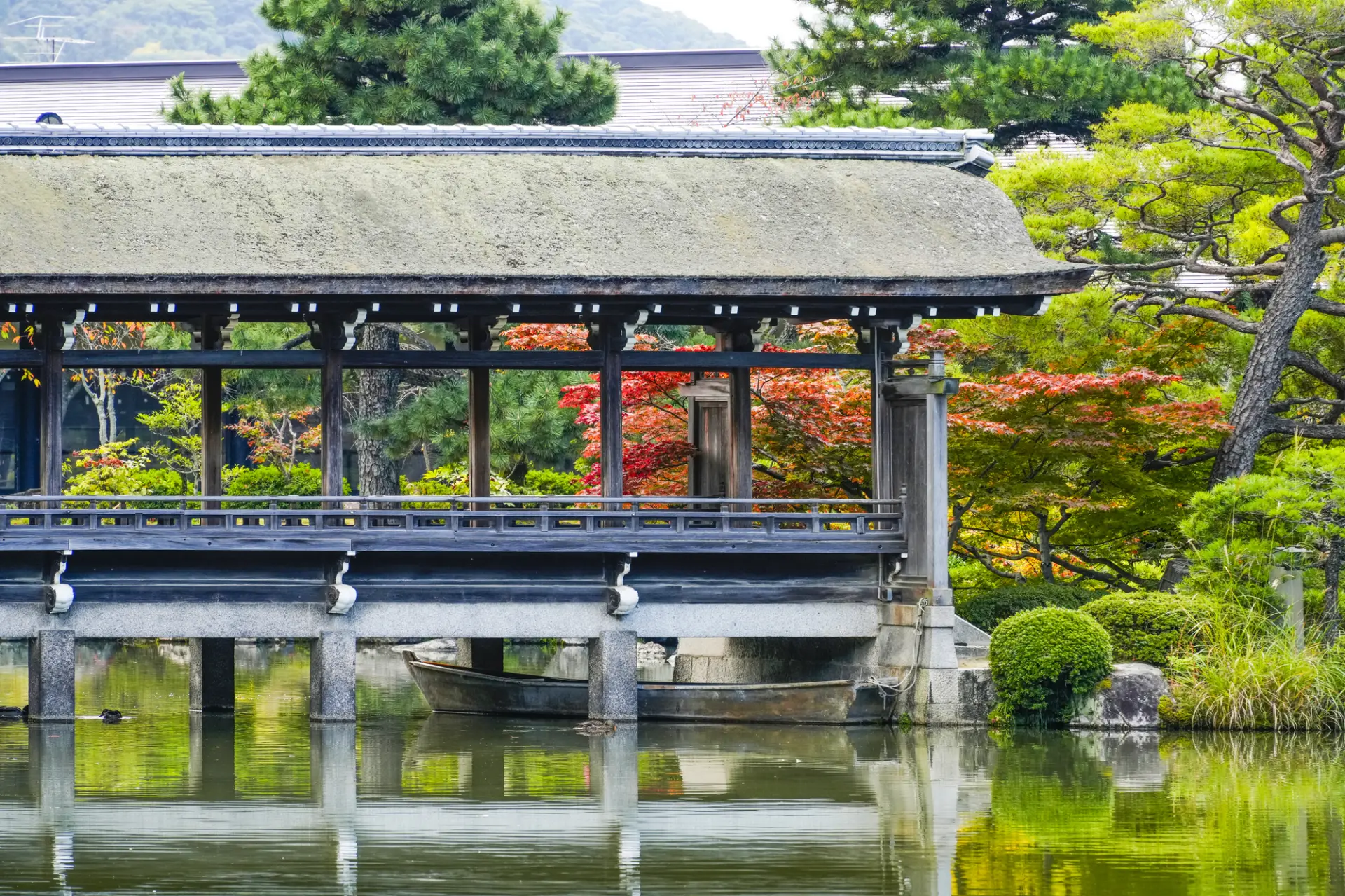
1. Heian Jingu Garden, a Japanese Garden with Beauty in Every Season
Heian Jingu Garden is a representative Japanese garden of the Meiji era and has also been designated a national Place of Scenic Beauty.
It consists of four gardens, East, West, Central, and South, and is characterized by the way it surrounds the shrine buildings.
With a different look in every season, Heian Jingu Garden has a charm that never grows old no matter how many times you visit, combining more than 100 years of history with the graceful beauty of living nature.
The highlight of the West Garden is its many plants, with more than 200 varieties, and the water lilies are especially worth seeing.
The Central Garden is centered around Soryu-ike Pond and features stepping stones known as Garyukyo Bridge.
The East Garden has Seiho-ike Pond, the largest pond in Heian Jingu Garden, and the scenery around it has a calming charm.


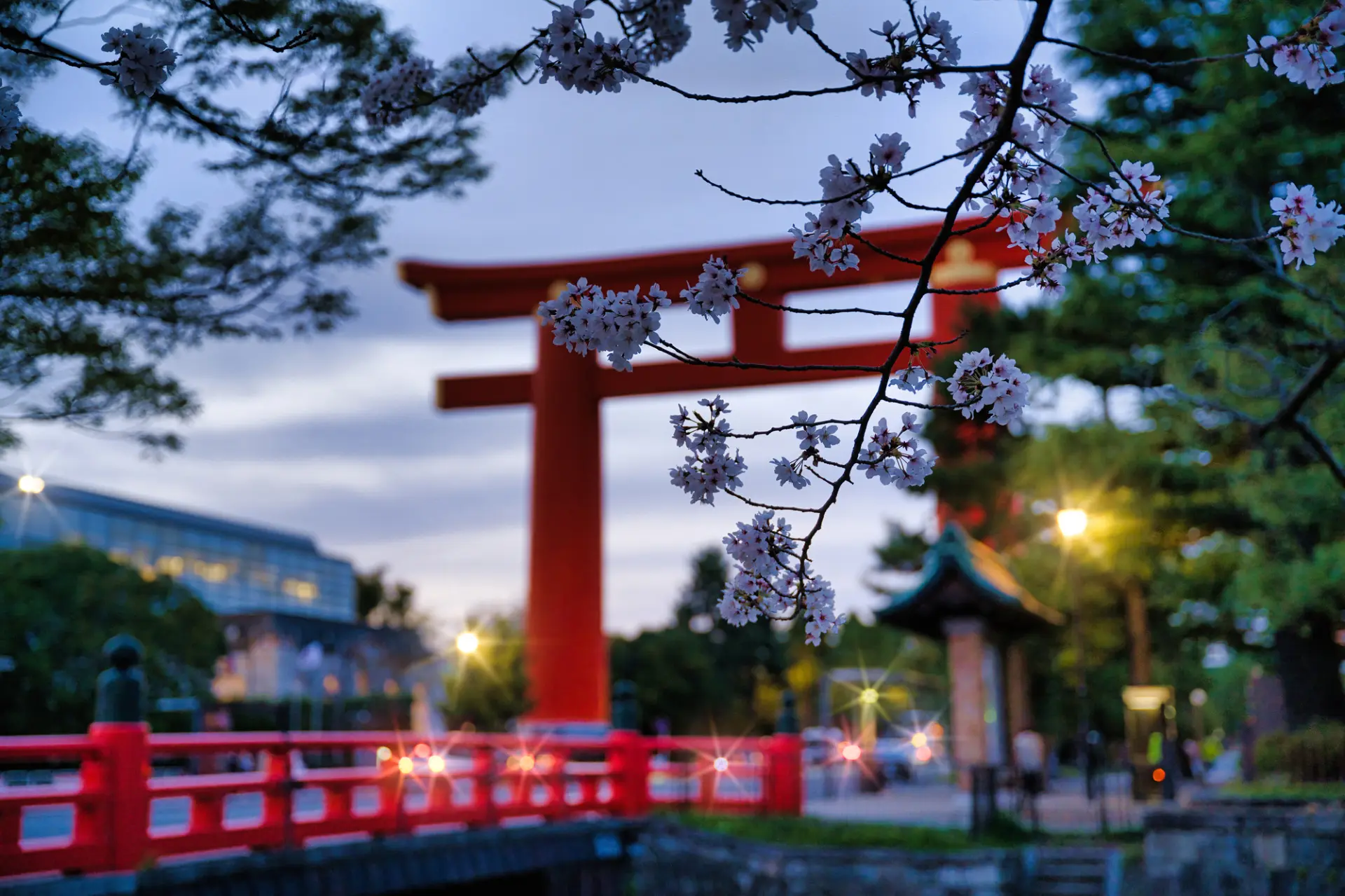
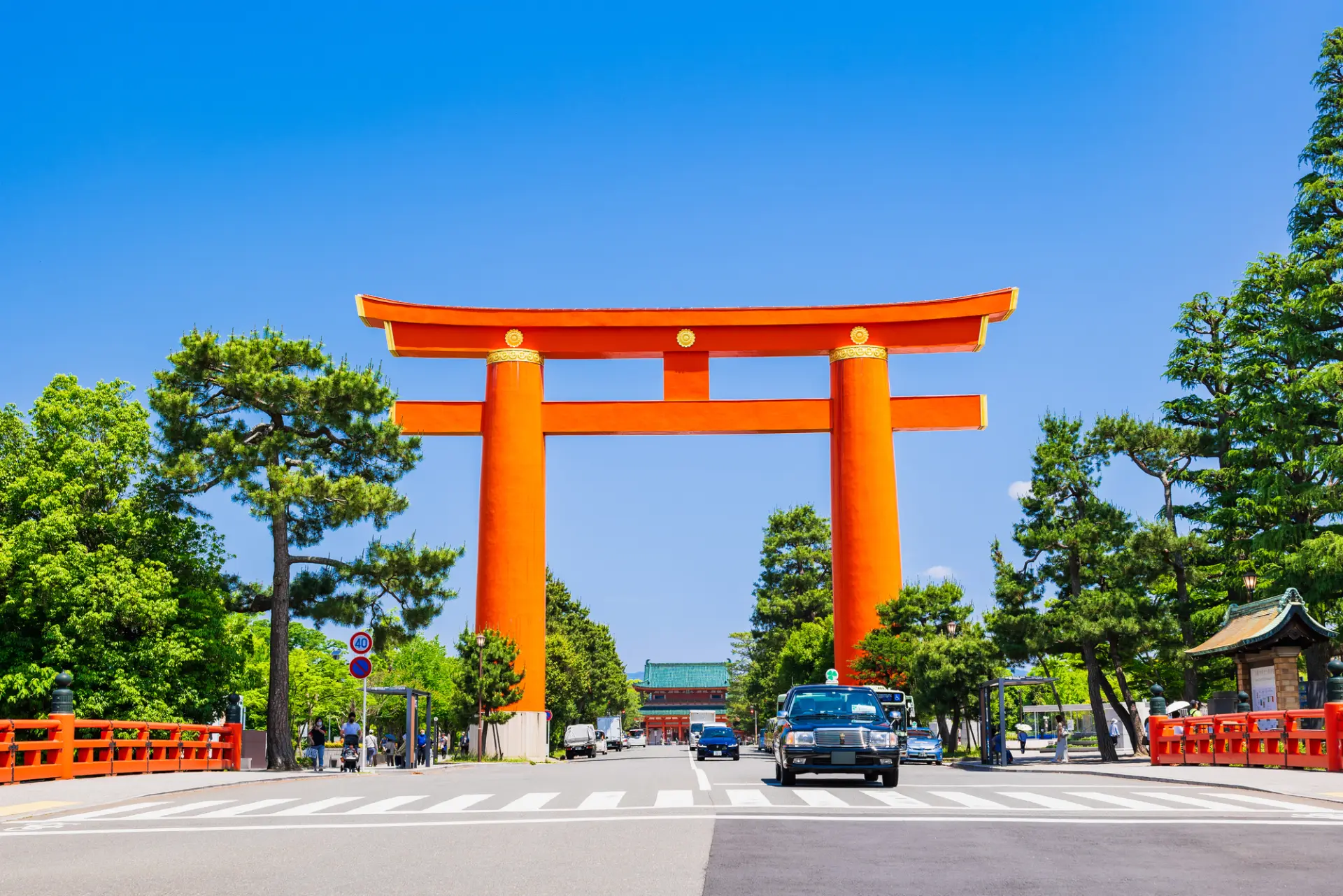
2. The Symbol of Heian Jingu Shrine, the Great Torii Gate
The Great Torii Gate was built in 1928 to commemorate the enthronement ceremonies of Emperor Showa, which were held in Kyoto.
It stands 24 meters high and 18 meters wide, and at the time it was built, it was the largest in Japan.
With its striking presence and beautiful vermilion color, it can truly be called the symbol of Heian Jingu Shrine.
The Great Torii Gate is also a popular photo spot in Kyoto and is loved by many visitors.
3. Daigokuden Hall, Combining Grandeur and Beauty
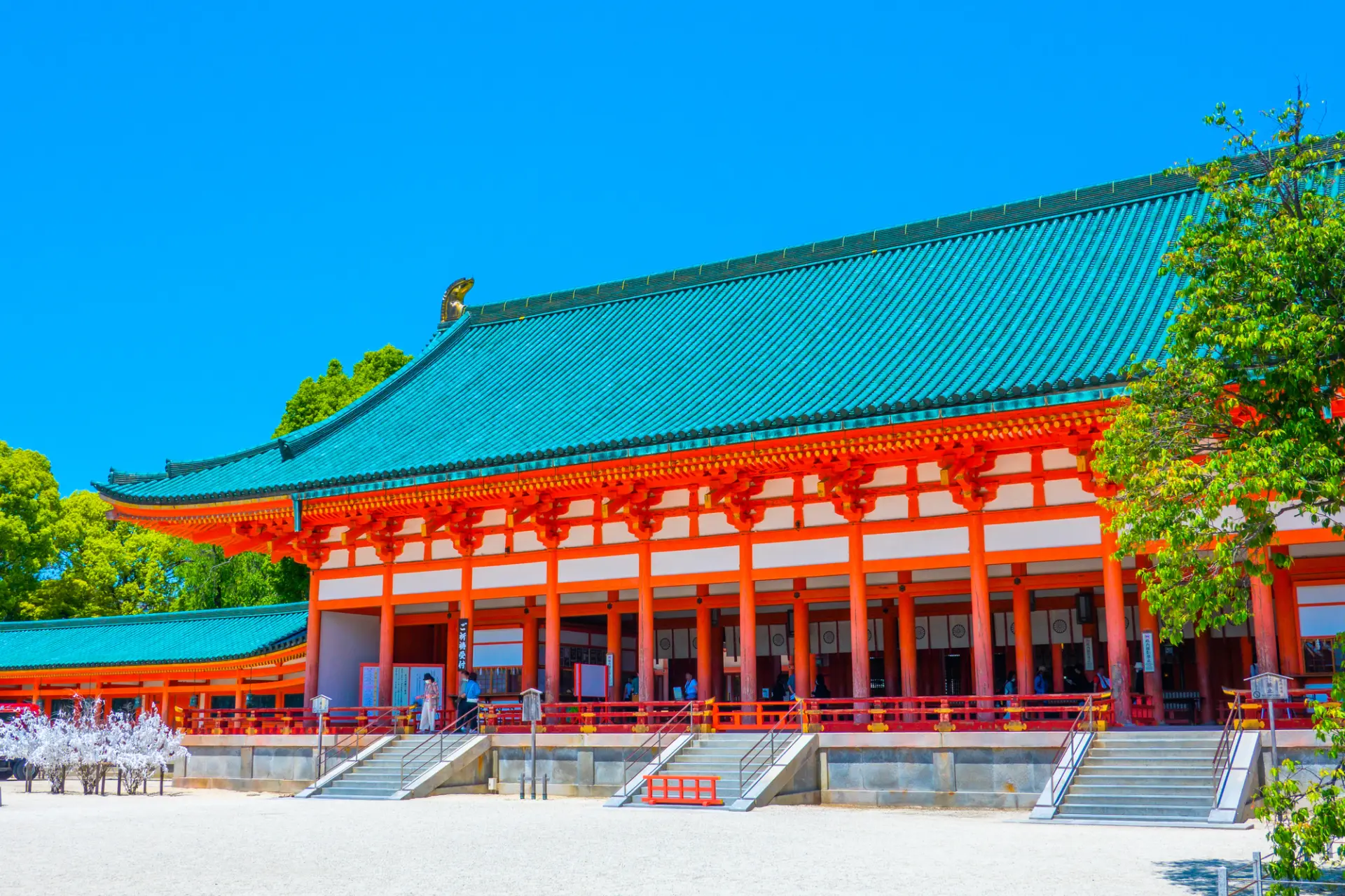
The shrine buildings of Heian Jingu Shrine recreate the Chodoin, the main state hall of Heian-kyo, at five-eighths of the original size.
Daigokuden Hall was built when the shrine was founded in 1895 and serves as the outer worship hall.
In other words, this is where visitors offer their prayers.
The Main Hall behind Daigokuden enshrines Emperor Kanmu and Emperor Komei, and is said to bring blessings for good relationships.
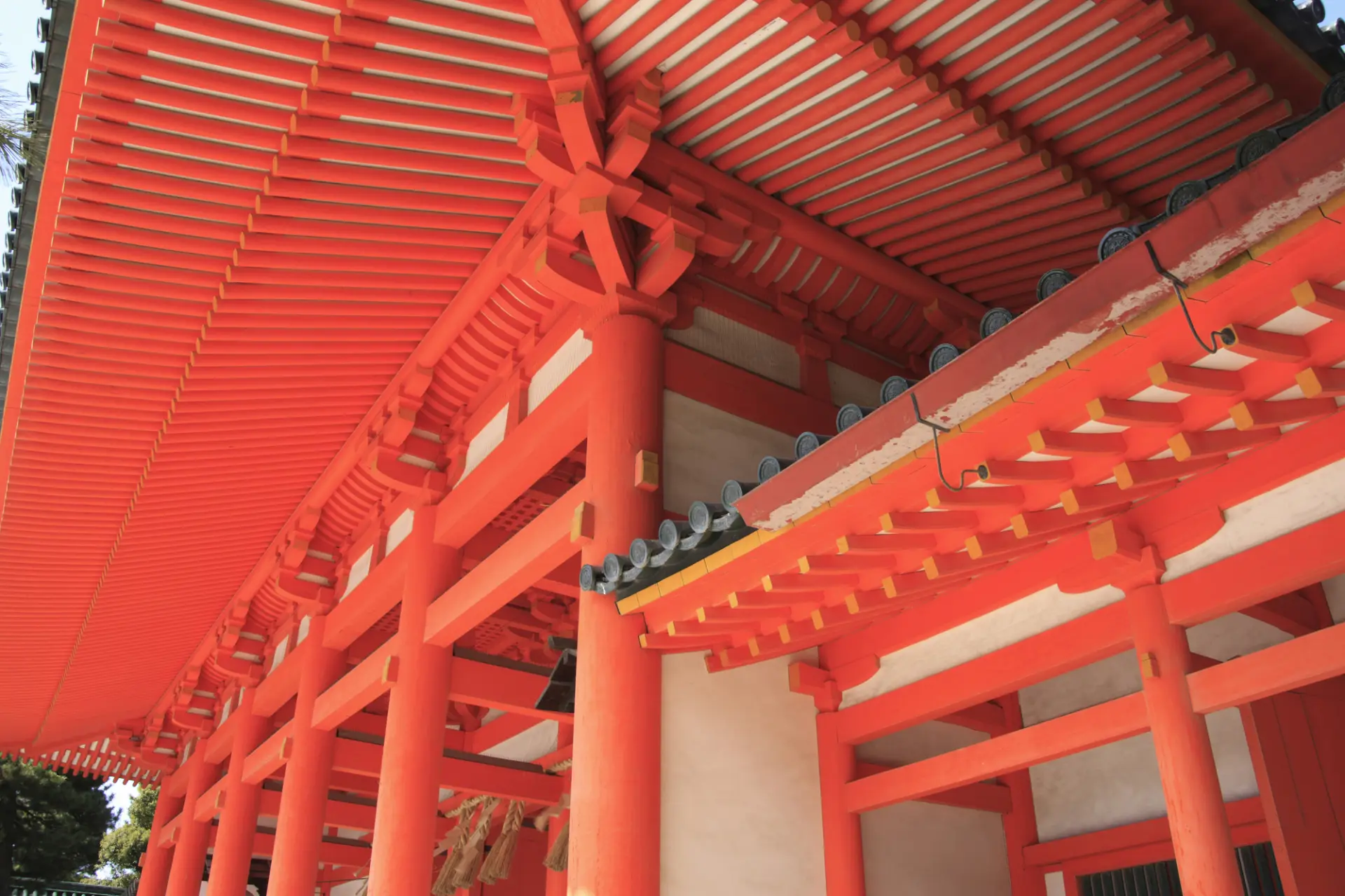
The vivid vermilion pillars and green roof tiles are beautifully striking, and the hall’s overwhelming grandeur is one of its biggest attractions.
It is also worth knowing that six buildings, including Daigokuden Hall, were designated Important Cultural Properties in 2010.
4. Jidai Matsuri, One of Kyoto’s Three Major Festivals
This is Heian Jingu Shrine’s grand festival, held every year on October 22, and is one of Kyoto’s three major festivals alongside the Gion Matsuri and Aoi Matsuri.
Originating as part of the celebrations for the 1,100th anniversary of the transfer of the capital to Heian-kyo in 1895, its biggest highlight is a historical costume parade that presents roughly 1,000 years of history, going backward in time from the Meiji Restoration to the Enryaku era when Heian-kyo was established.
Well-known historical figures appear one after another, including Katsura Kogoro and Saigo Takamori, key figures of the Meiji Restoration, and Oda Nobunaga, the famed warlord of the Sengoku period. Approx. 2,000 local participants take part, and the parade lasts for two hours.

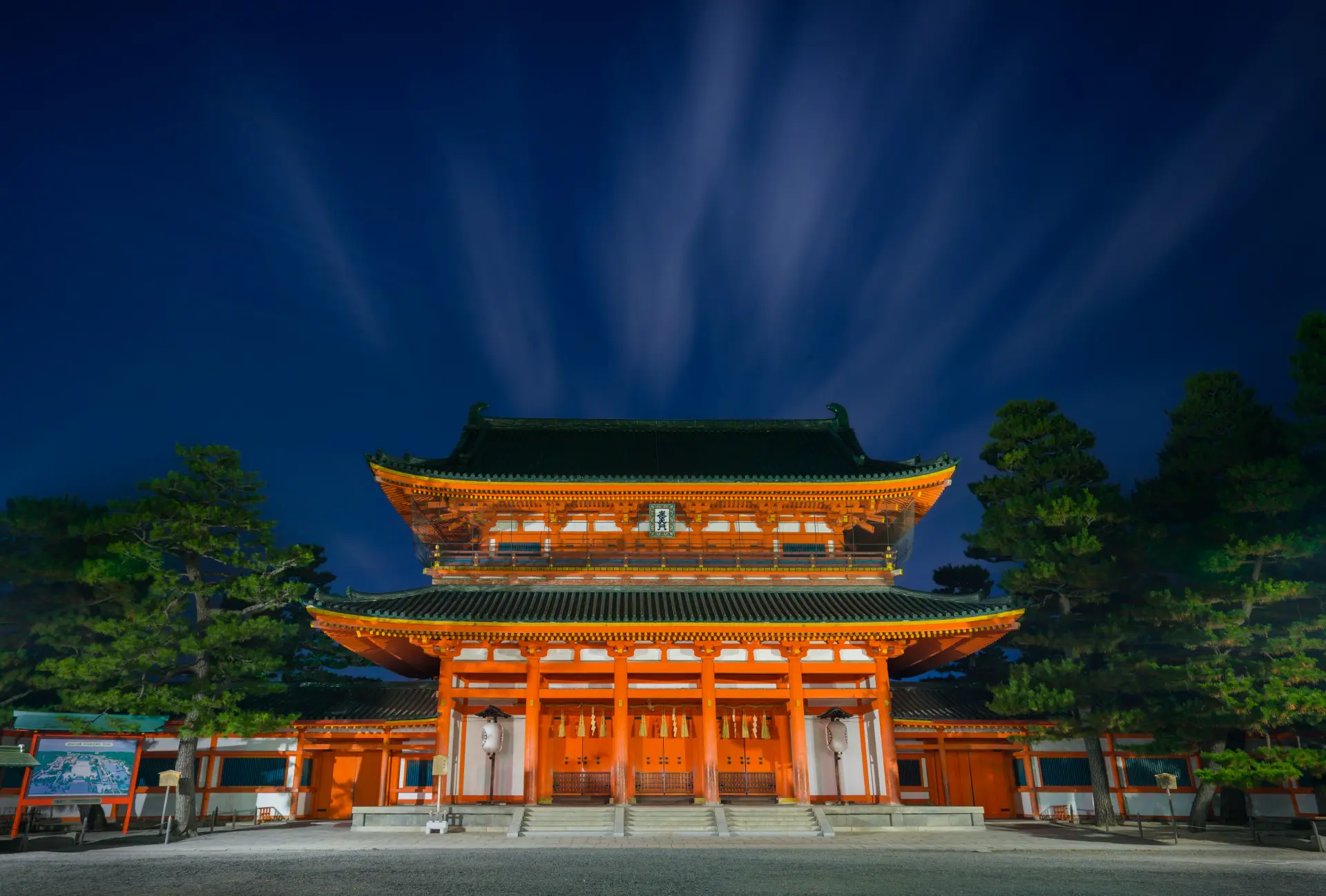
5. Otenmon Gate, a Beautiful Entrance That Takes You Back to the Heian Period
Built in the style of the Otenmon Gate of Heian-kyo, this impressive two-story gate stands out for its vermilion color and green roof tiles.
Passing through Otenmon Gate brings you into the grounds of Heian Jingu Shrine, so it serves as the shrine’s entrance.
Like Daigokuden Hall, it is one of the valuable buildings designated as an Important Cultural Property by the government.
Walking through Otenmon Gate may make you feel as though you are stepping into another era.

3 Popular Gourmet Spots Near Heian Jingu Shrine
Around Heian Jingu Shrine, you can enjoy what is known as Kyo-ryori, Kyoto cuisine made with local ingredients and distinctive cooking methods. Especially outstanding are dishes made with Kyoto vegetables.
After enjoying Heian Jingu Shrine, be sure to check out these carefully selected restaurants.
1. Kyoriori Rokusei
Founded in 1899 and boasting more than 120 years of history, this renowned Kyoto cuisine restaurant is now located along the Lake Biwa Canal near Heian Jingu Shrine in Okazaki.
Its signature dish is the Teoke Bento, a colorful assortment of dishes beautifully arranged in a wooden pail crafted by Living National Treasure Kiyotsugu Nakagawa.
Made with seasonal ingredients, it is a dish full of the charm of Kyoto cuisine and a pleasure to look at as well as eat.
Also worth noting is its creative Heian court cuisine, which recreates meals of Heian aristocrats based on historical documents and gives them a modern twist.

2. Tempura Endo Okazaki-tei
Located close to Heian Jingu Shrine along the canal in Okazaki, this tempura restaurant offers plenty of Kyoto atmosphere.
It is part of a popular restaurant group whose main branch is in Yasaka, and this Okazaki-tei location opened in 2016.
Using an abundance of seasonal ingredients unique to Kyoto, including Kyoto vegetables and mountain plants, as well as fresh seafood delivered directly from the Seto Inland Sea and Wakasa Bay, and river fish raised in clear streams, the menu is truly luxurious.
Its tempura is fried crisp in the highest-grade cottonseed oil pressed from premium cotton seeds, resulting in a light and delicate coating.

3. Kyoto Modern Terrace
ROHM Theatre Kyoto opened in 2015 after the Kyoto Kaikan, originally built in 1960, underwent large-scale renovation work.
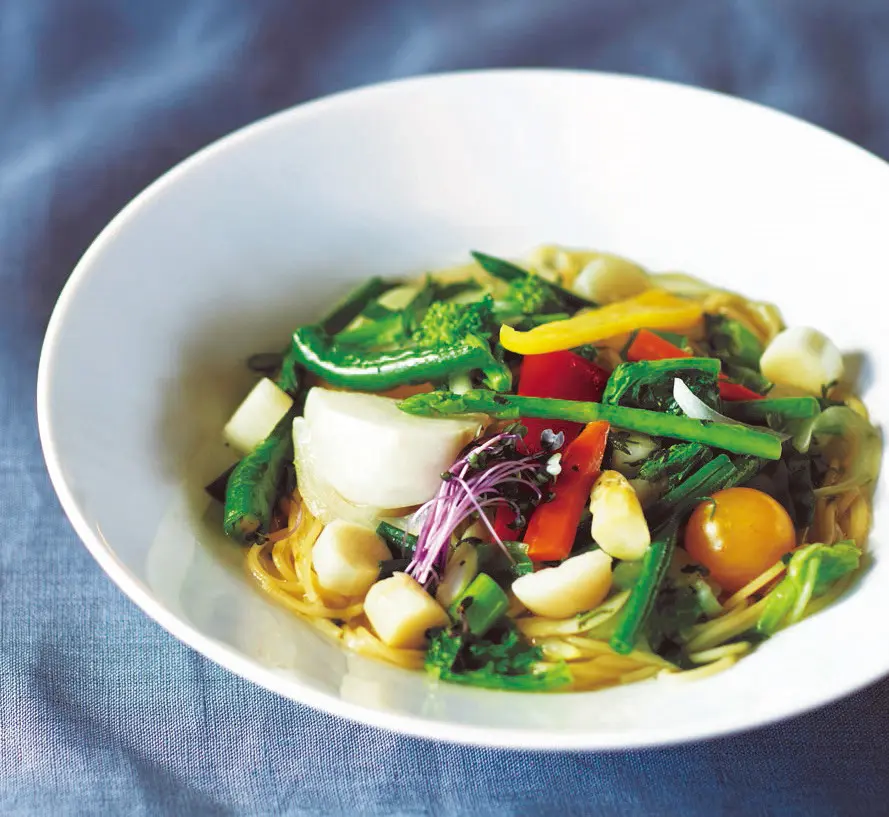
Located on the second floor, Kyoto Modern Terrace is a café and restaurant known for its space that carries on the characteristics of modernist architecture.
For lunch and dinner, it serves a wide variety of dishes made with plenty of seasonal vegetables, including 12-Vegetable Spaghetti, which provides half of the vegetables needed in a day, as well as grilled dishes and salads.
5 Sightseeing Spots Near Heian Jingu Shrine
Near Heian Jingu Shrine, there are many appealing sightseeing spots where you can enjoy history, Kyoto culture, and leisure activities.
Visiting them together with Heian Jingu Shrine will make your trip even more enjoyable, so be sure to check out the places introduced below.
1. Nanzen-ji Temple
In the late 13th century, Emperor Kameyama, who had repelled two Mongol invasions and later became a retired emperor, founded this temple as Japan’s first imperial Zen temple. After the main temple buildings were constructed by Kian Soen, the eminent monk Issan Ichinei, who had been dispatched to Japan as an envoy of the Yuan dynasty, succeeded him.
Many of the buildings that remain today were built from the Edo period onward.
The Hojo, designated a National Treasure, was originally a building from the Kyoto Imperial Palace built by Toyotomi Hideyoshi and relocated here in the Edo period, and is famous for its splendid Momoyama-style sliding door paintings by the Kano school, carvings said to be by Jingoro Hidari, and the rock garden by Kobori Enshu.

2. Kurodani Konkai Komyo-ji Temple
The head temple of the Jodo sect, affectionately known as “Kurodani-san.”
In 1175, Honen Shonin, the founder of the Jodo sect, descended from Kurodani on Mount Hiei and first built a hermitage here, making it the first temple of the Jodo sect. It is also said to be the birthplace of the Shinsengumi, as Matsudaira Katamori, lord of the Aizu domain and appointed Kyoto Shugoshoku in the late Edo period, established his headquarters here and commanded figures such as Kondo Isami and Hijikata Toshizo.
The grounds are home to many impressive structures, including the Sanmon Gate bearing the imperial plaque reading “Jodoshinshu Saisho Mon,” the Amida Hall rebuilt by Toyotomi Hideyori, and the Miei-do Hall, which enshrines an image of Honen Shonin.

3. Kyoto City Zoo
Kyoto City Zoo is located in one corner of Okazaki Park. Opened in 1903, it has a long history and is the second-oldest zoo in Japan after Ueno Zoo.
It reopened after renovations in 2015 and marked its 120th anniversary in 2023, and continues to be loved by people of all ages as a place of relaxation for Kyoto residents.
The zoo features enriching exhibits that allow animals to choose their own behavior, including the African Savannah, where giraffes and zebras are displayed together in a savanna-like setting, Gorilla’s House, where gorillas can move naturally using poles and ropes designed to resemble tropical rainforest trees, and Elephant Forest, where visitors can observe Asian elephants bathing and the different behaviors of males and females.

4. The National Museum of Modern Art, Kyoto
The National Museum of Modern Art, Kyoto opened in Okazaki Park in 1963 as the Kyoto branch of the National Museum of Modern Art.
The current building, completed in 1986, was designed with consideration for the park’s landscape and kept lower in height than the Great Torii Gate of Heian Jingu Shrine.
While reflecting the overall flow of modern and contemporary Japanese art history, the museum focuses on collecting and exhibiting art from Kyoto, the Kansai region, and western Japan more broadly.
Its collection spans a wide range of genres, including paintings, sculpture, and prints, with particular emphasis on crafts such as ceramics and textile dyeing and weaving.

5. Kyoto City KYOCERA Museum of Art
It was originally established as the Dairei Memorial Kyoto Museum of Art, Japan’s second large-scale public art museum.
Later, its name was changed to Kyoto Municipal Museum of Art. In spring 2020, it reopened after renovation under the nickname Kyoto City KYOCERA Museum of Art.
The museum houses a collection of more than 3,800 works, centered on the modern Kyoto art world, including Japanese-style painting, Western-style painting, sculpture, prints, crafts, and calligraphy.
Inside are multiple exhibition spaces capable of hosting many exhibitions at once, including Higashiyama Cube with state-of-the-art equipment for displaying contemporary art, The Triangle, a sharp-looking space focused on emerging artists, and dedicated collection rooms for displaying works from the museum’s holdings, allowing visitors to enjoy art from many different eras and genres.

3 Recommended Places to Stay Near Heian Jingu Shrine
If you want to explore the area around Heian Jingu Shrine at a relaxed pace, staying somewhere that lets you enjoy the calm atmosphere of the neighborhood is a great choice.
This area, home to many cultural facilities, offers a well-balanced mix of Kyoto character and quiet surroundings.
Here are some places where you can unwind and enjoy a comfortable stay between sightseeing outings.
1. Guesthouse WARAKU-AN
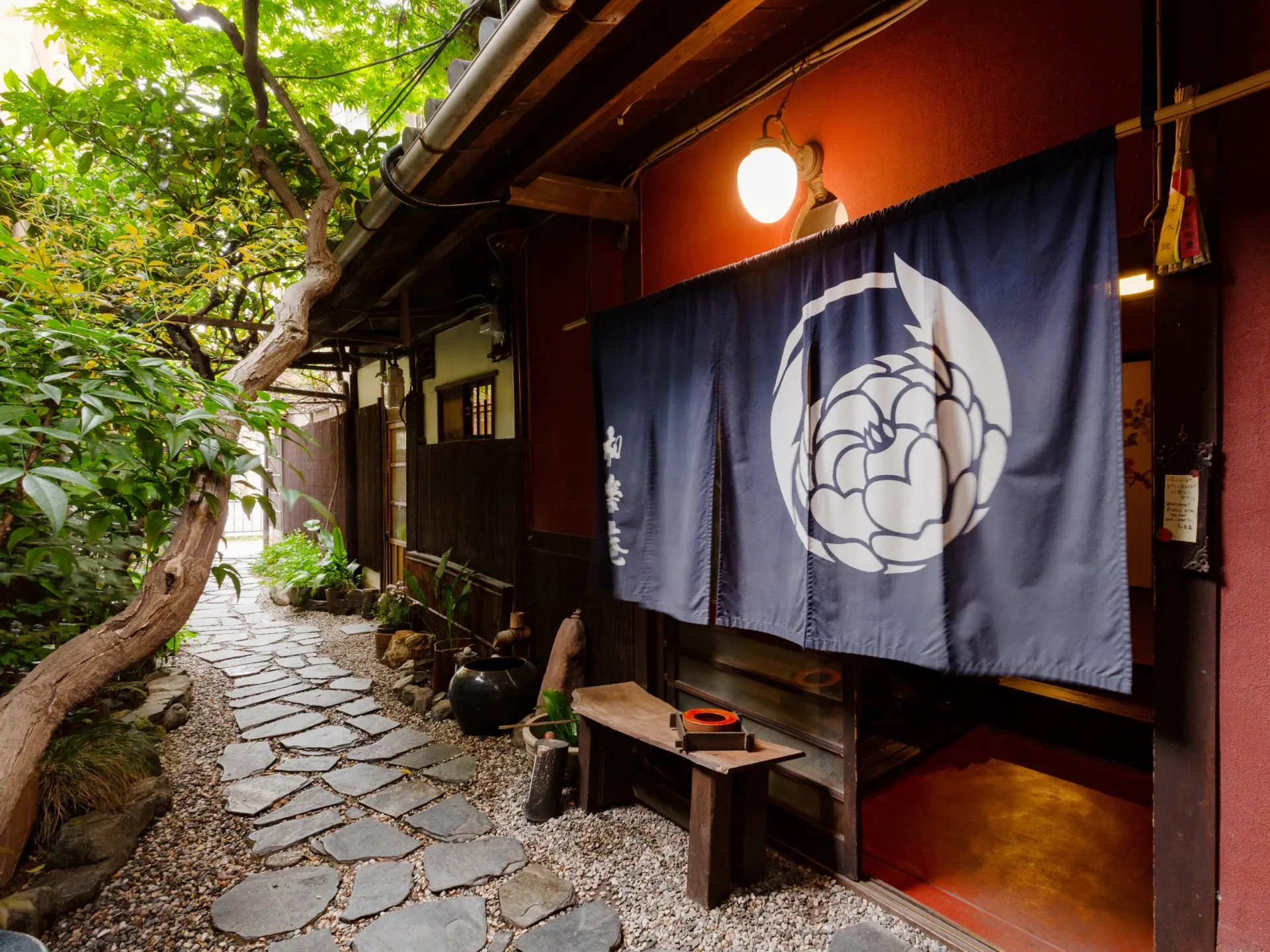
This charming lodging is housed in a renovated Kyoto townhouse more than 100 years old, located close to the popular sightseeing spot Heian Jingu Shrine.
It opened in 2006 as one of the pioneers of guesthouses using Kyoto townhouses, a style now commonly seen.
Once you step through the entrance, you will find a reception area welcomed by fusuma sliding-door paintings of rugosa roses and a free salon furnished with antique furniture, where time seems to flow at a relaxed pace far removed from the bustle of Kyoto. Japanese white-eyes sometimes come to visit the traditional inner garden as well.
2. Hotel Okura Kyoto Okazaki Bettei
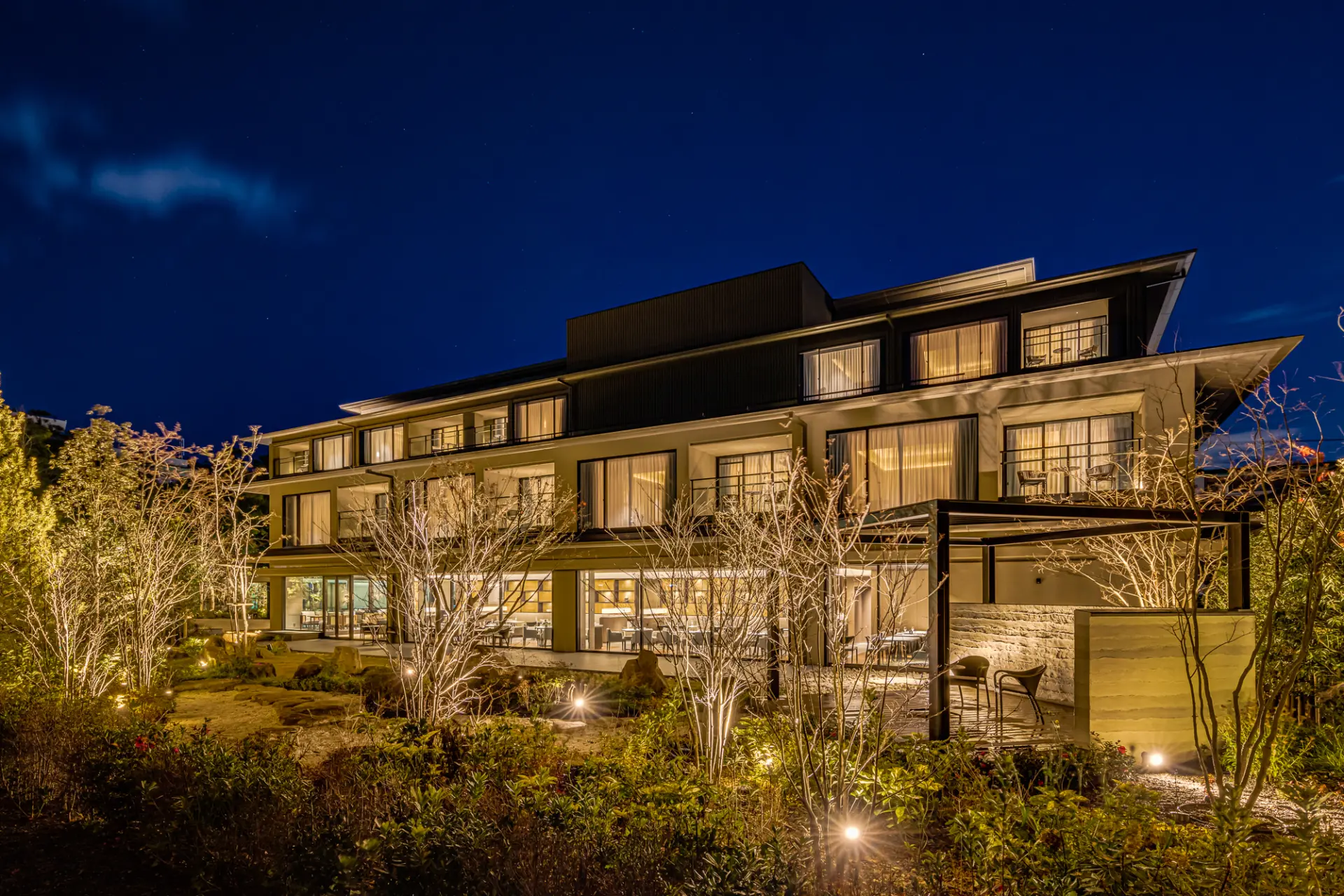
Opened in January 2022, this is Hotel Okura’s first small luxury hotel.
With the concepts of “Kyoto Okazaki,” “Higashiyama culture,” and “inheritance,” it creates the feel of a refined hideaway for adults.
The interior features details such as room numbers inspired by tea canisters, original lighting by Kanaamitsuji, calligraphy art, and Nishijin-ori woven wall décor.
Works by artists based in Kyoto are displayed throughout, allowing guests to feel a contemporary expression of Kyoto beauty in every corner.
3. Hotel Wing International Premium Kyoto Sanjo
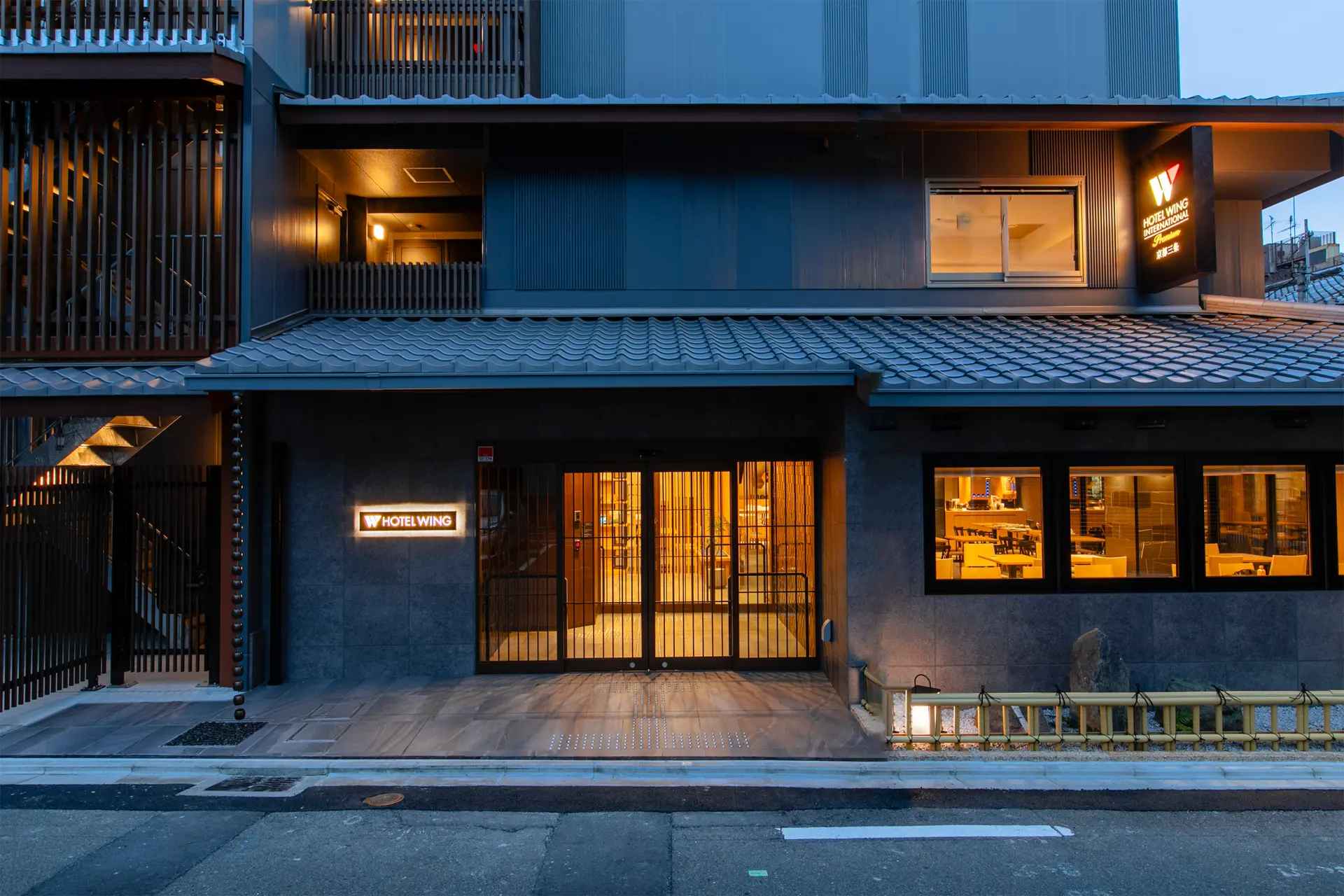
This hotel is conveniently located for sightseeing in Kyoto, just a 3-minute walk from Sanjo Keihan Station on the subway.
With Gion and Pontocho close by for a taste of Kyoto atmosphere, and Kawaramachi nearby for shopping and dining, it is an ideal base for efficiently exploring the city.
The front lobby and restaurant are designed in the style of a Kyoto townhouse, creating a refined Japanese atmosphere. All 88 guest rooms have separate bath and toilet areas, and room types range from spacious Premium Kings to compact Standard Twins.
Reviews
4.17
Some reviews are AI-translated.
-
Heian Jingu Shrine was built to honor the emperor. The huge torii gate outside is a symbolic landmark.
-
Kyoto has so many shrines and temples, but Heian Jingu really stands out with its unique appearance.
-
The huge red torii gate standing on the straight road is the most iconic symbol of Heian Jingu Shrine.
FAQ about Heian Jingu Shrine
Q
Which deities are enshrined at Heian Jingu Shrine?
A
Emperor Kanmu and Emperor Komei are enshrined as the shrine’s deities.
Q
What blessings is Heian Jingu Shrine known for?
A
Its most representative blessing is said to be matchmaking.
Summary
Among Kyoto’s many attractive sightseeing spots, Heian Jingu Shrine is especially famous.
In this article, we have introduced the basic information and highlights of Heian Jingu Shrine along with its history.
Why not visit Heian Jingu Shrine and experience a sense of Japanese history for yourself?
We have also introduced sightseeing spots and local food around Heian Jingu Shrine, but Kyoto still has many more appealing places to discover.
If you are unsure where to visit in Kyoto, be sure to use the article below as a reference.