


Mt. Takao Preparation Guide: 11 Things to Know Before Your Hike
Mt. Takao is an extremely popular destination visited by around 3 million hikers each year.
In addition to being conveniently located about one hour from central Tokyo, it is known for its rich natural environment, which received a three-star rating from the Michelin Guide.
Although Mt. Takao is often recommended for beginners, many people may wonder how much preparation is actually needed and what they should know about clothing and precautions.
This article covers 11 things to know before climbing Mt. Takao, including its climate and hiking trails.
It also introduces highlights and local food to help first-time visitors make the most of their sightseeing and hiking experience.
1. Mt. Takao Hiking Trails for Different Interests, Ages, and Fitness Levels
Mt. Takao has eight main hiking trails, including Nature Research Trails 1 through 6, the Inariyama Trail, and the Mt. Takao–Mt. Jinba Traverse Trail.
Trail 1 is recommended for first-time visitors and beginner hikers.
Most of the trail is paved, so it can be comfortably climbed in everyday clothes and sneakers.
It also passes major attractions and teahouses serving local specialties, making it an excellent way to experience the appeal of Mt. Takao.
For those looking for a more substantial hike, Trail 6 and the Inariyama Trail are recommended.
Because most of these trails follow unpaved paths through nature, they are relatively challenging and better suited to experienced hikers.
Refer to the table below for the approximate time required for each trail.
- Trail 1
-
Ascent: Approx. 1 hr 40 min
Descent: Approx. 1 hr 20 min - Trail 2
- Approx. 40 min per loop
- Trail 3
-
Ascent: Approx. 1 hr
Descent: Approx. 50 min - Trail 4
-
Ascent: Approx. 50 min
Descent: Approx. 40 min - Trail 5
- Approx. 30 min per loop
- Trail 6
-
Ascent: Approx. 1 hr 40 min
Descent: Approx. 1 hr 20 min - Inariyama Trail
-
Ascent: Approx. 1 hr 40 min
Descent: Approx. 1 hr 20 min - Mt. Takao–Mt. Jinba Traverse Trail
- Approx. 5 hr 30 min

Explore Mt. Takao More Easily by Cable Car or Chairlift
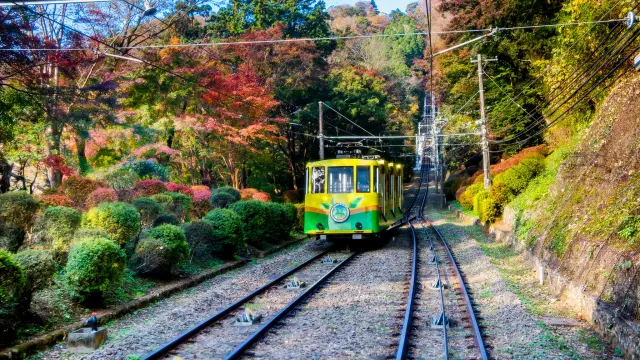
For an easier way to explore Mt. Takao, take the cable car or chairlift.
They quickly carry passengers from the foot of the mountain to the midpoint, making the mountain accessible to families with children, people who are not confident in their stamina, and visitors short on time.
Using the cable car or chairlift shortens the hiking time on Trail 1 mentioned above by about 40 minutes.
During busy sightseeing periods such as Golden Week and the fall foliage season, waits may exceed one hour, so plan accordingly.


2. Average Monthly Temperatures on Mt. Takao
The table below shows the estimated average temperatures at the summit of Mt. Takao, calculated using average temperatures in Hachioji City, where the mountain is located. Use it as a reference when deciding what to wear.
- Average Temperature in January
- 31.6°F
- Average Temperature in February
- 33.6°F
- Average Temperature in March
- 39.9°F
- Average Temperature in April
- 49.5°F
- Average Temperature in May
- 58.1°F
- Average Temperature in June
- 64.0°F
- Average Temperature in July
- 71.2°F
- Average Temperature in August
- 73.0°F
- Average Temperature in September
- 66.2°F
- Average Temperature in October
- 55.9°F
- Average Temperature in November
- 45.5°F
- Average Temperature in December
- 36.1°F

3. What to Wear When Hiking Mt. Takao
Although Mt. Takao is relatively easy to hike, it stands 1,965 ft high, and some trails include rugged terrain. Mountain weather and temperatures can also change quickly.
As with other mountains, long sleeves and long pants are recommended when hiking Mt. Takao.
Bring a waterproof and wind-resistant mountain jacket regardless of the season.
From November through April, average summit temperatures are below 50°F, so wear a fleece or sweater and a winter jacket over a long-sleeved shirt to stay warm.
In summer, from June through August, the average temperature at the summit is around 68°F, so you may sweat heavily while hiking.
A moisture-wicking, quick-drying long-sleeved shirt is therefore recommended. Sunlight is strong at the summit, so bring a hat as well.
Use these suggestions as a starting point and adjust your clothing based on the temperature on the day of your hike.


4. What to Bring When Hiking Mt. Takao
Mt. Takao is considered relatively easy for beginners to climb, but you should not let your guard down.
Dress appropriately and prepare everything you need before setting out.
Use the packing list below to make sure you have not forgotten anything before your hike.
- Essential Items
-
• Hiking shoes or well-worn sneakers
• Backpack
• Drinks, with at least 1 liter recommended
• Towel
• Trash bag
• Rain gear
• Hat - Useful Items
-
• Map or map app
• First-aid kit
• Wet wipes
• Snacks or emergency food
• Portable charger
• Plastic bags - Items Needed Depending on the Season
-
• Sunscreen
• Warm clothing
• Sunglasses


5. Well-Equipped Facilities That Put Beginner Hikers at Ease
One of Mt. Takao's attractions is its extensive facilities, which help even beginner hikers feel comfortable taking on the mountain.
The large, clean restrooms are another welcome feature.
Rest areas are available along the hiking trails and at the summit, allowing visitors to walk at their own pace without pushing themselves too hard.
Shops along Trail 1 sell local specialties such as Tengu-yaki and Tengu Kuromame Manju, both filled with sweet black soybean paste, as well as Mitsufuku Dango.
Each offers a pleasant level of sweetness and is ideal for replenishing your energy after a hike.
These Mt. Takao specialties also make good souvenirs.


6. Etiquette to Follow on Mt. Takao
There are three basic rules to follow on Mt. Takao: take your trash home, do not enter restricted areas or damage the natural environment, and do not pick flowers, plants, or insects.
Mt. Takao has one of Tokyo's richest natural environments and is an important habitat for a wide variety of plants and animals.
Basic hiking etiquette also calls for hikers to be considerate, yield to one another, and exchange greetings along the trail.
On narrow paths and single-file stairways, a simple “Go ahead” can help everyone have a pleasant time on Mt. Takao.


7. When to See Fall Foliage and Cherry Blossoms on Mt. Takao
Mt. Takao offers seasonal scenery throughout the year that may make you forget you are still in Tokyo.
Among its seasonal highlights, the cherry blossoms, which usually reach their peak from early to mid-April, are especially impressive.
Mountain cherry trees and Somei Yoshino cherry trees cover the mountain from its base to the summit in vivid shades of pink, creating an uplifting sight.
The hiking trail from Mt. Takao to Mt. Kobotoke-Shiroyama is particularly well known for its rows of cherry trees called the Thousand Cherry Trees. Icchodaira, located along the way, is especially popular and is an ideal place for cherry blossom viewing.
The fall foliage season, which usually runs from mid-November to early December, is another highlight.
The mountain is home to many varieties of maple, including Japanese maple and painted maple, producing colorful gradations of red, yellow, golden yellow, and green.
The combination of Mt. Fuji and the fall foliage seen from the summit observation deck is particularly striking.
Also see the following article for detailed information to help you enjoy Mt. Takao in fall.

Related Articles

Guide to Enjoying Mt. Takao in Spring
Take a scenic hike among the cherry blossoms!


8. Mt. Takao Highlights and Food
Mt. Takao is popular not only for hiking but also for its many attractions.
The surrounding area has enough sightseeing facilities to fill more than a day, offering something for visitors of all ages.
For example, Takaosan Yakuoin Temple, located halfway up the mountain, has a history of more than 1,200 years. It is also known as a spiritual site and attracts worshippers throughout the year.
Keio Takaosan Onsen Gokurakuyu is located near Takaosanguchi Station, making it a good place to stop and soothe your tired body in the hot springs.


Mt. Takao also has many dining spots worth visiting.
Two recommendations are Sakae Chaya, known for its specialty jinenjo soba made with Japanese mountain yam, and Gomadokoro Gongen Chaya, where the aroma of its savory house-made sauce is sure to whet your appetite.


9. The Tengu and Their Deep Connection to Mt. Takao
Mt. Takao is associated with numerous legends and stories about tengu, supernatural beings said since ancient times to possess mystical powers.
Tengu play a role in the religious traditions of Mt. Takao. They are considered attendants of Izuna Daigongen, the principal deity of Takaosan Yakuoin Temple, and have long been revered as divine beings.
For example, people in the past attributed the unusual octopus-like roots of the popular Tako-sugi cedar tree to the mystical powers of tengu and treated the tree with reverence.
Mt. Takao also has a history as a center of Shugendo, a tradition of mountain asceticism closely associated with yamabushi practitioners and tengu.
Even today, tengu are believed to bring blessings such as good fortune and protection from evil.
The temple grounds contain many tengu statues and tengu-themed objects in various forms, so keep an eye out for them as you explore.

10. How to Get to Mt. Takao
The following route and travel time begin at Shinjuku Station, which offers some of the most convenient access to Mt. Takao from central Tokyo.
The nearest station to Mt. Takao is Takaosanguchi Station. Be careful not to confuse it with nearby Takao Station, which has a similar name.
- Route
-
1. Walk from Shinjuku Station to Keio Line Shinjuku Station
2. Take a limited express train bound for Takaosanguchi from Keio Line Shinjuku Station and get off at Takaosanguchi Station
3. Walk a few minutes from Takaosanguchi Station to the foot of Mt. Takao
Note: Local trains take longer, so check the train type before boarding - Travel Time
- Approx. 1 hr 10 min
The cable car and chairlift stations mentioned above—Kiyotaki Station and Sanroku Station—are also about a 5-minute walk away.
For a Comfortable Weekend or Holiday Trip, Take the Mt. TAKAO Train
The Mt. TAKAO is a reserved-seat train operated by Keio Corporation between Shinjuku Station and Takaosanguchi Station on weekends and holidays.
The train is equipped with air purifiers, free Wi-Fi, and power outlets, allowing passengers to travel in comfort.
Trains can be especially crowded on weekend and holiday mornings, so this service is recommended if you want to guarantee a seat or avoid unnecessary fatigue and stress before your hike.
If you also want to appreciate the views from the train, book your ticket online and reserve your preferred window seat.

11. Discount Tickets for Visiting Mt. Takao
The following tickets can save you money when traveling to Mt. Takao or using the Keio Line.
If you plan to explore destinations across the Keio Line network or ride the chairlift or cable car, these tickets are likely to offer a discount and are well worth considering.
Mt. Takao Ticket
The Mt. Takao Ticket includes a discounted round-trip ticket from any station on the Keio or Inokashira Line to Takaosanguchi Station, together with a discounted ticket for either the Mt. Takao cable car or chairlift.
The package offers a 20% discount from any departure station except Takaosanguchi Station, making it an excellent value.
It can also be used as the basic fare ticket for the reserved-seat Mt. TAKAO train, which operates between Shinjuku Station and Takaosanguchi Station on weekends and holidays.

Mt. Takao Yu-Ttari Ticket
The Mt. Takao Yu-Ttari Ticket includes a discounted round-trip ticket from any station on the Keio or Inokashira Line to Takaosanguchi Station, a discounted round-trip ticket for either the Mt. Takao cable car or chairlift, and admission to and a meal at Keio Takaosan Onsen Gokurakuyu. It is available on weekdays only, although it is not sold on certain weekdays, including during Golden Week.
It also comes with benefits such as discounted admission to the Takao Trick Art Museum. Departing from Shinjuku or Shibuya Station can save you more than 1,000 yen.

Keio Line and Inokashira Line One-Day Pass
The Keio Line and Inokashira Line One-Day Pass is available from the first train of the day at ticket machines in each station.
It provides unlimited rides on both the Keio and Inokashira lines on the day of purchase.
This pass is an easy recommendation for anyone planning to take a total of seven or more train rides in one day.

Frequently Asked Questions About Mt. Takao
Q
Which trail is most recommended for beginners?
Trail 1 is recommended because most of it is paved. If you are concerned about the hike, take the cable car or chairlift to reduce the hiking time by about half.
Q
How cold does it get in winter?
Temperatures may reach around 48°F on warmer days but can fall as low as 23°F. Because there is also a temperature difference between the foot of the mountain and the summit, adequate protection against the cold is essential.
Q
Are there bears on Mt. Takao?
Around 10 sightings are confirmed each year. Bears have been reported near the Takao and Daigo forest roads, so take particular care in these areas.
Summary
This article has covered the precautions and preparations to consider when visiting Mt. Takao, along with recommended clothing and discount tickets.
Mt. Takao offers different scenery in every season, making it an appealing place to experience nature at any time of year.
Use this article as a reference to make the most of Mt. Takao and its many highlights, including local food and spiritual sites.
Also be sure to read the following article, which explores the mountain's appeal from every angle.
Author
Writers & Editors
GOOD LUCK TRIP Editors
Sharing lesser-known ways to experience Japan with the world!