
A Complete Guide to Enjoying Washi, Japan’s World-Class Traditional Paper We Want to Preserve for the Future
Washi is traditional Japanese paper with a warm, natural feel.
These days, people rarely use washi in daily life, even for New Year’s cards or letters.
Concern over this growing move away from washi led to its inscription on UNESCO’s Intangible Cultural Heritage list. As a paper unique to Japan, washi is a tradition that must not disappear.
That is why hands-on facilities have also emerged to help more people discover the warmth and appeal of washi.
In this article, we’ll introduce the charm of washi, made using Japan’s traditional techniques.
Introduction
In 2014, Japanese handmade washi papermaking techniques were inscribed on UNESCO’s Intangible Cultural Heritage list. The registered name is “Washi, craftsmanship of traditional Japanese hand-made paper.”
“Tesuki washi” refers to washi made entirely by hand. The word “washi” is used in contrast to “yoshi” (Western paper), and came into use after paper from abroad was introduced to Japan.
Three types of washi are included on UNESCO’s Intangible Cultural Heritage list: Sekishu-Banshi from Hamada City, Shimane Prefecture, Honminoshi from Mino City, Gifu Prefecture, and Hosokawashi from Ogawa Town and Higashichichibu Village, Saitama Prefecture.
There are around 70 washi-producing regions across Japan, from Hokkaido to Okinawa, besides these three, but today Echizen City in Fukui Prefecture is one of the largest production areas. At Okamoto Shrine, part of “Shisogami Okamoto Shrine and Otaki Shrine” in Echizen City, Kawakami Gozen, a rare paper deity in Japan, is enshrined, and there is also a legend that around 1,500 years ago, Kawakami Gozen came to teach papermaking to the local people.
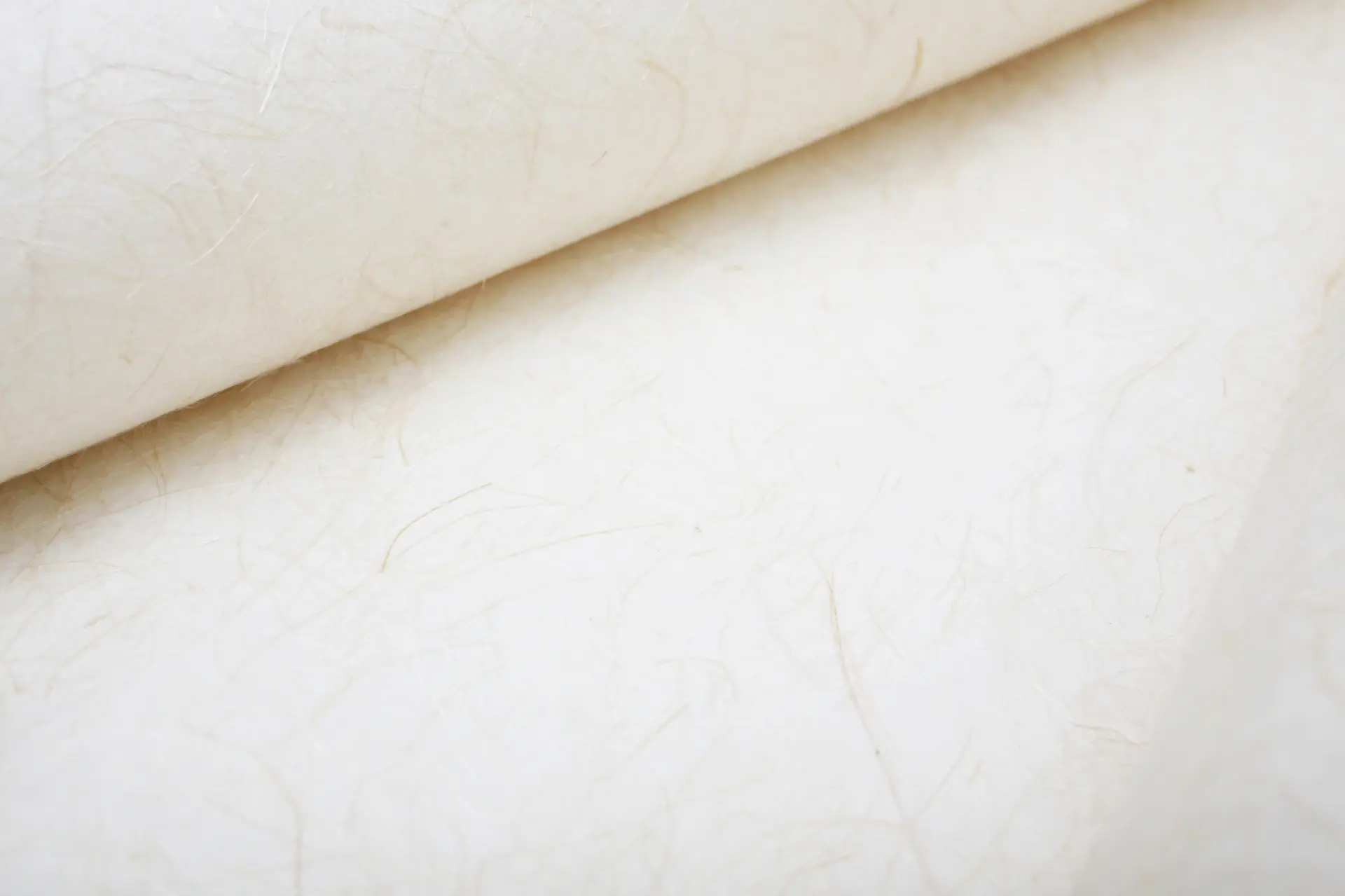
These types of washi are made using only domestically grown kozo, a plant native to Japan, and are produced with the traditional Japanese technique called nagashi-zuki. Each sheet is carefully made by hand by artisans, giving it character that cannot be achieved through machine mass production.
Another feature is that the production process differs slightly depending on the region and artisan. Kozo fibers are long, so the finished washi has intricately interwoven fibers, making it highly durable. Also, because the raw material is natural fiber and no chemicals are used in production, it is highly suitable for long-term preservation.
On the other hand, because it is handmade, raw material costs are about three times higher than for Western paper, and labor costs are also required, so prices tend to be high. In modern times, digitalization has advanced, and with it, paper consumption has also declined.
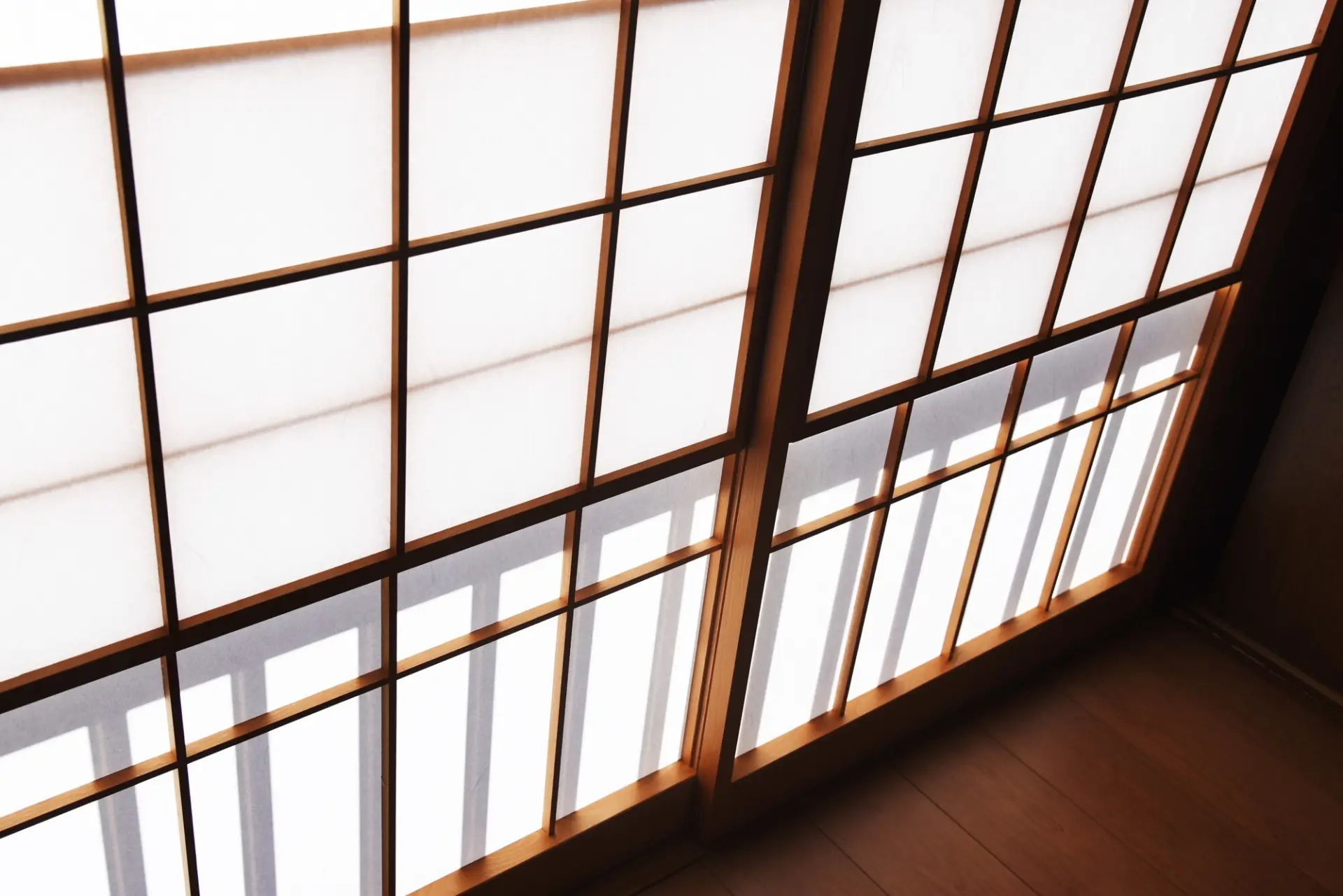
There were as many as 68,000 washi makers across Japan 150 years ago, but today there are fewer than 300, showing a dramatic decline. At this rate, the traditional techniques for making washi may disappear, creating a critical situation. One major reason for this sharp decline is that, over time, traditional Japanese houses with washitsu rooms featuring fusuma and shoji, two of the most common uses for washi, have become much less common.
What Is Washi?
The Difference Between Washi and Western Paper
Washi refers to paper traditionally made in Japan since ancient times.
Since the Meiji era, the term “washi” has been used for Japanese-made paper produced using traditional Japanese methods, in contrast to “yoshi” (Western paper), which was introduced from Europe, America, and elsewhere.
Today, paper in Japan is broadly divided into these two types: washi and Western paper. Washi is made from the bark of plants such as kozo, mitsumata, and gampi. It refers to paper made by pulping and forming these materials.
In traditional production, hand papermaking, in which each sheet is made one by one by hand, was the mainstream, but in the 1900s, machine-made washi also began to be produced. In hand papermaking, a tool called a “su” is used to make each sheet one by one with the nagashi-zuki technique. The fibers become intricately intertwined, resulting in high-quality, durable paper that is also flexible.
However, because it is handmade, there are also drawbacks: size is limited, production takes time, prices are higher, and quality can vary. Machine-made washi is produced on a conveyor-belt system and wound into rolls. The fibers tend to align in the direction the belt moves, making the paper strong vertically but weaker horizontally. Because it can be mass-produced with consistent quality, it is more affordable.
Western paper, on the other hand, is made mainly from wood and produced by machine. Japan’s first Western paper mill was established in the early Meiji era. As technology advanced, paper was mass-produced and inexpensive paper became widely available on the market.
The History of Washi
One theory says that the culture of making paper came to Japan around the Asuka period.
According to the Nihon Shoki, in 610 a monk from Goguryeo made paper, using the tame-zuki technique that creates thick paper, and ink. However, there is also a theory that papermaking technology existed in Japan even before that. Later, the practice of copying sutras spread, which increased the production of paper for sutra transcription.
In the Nara period, paper production increased for use in official records such as family registers, although paper was still considered a precious commodity. In the Heian period, paper spread mainly among the aristocracy, who used it to write poetry. It was during this time that the nagashi-zuki technique, which made it possible to produce thin paper, was perfected.
In the Kamakura and Muromachi periods, samurai also began using paper, and papermaking spread throughout Japan. Paper also came to be used for gifts. In the Edo period, paper became common among ordinary people as well, and was used in daily life for hanshi, shoji paper, tissue paper, and more, leading to a major increase in production.
Newspapers also appeared in the late Edo period. In the early Meiji period, banknotes and textbooks were made from washi, and machine-made washi was developed, but as Western paper from Europe and America entered Japan, paper consumed in Japan gradually shifted from washi to Western paper.
Raw Materials of Washi
The plants generally used as raw materials for washi are kozo, mitsumata, and gampi, all plants that have long been found in Japan. The inner bark beneath the outer bark is used. In addition to these three, some washi also uses wood pulp, bamboo, or pineapple.
- Kozo
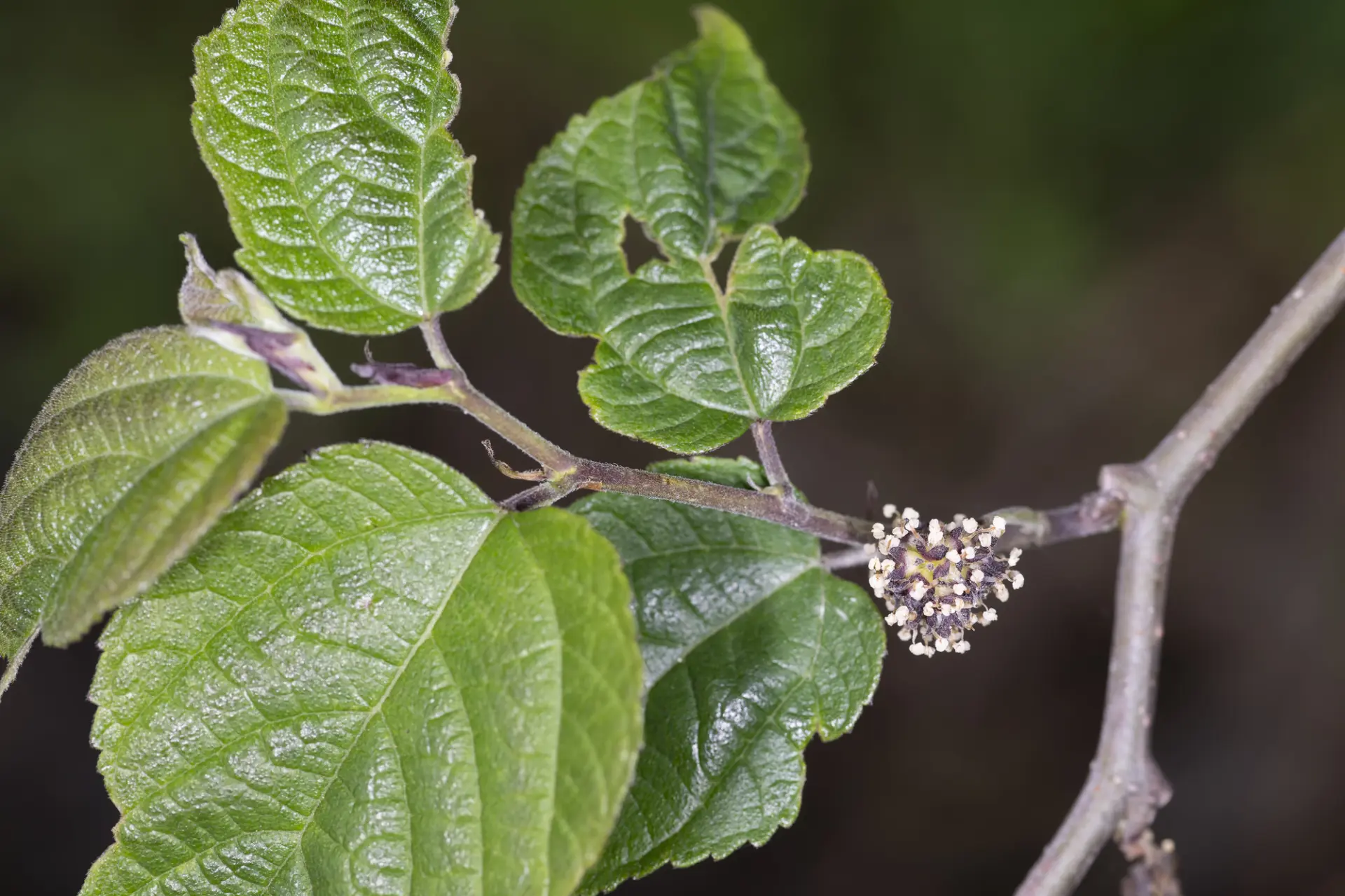
Kozo grows in Japan, the Korean Peninsula, and south-central China. It is a deciduous shrub in the mulberry family. Its fibers are thick, long, and strong. Kozo imported from countries such as Thailand is also used.
It is used for calligraphy paper, shoji paper, and folk craft paper. Since only the bark is used to make washi, apparently only about 4% of the whole kozo plant is actually used.
- Mitsumata
Mitsumata grows in south-central China and the Himalayas. It is a perennial deciduous shrub in the daphne family. It was given this name because its branches split into three. Its fibers are fine, short, and glossy.
Because it produces a smoother finish than washi made from kozo, it is well suited to detailed printing and is used for banknote paper, bureau paper, security paper, and insulating paper.
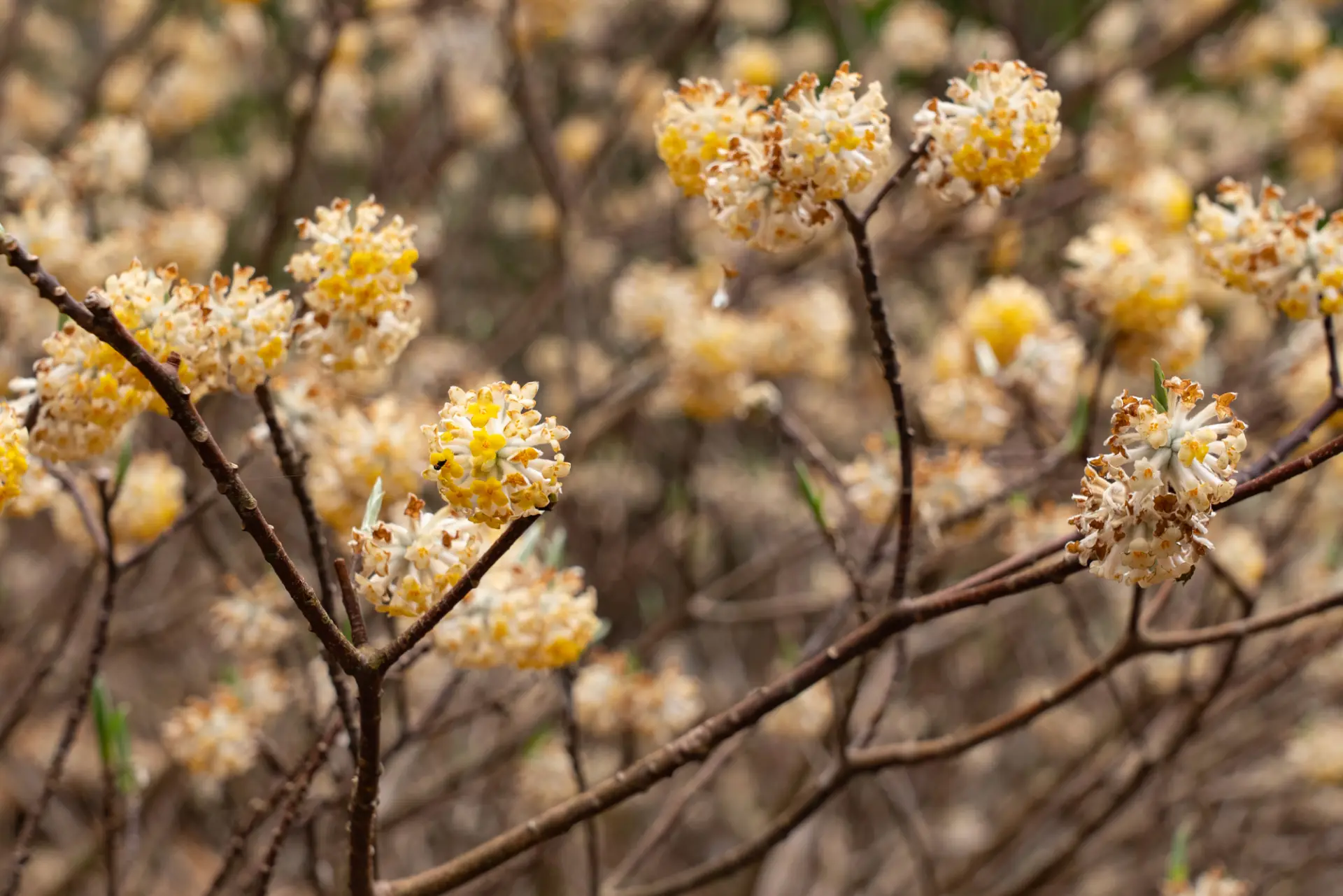
- Gampi
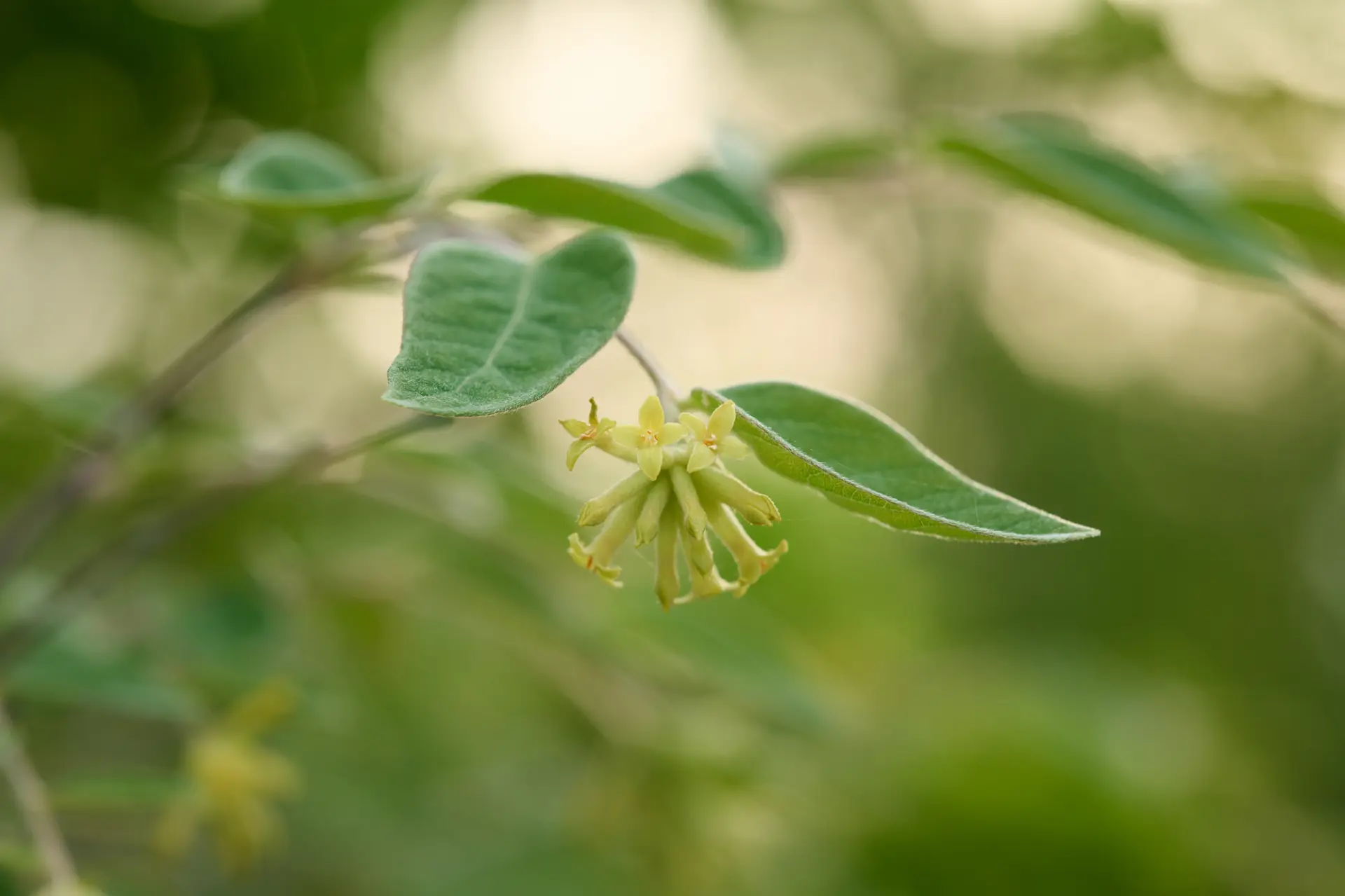
Gampi is a deciduous shrub in the daphne family. Its fibers are fine and short, producing washi with a beautiful gloss.
It is used for sutra transcription paper, stencil duplicating base paper, and record paper.
Try Making Washi
Try Papermaking in Kyoto
There is a facility in Kyoto where you can try making washi. It is a 9-minute walk from Hankyu Karasuma Station.
It is “Kami TO Wa” in Nakagyo Ward, Kyoto City.
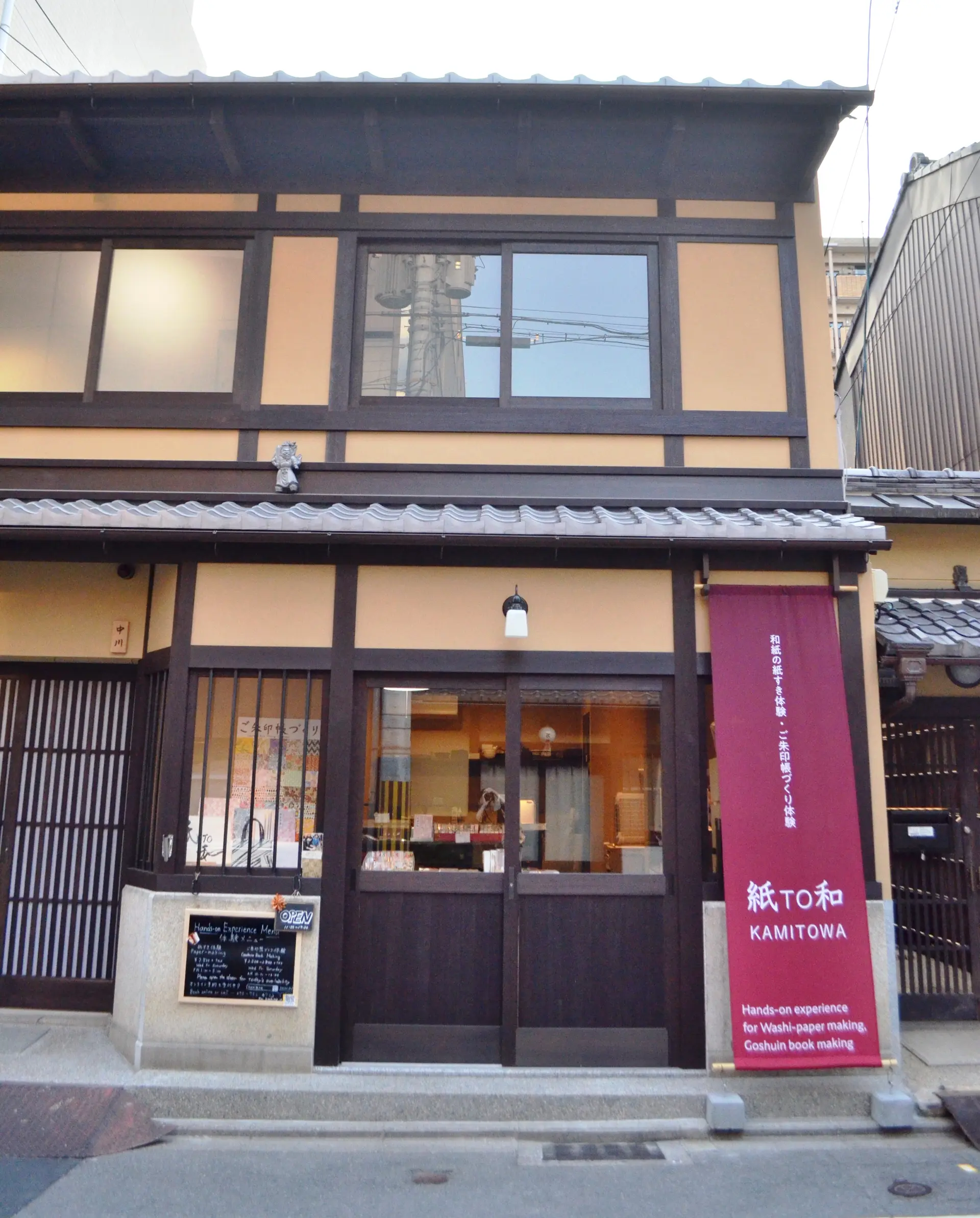
When you step into this renovated Kyoto townhouse shop, one of the first things you’ll notice is the neat display of washi goods and goshuin books.
The washi items include handmade washi postcards, letter paper, gift envelopes, and tape made from washi.
There are many items that would make great souvenirs.
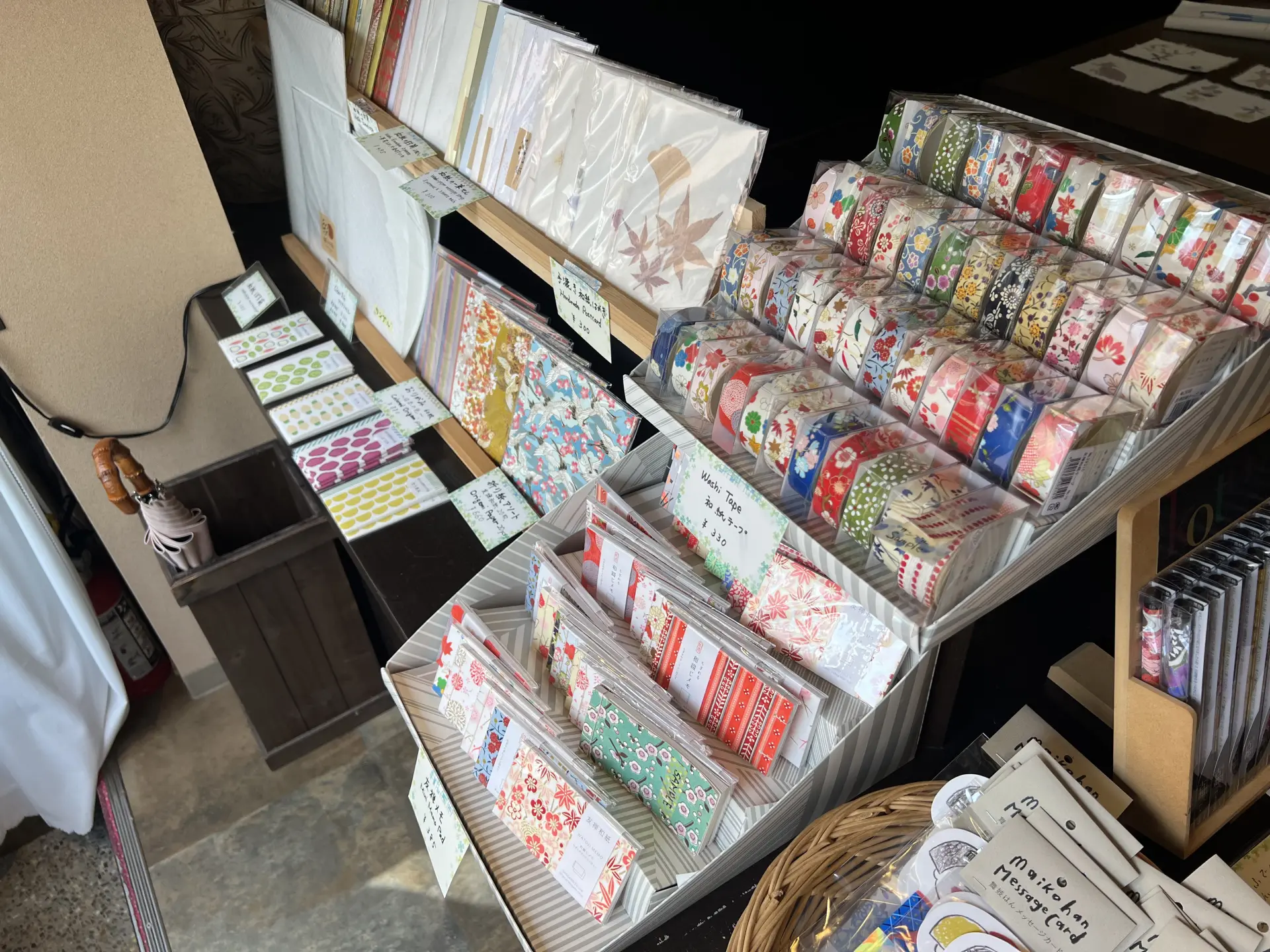
The goshuin books sold here are also made of washi, not only inside but even on the covers.
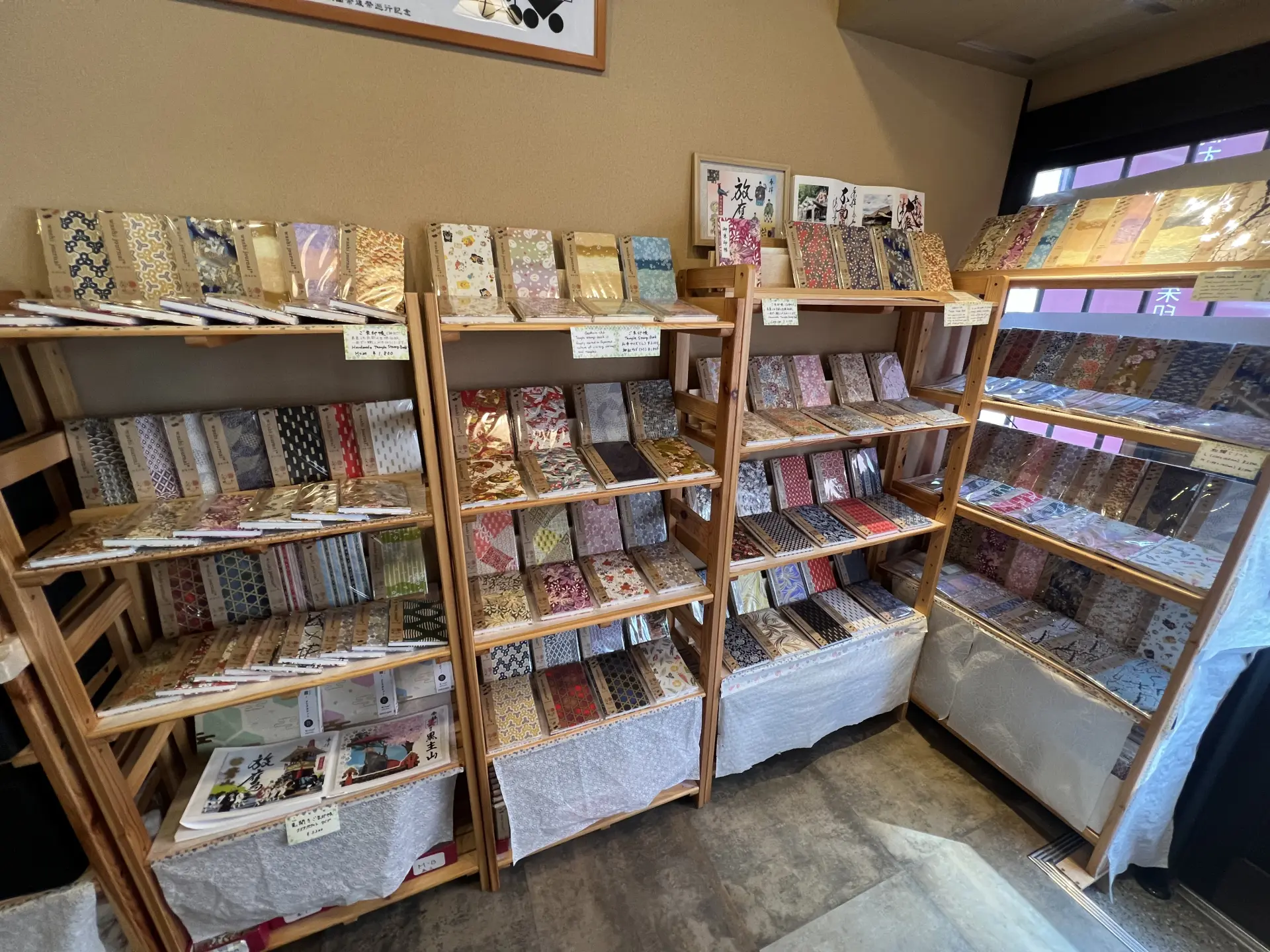
Some even have different washi patterns on the front and back covers.
There are so many designs to choose from that it is hard to decide, including animals such as Japanese cranes, snow rabbits, and beckoning cats, as well as cherry blossoms and auspicious traditional Japanese patterns. Just shopping for these washi goods is enjoyable enough, but this facility offers an even more special experience. You can make B4-size paper from washi raw materials and turn it into postcards, lamp shades, tapestries, or even a goshuin book.
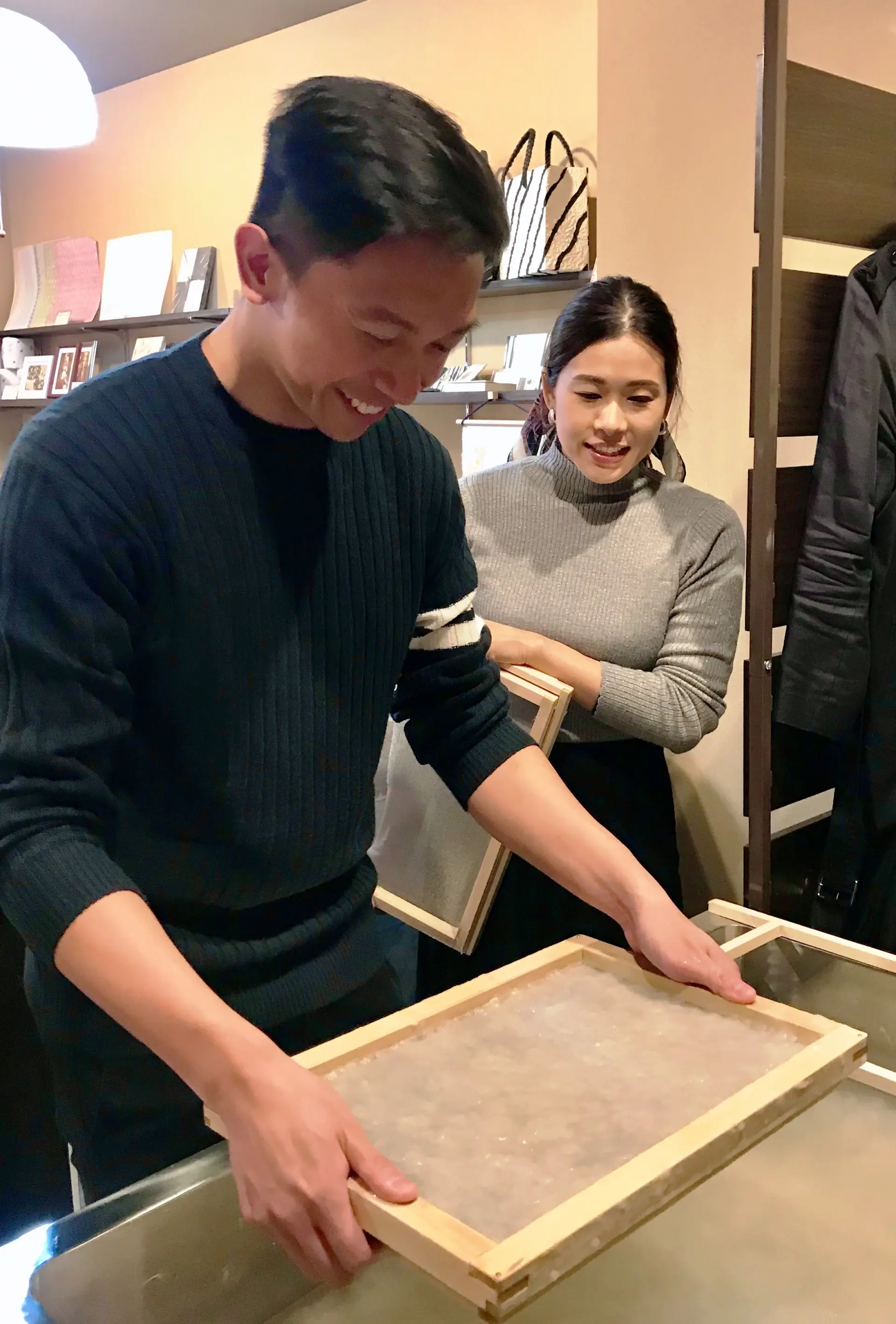
Originally founded in 1932 in Higashiosaka, Osaka, Kurauchi Co., Ltd., a paper wholesaler engaged in washi sales, washi workshops, and the planning, production, and sale of paper-related products, launched the washi workshop “Kami TO Wa” in 2017.
The idea came from wanting more people to discover the appeal of paper at a time when digitalization was accelerating the move away from it. Mr. and Mrs. Hayashi, who run the shop, carefully teach visitors how to make paper. Before starting the workshops, they visited many papermaking regions across Japan, including Echizen, Tokushima, and Kochi.
The workshop takes Approx. 1 hour. You can take your finished piece home with you, making it a truly special memory. There are four classes a day, with up to six people per class, so you can enjoy the experience at a relaxed pace while receiving careful instruction.
You can join in Japanese or English. It is very popular with visitors from the U.S., Australia, Europe, Taiwan, and China, and apparently 80% of participants are international tourists. Solo travelers are of course welcome, and couples, families, and friends can all enjoy trying this traditional Japanese craft of washi making!
Anyone from children to seniors can take part.
Facility Information
- Postal Code
- 604-8205
- Address
- 345 Sanjocho, Shinmachi-dori Rokkaku-agaru, Nakagyo-ku, Kyoto, Kyoto Prefecture
- Phone
- 075-756-4723
- Closed on
- Irregular closures on Sundays
- Experience Dates
-
Friday, Saturday, Monday, and Tuesday (10:30 am–5:00 pm, priority given to reservations)
※This is a very popular experience, so advance reservations are recommended - Admission
- ¥3,500–¥5,000
- Contents
-
- 4 postcards (a B4-size sheet is cut into 4 pieces)
- Table mat (B4 size)
- Lamp shade (B4 size)
※Note: Please use a safe light source such as an LED light.
- Tapestry (wood and string are attached to a B4-size sheet to make a wall hanging) additional fee ¥550 (additional material cost)
- Paper lantern (4 postcards are attached to wood) additional fee ¥980 (additional material cost)
- Experience making a goshuin book with the paper you made, additional fee ¥3,000 (goshuin book materials and instruction fee) - Access
-
9-minute walk from Exit 24 of Hankyu Kyoto Line “Karasuma Station” or Kyoto Municipal Subway Karasuma Line “Shijo Station”
※There is no parking. Visiting by public transportation is recommended - Official website
- Official website (Japanese)
Reception and Explanation
After checking in for the experience, you will get a quick explanation of how papermaking works.
First, you learn that the essential raw material for making washi is a plant called kozo.
Washi is made using the bark of this kozo plant. You will also get to see actual kozo branches.
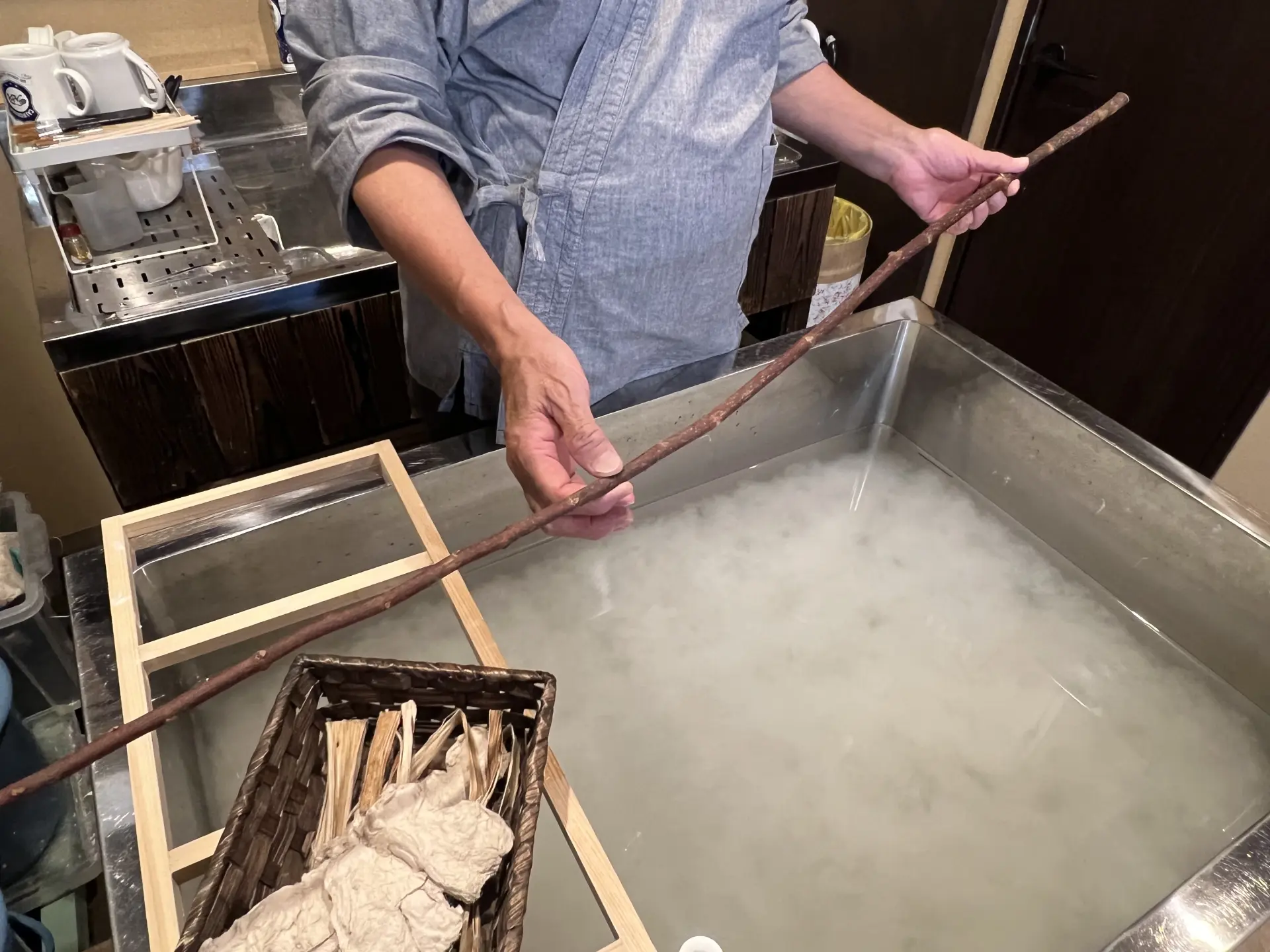
It feels surprisingly thin for something so long. The bark of the kozo is steamed for about 3 hours to make it easier to peel. After each piece is carefully peeled by hand, the bark is dried. Then it is boiled again for about 3 hours, washed, and beaten to break down the fibers.
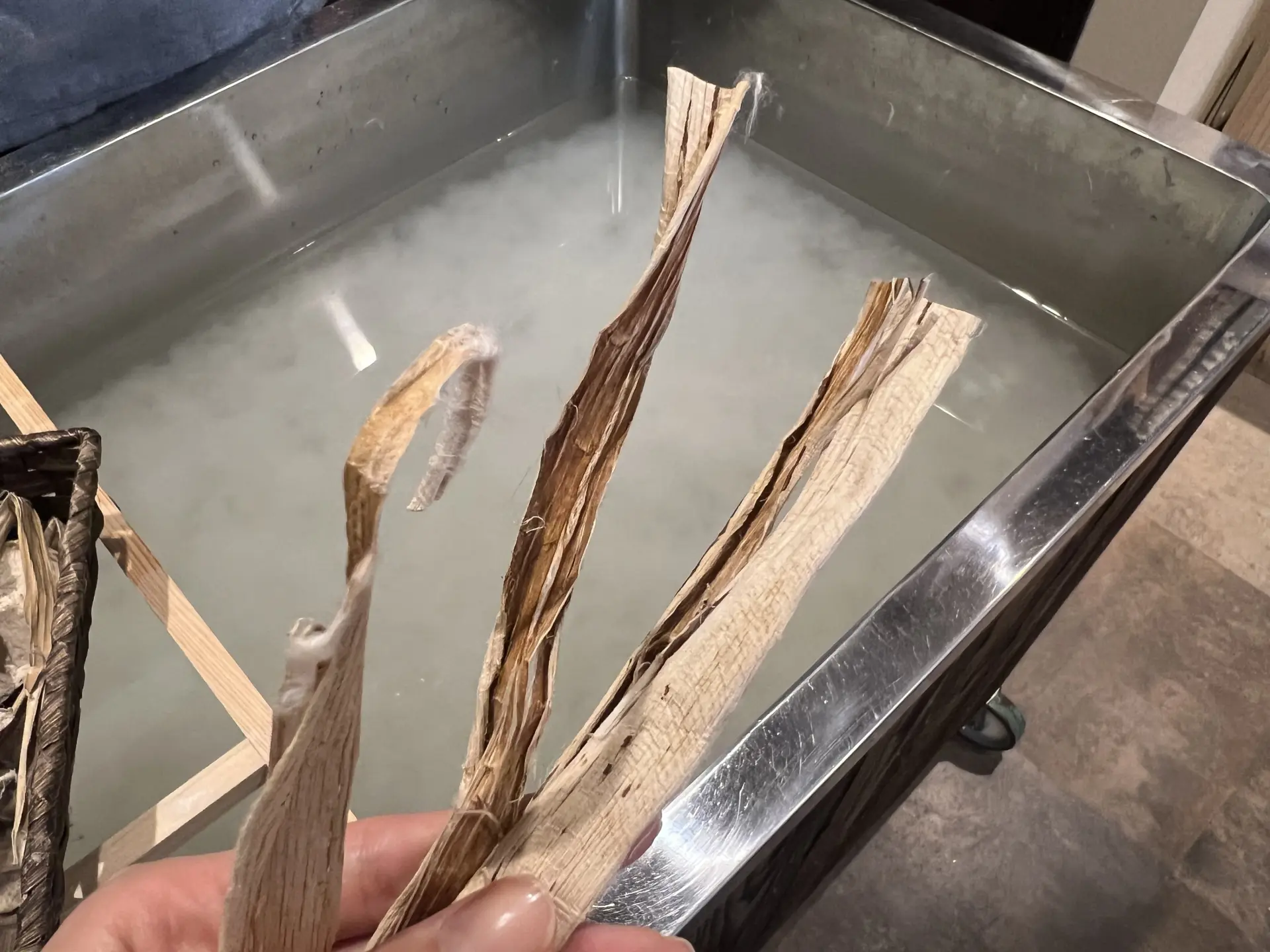
Inside the vat is a well-mixed combination of the beaten fibers, water, and a sticky liquid called neri.
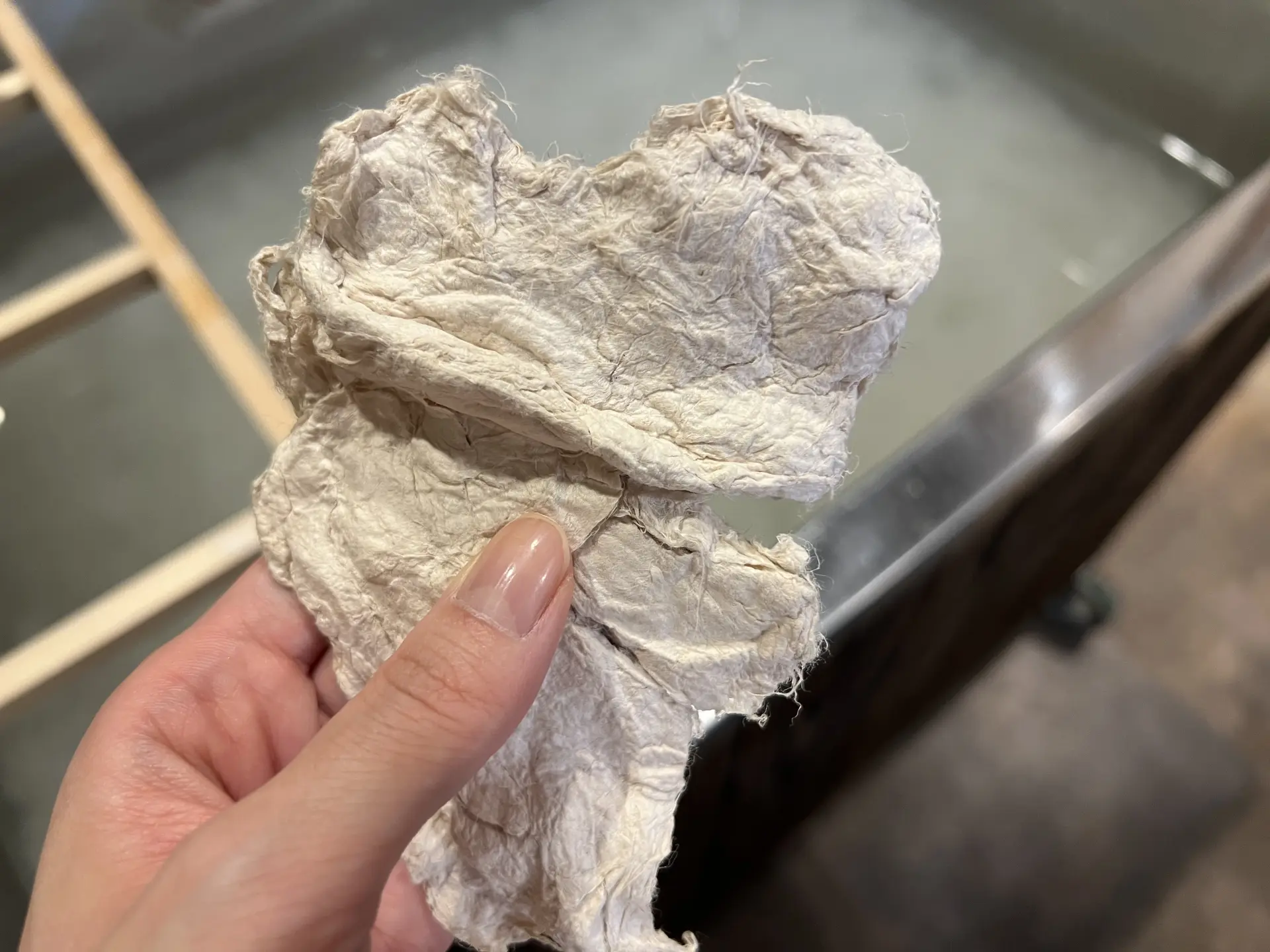
Neri plays an essential supporting role in washi making. It is a sticky mucilage extracted from the root of a plant called tororo-aoi. Adding neri slows the speed at which water passes through the mesh, allowing the fibers to disperse evenly. This makes the paper easier to form and helps create a cleaner finish.
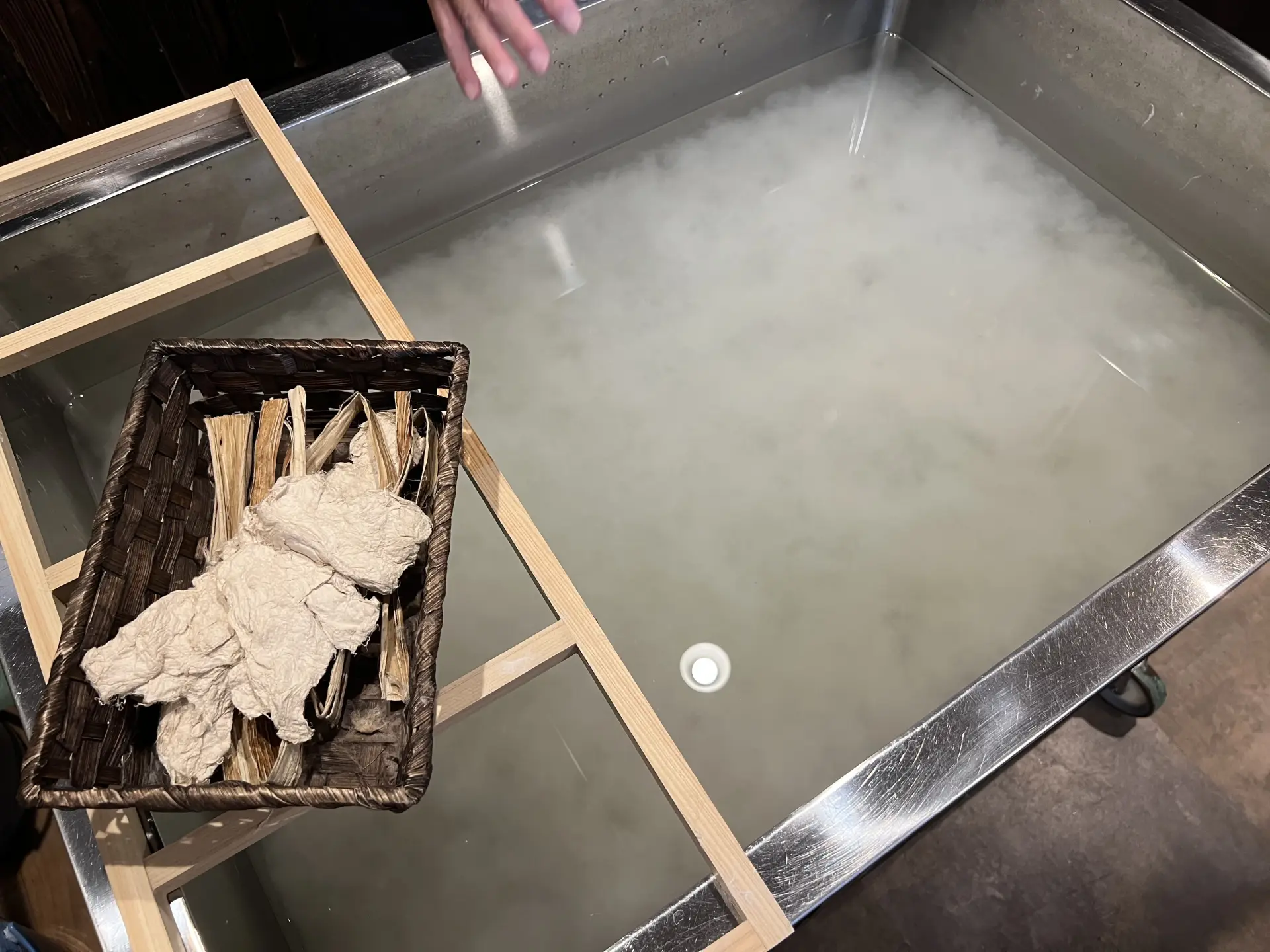
Then, after hearing a simple explanation of the papermaking flow, you get to try making it yourself.
Let’s Try Papermaking!
1. Place the wooden frame called a “sukiwaku” vertically into the vat so that it is perpendicular to the water surface.
The warm, slightly sticky water feels strange in a fascinating way. You can feel the soft, fluffy fibers.
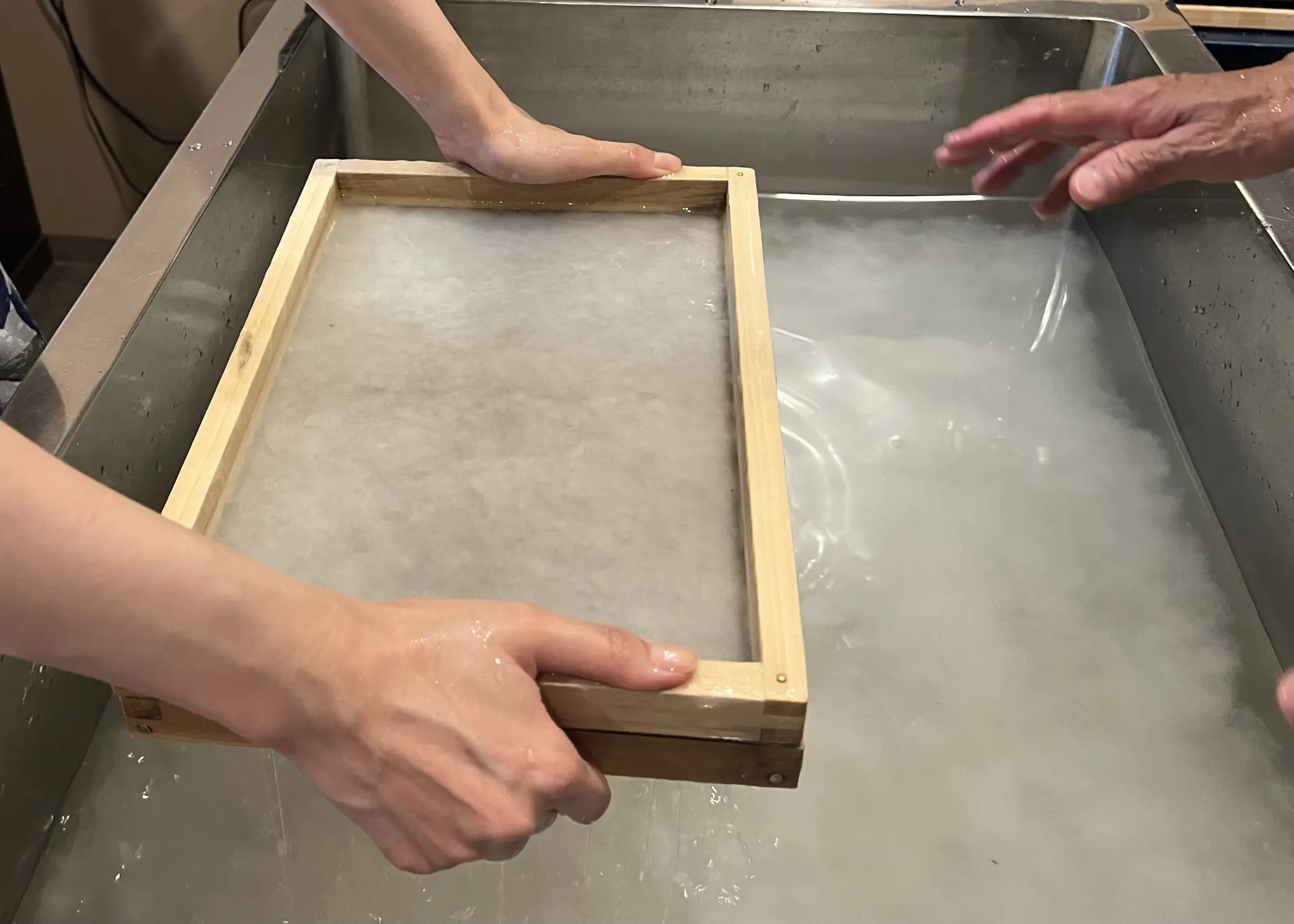
Once the wooden frame is in the vat, pull it toward you and scoop it up. Because the water is sticky, it is surprisingly heavy. The key is to hold the frame firmly so it does not shift as you lift it!
After scooping, shake it in the order of vertical, vertical, horizontal, horizontal to spread the material evenly. Shaking it both vertically and horizontally helps the fibers interlock, so take your time and move it slowly without rushing. Repeat this once more. On the second time, the water feels even heavier, so be careful that the frame does not slip.
Mr. Hayashi will support and guide you, so do not worry if you make a mistake!
2. Once the paper has been formed, the next step is to decorate it freely with pressed flowers.
There are leaves as well as colorful flowers such as cherry blossoms and dandelions.
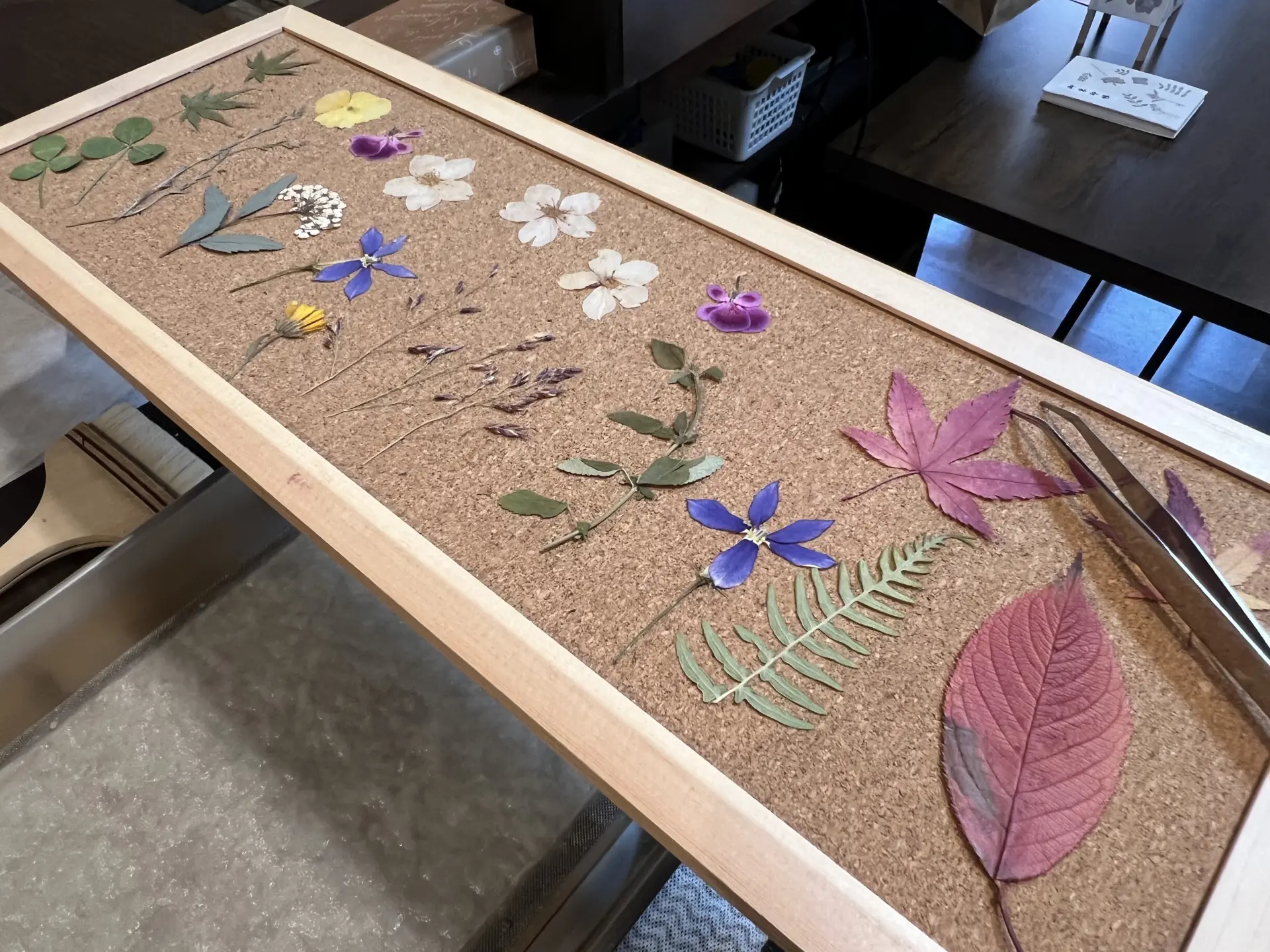
The day we visited was in autumn, so there were fallen leaves and red maple leaves.
Apparently, the types of pressed flowers change a little with the season. You can really feel the richness of Japan’s four seasons through them. You can use all of the pressed flowers if you like, or just pick the ones you like best.
The key point is that afterward, the sheet of paper will be cut vertically and horizontally into four equal parts. Be careful not to place pressed flowers where the cuts will be.
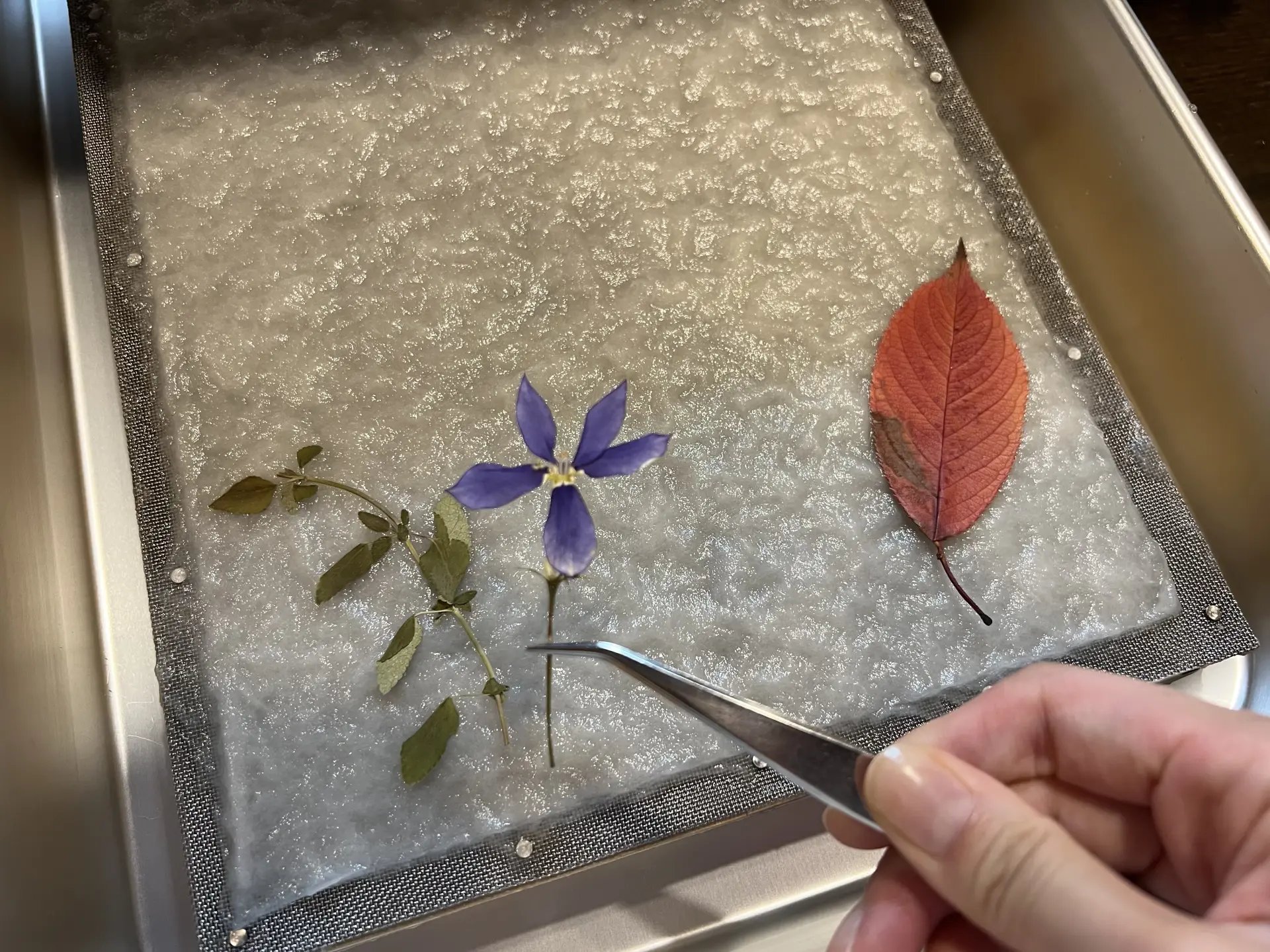
Thinking about the balance of the plants and flowers, and deciding whether to keep it simple or make it bold, you place the pressed flowers with tweezers.
After decorating, you can also use a brush to add gold powder!
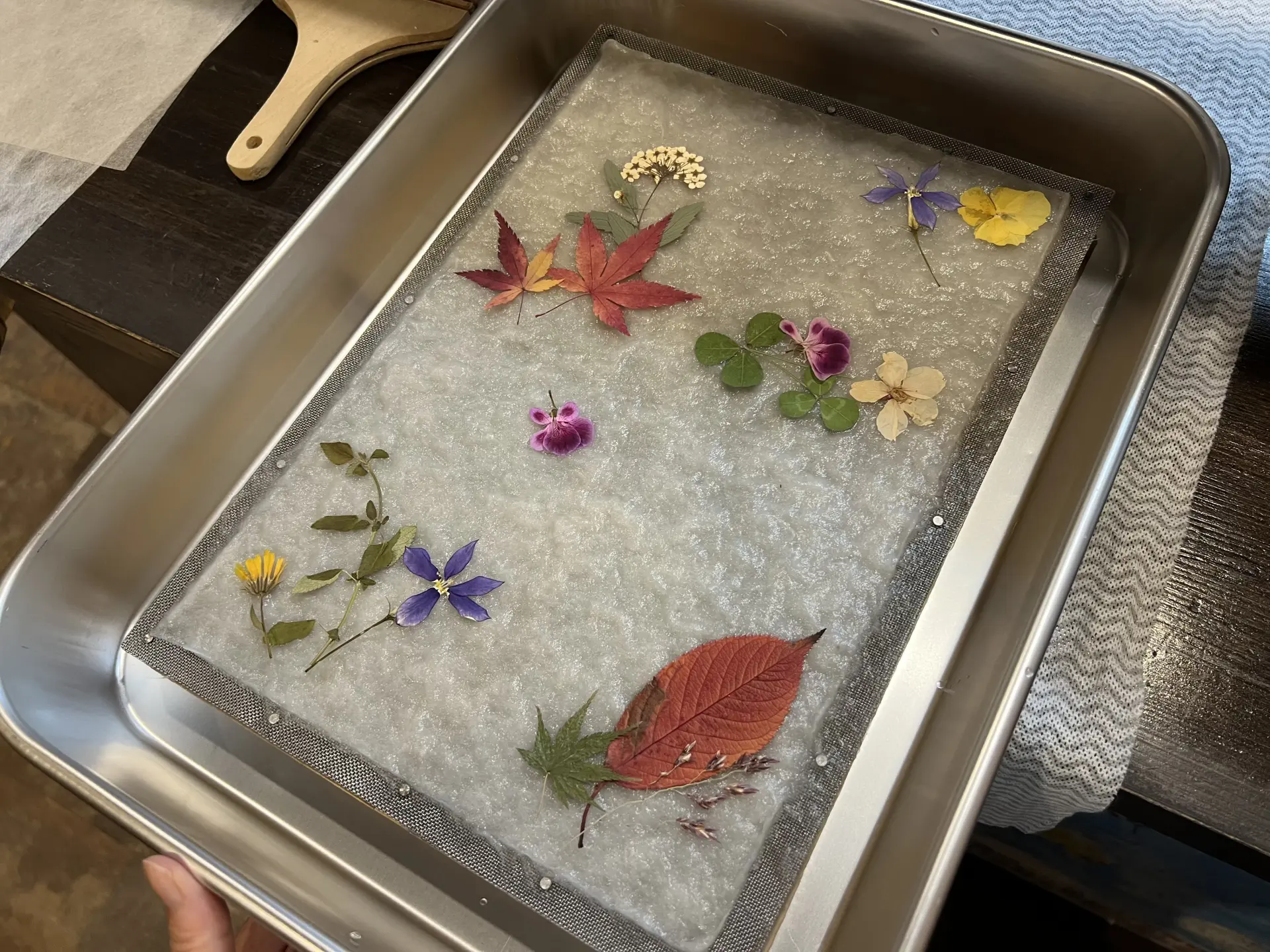
When gold powder was added to the red-dyed leaves, it gave them a sparkling accent. Of course, it is also fine not to use any gold powder at all. Design it however you like!
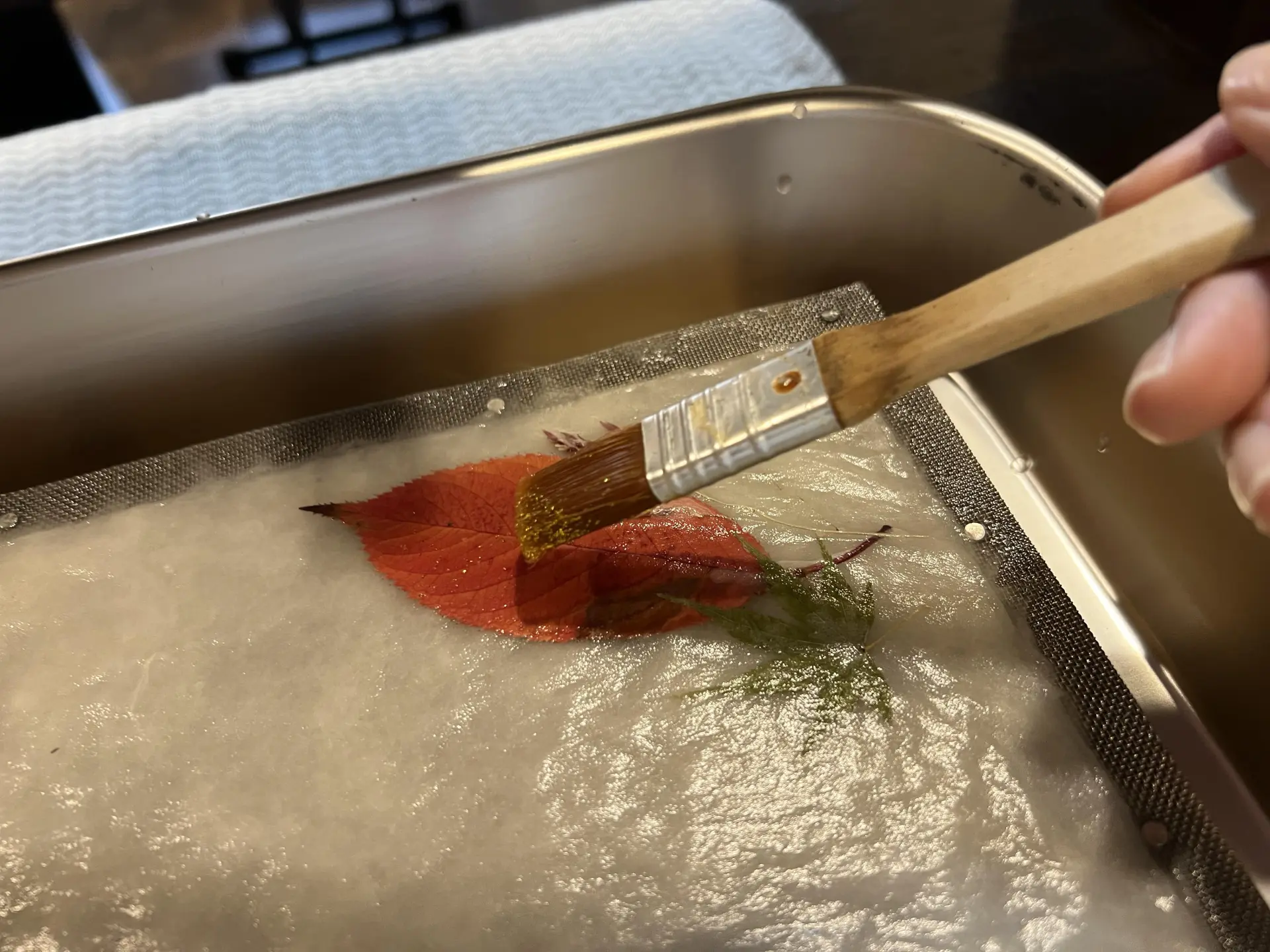
After that, a sheet of paper called tengujo is placed on top, and a brush is gently stroked from the center outward to remove air bubbles.
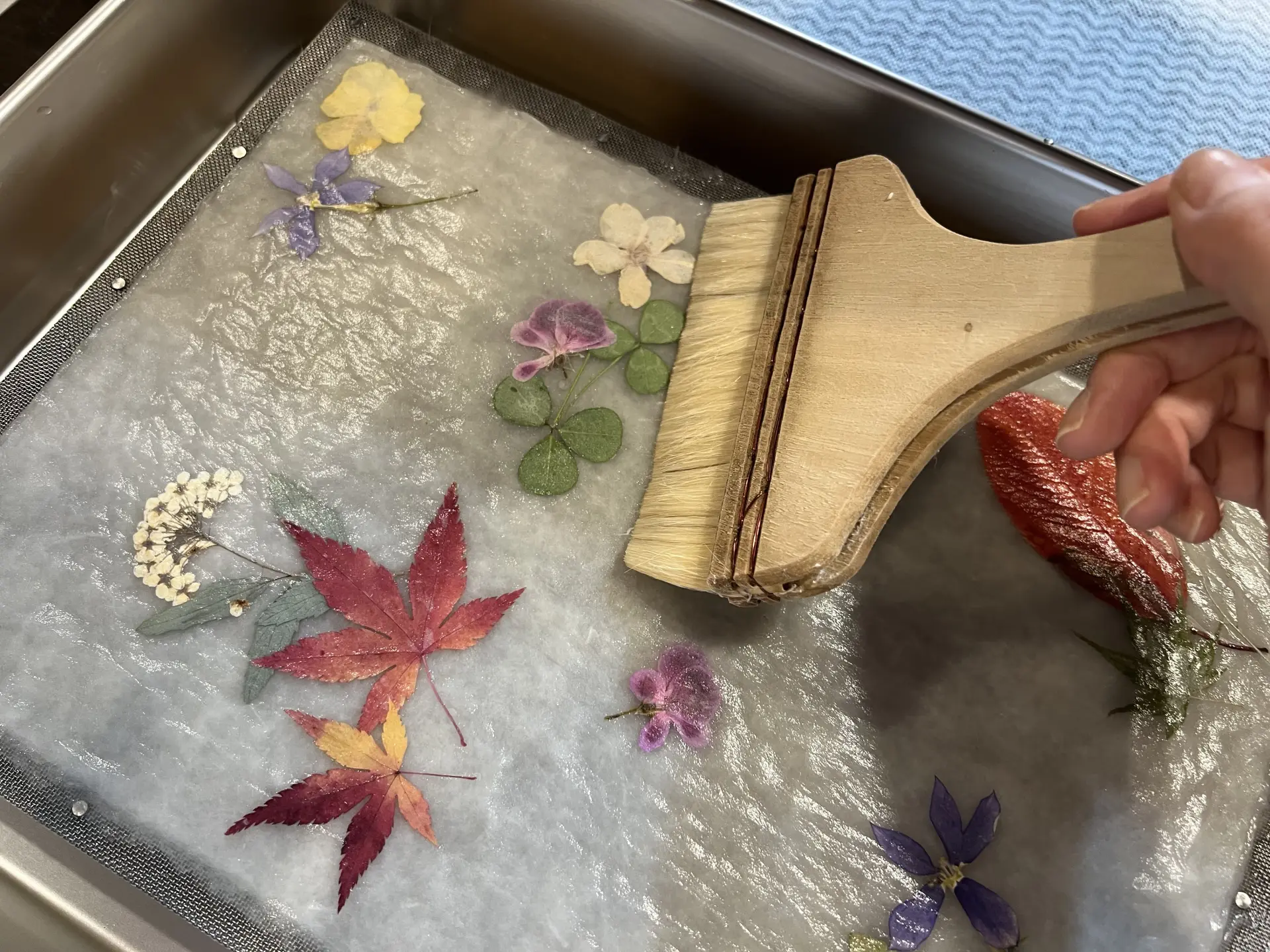
3. Next comes the final step. The sheet is covered with nonwoven fabric and placed in a dehydrator.
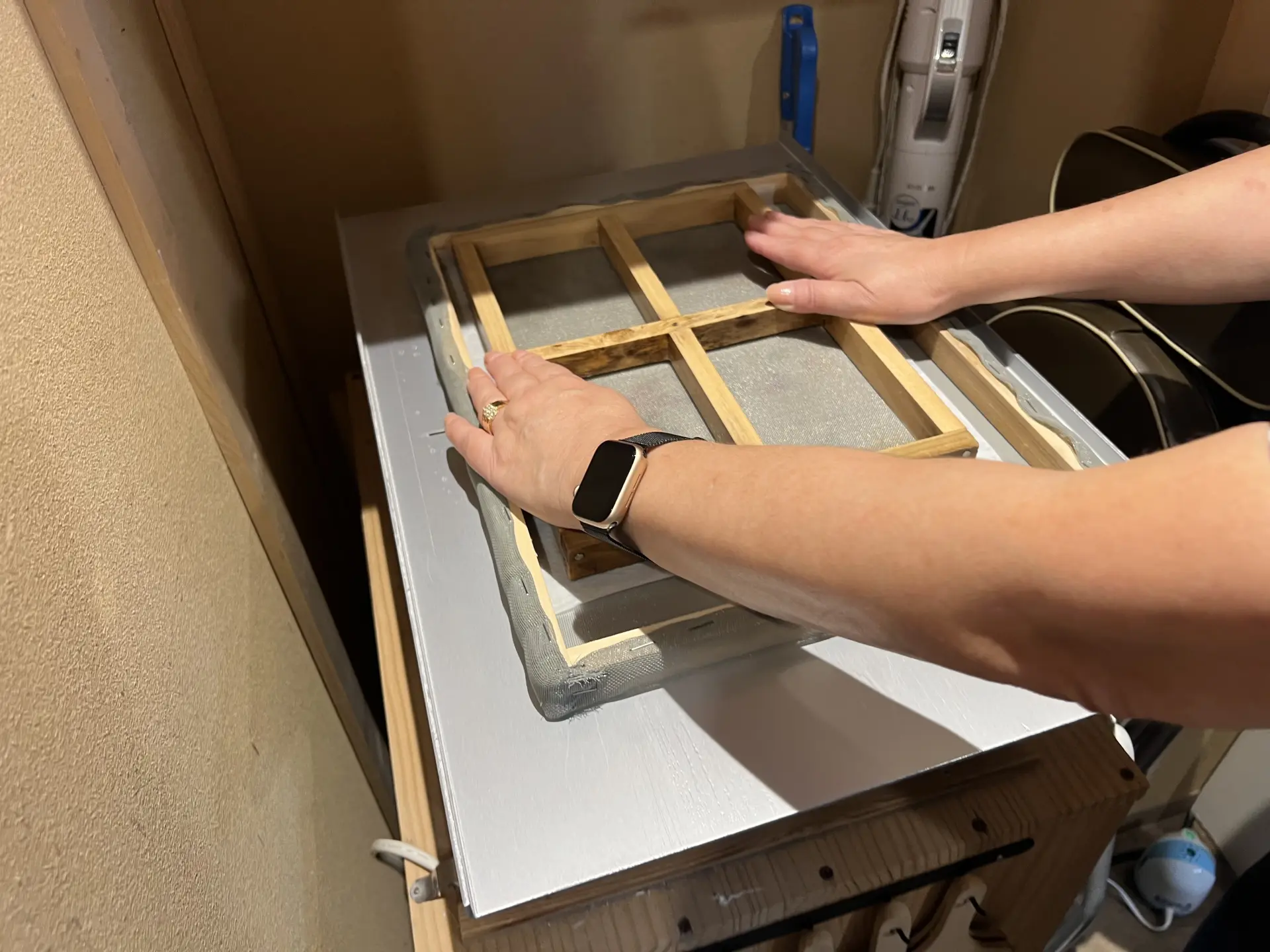
After dehydration, the washi is attached to a board-style dryer and dried.
Then all you need to do is wait about 10 minutes for it to dry. While it dries, you watch a video to learn the process of how washi is made.
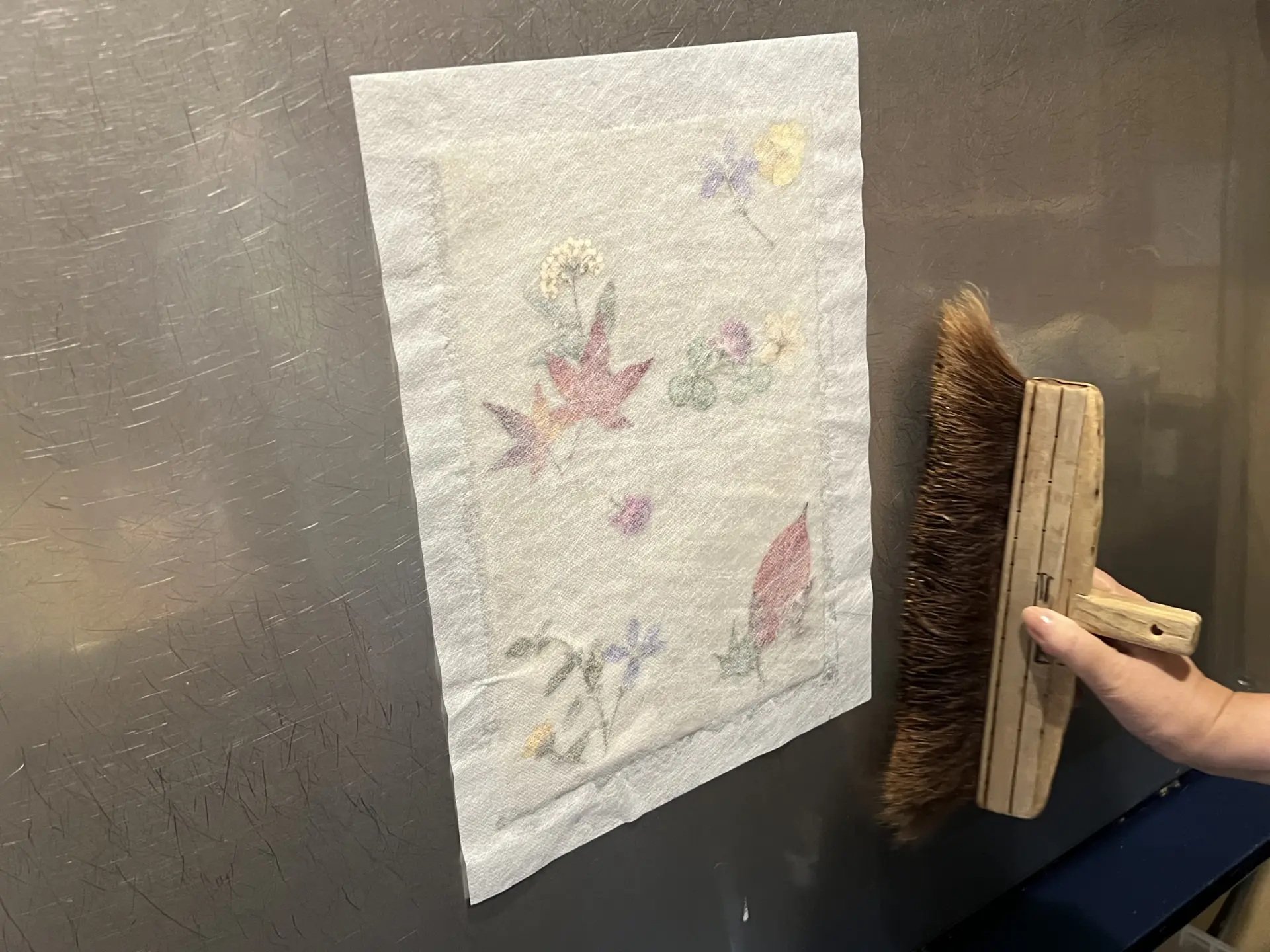
4. Once the washi is fully dry, it is cut into four equal parts. Fold it once vertically and once horizontally, then use a brush to apply water to the folded lines.
If you wet it thoroughly, the paper will tear neatly along those folded lines.
Looking at the torn edges, you can see fine fibers sticking out, which really reminds you that paper is made of fibers.
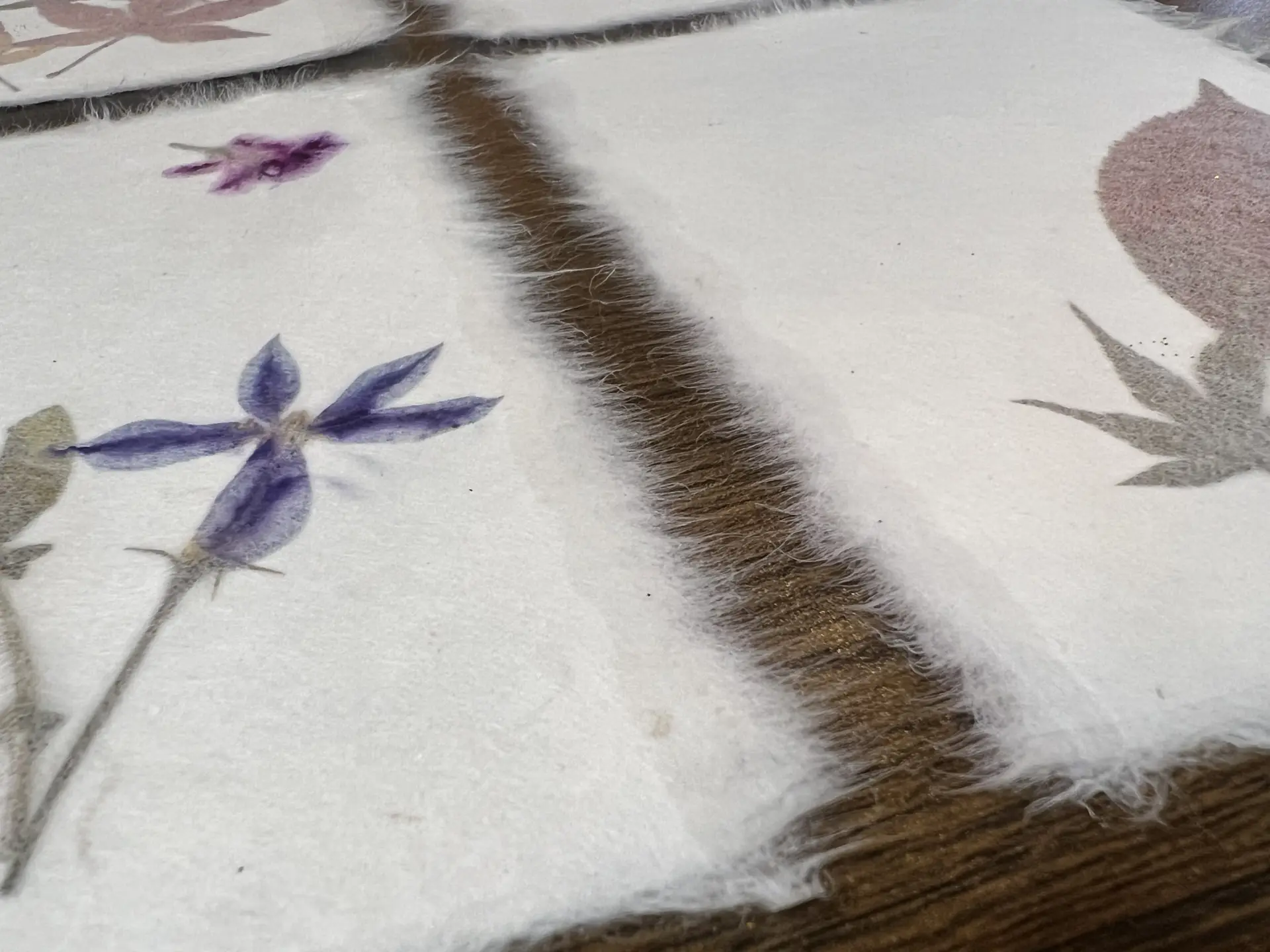
Your one-of-a-kind original washi is complete!
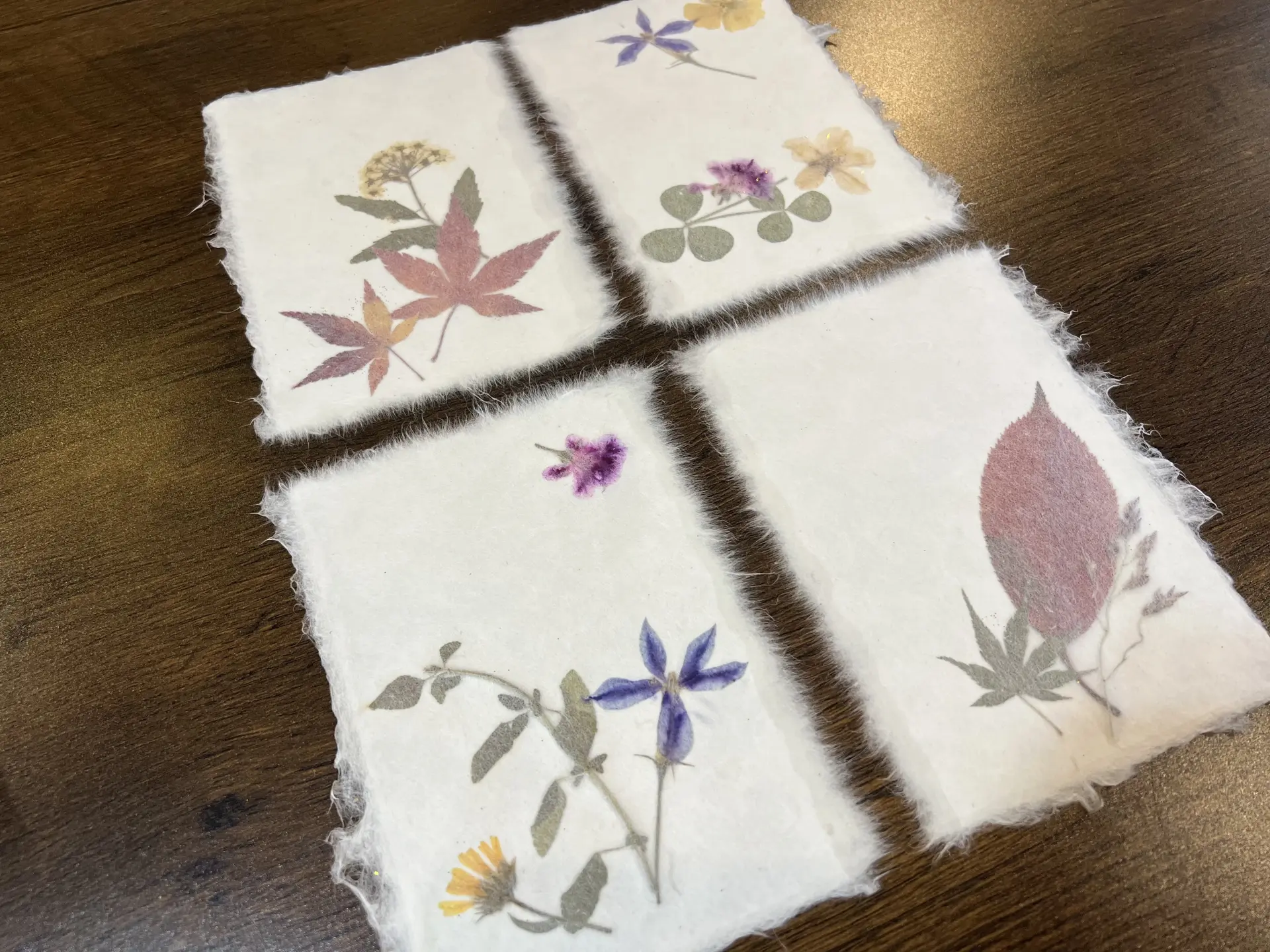
You can also use a brush to add your name here in Japanese or katakana.
Of course, Mr. Hayashi will show you how to write it. You can take your finished washi home as a keepsake, and after returning home, you can even display it in a postcard-size frame in your room. Or you can go to a nearby post office and send it just as it is as a postcard from Japan to a friend back home.
Learn the Process of How Washi Is Made!
After the papermaking experience, it takes about 10 minutes for the washi to dry.
During that time, you can watch a video and learn about the steps involved in making washi.
You can see how washi is made in winter in Gokayama, Toyama Prefecture, one of Japan’s major washi-producing regions. You can also learn about the history of washi, including the fact that washi made in Gokayama for more than 600 years is strong and flexible enough to be used for most daily items, and that until around 1955, papermaking was done in nearly every household in the area.
You also realize just how many steps are required to make a single sheet of washi and how much time and effort goes into it, making you want to value washi more instead of thinking of it as just ordinary paper.
Try Making Various Items with Your Finished Washi!
The completed washi can also be turned into a tapestry or lamp shade (additional time required: 15 minutes), or a goshuin book (additional time required: 45 minutes).
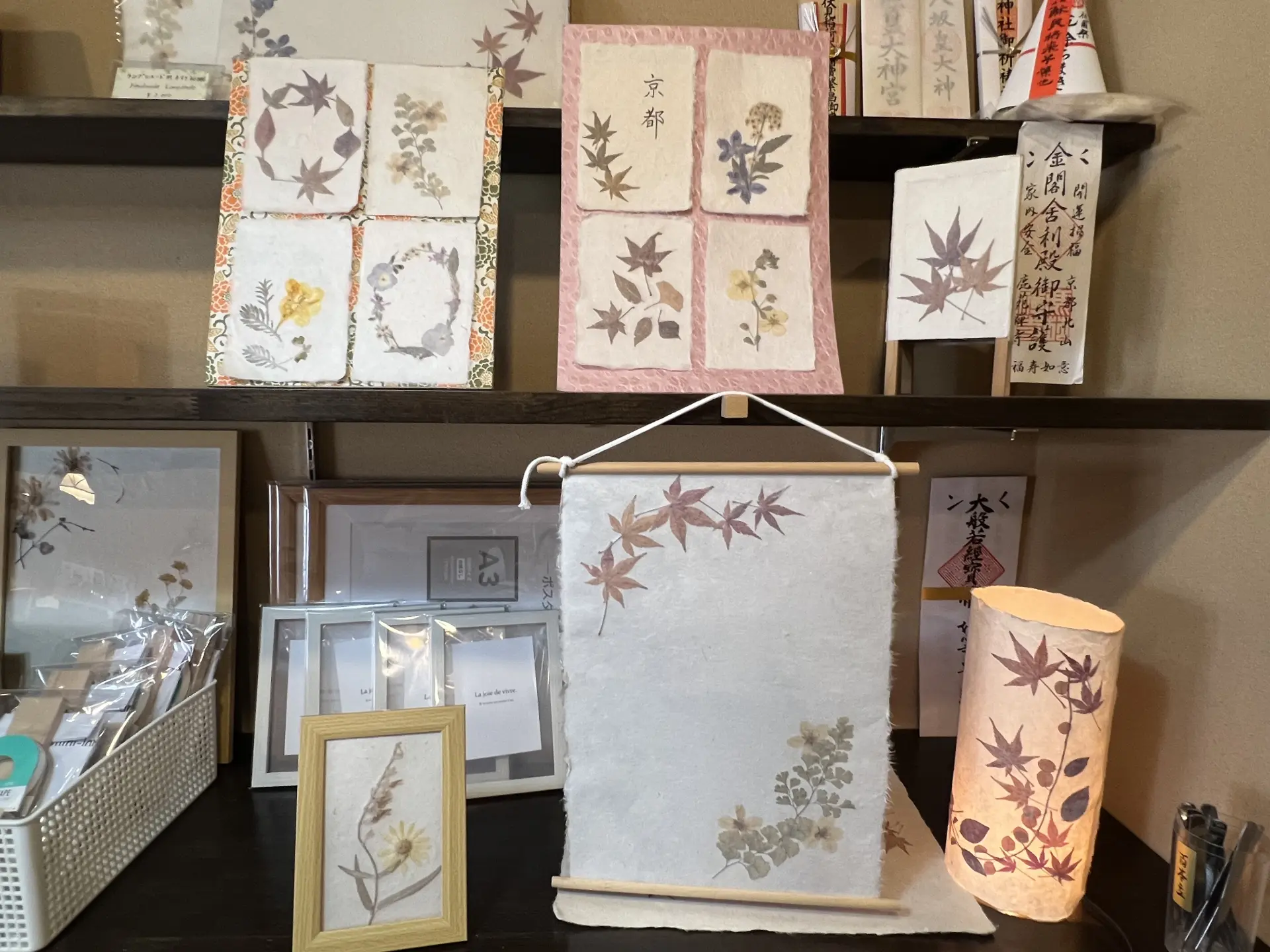
Since extra time is needed, it is recommended that you let them know in advance what you would like to make when making your reservation.
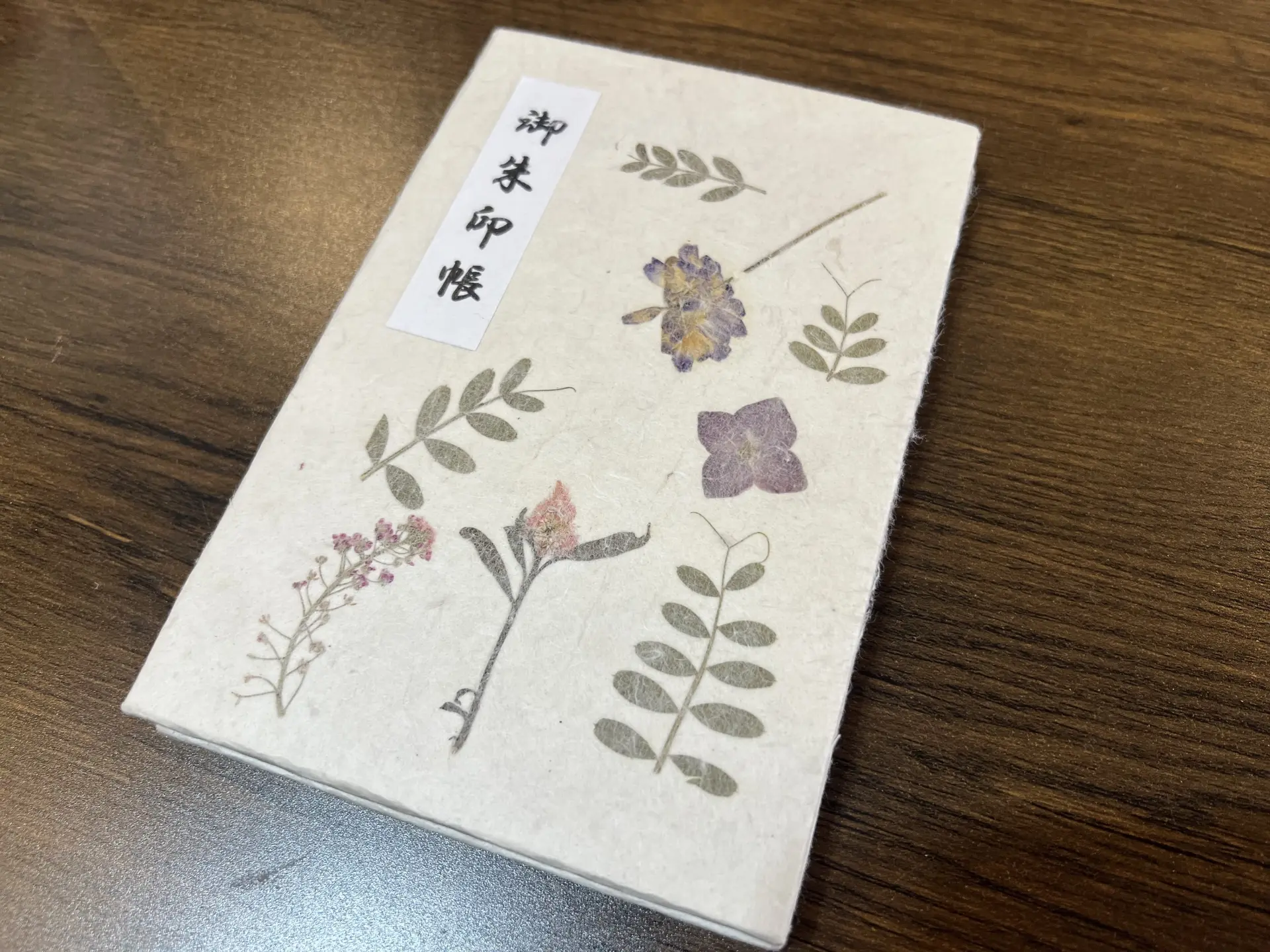
You Can Also Make a Goshuin Book with Washi Made by Artisans
You can also make a goshuin book using colorful washi crafted by artisans, like the ones sold at this facility.
You can choose from Approx. 100 patterns of washi. The paper used is called yuzen paper, and each sheet is stencil-dyed by hand by an artisan.
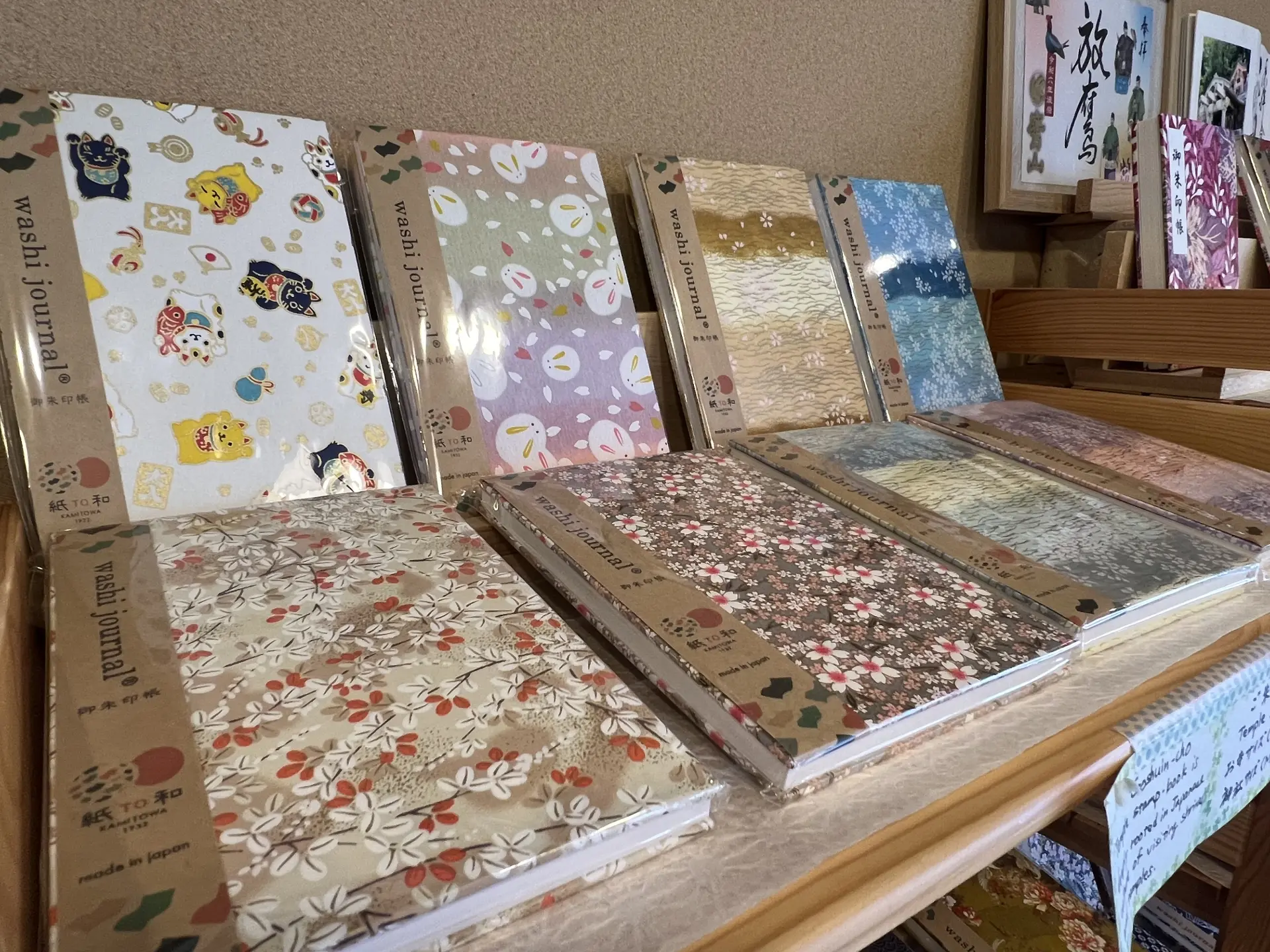
This experience is also popular because you can easily make a handmade goshuin book in about 45 minutes. The accordion-folded hosho paper inside has already been prepared by artisans, so all you do is attach your chosen washi to the thick front and back covers and glue in the hosho paper to finish it.
You can take your finished goshuin book home on the spot, so you can immediately head to a nearby shrine or temple and have a goshuin written in it. Kyoto has many shrines and temples, and in recent years some goshuin have become especially colorful and artistic, so take your handmade goshuin book and enjoy visiting shrines and temples to collect them. It is sure to add even more great memories to your time in Japan.
Goshuin Book-Making Overview
- Admission
- ¥3,200
- Required Time
- 45 minutes
How Washi Is Made
You can try papermaking yourself, but what process do actual artisans follow to create washi? Traditionally, making washi was one of farmers’ winter jobs. Because of that, winter is the busiest season for washi production.
1. Harvesting Raw Materials Such as Kozo
Harvesting takes place around mid-November. The harvested material is cut to about 120 cm, a convenient length for steaming in a kettle. The cut material is tightly tied into bundles with vines from climbing plants.
2. Steaming the Kozo
The kozo is placed in a large kettle and steamed for about 3 hours. It gives off kozo’s distinctive sweet aroma. Once the kozo is fully steamed, plenty of water is poured over it right away. This causes the bark to shrink, making it easier to remove from the trunk.
3. Peeling the Bark
If the steamed kozo cools down, it becomes harder to peel, so the bark is peeled off by hand from each branch while it is still hot.
Apparently, if you pull the bark downward, it comes off relatively easily.
4. Drying the Bark
The bark is dried in the sun in a place with good sunlight and ventilation. This continues until it is completely dry.
5. Scraping the Outer Bark
A small special blade is used to scrape off the outer bark and the layer beneath it.
If bark remains at this stage, the result will not be good washi, so it is scraped very carefully.
6. Snow Bleaching the Kozo
It is then sun-dried for about 2 weeks in a place with good sunlight and ventilation.
Care must be taken to prevent mold. Sunlight bleaches the pigments, gradually turning it white. Up to this point is the processing of the kozo itself.
7. Boiling the Kozo
From here, the actual washi production process begins. The kozo raw material is boiled.
It is placed in a large kettle and boiled for about 2–3 hours with lye or soda ash.
This softens the kozo and makes it easier to remove impurities attached to the fibers.
8. Removing Lye, Washing, and Dust Removal
While carefully checking for knots or damage in the wood, the kozo is soaked in well water and every speck of dust and debris is removed by hand, one by one. To eliminate all debris thoroughly, this process is repeated 2–3 times.
It is very demanding work, but if the debris is not thoroughly removed here, beautiful washi cannot be made.
9. Beating the Fibers
The fibers are beaten repeatedly with wooden sticks to loosen them into fine strands.
10. Fiber Separation
The fibers are dispersed.
11. Stirring and Dispersion
The softened fibers and water are placed in a tank and stirred. They are mixed with a tool called a maguwa, which looks like a large comb. If the water and fibers are not thoroughly mixed, the paper will become uneven when formed, so this is one of the steps that must be done carefully. Once well mixed, neri made from tororo-aoi is added and cut through with a stick while mixing.
12. Papermaking
The pulp in the tank is scooped up with a sugeta and moved back and forth and side to side to interlock the fibers. This scooping and moving process is repeated several times.
13. Dehydration
The sheets are dehydrated until the moisture content is about 60%, then stacked.
14. Peeling Off the Paper
The stacked sheets are peeled off one by one.
15. Pasting the Paper onto Boards to Dry
The paper is pasted onto warmed iron plates or stainless steel boards and dried.
Once attached, a brush is used to stroke from the inside outward to remove air bubbles.
This also helps remove wrinkles. Drying is completed in a few minutes.
Washi production processes vary depending on the region and the artisan, but in some areas, washi is made through steps like the ones introduced here.
Were you surprised by how many steps there are? Even from this alone, you can see how much time and effort goes into making washi.
When you realize how much work is involved, it also becomes easier to understand why a single sheet can be expensive.
Enjoying Washi
Traditionally, washi was used mainly for writing. Recently, however, the culture of writing New Year’s cards or letters by brush on washi has declined. Perhaps it is now used mostly for calligraphy.
In everyday life, there are not many chances to come into contact with washi. Still, writing by hand on washi feels completely different from a letter made on a computer or a message sent by email. It can feel more heartfelt, and you may even catch a glimpse of the writer’s personality.
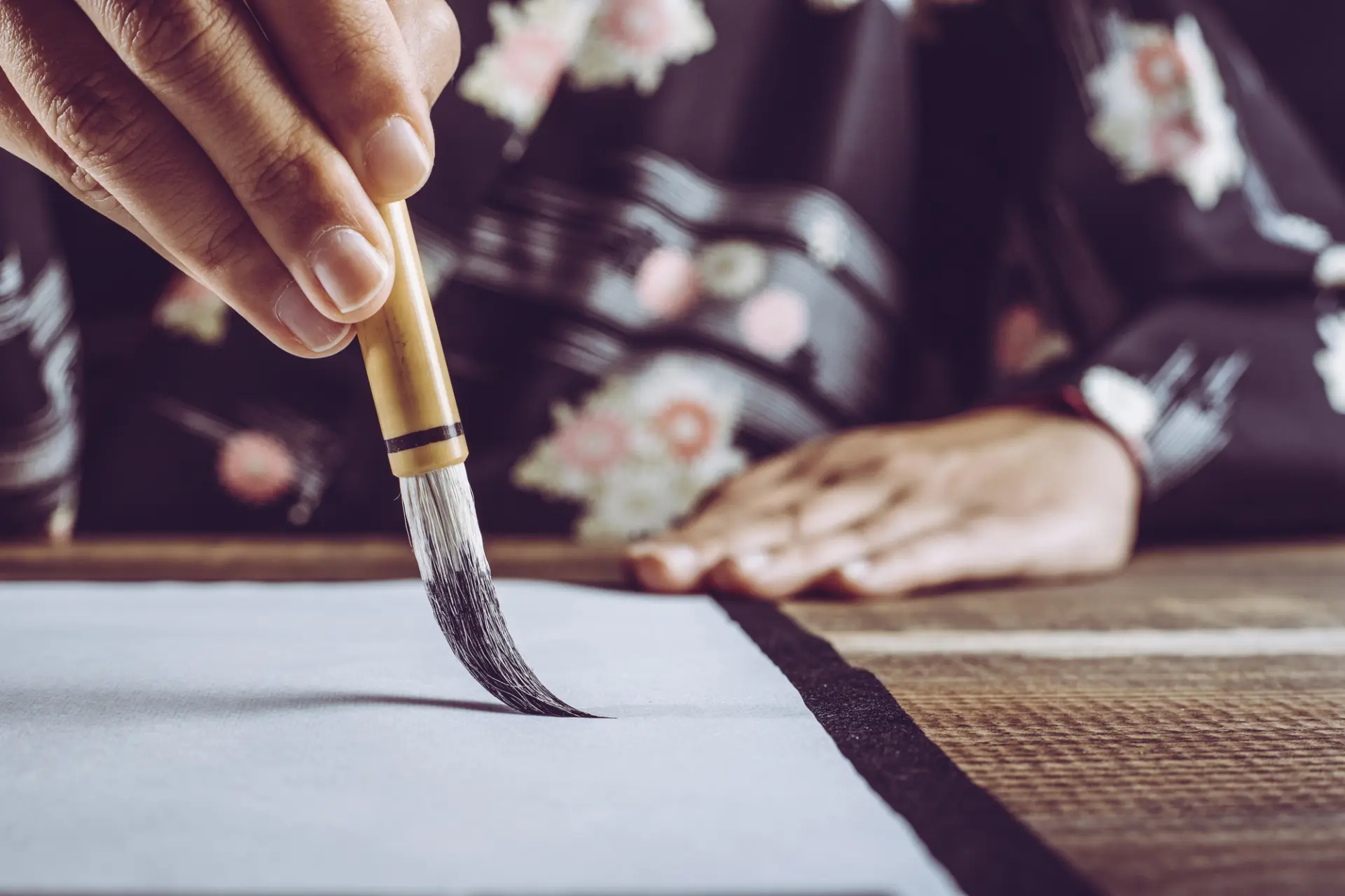
In recent years, washi has been used in many different ways as people search for new uses for it. Demand for shoji has certainly declined, but today washi is also used indoors as wallpaper and curtains. It is also used in crafts. Unlike industrial products, washi creates a unique warmth, and there are lighting fixtures made from washi, washi accessories, and tote bags made from washi material. There are even efforts to turn washi into thread and then into fabric, and dresses have been made from it as well.
Throughout its long history, washi was mainly used as a medium for recording written words, but today the possibilities for its use are expanding, and even more innovative uses are expected in the future.
Summary
Have you ever made paper by hand before?
When you visit Kyoto, be sure to spend about an hour in a quiet machiya townhouse and try making washi by hand.
When you take the time to make paper yourself from scratch, you come to understand the value of each sheet, something you may have previously used without thinking much about how much work goes into it.
Many people who try the experience say they found it soothing because it lets them focus deeply on making something by hand. Some may even sense wabi-sabi through the process of making washi. Whatever impression you come away with, this experience of truly engaging with paper, something many people rarely do, will likely give you a fresh perspective and new values.
In today’s world, where people are using less paper, this is without a doubt a perfect opportunity to slow down and spend real time with it.
(References)
- “What Is Washi?” Editorial Office (2020). What Is Washi? 3: The Basics of Washi. Rironsha Co., Ltd.
- Kodomo Club (2015). Washi, Now a World Heritage: 1. Japan’s Proud Washi: Let’s Think About “Washi” and Its Cultural Background! Shin Nippon Shuppansha Co., Ltd.

Author
Freelance Announcer
Sayaka Motomura
Focused on sharing insights related to traditional culture, performing arts, and history.