
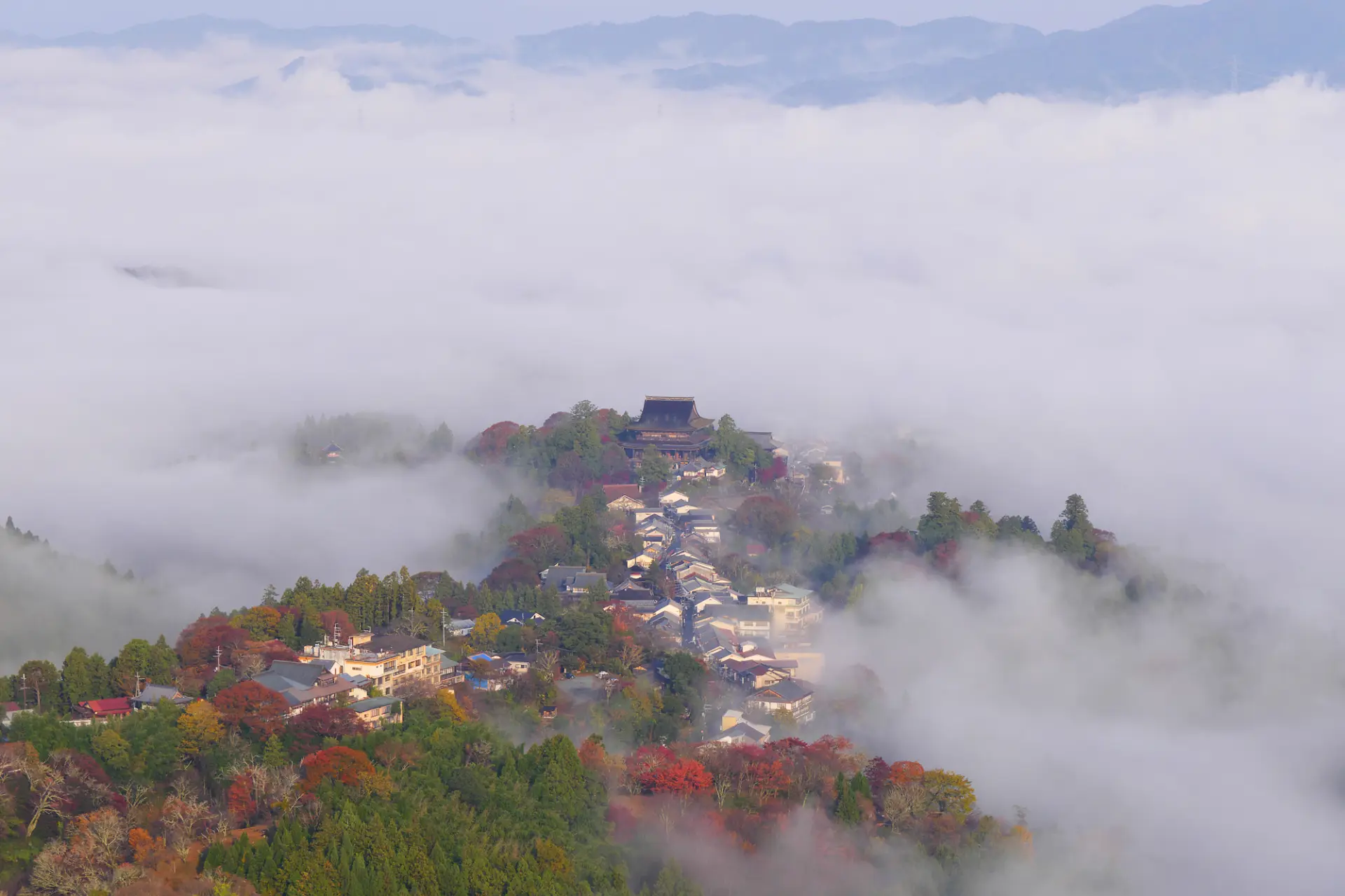
9 Otherworldly Landscapes to Discover in Nara: An Invitation to Mountains and Waters Where Gods Dwell
Deep in Nara, primeval landscapes such as Dorokyo Gorge and Odaigahara are scattered among sacred sites represented by Muroji Temple and Tamaki Shrine.
The terrain shaped by water and rock, together with the layered history of prayer, has created spaces unique to this region. Follow places where nature and faith meet, and step into scenery just a little removed from everyday life.
Natural Formations Created by Water and Rock
These spots feature landscapes shaped over long periods by flowing water and rocky terrain.
As you make your way into valleys and mountains, you can experience their scale and depth firsthand. See for yourself how nature’s forms change with every step.
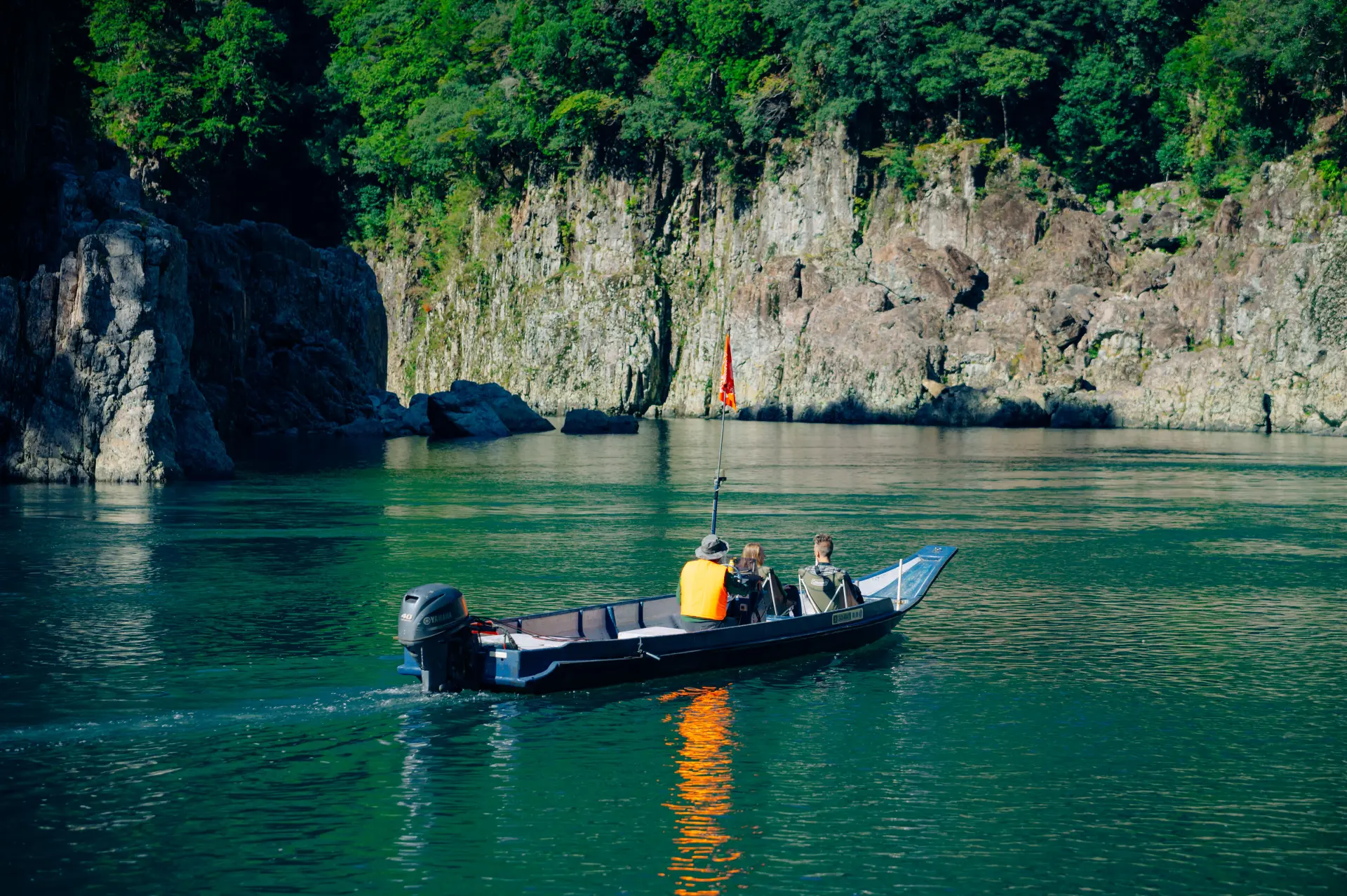
1. Dorokyo Gorge (Totsukawa Village)
A vast gorge stretching along the borders of Nara, Mie, and Wakayama prefectures. Within the deeply carved terrain, calm water surfaces and rock walls continue one after another.
The scenery formed by the clear cobalt-blue stream and cliffs tens of meters high rising on both sides of the river is breathtaking.
In the area known as Shimo-Doro, massive rocks and sheer cliffs line the gorge, creating a powerful view unique to a valley landscape.
This iconic scenery leaves a different impression depending on whether you view it from the water on a sightseeing boat or look up from the riverbank.
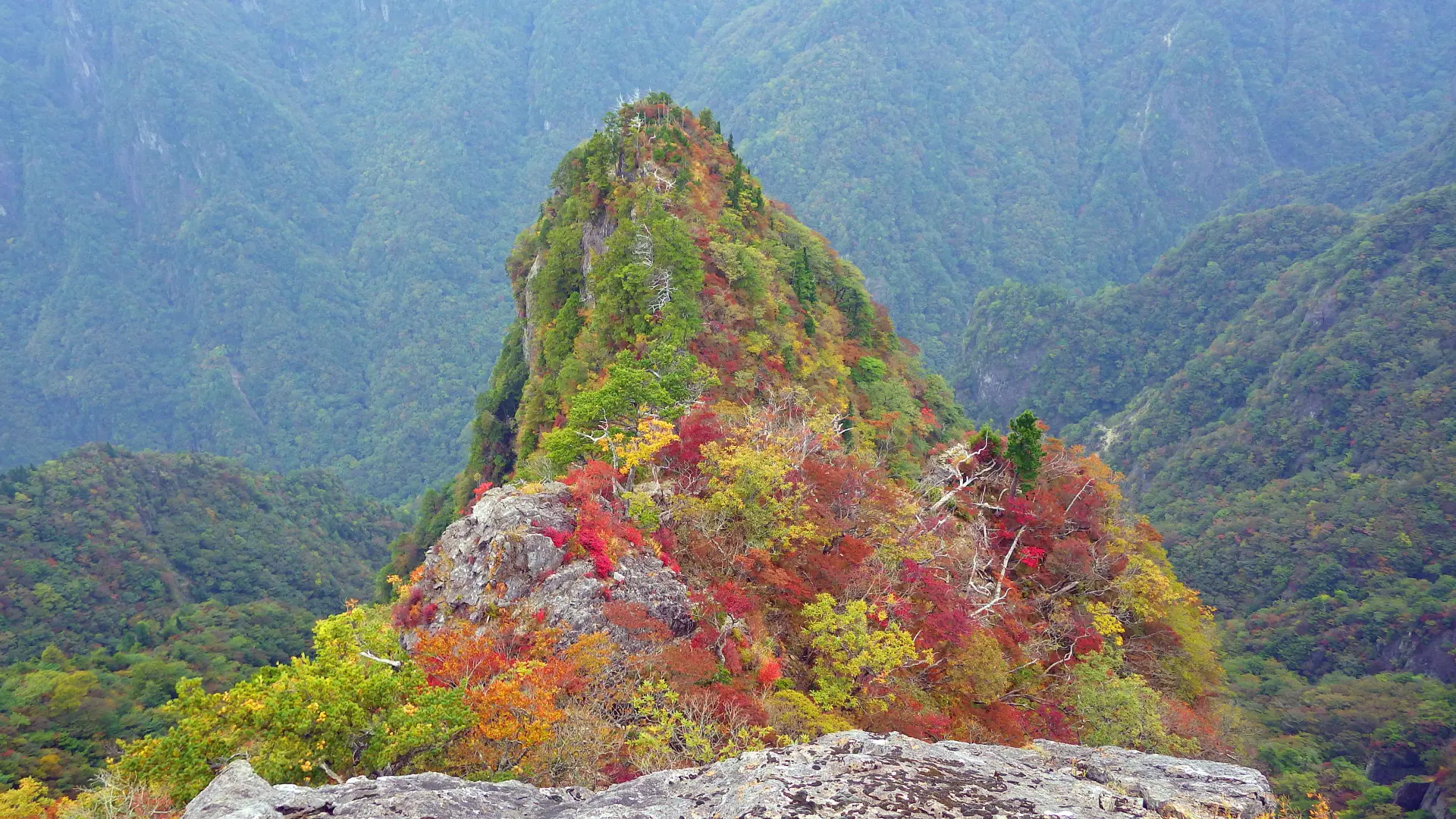
2. Odaigahara (Kamikitayama Village)
A plateau-like mountain area whose highest peak is Hidegatake at 1,695 meters above sea level.
Cliffs and primeval forests spread across its vast mountain area. It is one of Japan’s 100 Famous Mountains, and the entire mountain is designated as a special protection zone and other protected areas within Yoshino-Kumano National Park.
The environments and walking styles differ greatly between Higashi-Odai and Nishi-Odai, and the scenery also changes depending on the route. The more you walk, the more the mountain’s different expressions stand out.
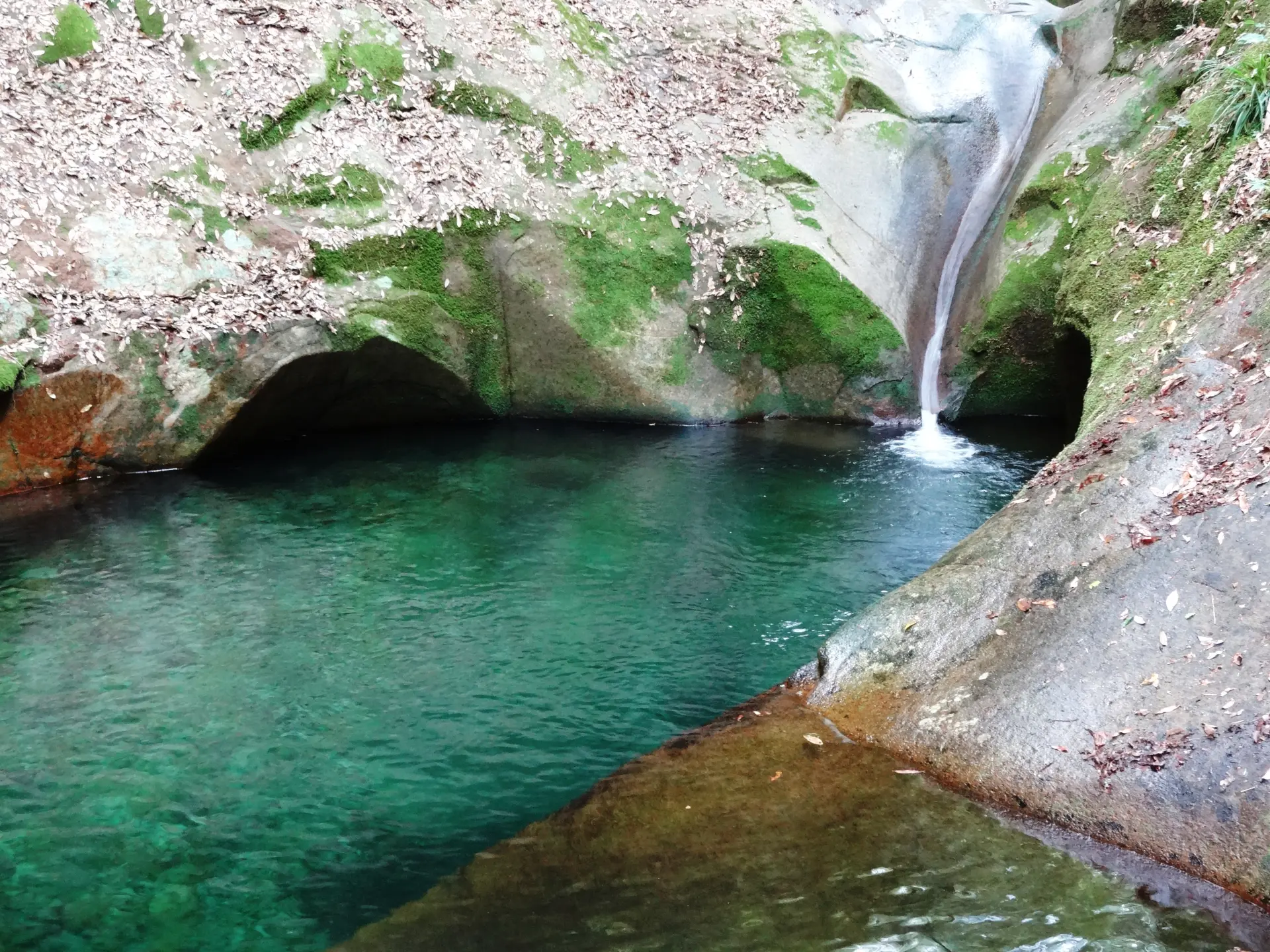
3. Ryuchin Gorge (Uda City)
Created by a clear stream flowing into Lake Muro, this gorge offers quiet scenery woven from moss-covered rocks and transparent water.
When sunlight reaches the basin below the falls, it turns a translucent emerald green, shining vividly in the stillness of the forest.
Ryuchin Shrine stands on the bank of the gorge and enshrines Takaokami no Kami, the deity who governs water. In this area where nature and faith overlap, the air feels still and charged.
Ancient Temples and Sacred Sites Hidden in Deep Forests
Temples and shrines have long been built in quiet mountain settings.
As you visit places of worship integrated with nature, you can experience spaces where prayer is still alive. It is also worth paying attention to the different histories and backgrounds of each place.
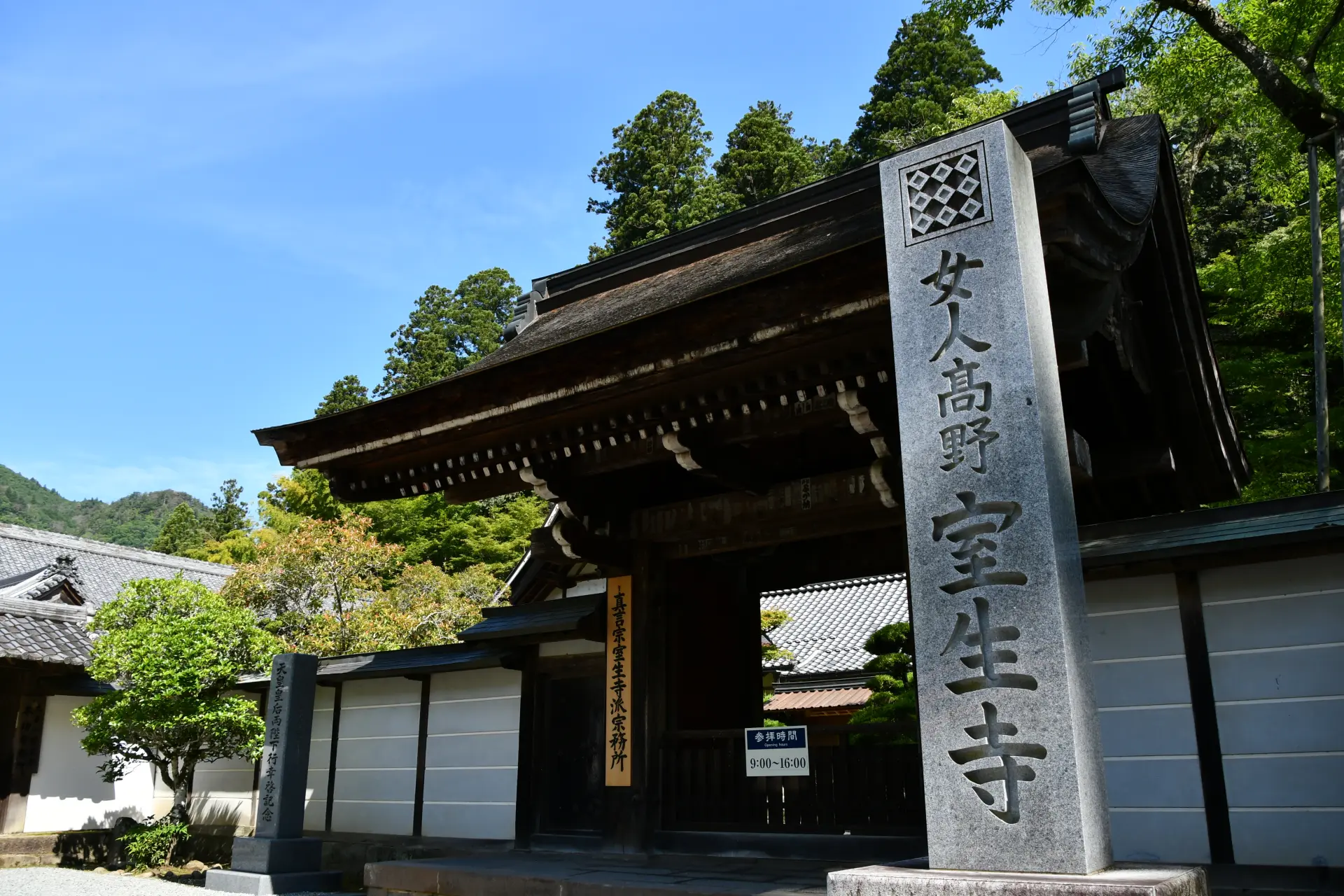
4. Nyonin Koya Muroji Temple (Uda City)
An ancient Shingon Buddhist temple founded in a mountain valley. Buddhist statues and architecture stand quietly within the nature-filled grounds.
Unlike Mount Koya, which once prohibited women, this temple accepted female worshippers despite belonging to the same Shingon sect, and from the Kamakura period it came to be known as “Nyonin Koya,” or “Koya for Women.”
Along the route through the stone steps, five-story pagoda, and Okunoin, the space changes in layers. As you proceed, the layout of the temple grounds comes into view in three dimensions.
5. Muro Ryuketsu Shrine (Uda City)
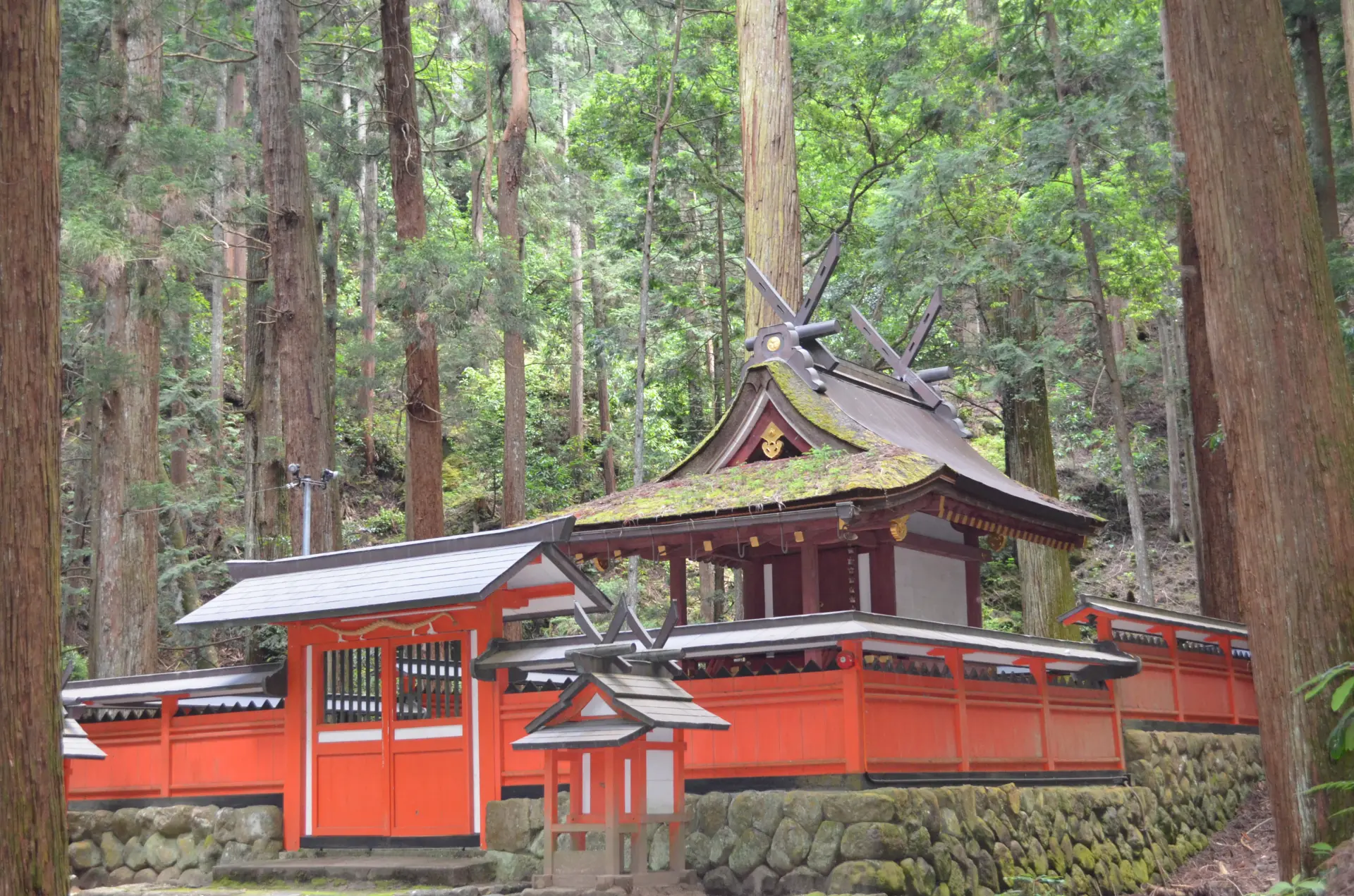
An ancient shrine known as a center of dragon deity worship. Within the forested grounds, the natural features that are objects of worship still feel alive.
It has been worshipped as a deity governing water and rain, and records remain that in the Heian period the imperial court sent envoys here to pray for rain. The rock cave behind the shrine, Myokissho Ryuketsu, has been regarded as a special place since ancient times, and nature itself has been treated as an object of prayer. It is a sacred area where the shrine buildings and nature are one.
6. Tamaki Shrine (Totsukawa Village)
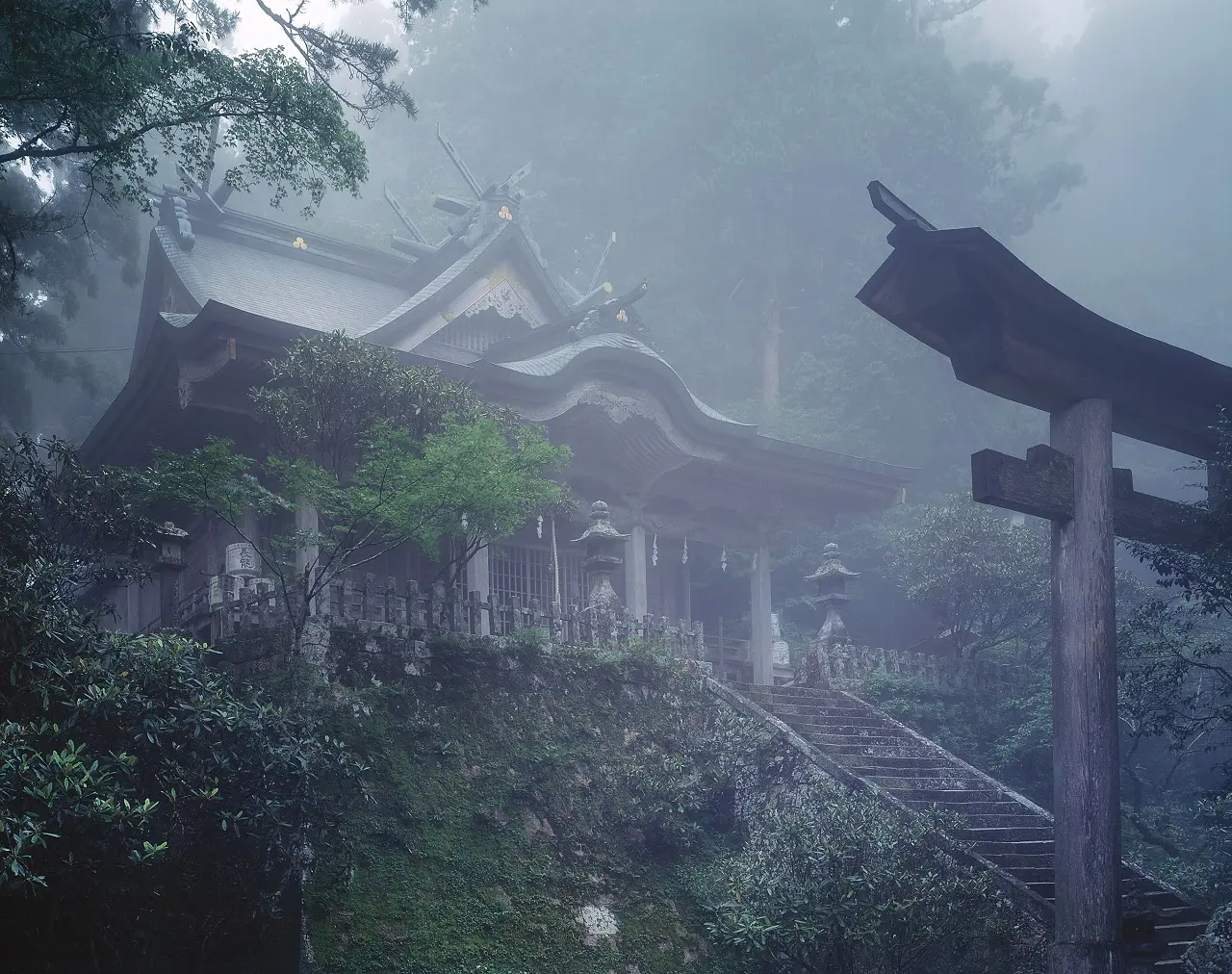
A shrine located in the mountains at over 1,000 meters above sea level.
The grounds, surrounded by deep forest, are often enveloped in mist. It is registered as a component asset of the World Heritage Site “Sacred Sites and Pilgrimage Routes in the Kii Mountain Range” and the Historic Site “Omine Okugakemichi.”
The main sanctuary is an irimoya-style shrine building made of zelkova wood, with a particularly stately appearance. In addition to the main sanctuary, visitors typically continue to Tamaki-sha near the summit, making the worship route one that involves climbing the mountain.
Places of Prayer Reached by Crossing Mountains and Valleys
Bridges, temples, and shrines appear beyond rugged terrain.
Follow places where the journey itself becomes part of the experience, and savor the views that come only after you arrive.
In southern Nara Prefecture, where the tradition of Shugendo continues, enjoy the journey along the way as well.
7. Tanize Suspension Bridge (Totsukawa Village)
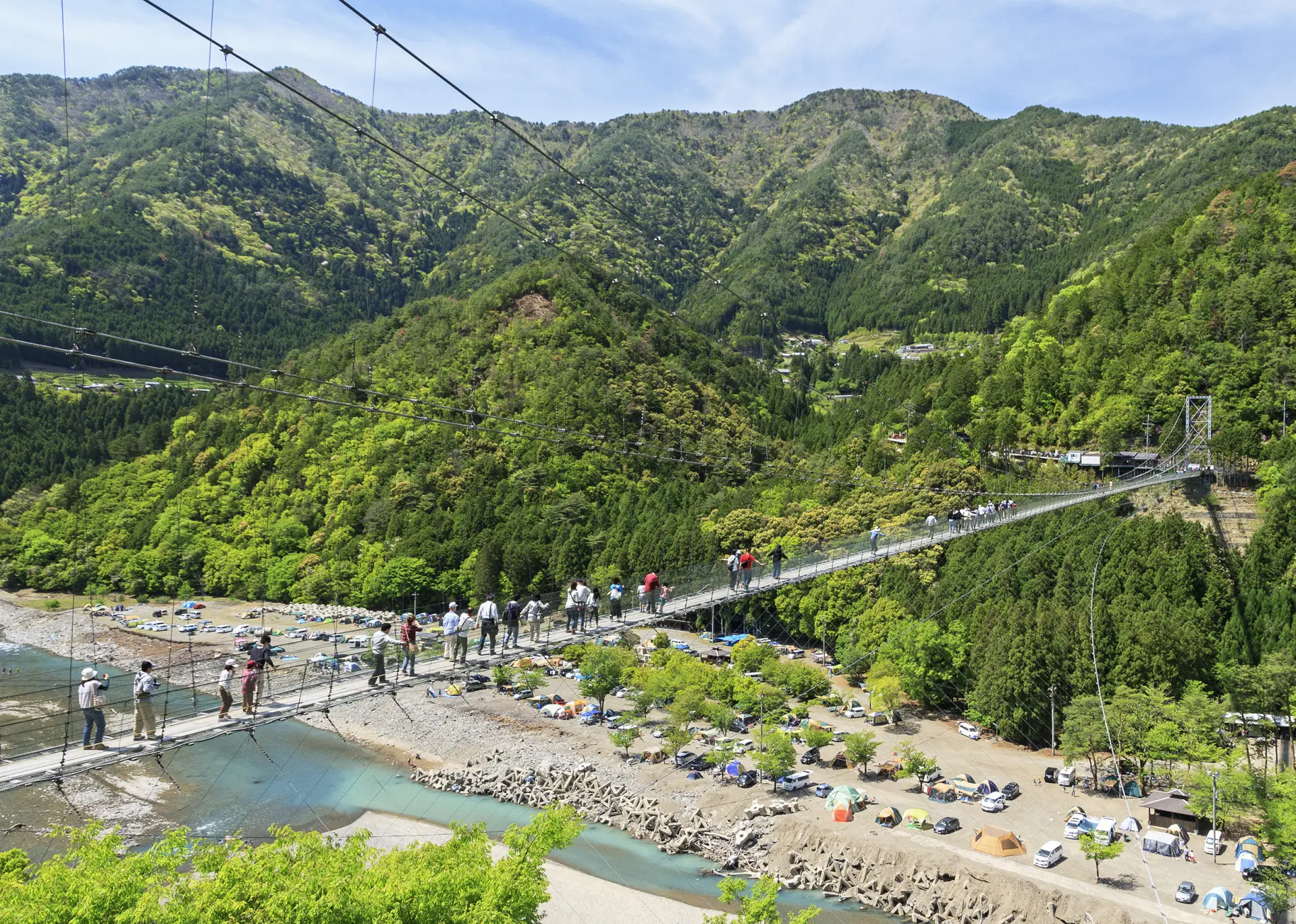
Surrounded by the deep mountains of grand natural scenery, this wire suspension bridge is one of the longest in Japan.
Spanning the Totsukawa River at 297 meters long and 54 meters high, it was once used for daily life, but today it is one of Totsukawa Village’s leading sightseeing spots.
From the bridge, you can feel both the flow of the river and the depth of the valley, while each step carries the sway beneath your feet. Cross it yourself and experience its height and distance.
8. Kinpusenji Temple (Yoshino Town)
The head temple of Shugendo, located on Mount Yoshino. This temple developed as a center of mountain worship.
The National Treasure main hall, Zaodo, was rebuilt in 1592 with a single-story irimoya-style structure, a mokoshi pent roof, and cypress bark roofing.
As a wooden building, it is the second largest after Todaiji Temple’s Great Buddha Hall, and a huge principal image is enshrined inside the hall, which is Approx. 34 meters high. It is an architectural landmark of Mount Yoshino worth knowing.
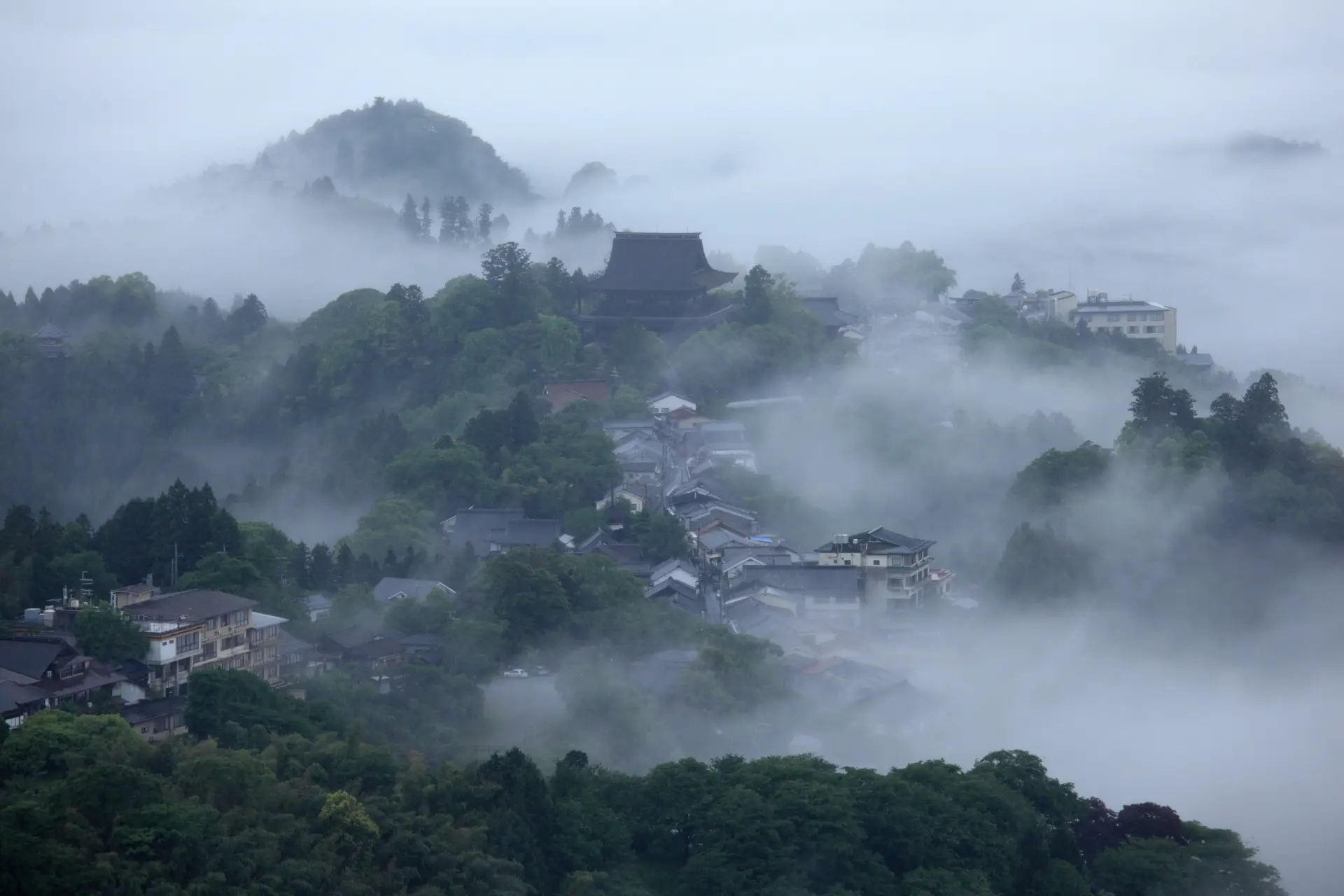
9. Mount Yoshino (Yoshino Town)
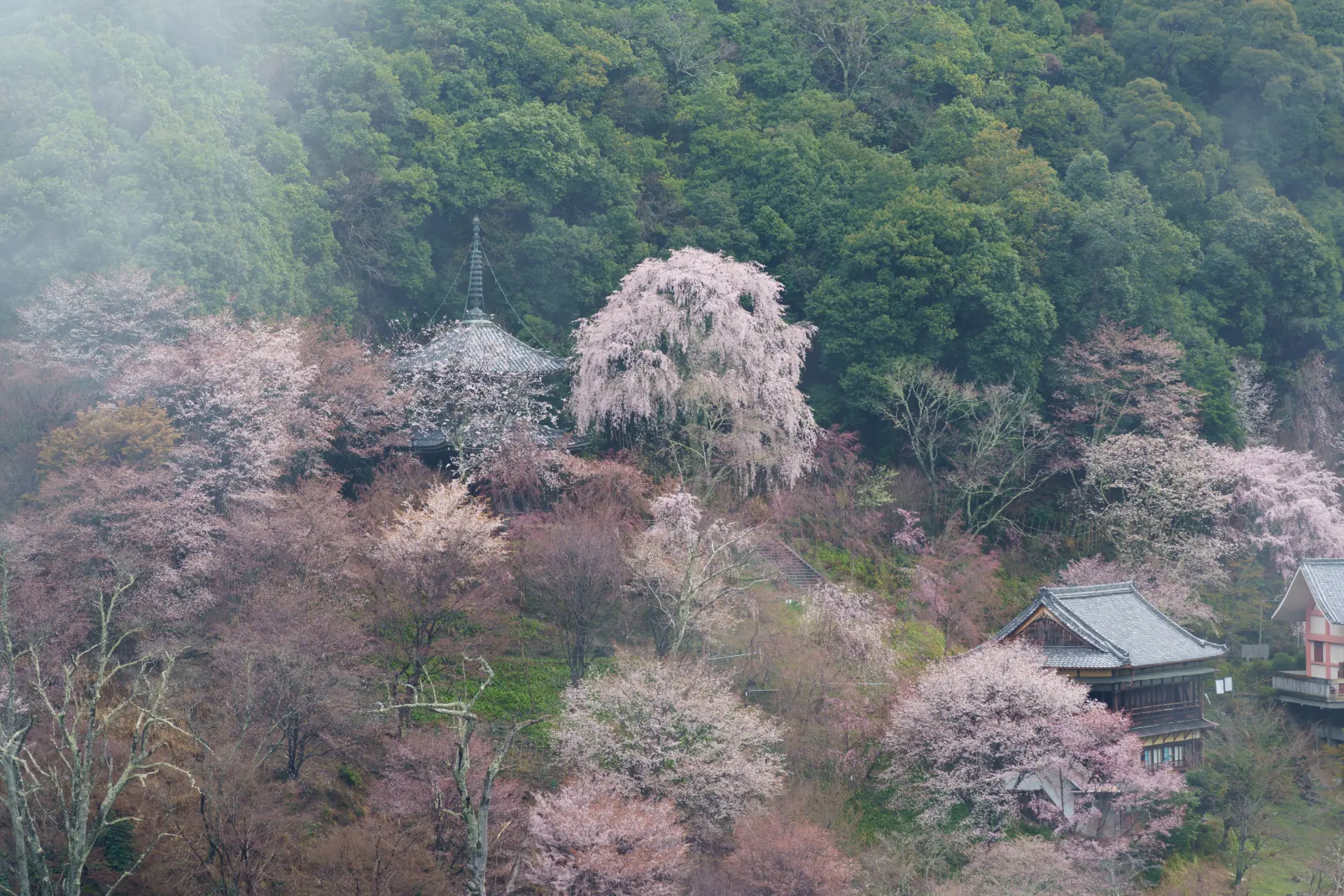
Mount Yoshino is dotted with temples and shrines, and seasonal scenery unfolds across the entire mountain. In spring, the cherry blossoms begin opening gradually from Shimo Senbon and beautifully color the whole mountain all the way to Oku Senbon.
Early summer brings hydrangeas and fresh greenery, making it a season for forest bathing. In autumn, colored leaves cover the mountain, while in winter, snow-covered temples and shrines create a quiet landscape. Walk through the area while comparing its different seasonal expressions.
Summary
In Nara’s mountain areas, landforms created by water and rock are scattered among places of worship layered over them.
By visiting gorges, forests, temples, and shrines, the meaning and role of each place become clearer. Connect the areas that interest you as you walk, and experience landscapes where nature and prayer overlap.