Sankeien Garden

Verified [Verified] denotes information that has been published with confirmation of its owing parties.

Sankeien Garden

A Japanese garden where seasonal scenery blends beautifully with traditional Japanese architecture.

3.29 5

Last update :
Supervised by :  Sankeien Garden

This Japanese garden was created by Sankei Hara, a businessman and man of letters.
Its expansive 175,000-square-meter (43-acre) grounds are artfully arranged with buildings relocated from Kyoto, Kamakura, and elsewhere, including Important Cultural Properties of Japan.
A variety of flowers bloom throughout the seasons, and events are held to celebrate them.
The garden’s teahouses serve soba and udon noodles, seasonal boxed lunches, and traditional Japanese sweets.
The museum shop sells Japanese sweets and other items available only here.

Highlights

  • Allow approximately 90–120 minutes to walk around the garden.
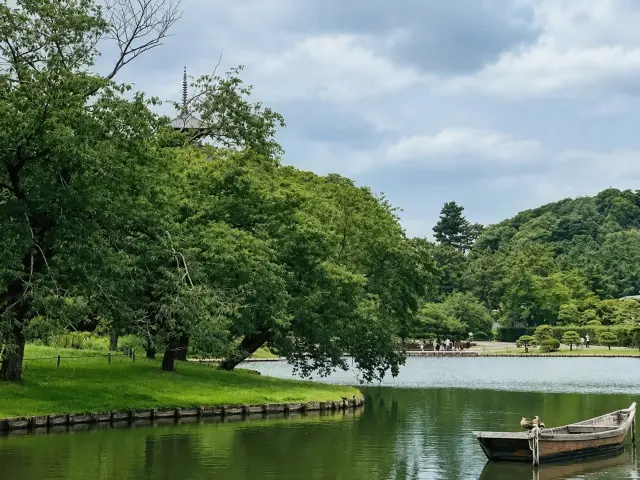
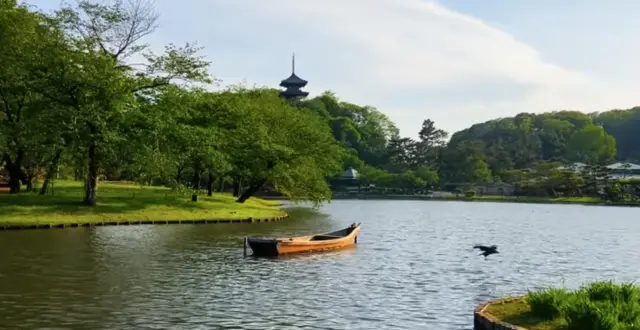
  • The Outer Garden features a three-story pagoda from the Muromachi period that was relocated from Kyoto, along with lovely cherry blossoms, Japanese irises, and other seasonal flowers.
  • The Inner Garden offers historic buildings with distinctive character and an intricately designed landscape.
  • The museum shop sells charming Japanese accessories, traditional sweets decorated with elegant patterns, and more.
  • The Sankei Memorial Hall exhibits works by artists associated with Sankeien Garden. It also has a paid matcha corner where visitors can enjoy matcha green tea and sweets.

Photos

  • The Outer Garden at Sankeien Garden

    The Outer Garden at Sankeien Garden

  • Rinshunkaku, an Important Cultural Property in the Inner Garden, is believed to have once been a villa of the Kii branch of the Tokugawa clan

    Rinshunkaku, an Important Cultural Property in the Inner Garden, is believed to have once been a villa of the Kii branch of the Tokugawa clan

  • Choshukaku, an Important Cultural Property

    Choshukaku, an Important Cultural Property

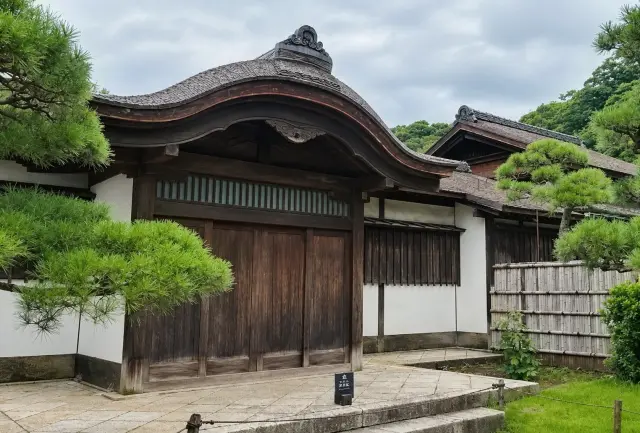
  • View of the entrance to Rinshunkaku from Gomon, a Tangible Cultural Property designated by the City of Yokohama

    View of the entrance to Rinshunkaku from Gomon, a Tangible Cultural Property designated by the City of Yokohama

  • Cherry blossoms at Sankeien Garden

    Cherry blossoms at Sankeien Garden

Reviews

5

Some reviews are AI-translated.

  • See More

    On this trip to Yokohama, I made a point of visiting Sankeien Garden because I’ve always loved historic Japanese architecture. I always feel that every old building has a piece of history behind it that’s worth taking the time to appreciate.

    When I entered Sankeien Garden, I found many historic buildings that had been relocated here from different parts of Japan, some even dating back to the Edo period. These buildings were not originally built here. They were dismantled, transported, and then reassembled and restored. Just thinking about that process makes it seem like an incredibly difficult undertaking!

    After surviving major earthquakes and air raids during World War II, it’s remarkable that these buildings have been preserved and that we have the chance to see them in person today. Thinking about how many people worked to preserve this cultural heritage so these old buildings could remain to this day was very moving.

    Whenever I see traditional Japanese gassho-zukuri buildings, with their thick thatched roofs and simple exteriors, I can’t help imagining how people endured the cold winters in the days before heating.

    Because of this, the more I looked, the more I felt that architecture is not just about houses. It is closely connected to the climate, terrain, way of life, and culture of the time, and every design has a reason for being there.

    As for the garden scenery, I personally felt that compared with the refined and intricate Japanese gardens in Kyoto, Sankeien Garden’s landscaping was not as distinctive. Instead, it was the historic buildings relocated here from different places that made me stop and admire them.

    Admission was only JPY 900, which I didn’t think was expensive. There weren’t many visitors when we went, so we took the garden map provided at the ticket counter and slowly walked around, following the signs and taking our time. It was quite relaxing.

    What left the strongest impression on me during this visit to Sankeien Garden was not how beautiful the garden was, but that these old buildings, weathered by the passage of time, could still stand intact before my eyes. Being able to step into this piece of history and experience the architecture and lifestyles of different eras was a very special part of the trip.

  • See More

    I originally thought I was just visiting a Japanese garden, but the moment I entered Sankeien Garden, I was blown away by its grandeur!

    This isn't simply a place to “see some flowers and trees.” Historic buildings from Kyoto, Kamakura, and other places were relocated here and combined with lakes, mountains, forests, and flowers to create a massive classical Japanese painting.

    What impressed me most wasn't actually the scenery, but founder Hara Sankei's vision and boldness. Back in 1906, he dared to undertake such a huge “relocating historic buildings + landscaping a garden” project. It seems wild even now, let alone back then!

    The grounds are far too large to describe as “taking a quick stroll.” Along the way, there are historic buildings such as the three-story pagoda and Rinshunkaku, and you'll find yourself constantly stopping to take pictures. Each season offers different scenery, with cherry blossoms, lotus flowers, and fall foliage each having their own charm.

    If you enjoy traditional Japanese architecture, gardens, and traveling at a leisurely pace while taking pictures, Sankeien Garden is definitely worth setting aside half a day to fully experience this “historic garden that changes with the seasons.”

  • See More

    The Japanese garden is really well maintained, with attention to detail in every corner. It's beautiful in every season, but the autumn leaves are absolutely stunning.

  • See More

    The entrance fee is JPY 700. If you're not coming for the cherry blossoms or autumn leaves, you might want to think twice.

  • See More

    This is a classic traditional Japanese garden with a rustic charm. It's definitely worth a visit if you want to experience Japanese garden culture.

Details

Name in Japanese
三溪園
Postal Code
231-0824
Address
58-1 Honmoku Sannotani, Naka Ward, Yokohama, Kanagawa
Phone
045-621-0634
Admission
JPY 900; elementary and junior high school students: JPY 200
Admission is free for elementary, junior high, and high school students on the second and fourth Saturdays of each month
Closed
December 26–31
The garden may also close temporarily
Business days vary by shop and teahouse within the garden
Hours
9:00 a.m.–5:00 p.m.
Hours may change during events
Hours vary by shop and teahouse within the garden
Access
(1) From JR Negishi Station, take Yokohama City Bus 58, 99, or 101 from bus stop No. 1 for approximately 10 minutes. Get off at Honmoku and walk approximately 10 minutes
(2) From the East Exit of Yokohama Station, served by JR and other lines, take Yokohama City Bus 8 or 148 from bus stop No. 2 for approximately 35 minutes. Get off at Sankeien-Iriguchi and walk approximately 5 minutes. Alternatively, take the Burari Sankeien Bus, which operates on Saturdays, Sundays, and public holidays, for approximately 35 minutes and get off at Sankeien
(3) From JR Sakuragicho Station, take Yokohama City Bus 8 or 148 from bus stop No. 2 for approximately 25 minutes. Get off at Sankeien-Iriguchi and walk approximately 5 minutes. Alternatively, take the Burari Sankeien Bus, which operates on Saturdays, Sundays, and public holidays, for approximately 25 minutes and get off at Sankeien
(4) From the Yamashitacho bus stop near Exit 4 of Motomachi-Chukagai Station on the Minatomirai Line, take Yokohama City Bus 8 or 148 for approximately 15 minutes. Get off at Sankeien-Iriguchi and walk approximately 5 minutes
Parking
Available for a fee; shared with buses
Official website
Official website (Japanese)
Hokkaido Tohoku Kanto Chubu Hokuriku Kansai Chugoku Shikoku Kyushu Okinawa