Chiba Shrine

Verified [Verified] denotes information that has been published with confirmation of its owing parties.

Chiba Shrine

A shrine known for warding off misfortune and for the Myoken Grand Festival, held since the Heian period.

3.20 2

Last update :
Supervised by :  Chiba Shrine

The shrine’s principal deity is Hokushin Myoken Sonjo-o, also known as Amenominakanushi no Okami, the deity of the North Star who governs the stars, removes misfortunes such as illness, accidents, and injuries, and guides people toward a better destiny. Affectionately known to locals as Myoken-sama, the deity draws worshippers seeking protection from misfortune and good fortune from across Chiba Prefecture and throughout Japan.

The shrine was founded in 1000 (Chōhō 2), when its temple complex was established by Taira no Tadatsune, a prominent warrior of the mid-Heian period. The Myoken Grand Festival has been held without interruption since 1127 (Daiji 2), bringing the shrine even greater reverence. The festival takes place over seven consecutive days each year, from August 16 to 22. A legend says that any single wish made during this period will come true, which is why it is also known as the One-Wish Myoken Grand Festival.

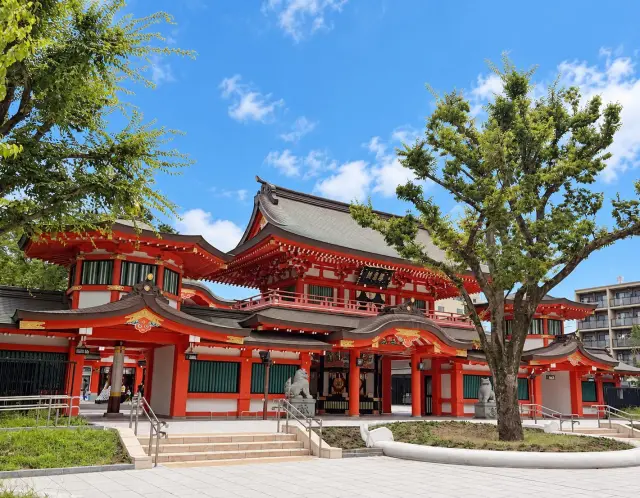
The impressive shrine building has an unusual two-story design, with worship halls on both the first and second floors. Although it was destroyed in an air raid during World War II, it was later rebuilt and completed anew as part of a major reconstruction project during the Heisei era. The grounds are also home to Chiba Tenjin, which enshrines Sugawara no Michizane, the deity of learning. Visitors can also collect sacred water from Enju no I, a well renowned for granting a single wish. The shrine offers amulets throughout the year, including the Chie-mamori amulet intended to help ward off senility. Each features star-related crests associated with the shrine’s North Star deity, such as the Three Lights and Nine Stars crests.

Highlights

  • Enshrines Hokushin Myoken Sonjo-o, affectionately known as Myoken-sama.
  • Known for the Myoken Grand Festival, held continuously since 1127 (Daiji 2).
  • Features an unusual two-story shrine building with worship halls on both floors.

Photos

  • The two-story shrine building

    The two-story shrine building

  • Chiba Tenjin, dedicated to Sugawara no Michizane

    Chiba Tenjin, dedicated to Sugawara no Michizane

  • The portable shrine of the Myoken Grand Festival

    The portable shrine of the Myoken Grand Festival

  • A ceremony attended by parishioners and worshippers

    A ceremony attended by parishioners and worshippers

  • Enju no I, a well that provides sacred water

    Enju no I, a well that provides sacred water

Reviews

2

Some reviews are AI-translated.

  • See More

    This shrine has been an important place of worship in the Chiba area since ancient times. It is known for the Myoken Grand Festival and primarily enshrines Myoken Sonjo-o. Many people regard it as a shrine that wards off misfortune, prevents disasters, and offers protection.

    The shrine is dominated by bright vermilion buildings with gold decorations, giving it a very ornate and distinctive appearance. Many people reportedly come specifically to pray for safety and protection from misfortune, and the shrine even offers blessings for new cars and prayers for road safety.

    During this visit to Chiba City, I happened to include a stop here to worship and walk around while experiencing the solemn atmosphere of a traditional Japanese shrine. If you happen to be visiting Chiba City, consider adding it to your itinerary and stopping by to pay your respects.

  • See More

    The two-story worship hall is really unique. You rarely see this kind of architecture at Japanese shrines.

Details

Name in Japanese
千葉神社
Postal Code
260-0018
Address
1-16-1 Innai, Chuo Ward, Chiba City, Chiba Prefecture
Phone
043-224-2211
Closed on
Open daily
Hours
6:00 AM–6:00 PM (gates open), 9:00 AM–3:30 PM (prayer requests), 9:00 AM–5:00 PM (amulet and ofuda counter), 9:00 AM–5:00 PM (ofuda and goshuin inscriptions)
Admission
Free admission to the grounds
Access
About a 12-minute walk from Chiba Station on the JR, Keisei, and Chiba Urban Monorail lines
Official website
Official website (Japanese)
Hokkaido Tohoku Kanto Chubu Hokuriku Kansai Chugoku Shikoku Kyushu Okinawa