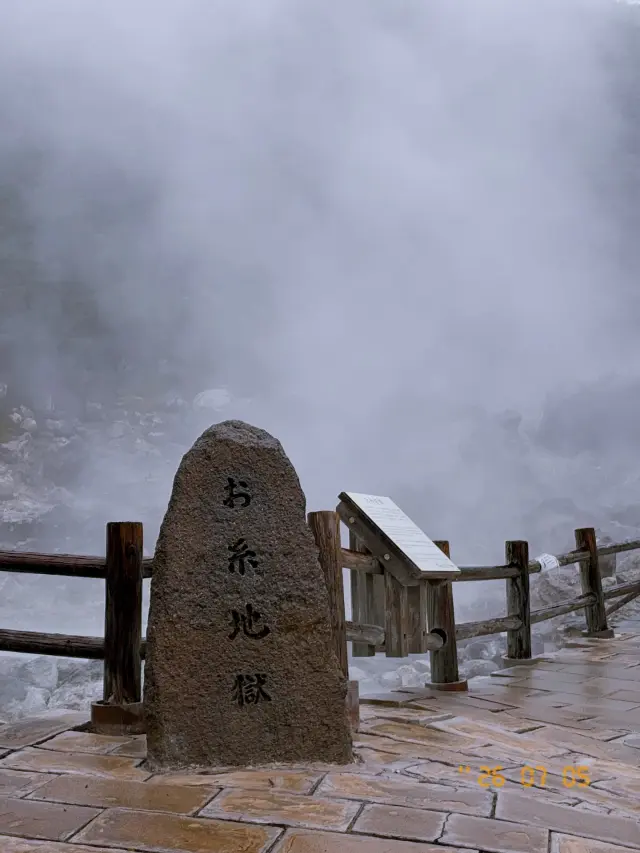
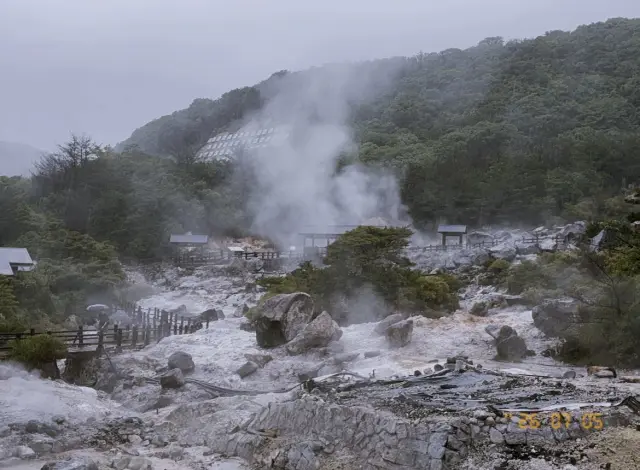
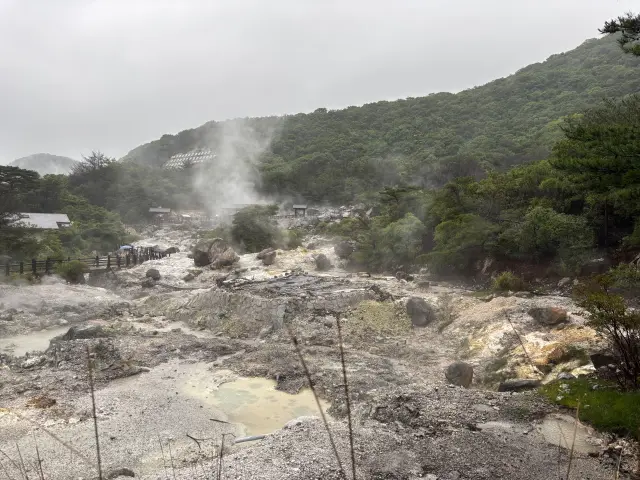
Unzen Jigoku is the main attraction in the Unzen Onsen area. The sight of thick white steam billowing from the hot springs amid the smell of sulfur resembles a vision of hell.
A walking trail that takes about 30 minutes to complete leads past more than 30 geothermal sites known as “hells.” Each has its own name, such as Dai Kyokan Jigoku, Oito Jigoku, and Seishichi Jigoku, along with stories and legends explaining its origins. An observation area at Dai Kyokan Jigoku, where the steam rises most violently, provides an up-close view of the fumarolic activity.
Near Oito Jigoku is the Unzen Jigoku Chaya rest area. It features Unzen Jigoku Foot Steaming, where visitors place their feet over the ground to feel the geothermal heat and steam, as well as the Unzen Jigoku Workshop, which serves hot spring eggs steamed in the geothermal vents (¥200 for two).
During the Edo period, this was also the site of brutal torture intended to force Christians to renounce their faith. A memorial has been erected to honor those who were martyred here.
A nearby stone-paved plaza contains a monument commemorating the 50th anniversary of Unzen’s designation as a national park. It is a popular spot for commemorative photos.
Highlights
-
See the “mud volcanoes,” small cone-shaped mounds formed as underground steam pushes up the soil.
-
The steam reaches temperatures of up to 248°F (120°C). The hot spring water is an acidic sulfate sulfur spring.
-
White and pale-yellow mineral deposits known as yunohana can be seen around the fumaroles.
-
The ground at Kyu Hachiman Jigoku, where geothermal activity has subsided, feels slightly warm to the touch.
-
An observation deck along the walking trail offers a panoramic view of the geothermal area.