
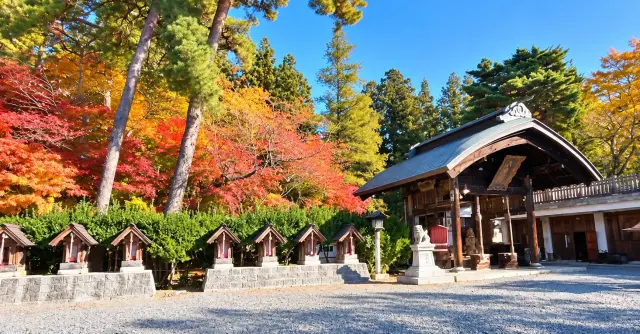
Morioka Hachimangu Shrine

Verified [Verified] denotes information that has been published with confirmation of its owing parties.

Morioka Hachimangu Shrine

Morioka's power spot is where all kinds of life-related gods are enshrined.

3.27 2

Last update :
Supervised by :  Morioka Hachimangu Shrine

It is said to have been built in Enpo 8 (1680) by Shigenobu Nanbu, the third lord of the Mutsu Morioka Domain. It is the prefecture's largest shrine, with 12 deities residing within its precincts. Each shrine enshrines a deity closely related to daily life, such as agriculture, commerce, academics, food, clothing, and shelter.

The shrine pavilions The Morioka Grand Shrine was repeatedly rebuilt after the Great Morioka Fire of Meiji 17 (1884) and other disasters and wind and snow damage, and the current shrine pavilion was rebuilt in Heisei 9 (1997). The shrine pavilion, painted in brightly colored vermilion and decorated with carvings of paulownia flowers, the prefectural flower, has become a familiar face of Morioka.

In addition, various other deities are enshrined in the precincts of the shrine, including "Enmusubi(marriage) Shrine" for the fulfillment of a good marriage, "Umemiya Shrine" for the safe delivery and prosperity of offspring, and "Takabe Shrine" dedicated to the god of cooking.
Among the 12 shrines, the" Kasamori Inari Shrine" is especially crowded with worshippers and is said to bring prosperity to business. It is the oldest shrine on the grounds, having been enshrined at the top of Mt. Hachiman before Morioka Hachimangu Shrine was built.

Highlights

  • It is the largest shrine in Iwate Prefecture and was built in Enpo 8 (1680).
  • It is a power spot with 12 shrines within its precincts.
  • Each shrine enshrines a deity closely related to daily life, such as commerce, industry, and academics.

Photos

  • The shrine pavilion was rebuilt in 1997

    The shrine pavilion was rebuilt in 1997

  • Paulownia flower carvings throughout the hall of worship

    Paulownia flower carvings throughout the hall of worship

Official FAQs

Frequently Asked Questions have been vetted and answered directly by each listing.

Q

Do you have signs or pamphlets in foreign languages? (If you do, which languages are available?)

A

Although there are pamphlets (in English) about Shinto and shrines, there are no foreign language pamphlets for Morioka Hachiman Shrine. There are also no signs in foreign languages.

Q

Is free WiFi available in the facility?

A

Not available.

Q

Are coin lockers available?

A

Not available.

Reviews

2

Some reviews are AI-translated.

  • See More

    When visiting Morioka, you can’t miss the historic Morioka Hachimangu Shrine. It is said to have been established in 1062, and its main deity is Hondawake no Mikoto, also known as Emperor Ojin. It is a very important shrine in the Morioka area. Besides worshipping here, it is also considered a place closely connected to daily life, where you can feel a sense of peace and energy.

    Visiting in the fall was perfect. The maple leaves had turned red, orange, and gold, and together with the old shrine buildings, they looked especially picturesque in the sunlight. What I liked most was that the weather was beautiful that day, the sky was deep blue, and there weren’t many visitors. The whole shrine felt less crowded and much more peaceful. Slowly walking along the approach, admiring the red maples and ginkgo trees, and feeling the autumn sunlight fall across the shrine grounds was truly relaxing.

  • See More

    From September 14th to 16th, they hold the Morioka Hachimangu Grand Festival here. There are lots of floats and it draws a huge crowd. It's super lively and really impressive! 🤣

Details

Name in Japanese
盛岡八幡宮
Postal Code
020-0872
Address
13-1 Hachimancho, Morioka City, Iwate
Telephone
019-652-5211
Holiday
Open every day
Hours
Open all day for worship
Admission
Free
Directions
A short walk from the bus stop "Hachimangu-mae."
Website
Official Website (Japanese)
Hokkaido Tohoku Kanto Chubu Hokuriku Kansai Chugoku Shikoku Kyushu Okinawa