Leaving the bustling streets outside Harajuku Station and turning into Meiji Jingu, it feels like the entire world is instantly put on mute! The heavy traffic and noisy commotion of the city are suddenly shut out, replaced by dense greenery that blocks out the sky and the crunch of footsteps on the gravel path. The air is filled with the scent of grass and wood, making you want to take a deep breath as your whole body completely relaxes.
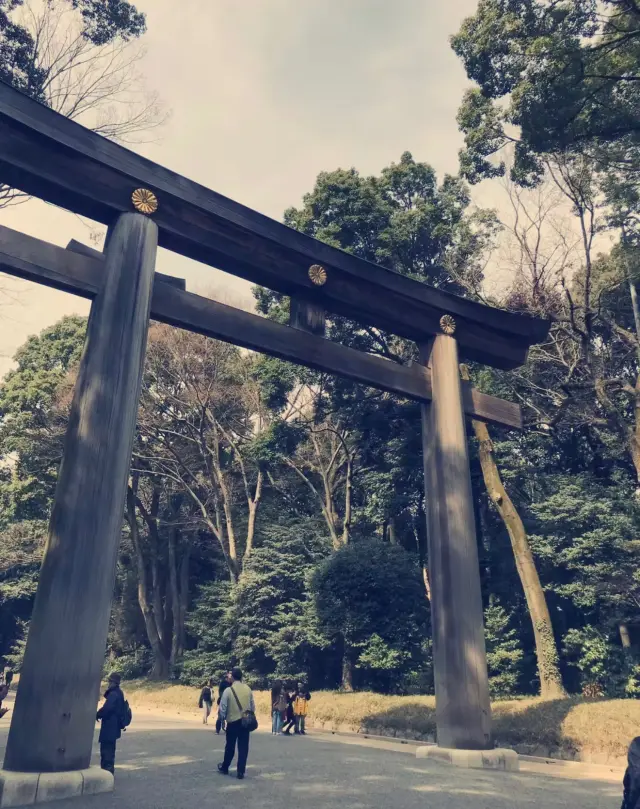
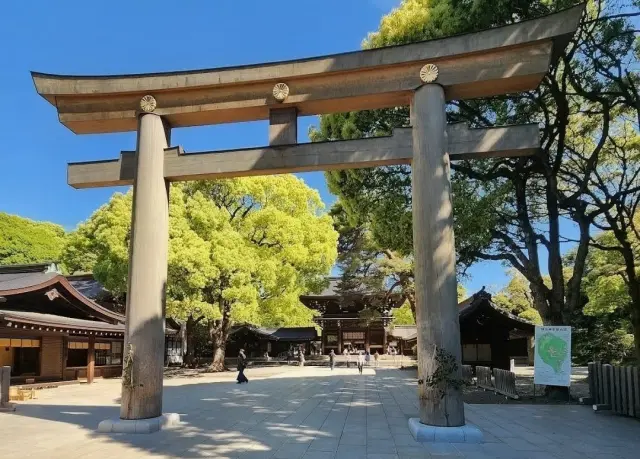
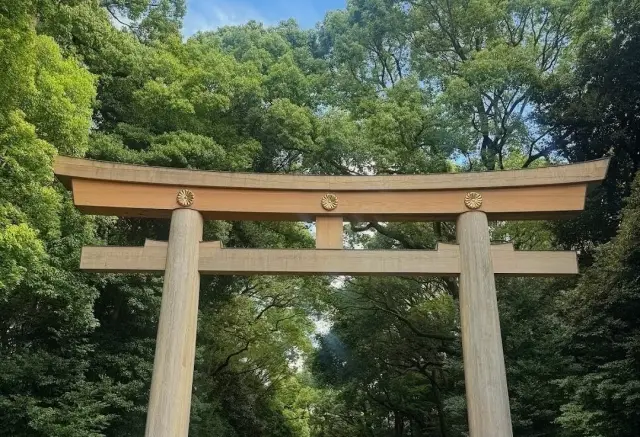
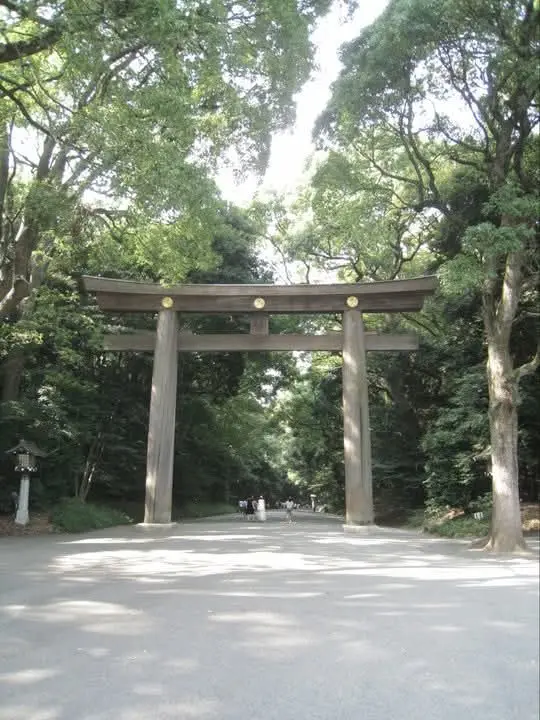
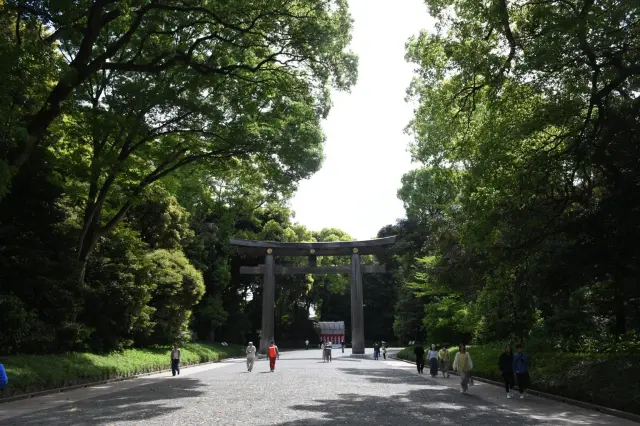
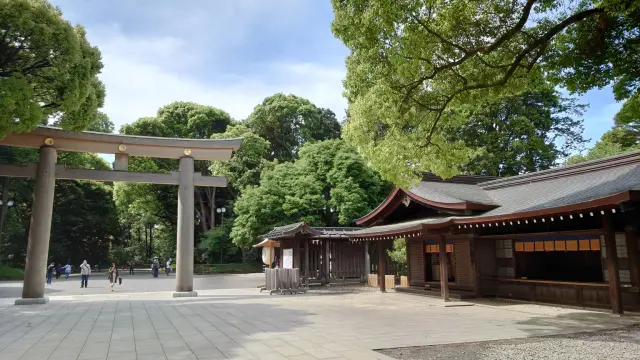
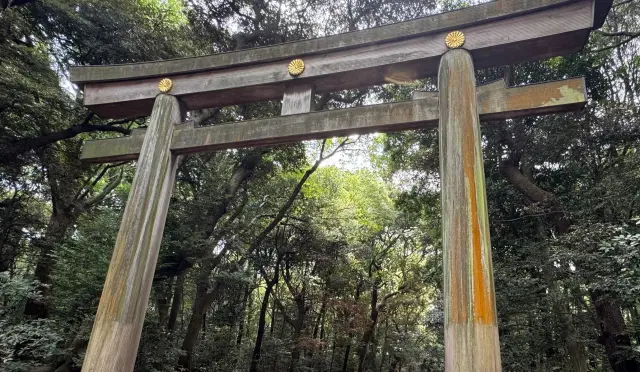
The first thing that makes a powerful impression is the huge torii gate towering over the approach! The entire gate is made from massive, solid logs. Standing beneath it and looking up, its monumental presence is incredibly overwhelming. Above the pillars is a gleaming gold 16-petal chrysanthemum crest of the Japanese Imperial Family, which looks even more solemn and mysterious against the lush green forest. Just taking a photo underneath makes you look incredibly tiny, and you can immediately feel the extraordinary atmosphere of the entrance to sacred ground.
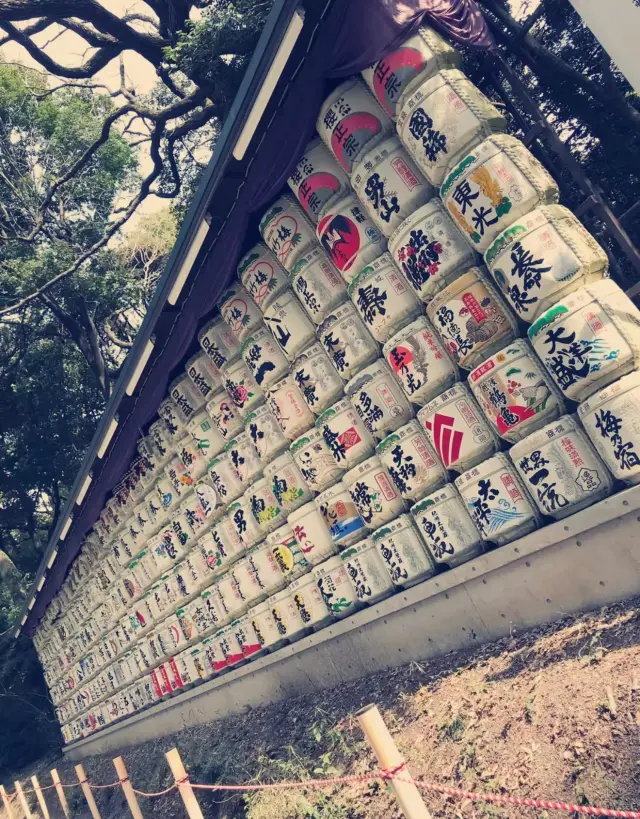
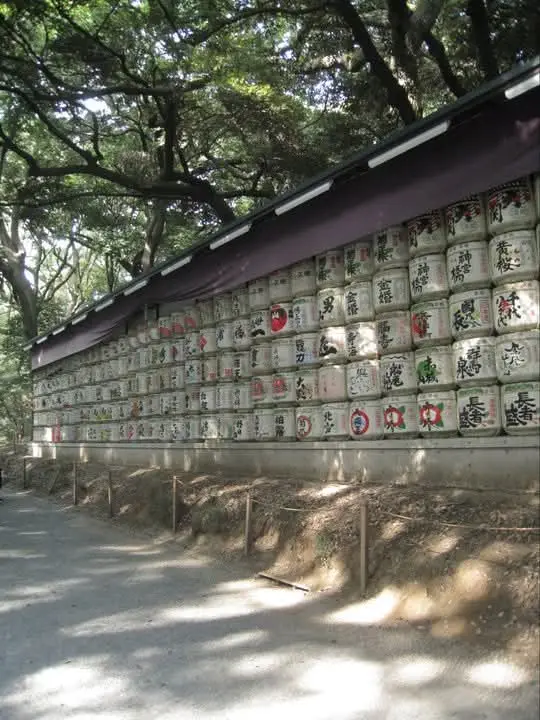
As you slowly wander along the wide gravel approach, the most eye-catching sight—and the one where everyone is sure to stop and snap away—is definitely the spectacular wall of donated sake barrels! Hundreds of Japanese sake barrels wrapped in braided straw rope and decorated with beautiful calligraphy and designs bearing names like “Sakura Masamune,” “Ozeki,” and “Umenoyado” are neatly stacked into a towering wall several levels high. It has so much traditional Japanese festival character and is incredibly photogenic. Capture the perspective from an angle, and practically every shot becomes a fantastic classic check-in photo!
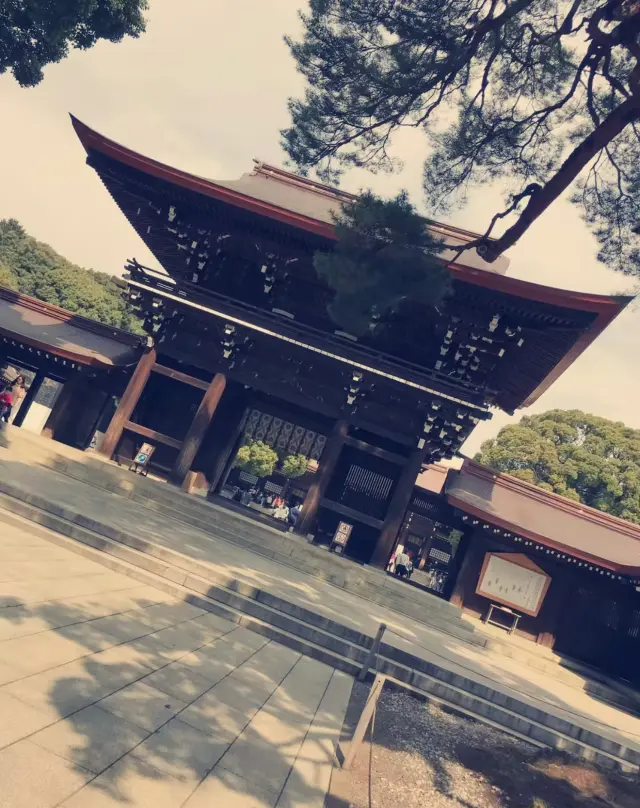
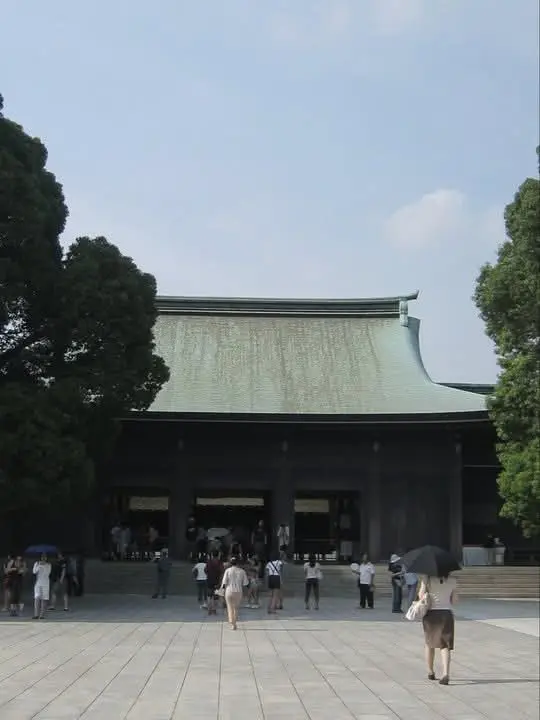
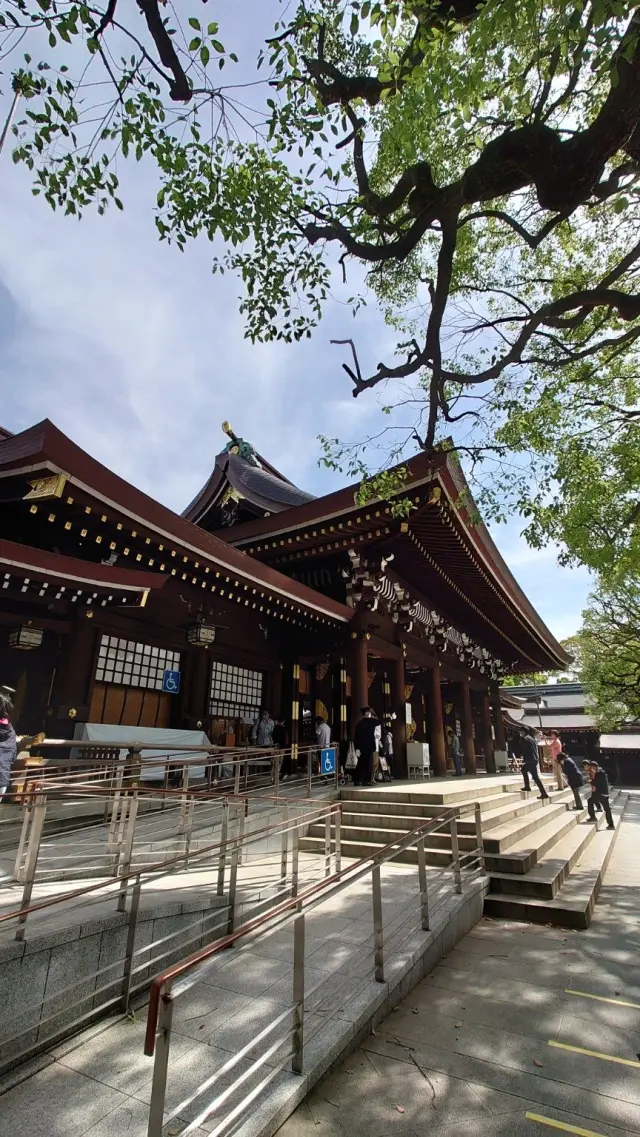
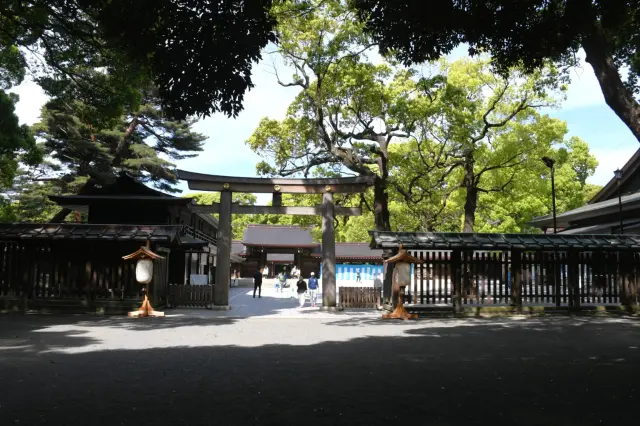
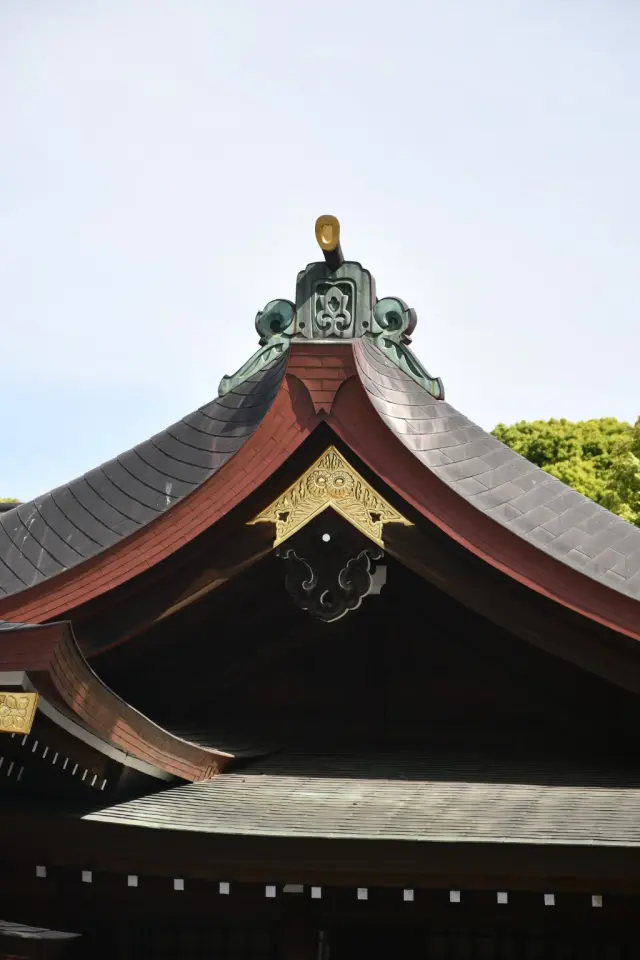
After following the approach to the shrine’s main entrance, the Minami-shinmon Gate, the magnificent wooden two-story hip-and-gable gate is truly breathtaking! Its dark natural-wood structure, stately sweeping eaves, and bracket work look exceptionally imposing against the blue sky and white clouds. Step over the threshold into the open, pristine inner courtyard, walk across the spotless stone paving, and directly ahead is the main sanctuary dedicated to Emperor Meiji and Empress Shoken. Beside it stand the enormous, lush “married camphor trees,” symbolizing happy relationships. In the cool breeze, you can put your hands together in worship, clap and pray, then draw one of Meiji Jingu’s special “Ō-mikokoro” fortunes, which contain wisdom about life rather than good or bad luck. It feels as though your spirit has been gently cleansed.
Hidden in the heart of Tokyo’s trendiest area, this man-made forest is not only vast and filled with shady trees, but also perfectly blends the solemnity of traditional Japanese Shinto with the healing power of nature. Whether you want to escape the city’s concrete jungle for some forest bathing or see the enormous wooden torii and impressive wall of sake barrels for yourself, Meiji Jingu is definitely a top sacred destination that remains breathtaking no matter how many times you visit Tokyo!
All Reviews of Meiji Jingu
- Overview
- Photos
- Reviews
- Basic Information
- Newest
- With Photos
- Most Liked
Showing 1–10 of 24
-
-
Meiji Jingu Shrine is one of Tokyo’s most iconic shrines and is also a well-known attraction that consistently ranks first in Japan for the number of visitors during New Year’s. After exiting Harajuku Station on the Yamanote Line, it’s about a 3-minute walk to the large torii gate at the southern approach. Once you pass through the gate and continue along the path, the bustling city scenery gradually gives way to a dense forest, as if you’ve suddenly entered another world.
The entire forest is very peaceful, and along the way, you can experience a solemn yet natural Japanese atmosphere. It truly feels like a “forest in the city.” I set aside about an hour and a half this time. After visiting the main shrine, I bought a ticket to walk around the Inner Garden and enjoy the natural scenery, which changes with the seasons. Finally, I left via the northern approach and took the train from Yoyogi Station.
-
-
Tokyo's best-known place of worship and forest retreat from the heat, Meiji Jingu Shrine!
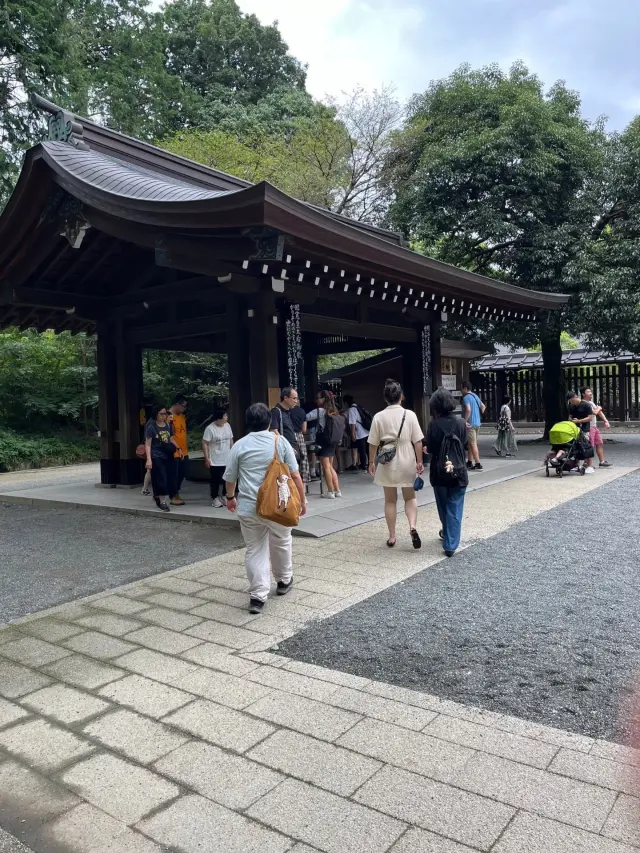
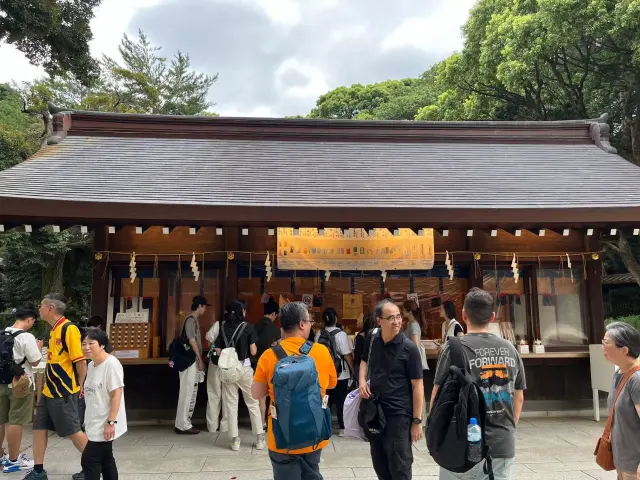
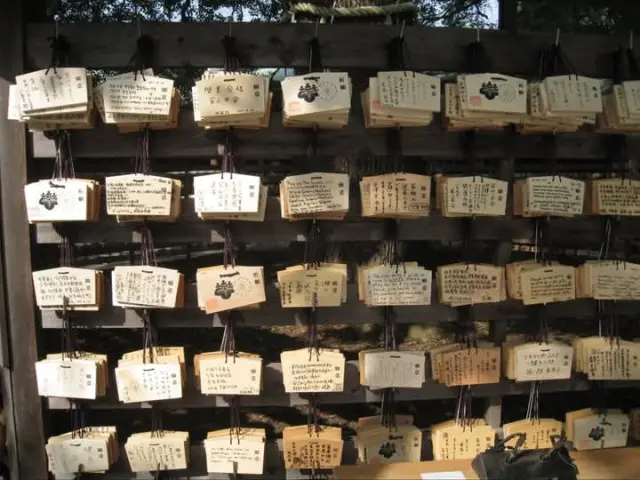
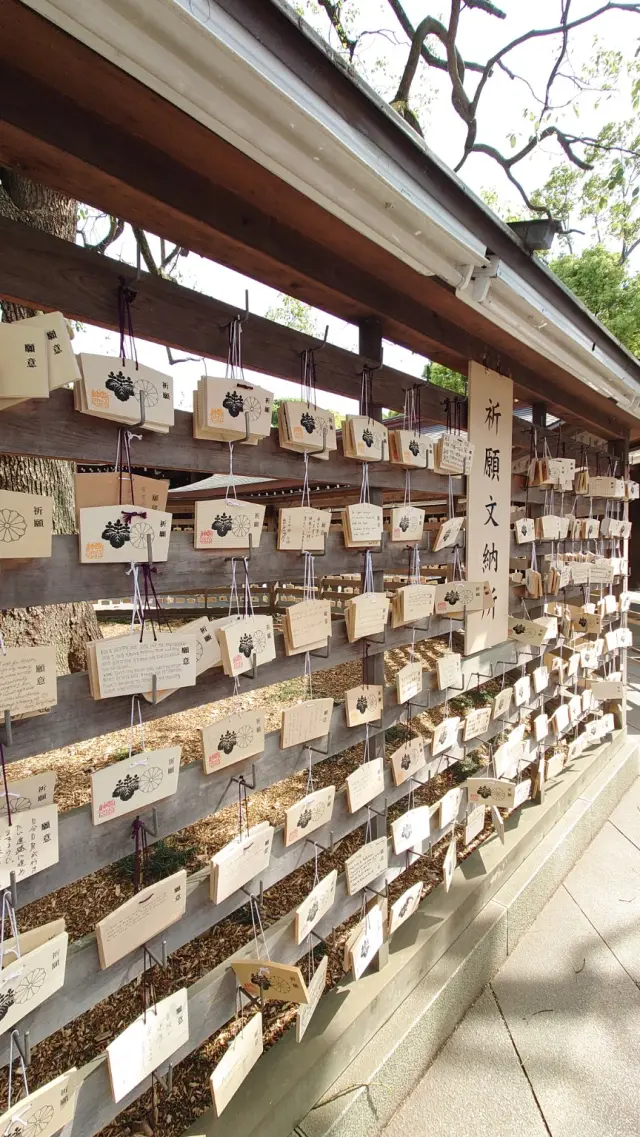
Right next to bustling Harajuku and Shibuya, the moment you enter the shrine grounds, you can feel the peace and solemnity of walking along the tree-lined approach. Before praying, you can purify your hands at the temizuya, then visit the amulet office to choose from various exquisite omamori and ema prayer plaques. Quiet and lush with greenery, it's a must-visit spiritual spot for experiencing traditional Japanese Shinto culture, praying for safety, and escaping the hustle and bustle of the city! -
-
Walking through Meiji Jingu Shrine feels like entering a vast, quiet, deep forest hidden within the city. The towering trees lining both sides of the approach make you feel cut off from the hustle and bustle of Tokyo as soon as you enter. Emperor Meiji and Empress Shoken are enshrined here, and it is also one of Japan's most important shrines, attracting millions of worshippers every New Year.
The enormous torii gate at the entrance is said to have been made from cypress from Alishan, Taiwan. As you walk along the gravel path, hearing the crunch beneath your feet and looking up at the towering torii gate, you feel a solemn sense of entering sacred grounds one step at a time.
-
-
Meiji Jingu Shrine: Making a Wish in a Tokyo Forest
After arriving in Tokyo and passing through the bustling streets of Shibuya, you turn and suddenly find yourself in a tranquil, lush forest. This is the solemn and sacred Meiji Jingu Shrine. At the entrance stands a massive wooden myojin torii gate, said to have been built from a giant thousand-year-old cypress from Alishan, Taiwan. Looking up at it, you can truly feel a sense of awe and reverence.
As you follow the tree-lined path, sunlight filters through the leaves, and the noise of the city gradually fades away, leaving only the quiet rhythm of footsteps and rustling leaves. In front of the main shrine, the dark wooden buildings, gold accents, and elegant rooflines look especially dignified against the greenery.
The most interesting part is the votive tablet area. Countless ema are covered with wishes from people around the world. Some pray for success, some for safety, and others leave blessings for their families. We also sincerely wrote down our own wishes and hung them in the breeze. Perhaps the meaning of travel is to leave behind a beautiful hope for the next chapter—for ourselves and those we love—in an unfamiliar place.
-
-
Meiji Jingu Shrine is an especially peaceful place in central Tokyo. After entering, I slowly walked along the tree-lined approach and felt as though I had suddenly left the city's hustle and bustle behind. Tall trees surrounded me, the air was fresh, and the atmosphere was both solemn and relaxing. I visited the shrine to pray for safety and also admired the architecture and scenery rich in traditional Japanese character.
-
-
Walking into Meiji Jingu Shrine feels like stepping into a forest in the middle of Tokyo. The surroundings are მშვიდ and serene. The worship route is easy to follow, and the air feels fresh and pleasant.
Take your time walking around and enjoy the solemn yet soothing atmosphere of a Japanese shrine.
-
-
There’s a lot of shade in the summer, so it’s cooler than I expected. It’s a bit of a walk to the main shrine, and it really feels like a forest hike.
-
-
The moment you enter Meiji Jingu Shrine, it feels like you've stepped into a different world. It's so peaceful and soothing!
-
Meiji Shrine is always packed with people coming for the first shrine visit of the New Year. It's the most popular spot every year.
-