Leaving the bustling streets outside Harajuku Station and turning into Meiji Jingu, it feels like the entire world is instantly put on mute! The heavy traffic and noisy commotion of the city are suddenly shut out, replaced by dense greenery that blocks out the sky and the crunch of footsteps on the gravel path. The air is filled with the scent of grass and wood, making you want to take a deep breath as your whole body completely relaxes.
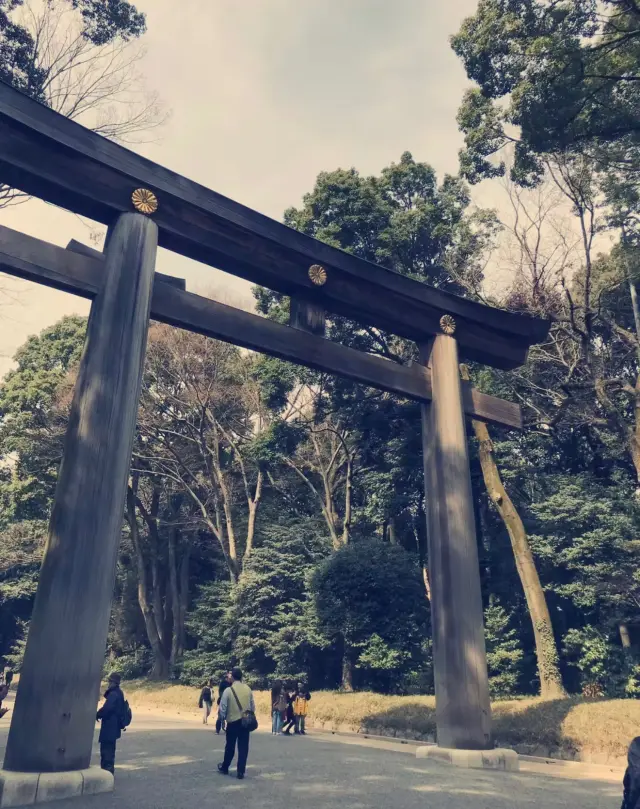
The first thing that makes a powerful impression is the huge torii gate towering over the approach! The entire gate is made from massive, solid logs. Standing beneath it and looking up, its monumental presence is incredibly overwhelming. Above the pillars is a gleaming gold 16-petal chrysanthemum crest of the Japanese Imperial Family, which looks even more solemn and mysterious against the lush green forest. Just taking a photo underneath makes you look incredibly tiny, and you can immediately feel the extraordinary atmosphere of the entrance to sacred ground.
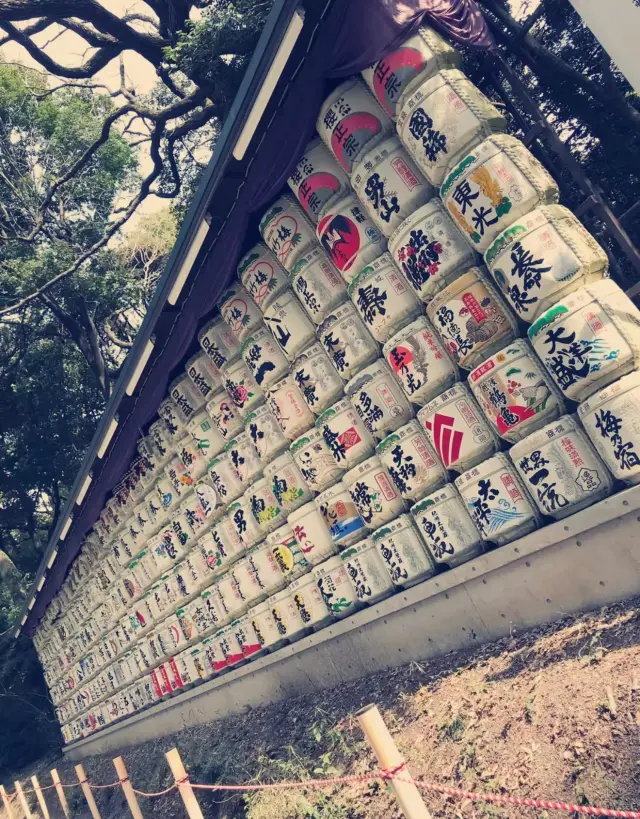
As you slowly wander along the wide gravel approach, the most eye-catching sight—and the one where everyone is sure to stop and snap away—is definitely the spectacular wall of donated sake barrels! Hundreds of Japanese sake barrels wrapped in braided straw rope and decorated with beautiful calligraphy and designs bearing names like “Sakura Masamune,” “Ozeki,” and “Umenoyado” are neatly stacked into a towering wall several levels high. It has so much traditional Japanese festival character and is incredibly photogenic. Capture the perspective from an angle, and practically every shot becomes a fantastic classic check-in photo!
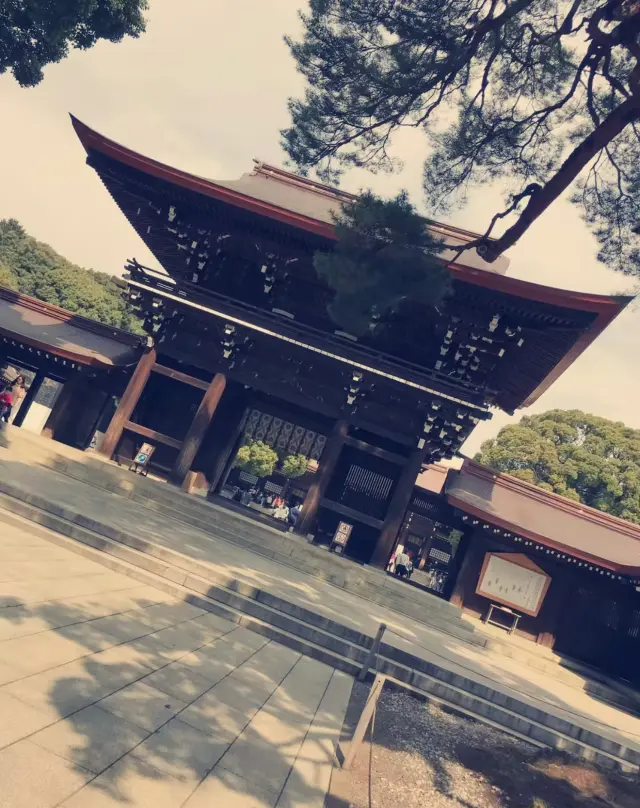
After following the approach to the shrine’s main entrance, the Minami-shinmon Gate, the magnificent wooden two-story hip-and-gable gate is truly breathtaking! Its dark natural-wood structure, stately sweeping eaves, and bracket work look exceptionally imposing against the blue sky and white clouds. Step over the threshold into the open, pristine inner courtyard, walk across the spotless stone paving, and directly ahead is the main sanctuary dedicated to Emperor Meiji and Empress Shoken. Beside it stand the enormous, lush “married camphor trees,” symbolizing happy relationships. In the cool breeze, you can put your hands together in worship, clap and pray, then draw one of Meiji Jingu’s special “Ō-mikokoro” fortunes, which contain wisdom about life rather than good or bad luck. It feels as though your spirit has been gently cleansed.
Hidden in the heart of Tokyo’s trendiest area, this man-made forest is not only vast and filled with shady trees, but also perfectly blends the solemnity of traditional Japanese Shinto with the healing power of nature. Whether you want to escape the city’s concrete jungle for some forest bathing or see the enormous wooden torii and impressive wall of sake barrels for yourself, Meiji Jingu is definitely a top sacred destination that remains breathtaking no matter how many times you visit Tokyo!
Meiji Jingu | Review by Jk
Other Reviews by Jk
-
Tennoji Park
An urban park located just steps from Tennoji Station, one of Osaka’s major terminal stations. This historic park opened in 1909 on the former site of the 5th National Industrial Exhibition, which was held in 1903. Its vast 26-hectare grounds are home to a variety of attractions, including Tennoji Zoo.
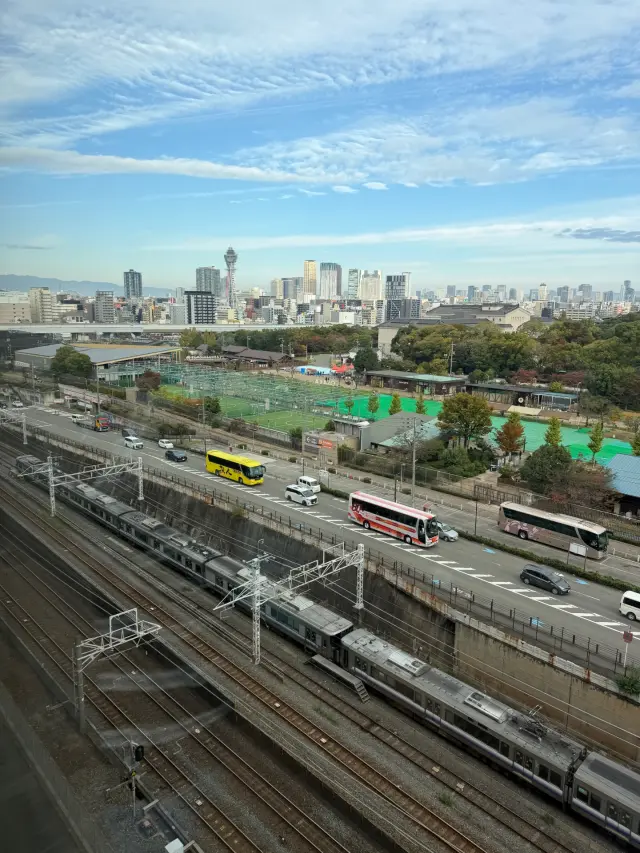
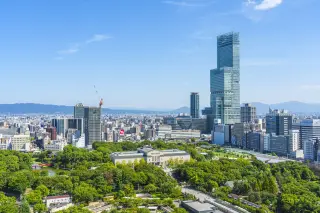
Cross the street and walk straight into Tennoji Park, and the whole scene instantly switches from a bustling metropolis to a super chill, European-style lawn! The craziest thing here is the ridiculously huge lawn area called “TEN-SHIBA.” Right in central Osaka, packed with skyscrapers, there’s somehow this whole wide-open stretch of lush green grass hidden away. Look up, and you can see Japan’s super-tall Abeno Harukas skyscraper right next to it as a backdrop. The visual impact of modern architecture mixed with nature is seriously unbeatable! On weekends, lots of locals and college students bring picnic blankets, grab some coffee or takeout fried chicken, and just lie on the grass doing nothing, soaking up the sun and enjoying the breeze. It’s so relaxing that you won’t want to move at all!
And Tennoji Park definitely isn’t some old-fashioned park where all you can do is take a walk. The whole park is super stylish and fun to explore! Neatly lined up on both sides of the lawn are a bunch of thoughtfully designed artsy cafés, Italian restaurants, and open-air beer bars. During the day, you can sit outside and enjoy brunch with the view. At night, once the lights come on, the atmosphere is at its peak. Having a drink while looking out at Abeno’s sparkling night view is super romantic. Head farther into the park, and it connects seamlessly to the hugely popular Tennoji Zoo and Keitakuen Garden, which is full of the tranquility of a Japanese garden. You can even walk from here all the way to Tsutenkaku to eat kushikatsu. The location seriously couldn’t be better! -
-

Kansai International Airport
Many domestic and international flights carry nearly 28 million people a year at this western Japan’s entrance, Kansai International Airport. It is on an island about 5km off the coast of Senshu in Osaka Bay, famous as the world’s first marine airport on a completely man-made island. The airport code KIX is used as the familiar nickname “KIX.”
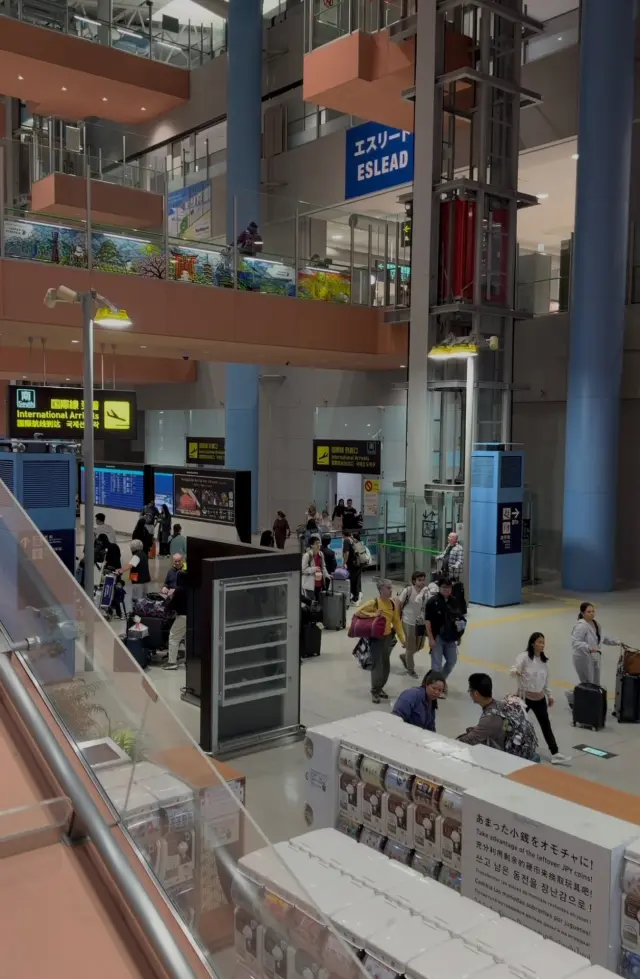
Kansai International Airport is definitely much more than just a place to catch a flight. It’s the perfect place for one last massive shopping and eating spree before heading home! The renovated duty-free area after security feels just like a huge luxury department store, packed with everything from Japan-exclusive snacks and matcha desserts to high-end beauty products and trendy souvenirs. If you’re not careful, you’ll spend all your JPY and max out your credit card. Even if you arrive early and have to wait for your flight, you won’t get bored at all. The terminals are full of incredible authentic food, including Osaka’s legendary Kamukura ramen, freshly fried crispy pork cutlets, and piping-hot takoyaki. You can stuff yourself one last time before boarding and end your entire Kansai trip on an unbelievably satisfying high note!
-
-
Hokkaido Shrine
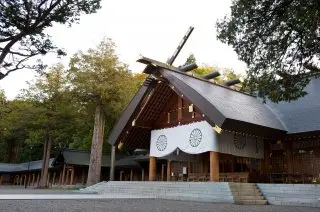
Hokkaido Shrine, one of the most prominent shrines in Hokkaido, is located in Chuo District, Sapporo City. Its history is long, which began in 1869, when the Emperor Meiji directed to enshrine “Kaitaku Sanshin (Developing Three Deities)” here as a place of faith for pioneers.
The moment you step into Hokkaido Shrine, you’re instantly struck by its incredibly quiet and sacred atmosphere! It’s basically the top shrine in all of Hokkaido. The entire shrine is surrounded by towering old-growth trees, and the air is unbelievably clean and fresh. One deep breath wakes you right up. The crunch of the gravel under your feet instantly calms the restless feeling you get from constantly scrolling on your phone. And what’s really crazy is how rich the wildlife is. As you’re walking, a super nimble wild squirrel will often suddenly dart out on a nearby tree, poking its head around looking for nuts. They’re seriously so cute and soothing to see up close!
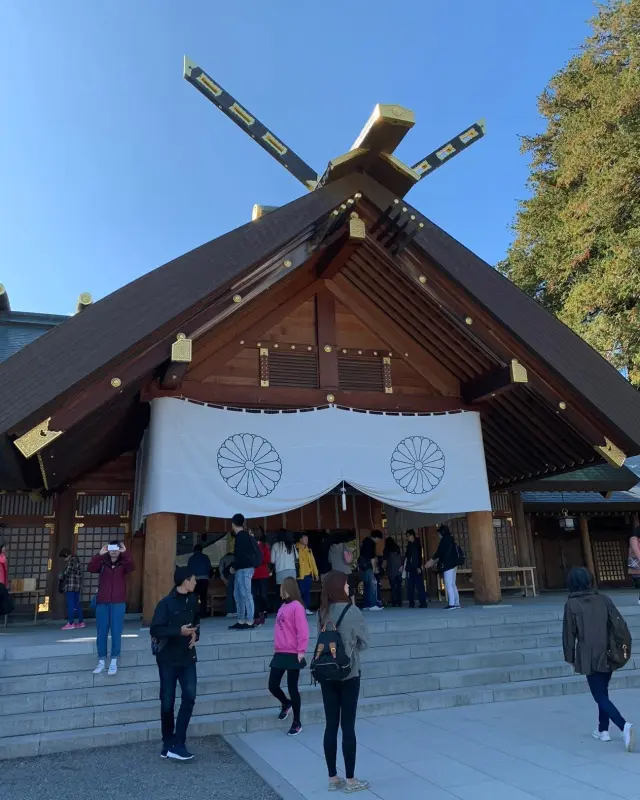
When you reach the main shrine, the dark wood paired with the green copper roof looks unbelievably cool, both solemn and full of that calm, commanding aura of ancient Japan. After praying, you definitely can’t just turn around and leave. You have to head straight to the Rokkatei teahouse next door! They have Hangankan mochi that’s exclusive to this shrine, freshly grilled right in front of you. It’s piping hot in your hands, with a lightly charred exterior and a hint of buckwheat aroma. When you bite into it, it’s incredibly soft and chewy, and the red bean filling is just the right amount of sweet. Enjoy it on a nearby bench with a hot cup of free roasted tea, and you’ll feel completely recharged in body, mind, and spirit! -