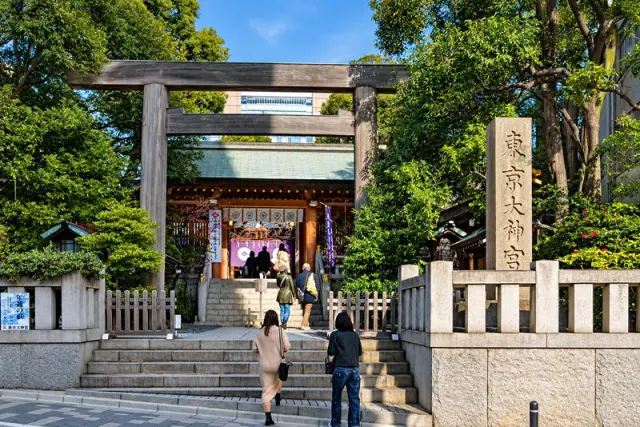
I included Tokyo Daijingu Shrine in this trip mainly because it is quite well known among Tokyo’s shrines for finding love. It also has deep historical ties to Ise Jingu, so since I was already planning to visit Ise Jingu, I wanted to stop by here first and pray for good luck in love. I was also scheduled to attend a handicraft market in Zoshigaya that day, so after considering transportation and the direction of my itinerary, I decided to visit the shrine in the morning.
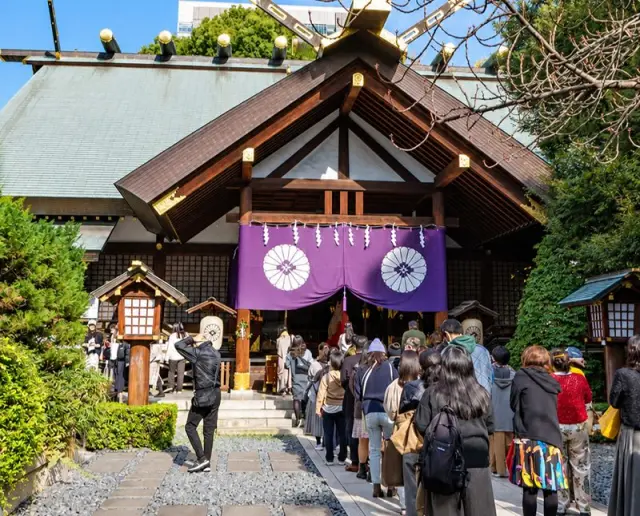
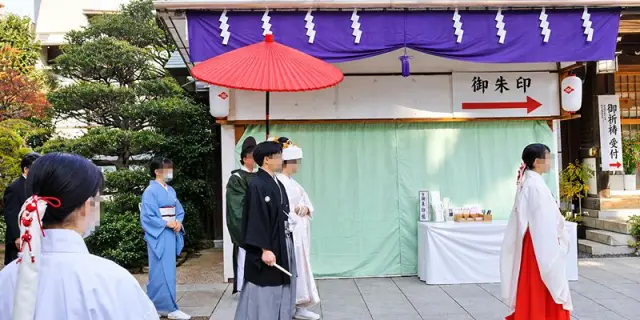
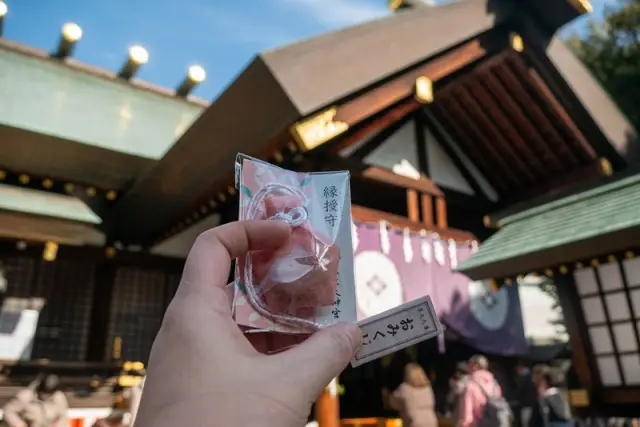
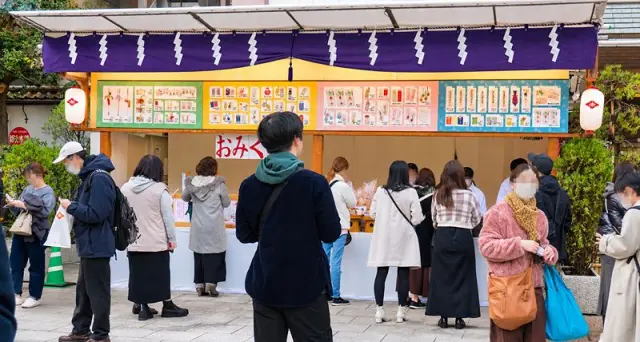
When I arrived, I found that the shrine grounds were a little smaller than I had imagined, but there were quite a lot of visitors. I also happened to see a couple holding a Shinto wedding ceremony that day, which was an unexpected bonus. There was a wide variety of love-themed omikuji, including basic love and matchmaking fortunes, as well as flower fortunes, blood type fortunes, and lucky matchmaking fortunes, so you can choose according to your preference. The shrine office also sold a wide selection of charms. The most famous is the “Enmusubi Suzuran Mamori,” but after looking for quite a while, I ultimately chose the “Enju Mamori,” which I personally preferred. The outer layer of this charm is made from a special cocoon silk, giving it a very delicate texture. It suited my taste better than the cute lily-of-the-valley charm.
There were also seats made from wooden posts next to the amulet office, allowing visitors to take a short break. It was a very thoughtful design. Perhaps because it was a holiday, there were consistently many visitors. By the time I was getting ready to leave, the line to pray at the main hall was several times longer than when I had arrived, showing just how popular this place really is.
One distinctive point is that although the shrine grounds are not large, the buildings are constructed in the shinmei-zukuri architectural style. The roofs and buildings themselves have a very strong presence, which made the space feel slightly oppressive to me. If buildings of the same scale were placed in a spacious setting like Ise Jingu, perhaps the feeling would not be as noticeable.
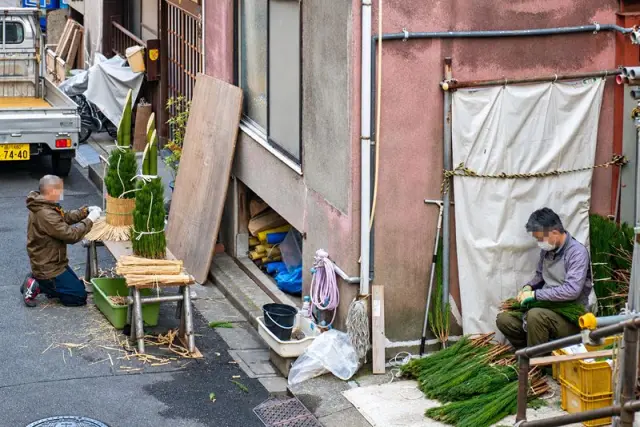
Also, my visit happened to be close to the Japanese New Year, and I unexpectedly saw craftspeople nearby making New Year’s pine decorations. It was my first time seeing the process of making this kind of traditional New Year’s decoration in person, and I found it quite interesting. Overall, the grounds of Tokyo Daijingu Shrine are not large, and around 20–40 minutes should be enough to pray, enjoy the surroundings, and shop for charms. If you happen to be planning an itinerary around Iidabashi, it may be worth stopping by.
All Reviews of Tokyo Daijingu Shrine
3.25
3
Related Articles

Tokyo Daijingu Shrine
A popular shrine believed to bring good luck in finding love!
- Overview
- Photos
- Reviews
- Basic Information
- Newest
- With Photos
- Most Liked
Showing 1–3 of 3
-
-
Tokyo Daijingu Shrine is known for prayers for good relationships and is a highly popular power spot in Tokyo.
The shrine has a quiet, elegant setting and a solemn yet peaceful atmosphere. Many people come here to pray for happiness, peace, and meaningful connections.
-
-
I heard it's really effective, so I came to check it out and pray for good luck in love.