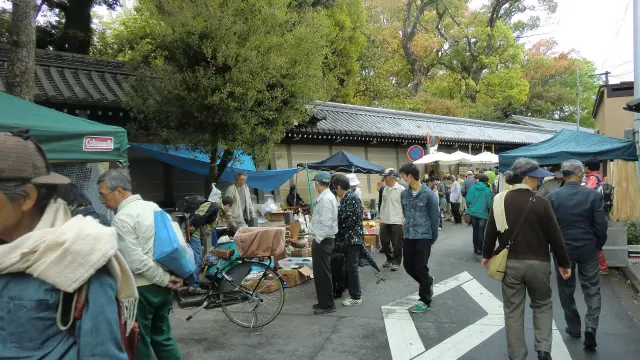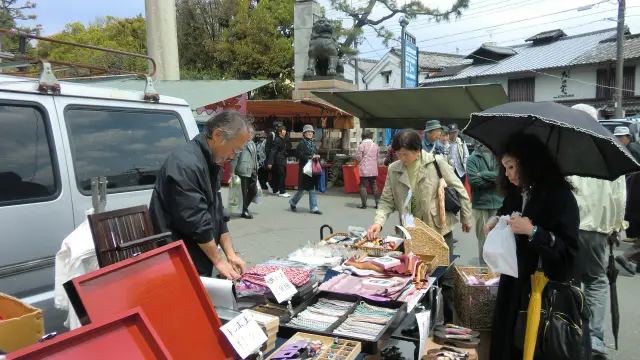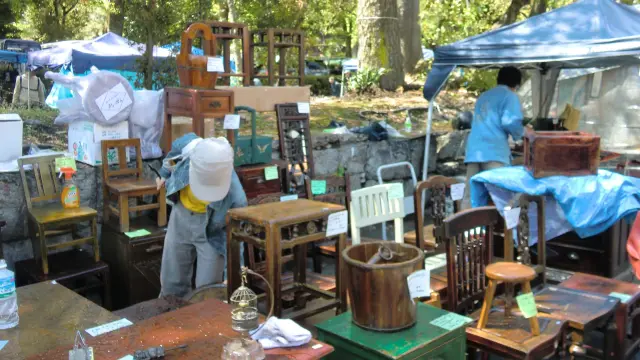
Every time I visit Kitano Tenmangu Shrine, my main reason is the Tenjin Market held on the 25th of each month. If you like kimono, vintage clothing, or kimono accessories, I personally really recommend checking it out. Kyoto has quite a few antique markets, but based on my experience visiting several times, this one has an especially large number of kimono-related stalls. They carry everything from kimono, haori, and obi to obijime and all kinds of kimono accessories, with a very wide selection. Some undergarments and consumable items are even sold new, and the prices are much lower than in stores. For people who are genuinely interested in kimono, this is a great place to hunt for treasures.
The Tenjin Market itself is huge. Besides kimono, there are antiques, old tools, tableware, miscellaneous goods, plants, and all kinds of snacks. The food stalls are mainly concentrated around the main gate. There aren’t many of them, and they’re pretty ordinary, but they’re just there to fill your stomach and give you some energy, so the taste isn’t that important. It’s easy to lose track of time while browsing here. Especially if your main goal is to buy kimono, I recommend coming early because the good items really do get picked out quickly.
Although the market mainly operates in cash, on my later visits I noticed that some stalls had started accepting credit cards. I usually skip the stalls that accept cards, since they mainly sell antiques and similar items, so I assume they offer card payments because the transaction amounts can be quite high. But if you do find something you really want, being able to pay by card is quite convenient, since it’s hard to carry that much cash with you.
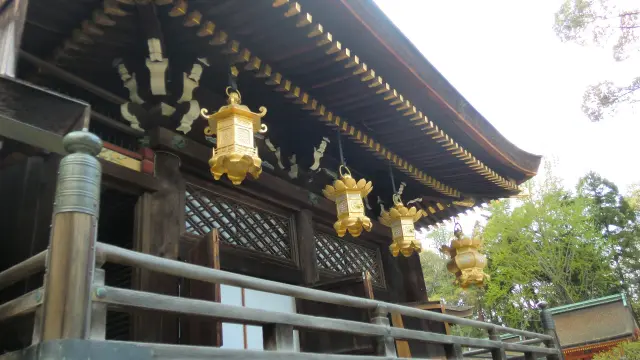
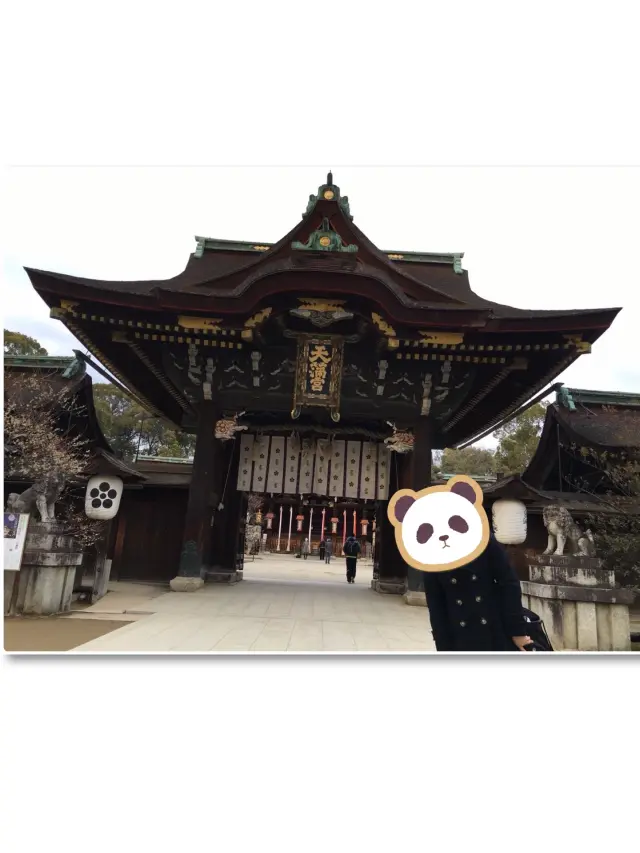
Kitano Tenmangu Shrine itself is also well worth visiting. I’ve been here many times, and it feels a little different each time. If you come in February, you can enjoy the plum blossoms while visiting the Tenjin Market. If you happen to come on the 25th, you can also attend the Plum Blossom Festival. In addition to the festival, there is also a grand outdoor tea ceremony served by geiko and maiko from Kyoto’s Kamishichiken district, held among the blooming plum trees. During the Setsubun Festival in early February, geiko and maiko from the Kamishichiken Kabukai also perform a Japanese dance offering at the Kagura Hall. If you want to experience Kyoto’s traditional performing arts, all of these events have their own distinctive character.
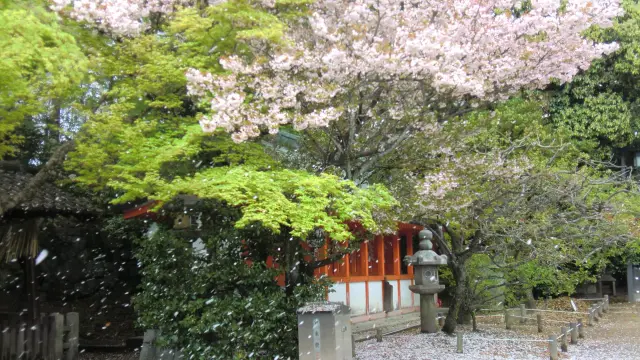
I also visited once in April. The cherry blossom season was already nearing its end, so I wasn’t expecting much, but I was very lucky and happened to see a shower of falling cherry blossoms. It was incredibly romantic and ended up becoming one of my strongest memories of Kitano Tenmangu Shrine. After visiting Kitano Tenmangu Shrine, you can continue on to Hirano Shrine, which is also one of Kyoto’s well-known cherry blossom viewing spots. The two places work very well together in one itinerary.
All Reviews of Kitano Tenmangu Shrine
- Overview
- Photos
- Reviews
- Basic Information
- Newest
- With Photos
- Most Liked
Showing 1–4 of 4
-
-
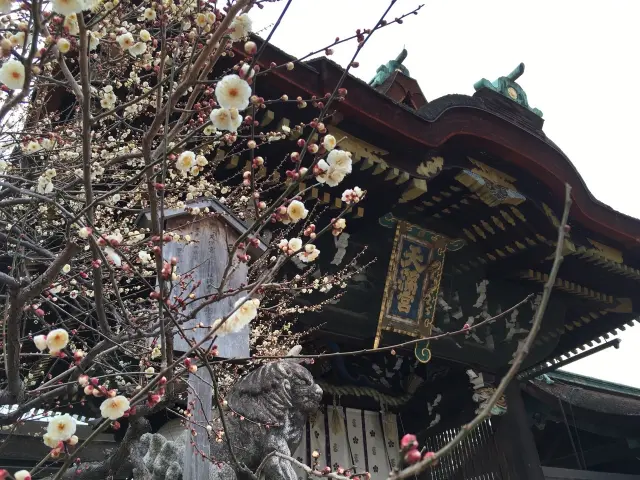
When I visited Kitano Tenmangu Shrine in Kyoto, I was really looking forward to seeing the plum blossoms in full bloom. Unfortunately, only a small number were blooming when I went, so I missed the most dreamlike view of them all in full bloom.
Even though I didn't get to see a whole landscape of blooming plum trees, I could still feel the atmosphere of the ancient capital. Together with Kitano Tenmangu Shrine's traditional architecture and shrine atmosphere, the occasional plum tree in full bloom gave the photos a charm of their own.
This visit was more like scouting the location in advance, so I was a little disappointed. If I could visit when the plum blossoms are in full bloom, I'm sure the entire Kitano Tenmangu Shrine would be even more beautiful. Just imagining the plum blossoms paired with the vermilion buildings makes me look forward to it.
-
-
This is the temple that Japanese students always visit to pray for academic success.
-
After mid-February, this is the best place to see plum blossoms. The Tenjin Market, held on the 25th of every month, is also a big event for locals in Kyoto.