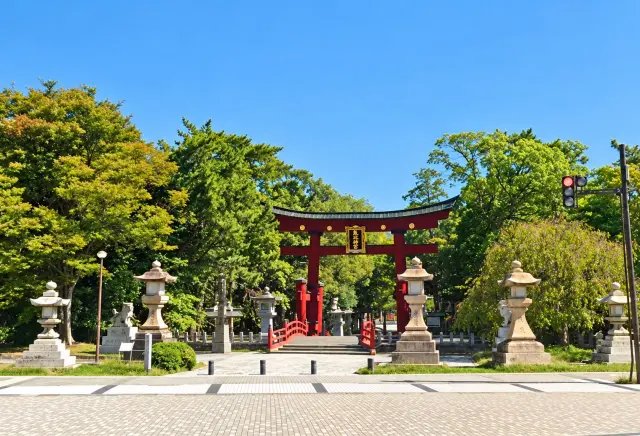
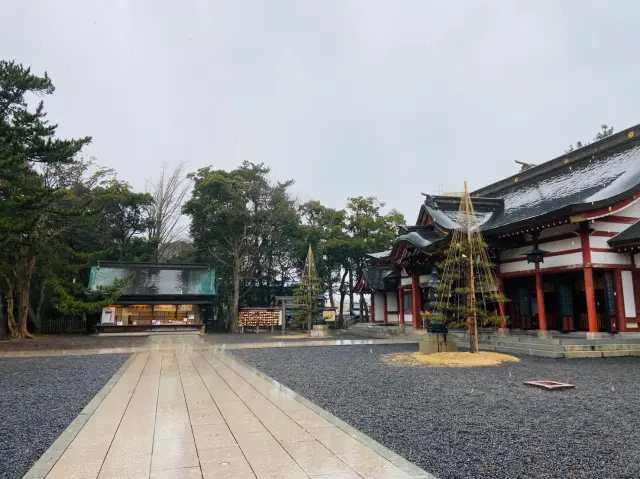
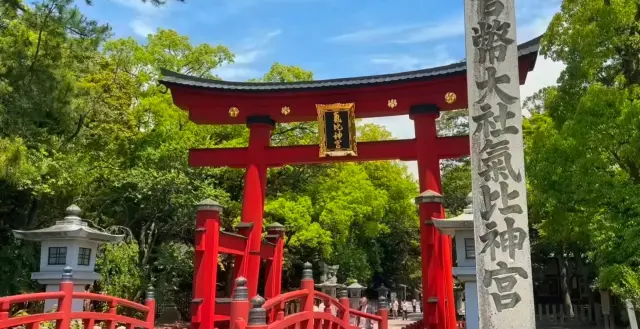
Before WWII, there was a carved Momotaro figure in the transom of the main shrine building at Kehi Jingu Shrine.
I looked into why Momotaro would be there in the first place.
Kehi Jingu is regarded as the guardian shrine of the Hokuriku region. “Hokurikudo” was one of the four major ancient routes/regions, covering what are now Fukui, Ishikawa, Toyama, and Niigata. Sanyodo, meanwhile, covered Hyogo, Okayama, Hiroshima, and Yamaguchi.
Around the time of Emperor Sujin (not definitive, but roughly the 2nd century), expeditions were led by generals assigned to these regions. For Hokurikudo it was Ohiko-no-Mikoto, and for Sanyodo it was the Kibitsu clan.
Later, in the 3rd century, there were campaigns to Izumo in the San’in region and to the Kanto area, carried out by an alliance of Yamato Takeru and the Kibi clan.
Yamato Takeru is thought to have been strongly influenced by the Korean Peninsula. It’s believed there was trade with immigrants who brought iron weapons, horse culture, and so on by large ships across the “Northern Sea” (the Sea of Japan) to Wakasa (Tsuruga and Obama). The Kibi clan is also said to have had ironmaking technology.
Iron swords outperform bronze swords, and to bring a wide area under control, cavalry forces were essential.
There’s also a theory that the Kibitsu clan governed Sanyodo, while Hokurikudo was governed by the younger brother of the Kibitsu clan.
The Kibitsu clan in Okayama is considered the original home of the Momotaro legend, but Yamato Takeru is enshrined as one of the seven deities at Kehi Jingu.
You could say Yamato Takeru and the Kibi clan helped build the foundation of Yamato power.
And as for why Kehi Jingu is in Tsuruga—when you look back over 2,000 years of history, you can see just how important this area was.