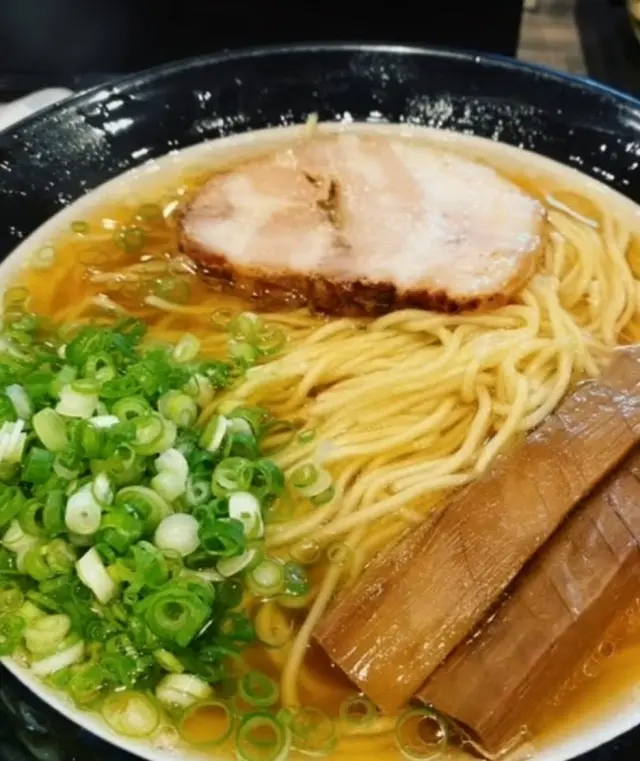
The thick noodles have a firm, satisfying texture. Paired with thick-cut chashu and menma, every bite feels really fulfilling. If you like lighter-style ramen, you might fall in love with its unique soy sauce flavor.
When you’re in Osaka, don’t just go for tonkotsu ramen. Don’t miss this bowl from King-emon, packed with local Osaka flavor. It’s simple, but memorable—delicious and worth coming back for.
King-emon Main Store | Review by 王小鈞
Other Reviews by 王小鈞
-
Ouchijuku Misawaya
A soba restaurant in Ouchijuku, a nationally designated Preservation District for Groups of Traditional Buildings, where around 40 thatched-roof houses line the old highway. Set inside a restored traditional home, the calm, classic Japanese interior features a pendulum clock and an irori hearth with charcoal fire in winter. Don’t miss the rows of soba cups displayed on the wall. A must-try at Misawaya is the signature “Takato Soba,” said to have been loved by the Aizu domain lord.
Misawaya in Ouchijuku—when visiting this post town that preserves its Edo-period streetscape, of course you have to try the very distinctive “Takato Soba”! It was my first time seeing soba eaten with a green onion instead of chopsticks, and it was really unique. The cold soba had a lot of grated daikon, and the spiciness became quite noticeable toward the end; the other bowl of soba in hot broth was nice and warming. Personally, I thought the portions were a little large, but the vegetable tempura was delicious, and there was also a very unusual fried red bean bun that wasn’t greasy or too sweet. Overall, it was a very distinctive experience, and I recommend giving it a try when you visit Ouchijuku!
-
-
The Aizu Bukeyashiki - Samurai Residence
Located near Higashiyama Onsen, this large-scale historical museum park features the restored residence of Saigo Tanomo, who was a Karo officer in the Aizu domain, surrounded by relocated and restored traditional buildings and a museum.
The Aizu Bukeyashiki - Samurai Residence is a museum full of Aizu history. The grounds are larger than expected, and the exhibits are quite extensive. At the bus stop by Aizuwakamatsu JR Station, you can buy a one-day bus pass for JPY 2,000 that includes admission to three attractions: Tsuruga Castle, the Samurai Residence, and Sazaedo. You can also travel around the loop clockwise or counterclockwise, making it easy to plan your day. I recommend allowing about an hour and a half to explore the Samurai Residence at a leisurely pace. There is no shade at the bus stop in summer, so be sure to protect yourself from the sun before heading out!
-
-
Iimoriyama
At the eastern edge of the Aizu Basin, Iimoriyama is a leading tourist destination in Aizuwakamatsu City, attracting around two million visitors a year. The 314-meter-high hill can be ascended not only by foot but also via a paid escalator for easy access.
From the top of Mount Iimori, you can look out over the castle town of Aizuwakamatsu. Besides its pleasant scenery, it is also a sacred mountain filled with historical stories. For JPY 250, you can take the escalator up the mountain and experience Aizu's rich history along the way. The most moving part is the story of the Byakkotai. During the war, about 20 boys between the ages of 15 and 17 mistakenly believed that Tsuruga Castle had fallen and, overcome with grief, took their own lives here. Standing before the monument and offering a stick of incense felt especially heavy, and made the tragedy of this history even more palpable.
-