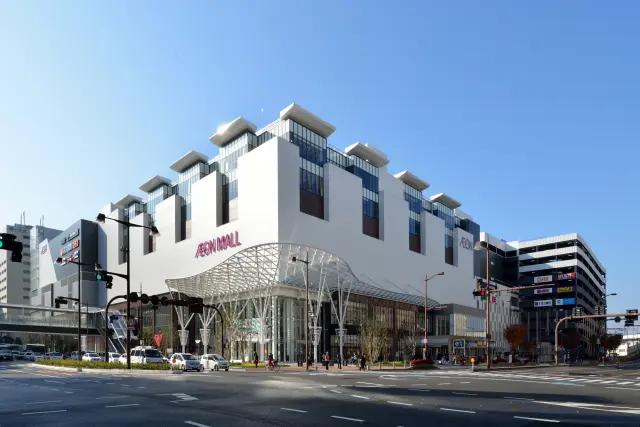
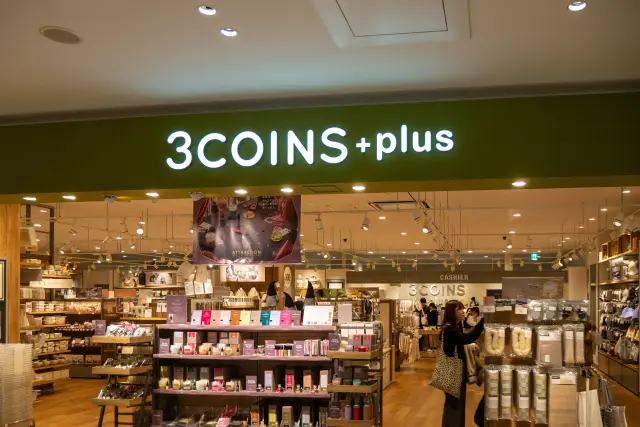
AEON MALL Okayama is really huge. If there are specific brands you want to visit, I recommend checking the floor and location before going in, or you can easily wear yourself out walking around inside. But its size also has advantages: the selection of brands is very comprehensive. You can shop at brands familiar to Taiwanese travelers, such as DAISO, 3COINS, JINS, and MUJI, all in one place. I especially thought the MUJI here was very large.
Compared with running around different areas of Osaka or Tokyo for different brands, here you can get almost all your household goods, clothing, glasses, drugstore items, and souvenirs in one place. It’s a great stop for getting all your shopping done at once. Another especially traveler-friendly feature is that many specialty stores offer tax-free shopping, and the official website lists which stores provide it. There’s no need to check each brand’s website, which saves a lot of trouble. Definitely a plus.
For the best shopping order, I also recommend visiting the individual stores first and then shopping at the supermarket on the first floor last. The supermarket stays open until 23:00, much later than the other stores in the mall, which close at 21:00. Besides the timing, if you buy a lot of food at the supermarket first, carrying it all around while shopping can be pretty tiring.
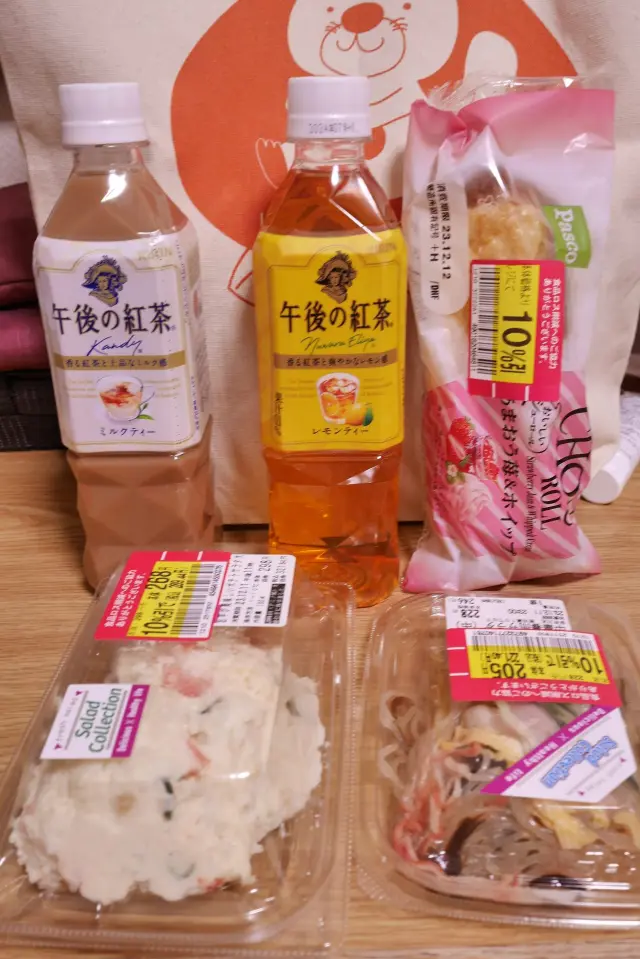
Discounts on prepared foods starting in the evening are also very popular. When I went close to 8:00 p.m., there was still food available, but many popular items were already gone. Since the supermarket itself is large enough, it usually won’t be completely cleaned out, but if there’s something in particular you want to eat, don’t wait too late.
Also, after arriving in Okayama on Tigerair Taiwan and getting into the city, many tourist attractions are already about to close, so AEON MALL is actually a great option at that time. You can also use it as a one-stop shopping destination on your last day. For me, AEON MALL Okayama’s biggest advantage is being able to buy everything in one place, with a comprehensive selection of brands and a supermarket that stays open later. The shopping convenience is even better than in many major cities.
AEON MALL Okayama | Review by Holly
Other Reviews by Holly
-
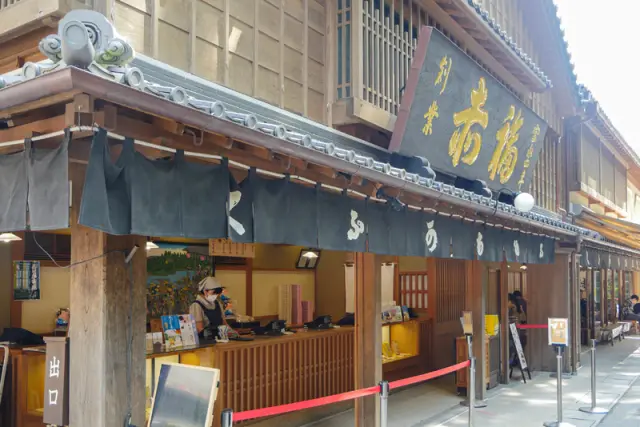
Akafuku-Main store
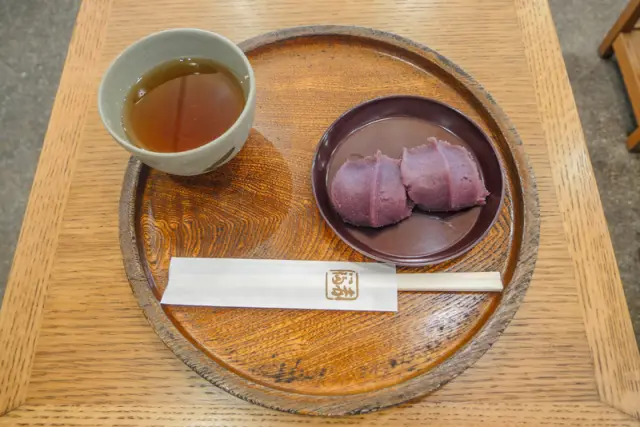
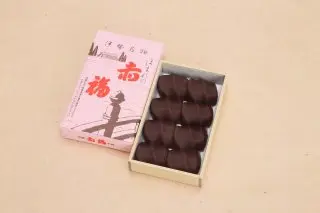
Founded in 1707, during the early Edo period, this long-established store has been welcoming visitors to Ise Jingu shrine for centuries with its famous "Akafuku Mochi." This traditional Japanese sweet consists of a mochi rice cake topped with smooth sweet bean paste, and its shape is distinctive. The three lines on the bean paste represent the pure flow of the Isuzu River that runs through the sacred grounds of Ise Jingu, while the white mochi symbolizes the pebbles at the riverbed.
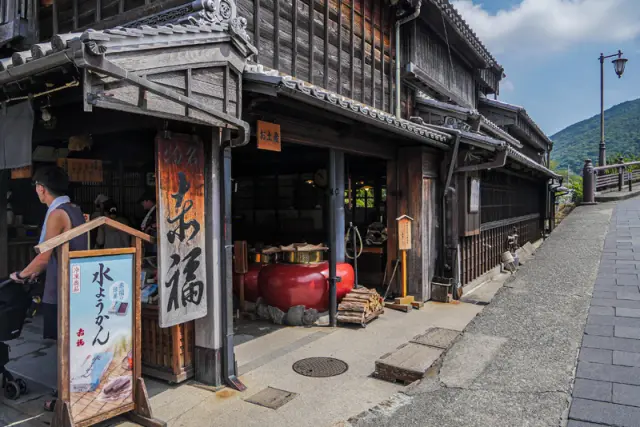
After entering Oharai-machi, turn right and you'll see it. The Akafuku Main Store is actually very easy to find. This is Akafuku's flagship location, and the timing of my visit was pretty good, so the line wasn't too outrageous. However, if it's very crowded and you're not set on eating at the main store, I don't think you need to spend all your time waiting here. There are other Akafuku shops nearby to choose from.
As for the Akafuku Mochi itself, I think its strongest point is actually the red bean paste. If the bean paste is strained too finely, it's easy to lose the aroma of the beans along with it. But if you try to preserve that aroma, it's difficult to make the paste this smooth. Akafuku balances the two very well. The texture is extremely delicate, but it doesn't just taste sweet—you can still taste the aroma of the azuki beans themselves. This seemingly simple wagashi actually requires a great deal of skill in handling red beans, and I think Akafuku is truly impressive in that regard.
What surprised me most was that it wasn't as sweet as I'd imagined. It's still sweet, but when paired with the hot tea provided, the sweetness is softened and everything comes back into balance. I really admire how Akafuku gets the level of sweetness just right.
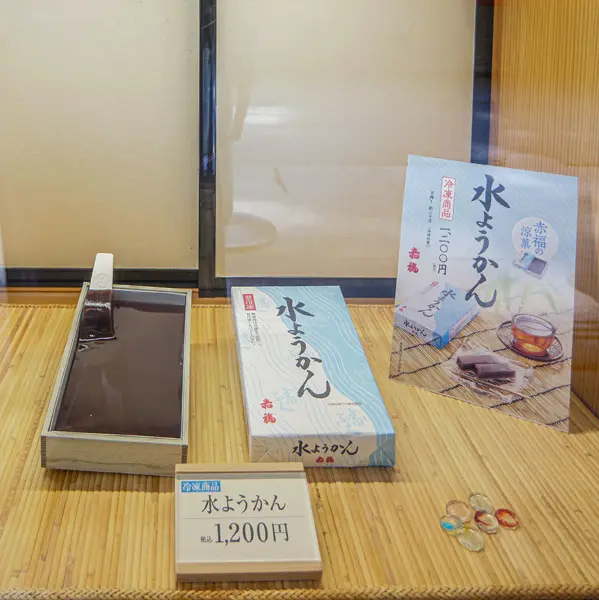
When I visited, they also happened to have the seasonal summer Akafuku Mizu-Yokan. Akafuku Mizu-Yokan is made with azuki beans from Hokkaido and prepared as a whole slab poured into a single box, and it has very good reviews. I really wanted to buy it, but it's a frozen product that has to be kept cold. The problem was that I visited in August and still had a full itinerary after making the purchase, eventually heading all the way to Osaka. A frozen product was simply not practical to buy. If it had come in a smaller box, I could have found a place to sit after walking around Okage Yokocho and finished it right there. But it was a large 320g box, and no matter how much I can handle sweets, there was no way I could finish it all at once. In the end, I had to tearfully give up on it. -
-
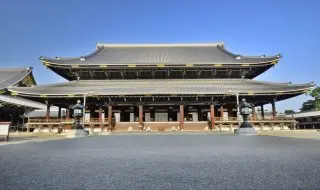
Higashi Honganji Temple, Kyoto
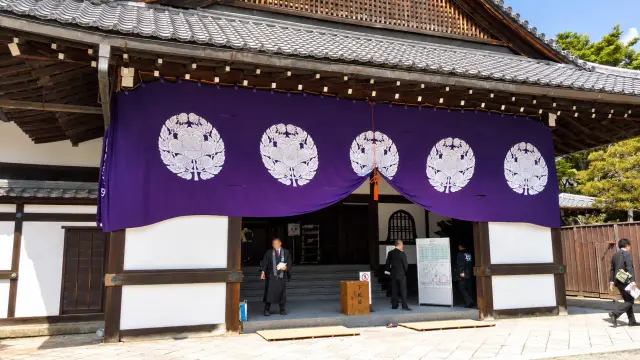
Higashi Honganji Temple is located in Karasuma Rokujo, near Kyoto Station. Officially called "Shinshu Hongyo", Higashi Honganji Temple is the head temple of the Otani sect of Shinshu Buddhism, built in the 7th year of Keichō era (1602) on land donated by Tokugawa Ieyasu to Kyōnyo Shonin.
Kyoto has both an eastern and western Honganji Temple, but originally there was only one Honganji Temple. After Kennyo Shonin passed away, his eldest son Kyonyo succeeded him as head of Honganji, but Toyotomi Hideyoshi later ordered him to retire, and the position passed to his third son, Junnyo. This became the foundation for the lineage that would later develop into Nishi Honganji. Later still, Tokugawa Ieyasu granted Kyonyo land around Karasuma Rokujo and Shichijo in Kyoto, where Kyonyo reestablished Honganji, resulting in the present-day Higashi and Nishi Honganji temples.
Higashi Honganji is closer to Kyoto Station than Nishi Honganji. It is about a 7-minute walk from JR Kyoto Station, so if you happen to be nearby, I highly recommend stopping by. The first time I entered Higashi Honganji, I was genuinely taken aback because the grounds were far larger than I had expected. The Founder’s Hall in particular is one of the largest wooden structures in the world, and its interior contains 927 tatami mats. Compared with the other temples I had visited over the past few days, the ones I had previously thought were huge suddenly seemed like nothing.
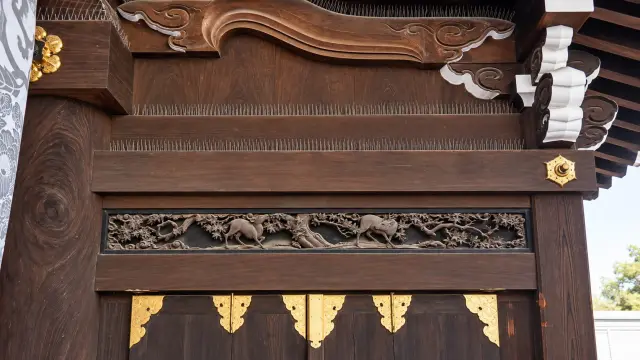
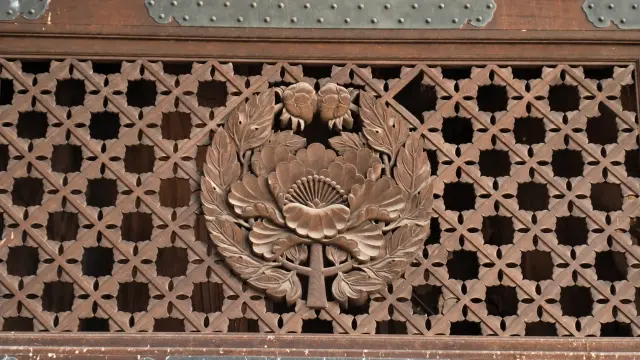
And Higashi Honganji is not just “big.” If you look closely at the buildings, you will find many interesting details. Although the main buildings you see today have been reconstructed, the architecture still has plenty of details worth taking the time to examine. On this visit, for example, I saw quite a few wooden carvings featuring animals. The rabbit in the photo is one of them, and deer, dragons, lions, and other animals can be found elsewhere on the grounds. When visiting a large temple like this, it is easy to miss these small details if you only keep staring at the main hall. Instead, slowly looking up and down will reveal quite a few interesting things.
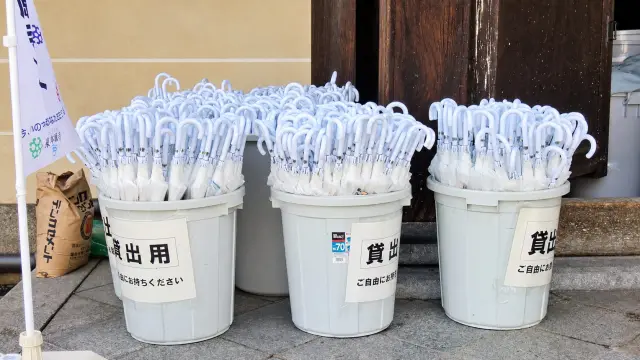
Also, it happened to be raining when I visited, and there seemed to be some kind of temple event going on. I saw the temple staff taking out a huge number of umbrellas to organize and dry them. From a distance, the sight of so many open umbrellas was actually quite impressive. This is not something an ordinary tourist would particularly expect to see, but it ended up becoming one of my strongest memories of Higashi Honganji.
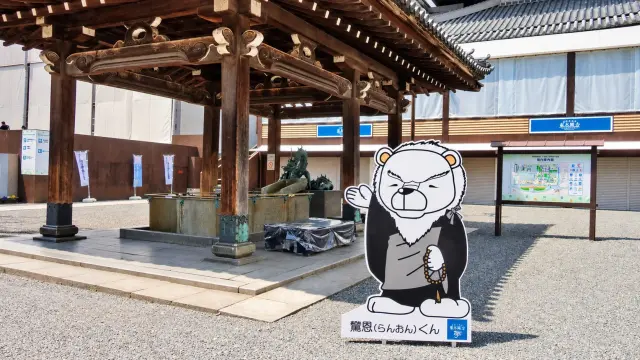
I also never expected such a solemn temple to have its own mascot. On this visit, I saw a standee of “Ran’on-kun” on the grounds. It is a lion wearing Buddhist robes and holding prayer beads, which felt like quite a contrast at first glance. I later looked it up and found that it is an official character created for events related to the 750th memorial anniversary of Shinran Shonin in 2011. It made me feel that Japanese Buddhism is really quite modern.
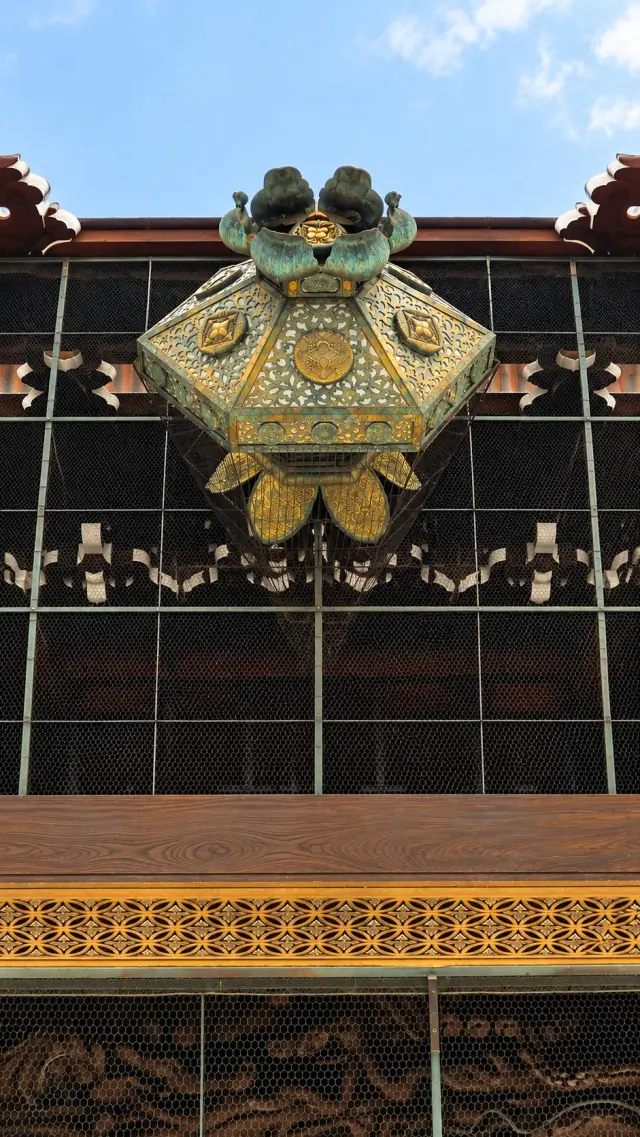
And honestly, I personally think Higashi Honganji is quite luxurious. It feels very different from the style of Buddhist temples I commonly see in Taiwan, especially because the halls are decorated with many gold elements, making the overall appearance quite ornate. I even felt that it had the same kind of glittering golden visual effect as Nijo Castle, -
-
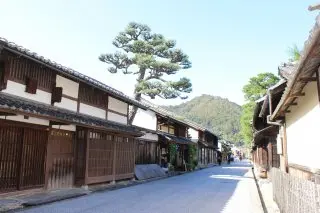
The Omi Merchant Townscape (Shinmachi Dori)
The 2-km area around Shinmachi that stretches north from JR Omihachiman Station is a preserved, historic streetscape that’s designated as a Nationally-selected Preservation Districts for Groups of Historic Buildings. The merchant homes were built between the late Edo and Meiji/Taisho Periods, but are preserved for visitors to enjoy even today.
Although Omihachiman isn't very far from the station, we rented bicycles near the JR station to save our legs. Luckily, we did, because the sights in Omihachiman were farther apart than expected, and some stretches were sloped. Even if you take a bus to the sights, the actual area to explore is still fairly large, so walking can be a little tiring. Having bicycles was really much more convenient.
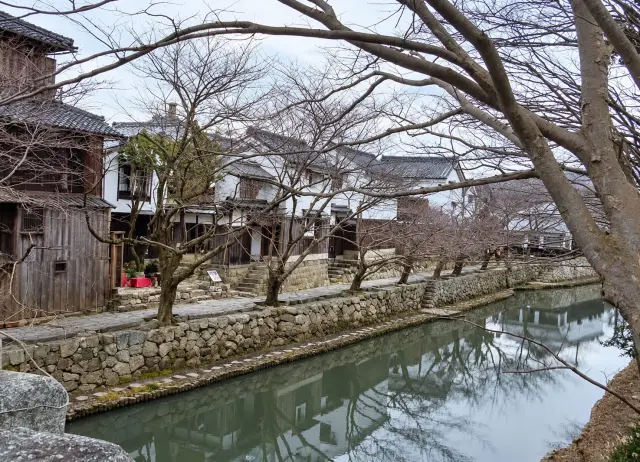
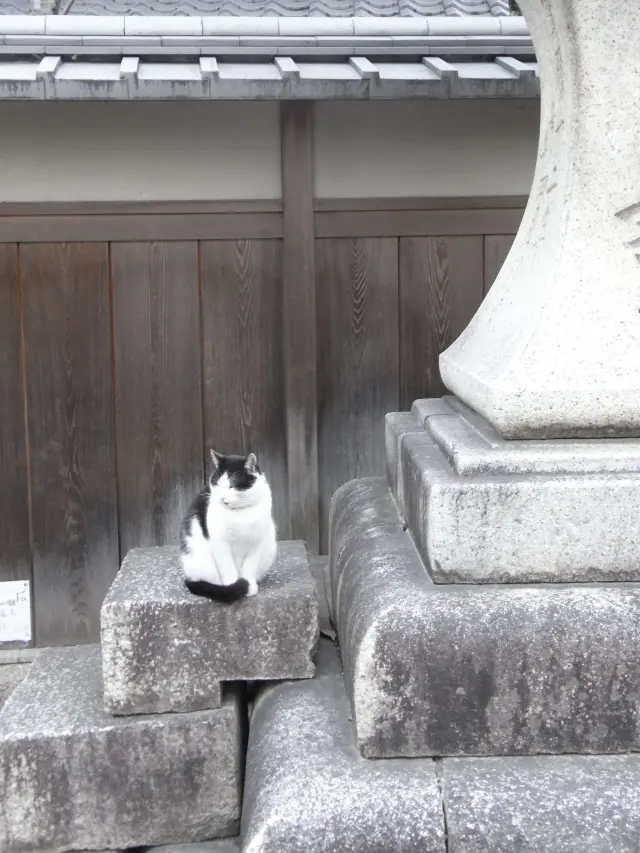
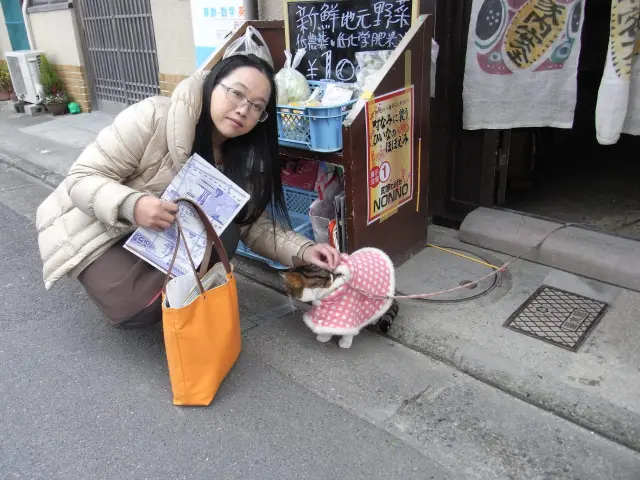
The white walls, lattice windows, traditional machiya houses, and scenery around Hachiman-bori really give Omihachiman the feel of an Edo-period castle town. Almost any angle makes for an atmospheric photo. Although it looks a little like Kurashiki, the two are still different. There aren't as many businesses here as in Kurashiki, but the smaller crowds give it a character of its own. Since we visited in winter, the trees on both sides of the canal were bare. It wasn't as pretty as in other seasons, but the desolate feeling had its own charm. We also ran into lots of cats along the way. They weren't afraid of people and let us take pictures, which made me very happy.
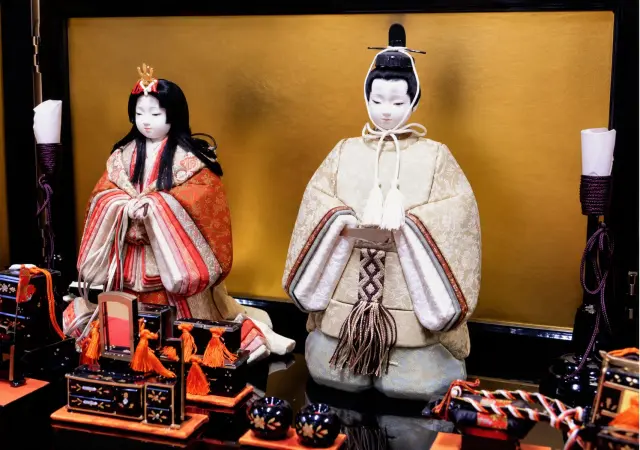
Another main reason we included Omihachiman in this trip was the “Omihachiman Sekku Doll Tour,” because I wanted to see the Hina dolls displayed by local businesses. After actually visiting, I realized that it was more like individual families displaying their treasured Hina dolls in their own stores or homes and opening the spaces to visitors, rather than the kind of large exhibition I had imagined. Since we would have to enter the stores and would feel awkward leaving without buying anything, we didn't go out of our way to see them. However, the restaurant where we ate also had Hina dolls on display, and we found a style we liked, so it still felt worthwhile.
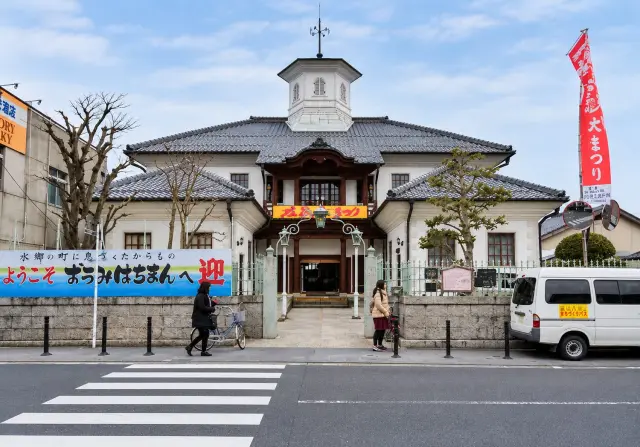
We also stopped by Hakuunkan along the way. This building was originally built in 1877 as Hachiman Higashi School. It combines Western architectural styles with traditional Japanese techniques and is a representative example of pseudo-Western architecture. It is now used as a tourist information center and is a convenient place to rest, ask for information, and buy souvenirs while exploring Hachiman-bori and the old town. We bought a postcard made from rush grass here, printed with a very Japanese-style design. I had already planned to buy a postcard to mail to myself, and when I saw this unusual design, I decided this was the one.
Another thing I was really looking forward to in Omihachiman was CLUB HARIE's baumkuchen. However, the Himure House doesn't directly face the main road, and at first we wandered around for quite a while without finding it. Finally, my friend couldn't take it anymore and rushed straight to Hakuunkan to ask the staff. That's when we learned it was actually nearby. After entering from the road near Hakuunkan, we found it by looking to the left.
In the end, we bought baumkuchen and pudding. The pudding looked delicious at the time, so I picked it up on impulse, but after eating it, I actually regretted it a little. If I'd known, I would have spent the entire budget on baumkuchen. The baumkuchen itself wasn't too sweet, the kind of flavor Taiwanese people would like. -