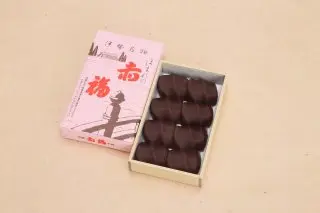
Akafuku-Main store
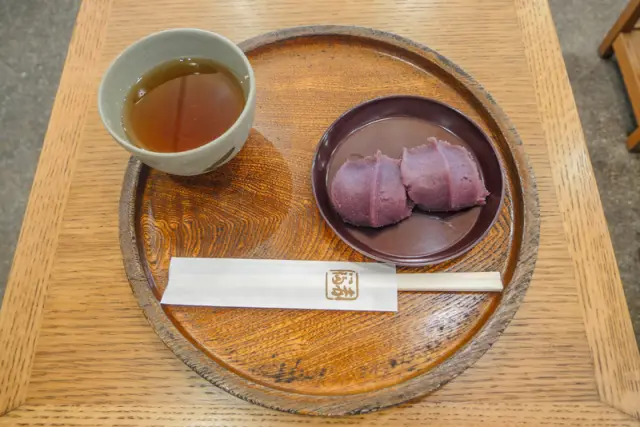
Founded in 1707, during the early Edo period, this long-established store has been welcoming visitors to Ise Jingu shrine for centuries with its famous "Akafuku Mochi." This traditional Japanese sweet consists of a mochi rice cake topped with smooth sweet bean paste, and its shape is distinctive. The three lines on the bean paste represent the pure flow of the Isuzu River that runs through the sacred grounds of Ise Jingu, while the white mochi symbolizes the pebbles at the riverbed.
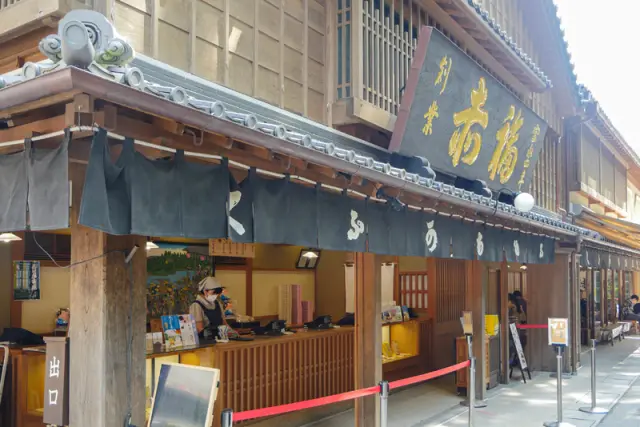
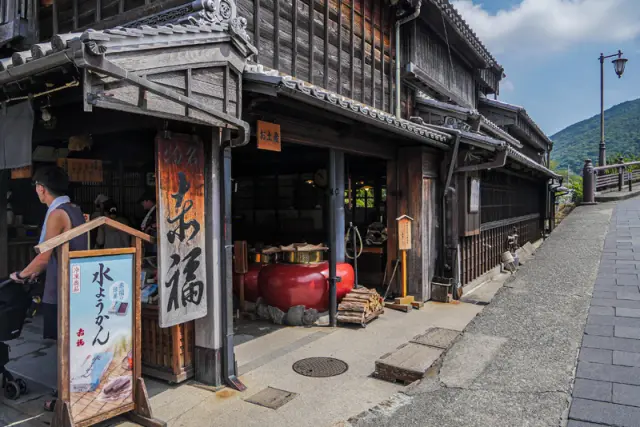
After entering Oharai-machi, turn right and you'll see it. The Akafuku Main Store is actually very easy to find. This is Akafuku's flagship location, and the timing of my visit was pretty good, so the line wasn't too outrageous. However, if it's very crowded and you're not set on eating at the main store, I don't think you need to spend all your time waiting here. There are other Akafuku shops nearby to choose from.
As for the Akafuku Mochi itself, I think its strongest point is actually the red bean paste. If the bean paste is strained too finely, it's easy to lose the aroma of the beans along with it. But if you try to preserve that aroma, it's difficult to make the paste this smooth. Akafuku balances the two very well. The texture is extremely delicate, but it doesn't just taste sweet—you can still taste the aroma of the azuki beans themselves. This seemingly simple wagashi actually requires a great deal of skill in handling red beans, and I think Akafuku is truly impressive in that regard.
What surprised me most was that it wasn't as sweet as I'd imagined. It's still sweet, but when paired with the hot tea provided, the sweetness is softened and everything comes back into balance. I really admire how Akafuku gets the level of sweetness just right.
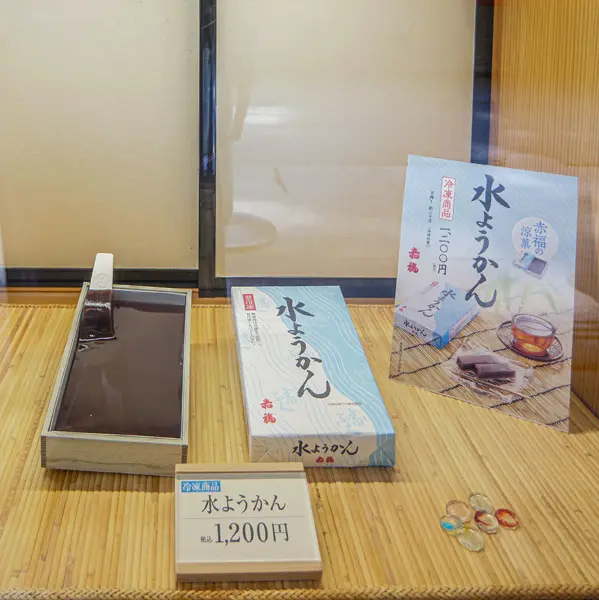
When I visited, they also happened to have the seasonal summer Akafuku Mizu-Yokan. Akafuku Mizu-Yokan is made with azuki beans from Hokkaido and prepared as a whole slab poured into a single box, and it has very good reviews. I really wanted to buy it, but it's a frozen product that has to be kept cold. The problem was that I visited in August and still had a full itinerary after making the purchase, eventually heading all the way to Osaka. A frozen product was simply not practical to buy. If it had come in a smaller box, I could have found a place to sit after walking around Okage Yokocho and finished it right there. But it was a large 320g box, and no matter how much I can handle sweets, there was no way I could finish it all at once. In the end, I had to tearfully give up on it.