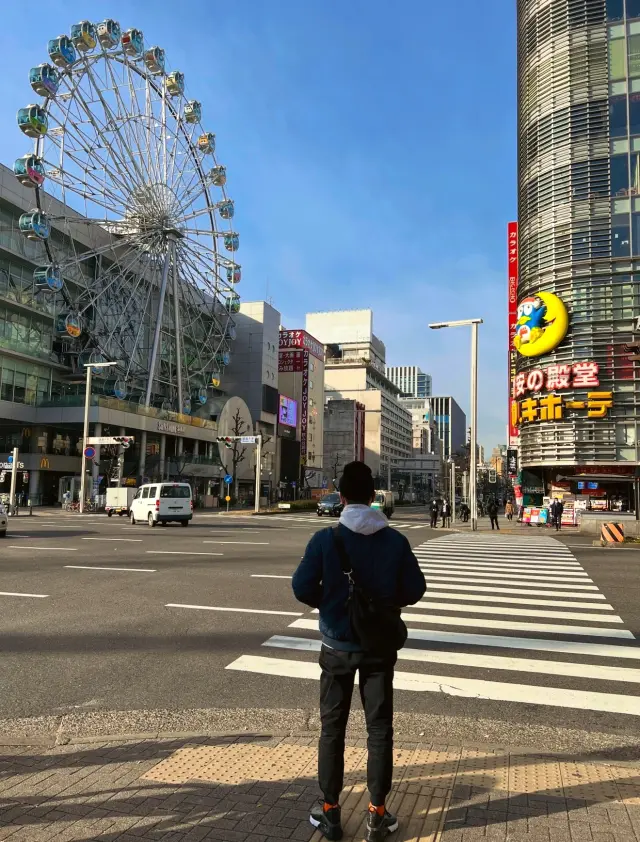
Standing at an intersection in the heart of Nagoya’s Sakae shopping district, with the warm winter sunlight shining on the crosswalk, I looked up at the super eye-catching giant Ferris wheel on the left. Its colorful rotating gondolas, paired with the yellow Don Quijote penguin sign on the right, gave the entire neighborhood a full-on stylish urban vibe.
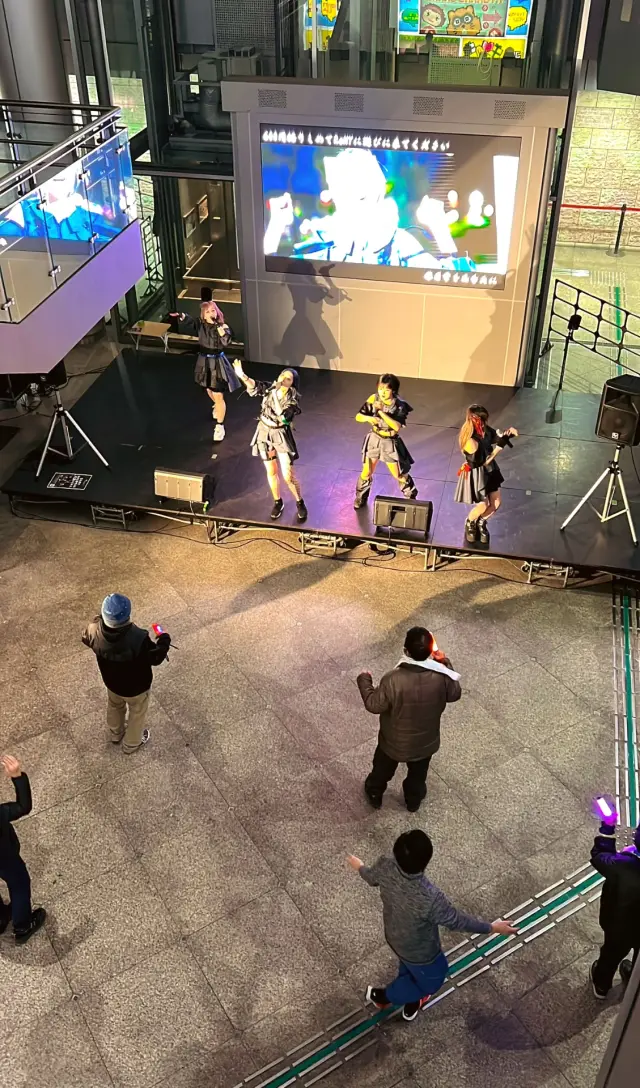
After crossing the street with the crowd, I casually wandered into the mall and happened to catch a lively mini LIVE by an underground idol group on the atrium stage. Looking down from the glass railing on the second floor, I saw the girls singing and dancing with all their energy while the fans below waved their light sticks in perfect unison. The air was filled with a passionate enthusiasm for the music and cheering them on.
There was something so immersive about walking through the busiest streets of Nagoya—taking pictures of the landmark Ferris wheel one moment, then being drawn into a powerful local subculture scene the next—that I couldn’t help swaying along to the rhythm.
I highly recommend visiting Sunshine Sakae in person. Whether you’re capturing the classic street view of the Ferris wheel or experiencing an electrifying underground idol performance inside the mall, it will definitely leave you with a uniquely energetic memory of your trip!
SUNSHINE SAKAE | Review by Jk
Other Reviews by Jk
-

Hokkaido Shiki-Saikan JR Hakodate Store
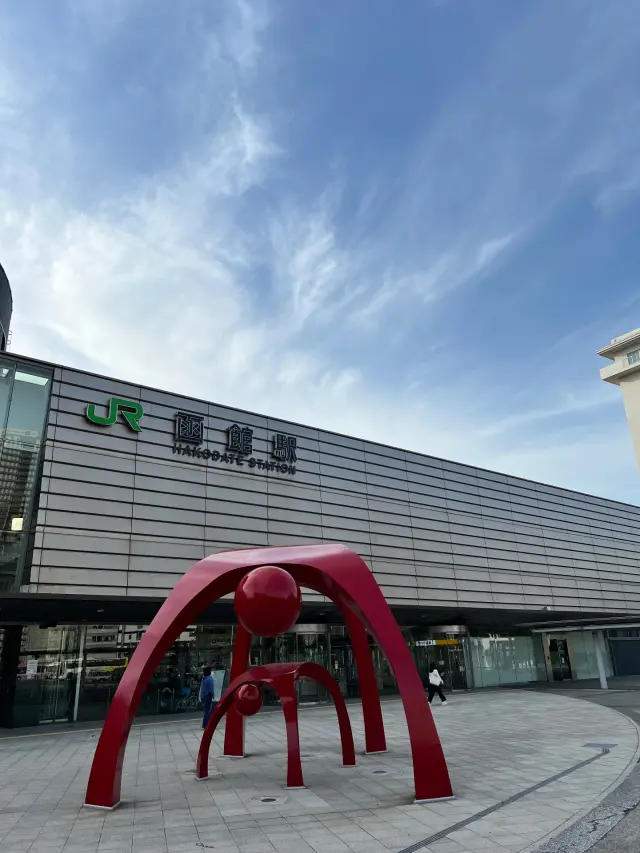
Located inside JR Hakodate Station, Hokkaido Shiki-Saikan offers more than 1,000 items, including popular Hakodate and Hokkaido sweets. Open from early in the morning, the store is crowded with people stopping by before boarding the train.
The moment you step into Hokkaido Shiki-Saikan on the first floor of JR Hakodate Station, you’re instantly overwhelmed by the sheer abundance of Hokkaido souvenirs! This is basically the ultimate last stop for shopping before leaving Hakodate, and the location couldn’t be more convenient. Whether you’ve just gotten off the train to start your trip or you’re dragging your luggage along to catch a train out of town, once you pass by, you’ll inevitably find yourself drawn inside!
The shelves are packed and the store is incredibly lively, with Hokkaido’s biggest souvenir stars everywhere you look! Shiroi Koibito, Rokkatei rum raisin sandwich cookies, ROYCE' nama chocolate, Jaga Pokkuru, and all kinds of limited-edition potato chips are neatly arranged into an impressive wall of souvenirs. There’s no need to run all over the place—you can pick up all the classics you want in one stop.
Besides the popular sweets found throughout Hokkaido, the best part is the huge selection of local items exclusive to Hakodate! There are classic curry pouches from the long-established Hakodate restaurant Gotoken, melt-in-your-mouth Snaffle's cheesecakes, and plenty of seafood treats like shredded grilled squid, dried scallops, and dried salmon. Every item has the uniquely tempting, savory aroma of this port city. Just one lap around the refrigerated cases and snack section, and before you know it, your shopping basket is piled into a small mountain.
They also often have freshly baked snacks and rich Hokkaido milk desserts. Before boarding the train, grab a creamy, velvety soft-serve cone to eat as you walk. The moment that milky flavor melts in your mouth, the happiness is off the charts. The aisles are spacious and clean, and even the checkout counters move incredibly quickly, making this place a total lifesaver for travelers rushing to catch a train.
Whether you’re looking for presentable, sought-after gift boxes for friends and family or want to open a bag of local snacks to enjoy with the scenery on the train, Hokkaido Shiki-Saikan JR Hakodate Store is absolutely the kind of treasure trove you won’t want to leave empty-handed! -
-
Meiji Jingu Shrine
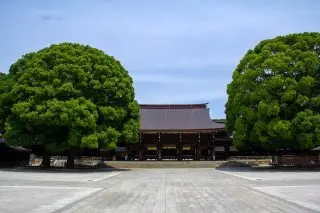
Meiji Shrine was established in 1920 (Taisho 9) as a shrine to enshrine Emperor Meiji and Empress Shoken.
Leaving the bustling streets outside Harajuku Station and turning into Meiji Jingu, it feels like the entire world is instantly put on mute! The heavy traffic and noisy commotion of the city are suddenly shut out, replaced by dense greenery that blocks out the sky and the crunch of footsteps on the gravel path. The air is filled with the scent of grass and wood, making you want to take a deep breath as your whole body completely relaxes.
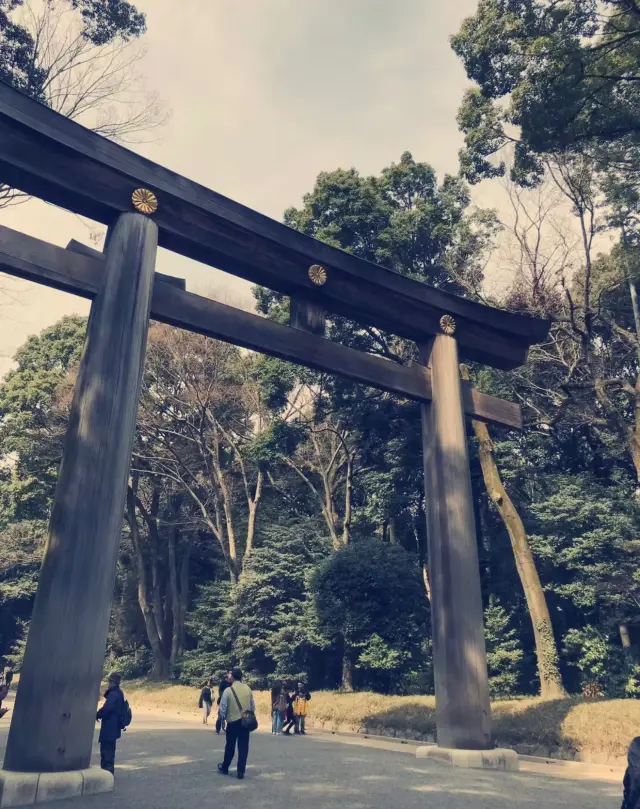
The first thing that makes a powerful impression is the huge torii gate towering over the approach! The entire gate is made from massive, solid logs. Standing beneath it and looking up, its monumental presence is incredibly overwhelming. Above the pillars is a gleaming gold 16-petal chrysanthemum crest of the Japanese Imperial Family, which looks even more solemn and mysterious against the lush green forest. Just taking a photo underneath makes you look incredibly tiny, and you can immediately feel the extraordinary atmosphere of the entrance to sacred ground.
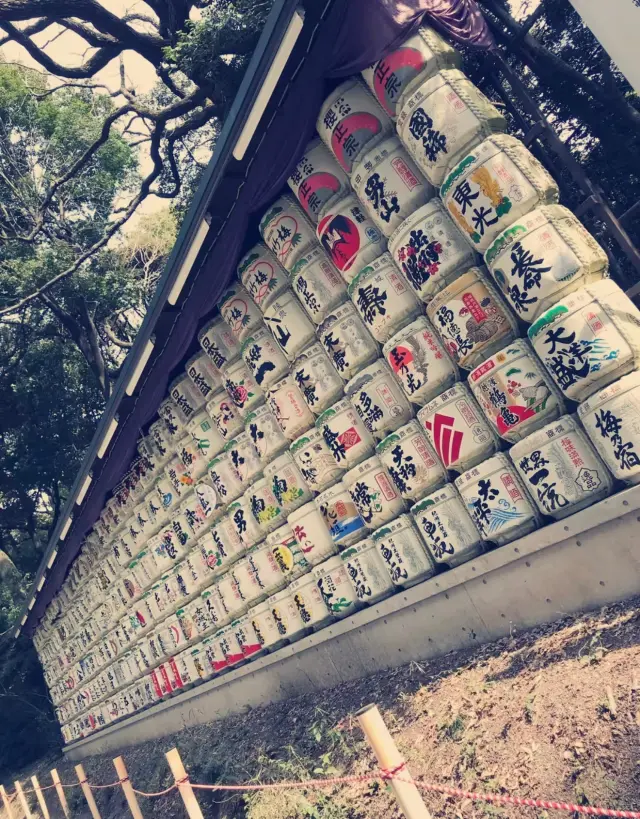
As you slowly wander along the wide gravel approach, the most eye-catching sight—and the one where everyone is sure to stop and snap away—is definitely the spectacular wall of donated sake barrels! Hundreds of Japanese sake barrels wrapped in braided straw rope and decorated with beautiful calligraphy and designs bearing names like “Sakura Masamune,” “Ozeki,” and “Umenoyado” are neatly stacked into a towering wall several levels high. It has so much traditional Japanese festival character and is incredibly photogenic. Capture the perspective from an angle, and practically every shot becomes a fantastic classic check-in photo!
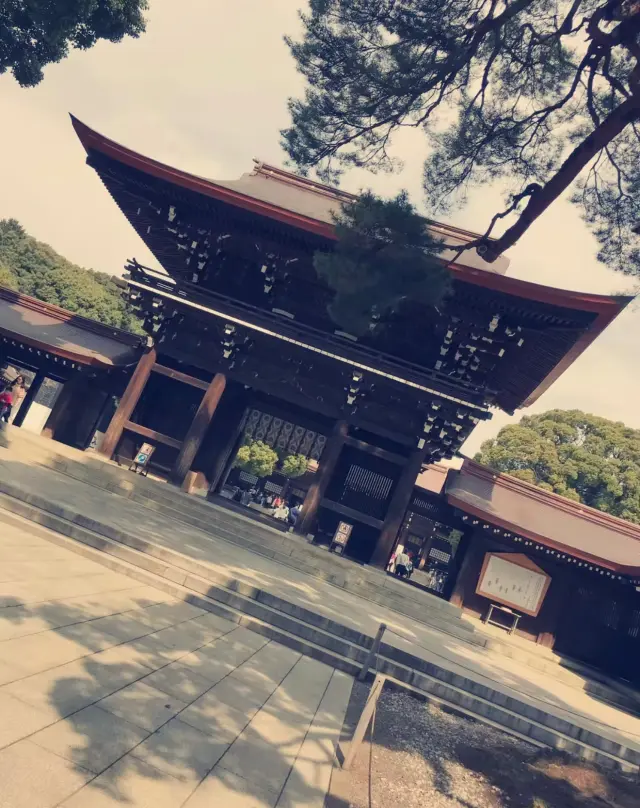
After following the approach to the shrine’s main entrance, the Minami-shinmon Gate, the magnificent wooden two-story hip-and-gable gate is truly breathtaking! Its dark natural-wood structure, stately sweeping eaves, and bracket work look exceptionally imposing against the blue sky and white clouds. Step over the threshold into the open, pristine inner courtyard, walk across the spotless stone paving, and directly ahead is the main sanctuary dedicated to Emperor Meiji and Empress Shoken. Beside it stand the enormous, lush “married camphor trees,” symbolizing happy relationships. In the cool breeze, you can put your hands together in worship, clap and pray, then draw one of Meiji Jingu’s special “Ō-mikokoro” fortunes, which contain wisdom about life rather than good or bad luck. It feels as though your spirit has been gently cleansed.
Hidden in the heart of Tokyo’s trendiest area, this man-made forest is not only vast and filled with shady trees, but also perfectly blends the solemnity of traditional Japanese Shinto with the healing power of nature. Whether you want to escape the city’s concrete jungle for some forest bathing or see the enormous wooden torii and impressive wall of sake barrels for yourself, Meiji Jingu is definitely a top sacred destination that remains breathtaking no matter how many times you visit Tokyo! -
-
Tokyo Station: Marunouchi Station Building
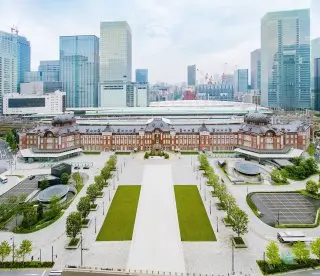
The construction of Japan’s front gate, Tokyo Station, began in March, 1908 and it was opened in December, 1914. Kingo Tatsuno, the pioneer of modern architecture in Japan, designed it. The steel-framed, brick Marunouchi Station building was burned on the roof and interior in the 1945 air raid.
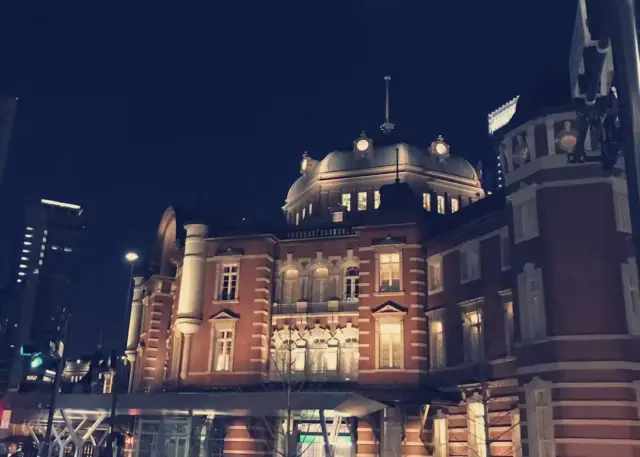
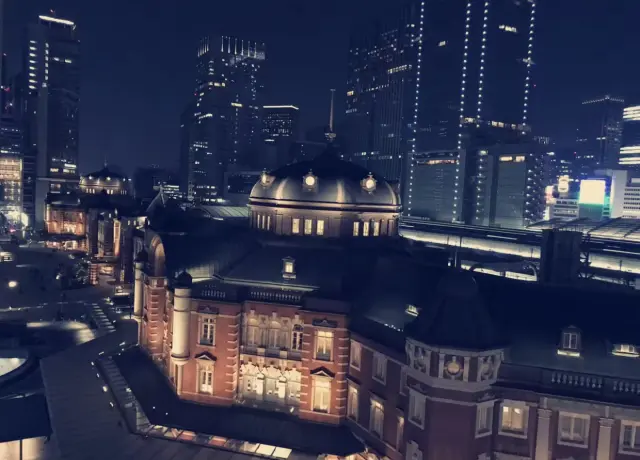
As soon as night falls, the red-brick Marunouchi side of Tokyo Station transforms into the most dazzling and dreamlike century-old landmark in all of Tokyo! Just head up to the observation terrace of a nearby building and look down, and the grand, classical Marunouchi Station Building displays an unparalleled sense of splendor, outlined by warm orange-yellow lighting. Beneath the deep blue night sky, its historic octagonal domes and arched red-brick windows are tightly surrounded by clusters of modern skyscrapers towering behind it and sparkling with silvery-white lights. The striking visual contrast between the classical romance of the Meiji and Taisho eras on one side and the sleek skyline of a top modern metropolis on the other feels like a jewelry box of time has been spilled open. It’s so beautiful that you won’t want to blink!
Walk down to the plaza and look up, and the details of the station building are even more astonishing! Carefully restored, the red-brick walls take on a rich, warm dark-red glow beneath the streetlights and spotlights. The symmetrical white stone cornices, classically carved columns, and tall lightning-rod spires rising above the domes give every corner a composed, commanding presence. The vintage wooden window frames glow warmly, as if a gentleman in an old-fashioned suit might step through the doors at any moment. At night, the entire building feels like a living century-old museum. Stand in the plaza’s slightly cool night breeze and find an angle for a photo—practically every press of the shutter produces a polished, postcard-worthy image.
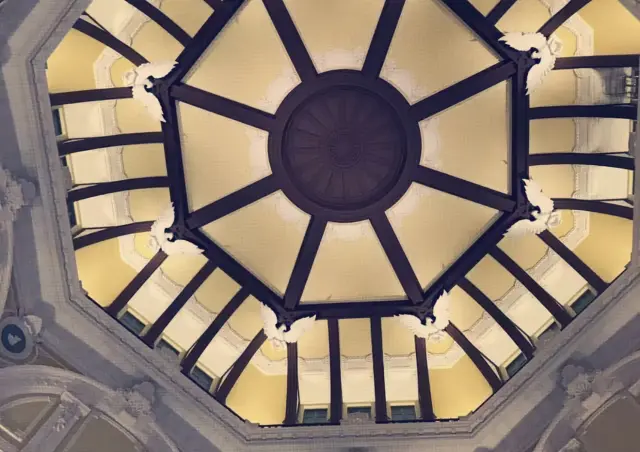
After admiring the powerful nighttime exterior, step into the Marunouchi North or South Entrance hall, and be sure to tilt your head back as far as it will go! The soaring octagonal domed ceiling is a true temple of art. The pale-yellow dome is elegantly divided by dark wooden ribs radiating outward, while every section is decorated with pure-white eagle sculptures that look ready to take flight and exquisitely detailed geometric reliefs. Fluorescent and indirect lighting softly illuminates the entire dome, giving it an almost sacred glow. Standing in the middle of the endless flow of commuters and gazing up at this beautiful dome, miraculously restored after being devastated by war, is every bit as moving as visiting a grand cathedral in Europe!
And Tokyo Station isn’t just a place for taking photos and checking in. It’s also an underground maze-like castle filled with endless delicious food and surprises! The underground Tokyo Station First Avenue and GRANSTA shopping areas are as lively as a city that never sleeps, bringing together popular ramen shops from regions across Japan with long lines, freshly baked crispy treats, famous souvenirs, and all kinds of stores selling limited-edition anime character merchandise. Whether you’re carrying bags full of hugely popular sweets you just bought or slurping down a steaming, fragrant bowl of ramen, every moment feels incredibly comforting and satisfying.
From viewing the glittering, galaxy-like red-brick nightscape from a high terrace, to strolling through the plaza and admiring the elegant vintage architectural lines up close, to stepping inside the station and gazing at the breathtaking octagonal dome with its soaring eagles, Tokyo Station seamlessly blends the weight of a century of history with the pulse of an ultra-modern city. It’s not only the starting and ending point of countless journeys, but also a top must-visit destination that will make you fall deeply in love with the charm of Tokyo at night the moment you arrive! -