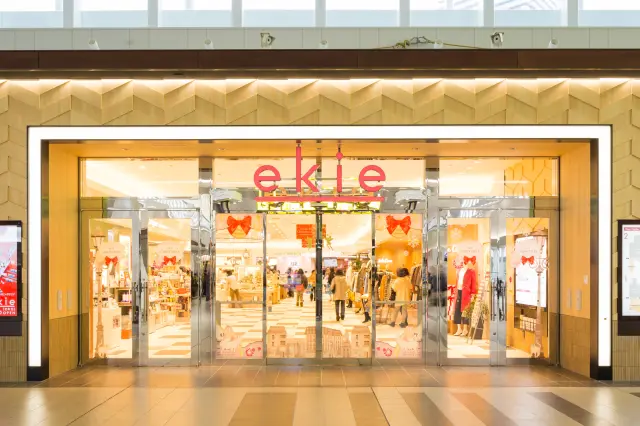
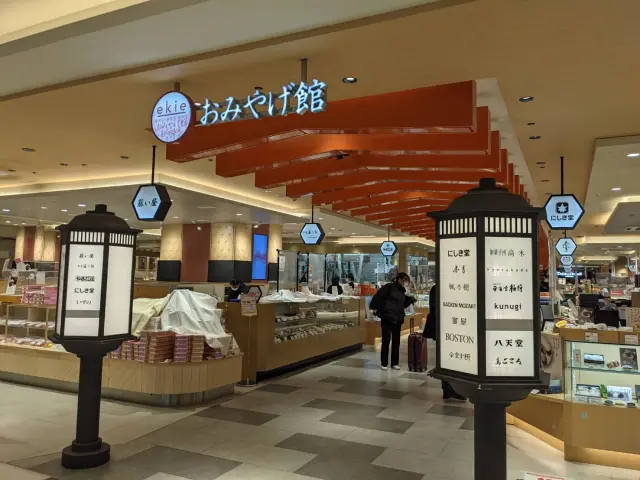
ekie Hiroshima is located inside Hiroshima Station, making it very convenient to reach. You can easily browse around while passing through the station. It brings together many restaurants, dessert shops, souvenir stores, and local Hiroshima specialties, making it convenient to buy all your souvenirs in one place. In addition to local foods such as Hiroshima-style okonomiyaki and oysters, you can also find many delicate sweets and distinctive products.
Other Reviews by Linda Liao
-

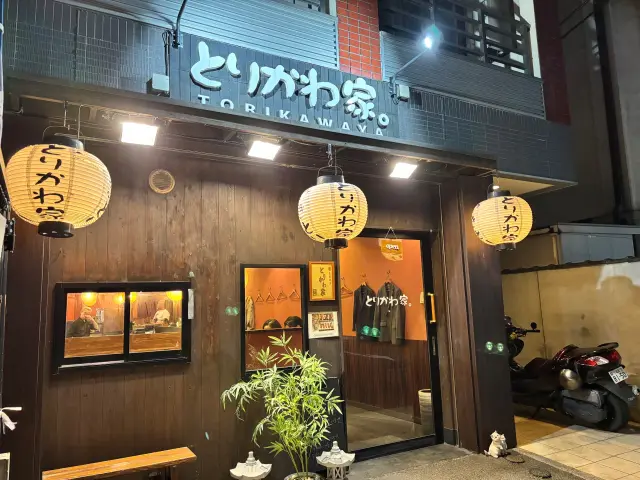
Torikawa-ya
A beloved yakitori restaurant specializing in Hakata’s famous "Torikawa" (grilled chicken skin), Torikawa-ya is a must-visit spot for locals and tourists alike. Conveniently located near the station, it offers a welcoming atmosphere where guests can enjoy one of Fukuoka’s most popular delicacies.
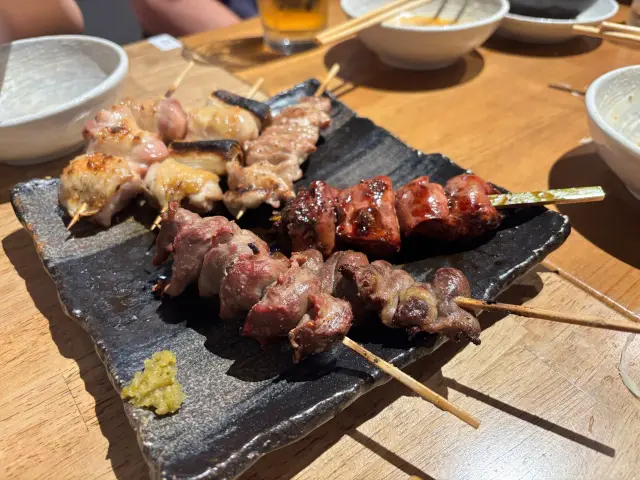
Before I even reached the entrance, I could smell the enticing charcoal-grilled aroma from a distance, and my stomach was already growling. Luckily, I arrived early this time and there were still seats available, so I eagerly slipped inside. The small izakaya doesn't have much space, and customers sit shoulder to shoulder, but that gives it an even livelier, friendlier, and more authentic atmosphere. The most captivating part is the grill right in front of you. Watching the chef skillfully place skewer after skewer over the charcoal, hearing the fat sizzle as it drips down, and smelling the mouthwatering aroma made me wish the food would hurry up and arrive! This time, I tried three different flavors, each with its own character. Personally, I liked the simple salt flavor best because it brought out the natural flavors of the ingredients and charcoal grilling. Those who prefer richer flavors can choose the sauce or soy sauce flavor.
Another dish I can't stop thinking about is the pork belly from Itoshima, Fukuoka! It made a strong impression on me when I first tried it at a hotel breakfast. The meat was tender, with evenly distributed marbling and a natural sweetness. It wasn't nearly as greasy as I had imagined, and I couldn't stop eating bite after bite!
-
-
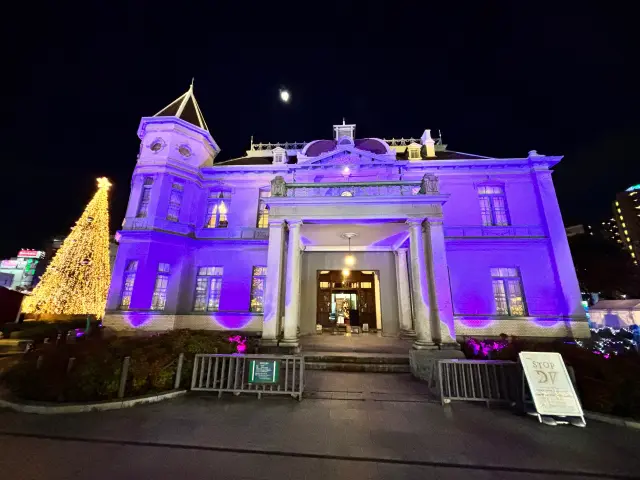
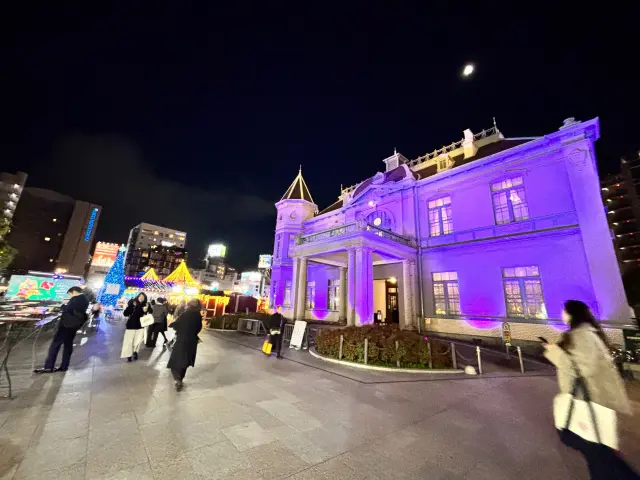
Kihinkan Old Public Hall of Fukuoka Prefecture
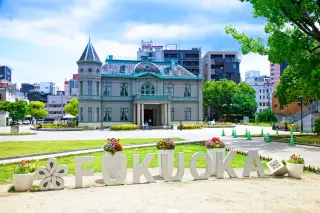
This historic Western-style building, constructed in 1910, stands in a corner of Tenjin Central Park. Designated a National Important Cultural Property, it is a rare surviving wooden building from the Meiji era designed in the French Renaissance style. Before opening to the public, the building was partially dismantled and restored to its original appearance. Its notable features include an entrance porch with imposing stone columns, an octagonal tower with a pointed roof, and rooms decorated in distinct styles.
I enjoy visiting historic Western-style buildings throughout Japan and learning why they were built and what they have experienced over the years. On this trip to Fukuoka, I made a special visit to the Kihinkan Old Public Hall of Fukuoka Prefecture. As soon as I approached, I was drawn to its elegant exterior. The entire building is based on the French Renaissance style, with a symmetrical design, refined window frames, and classical decorations that make it feel like a European aristocratic residence, in striking contrast to traditional Japanese architecture.
This Western-style building was constructed in 1910 (Meiji 43) as a reception hall for distinguished guests attending the 13th Kyushu-Okinawa Eight-Prefecture Joint Exhibition. After it was completed, it hosted Prince and Princess Kan'in and was also used for banquets and social events. It later served various purposes, and in 1984, it was designated a National Important Cultural Property of Japan, preserving this valuable piece of history. After learning these stories, looking at the building again made it feel even more meaningful.
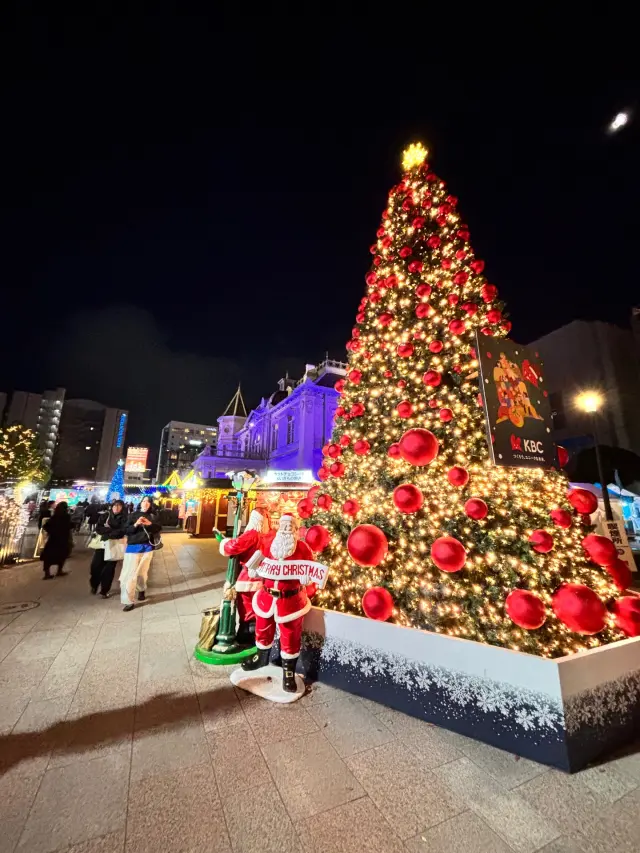
My visit happened to be during the Christmas season, so there were seasonal light displays outside as well as all kinds of Christmas decorations. There were so many Santa Claus statues beside the hall that I couldn't help but smile! Many visitors were happily taking photos, and the festive atmosphere was quite strong〜
-
-
Drum Gate and Hospitality Dome (Kanazawa Station)
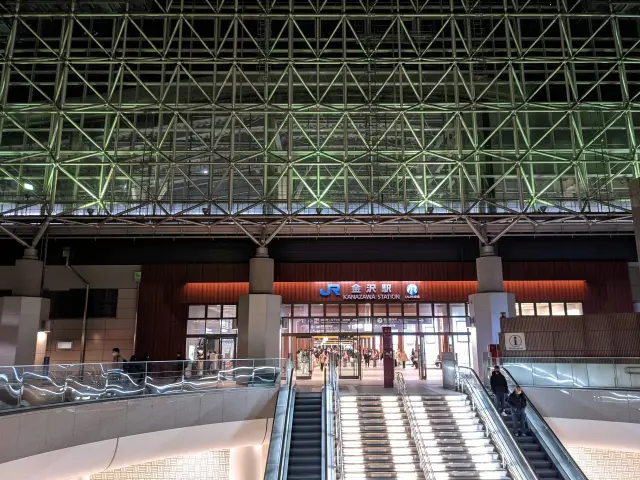
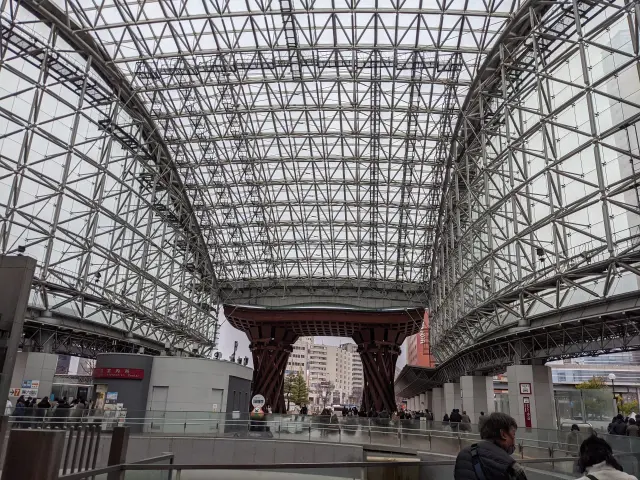
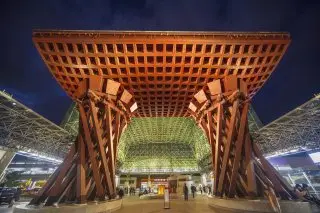
Kanazawa Station, the gateway to Kanazawa, is bustling with visitors as the Hokuriku Shinkansen arrives and departs, making it a hub for Hokuriku tourism. The eye-catching Drum Gate and Hospitality Dome, completed in 2005, are located at the Kenrokuen Gate (East Exit) facing the city center.
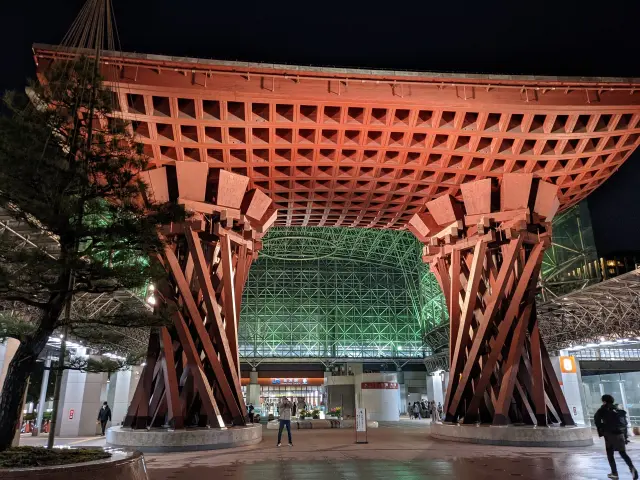
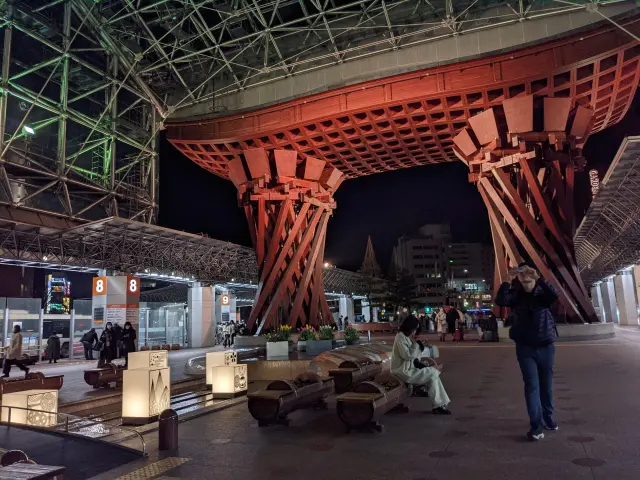
Before my trip even began, I was already won over by the beauty of JR Kanazawa Station! To this day, it’s still my favorite station. As soon as you walk out of the East Exit, the magnificent Drum Gate comes into view. This massive wooden structure stands 13.7 meters tall, and simply looking up at it from below is awe-inspiring. What attracts me most is that the entire gate is made of warm wood. Its two uniquely shaped pillars were inspired by the drums (tsuzumi) used in Kanazawa’s traditional Noh theater. Not only is the design distinctive, but it also showcases Japan’s exquisite woodworking craftsmanship. Behind it is the Hospitality Dome (Motenashi Dome), which looks like a giant glass umbrella. Its transparent geometric glass canopy lets the sunlight stream in and also symbolizes an umbrella sheltering visitors from Kanazawa’s frequent rain and snow, combining beautiful design with practicality.
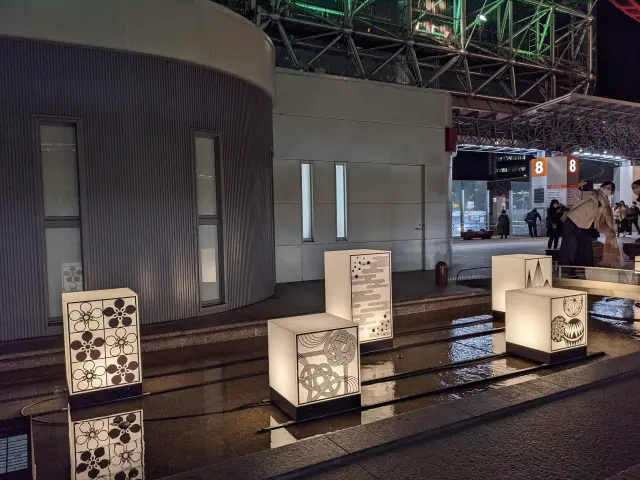
Kanazawa Station actually opened back in 1898. After undergoing several renovations, it debuted in its current form in 2005, blending modern architecture with traditional culture. In 2011, it was even selected by the American magazine Travel + Leisure as one of the “14 Most Beautiful Train Stations in the World,” and it truly lives up to its reputation! During the day, you can admire the imposing Drum Gate, while at night it’s illuminated. The lights shining on the wooden gateway create a completely different romantic atmosphere. I sincerely recommend setting aside a little extra time to see it once during the day and again at night. It’s definitely worth it!
-