

These are Japan's three most famous castles. Along with Nagoya Castle and Himeji Castle, they're all really well-known. I've visited all three, and each one has its own unique historical significance.
Tower of Osaka Castle | Review by Jessie Cheng


Other Reviews by Jessie Cheng
-
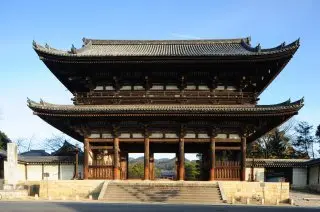
Ninnaji Temple
The head temple of the Omuro school of Shingon Buddhism, Ninnaji Temple is listed as a UNESCO World Cultural Heritage site as part of the Historic Monuments of Ancient Kyoto. Construction began in 886 at the request of Emperor Koko, the 58th emperor, during the early Heian period, and the temple was completed in 888 by his successor, Emperor Uda. The era name Ninna derives from the temple's name.
You need a ticket to enter the imperial garden. Every part of the garden has its own unique scenery—definitely worth checking out.
-
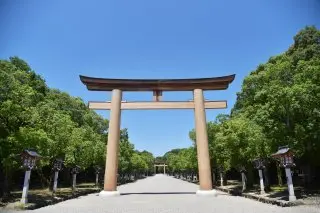
Kashihara Jingu
Kashihara is described as the birthplace of Japan in the Nihon Shoki, Japan’s first imperially commissioned official history. Kashihara Jingu was founded in 1890 based on the account that Emperor Jimmu, traditionally regarded as Japan’s first emperor, ascended the throne at Kashihara Palace. The shrine is dedicated to Emperor Jimmu and Empress Himetataraisuzu.
This shrine is dedicated to Emperor Jinmu, the first emperor of Japan. The grounds are huge—you'll need a few hours to walk around. The environment is fantastic, and it's considered a place with great feng shui.
-
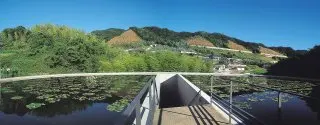
Honpukuji Water Temple
A temple of the Omuro school of Shingon Buddhism believed to have been founded in the late Heian period (794-1185). Located on a small hill, the temple grounds offer panoramic views of Osaka Bay. Its main hall, known as the Water Temple and designed by world-renowned architect Tadao Ando, has attracted considerable attention.
The temple is built under a lotus pond, which you can't tell at all from the outside. That's the genius of architect Tadao Ando.