

This shrine is dedicated to Emperor Jinmu, the first emperor of Japan. The grounds are huge—you'll need a few hours to walk around. The environment is fantastic, and it's considered a place with great feng shui.
Kashihara Jingu (Kashihara Shrine) | Review by Jessie Cheng
Other Reviews by Jessie Cheng
-
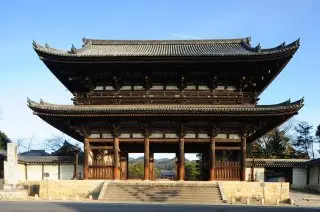
Ninna-ji Temple
The head temple of the Omuro school of the Shingon sect of Buddhism, registered as a UNESCO World Heritage Site as one of the "Historic Monuments of Ancient Kyoto" The construction of the temple began in the early Heian period (886) at the request of Emperor Koko, the 58th emperor, and was completed in 888 by Emperor Uda, the next emperor. The temple name, Ninna, comes from the Japanese era name.
You need a ticket to enter the imperial garden. Every part of the garden has its own unique scenery—definitely worth checking out.
-
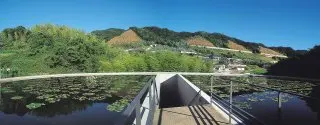
Honpukuji Water Temple
This temple is of the Omuro school of the Shingong sect of Buddhism, and it is said to have been built in the latter half of the Heian period (794-1185). Located atop a small hill, visitors can look out over Osaka Bay from the temple’s grounds.
The temple is built under a lotus pond, which you can't tell at all from the outside. That's the genius of architect Tadao Ando.
-
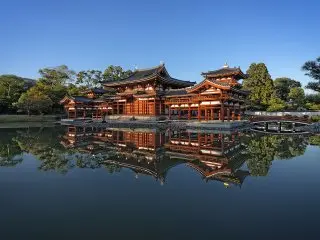
Byodoin
An imperial authority in the Heian Period, Fujiwara Michinaga used this place as a vacation home. His son Yorimichi inherited, converted and opened it as a temple in 1052. It was designated as a World Heritage Site in 1994. The remodeling in 2014 brought it back closer to its original state. The main Amida Buddha statue in Amida Hall is worth a look. You will be amazed by the symmetrical beauty of the building.
The Byodoin building and its reflection on the lake blend together beautifully.