
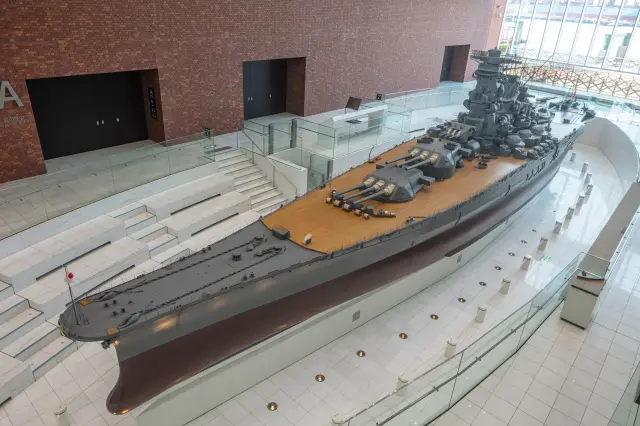
Kure has a great location—the port is really hidden, which makes it perfect as a naval base.
Yamato Museum (Kure Maritime Museum) | Review by HUANG CHIUYEN
Other Reviews by HUANG CHIUYEN
-
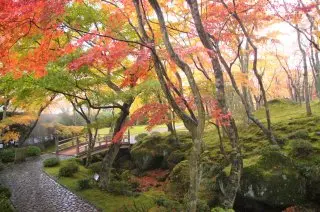
Hakone Museum of Art
The museum was founded by the industrialist and religious leader Mokichi Okada. It was opened in 1952 within the “Shinsenkyo” garden, which he himself built between 1944 and 1953. With a view of the Hakone mountain range and the Sagami Sea, the garden harmonizes the beauty of natural landscape and artificial gardening.
This is a classic Japanese garden. You can sit in the tea house and enjoy the beautiful scenery. The museum also has a great variety of exhibits.
-
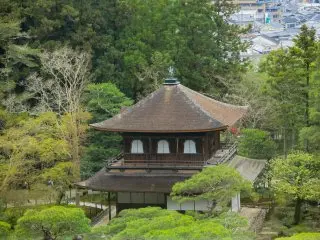
Ginkaku-ji
This temple was built by Ashikaga Yoshimasa, the eighth shogun of the Muromachi Shogunate, as a villa called "Higashiyama-den". Along with Kinkakuji Temple, this temple is a pagoda temple outside of Shokokuji Temple (i.e., a hermitage built in a different location from the main temple after his retirement). After Yoshimasa's death, the temple was named Jishoji after his Buddhist name.
As soon as you enter, you see the whole dry landscape garden—it's truly a masterpiece of art. Really impressive.
-
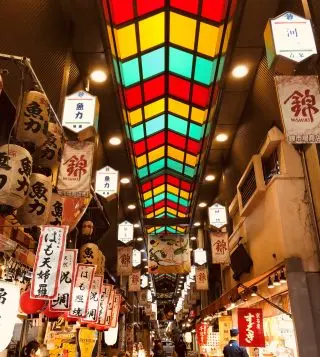
Nishiki Market
Nishiki Market is located on Nishikikoji Street, north of Shijo Street, Kyoto’s main street. The fish market thrived here, and in 1615, it received official permission from the Edo Shogunate to expand. It is called “Kyoto’s kitchen” and offers a wide range of foods such as Kyoto vegetables, fresh-water fish from Lake Biwa, Hamo (conger pike), Guji (tilefish), Sasakarei (half-dried flounder), Yuba (tofu skin), Namafu, and pickles. Most of Kyoto’s special ingredients can be found here.
Even though it's a traditional market, the place is decorated in a unique way and is super clean—no fishy smell at all.