

22 Best Places to See Fall Foliage in Hokkaido: Spectacular Autumn Scenery Blending into Vast Natural Landscapes
Hokkaido is a popular travel destination where visitors can also enjoy fall foliage. Its vast natural landscapes retain touches of green while turning vibrant shades of red and yellow. This article introduces the best places and times to see the spectacular autumn scenery unique to Hokkaido.
Use it as a guide to make the most of Hokkaido's fall foliage.
Autumn in Hokkaido: Vast Landscapes Covered in Fall Colors
Renowned as a popular travel destination, Hokkaido is known for its vast landscapes and abundant natural beauty.
In addition to attractions such as zoos and observation decks, local specialties including soup curry and jingisukan grilled mutton are another major draw.
Hokkaido is also known for its thriving agriculture and sheep farming, supported by its expansive natural environment and climate.
At Hokkaido's fall foliage spots, visitors can see magnificent scenery where vibrant autumn colors blend into grand natural landscapes.
The foliage itself is impressive, but the surrounding natural scenery is just as appealing.
Because temperatures drop early in Hokkaido, its fall colors can be enjoyed earlier than in most other parts of Japan.
Typical Fall Foliage Season in Hokkaido
Refer to the table below for the typical best times to see fall foliage in Hokkaido.
These are annual averages, so the timing may vary somewhat from year to year.
The best viewing period also differs by location. See the typical foliage season listed for each spot introduced below for more details.
- Sapporo Area
-
Hokkaido University: Late October to early November
Nakajima Park: Late October to early November
Mt. Moiwa Ropeway: Mid- to late October
Maruyama Park: Mid- to late October
Hokkaido Jingu: Mid- to late October
Hiraoka Greenery Center: Mid-October to early November
Jozankei Onsen (Hoheikyo Dam): Early to mid-October
Lake Shikotsu: Mid- to late October - Asahikawa Area
-
Mt. Asahidake: Mid- to late September
Daisetsuzan Sounkyo Kurodake Ropeway: Mid- to late September
Sounkyo Onsen and Sounkyo Gorge: Late September to mid-October - Obihiro Area
-
Mikuni Pass and Lake Nukabira: Late September to early October
Fukuhara Sanso: Early to mid-October
Lake Shikaribetsu: Late September to mid-October - Kushiro Area
-
Lake Akan: Late September to early October
Onneto: Early to mid-October
Shiretoko Five Lakes: Early to mid-October - Muroran Area
-
Noboribetsu Onsen: Mid- to late October
Lake Toya: Mid- to late October - Hakodate Area
-
Hakodate Kosetsuen: Late October to early November
Goryokaku Park: Late October to early November
Onuma Quasi-National Park: Mid-October to early November
2026 Fall Foliage Forecast for Hokkaido
The table below summarizes the predicted peak foliage dates for locations across Hokkaido, announced by the Japan Weather Association on October 1, 2026. In many areas, the foliage is expected to peak later than usual.
However, the timing may shift depending on the location and future temperatures.
- Sapporo
- Around November 4
- Asahikawa
- Around October 21
- Obihiro
- Around October 23
- Kushiro
- Around October 18
- Muroran
- Around November 8
- Hakodate
- Around November 7
Source: Japan Weather Association
Source: Weather Navigator
22 Fall Foliage Spots in Hokkaido with Breathtaking Natural Scenery
The following section introduces fall foliage spots in six areas of Hokkaido: Sapporo, Asahikawa, Obihiro, Kushiro, Muroran, and Hakodate. If you are visiting Hokkaido in autumn, consider adding some of these destinations to your itinerary.
The typical peak foliage season for each location is also provided for reference.
Sapporo Area: 8 Fall Foliage Spots in and Around Sapporo
Predicted peak: Around November 4
Along with the Hakodate area, Sapporo's fall foliage reaches its peak relatively late. The city's ginkgo-lined avenues, shrines, and mountaintop observation decks are accessible by subway and streetcar. Travel a little farther, and you can reach the hot spring town of Jozankei or the clear waters of Lake Shikotsu in about an hour.
One of the area's strengths is its long foliage season, with peak colors shifting between the city and its outskirts for more than a month from early October to early November.
1. Hokkaido University
A 10-minute walk north of Sapporo Station, a roughly 380-meter avenue of ginkgo trees runs along Kita 13-jo Street through the Hokkaido University campus. In late October, the 70 trees lining both sides form a golden tunnel, while fallen leaves create a carpet underfoot. The campus is free for anyone to explore, and general vehicle traffic is prohibited.
On a weekend during peak foliage, students organize the two-day Konyosai Festival, when the entire avenue is illuminated. If time permits, also visit the poplar avenue and the university museum, which offers free admission.
- Typical peak foliage season
- Late October to early November
- Konyosai Festival dates
-
October 31, 2026, 10:00 a.m.-9:00 p.m.
November 1, 2026, 10:00 a.m.-8:00 p.m.

- Name in Japanese
- 北海道大学
- Postal Code
- 060-0808
- Address
-
5 Kita8jonishi, Kita-ku, Sapporo City, Hokkaido
Google Maps - Telephone
- 011-716-2111(Main number)
- Admission
-
Free
※Depend on facilities - Closed
- Depend on facilities
- Hours
- Depend on facilities
- Direction
- A 7-minute walk from JR Sapporo station.
- Official Website
- Official Website (English)
2. Nakajima Park
Despite its location in central Sapporo, Nakajima Park is surrounded by abundant greenery. Its changing seasonal scenery draws many visitors, making it one of the city's most popular parks. The park also features a Japanese garden, and its wide variety of fall foliage is a major attraction. In the garden, vivid leaves are reflected in the pond, their shimmering colors creating a distinctly Japanese atmosphere.
The surrounding high-rise buildings are visible from inside Nakajima Park, creating a striking and evocative contrast with the colorful foliage. At night, illumination makes the leaves appear even more vivid, and their reflections on the pond create a mysterious scene.
- Typical peak foliage season
- Late October to early November

- Name in Japanese
- 中島公園
- Postal Code
- 064-0931
- Address
-
Nakajima Park 1, Chuo-ku, Sapporo City, Hokkaido
Google Maps - Telephone
- 011-511-3924
- Closed
-
December 29th to January 3rd
* Refer to the admissions to different facilities on the official website - Hours
- Open 24hours (Management office: 9:00am - 5:00pm)
- Admission
-
Free
* Refer to the closing of different facilities on the official website. - Directions
- From Subway Nakajimakoen Station, walk a short distance.
- Official Website
- Official Website (English)
3. Mt. Moiwa Ropeway
Mt. Moiwa stands near the center of Sapporo. Visitors can reach its 531-meter summit aboard a Swiss-made mini cable car designed for observing the forest. The mountain is also popular among Sapporo residents as an accessible hiking destination, with five trails leading to the summit. From the top, a 360-degree panorama encompasses the Sapporo cityscape, Ishikari Plain, Ishikari Bay, and the Mashike-Shokanbetsu mountain range.
A highlight is the sweeping view of the foliage from the ropeway. As the scenery moves slowly below, you can watch the colors gradually shift across the landscape. Viewed from above, the beauty of the foliage becomes even more striking. Since the mountain is relatively easy to climb, hiking to the summit while viewing the leaves up close is another good option.
- Typical peak foliage season
- Mid- to late October

- Name in Japanese
- 札幌もいわ山ロープウェイ(展望台)
- Postal Code
- 064-0942
- Address
-
5-3-7 Fushimi, Chuo-ku, Sapporo City, Hokkaido
Google Maps - Phone
- 011-561-8177
- Holidays
- Operation will be suspended during poor weather and an annual maintenance inspection.
- Hours
-
Mt. Moiwa Ropeway (Sanroku Station-Chufuku Station) Green Season(Apr-Nov) 10:30 - 10:00 (Last Lift to the top 21:30) Winter Season (Dec-Mar) 11:00 - 22:00 (Last Lift to the top 21:30)
Mini Cable Car (Chufuku Station – Sancho Station) Green Season(Apr-Nov) 10:30 - 21:50 (Last Lift to the top 21:40) Winter Season (Dec-Mar) 11:10 - 21:50 (Last Lift to the top 21:40) - Prices
-
Mt. Moiwa Ropeway (Sanroku Station-Chufuku Station) Round-Trip Adult: 1,400 yen Child: 700 yen
Mini Cable Car (Chufuku Station–Sancho Station) Round-Trip Adult: 700 yen Child: 350 yen
*Package prices are available. - Directions
- Take the Streetcar to the Ropeway Iriguchi stop, an about 2-minute ride by Free Shuttle Bus.
- Credit Cards
- Accepted
- Official Website
- Official Website (English)

4. Maruyama Park
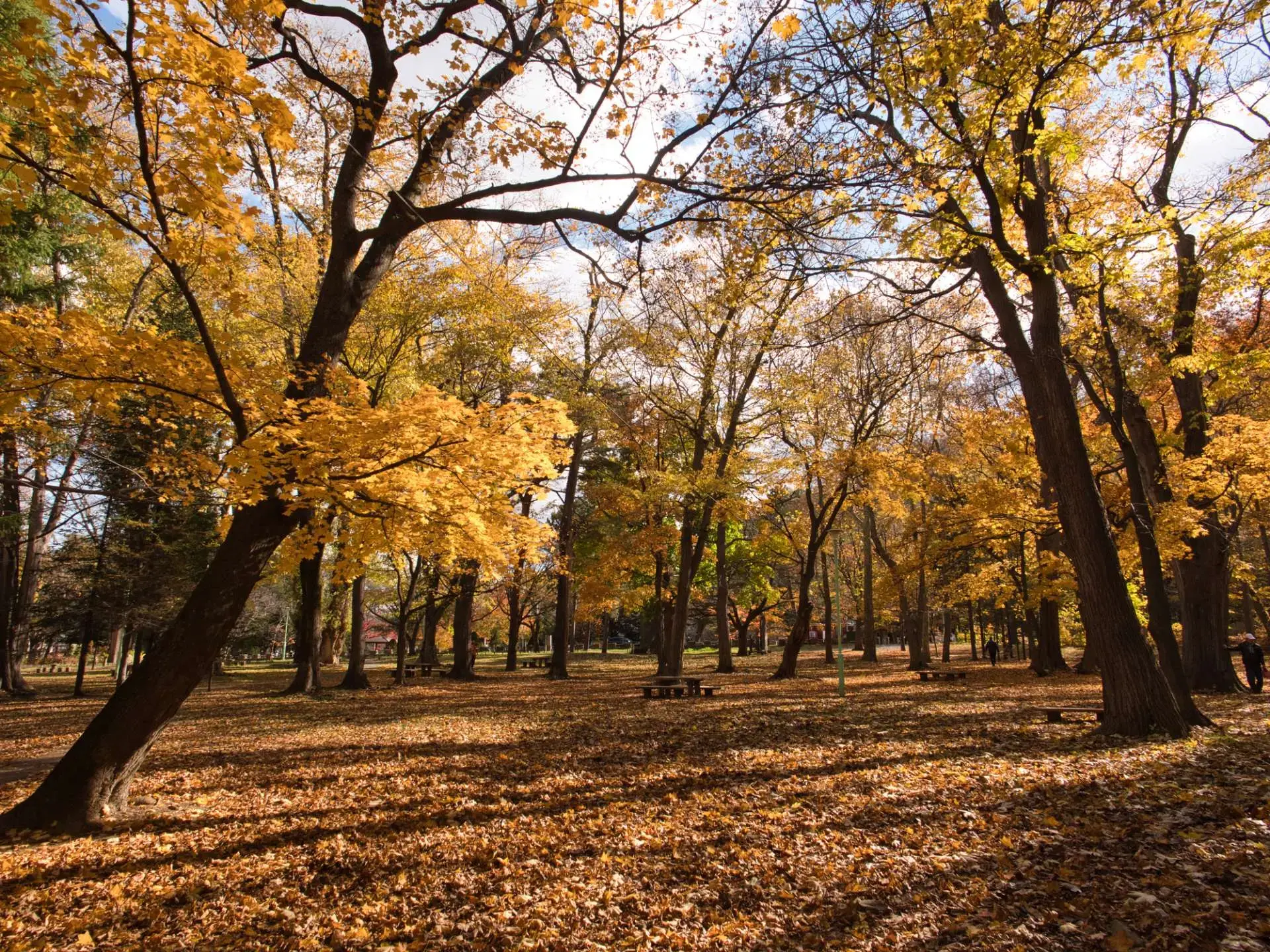
Located a five-minute walk from Maruyama Koen Station on the Tozai Subway Line, this wooded park spreads across the western edge of Sapporo. Its history began in the early Meiji period, when the Hokkaido Development Commission established a tree-testing ground here. Mt. Maruyama behind the park is covered by primeval forest designated as a National Natural Monument.
From mid- to late October, katsura trees, Japanese maples, and painted maples change color, giving the park, with its many large trees, a depth of autumn color that is hard to believe exists within the city. A morning walk through the foliage followed by a visit to the shrine makes for an ideal autumn half-day in Sapporo.
Admission is free, and Hokkaido Jingu and Maruyama Zoo are located next to the park.
- Typical peak foliage season
- Mid- to late October
- Name in Japanese
- 円山公園
- Postal Code
- 064-0959
- Address
-
3 Miyagaoka, Chuo-ku, Sapporo City, Hokkaido
Google Maps - Telephone
- 011-621-0453
- Holiday
- Open every day
- Hours
- Walk anytime
- Admission
- Free
- Direction
- From Sapporo Municipal Subway’s Tozai Line, Maruyama Koen Station, and walk 5 min.
- Official Website
- Official Website (English)
5. Hokkaido Jingu
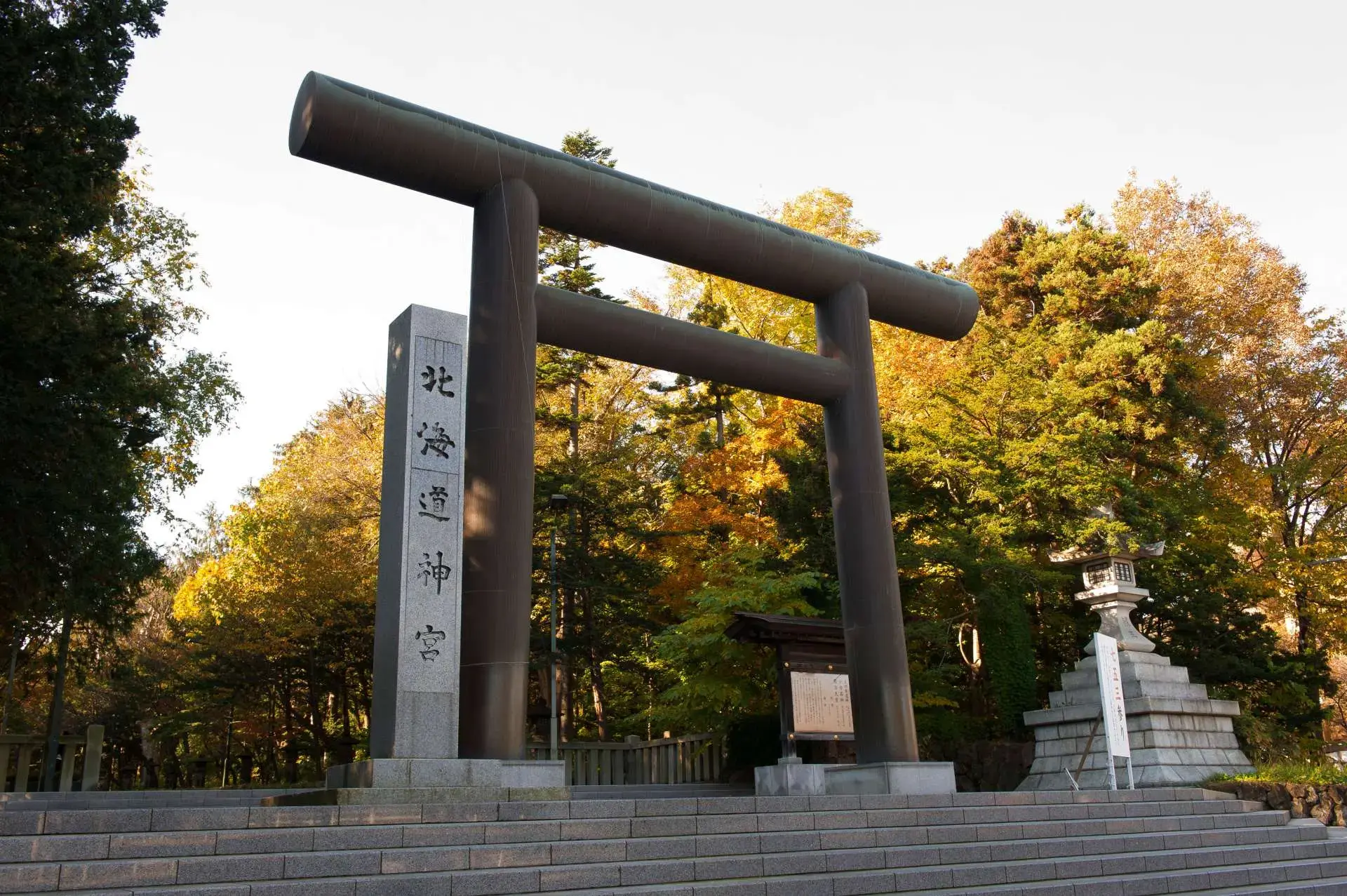
Adjacent to Maruyama Park, Hokkaido Jingu was founded in 1869 to enshrine deities protecting the development of Hokkaido. It is the most visited shrine in Hokkaido. Visitors may enter freely, and taking a break at the shrine's teahouse with a freshly baked Hangan-sama sweet is a popular tradition.
The roughly 180,000-square-meter grounds form a continuous forest with the primeval woodland of Mt. Maruyama. From mid- to late October, the ginkgo trees along the main approach and the maples within the grounds change color. The long path toward the shrine buildings becomes an autumn walkway beneath golden leaves.
- Typical peak foliage season
- Mid- to late October
- Name in Japanese
- 北海道神宮
- Postal Code
- 064-8505
- Address
-
474 Miyagaoka, Chuo-ku, Sapporo City, Hokkaido
Google Maps - Telephone
- 011-611-0261
- Admission
- Free
- Closed
- Open every day
- Hours
-
7:00am - 4:00pm (Prayer rituals and good luck charms available after 9am.)
* Varies depending on seasons. Refer to the official website. - Directions
- From Subway Maruyama Koen Station, walk about 15 min.
- Official Website
- Official Website (Japanese)
6. Hiraoka Greenery Center
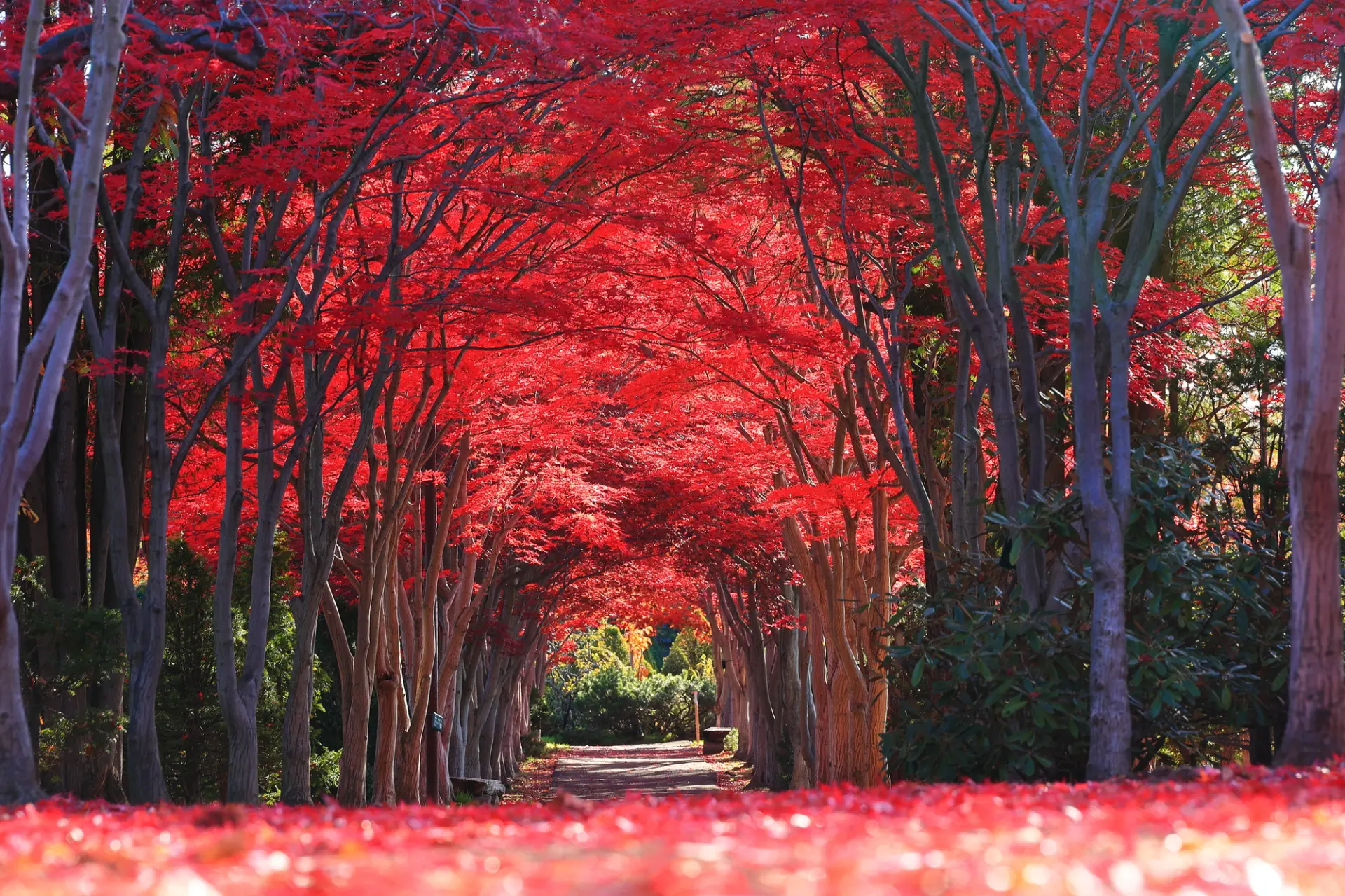
This municipal garden for ornamental trees is located in a residential area of Sapporo's Kiyota Ward. Nomura maple trees line a roughly 220-meter path, forming a deep-red tunnel from mid-October to early November. When fallen leaves cover the path, everything above and below turns red. In recent years, the garden has rapidly grown in popularity as one of Sapporo's leading foliage spots.
It also has Japanese and Western-style gardens, and in some years its opening season is extended through mid-November for the fall colors.
- Typical peak foliage season
- Mid-October to early November
- Name in Japanese
- 平岡樹芸センター
- Postal Code
- 004-0874
- Address
-
3-chome, Hiraoka 4-jo, Kiyota Ward, Sapporo, Hokkaido
Google Maps - Phone
- 011-883-2891
- Closed on
- Mondays, or the following weekday when Monday is a national holiday; closed during winter
- Hours
- 8:45 a.m.-5:15 p.m.
- Admission
- Free
- Access
- From Oyachi Subway Station, take Chuo Bus route Oya 69 to Hiraoka 4-jo 2-chome, then walk one minute
- Official website
- Official website (Japanese)
7. Jozankei Onsen and Hoheikyo Dam
About an hour by bus from central Sapporo, Jozankei is a historic hot spring town often called Sapporo's retreat. Its foliage is said to be among the most vivid in Hokkaido. This is attributed to the area's sharp temperature differences, and Jozankei has been selected as one of Japan's 100 Best Fall Foliage Spots. The view from Futami Suspension Bridge is particularly impressive, offering an up-close look at the colorful leaves.
Hoheikyo Dam, about a 15-minute drive farther into the mountains from the hot spring town, is the largest foliage spot in Jozankei. The view from the top of the nearly 100-meter-high dam encompasses Lake Jozan and autumn colors covering the mountains on both shores, creating one of Hokkaido's signature fall landscapes.
During the foliage season, the Koyo Kappa Bus also operates between the hot spring town and nearby attractions.
- Typical peak foliage season
- Early to mid-October
-
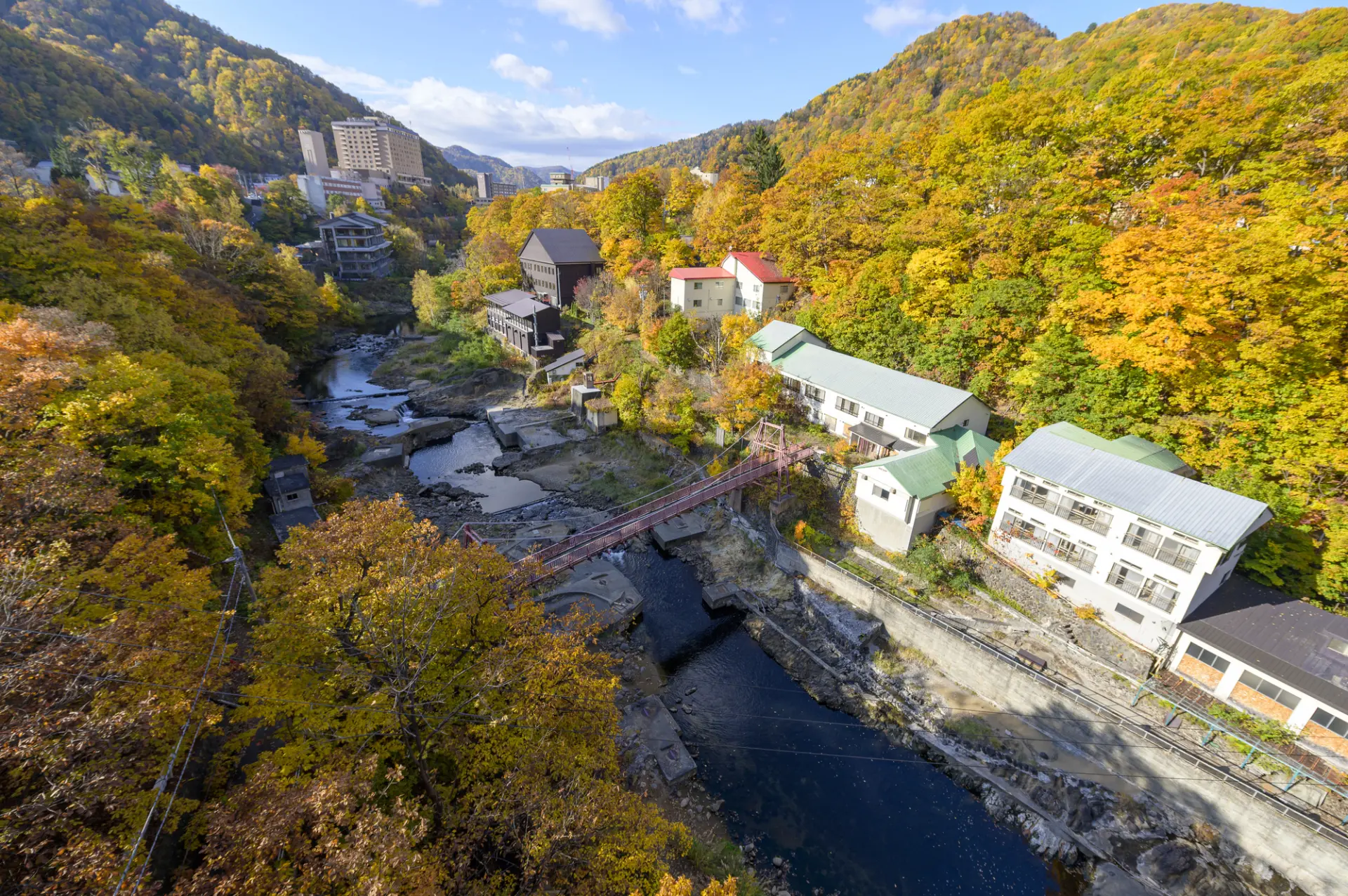
Jozankei Onsen surrounded by colorful autumn leaves
-
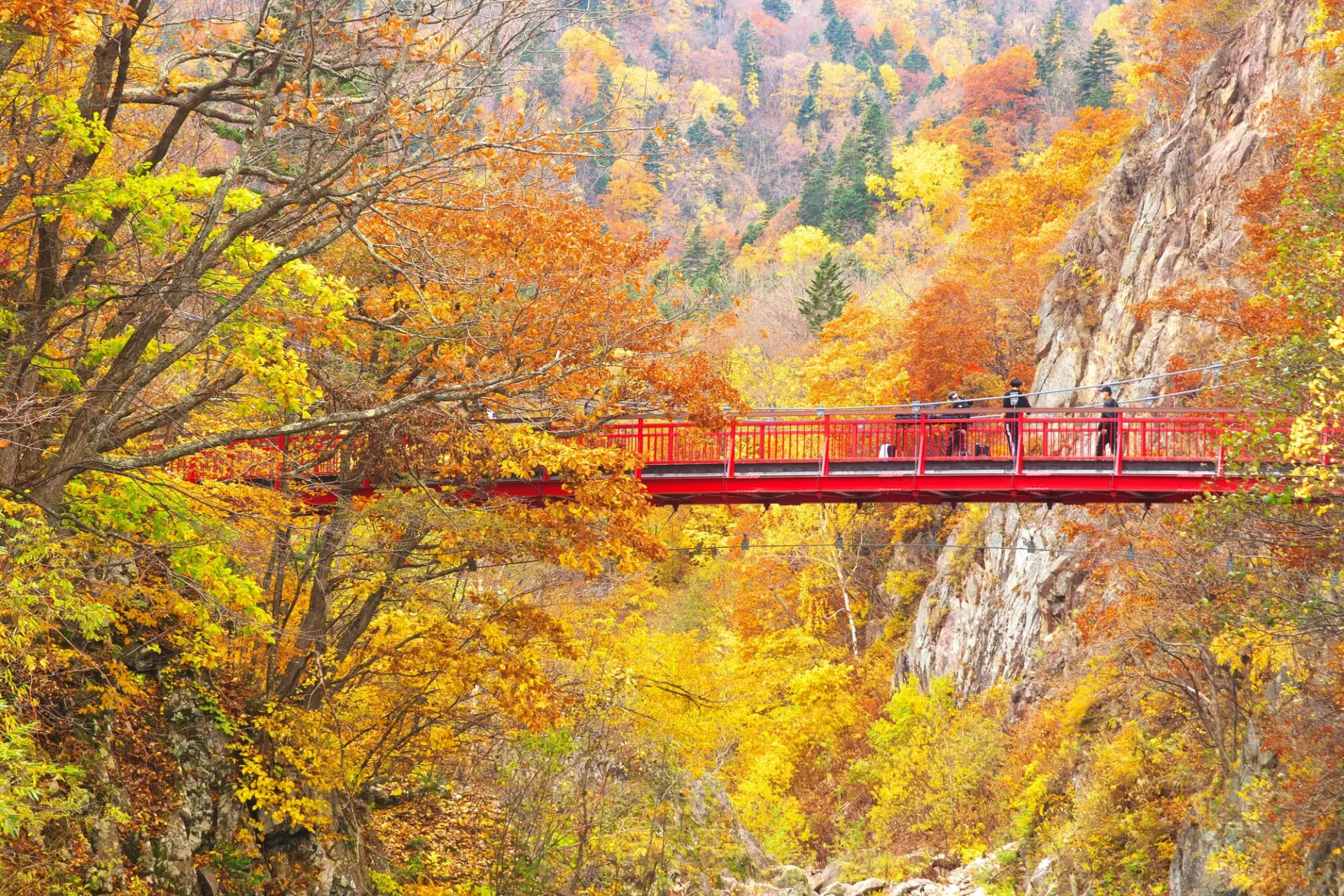
Futami Suspension Bridge, one of Jozankei's foremost foliage spots
-
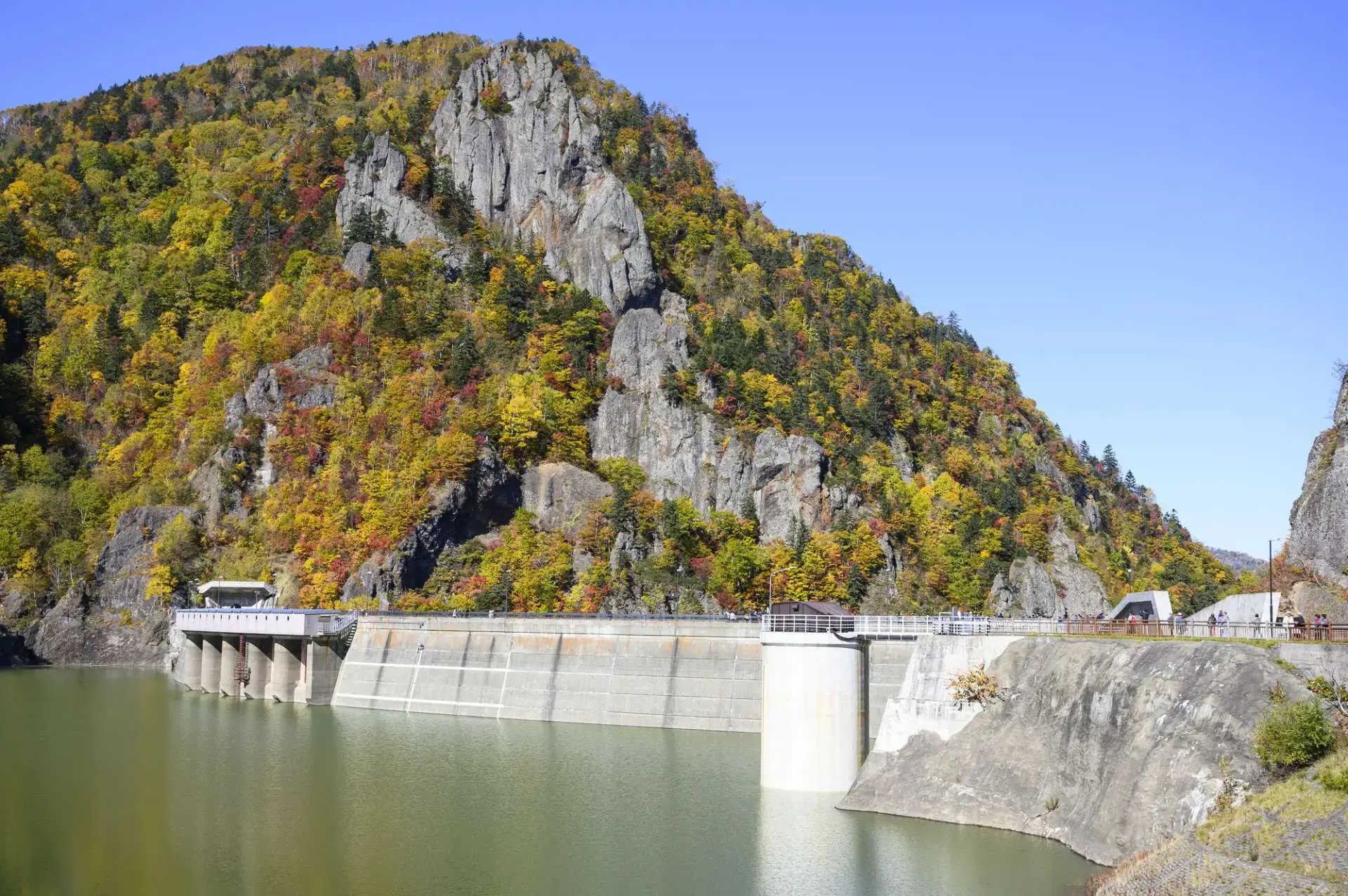
Hoheikyo Dam, known for sightseeing water releases and fall foliage
- Name in Japanese
- 定山渓温泉街
- Postal Code
- 061-2303
- Address
-
Minami-ku, Sapporo City, Hokkaido
Google Maps - Telephone
- 011-598-2012 (Jozankei Tourism Association)
- Closed
- Depend on facilities
- Hours
- Depend on facilities
- Admission
- Depend on facilities
- Directions
- From Sapporo Station on the Subway Namboku Line/Toho Line/JR Line, take the Jotetsu Bus to the Jozankei Yunomachi stop. You will be right there.
- Website
- Official Website (English)
8. Lake Shikotsu
Located in Chitose, Lake Shikotsu is Japan's northernmost ice-free lake. It is about 40 minutes by car from New Chitose Airport and roughly an hour from Sapporo, making it suitable for a day trip that includes a hot spring bath. The lake is known for its clear water, which has repeatedly ranked first nationwide in Ministry of the Environment water-quality surveys. The autumn colors of Mt. Eniwa and Mt. Fuppushi are reflected on its surface.
The landscape has a subdued palette, with the reds and yellows of broadleaf trees mixed among green conifers. Rather than intense color, the appeal lies in the foliage's harmony with the lake. The red Yamasen Railway Bridge over the Chitose River near the lakeside hot spring town creates a classic autumn composition. From an underwater sightseeing boat, visitors can see both the blue water, clear enough to reveal the lakebed, and the foliage along the shore.
- Typical peak foliage season
- Mid- to late October

- Name in Japanese
- 支笏湖
- Postal Code
- 066-0281(Shikotsu Onsen)
- Address
-
Shikotsu Onsen, Chitose City, Hokkaido
Google Maps - Telephone
- 0123-25-6152 (Lake Shikotsu National Park Management Council)
- Closed
- Free to walk
- Business Hours
- Walk anytime
- Admission
- Free
- Access
-
(1) About 30 minutes by car from JR Chitose Line’s Chitose Station.
(2) About 40 minutes by car from New Chitose Airport.
(3) From New Chitose Airport, take a Hokkaido Chuo Bus for 55 minutes, get off at “Shikotsuko” stop, then walk 1 minute. - Official Website
- Official Website (Japanese)
For more recommended attractions in and around Sapporo, see the article below.

Asahikawa Area: 3 Fall Foliage Spots in the Daisetsuzan Mountains
Predicted peak: Around October 21
About a month before the foliage in Asahikawa reaches its peak around October 21, Japan's earliest fall colors begin appearing high in the Daisetsuzan Mountains in mid-September. Both Mt. Asahidake, reached by ropeway, and Sounkyo, a roughly 24-kilometer gorge lined with sheer cliffs, are accessible by bus from Asahikawa Station. Visitors can follow the colors as they descend from the mountains to lower elevations from mid-September through mid-October.
1. Mt. Asahidake, Home to Japan's Earliest Fall Foliage
Mt. Asahidake is the highest peak in the Daisetsuzan mountain range, whose mountains rise to around 2,000 meters. Although the summit stands at 2,291 meters, a ropeway reaches an elevation of about 1,600 meters, making the mountain's scenery easily accessible. Sugatami Pond is located at this elevation. On clear days, Mt. Asahidake is reflected in its blue water, creating an ethereal atmosphere.
Because of its elevation and climate, Mt. Asahidake is famous as the first place in Japan to display fall colors. The leaves may begin changing as early as late August, heralding the arrival of autumn in Japan. The view from the ropeway is exceptional, with intricate shades of red, yellow, and green spreading below like a painting.
- Typical peak foliage season
- Mid- to late September

- Name in Japanese
-
旭岳
“Welcome to Higashikawa" Higashikawa Town, Hokkaido, Japan (Asahidake Visitor Center) - Postal Code
- 071-1472
- Address
-
Asahidake Onsen, Higashikawacho, Kamikawagun, Hokkaido
Google Maps - Telephone
- 0166-97-2153
- Closed
- New Year’s holiday period.
- Business Hours
- 9:00am - 5:00pm
- Admission
- Free
- Directions
- From JR Asahikawa Station or Asahikawa Airport, board the No. 66 Asahikawa-Asahidake Line "Ideyu-go" and alight at "Asahidake" stop. 2-minute walk.
- Credit Cards
- Accepted
- Official Website
- Official Website (English)
2. Daisetsuzan Sounkyo Kurodake Ropeway
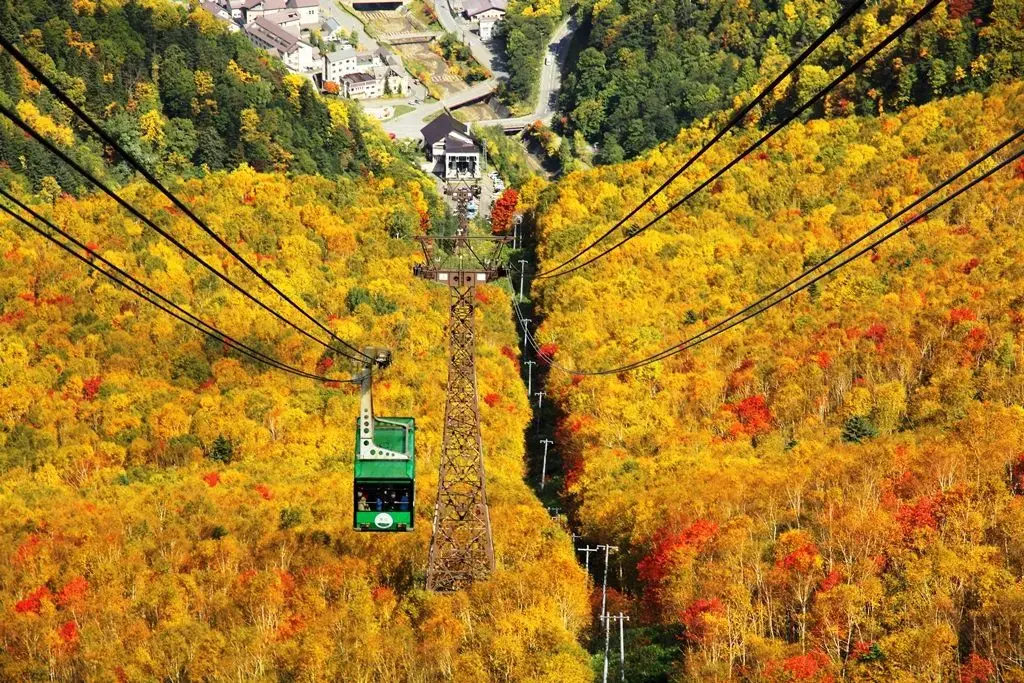
A seven-minute ride on the Kurodake Ropeway from Sounkyo Onsen leads to the fifth station at an elevation of about 1,300 meters. By mid-September, the slopes below are colored by red rowan trees and yellow Erman's birches. Continue by chairlift to the seventh station at about 1,520 meters for a panoramic view of the Daisetsuzan peaks and colorful valleys.
The panoramic foliage visible from the ropeway brings the autumn scenery of the Daisetsuzan Mountains within reach of visitors who do not hike. The peak season at higher elevations is brief, lasting from mid- to late September. The first snow may fall in October, so be sure to bring warm clothing.
- Typical peak foliage season
- Mid- to late September
- Name in Japanese
- 大雪山層雲峡・黒岳ロープウェイ
- Postal Code
- 078-1701
- Address
-
Sounkyo, Kamikawa-cho, Kamikawa-gun, Hokkaido
Google Maps - Telephone
- 01658-5-3031
- Admission
-
Ropeway round ticket: Adult (Middle schooler and older) 3,000 yen, Child (Elementary child) 1,500 yen
Paired lift for skiers, 1 ride: Adult (Middle schooler and older) 800 yen, Child (Elementary child) 400 yen
*Check the official website for details. - Closed
- Ropeway maintenance period in January. Call for details.
- Hours
-
8:00am - 4:00pm
*Depends on seasons. Check the official website for details. - Directions
- From JR Kamikawa Station, ride Dohoku Bus, Sounkyo/Kamikawa Line for 30 min. Get off at Sounkyo and walk 5 min.
- Official Website
- Official Website(Japanese)
3. Sounkyo Onsen and Sounkyo Gorge
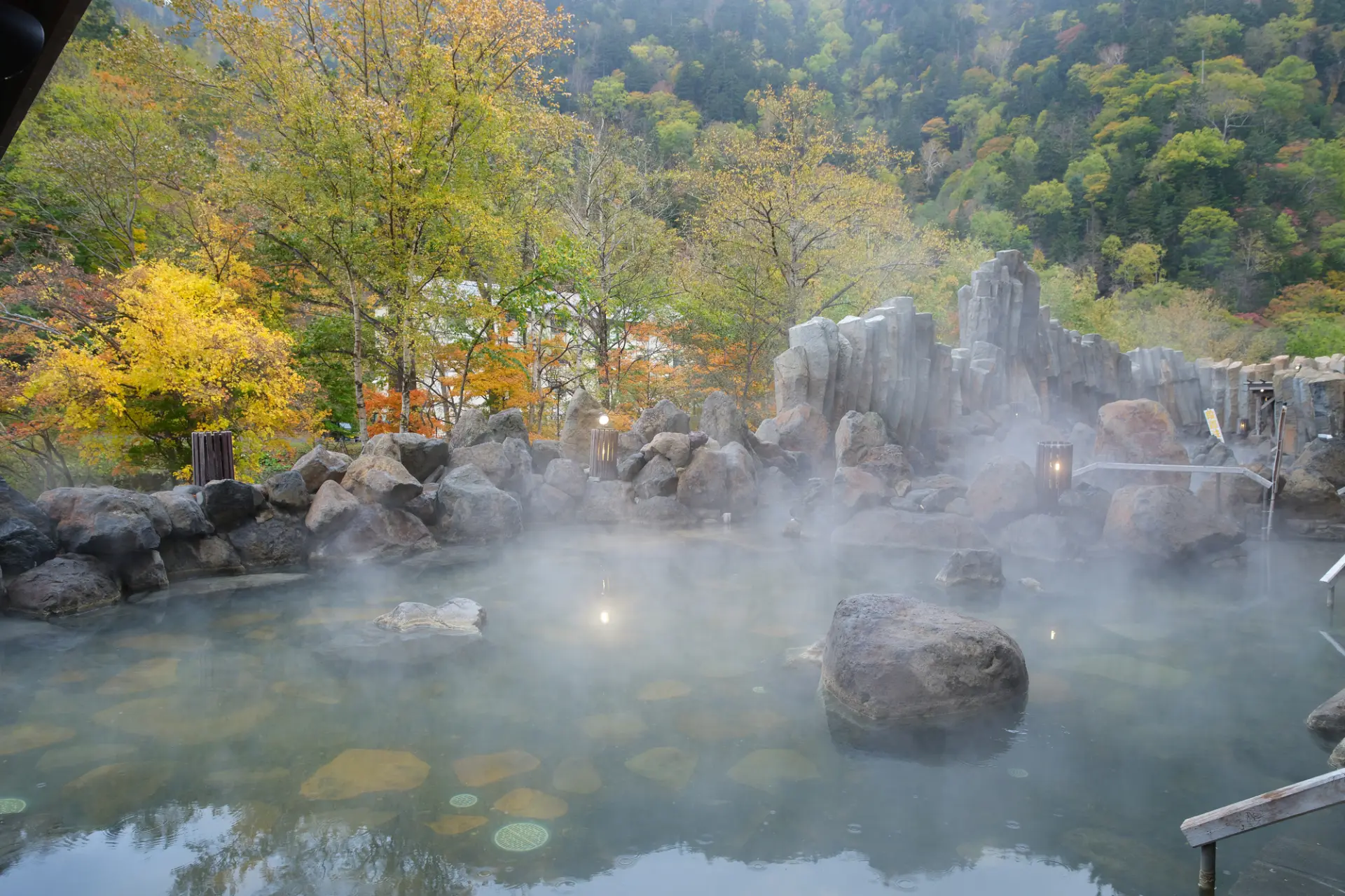
At the northern foot of the Daisetsuzan Mountains, accommodations at Sounkyo Onsen stand at the bottom of a gorge where cliffs roughly 200 meters high extend for about 24 kilometers along the Ishikari River. The Momijidani walking trail, accessible on foot from the hot spring town, takes about 30 minutes each way and passes through a tunnel of colorful trees leading to Momiji Falls.
By car, continue to Obako, where walls of columnar-jointed rock rise close to the road, and Sobakudai Observation Deck, which overlooks Ginga and Ryusei Falls. The hot spring town also has facilities for day-use bathing, allowing visitors to see the foliage at both high and low elevations and finish the day with a relaxing soak.
- Typical peak foliage season
- Late September to mid-October
- Name in Japanese
- 層雲峡温泉
- Postal Code
- 078-1701
- Address
-
Sounkyo, Kamikawa-cho, Kamikawa-gun, Hokkaido
Google Maps - Telephone
- 01658-5-3350(Sounkyo Tourist Association)
- Closed
- Free to walk
- Business Hours
- Walk anytime
- Admission
- Free
- Access
- From Kamikawa Station on the JR Sekihoku Main Line, take the Dohoku Bus to Sounkyo, then it’s just a short walk.
- Official Website
- Official Website (Japanese)
For more recommended attractions in the Asahikawa area, see the article below.

Obihiro Area: 3 Fall Foliage Spots in Obihiro and Tokachi
Predicted peak: Around October 23
Kamishihoro and Shikaoi, located at the northern edge of the Tokachi Plain and east of the Daisetsuzan Mountains, offer several foliage destinations worth exploring by rental car. These include Mikuni Pass, which overlooks a vast forest from the highest point on any national highway in Hokkaido; Fukuhara Sanso, which opens only during the fall foliage season; and Lake Shikaribetsu, the highest natural lake in Hokkaido. Each typically reaches its peak from early to mid-October.

1. Mikuni Pass and Lake Nukabira
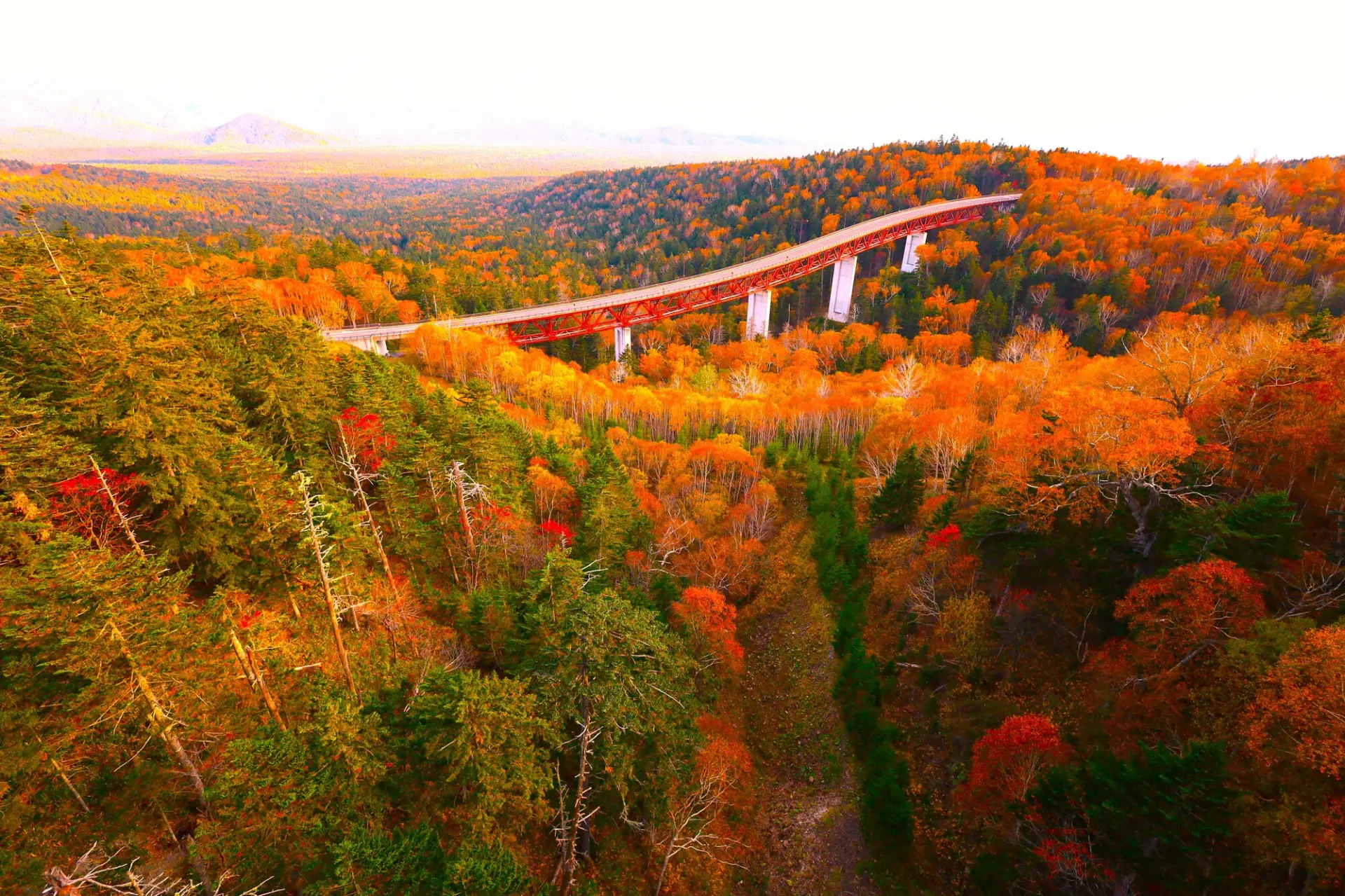
Drive south from Sounkyo along National Route 273 for about an hour to reach Mikuni Pass, the highest point on a national highway in Hokkaido at an elevation of 1,139 meters. The vast forest viewed from the pass's observation deck, crossed by the red arch of Matsumi Bridge, forms one of Hokkaido's best-known fall foliage scenes. The elevation difference between the pass and Lake Nukabira below is about 600 meters, so colors continue along the route into early October.
Lake Nukabira is home to the Taushubetsu River Bridge, a concrete arch bridge left from the former Japan National Railways Shihoro Line. It appears only when the water level is low. No public transportation is available, so this is a stop to make while driving between Sounkyo and Obihiro.
- Typical peak foliage season
- Late September to early October
- Name in Japanese
- 三国峠展望台
- Postal Code
- 080-1401
- Address
-
Mitsumata, Kamishihorocho, Katogun, Hokkaido
Google Maps - Telephone
- 01564-7-7272(Kamishihorocho Tourist Association)
- Closed
- Free to walk
- Business Hours
- Open for passage anytime
- Admission
- Free
- Access
- Approximately 2 hours by car from Otofuke-Obihiro IC on the Doto Expressway
- Official Website
- Official Website (Japanese)
2. Fukuhara Sanso
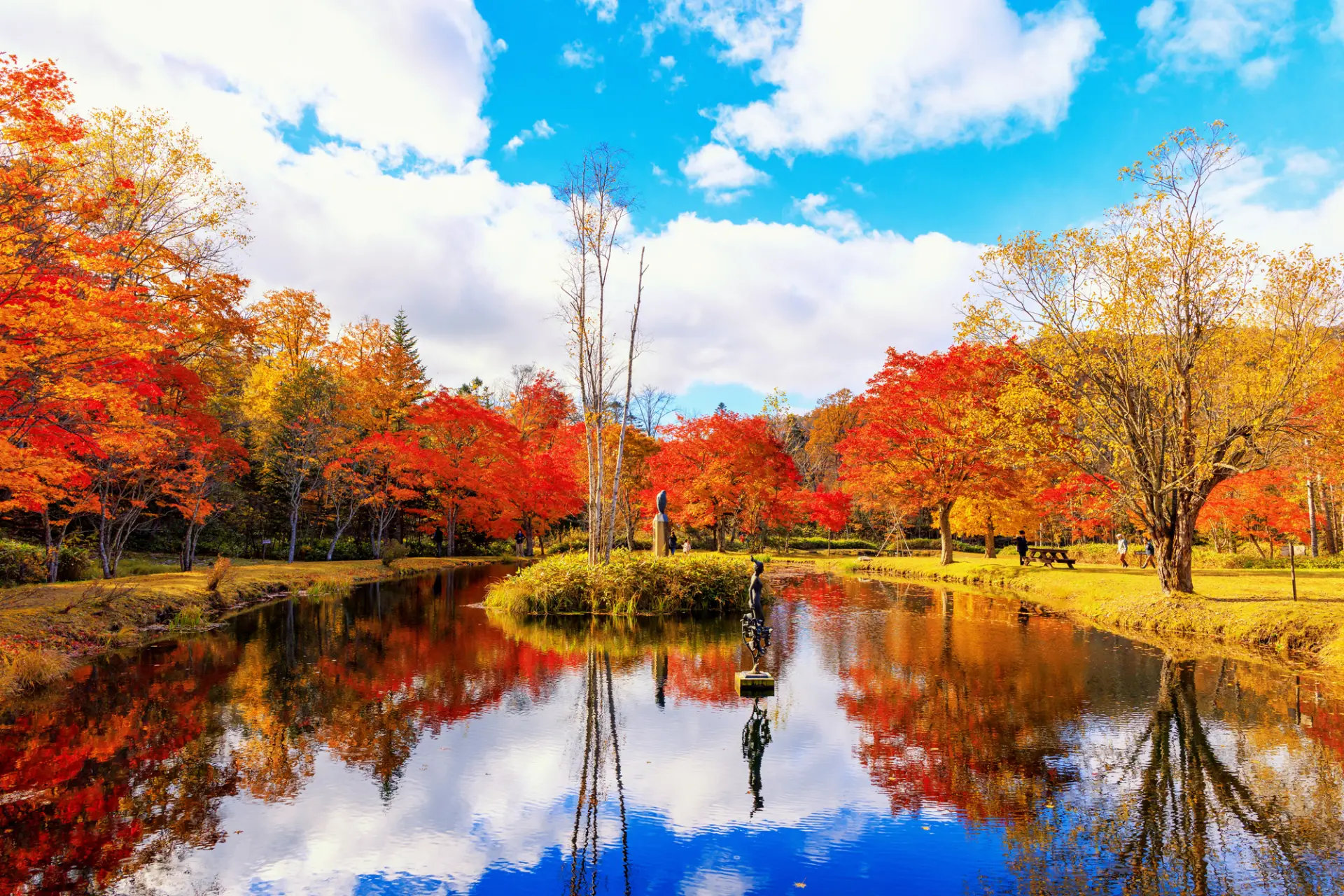
This garden was created as a private retreat by Shikaoi businessman Jihei Fukuhara and is opened to the public free of charge only during the fall foliage season. Around 300 maple trees surround its ponds and streams, enveloping visitors in red both overhead and underfoot as they walk the paths.
It is so popular that large tour buses arrive daily during the opening period. It offers a rare opportunity to see temple-garden-style foliage, more commonly associated with Japan's main island of Honshu, in Hokkaido.
The garden is about 50 minutes by car from Obihiro on the way to Lake Shikaribetsu. No public transportation is available.
- Typical peak foliage season
- Early to mid-October
- Opening period
- October 3-25 in 2026
- Name in Japanese
- 福原山荘
- Postal Code
- 081-0344
- Address
-
Kit瓜maku, Shikaoi, Kato District, Hokkaido, across from Shikaoi Nature Land
Google Maps - Phone
- 0156-66-1010 (Fukuhara Memorial Museum of Art)
- Closed on
- Outside the public opening period; typically open for a limited period around September and October
- Hours
- 9:00 a.m.-4:00 p.m.
- Admission
- Free
- Access
- About 40 minutes by car from JR Shintoku Station or about 1 hour and 10 minutes by car from JR Obihiro Station
- Official website
- Official website (Japanese)
3. Lake Shikaribetsu
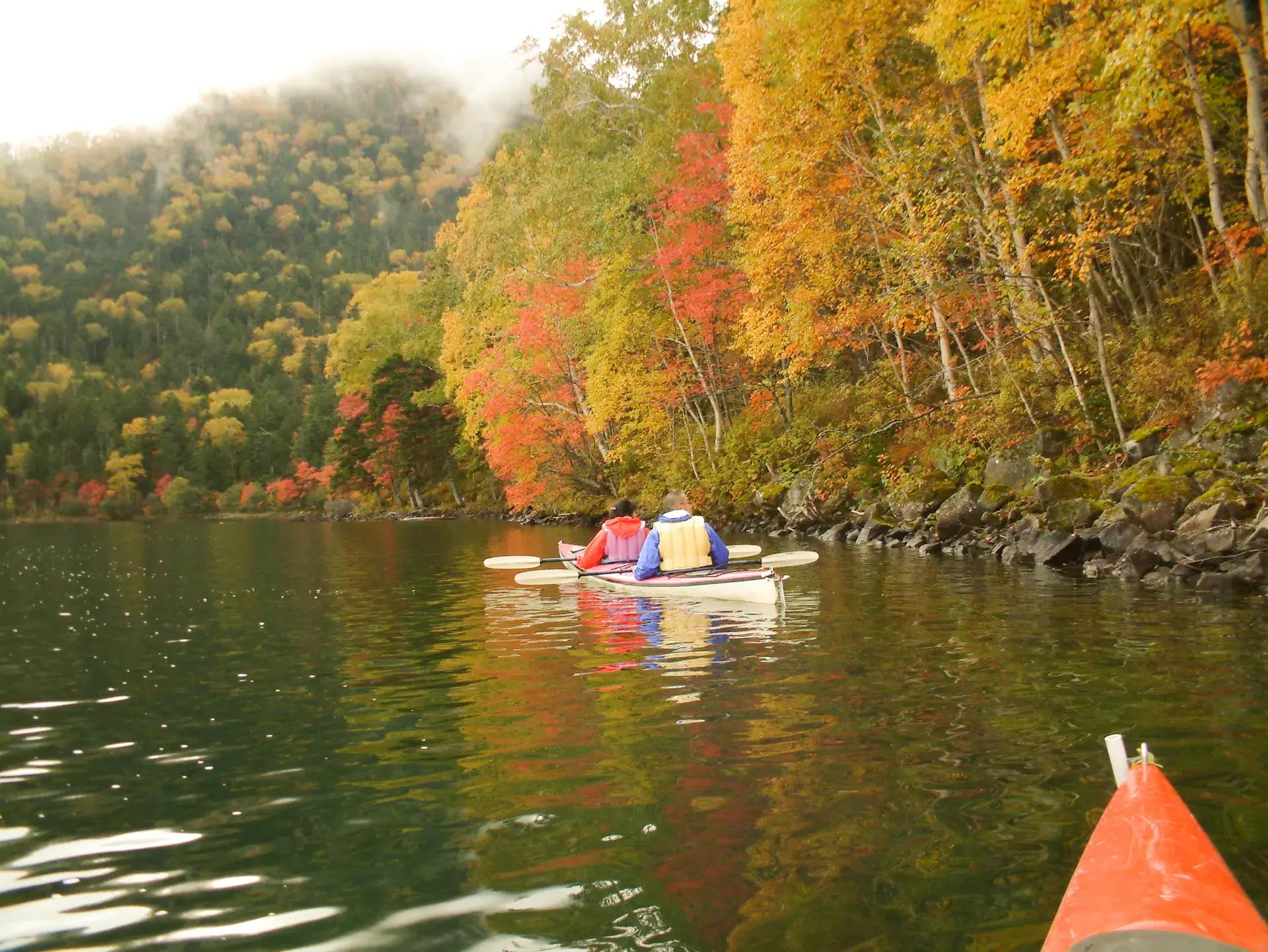
Located at the southern edge of Daisetsuzan National Park, Lake Shikaribetsu is Hokkaido's highest natural lake at an elevation of 810 meters. The surrounding mountains change color from late September to mid-October, and on calm mornings, the lake reflects the foliage like a mirror.
Sightseeing boats departing from lakeside accommodations offer views of the foliage from the water. Visitors may also encounter northern pikas, which have survived in the rocky terrain since the Ice Age. At about 1 hour and 40 minutes by local bus from Obihiro Station, it is one of the few foliage spots in Tokachi accessible by public transportation.
Hot spring accommodations stand along the shore, and an overnight stay offers the chance to experience the misty autumn lake in the quiet of early morning.
- Typical peak foliage season
- Late September to mid-October
- Name in Japanese
- 然別湖
- Postal Code
- 081-0344
- Address
-
Lake Shikaribetsu, Shikaoicho, Katogun, Hokkaido
Google Maps - Telephone
- 0156-66-4034(Shikaoi Town Tourism Association)
- Closed
- Free to walk
- Business Hours
- Walk anytime
- Admission
- Free
- Access
- From JR Obihiro Station, take a bus to "Shikaribetsu Kohan" stop, then a short walk.
- Official Website
- Official Website (English)
For more recommended attractions in the Obihiro area, see the article below.

Kushiro Area: 3 Fall Foliage Spots in Akan and Shiretoko
Predicted peak: Around October 18
1. Lake Akan
Lake Akan is Hokkaido's fifth-largest freshwater lake and is known as a habitat for marimo algae balls. Marimo live in freshwater lakes around the world, but those in Lake Akan are distinguished by their nearly perfect spherical shape and can grow to more than 15 centimeters in diameter, giving them global significance. The area surrounding the lake is part of Akan-Mashu National Park, where visitors can experience Hokkaido's mysterious natural scenery while walking through a setting regarded as spiritually uplifting.
During the peak foliage season, the surrounding area offers spectacular views combining expansive natural scenery and autumn colors. The view from Takimi Bridge, located about 4 kilometers from the lakeshore, is particularly recommended. Red and yellow foliage contrasts with the white spray of the rushing stream, creating an evocative scene found only here.
- Typical peak foliage season
- Early to mid-October
-
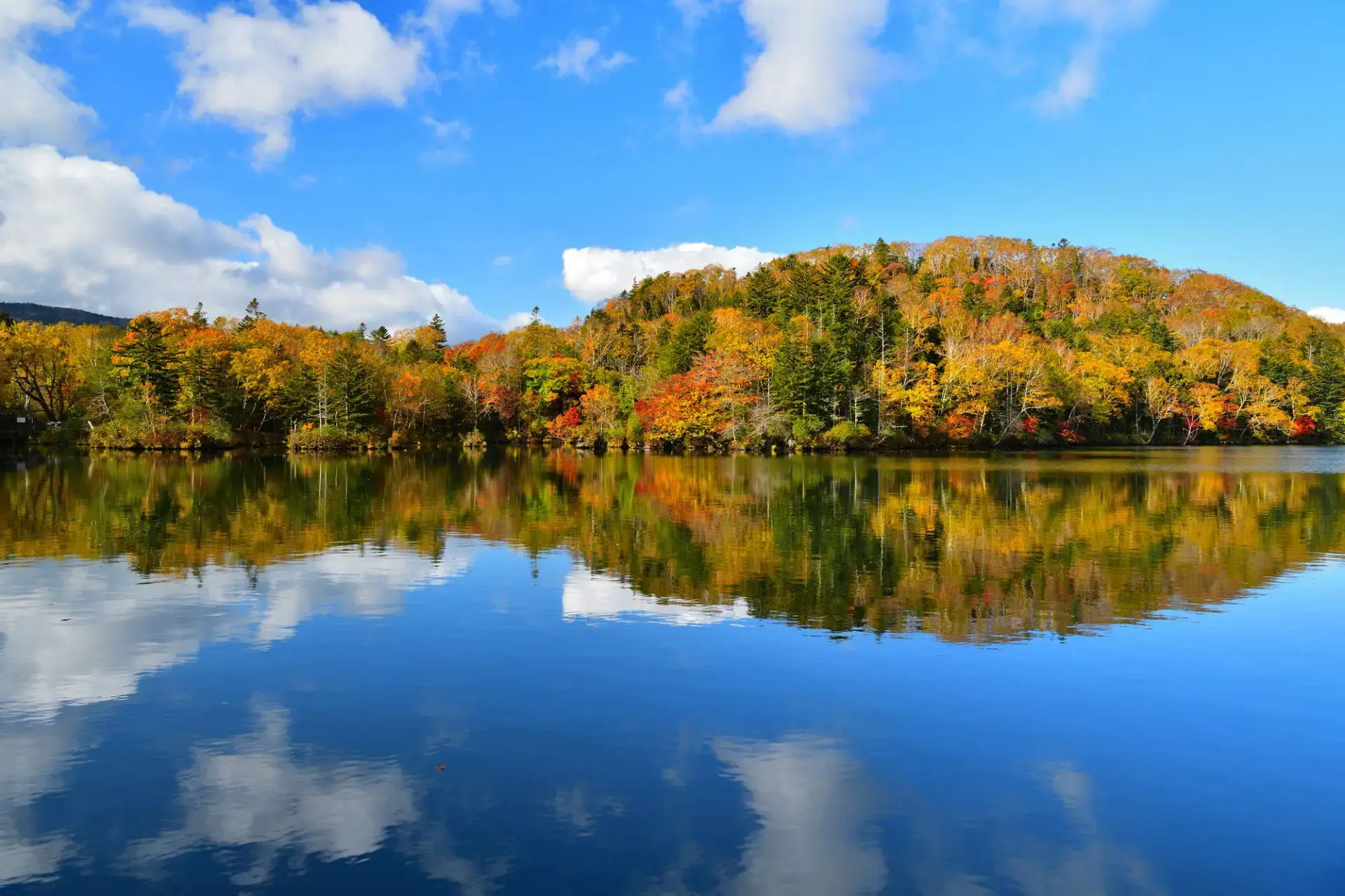
The reflections of the fall foliage on the water are also striking
-
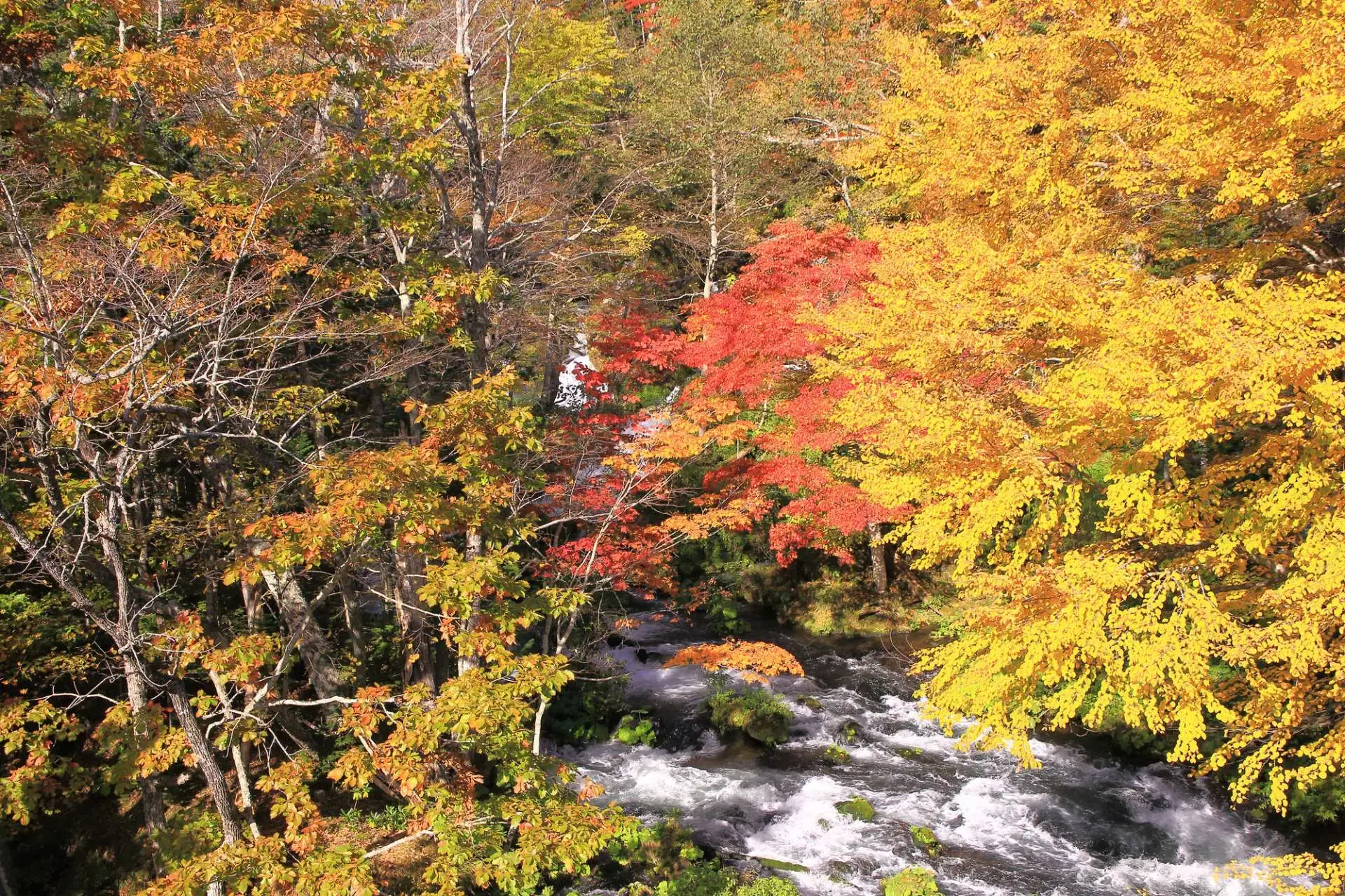
Be sure to take in the view from Takimi Bridge
- Name in Japanese
- 阿寒湖
- Address
-
Akankoonsen, Akancho, Kushiro City, Hokkaido
Google Maps - Directions
- From Kushiro Airport, take the Akan Bus for 80 minutes.
- Official Website
- Official Website (English)
2. Onneto
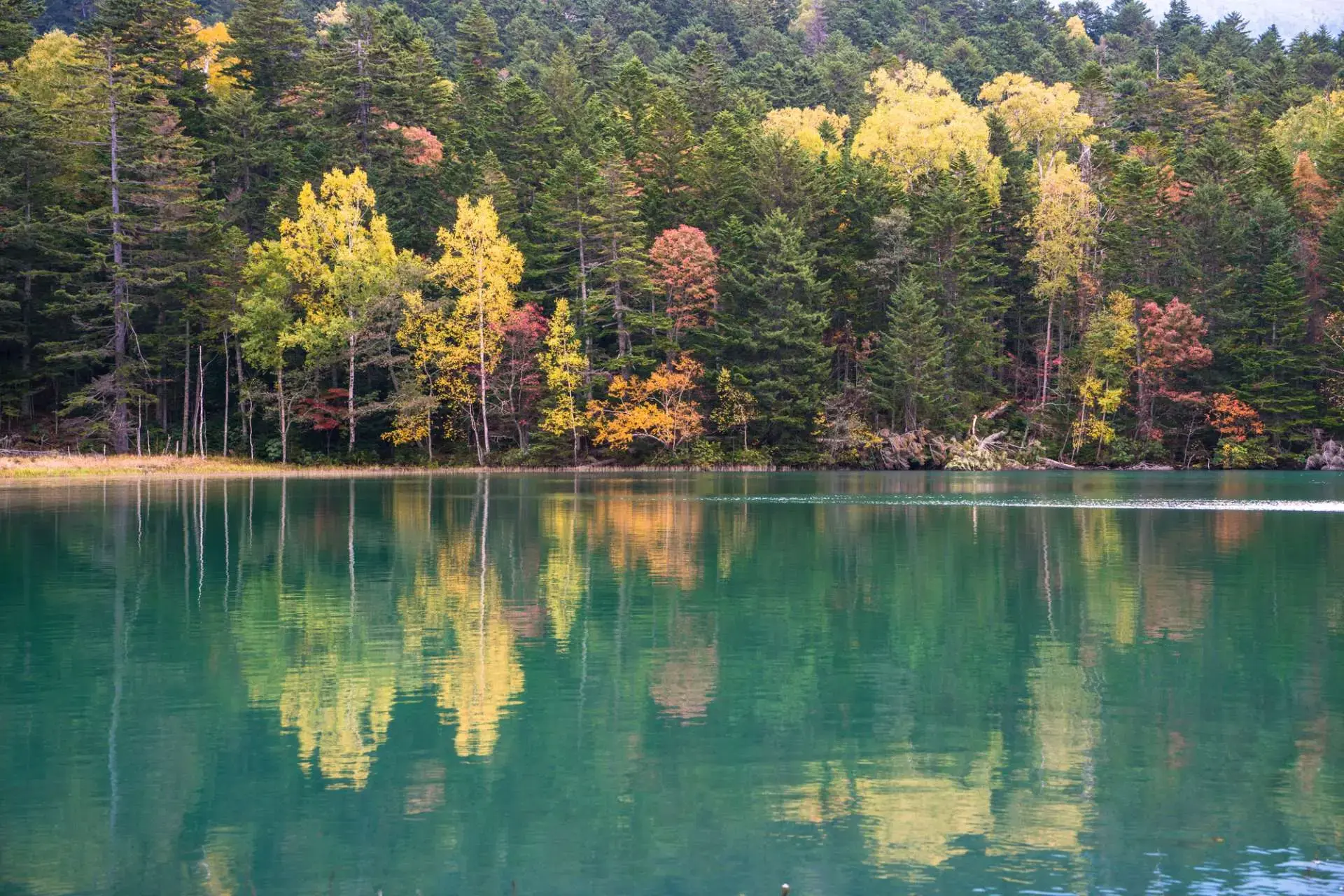
About 30 minutes by car from Akanko Onsen, this small lake lies hidden in the forest at the foot of Mt. Meakan. It is also known as Goshikinuma, or the Five-Colored Lake, because its surface changes from emerald green to cobalt blue depending on the weather and viewing angle.
In autumn, the Erman's birches and maples around the lake turn yellow and red, creating a contrast with the blue water found nowhere else in Hokkaido. From the lakeside observation deck, Mt. Meakan and Mt. Akanfuji are reflected on the water. No public transportation is available, so visitors must travel from Lake Akan by rental car or taxi.
- Typical peak foliage season
- Early to mid-October
- Name in Japanese
- オンネトー
- Postal Code
- 089-3964
- Address
-
Moashoro, Ashorocho, Ashorogun, Hokkaido
Google Maps - Directions
- Approximately 23 minutes by car from Lake Akan Onsen
- Website
- Official Website (Japanese)
3. Shiretoko Five Lakes
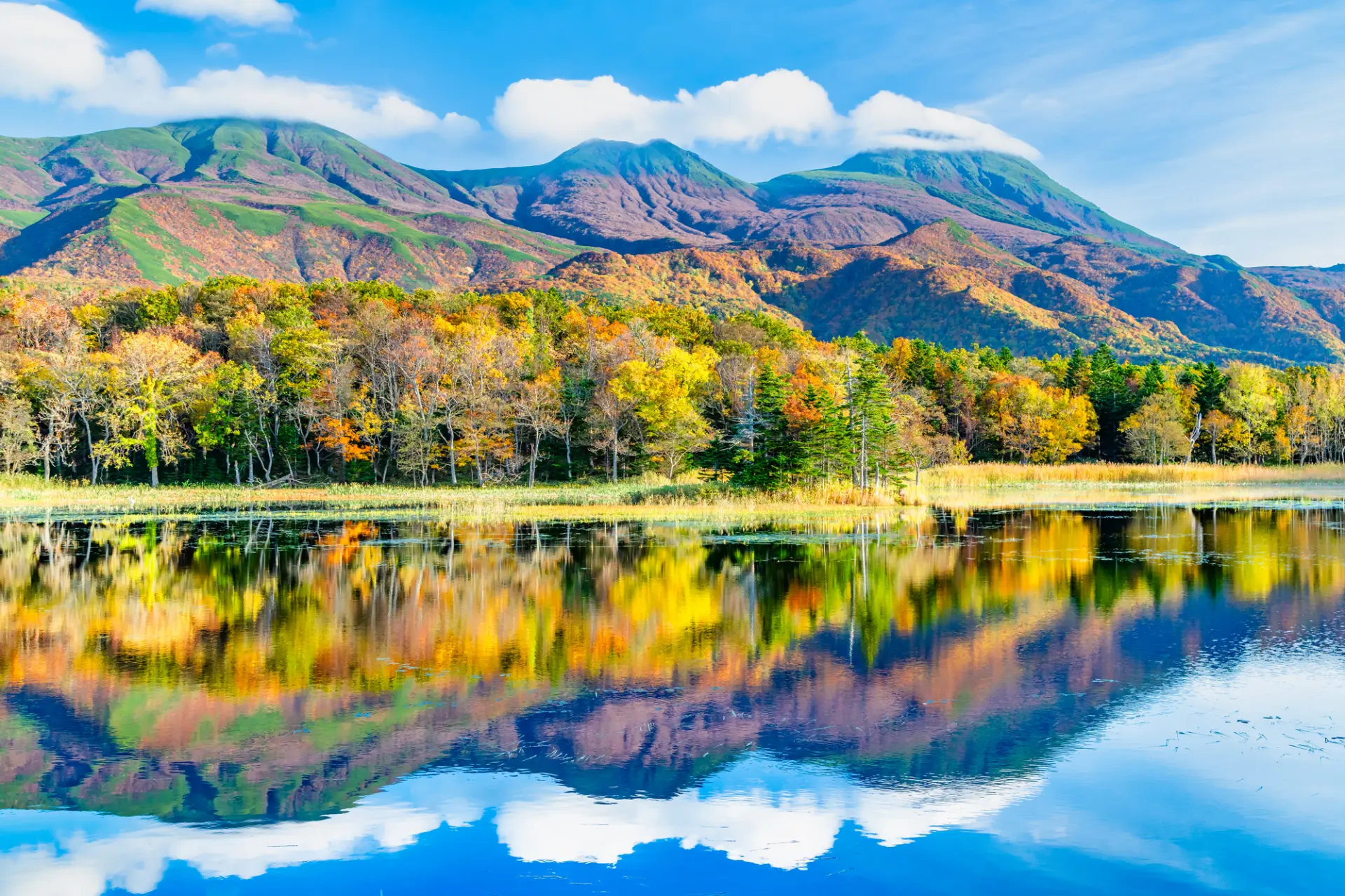
These five lakes are scattered throughout the primeval forest of the Shiretoko Peninsula, a World Natural Heritage Site. From early to mid-October, the autumn colors of beech and maple trees are reflected on the water. The roughly 800-meter Elevated Wooden Path is open to everyone, and its observation deck overlooking the First Lake provides a panoramic view of the Shiretoko mountain range and surrounding foliage.
Because this is brown bear habitat, always follow local instructions. Bus service is seasonal and limited, so traveling by car is more reliable.
- Typical peak foliage season
- Early to mid-October
- Name in Japanese
- 知床五湖
- Postal Code
- 099-4356
- Address
-
Inside Shiretoko National Park, Sharicho, Sharigun, Hokkaido
Google Maps - Telephone
- 0152-24-3323 (Shiretoko Five Lakes Field House)
- Closed
- Mid-November to mid-April
- Elevated Wooden Path Hours
- Varies by season. Please check the official Shiretoko Five Lakes website.
- Elevated Wooden Path Fee
- Free
- Ground Pathways Hours
- 8:00am - 5:00pm (subject to seasonal changes; check the official Shiretoko Five Lakes website).
- Ground Pathways Fee
-
Opening to May 9, August 1 to November 8: Adults 250yen, Children (0-11 years) 100yen
May 10 to July 31: Limited to guided tours; fees available on the official website. - Access
-
From JR Shiretoko-Shari Station, take the Shari Bus Shiretoko Line for approximately 40 km and get off at "Shiretoko Five Lakes," then a short walk.
For additional transportation options, refer to the official Shiretoko Five Lakes website. - Official Website
- Official Website (English)
For more recommended attractions in the Kushiro area, see the article below.

Muroran Area: 2 Fall Foliage Spots in Noboribetsu and Toya
Predicted peak: Around November 8
The Muroran area is home to two of Hokkaido's leading hot spring destinations: Noboribetsu Onsen, with its steaming Jigokudani, and Lake Toya, which overlooks Mt. Usu and Nakajima Island.
Both are less than 20 minutes by bus from stations served by limited express trains connecting Sapporo and Hakodate, making them easy stops during a rail journey.
1. Noboribetsu Onsen
Known since the Edo period, Noboribetsu Onsen is an exceptionally rare hot spring destination offering many different types of mineral water in one area. Much of the spring water emerging throughout the region comes from Jigokudani, or Hell Valley, which was formed by volcanic activity around 10,000 years ago.
The white steam rising from Jigokudani and other areas makes Noboribetsu's red and yellow foliage appear especially vivid. The traditional atmosphere of the hot spring town and the colors covering the surrounding mountains provide a deeply relaxing setting. The cool autumn climate also makes it an ideal season to combine a hot spring bath with foliage viewing.
The Onibi-no-Michi walking trail is illuminated at ground level from sunset until 9:30 p.m. year-round. At night, the steam and autumn leaves emerge in an atmospheric glow.
- Typical peak foliage season
- Mid- to late October

- Name in Japanese
- 登別温泉
- Postal Code
- 059-0551
- Address
-
Noboribetsuonsencho, Noboribetsu City, Hokkaido
Google Maps - Telephone
- 0143-84-3311 (Noboribetsu International Tourism and Convention Association)
- Closed
- Free to walk
- Business Hours
- Walk anytime
- Directions
- From JR Noboribetsu Station, take Donan Bus for Noboribetsu Onsen, 15 mins to Noboribetsu Onsen Bus Terminal, a short walk from the bus stop.
- Official Website
- Official Website (English)
2. Toyako Onsen
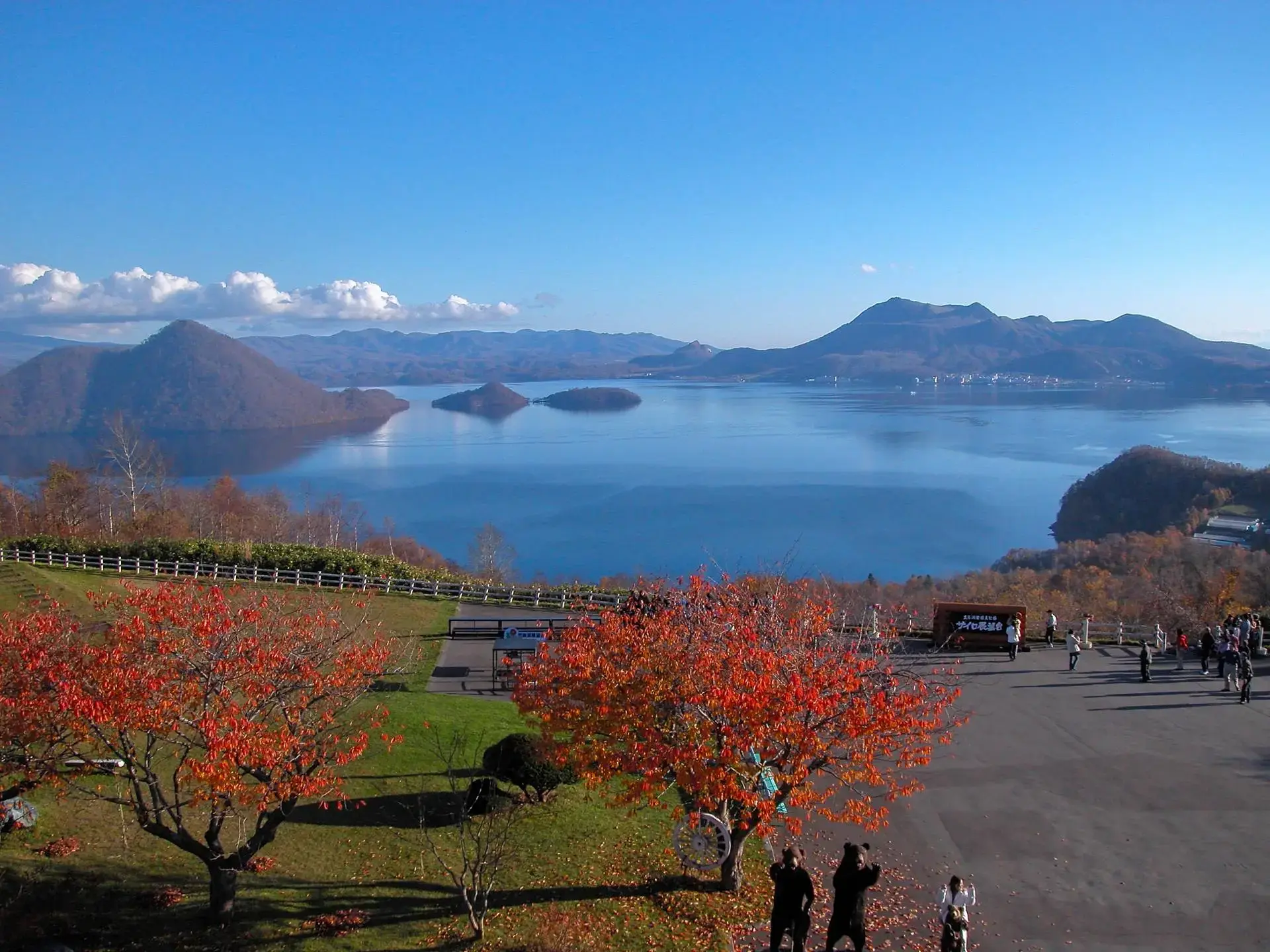
This caldera lake spreads out at the foot of Mt. Usu. From mid- to late October, the scenery overlooking Nakajima Island in the center of the lake and Mt. Yotei on the opposite shore takes on its autumn colors. Sightseeing boats depart from Toyako Onsen on the lakeshore and travel to Nakajima Island, offering views of the colorful mountains from the water.
The Toyako Long-Run Fireworks Display is held every year, allowing visitors to experience both fireworks and the autumn lake on the same day during the foliage season. The area is also easy to reach by rail, with a 20-minute bus ride from JR Toya Station. It can be combined with Noboribetsu Onsen in a two-day, one-night itinerary featuring two major hot spring destinations.
- Typical peak foliage season
- Mid- to late October
- Toyako Long-Run Fireworks Display
- April 28-October 31
- Name in Japanese
- 洞爺湖温泉
- Postal Code
- 049-5721
- Address
-
Toyako Onsen, Toyakocho, Abutagun, Hokkaido
Google Maps - Telephone
- 0142-75-2446 (Toyako Onsen Tourist Association)
- Directions
- From JR Toya Station, take the Donan Bus bound for Toyako Onsen (Lake Toya). 20 minutes, alight at Toyako Bus Terminal and walk shortly.
- Website
- Official Website (English)
For more recommended attractions in the Muroran area, see the article below.

Hakodate Area: 3 Fall Foliage Spots in and Around Hakodate
1. Hakodate Kosetsuen
Hakodate Kosetsuen is a garden within Miharashi Park in Hakodate. It originated in the Meiji period as the villa of a wealthy merchant based in the city. The name Kosetsuen is said to have been given by the head priest of Chion-in, the head temple of the Jodo school in Kyoto, during a visit to Hakodate in the Taisho period. It means “a garden where plum blossoms are fragrant in the snow.” In 2001, it was designated a Place of Scenic Beauty, making it Hokkaido's only nationally designated cultural-property garden.
About 7,000 trees representing roughly 150 species are planted here, creating a gradual transition of colors. The roughly 100-meter maple avenue is a particular highlight. The sight of fiery red maples forming a canopy overhead is impressive in scale. After sunset, the trees are illuminated, transforming the bright daytime scenery into an atmospheric nighttime landscape.
- Typical peak foliage season
- Late October to early November
- Illumination
- October 16-November 8, 2026, 4:00 p.m.-9:00 p.m.
-
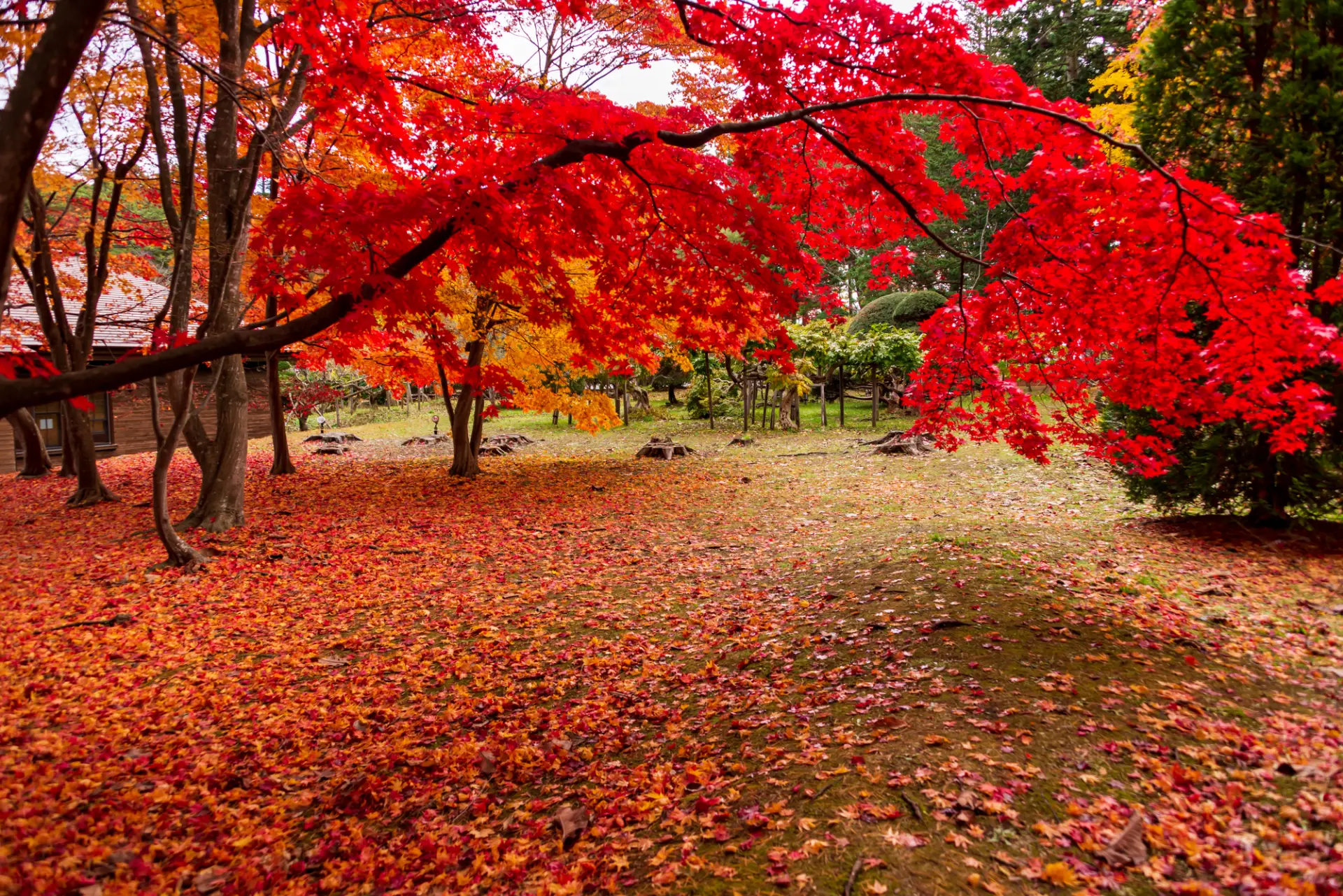
The vivid red maples are striking even individually
-
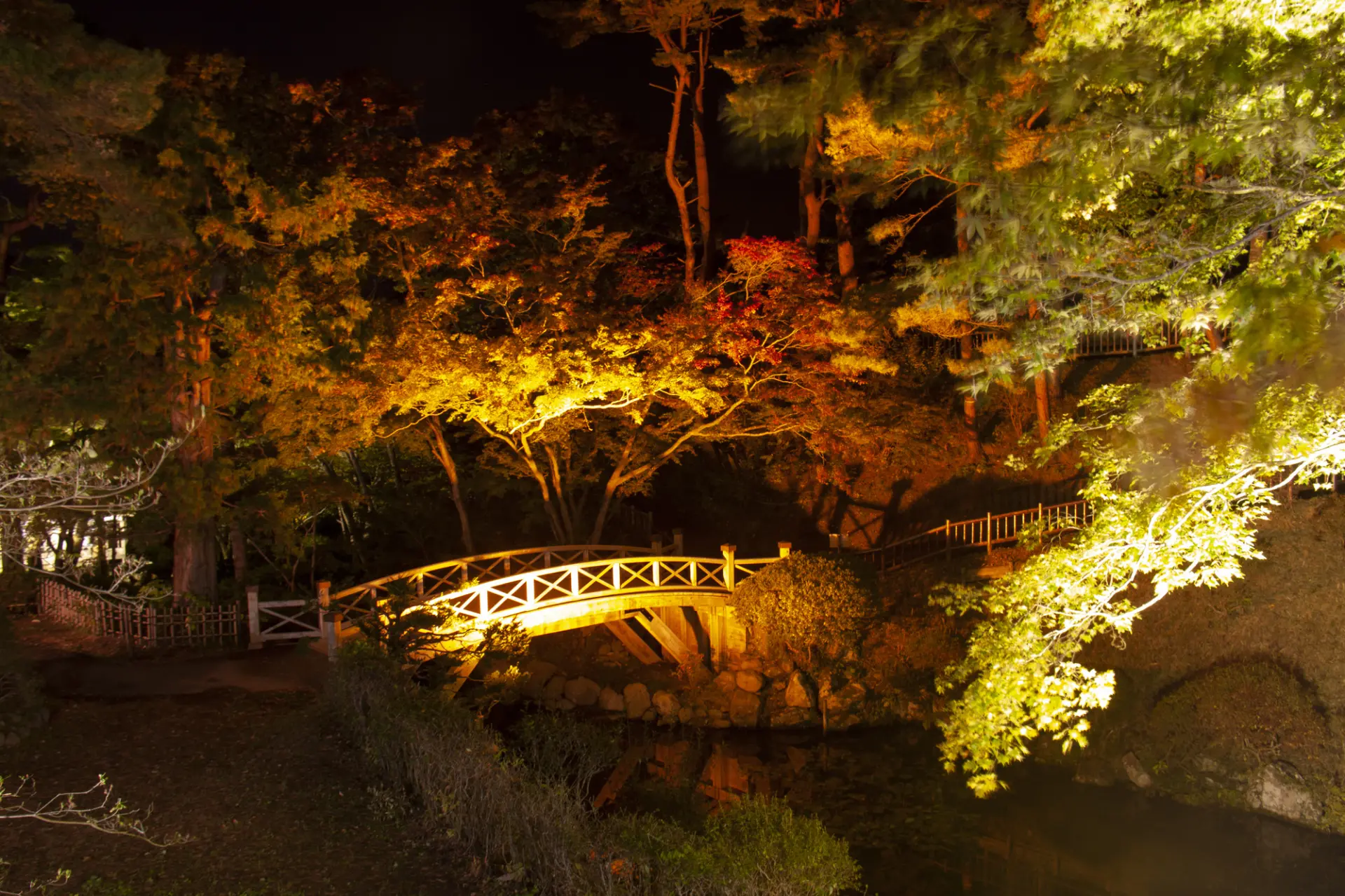
The illuminated foliage creates an atmospheric and evocative scene
- Name in Japanese
- 函館香雪園
- Postal Code
- 042-0956
- Address
-
56 Miharashicho, Hakodate City, Hokkaido
Google Maps - Telephone
- 0138-57-7210
- Admission
- Free
- Closed
- Open every day
- Hours
- 9:00am - 5:00pm
- Directions
- From JR Hakodate Station, ride a bus for 40 min.
- Official Website
- Official Website (Japanese)
2. Goryokaku Park
Goryokaku, a Western-style fortress completed in 1866, is also known as a place to view seasonal flowers. Its cherry trees are especially famous, to the point that cherry blossoms have become synonymous with Goryokaku Park. In autumn, the park's trees, including around 1,600 cherry trees, turn shades of red and yellow. A walking path circles the outside of the moat, allowing visitors to enjoy the foliage while strolling through an atmospheric setting.
The view from the nearby 107-meter Goryokaku Tower is particularly recommended. The star-shaped fortress covered in autumn colors, seen together with the Hakodate cityscape, is a scene found only at Goryokaku Park.
- Typical peak foliage season
- Late October to early November

- Name in Japanese
- 五稜郭公園
- Postal Code
- 041-0806
- Address
-
1-26-8 Mihara, Hakodate City, Hokkaido
Google Maps - Telephone
- 0138-31-5505
- Holiday
- Open every day
- Hours
-
Outside of the fort: open 24 hours
Inside of the fort: 5:00am-7:00pm (April-October), 5:00am-6:00pm (November-March) - Admission
- Free
- Directions
- 15 minutes on foot from the Goryokaku Koen-mae streetcar stop.
- Official Website
- Official Website (Japanese)
3. Onuma Quasi-National Park
About 30 minutes by limited express train from Hakodate Station, followed by a five-minute walk from JR Onuma-Koen Station, the shore of Lake Onuma spreads out beneath the active volcano Mt. Komagatake. Designated in 1958, this is southern Hokkaido's only quasi-national park. Lakes Onuma and Konuma contain 126 small islands, and the roughly 50-minute Island-Hopping Trail connects several of them by bridges.
From mid-October to early November, maples along the lakeshore change color, and Mt. Komagatake framed by autumn leaves forms the park's signature view. Visitors can also take in the foliage by sightseeing boat or rental bicycle on the roughly 14-kilometer route around the lake. The view of Mt. Komagatake through the autumn leaves is particularly impressive, combining expansive natural scenery with seasonal color.
- Typical peak foliage season
- Mid- to late October

- Name in Japanese
- 大沼国定公園
- Postal Code
- 041-1354
- Address
-
1023-1 Onumacho, Nanaecho, Kamedagun, Hokkaido
Google Maps - Directions
- From Shin-Hakodate-Hokuto Station, drive 10km for about 15min.
- Official Website
- Official Website (Japanese)
For more recommended attractions in the Hakodate area, see the article below.

FAQs About Fall Foliage Spots in Hokkaido
Q
When is the best time to see fall foliage in Hokkaido?
The colors descend from the mountains to the cities over about two months. As a general guide, Mt. Asahidake in the Daisetsuzan Mountains peaks in mid-September; Sounkyo, Lake Akan, and Mikuni Pass from late September to early October; central Sapporo from mid-October to early November; and Hakodate from late October to early November. For a September trip, choose the Daisetsuzan Mountains. For November, Sapporo or Hakodate is a good choice.
Q
Which fall foliage spots can be reached from Sapporo using only trains and buses?
Hokkaido University's ginkgo avenue, Nakajima Park, Mt. Moiwa, Maruyama Park, Hokkaido Jingu, and Hiraoka Greenery Center can be reached by subway and streetcar. Jozankei is about 1.5 hours by bus from Sapporo Station, while Lake Shikotsu is about 50 minutes by bus from Chitose Station. Both are suitable for day trips from Sapporo.
Q
Which places require a rental car?
Mikuni Pass and Lake Nukabira, Fukuhara Sanso, and Onneto have no public transportation, so a car is required. Buses to the Shiretoko Five Lakes operate seasonally and are limited in number, making a car the more reliable option.
Q
Where can I enjoy hot springs and fall foliage together?
Jozankei, Noboribetsu, and Lake Akan have major foliage spots immediately beside their hot spring towns. Hot springs can also be found at the foot of Mt. Asahidake and in Sounkyo. Lake Shikotsu and Lake Toya have hot spring inns along their shores, where visitors can soak while viewing the lakes and autumn leaves.
Summary
This article has introduced Hokkaido's major fall foliage spots and their typical peak viewing periods. The harmony between Hokkaido's vast natural scenery and its autumn colors is the region's greatest seasonal appeal. Consider visiting Hokkaido when the foliage is at its peak.
Because Hokkaido's colors reach their peak earlier than in other parts of Japan, keep the timing in mind when planning your trip.
When traveling in Hokkaido, consider visiting the attractions introduced in the article below as well.
Author
Writers & Editors
GOOD LUCK TRIP Editors
Sharing lesser-known ways to experience Japan with the world!