

8 Fall Foliage Spots in Nagoya Where You Can Experience Japanese History and Charm
Nagoya, a popular tourist destination, also offers beautiful fall foliage. The city's main appeal in autumn lies in the picturesque harmony between colorful leaves and distinctly Japanese architecture, including shrines, temples, and castles. Venture into the surrounding areas to see fall foliage amid abundant nature.
This article introduces the best times to see the leaves, along with fall foliage spots in Nagoya and nearby areas. Use it to plan your autumn visit to Nagoya.
Explore Nagoya's Atmospheric Fall Foliage Spots
Nagoya may be famous for local specialties such as chicken wings and miso katsu, but it is also home to many historic attractions, most notably Nagoya Castle.
One of Nagoya's appeals is the ability to combine food, scenery, and other experiences in a single trip. As one of Japan's major cities, it has an extensive transportation network that provides easy access to its various attractions.
A major highlight is seeing distinctly Japanese scenery, including traditional gardens, shrines, temples, and castles, transformed by autumn colors. These landscapes offer an immersive taste of Japan's seasonal charm. Many locations are also illuminated after sunset, creating dreamlike scenes. Other spots offer colorful foliage amid abundant nature, so choose the destinations that best suit your preferences.

Typical Fall Foliage Season in Nagoya
Refer to the table below for the typical peak fall foliage periods in Nagoya.
The timing does not vary greatly among the city's main foliage spots, so visiting from mid- to late November should allow you to see the leaves near their peak at most locations.
- Higashiyama Zoo and Botanical Gardens
- Mid-November to early December
- Shirotori Garden
- Late November to early December
- Tokugawa Garden
- Late November to early December
- Nagoya Castle
- Mid- to late November
- Meijo Park
- Mid- to late November
- Atsuta Jingu
- Late November to early December
- Yagoto-san Koshoji Temple
- Late November to mid-December
- Yokiso
- Late November to early December
- Jokoji Temple and Jokoji Park
- Mid-November to early December
- Korankei Gorge
- Mid- to late November
2026 Fall Foliage Forecast for Nagoya
According to a forecast released in October 2026 by the Japan Weather Association, the fall foliage in Nagoya is expected to reach its peak around December 2. The timing is forecast to be close to the seasonal average.
However, the peak period may shift depending on the location and future temperatures, so keep this in mind when planning your visit.
Source: Japan Weather Association
8 Fall Foliage Spots to Visit in Nagoya
Below are some of the most recommended fall foliage spots in Nagoya, along with their typical peak viewing periods. If you are visiting Nagoya in autumn, consider adding these places to your itinerary for a memorable trip.
1. Higashiyama Zoo and Botanical Gardens: Autumn Scenery Beyond What You Might Expect from a Zoo
This expansive zoo and botanical garden covers approximately 148 acres and includes a zoo, botanical gardens, and an amusement park, making it difficult to see everything in a single day. The zoo displays around 450 species and is home to many popular animals, including the koalas that serve as its symbol. Be sure to also visit the botanical gardens, where plants are displayed amid the area's natural terrain.
In autumn, around 500 trees change color throughout the grounds, particularly in the Japanese garden, adding vivid hues to the natural scenery. There are many distinctly Japanese autumn scenes to discover, including maples surrounding the garden's Okuike Pond and colorful leaves framing a teahouse and a traditional gassho-style house. Another highlight is the striking gradient as the leaves transition from green to red and yellow. Fall foliage can also be seen in the Western-style garden, which has an entirely different atmosphere from the Japanese garden. Limited-time illuminations are held during the season, allowing visitors to experience a variety of autumn landscapes in one place.
- Typical peak foliage period
- Mid-November to early December


- Name in Japanese
- 名古屋市東山動植物園
- Postal Code
- 464-0804
- Address
-
3-70 Higashiyamamotomachi, Chikusa-ku, Nagoya City, Aichi
Google Maps - Tel
- 052-782-2111
- Closed Days
-
Mondays
※When a Monday falls on a holiday, the following weekday will be closed instead.
New Year’s holiday (Dec. 29 - Jan. 1) - Hours
- 9:00am - 4:50pm (Admission allowed until 4:30pm)
- Admission
- Adults (high schoolers and older): 800 yen, middle-schooler and younger: Free, (Sky Tower combo ticket) Adults: 880 yen
- Directions
-
1) from Nagoya Municipal Subway, Higashiyamakoen Station, walk 3 min to the Zoo.
2) from Nagoya Municipal Subway, Hoshigaoka Station, walk 6 min to the Zoo. - Credit Cards
- Accepted (Visa, MasterCard, JCB, UnionPay, American Express, Diners Club, DISCOVER)
- Official Website
- Official Website (English)
2. Shirotori Garden: A Fall Foliage Spot Rich in Japanese Atmosphere
This Japanese strolling garden with a central pond was designed to represent the geography of Japan's Chubu region. Covering 9.1 acres, it is one of the largest gardens of its kind in the Tokai region. Its artificial hill represents Mount Ontake, while the stream originating there depicts the Kiso River descending toward the ravine of Nezame-no-Toko. The landscape where the Kiso River's current becomes gentler and separates into the Ibi and Nagara rivers is particularly expansive. Strolling through the garden while imagining the natural scenery of the Chubu region adds to the experience.
At Shirotori Garden, approximately 1,500 trees turn red and yellow, bringing brighter colors to the grounds and deepening their Japanese atmosphere. One of the main highlights is the foliage reflected on the water, where vivid colors shimmer gently across the surface. The garden is also illuminated during peak season, and the glowing leaves provide an appealing backdrop for photos.
- Typical peak foliage period
- Late November to early December

- Name in Japanese
- 白鳥庭園
- Postal Code
- 456-0036
- Address
-
2-5 Atsutanishimachi, Atsuta-ku, Nagoya City, Aichi
Google Maps - Telephone
- 052-681-8928
- Closed
- Mondays (If it falls on a holiday, closed on the following weekday), December 29th-January 3rd
- Hours
- 9:00am - 5:00pm(Admission allowed until 4:30pm)
- Admission
- Adult: 300 yen, Middle schooler and younger: Free
- Directions
- From Nagoya Municipal Subway, Nashiro Line’s Atsuta Jingu Nishi Station, walk 10 min.
- Credit Cards
- Not accepted
- Official Website
- Official Website (English)
3. Tokugawa Garden: A Variety of Striking Autumn Landscapes
This Japanese garden was created on the former site of the Ozone Residence, a retirement estate built in 1695 by Mitsutomo, the second lord of the Owari Domain. The grounds at the time reportedly covered approximately 44 hectares (109 acres). The garden follows the strolling pond style commonly used for daimyo gardens during the Edo period. A clear stream flows from a waterfall through a ravine and into a pond representing the sea, symbolically recreating Japan's natural landscapes. Tokugawa Garden also makes use of the site's considerable elevation changes, resulting in dynamic and varied scenery.
With around 300 trees displaying vivid autumn colors, Tokugawa Garden offers an immersive experience of distinctly Japanese scenery and seasonal charm. The garden is characterized by its dramatic elevation changes and three-dimensional use of space, which make the red and yellow foliage appear particularly impressive. After sunset, the garden is illuminated, revealing a dreamlike side of the autumn scenery that differs from its daytime appearance.
- Typical peak foliage period
- Late November to early December


- Name in Japanese
- 徳川園
- Postal Code
- 461-0023
- Address
-
1001 Tokugawacho, Higashi-ku, Nagoya City, Aichi
Google Maps - Telephone
- 052-935-8988
- Holiday
- Monday (if it is a national holiday, the next day)
- Hours
- 9:30am - 5:30pm (Admission allowed until 5:00pm) *There may be changes in timings
- Admission
- Adults: 300yen, Middle school student and younger : free
- Directions
-
1) About a 10-minute walk from the south gate of Ozone Station on the JR Line.
2) About 15-minute walk from Ozone Station on Nagoya Municipal Subway or Meitetsu Line.
3) About a 36-minute ride on Route Bus Meguru from Nagoya Station on each line.
4) About a 25-minute ride on Key Route Bus No.2 from Nagoya Station on each line, get off at Tokugawaen Shindeki Station and walk for about 3 minutes. - Credit Cards
- Not accepted
- Official Website
- Official Website (English)
4. Nagoya Castle: One of Japan's Most Celebrated Castles Framed by Fall Foliage
Nagoya Castle is one of Japan's largest castle complexes. It was constructed in the early Edo period under the orders of Tokugawa Ieyasu, founder of the Tokugawa shogunate. A pair of male and female golden shachihoko ornaments gleam atop the five-tiered roof of the castle tower and have become symbols of Nagoya. The Honmaru Palace, built in 1615 as the lord's residence and administrative center, is also well worth seeing. Its interior is decorated with beautiful painted partitions created by the Kano school, a group of artists active from the Muromachi through the Edo periods.
Nagoya Castle has a distinctive atmosphere when seen with fall foliage, combining grandeur with vibrant seasonal colors. The castle is impressive when viewed through the leaves from nearby, but seeing it standing amid the foliage from farther away is equally rewarding.
It is a scene worth capturing in a photograph.
- Typical peak foliage period
-
Mid- to late November
Note: The castle tower is currently closed, and visitors cannot enter the interior.


- Name in Japanese
- 名古屋城
- Postal Code
- 460-0031
- Address
-
1-1 Hommaru, Naka-ku, Nagoya City, Aichi
Google Maps - Tel
- 052-231-1700 (Nafoyajo Sogo Jimusho)
- Closed
- Year-end and New Year holidays (varies depending on the events.)
- Hours
- 9:00am - 4:30pm (Admission to Hommaru Palace is till 4:00pm.)
- Admission
-
1,000yen for Adults, Free for junior high school students and younger,
<Combo ticket with Tokugawa-en> 1,040yen for Adults. - Directions
-
1) About 5 minutes walk from Nagoyajo (Nagoya Castle) Station on the Nagoya Municipal Subway.
2) About 22 minutes by the Me~guru, Nagoya Sightseeing Route Bus service from Nagoya Station, only a few minutes walk after getting off at Nagoya Castle bus stop. - Credit Cards
- Accepted (Visa, MasterCard, JCB, UnionPay, American Express, Diners Club, DISCOVER) * Cash is only accepted for the combo ticket with Tokugawa-en.
- Official Website
- Official Website (English)
5. Meijo Park: Take Your Time Enjoying Fall Foliage in an Open Setting
This expansive 198-acre park features flower beds filled with seasonal blooms, open lawns, Ofuke Pond with views of Nagoya Castle, and sports facilities including a baseball field. It is a popular place for Nagoya residents to relax. Meijo Park Flower Plaza has a bright, naturally lit atrium and sunroom, and hosts a variety of exhibitions related to flowers and greenery.
Highlights of the park's fall foliage include its reflections on the water and the contrast between the colorful leaves and green lawns. With plenty of benches and open space, visitors can take their time appreciating the autumn scenery. The main highlight is the view of Nagoya Castle and the foliage from Ofuke Pond. The reflected leaves on the water and the castle in the distance also make this a recommended photo spot.
- Typical peak foliage period
- Mid- to late November

- Name in Japanese
- 名城公園
- Postal Code
- 462-0846
- Address
-
1-2 Meijo, Kita-ku, Nagoya City, Aichi
Google Maps - Telephone
- 052-913-0087
- Holiday
- Open every day *Meijo Park Flower Plaza: Mondays (If falls on a holiday, the next weekday is closed), The 3rd Wednesday of each month (If falls on a holiday, the 4th Wed is closed), Dec 29 - Jan 3.
- Hours
- Open all the time (Meijo Park Flower Plaza: 9:00am - 4:30pm)
- Admission
- Free
- Directions
- Nearby Meiji Park Station of the Nagoya City Subway.
- Credit Cards
- Not accepted
- Official Website
- Official Website (Japanese)
6. Atsuta Jingu: Fall Foliage in a Sacred Setting
Atsuta Jingu is said to have originated around 1,900 years ago, when the sacred sword Kusanagi-no-Tsurugi was enshrined here. The sword is one of the Three Sacred Treasures of Japan, which Japanese mythology says were bestowed by the sun goddess Amaterasu and have been passed down as symbols of the emperor's legitimacy. In addition to the main sanctuary, the grounds contain a total of 45 shrines, including Kamichikama Jinja, where prayer plaques seeking success in school and entrance examinations are dedicated, and Kusunomimae Jinja, worshipped by women as a shrine associated with safe childbirth.
One of the main highlights is the harmony between the autumn leaves and historic structures such as the Kaguraden Hall. Bright reds and yellows bring color to the solemn, peaceful grounds and give the entire shrine a more vibrant appearance. The ginkgo-lined path is especially worth visiting, with thick clusters of golden leaves beautifully framing the walkway. Fallen leaves also cover the ground like a yellow carpet, creating an excellent setting for photographs.
- Typical peak foliage period
- Late November to early December

- Name in Japanese
- 熱田神宮
- Postal Code
- 456-8585
- Address
-
1-1-1 Jingu, Atsuta-ku, Nagoya City, Aichi
Google Maps - Tel
- 052-671-4151
- Closed
- Open all year round (The Treasure Hall closes on the last Wednesday of the month and the following day)
- Hours
- Open all year round (The Treasure Hall 9:00am - 4:30pm)
- Admissions
- Free (for the Treasure Hall, Adults 500yen, Elementary and Junior high school students : 200yen (Fees may change when special exhibitions or feature exhibitions are held)
- Directions
-
1) Approx. 3 minutes walk from Jingumae Station on Nagoya Railroad (Meitetsu)
2) Approx. 7 minutes walk from Atsuta Jingu Nishi Station on Nagoya Municipal Subway
3) Approx. 7 minutes walk from Atsuta Jingu Temma-cho Station on Nagoya Municipal Subway - Credit Cards
- Not accepted
- Official Website
- Official Website (English)
7. Yagoto-san Koshoji Temple: Historic Architecture Surrounded by Fall Foliage
One of the main appeals of Yagoto-san Koshoji Temple is the opportunity to view its many historic buildings alongside nature that changes with each season. Located in Nagoya's Showa Ward, it is also conveniently accessible, approximately 30 minutes by train from Nagoya Station. The imposing wooden five-story pagoda is especially popular and has been designated a National Important Cultural Property.
In autumn, colorful leaves brighten the temple grounds and create a distinctly Japanese seasonal atmosphere. The harmony between the stately buildings and vivid red and yellow foliage is characteristic of autumn in Japan. During the peak viewing season, the five-story pagoda and surrounding foliage are illuminated from sunset, revealing a different appearance from the daytime scenery.
- Typical peak foliage period
- Late November to mid-December

- Name in Japanese
- 八事山興正寺
- Postal Code
- 466-0825
- Address
-
78 Yagotohonmachi, Showa Ward, Nagoya, Aichi
Google Maps - Phone
- 052-832-2801
- Closed on
- Open daily
- Hours
- 8:00am–5:00pm
- Admission
- Free admission
- Access
- A short walk from Yagoto Station on the Nagoya Municipal Subway Meijo Line and Tsurumai Line
- Credit Cards
- Not accepted
- Official website
- Official website (Japanese)
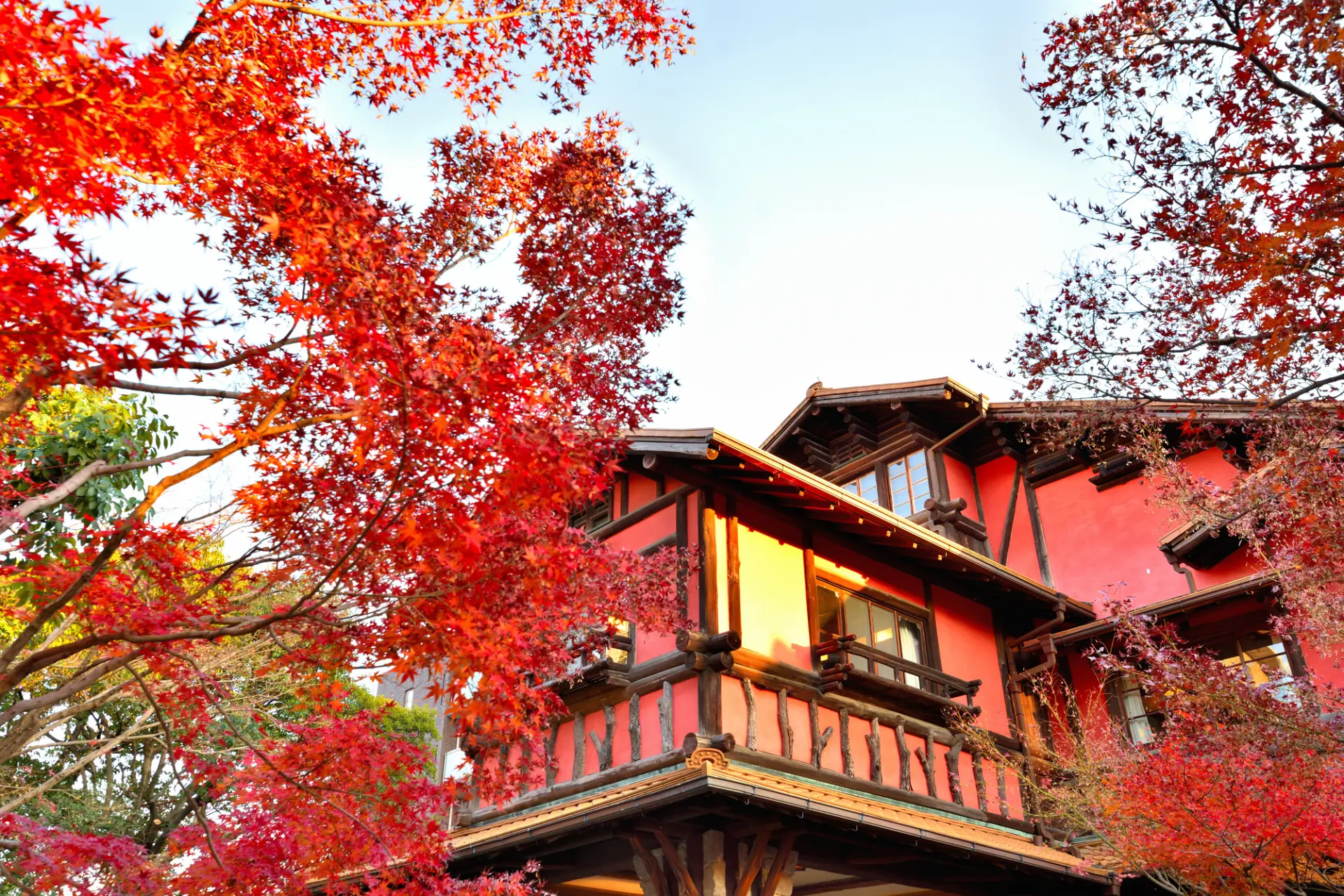
8. Yokiso: Elegant Gardens and Villa Architecture Surrounded by Fall Foliage
This villa was developed between the Taisho period and early Showa period by Jirozaemon Suketami Ito, the first president of Matsuzakaya, a well-known Nagoya department store. Built on the hills of Kakuozan, it is considered a representative example of the suburban villas constructed in modern Nagoya, and five of its buildings have been designated Tangible Cultural Properties by the city. When first established, the estate covered approximately 8.2 acres. It makes effective use of the site's natural elevation changes, incorporating ponds and other features that blend harmoniously with the surrounding landscape.
The northern garden features a Japanese strolling garden centered around a pond, where maples change color in autumn. The foliage takes on the atmosphere of a historic villa when viewed alongside the covered Hakuun Bridge and the Sanshotei teahouse. After exploring the garden, continue to Choshokaku in the southern garden. The autumn leaves surrounding this mountain lodge-style building present a different character from those in the Japanese garden.
- Typical peak foliage period
- Late November to early December
- Name in Japanese
- 揚輝荘
- Postal Code
- 464-0057
- Address
-
2-5-17 Hoocho, Chikusa-ku, Nagoya City, Aichi
Google Maps - Telephone
- 052-759-4450
- Closed
- Every Monday (If Monday is a public holiday, then the following weekday)
- Hours
- 9:30am - 4:30pm
- Admission
- Free (300 yen for entry to Choushou-kaku)
- Directions
- 10-minute walk from Nagoya Municipal Subway Kakouzan Station.
- Credit Cards
- Accepted
- Official Website
- Official Website (Japanese)
See the Fall Foliage at Jokoji Temple and Jokoji Park, Nagoya's Scenic Retreat
Jokoji Temple and Jokoji Park are located in Seto, a city adjacent to Nagoya. The park is rich in nature and centered around Jokoji, a Rinzai Zen temple. Historic architecture is another highlight, and the temple's main hall, Muiden, has been designated a National Important Cultural Property.
Known as “Nagoya's scenic retreat,” referring to a sightseeing destination near the city, the area is famous for both cherry blossoms and fall foliage. In autumn, more than 200 trees throughout the grounds change color, adding vivid hues to the dignified historic buildings. Another sight not to miss is the atmospheric scenery created by the vermilion railings of a bridge over the pond and the colorful leaves surrounding the water. It is well worth venturing beyond Nagoya to visit.
- Typical peak foliage period
- Mid-November to early December


- Name in Japanese
- 定光寺 定光寺公園
- Postal Code
- 480-1201
- Address
-
45 Jokojicho, Seto City, Aichi
Google Maps - Telephone
- 0561-85-2730
- Closed
- Free to walk
- Business Hours
- Walk anytime
- Admission
- Free
- Access
-
(1) About 20 minutes walk from JR Chuo Main Line’s Jōkōji Station.
(2) 15 minutes by car from Seto-Shinano IC on the Tokai-Kanjo Expressway or Kasugai IC on the Tomei Expressway. - Official Website
- Official Website (Japanese)
Venture Farther to Korankei Gorge, One of Japan's Leading Fall Foliage Destinations
Korankei Gorge, located along the Tomoe River, is known as one of Japan's leading fall foliage destinations.
Its history is said to have begun in 1634, when a priest from Kojakuji Temple planted trees in the area. Today, approximately 3,000 trees turn red and yellow in autumn, creating a striking landscape.
The Korankei Maple Festival is held each year for one month, from November 1 to 30. Visitors are entertained by events and activities based on a different annual theme. The illumination from sunset to 9:00 p.m. is especially worth seeing. The colorful leaves emerging from the darkness under the lights create a dreamlike scene that is sure to leave a lasting impression. Although Korankei is some distance from central Nagoya, it is worth the trip for those who want to see impressive fall foliage.
- Typical peak foliage period
- Mid- to late November


- Name in Japanese
- 香嵐渓(こうらんけい)
- Postal Code
- 444-2424
- Address
-
Iimori, Asukecho, Toyota City, Aichi
Google Maps - Telephone
- 0565-62-1272(Toyota City Asuke Tourism Association)
- Closed
- Free to walk
- Business Hours
- Walk anytime
- Admission
- Free ※Fees are subject to change.
- Access
-
1) From Jyosui Station on the Meitetsu Toyota Line, change to the Toyota Oiden Bus Sanage Asuke Line and get off at the "Korankei" bus stop, a short walk away.
2) From Toyota City Station on the Meitetsu Mikawa Line/Toyota Line, change to the Meitetsu Bus Yanami Line bound for Asuke, get off at the "Korankei" bus stop, and walk a short distance.
3) From Higashi Okazaki Station on the Meitetsu Main Line, change to the Meitetsu Bus Okazaki/Asuke Line bound for Asuke, get off at the "Korankei" bus stop, and walk a short distance. - Official Website
- Official Website (English)
Frequently Asked Questions About Fall Foliage Spots in Nagoya
Q
When is the best time to see fall foliage in Nagoya?
Although it varies by location and the weather each year, the typical peak period is from mid-November to early December.
Q
Which fall foliage spots near Nagoya are recommended?
Recommended destinations include Jokoji Temple and Jokoji Park in an area adjacent to Nagoya, as well as Korankei Gorge, one of Japan's leading fall foliage spots.
Summary
This article introduced Nagoya's fall foliage spots and their typical peak viewing periods.
In addition to its abundant natural scenery, one of Nagoya's greatest autumn attractions is the harmony between colorful leaves and historic structures such as Nagoya Castle.
Visit during the peak season to appreciate the beauty of Nagoya's fall foliage.
If you are planning a trip to Nagoya, use the article below, which introduces recommended attractions and local cuisine, to help create your itinerary.

Author
Writers & Editors
GOOD LUCK TRIP Editors
Sharing lesser-known ways to experience Japan with the world!