
![[9 Popular Tourist Spots in Izu] Take a Relaxing Trip Filled with Nature, Gourmet Food, and Hot Springs](https://static.gltjp.com/glt/data/article/21000/20602/20240125_131946_3fddfe33_w1920.webp)
[9 Popular Tourist Spots in Izu] Take a Relaxing Trip Filled with Nature, Gourmet Food, and Hot Springs
Blessed with both sea and mountains, Izu offers plenty to enjoy, including hot springs, gourmet food, and outdoor activities.
Some areas are popular sightseeing and resort destinations that can be fully enjoyed even on a day trip or a one-night, two-day getaway from Tokyo.
In this article, we carefully selected some of the best tourist spots, restaurants, and accommodations in charming Izu.
You’ll be able to fully experience everything Izu has to offer, from beautiful natural scenery to exceptional local cuisine.
What is Izu Like?
The Izu Peninsula is located in eastern Shizuoka Prefecture.
In some cases, “Izu” refers only to Izu City in the center of the peninsula, but in this article, “Izu” refers to the entire Izu Peninsula.
One of Izu’s biggest draws is that you can enjoy both the sea and the mountains.
Of course, that’s not all, as there are also hot springs and a wide range of activities to enjoy.
It is also easy to access from Tokyo, making it a highly popular sightseeing and resort destination.
Izu is often introduced as four areas, each with its own distinct character.
If you understand the features of each area using the table below, it will be easier to plan your trip.
- East Izu Area
-
・Eastern part of the Izu Peninsula
・Home to many of Izu’s most popular tourist destinations, including Atami and Ito
・Hot spring areas such as “Inatori Onsen” and seasonal natural scenery are major highlights - South Izu Area
-
・Southern part of the Izu Peninsula
・Beautiful townscapes full of historical charm and scenic ocean views
・Has the largest number of swimming beaches on the Izu Peninsula - West Izu Area
-
・Western part of the Izu Peninsula
・Famous for spectacular sunsets over islands floating in the sea and the horizon - Central Izu Area
-
・Central part of the Izu Peninsula
・A mountainous area where popular attractions include the “Nirayama Reverberatory Furnaces,” a UNESCO World Heritage Site, and Izu’s oldest hot spring
If you are sightseeing in Izu, don’t miss the local cuisine made with ingredients nurtured by its rich natural environment.
In particular, dishes made with splendid alfonsino known as Inatori kinme, dried fish, and wasabi are especially famous.

What is the best season to visit Izu?
If you want to enjoy beautiful seasonal scenery, spring through summer is recommended, while winter is best for gourmet travel in Izu, as many types of seafood are in season.
No matter when you visit, Izu is sure to offer something to enjoy.
If we had to choose just one season, spring would be the top recommendation.
There are famous cherry blossom spots across the area, and the early-blooming Kawazu-zakura cherry blossoms are especially well known.
In Kawazu Town, located in the southern part of the East Izu area, you can find the original Kawazu-zakura tree.
The best viewing season is from early February to early March, around one month earlier than typical cherry blossoms.
What to wear in Izu by season
- Spring (March - May): Light jacket and thin sweater
- Summer (June - August): Light clothing, short sleeves
- Fall (September - November): Light jacket, coat
- Winter (December - February): Coat, thick sweater or jacket
How do you get to Izu?
From Tokyo Station, it takes about 1 hour by Shinkansen to reach Mishima Station, the gateway to Izu.
It’s a convenient trip with no transfers required.
If you are visiting from Taiwan, first head to Shizuoka Airport by plane.
From there, it is recommended to make your way to Izu by combining trains, buses, and the Shinkansen.
Main transportation options for sightseeing in Izu
If you plan to visit sightseeing spots in Izu, buses will be your main means of transportation.
Railways run through the eastern area, but in the western and central areas, buses or taxis are generally the main way to get around.
If you want to visit sightseeing spots efficiently without worrying about time, consider renting a car.
9 Popular Tourist Spots You Should Visit in Izu
Izu offers a wide variety of attractions, from beautiful natural scenery shaped by the sea and mountains to leisure facilities and temples and shrines.
There are also many hot spring areas, so Izu is a great place to visit when you want to relax and unwind.
Here are some of the most popular tourist spots you should visit in this charming region.
Use these featured attractions as the foundation for planning your trip.
1. Mount Omuro
Mount Omuro is an independent peak in Ito City, Shizuoka Prefecture, with an elevation of 580 meters.
With its distinctive upside-down bowl shape, it is beloved as a symbol of the Izu Highlands.
Formed by volcanic activity Approx. 4,000 years ago, Mount Omuro is a nationally designated Natural Monument and one of the largest scoria cones in the Higashi-Izu Monogenetic Volcano Group.

2. Izu Granpal Park
Izu Granpal Park covers a vast area equal to Approx. five Tokyo Domes.
It offers many different types of attractions, including the thrilling “Zipline, KAZE” that lets you glide through the air, the giant ship-shaped 3D maze “KAiZOKU,” and “Water Balloon,” where you step inside a balloon and walk on water.

3. Jogasaki Coast
One of the most iconic scenic spots in East Izu, it is part of Fuji-Hakone-Izu National Park.
This Approx. 9 km lava rock coastline was formed by lava from Mount Omuro’s eruption Approx. 4,000 years ago and later shaped by marine erosion.
It is also recommended to look down at the ocean from the suspension bridge or take a sightseeing boat to view the cliffs from the sea.

4. Ryugu Sea Cave
Ryugu Sea Cave is a cave in the Toji district of Shimoda City at the southern tip of the Izu Peninsula, and one of the area’s best-known sightseeing spots.
In the southern part of the peninsula, deposits from undersea volcano eruptions Approx. 1 million years ago spread widely across the area, and those layers were uplifted by crustal movement to create today’s landscape.
A sea cave is formed when waves strike coastal cliffs and erode softer layers and fault lines, and Ryugu Sea Cave is one such cave.

5. Izu Shaboten Zoo
This animal park features Approx. 1,500 kinds of cacti and succulents from around the world and is home to Approx. 140 species of animals.
The greenhouse is planted with cacti, succulents, and forest cacti from four regions: Mexico, Madagascar, South America, and Africa.
If you visit at the right time, you can also see cacti in bloom.

6. Shimoda Floating Aquarium
Shimoda Floating Aquarium makes use of an inlet in Shimoda Bay, allowing visitors to experience the beautiful natural surroundings of Wakanoura just as they are.
A floating stage sits in the inlet, where you can enjoy dynamic dolphin shows in a natural setting, and there are also programs such as Amazing Seat and Dolphin Feeding that let you get close to and interact with dolphins (same-day registration, first come, first served).

7. Lake Ippeki
A crater lake on the eastern coast of the Izu Peninsula, formed by an eruption Approx. 100,000 years ago.
It is also known as the “Eye of Izu” because the surrounding mountains and trees are beautifully reflected on the lake’s surface.
The circumference is Approx. 4 km, and it takes about 60 minutes to walk around it.
Walking paths are maintained around the lake, making it a popular place for hiking.
Since the trail has few ups and downs, you can enjoy an easy walk while taking in the lake views.

8. Fukuchiyama Shuzenji Temple
A temple in the Shuzenji Onsen area, where seasonal scenery is especially beautiful.
Its full name is “Fukuchizan Shuzen Bannanzenji,” but it is commonly called Fukuchiyama Shuzenji Temple.
Nearby are many highlights, including “Tokko no Yu,” said to have sprung forth by Kobo Daishi and known as the origin of Shuzenji Onsen, “Hie Shrine,” which once served as the temple’s guardian shrine, and “Hako-yu,” where Lord Yoriie was attacked.

9. Atami Onsen Town
One of Japan’s leading hot spring resort areas, with a history of over 1,500 years. The name Atami is said to come from hot water springing up from the sea and making the seawater warm.
Its history is so old that it appears in Izu’s oldest records, and its scale is just as impressive in both water volume and heat output, with a total spring output of Approx. 19,100 liters per minute.
Thanks to abundant underground hot spring veins that have supplied these high-temperature waters for over 1,000 years, the area still thrives today with many accommodations, day-use public baths, and even large spa resort facilities.


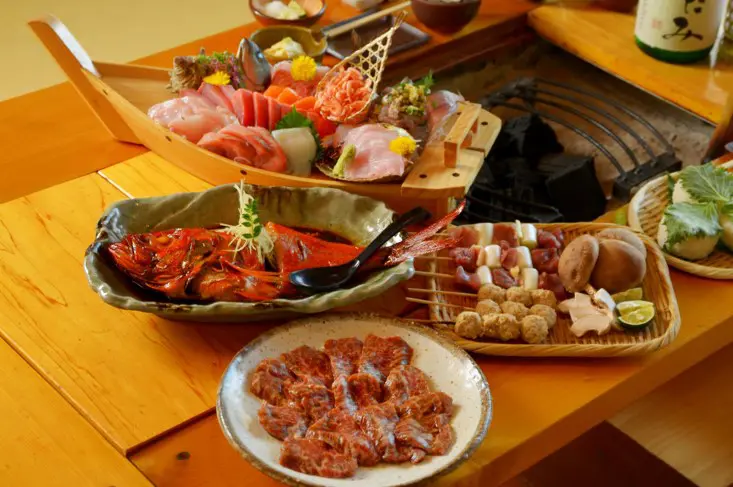
Enjoy Exceptional Cuisine Made with Local Ingredients! 3 Popular Restaurants in Izu
Here are some popular restaurants where you can enjoy seasonal flavors, including fresh seafood and locally grown vegetables, in a variety of dishes.
One of their charms is the careful cooking of carefully selected ingredients, creating meals that are as visually appealing as they are delicious.
Along with Izu’s beautiful natural scenery, be sure to enjoy its exceptional local cuisine as well.
1. Honke Maguroya
A specialty restaurant in a quiet residential area of the Izu Highlands, serving tuna and local fish dishes.
Using carefully selected premium tuna sourced through its own network, the restaurant offers rare cuts of tuna and various delicacies that only a tuna specialty restaurant can provide.
In addition, the owner, a broker for the Izu Inatori Fishery Cooperative, uses his expert eye to carefully source and serve the trademarked branded splendid alfonsino known as “Inatori Kinmedai.”

2. Mikuni Izu Kogen
A restaurant located just a short walk from the Izu Kogen Sakuranamiki-guchi entrance.
It serves beautifully prepared Mediterranean cuisine using ingredients from Izu’s rich natural environment, including seafood centered on local fish from Ito and Shimoda, as well as freshly harvested vegetables.
The dishes are overseen by Kiyomi Mikuni, owner-chef of Hotel de Mikuni and the talent behind many popular restaurants. The building was designed by renowned architect Kengo Kuma.

3. Irorijaya
An izakaya with excellent access, located just a short walk from JR Atami Station.
You can enjoy scenic coastal views along with fresh seafood and mountain produce from Atami while gathering around the irori hearth.
At lunch, the menu focuses on set meals and rice bowls, with a variety of dried fish and sashimi available.
At dinner, you can enjoy skewers and dried fish cooked over the irori together with sake carefully selected by the owner.
Relax with Scenic Views and Hot Springs! 3 Recommended Accommodations in Izu
Here are accommodations where you can fully enjoy one of Izu’s greatest attractions, its hot springs, while also taking in beautiful views.
These are perfect places to relax and soothe your body after a day of sightseeing, so consider them as your base for exploring Izu.
1. Village Izu Kogen
A resort hotel in the Izu Highlands with extensive facilities and amenities, making long-term stays possible.
All rooms are suites with ocean views and kitchens, and the wide variety of room types is a major draw, including rooms for 6 to 7 guests suitable for three generations or groups, rooms with open view baths, and dog-friendly rooms in a dedicated building for guests traveling with their pets.

2. SORA Togetsusou Kinryu
Shuzenji has a history of over 1,200 years and flourished as Izu’s oldest hot spring area.
At “SORA Togetsusou Kinryu,” you can enjoy this beloved hot spring in a variety of open-air baths.
The open-air baths, designed by spatial designer Hisanobu Tsujimura, create a fantastical atmosphere enhanced by lighting effects, and the baths connected to the indoor baths also offer soothing views of nature.

3. Yumotokan
Yugashima is a quiet hot spring area along the Kano River valley in the Amagi Mountains.
Hot spring inns are scattered among the dense greenery, and Yumotokan is especially well known as the inn where Nobel Prize-winning author Yasunari Kawabata wrote “The Dancing Girl of Izu.”
This traditional Japanese inn has a retro atmosphere that makes you feel as if you have stepped back in time the moment you enter.

FAQ about Izu Sightseeing
Q
Where should I go to enjoy Izu in a short amount of time?
Atami and Ito are recommended because they are easy to access from Tokyo in a short time and have many sightseeing spots.
Q
What are Izu’s famous local foods?
Dishes made with seafood such as splendid alfonsino, spiny lobster, turban shell, and horse mackerel are local specialties.
Summary
In this article, we introduced popular tourist spots in Izu as well as the best seasons to visit.
One of Izu’s greatest charms is that you can enjoy both the sea and mountain landscapes while also savoring delicious local food.
With many hot spring areas, it also offers plenty of accommodations where you can relax after your trip.
By visiting the spots introduced here, you will be able to fully experience Izu’s appeal through spectacular views, gourmet food, and hot springs.
Shizuoka Prefecture has many attractive sightseeing destinations beyond Izu as well.
It is also recommended to travel beyond Izu and explore other sightseeing spots in Shizuoka.
The article below introduces carefully selected classic sightseeing spots in Shizuoka Prefecture, so be sure to check it out as well.