
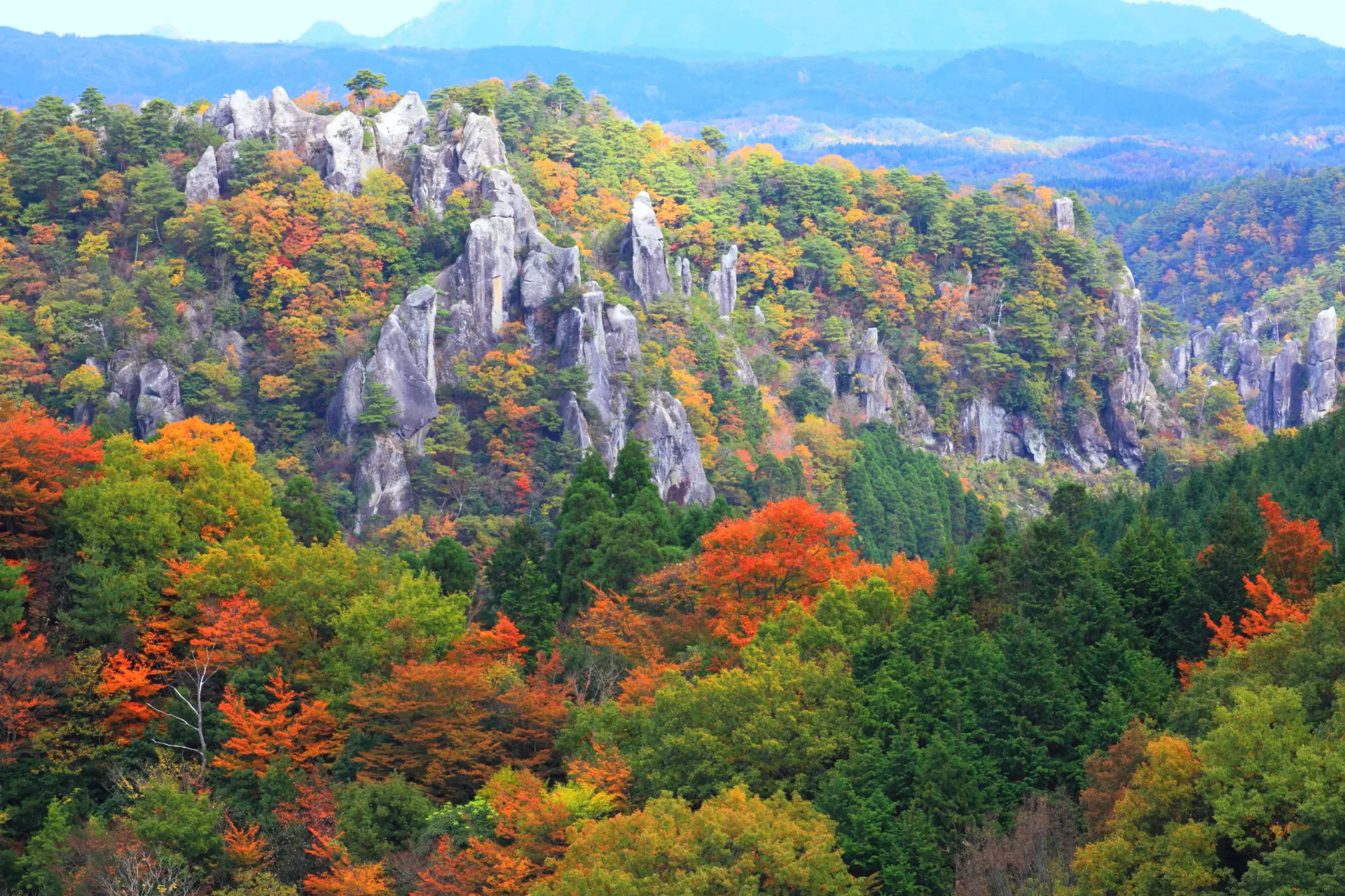
35 Best Places to See Autumn Leaves in Kyushu with Spectacular Scenery Shaped by Majestic Nature
Kyushu is a region in southwestern Japan made up of seven prefectures: Fukuoka, Saga, Nagasaki, Oita, Kumamoto, Miyazaki, and Kagoshima.
In autumn, the region offers a wide range of scenery, from grand valleys turning crimson to historic shrines and temples framed by vivid fall foliage.
This article introduces autumn leaves spots across Kyushu and their best viewing seasons.
Use it to help plan your trip and fully enjoy Kyushu wrapped in beautiful fall colors.
Kyushu: A Place to Discover Diverse Autumn Scenery Colored by Fall Leaves
Kyushu is blessed with diverse natural landscapes, including rich hot springs created by active volcanoes, dramatic coastlines, and deep, rugged mountains.
That is why its autumn leaves spots are just as varied.
From valleys with sheer cliffs painted in brilliant colors, to dreamy foliage blending with the steam of hot spring towns, to majestic autumn leaves enhancing historic castles, shrines, and temples, one of Kyushu’s greatest charms is being able to experience different kinds of fall scenery wherever you go.
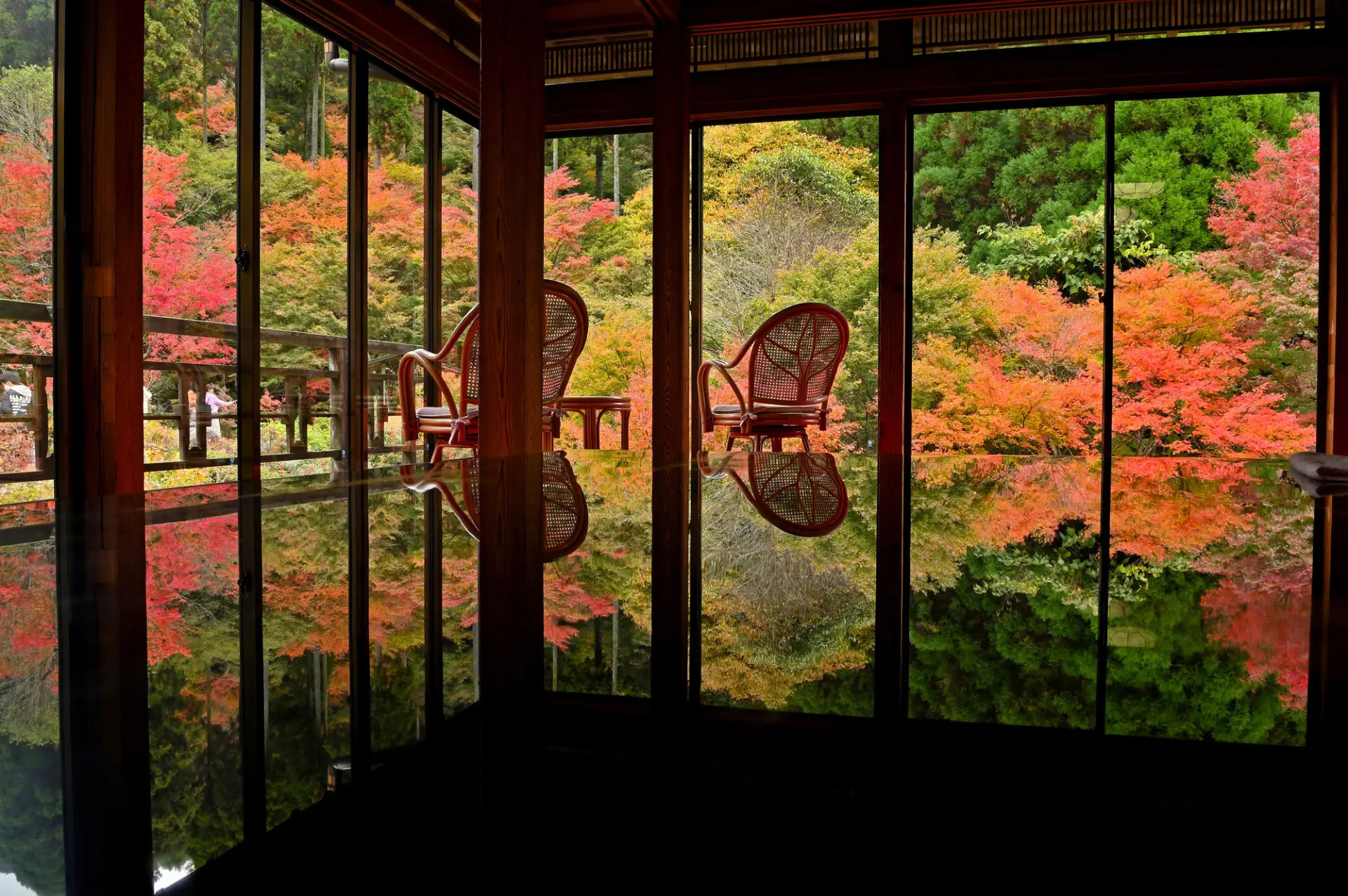
[Average Year] Best Time to See Autumn Leaves in Kyushu
Please refer to the table below for the best time to see autumn leaves in Kyushu.
These are the average peak seasons, so keep in mind that timing may vary somewhat.
The best viewing period also differs depending on the spot, so please check the average best season listed for each destination introduced below.
- Fukuoka
- mid-November–early December
- Saga
- early November–early December
- Nagasaki
- mid-November–early December
- Oita
- late October–early December
- Kumamoto
- early November–mid-November
- Miyazaki
- early November–late November
- Kagoshima
- early November–early December
Best Time to See Autumn Leaves in Kyushu in 2025
The table below summarizes the expected best time to see autumn leaves in the Kyushu region, announced on October 2, 2025, by the weather information company Nihon Kishou Co., Ltd. Overall, the season is expected to be generally close to average, but Fukuoka, Nagasaki, and Kumamoto are forecast to be later than usual.
However, please note that peak timing may shift depending on each spot and future temperatures.
- Fukuoka
- around December 9
- Saga
- around December 6
- Nagasaki
- around December 15
- Oita
- around December 1
- Kumamoto
- around December 9
- Miyazaki
- around December 7
- Kagoshima
- around December 13
Source: Nihon Kishou Co., Ltd.
Source: Otenki Navigator
Take in Atmospheric Autumn Scenery! 5 Best Autumn Leaves Spots in Fukuoka
Fukuoka Prefecture is the gateway to Kyushu, and its modern cities bustle with many tourists.
However, if you go just a little beyond the urban areas, you will find abundant nature.
One of Fukuoka’s charms is the variety of autumn leaves spots scattered across the prefecture, from historic castle towns and shrines and temples to mountains revered as sacred peaks.
Here, we introduce five especially recommended autumn foliage spots.
1. Akizuki Castle Ruins
Located almost in the center of Fukuoka Prefecture, Akizuki has a long history as a castle town. Development was delayed after the samurai class declined in the Meiji period and because the town was away from major transportation routes, which helped preserve the appearance of the old castle town to this day.
Akizuki is one of Japan’s 126 Important Preservation Districts for Groups of Traditional Buildings. Among them, only four are castle towns, and Akizuki is unique in that the entire town is designated. Thanks to its charming castle-town atmosphere, it is known as “Little Kyoto of Chikuzen.”
It is also famous as an autumn leaves destination, and the foliage that colors the Akizuki Castle Ruins, designated a historic site by Fukuoka Prefecture, along with the Main Gate (Kuromon) and Nagayamon Gate, both designated important cultural properties by Fukuoka Prefecture, is exceptionally beautiful and attracts many visitors.
Along Suginobaba Street leading to the Akizuki Castle Ruins, stalls line the way, allowing visitors to enjoy tea and sweets while taking in the beautiful castle-town scenery colored by autumn leaves.
- Best Time to See Autumn Leaves (Average Year)
- mid-November–late November
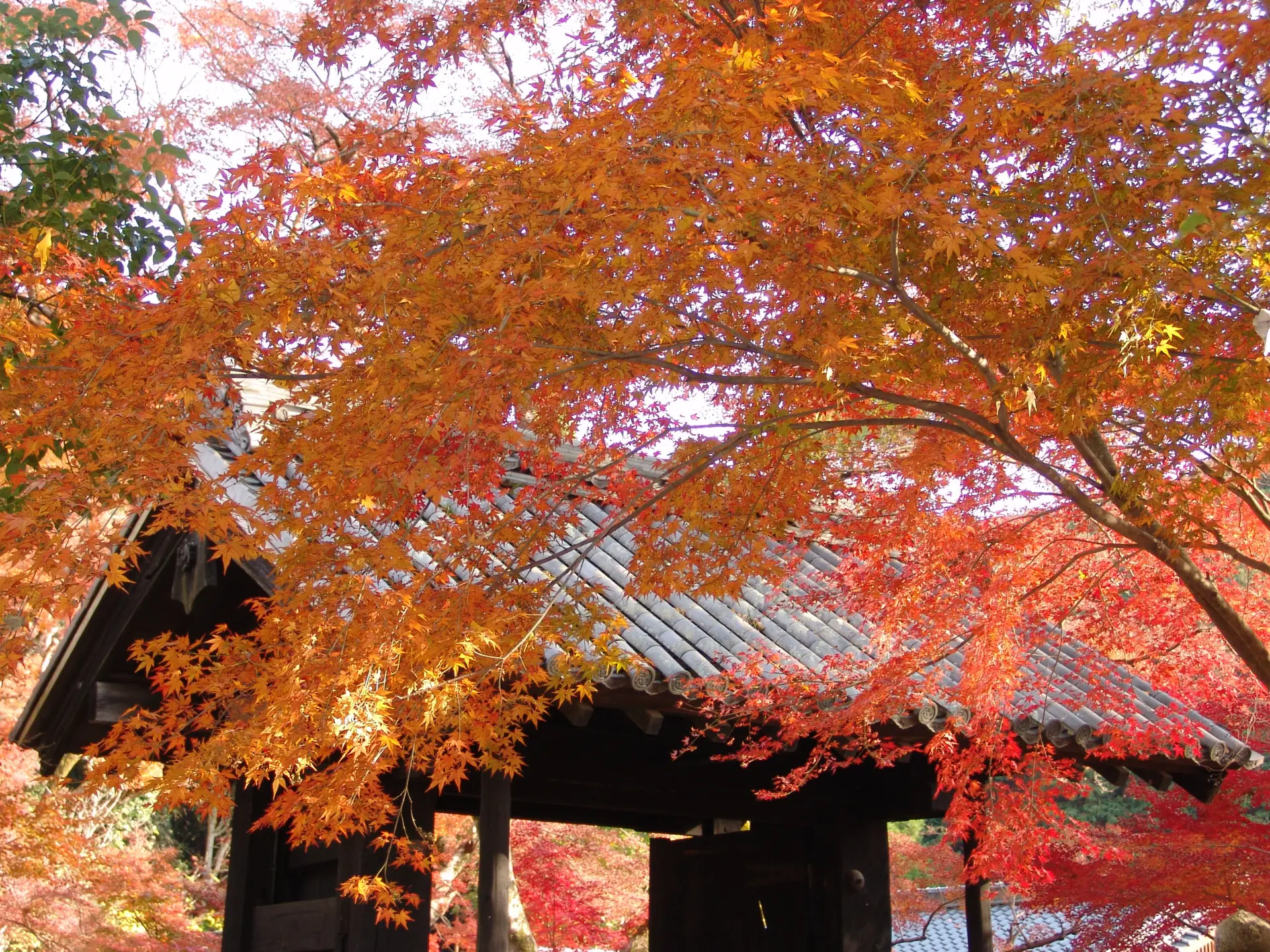
2. Nomiyama Kannonji Temple
Located at the foot of Mt. Hokodate, Nomiyama Kannonji Temple is a special head temple of the Koyasan Shingon sect, a status equivalent to a main temple.
It is a highly revered temple and receives over 1 million worshippers each year.
Not only that, it also serves as a place of training where many monks gather.
There are many highlights, including over 3,000 Mizuko Jizo statues, the Daishido Hall dedicated to Kobo Daishi, and the Inari Shrine dedicated to Inari Daimyojin.
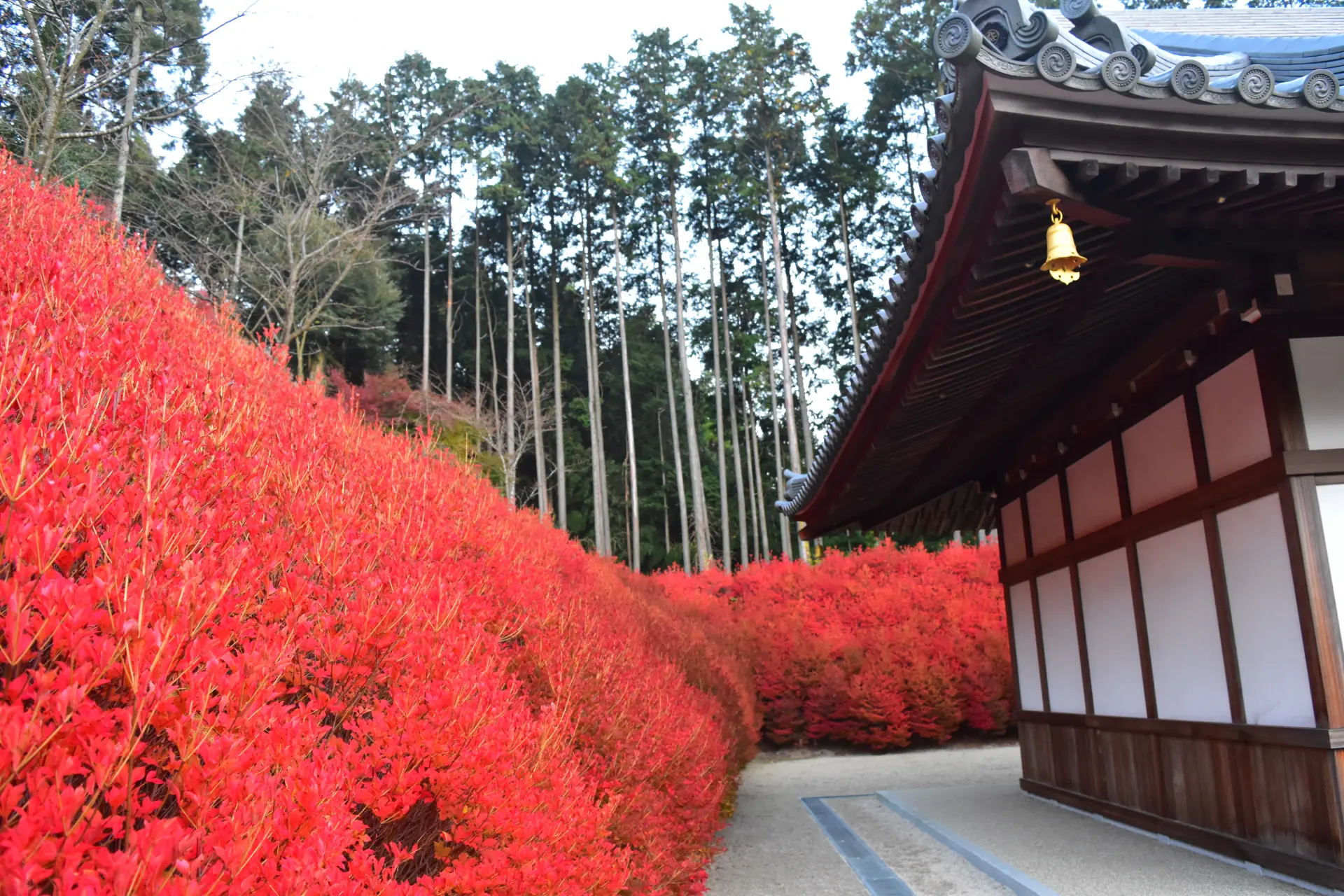
The temple grounds and approach are lined with over Approx. 1,000 maple trees and over Approx. 1,000 azaleas, and in autumn, the colorful foliage enhances the solemn atmosphere.
There are many beautiful foliage spots here, but the Approx. 600 Enkianthus trees planted behind Hyakkanondo Hall, turning the entire area bright red, are especially not to be missed.
- Best Time to See Autumn Leaves (Average Year)
- late October–mid-November
3. Kitakyushu Municipal Shiranoe Botanical Garden
A relaxing place for local residents spread across a small hill, this botanical garden has a history of nearly 80 years and lets visitors enjoy natural scenery shaped by plants throughout the year.
In autumn, Approx. 800 iroha maple trees and other species turn color, creating charming scenery.
Because the iroha maples are found throughout the garden, you can stroll around while admiring the beautiful trees turning yellow and red.
A recommended foliage spot is Komorebi no Michi, or “Sunbeams Path.” It is a quiet area lined with large iroha maple trees, where you can fully feel the mood of autumn.
During the peak foliage season, the Momiji Festival is held, where visitors can also enjoy a botanical market, concerts, and tea gatherings alongside the autumn leaves.
- Best Time to See Autumn Leaves (Average Year)
- late November–early December
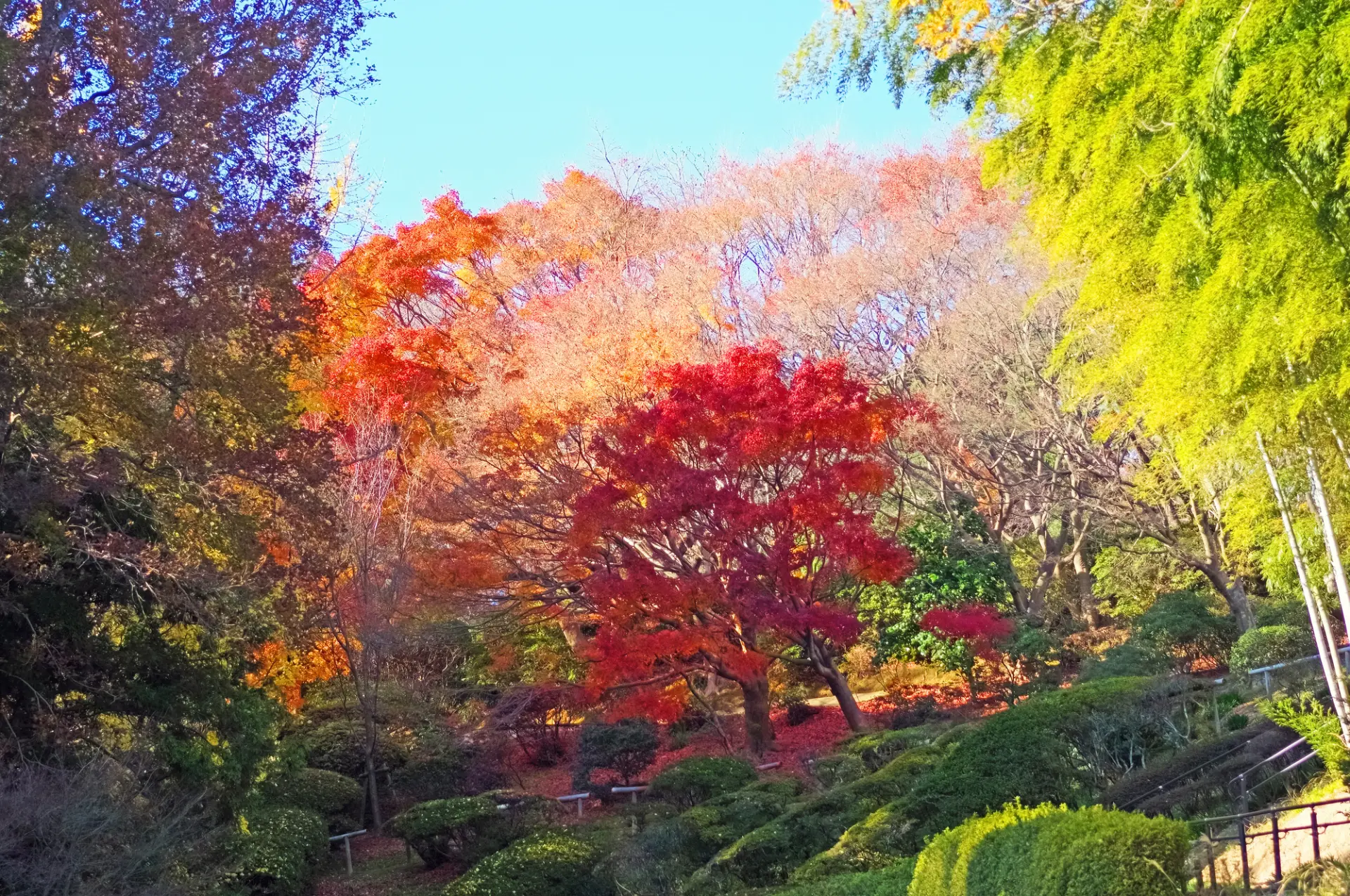
4. Katsuyama Park
A park that can be considered a symbol of Kitakyushu City, located in northeastern Fukuoka.
Within the park are tourist and cultural facilities such as Kokura Castle, Kokura Castle Garden, and the Central Library.
There are also plenty of family-friendly spaces such as the Great Lawn Plaza and the Murasaki River Waterside Plaza, making it popular with many local residents.
Katsuyama Park is also known as a great place for autumn leaves, with many wax trees and ginkgo trees planted throughout, making it one of the tourist spots to visit in autumn.
The zelkova trees around the Kokura Castle keep are especially impressive and stately.
During the autumn foliage season, illuminations and the Kokura Castle Bamboo Lantern Festival are also held, creating a magical scene with 30,000 bamboo lanterns glowing in the castle keep plaza.
- Best Time to See Autumn Leaves (Average Year)
- mid-November–early December
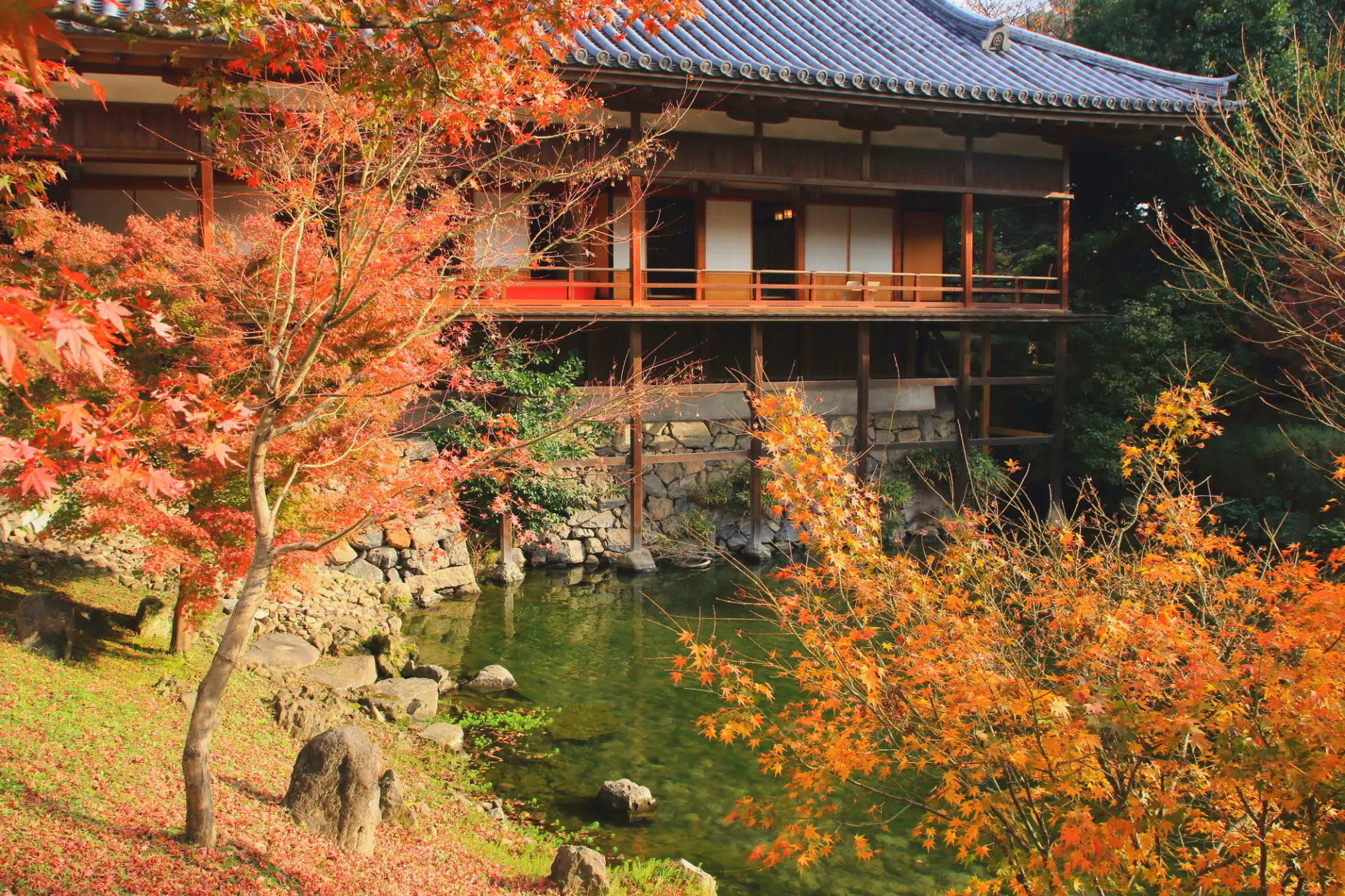
5. Mt. Hikosan
Located on the border between Fukuoka and Oita, Mt. Hikosan is a mountain of Approx. 1,200 meters above sea level made up of three peaks.
The mountain itself is considered a sacred object of worship and has long been revered as a holy mountain.
It is also known as a famous autumn leaves spot, and when the foliage reaches its peak, many hikers visit to enjoy the spectacular autumn views spreading out below from the summit.
At the center stands Hikosan Jingu Hoheiden, a shrine building designated as an Important Cultural Property by the national government.
Within the grounds of Hikosan Jingu, the Hikosan Slope Car runs alongside the approach.
You can enjoy a 7-minute aerial ride while taking in the beautiful autumn leaves.
Another nice point is that the foliage begins near the summit and the best season comes later the farther down toward the foot you go, allowing visitors to enjoy autumn leaves over a long period.
- Best Time to See Autumn Leaves (Average Year)
- early November–mid-November
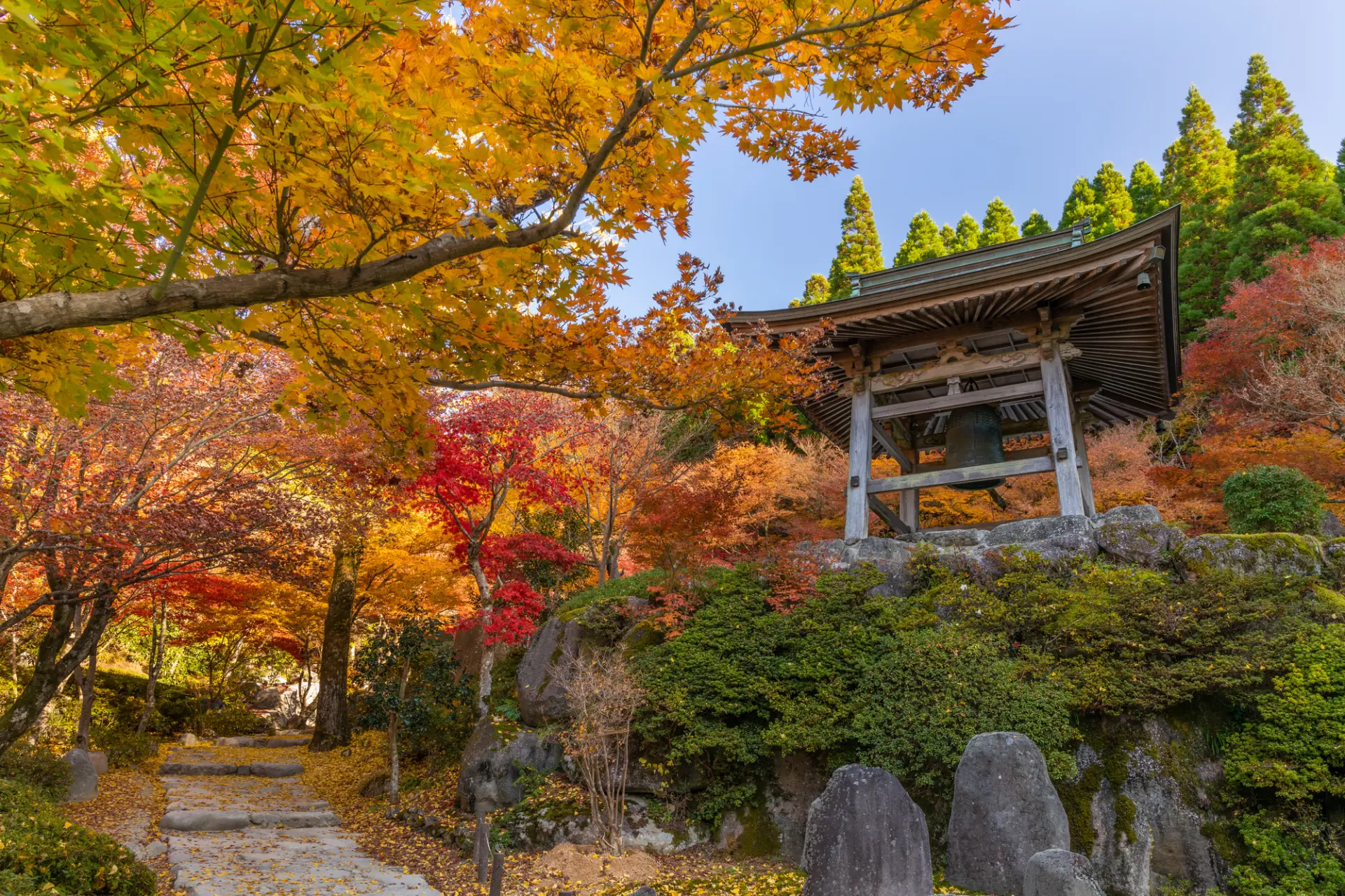

Can You See Autumn Leaves by the Sea? 5 Best Autumn Leaves Spots in Saga
Saga Prefecture is an area with many historic sites and a calm atmosphere.
In autumn, tranquil gardens and historic shrines and temples are wrapped in vivid fall colors.
Along the tidal flats facing the Ariake Sea, you can also see the unusual sight known as “autumn leaves of the sea,” where plants turn red.
From here, we introduce five foliage spots full of the unique charm of Saga.
1. Kujuen
Located in Kanzaki City, Saga Prefecture, Kujuen is a place designated as a National Place of Scenic Beauty.
It was named because a businessman from Saga spent nine years building it.
It is generally open to the public only twice a year for nine days each time, once during the fresh green season and once during the autumn foliage season.
(In 2025, the period will be extended, and it will be open for 16 days from November 15 to November 30.)
The scenery created by the harmonious combination of the elegant thatched-roof residence and the garden, where Approx. 130 maple trees turn color, evokes a sense of wabi-sabi.
Because this special autumn foliage can only be seen for a limited time, it is sure to leave a strong impression.
- Best Time to See Autumn Leaves (Average Year)
- mid-November–late November
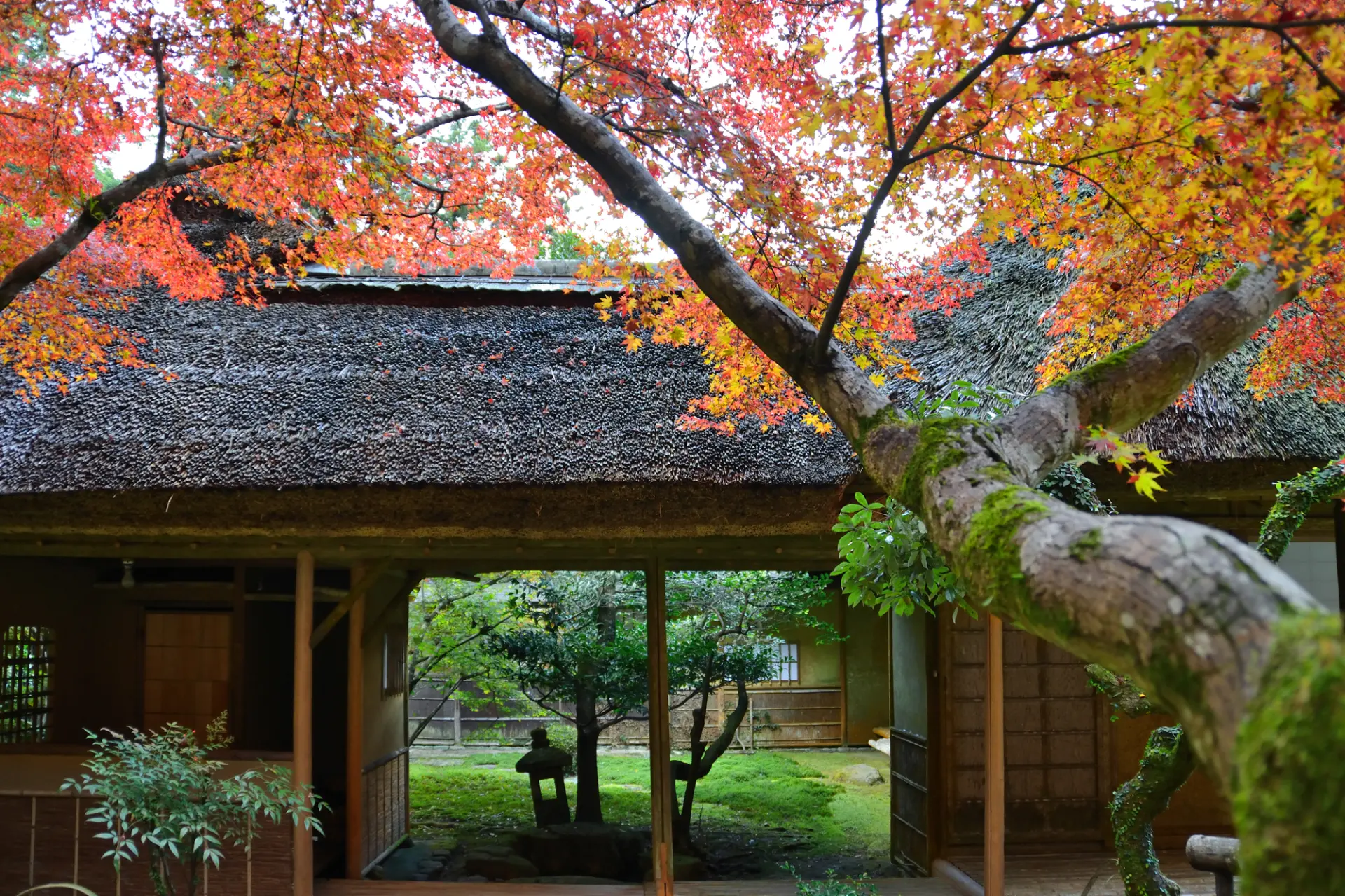
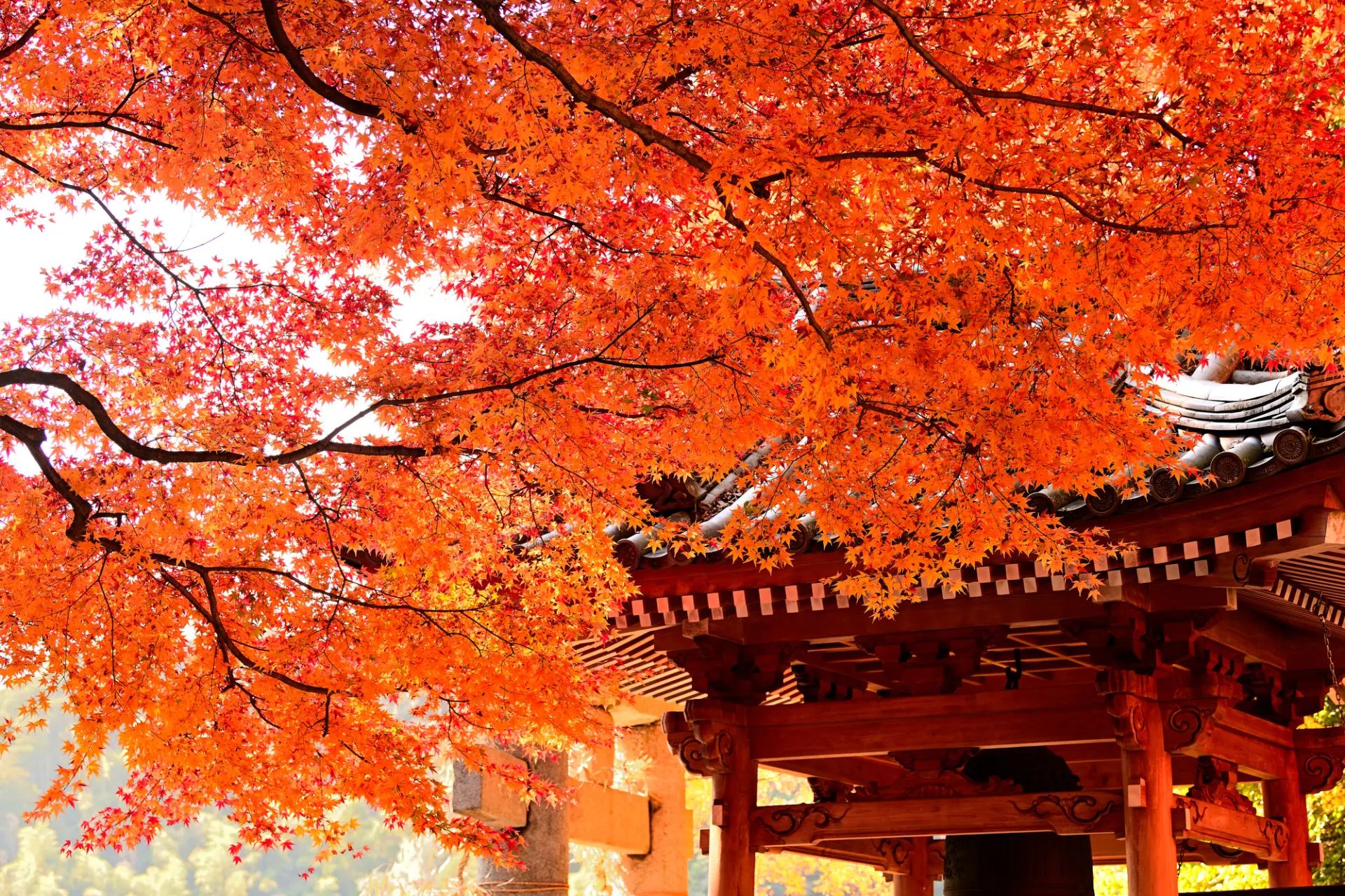
2. Daikozenji Temple
Daikozenji Temple in Kiyama Town, Miyaki District, Saga Prefecture, is an ancient Tendai sect temple with a history of over 1,300 years.
It is well known for its azaleas in spring, but its autumn leaves are also spectacular.
The vast garden behind the main hall, called Daikozenji Keien Garden, features Approx. 500 maple trees that dye the temple grounds a deep crimson.
The tunnel of autumn leaves arching over the stone stairway approach is especially beautiful.
At night, the area is also illuminated, allowing visitors to enjoy the foliage in a magical atmosphere different from the daytime.
- Best Time to See Autumn Leaves (Average Year)
- mid-November–early December
3. Higata Yoka Park
At Higata Yoka Park on the Higashiyoka coast in Saga City, a rare sight called the “autumn leaves of the sea” appears in autumn.
The main attraction is a halophyte plant called Shichimenso that grows naturally in the tidal flats of the Ariake Sea.
As autumn deepens, its green leaves turn reddish purple and spread across the ground, creating a scene like a red carpet.
This is a unique autumn foliage spot where you can also enjoy the scenery of tidal flats registered under the Ramsar Convention and the sight of migratory birds.
- Best Time to See Autumn Leaves (Average Year)
- late October–early November

4. Nishikei Park
Nishikei Park in Taku City, Saga Prefecture, is a relaxing place for locals that was landscaped by a businessman from the area and donated to the city.
It offers seasonal scenery throughout the year, with cherry blossoms in spring, autumn leaves in fall, and plum blossoms in winter.
Approx. 180 maple trees are planted in the park, and the area called Momiji Valley is especially known for its fiery red foliage.
The park also includes Kantei, a nationally registered Tangible Cultural Property, and a local history museum with materials related to Taku Seibyo.
The park adjoins Taku Seibyo, and the scenery created by the historic buildings and autumn leaves is also one of its highlights.
- Best Time to See Autumn Leaves (Average Year)
- mid-November–late November
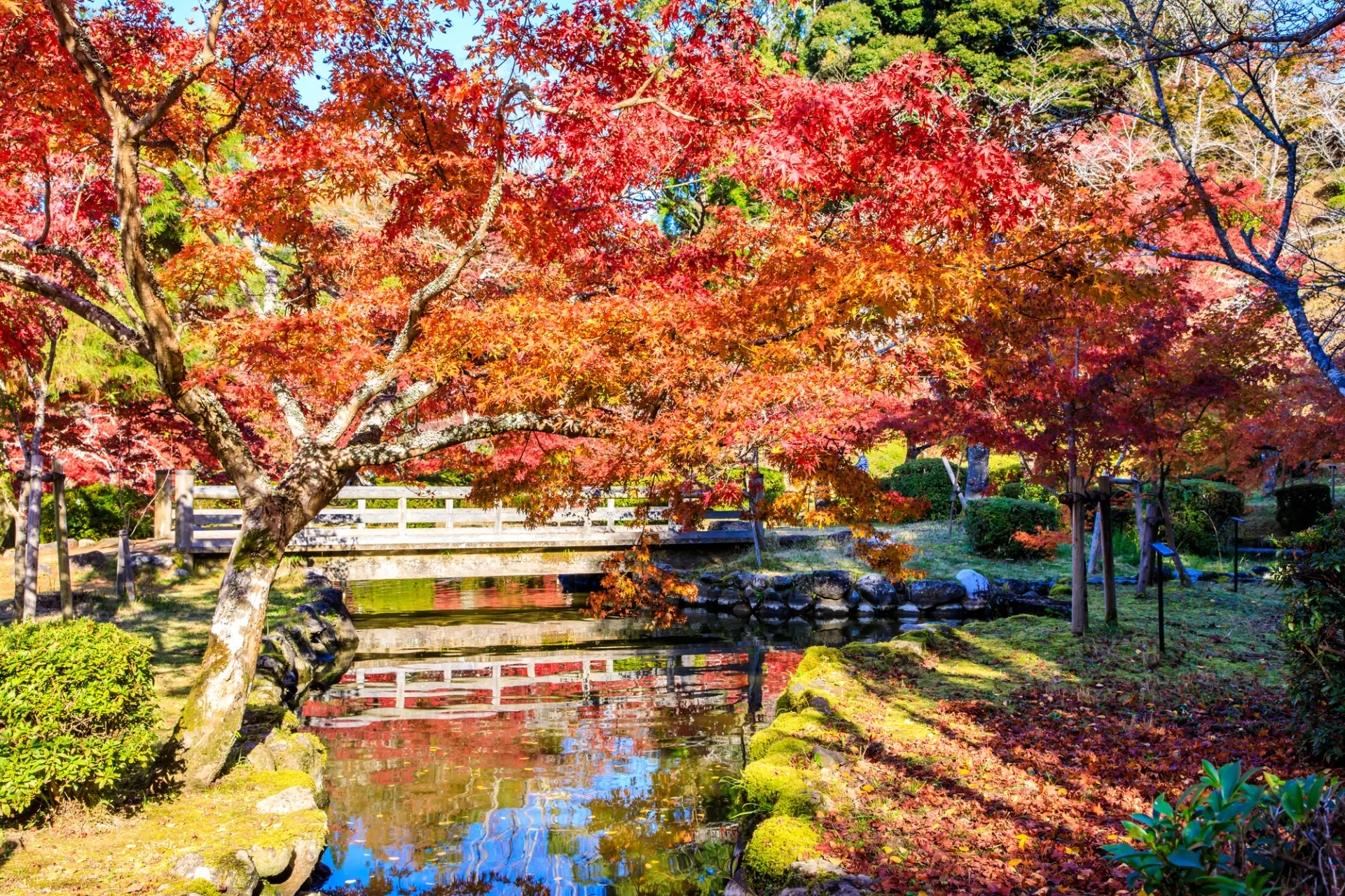
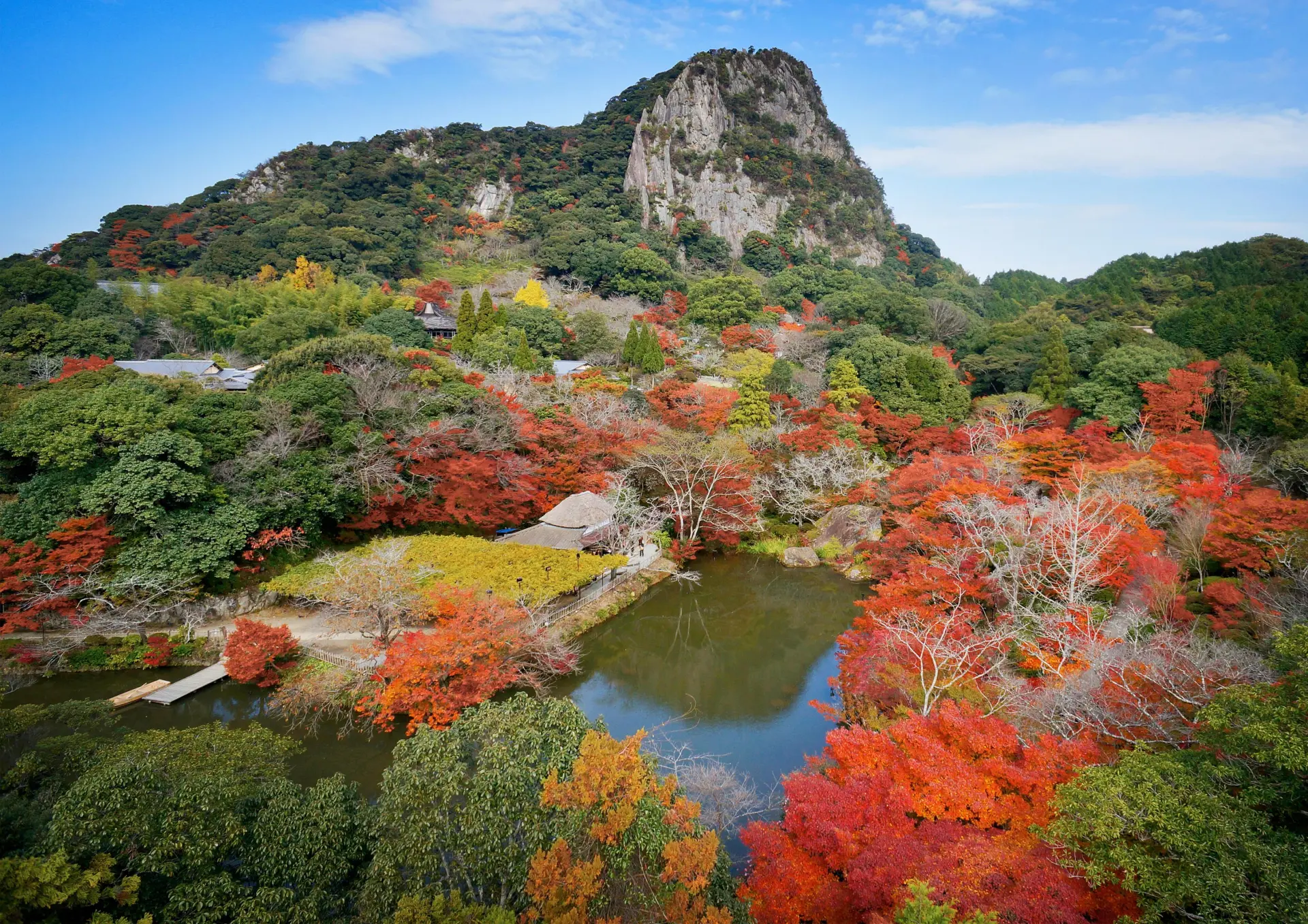
5. Mifuneyama Rakuen
Using the cliffs of Mt. Mifune, a symbol of Takeo, as borrowed scenery, this garden was created in 1845 by Shigeyoshi Nabeshima, the 28th lord of the Takeo domain, over a period of three years. It is a strolling garden centered around a large pond and boasts a vast site of Approx. 150,000 tsubo, about the size of 10 Tokyo Domes.
In autumn, iroha maples and large maples turn color, painting the expansive grounds in brilliant hues.
The nighttime illumination event Tamayura no Yuube is especially large in scale, and the “reflected autumn leaves” mirrored on the pond’s surface create a breathtaking scene that captivates visitors.
This is a grand autumn leaves destination that can be enjoyed both day and night.
- Best Time to See Autumn Leaves (Average Year)
- mid-November–early December
Don’t Miss the Artistic Reflections of Autumn Leaves! 5 Best Autumn Leaves Spots in Nagasaki
Nagasaki is known for its hillside streets and exotic cityscape.
In autumn, that unique topography and rich history combine with fall foliage to create distinctive scenery.
From dynamic mountains painted in autumn colors to elegant foliage enjoyed at quiet temples, the area offers many different faces of fall.
Here are five recommended autumn leaves spots in Nagasaki.
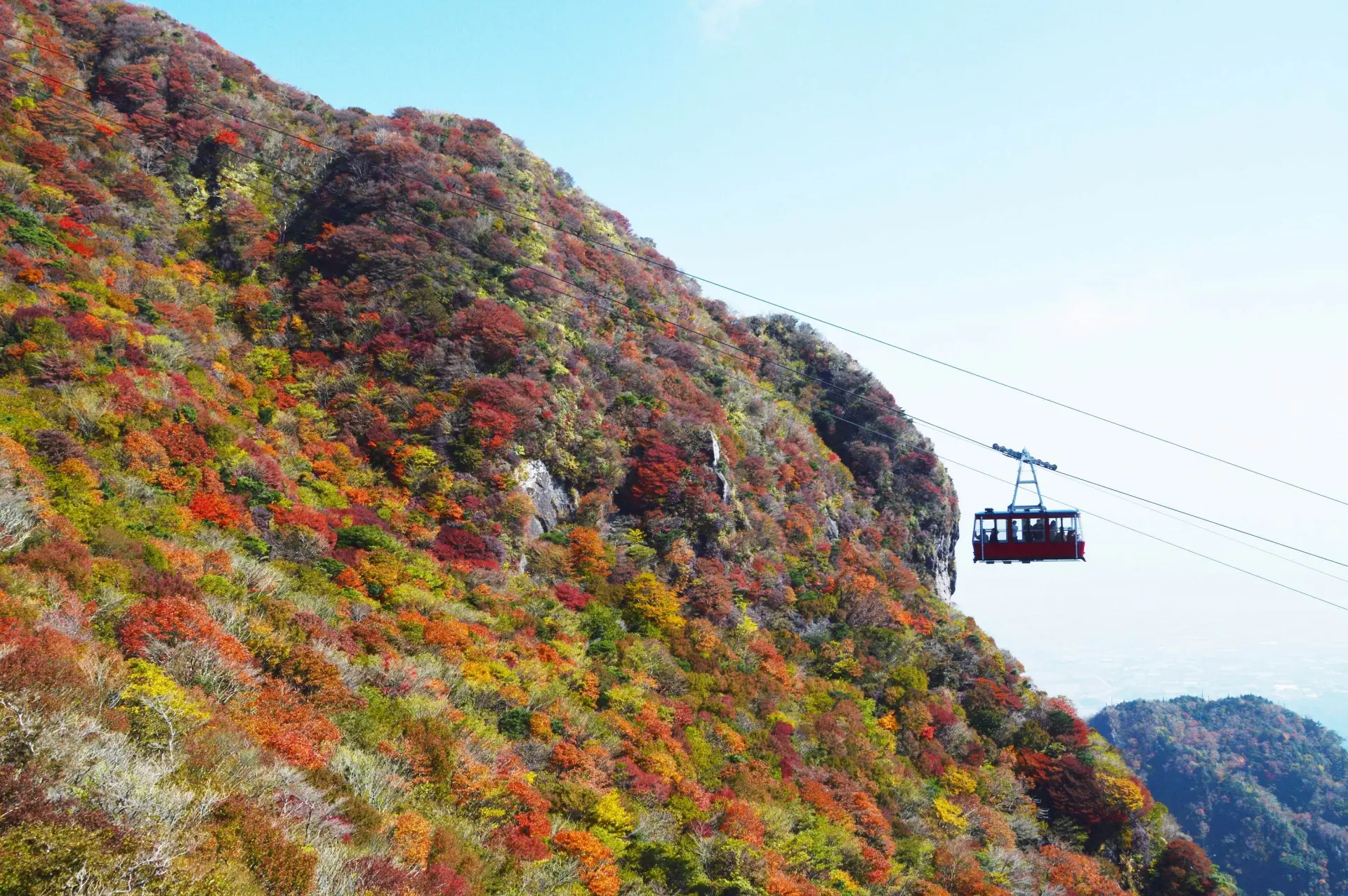
1. Unzen Ropeway
This ropeway, with a total length of Approx. 500 meters, connects Unzendake Nita Pass Station and Myokendake Station. It covers an elevation difference of Approx. 174 meters in Approx. 3 minutes and runs at 3-minute intervals. The gondolas use a tricable system.
At the summit-side Myokendake Station, there is a rooftop observation deck with views of Mt. Fugendake, Heisei-Shinzan, the Shimabara Peninsula, and the Amakusa Islands. In addition, if you walk for 5 to 6 minutes from the station, you can reach the Myokendake observation point at an elevation of 1,300 meters.
In autumn, mountain ash, maples, and other trees turn red and yellow, and from the gondola you can look out over a carpet of autumn leaves spreading below.
Enjoying the grand scenery of the Fugendake Autumn Forest, designated a National Natural Monument, from the sky makes for a truly special foliage experience.
- Best Time to See Autumn Leaves (Average Year)
- late October–early November
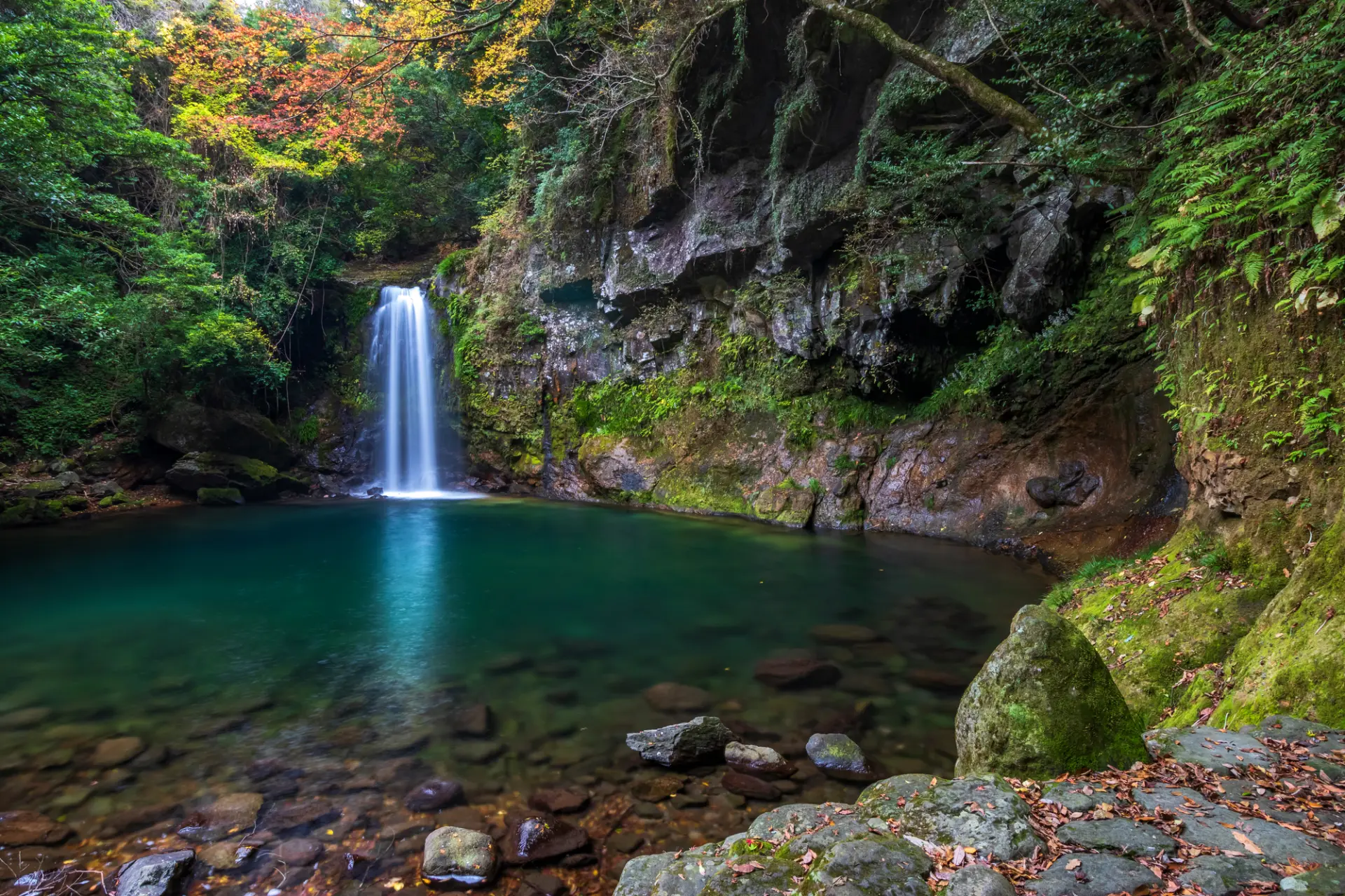
2. Todoroki Gorge
Todoroki Gorge in Isahaya City, Nagasaki Prefecture, is a valley with a clear stream selected as one of Japan’s 100 Exquisite and Well-Conserved Waters.
More than 30 waterfalls of various sizes continue one after another, and the pure flow of water and rich nature are its main attractions.
In autumn, the maples and other trees along the valley turn color all at once, creating beautiful scenery with a striking contrast of white waterfalls, black rocks, and red and yellow foliage.
Because walking paths are well maintained, visitors can safely enjoy a stroll while listening to the murmur of the stream.
Autumn leaf viewing while surrounded by refreshing negative ions is sure to leave you feeling renewed in both body and mind.
- Best Time to See Autumn Leaves (Average Year)
- mid-November
3. Misojien
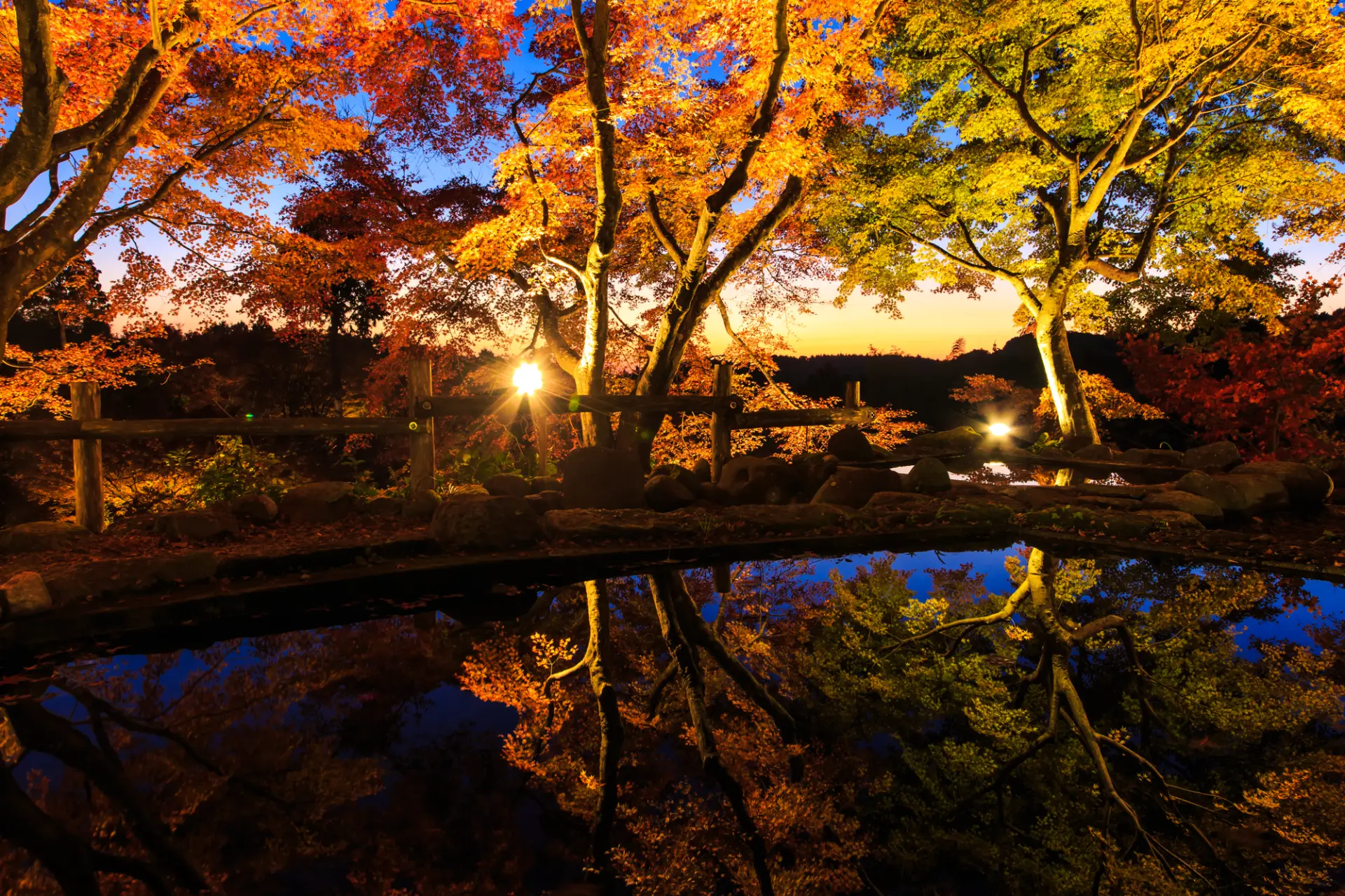
Misojien in Unzen City, Nagasaki Prefecture, is a vast maple garden of Approx. 8,000 tsubo that the owner spent more than 30 years creating.
Approx. 1,000 maple trees are planted in the garden, and in autumn the whole mountain turns a fiery red.
The carefully maintained garden is picturesque from every angle.
At night, the garden is illuminated, giving it a mysterious atmosphere different from the daytime.
This is a beloved autumn leaves spot created through the passion of a private individual.
- Best Time to See Autumn Leaves (Average Year)
- late November–early December
4. Shushi Maple Road
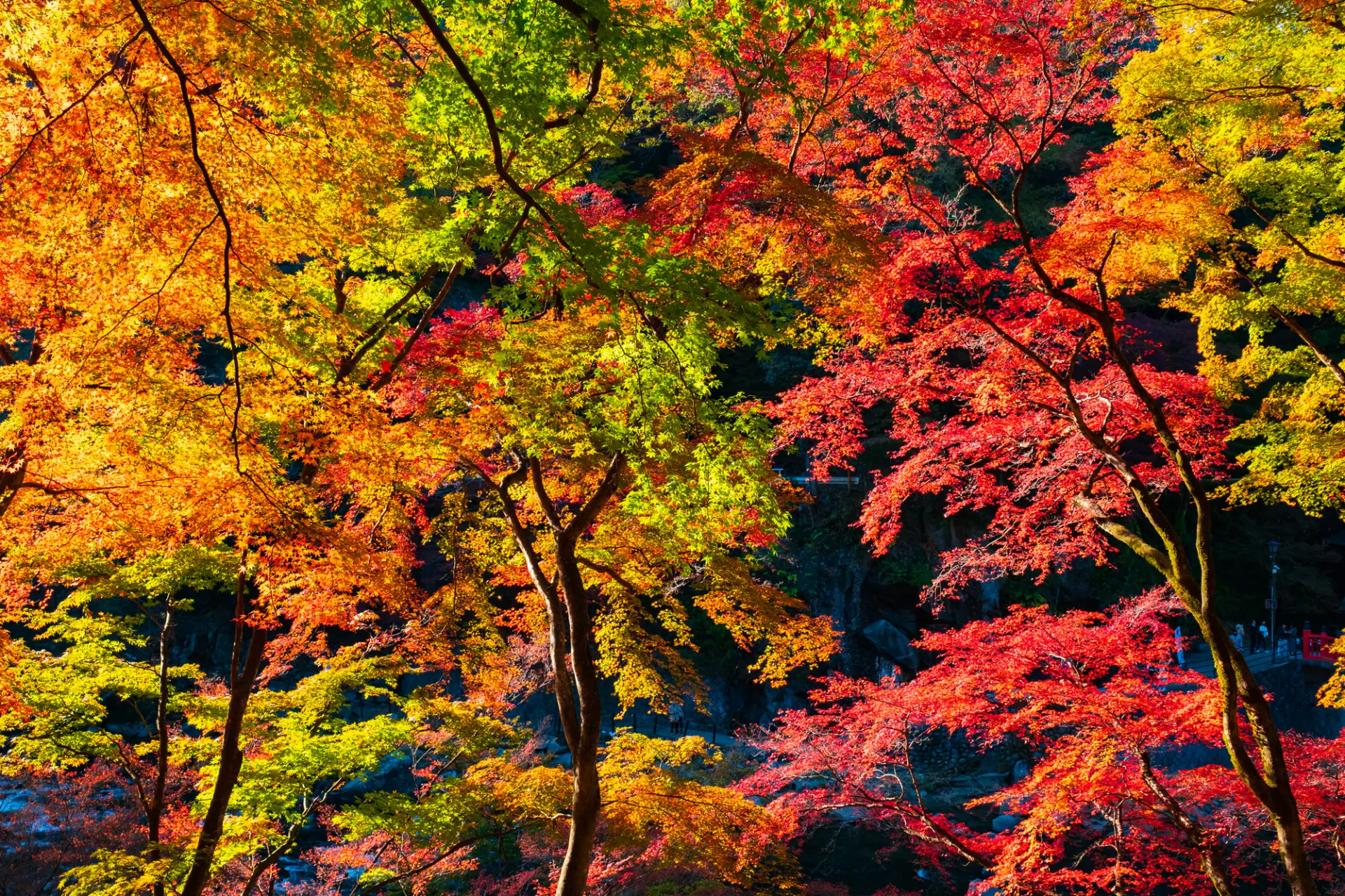
Shushi Maple Road on Tsushima, one of Nagasaki Prefecture’s remote islands, is a road stretching for Approx. 7 kilometers along the Shushi River.
Just as its name suggests, in autumn the clusters of maple trees turn color and create a beautiful tunnel of fall foliage.
It is recommended not only to enjoy the view from your car while driving, but also to park at the nearby Shushi Forest Park and take a leisurely walk.
The autumn leaves reflected on the calm river surface are also full of charm and captivate visitors.
This is a spot where you can quietly enjoy autumn leaves amid Tsushima’s abundant nature.
- Best Time to See Autumn Leaves (Average Year)
- mid-November–late November
5. Jufukuji Temple
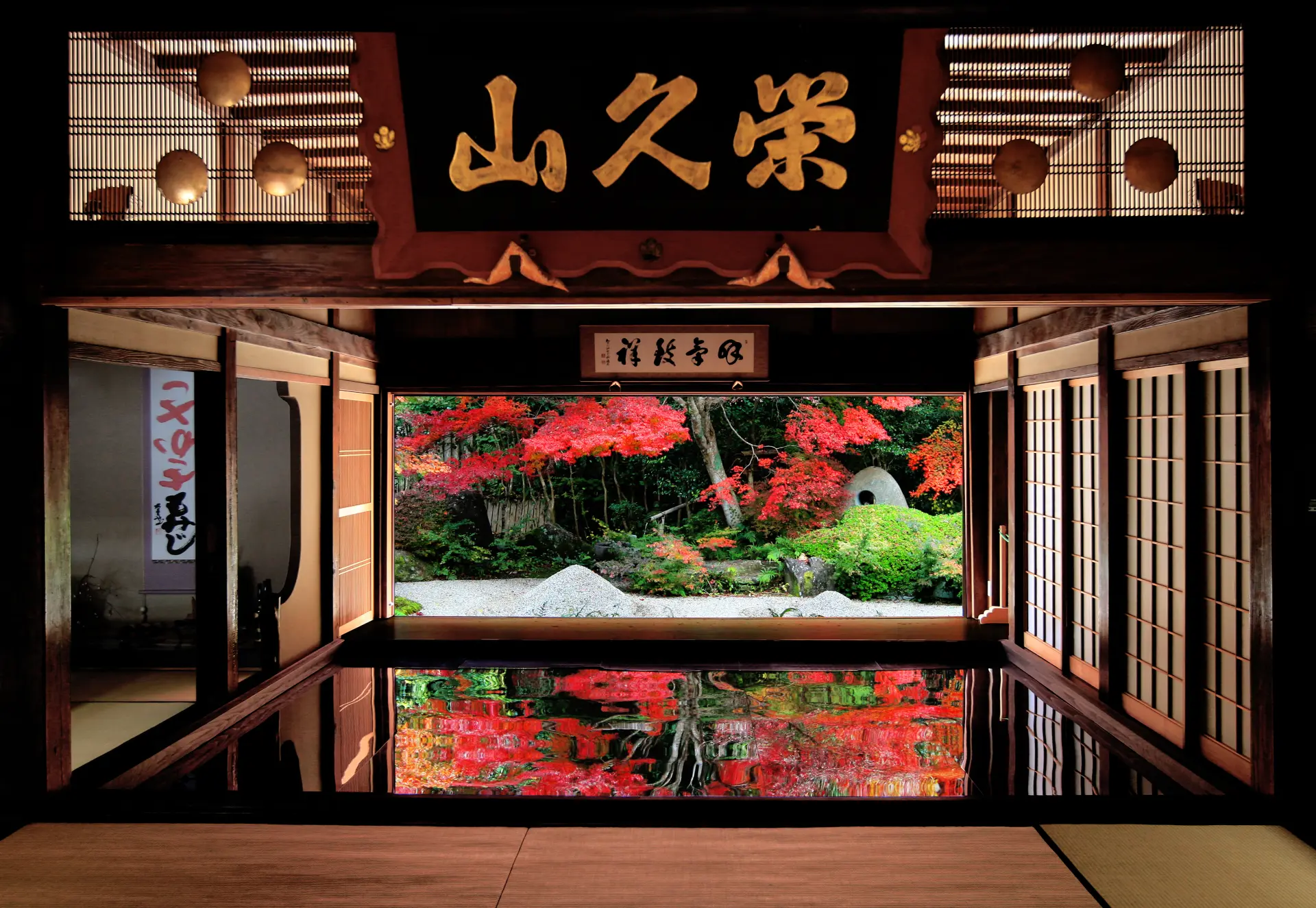
Jufukuji Temple, nestled in a quiet mountain village in Sasebo City, Nagasaki Prefecture, draws many visitors in autumn.
What they come for is the “reflected autumn leaves,” which are open to the public for a limited time.
By removing part of the tatami flooring in the main hall and fitting an acrylic panel in its place, the temple creates a magical scene in which the garden’s vivid reflected foliage appears like a mirror of water.
Here, visitors can enjoy art-like autumn leaves created by the ingenuity unique to a small temple and the serenity of the space.
- Best Time to See Autumn Leaves (Average Year)
- mid-November
5 Best Autumn Leaves Spots in Oita for Dynamic Landscapes and Unique Views
Famous as “Onsen Prefecture,” Oita is known not only for its hot springs but also for the magnificent autumn leaves nurtured by its grand natural landscapes.
You can find dynamic scenery here, from spectacular views looking down from Japan’s tallest suspension bridge to the contrast of autumn colors with valleys lined by unusual rock formations.
There are also deeply atmospheric fall scenes coloring historic sites and temples designated as National Treasures.
Here, we introduce five must-see autumn foliage spots in Oita.
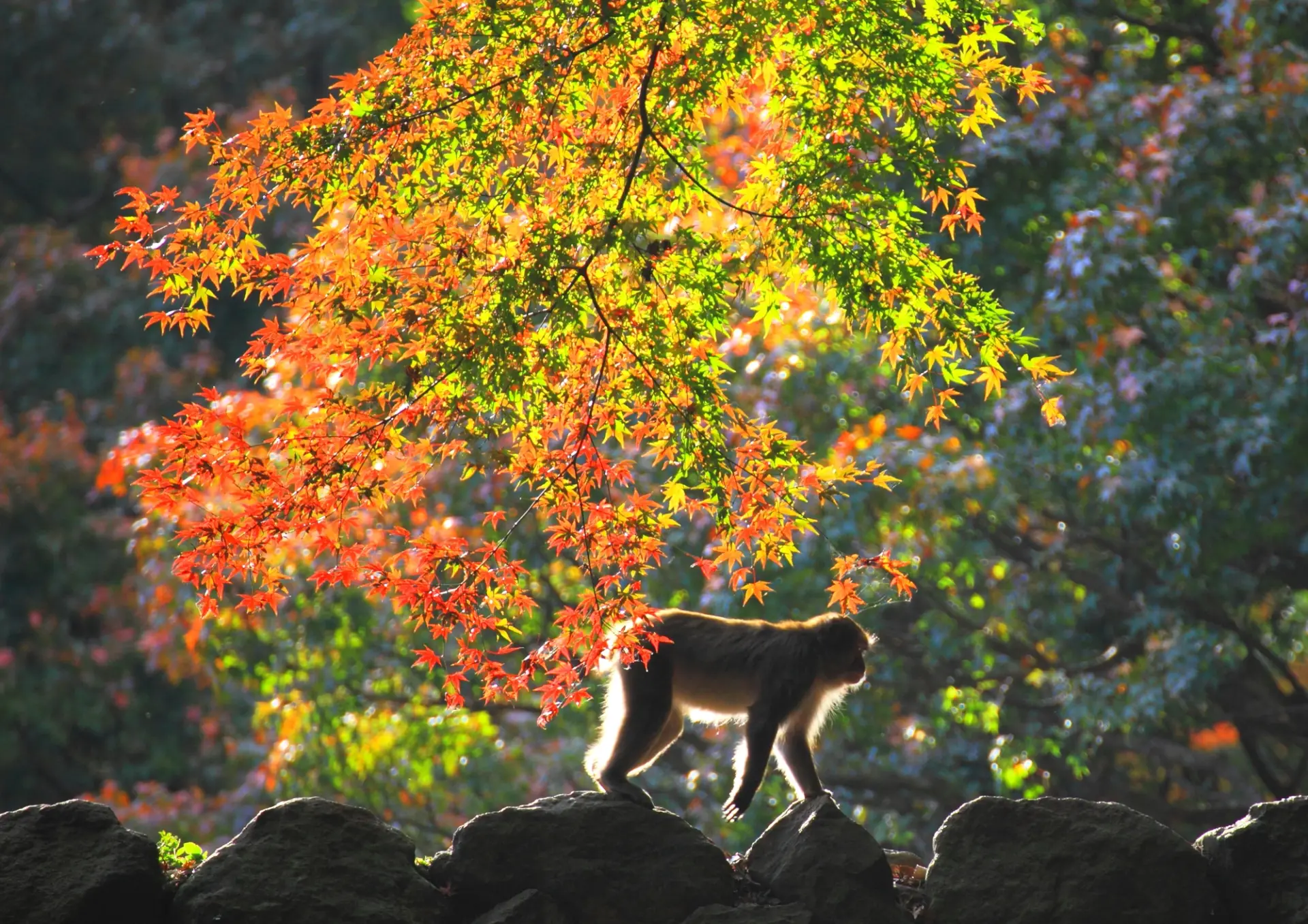
1. Oita Marine Palace Aquarium Umitamago and Takasakiyama Natural Zoological Garden
A zoo located at the foot of Mt. Takasaki, which has an elevation of 628 meters and stands next to Umitamago.
More than 70 years have passed since it opened in 1953, yet it remains popular with tourists as a natural zoological garden where wild monkeys can still be observed in a natural state.
In autumn, the trees in the park turn red and yellow, creating the unusual sight of adorable Japanese macaques playing among the autumn leaves.
The view of the mountainside above the monkey gathering area turning vivid colors is especially beautiful.
As a spot where visitors can enjoy the unique combination of animals and autumn leaves, it is also popular with families.
- Best Time to See Autumn Leaves (Average Year)
- early December
2. Fujigawachi Gorge
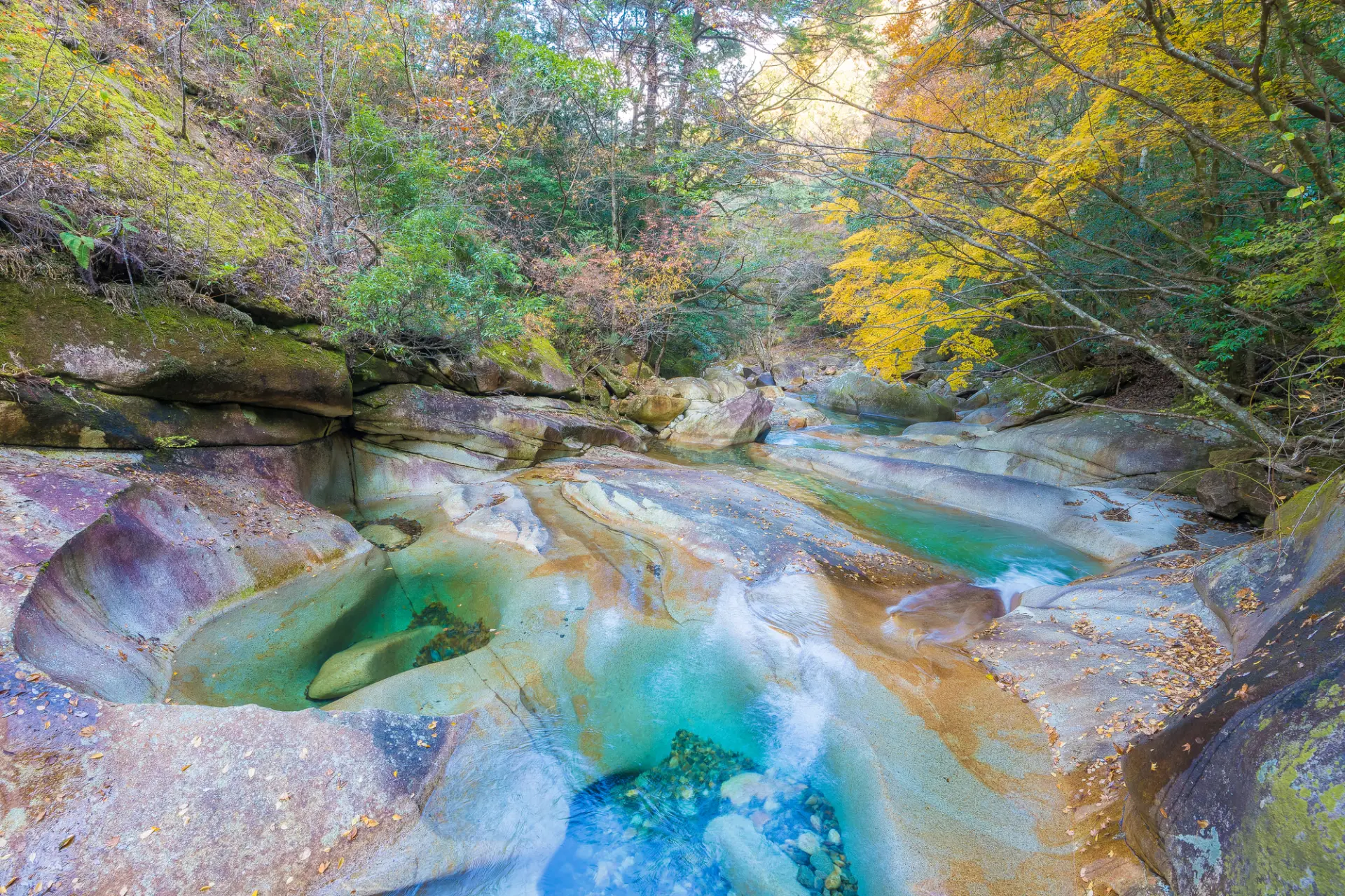
Fujigawachi Gorge in Saiki City, Oita Prefecture, is a nature-rich spot located within the Sobo, Katamuki and Okue UNESCO Eco Park.
It is known for its scenery where a clear stream seems to glide over a huge single slab of granite.
In autumn, the maples and other trees on both sides of the gorge turn color, creating a beautiful contrast of white rock, blue water, and red foliage.
The autumn leaves are especially beautiful in the area dotted with potholes known as ouketsu.
This is recommended for people who want to quietly feel the deepening of autumn in a place where untouched nature remains.
- Best Time to See Autumn Leaves (Average Year)
- late October–early November
3. Oka Castle Ruins, a National Historic Site
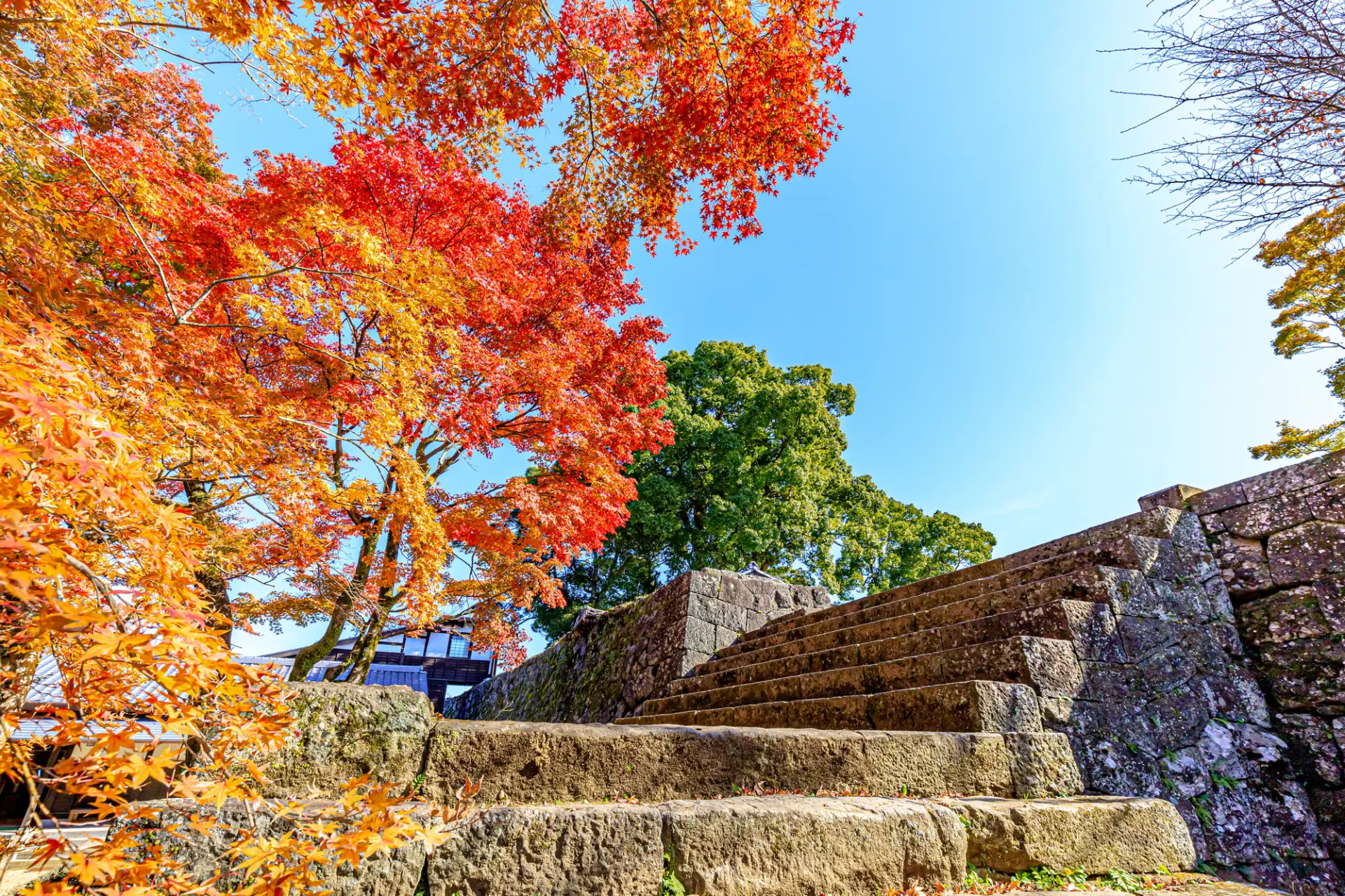
These are the ruins of Oka Castle, said to have been built in 1185 to welcome Minamoto no Yoshitsune. The castle stood on a rocky mountain 325 meters above sea level, formed by pyroclastic flows from Mt. Aso, and was praised as an impregnable fortress thanks to its sheer cliff location and impressive stone walls.
Although the buildings inside the castle were dismantled after the castle was abandoned, the stone walls still remain today, allowing visitors to sense the vestiges of the grand fortress of the past.
Approx. 2,500 trees, mainly maples, color the site in autumn, glowing vividly against the backdrop of the magnificent stone walls.
It is also known as the model for the famous song “Kojo no Tsuki” by composer Rentaro Taki, making it a place where you can enjoy autumn leaves while feeling a sense of historical romance.
The nighttime event featuring glowing bamboo lanterns is also not to be missed.
- Best Time to See Autumn Leaves (Average Year)
- mid-November–late November
4. Kyusuikei Gorge
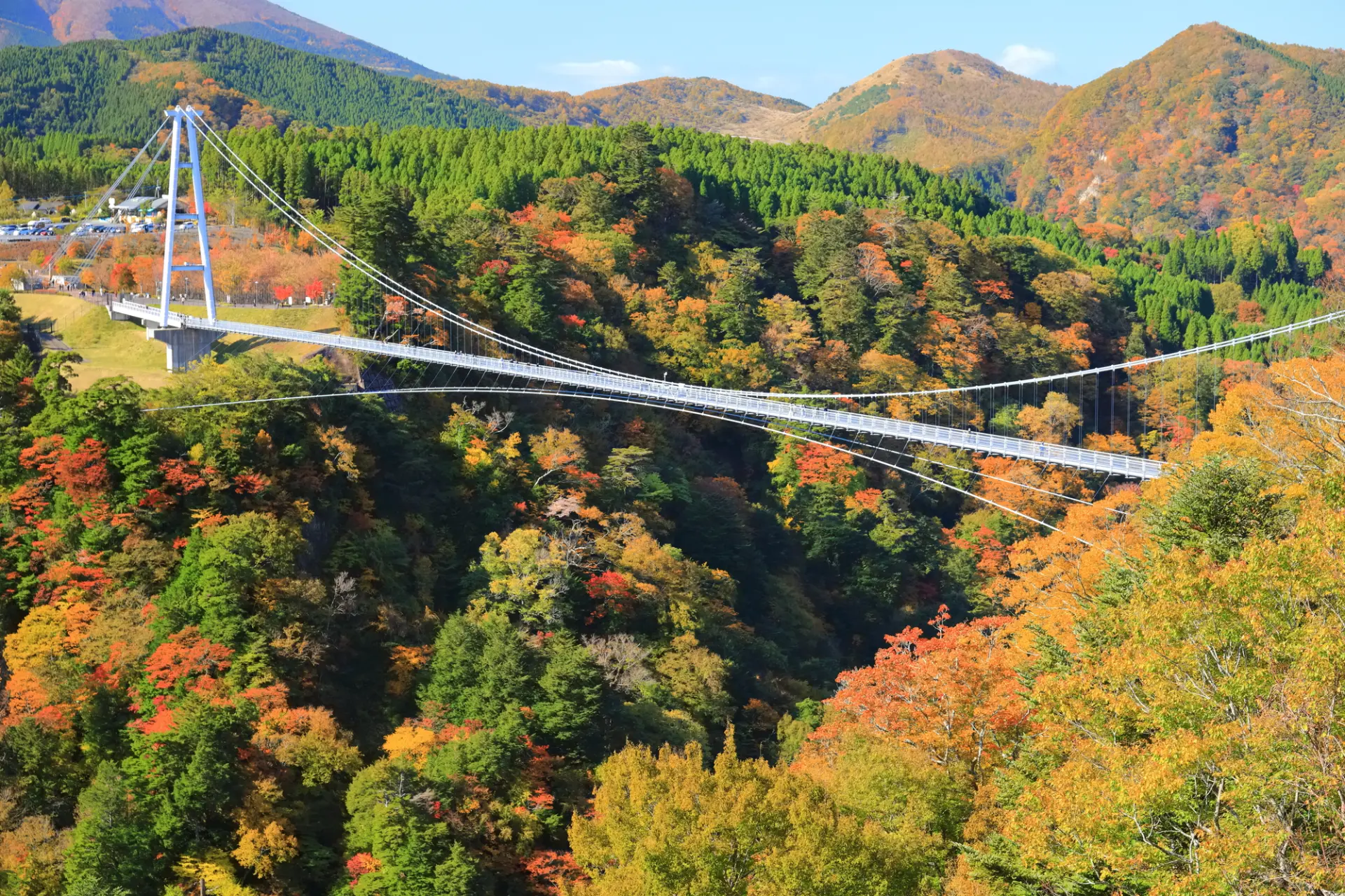
Kyusuikei Gorge in Kokonoe Town, Kusu District, Oita Prefecture, is a gorge of sheer cliffs stretching for Approx. 2 kilometers along the upper reaches of the Kusu River.
The valley, covered with virgin forest, turns into a spectacular scene like a brocade picture scroll in autumn, when maples, katsura trees, and others all change color at once.
The road along the gorge has many curves and is also called Jusankyoku, allowing visitors to enjoy one autumn foliage view after another while driving.
The gorge is also home to the pedestrian-only Kokonoe “Yume” Otsurihashi suspension bridge, the tallest in Japan, and the 360-degree autumn foliage panorama seen from the bridge is breathtaking.
- Best Time to See Autumn Leaves (Average Year)
- early November–mid-November
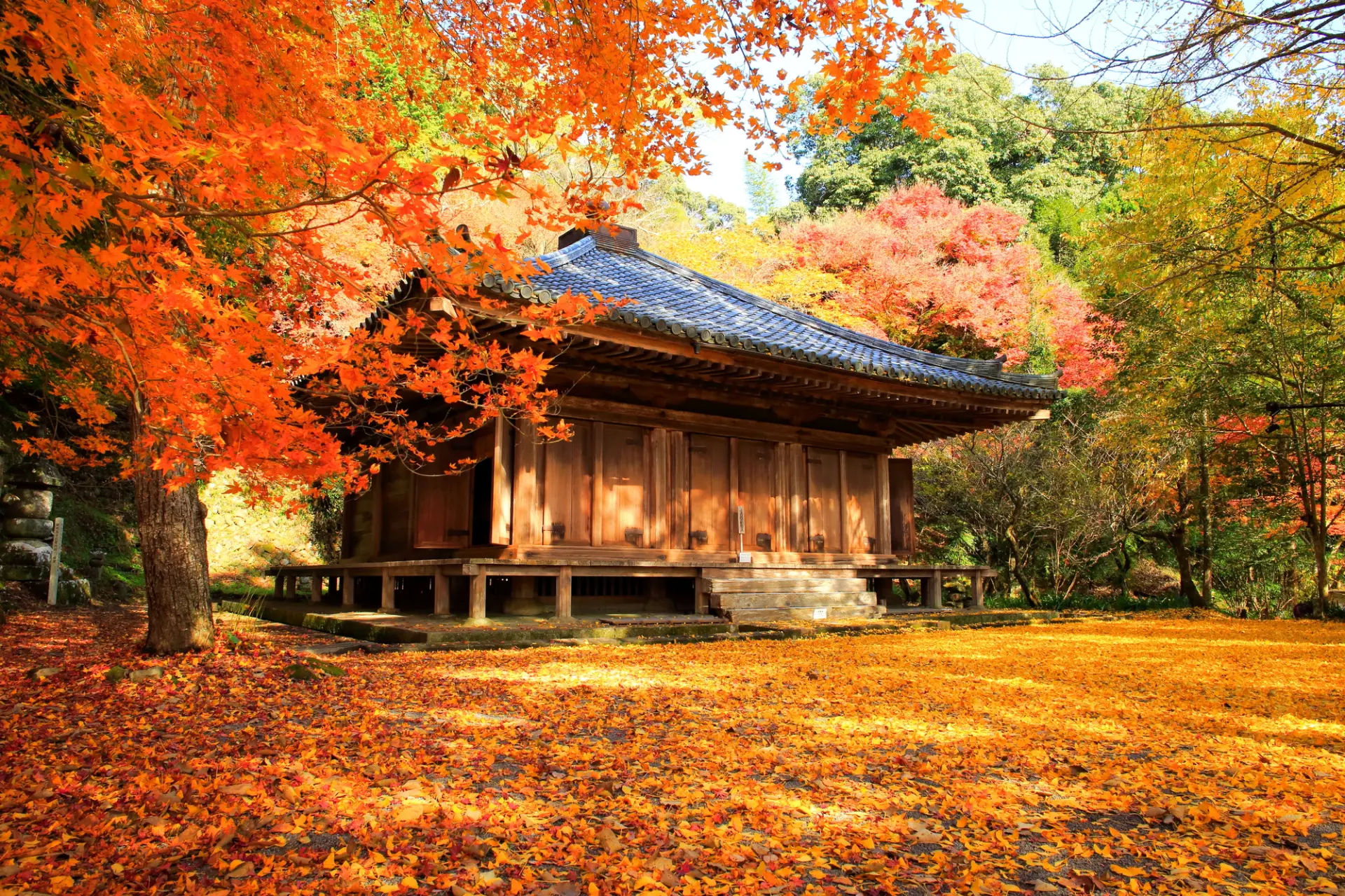
5. Fukiji Temple
Fukiji Temple in Bungotakada City, Oita Prefecture, is a Tendai sect temple founded in the Heian period.
The Fukiji Odo Hall on the temple grounds is designated a National Treasure as the oldest existing wooden building in Kyushu.
In autumn, several large ginkgo trees around the hall shine golden.
The fallen leaves covering the ground look just like a yellow carpet.
The contrast between the National Treasure building and the ginkgo trees deeply conveys the charm of autumn in Japan.
When the site is illuminated at night, it is wrapped in a magical atmosphere.
- Best Time to See Autumn Leaves (Average Year)
- late November–early December
5 Best Autumn Leaves Spots in Kumamoto with Beautiful Contrasts of Clear Streams and Fall Colors
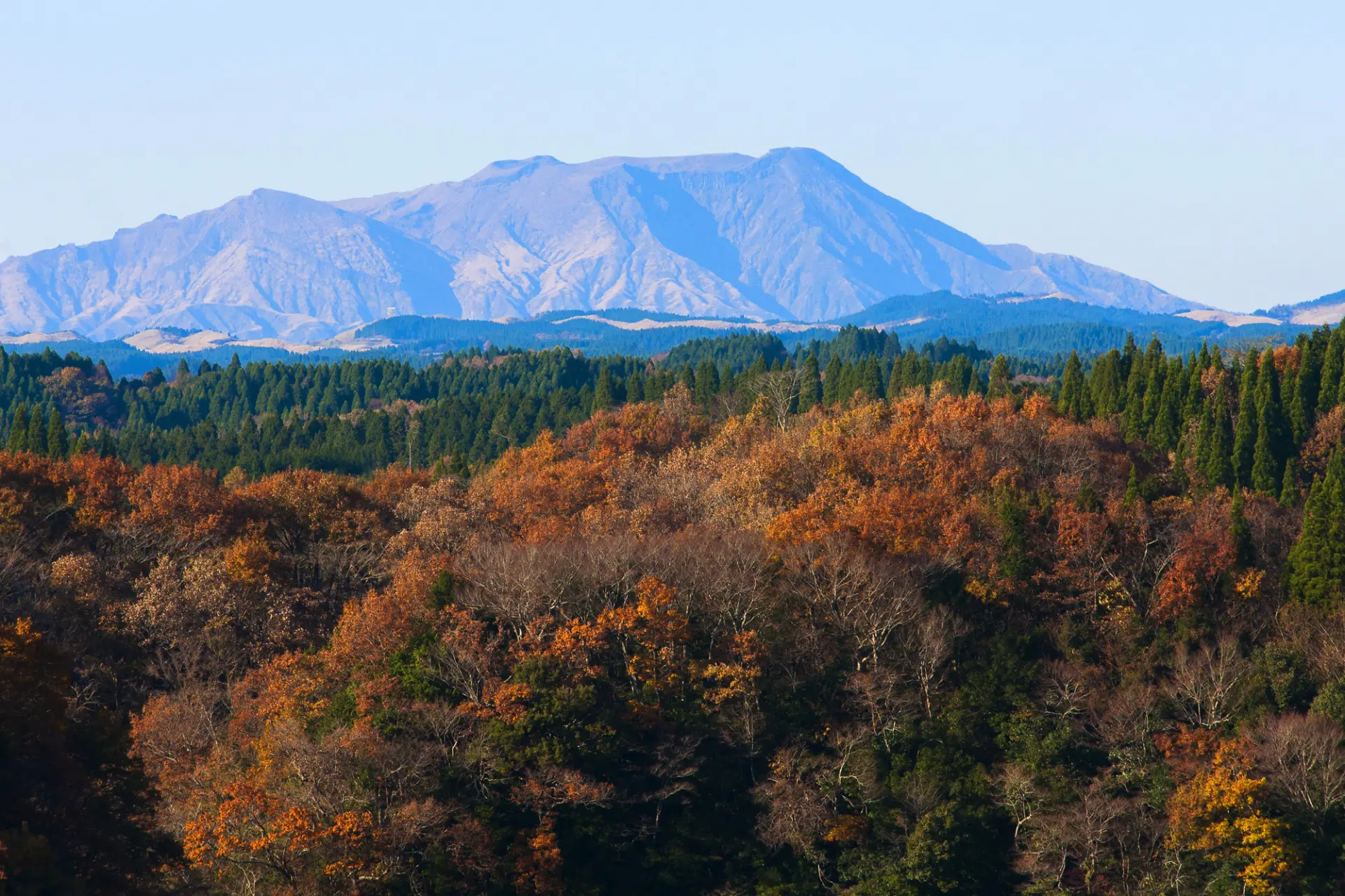
Kumamoto Prefecture is blessed with abundant nature, including the majestic Mt. Aso.
Also known as the “Land of Fire,” this area is colored by blazing autumn leaves when fall arrives.
From spectacular scenery created by dynamic valleys and autumn colors to the overwhelming presence of giant ginkgo trees over 1,000 years old, you can encounter landscapes that truly stir the heart.
Here, we introduce five of Kumamoto’s representative autumn foliage spots.
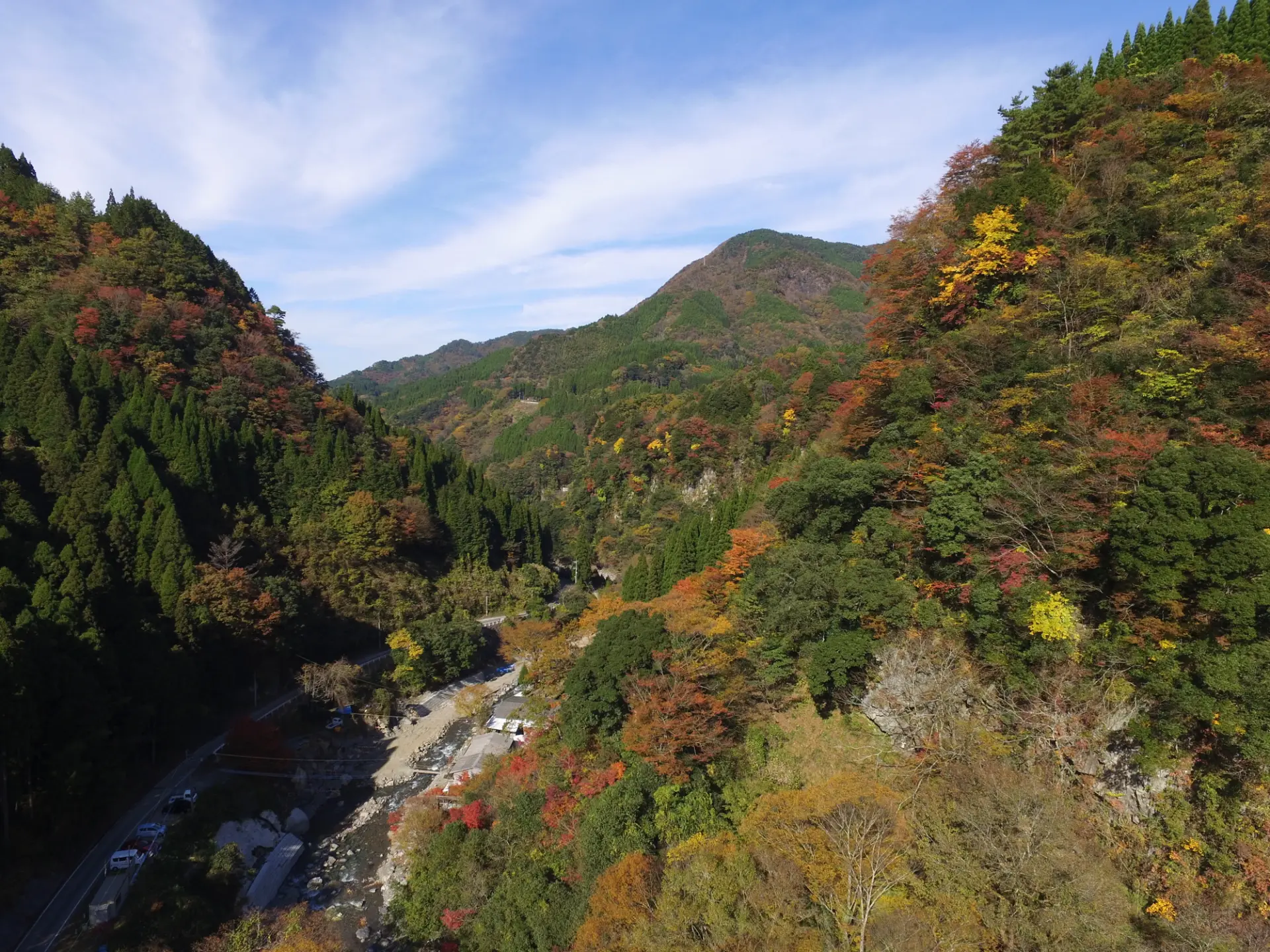
1. Soyo Gorge
Soyo Gorge in Yamato Town, Kamimashiki District, Kumamoto Prefecture, is a U-shaped valley located in the upper reaches of the Gokase River.
Sheer cliffs reaching 200 meters in height continue for Approx. 10 kilometers, and the grand scenery has earned it the nickname “Kyushu’s Grand Canyon.”
In autumn, maples, zelkovas, and other trees turn color, painting the deep green valley red and yellow.
The view from Nagasakibana Observation Deck is especially wonderful, offering a panoramic look over the autumn leaves covering the entire gorge.
This is a breathtaking autumn foliage spot created by nature on a grand scale.
- Best Time to See Autumn Leaves (Average Year)
- early November–mid-November
2. Ryokusenkyo Gorge
Ryokusenkyo Gorge, located in Midorikawa, Yamato Town, Kamimashiki District, Kumamoto Prefecture, is a nature-rich gorge in the headwaters area of the Midorikawa River.
Covered with untouched virgin forest, the entire gorge becomes vividly colored in autumn as beeches, maples, and other trees turn.
Because of the large temperature differences, the autumn colors are especially deep and are known for their beauty.
The view from the suspension bridge spanning the gorge is spectacular, offering a 360-degree panorama of autumn leaves.
There is also a campground nearby, making this a spot where you can enjoy fall foliage while spending time outdoors.
- Best Time to See Autumn Leaves (Average Year)
- late October–early November
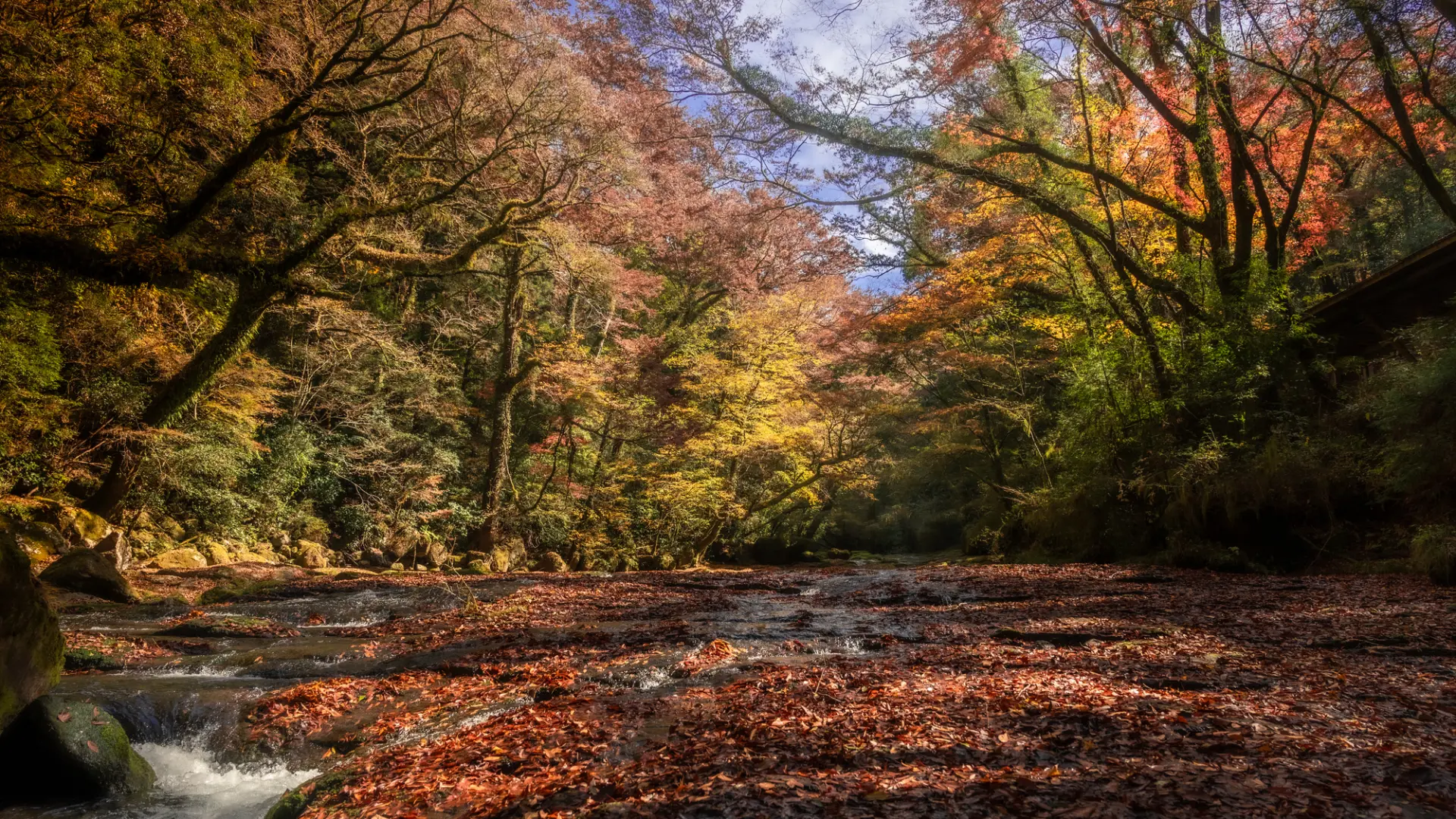
3. Kikuchi Gorge
Kikuchi Gorge in Kikuchi City, Kumamoto Prefecture, is a beautiful gorge located at the source of the Kikuchi River.
It has been selected as one of Japan’s 100 Forest Bathing Forests and Japan’s 100 Best Waterfalls, and is known for its scenery created by virgin forest and clear streams.
In autumn, iroha maples, zelkovas, and other trees turn color, creating a striking contrast with the emerald-green river flow.
The views from spots such as Momijigase and Hirogawara are especially wonderful.
While walking along the trails, you can fully enjoy autumn nature with all five senses, accompanied by the murmur of the river and birdsong.
- Best Time to See Autumn Leaves (Average Year)
- early November–mid-November
4. Gokanosho
Gokanosho in Yatsushiro City, Kumamoto Prefecture, is a secluded area deep in the Kyushu Mountains made up of five settlements.
This land, associated with legends of the defeated Heike clan, still preserves abundant untouched nature.
In autumn, the vast mountains are dyed red, yellow, and orange, creating magnificent scenery.
The landscapes of suspension bridges and waterfalls in the valleys, such as Sendan Todoroki Falls and Umenoki Todoroki Park Suspension Bridge, framed by autumn leaves are especially beautiful.
You can enjoy one spectacular view after another while driving through the area.
- Best Time to See Autumn Leaves (Average Year)
- early November–mid-November
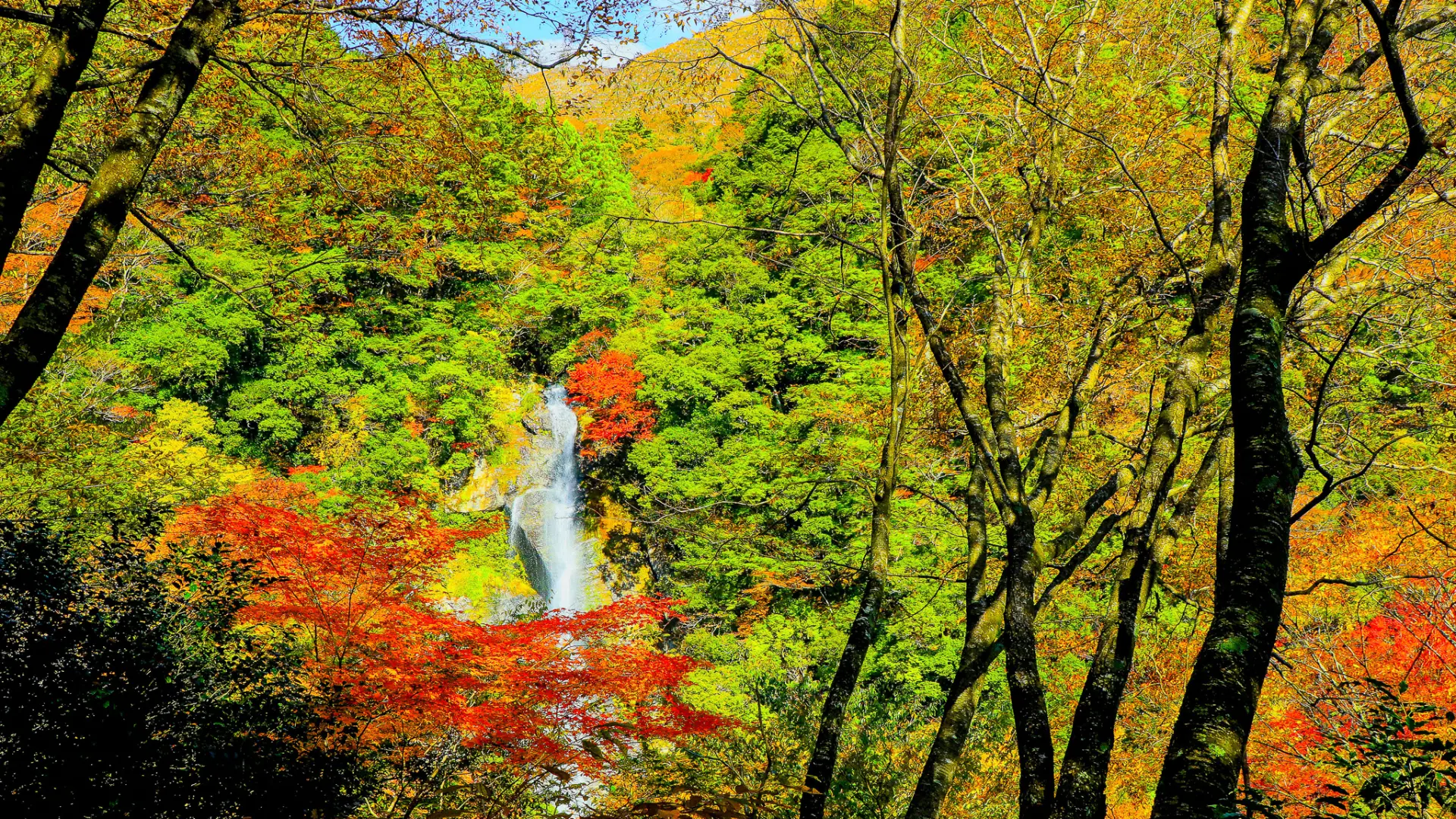
5. Shimogi no Oicho
Shimogi no Oicho in Oguni Town, Aso District, Kumamoto Prefecture, is a giant tree designated as a National Natural Monument.
It is said to be over 1,000 years old, standing Approx. 25 meters tall with a trunk circumference of Approx. 10 meters.
In autumn, countless leaves shine gold all at once, giving it an overwhelming presence that stuns viewers.
At night, the tree is illuminated, and the giant golden tree appearing in the darkness feels both magical and divine.
When the leaves begin to fall, the ground becomes covered with a yellow carpet, revealing another kind of beauty.
- Best Time to See Autumn Leaves (Average Year)
- late October–early November
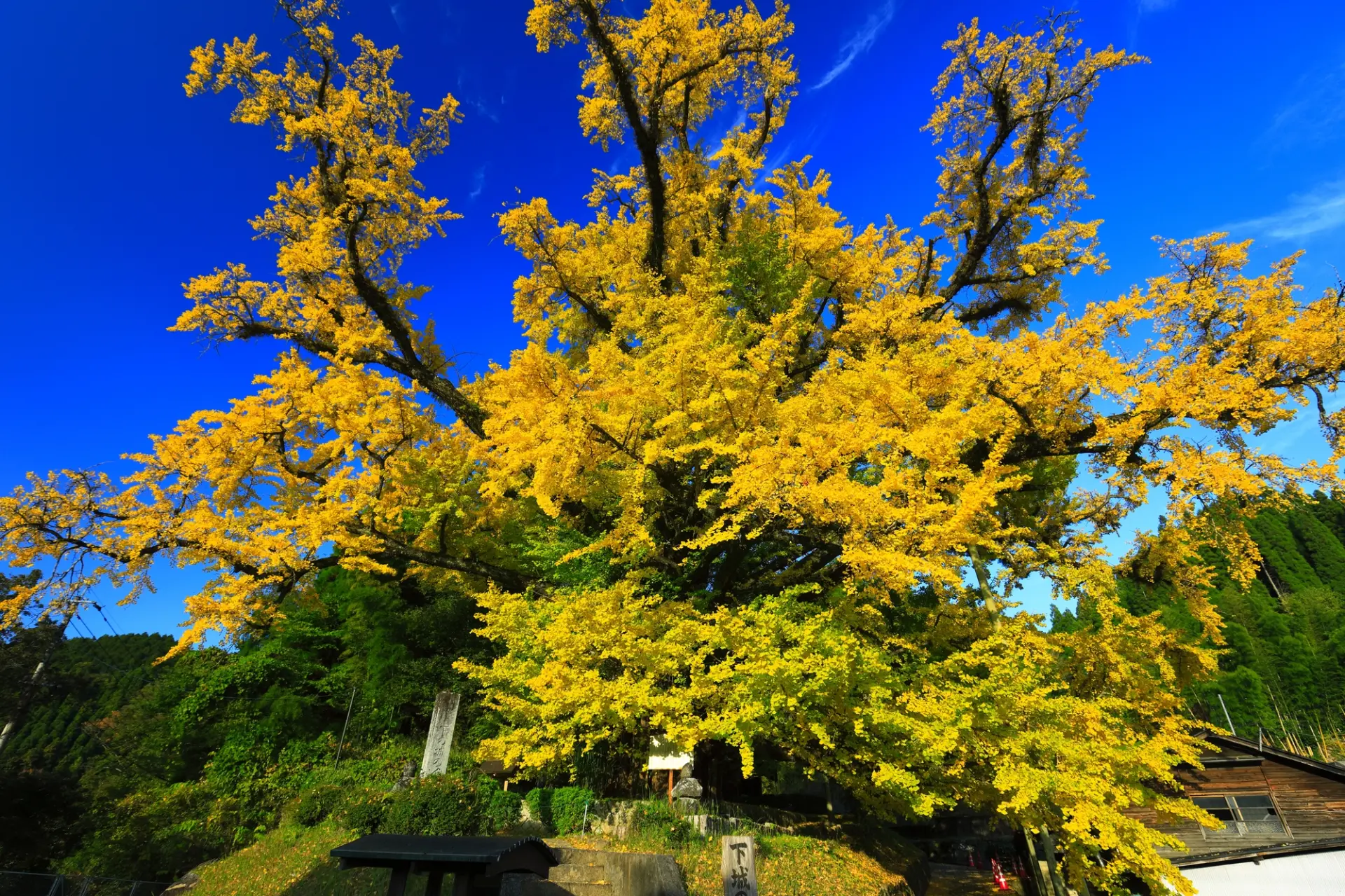
5 Best Autumn Leaves Spots in Miyazaki Where You Can Discover Unique Autumn Scenery
Miyazaki Prefecture, known as the “birthplace of Japanese mythology,” is home to many autumn leaves spots with a mysterious atmosphere.
The sight of grand natural landscapes, such as valleys embraced by deep mountains and highlands created by volcanic eruptions, turning autumn colors is breathtaking.
Another charm of Miyazaki is the unique ways to enjoy the season, from looking up at autumn leaves from a boat to admiring a single maple tree lovingly nurtured by a private owner.
Here, we introduce five mystical autumn foliage spots in Miyazaki.
1. Mitate Gorge
Mitate Gorge in Hinokage Town, Nishiusuki District, Miyazaki Prefecture, is a nature-rich gorge located in the upper reaches of the Hinokage River.
It is characterized by white granite rock faces and a clear stream shining emerald green.
In autumn, the untouched broadleaf forest turns red and yellow, vividly coloring the gorge.
While walking along the trails, you can slowly enjoy the spectacular scenery created by the beautiful water, rocks, and autumn leaves.
- Best Time to See Autumn Leaves (Average Year)
- early November–early December
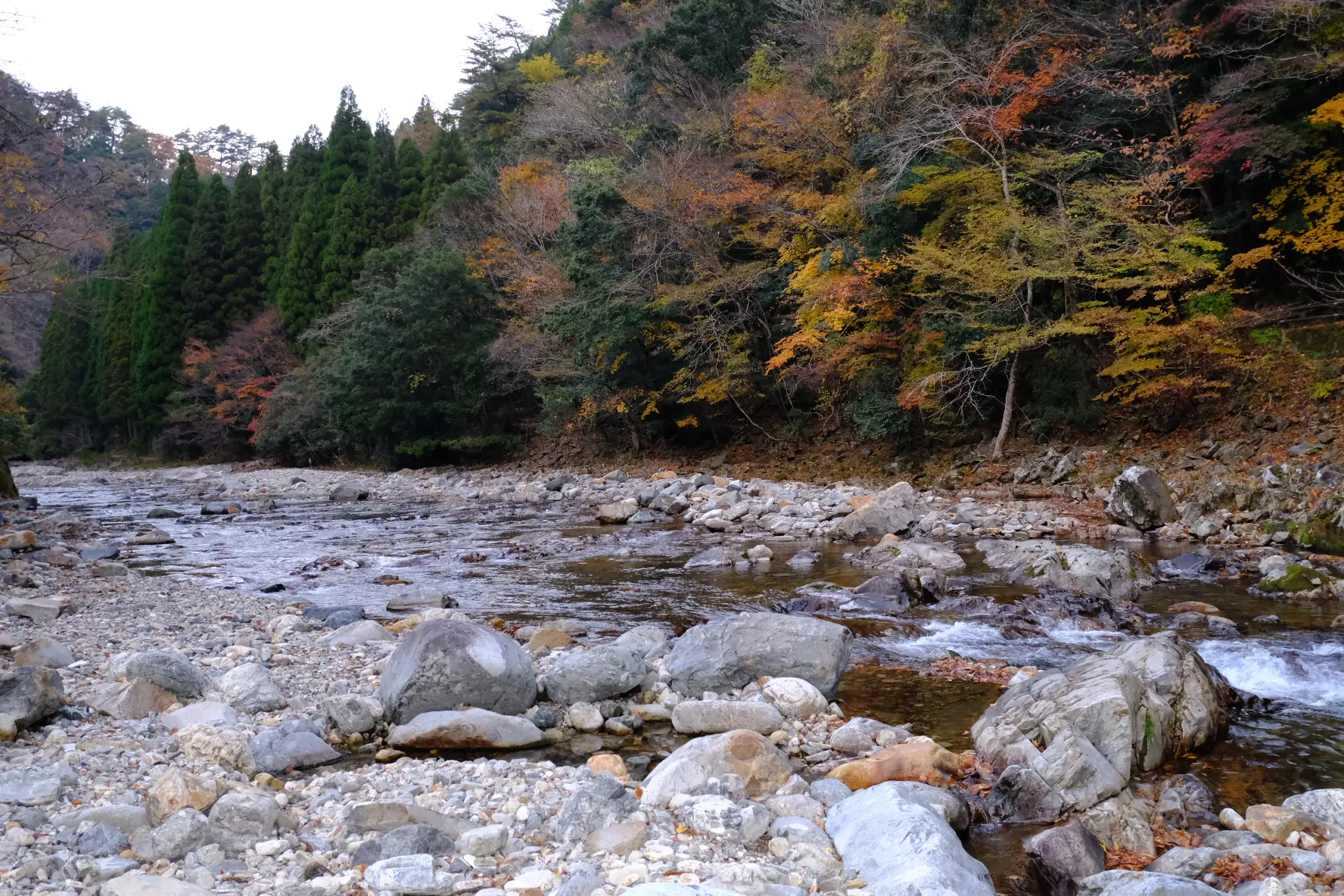
2. Ebino Plateau
Ebino Plateau is located in Ebino City, Miyazaki Prefecture, at an elevation of 1,200 meters in the Kirishima mountain range.
In autumn, the pampas grass growing naturally across the plateau sends up its plumes all at once, creating beautiful scenery as it sways in the wind.
The main feature of the autumn foliage here is the trees that turn a distinctive reddish brown due to the effects of volcanic gases and other factors.
The autumn leaves reflected on the surfaces of crater lakes such as Rokkannon Miike and Fudoike on the plateau create a mysterious atmosphere.
Trekking courses are also well maintained, allowing visitors to enjoy the open autumn scenery unique to a highland area while hiking.
- Best Time to See Autumn Leaves (Average Year)
- late October–early November
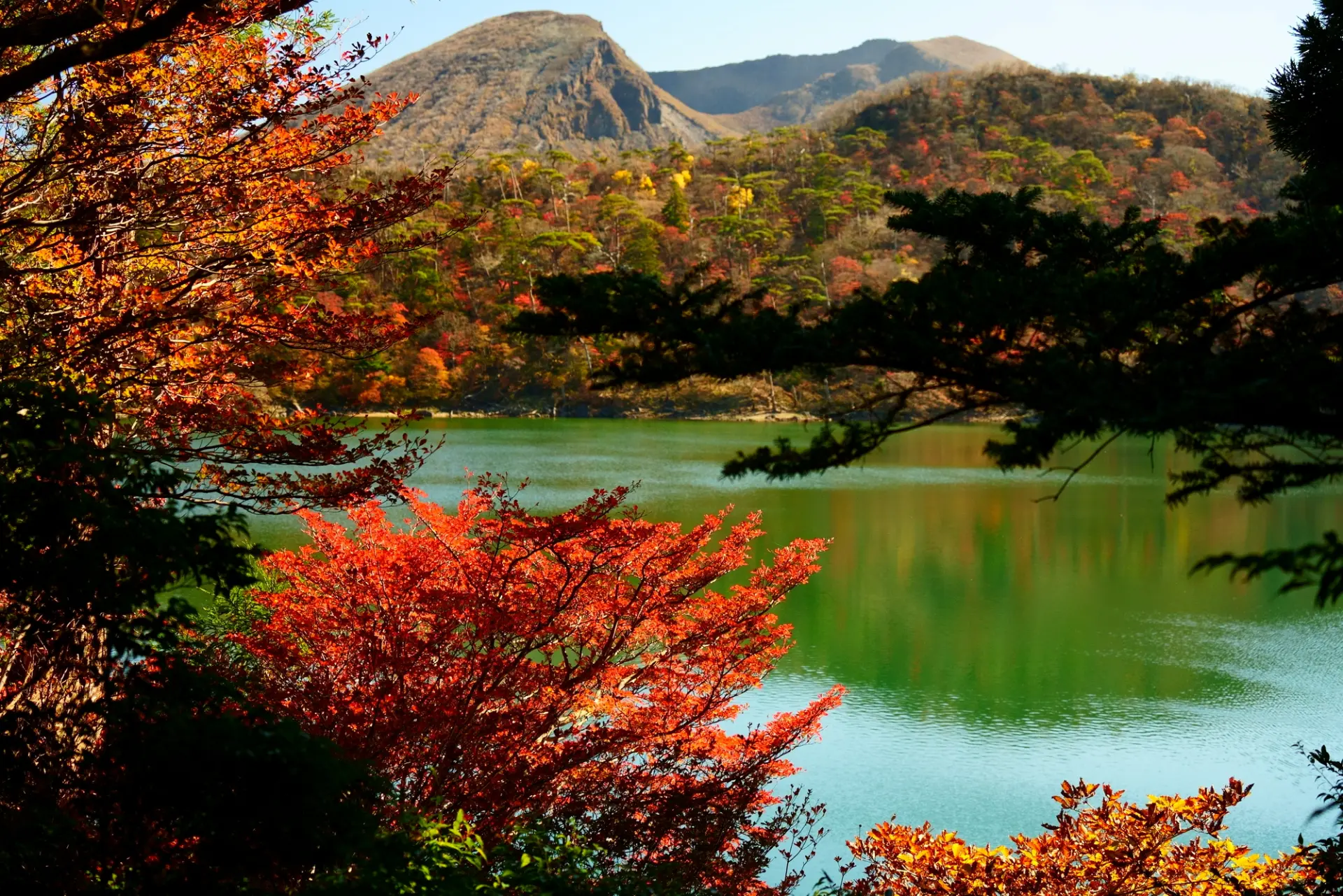
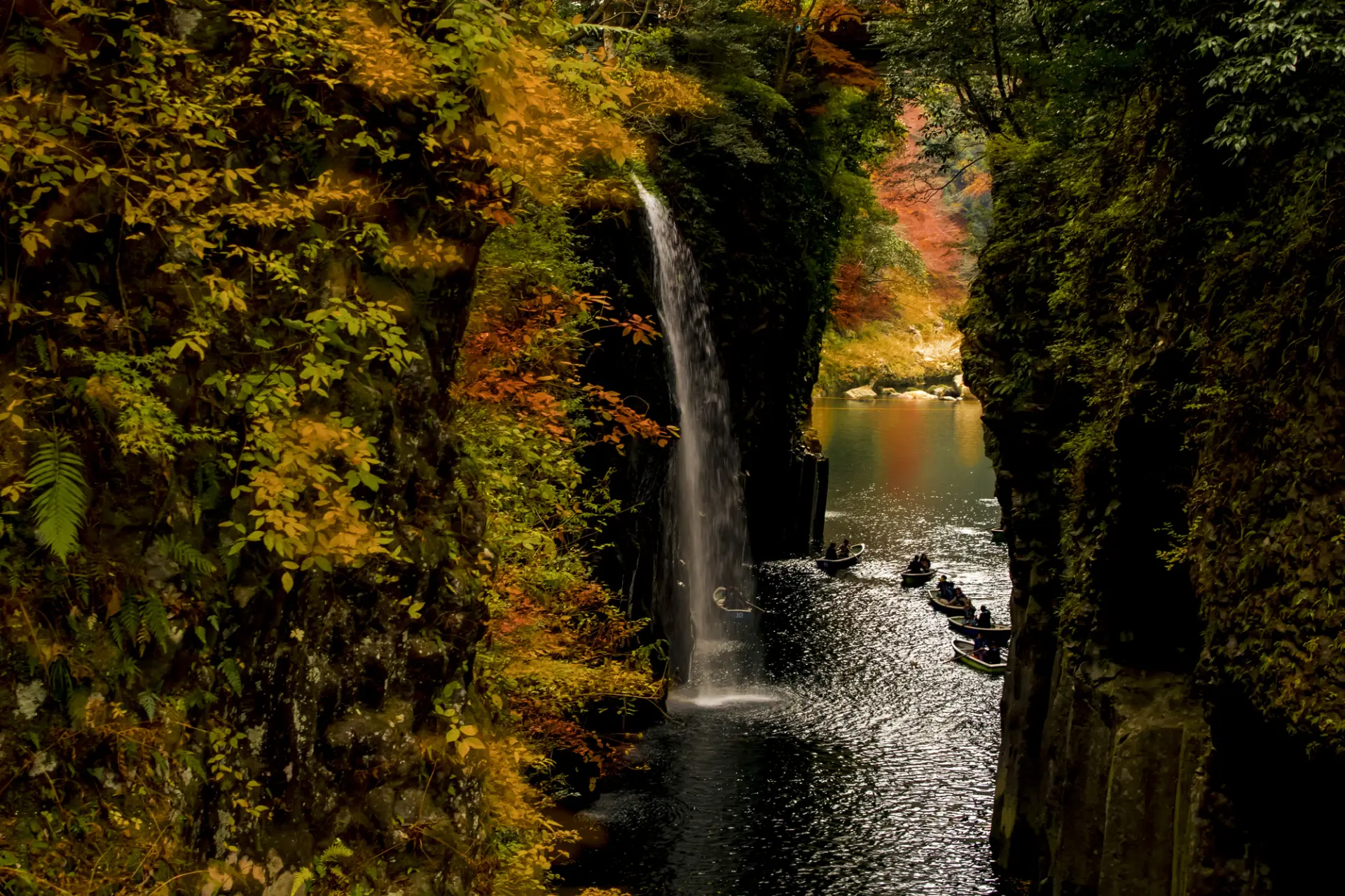
3. Takachiho Gorge
A V-shaped gorge formed over tens of thousands of years as the Gokase River eroded lava that flowed out from eruptions of Mt. Aso.
The scenery of cliffs reaching 100 meters at their highest point and averaging 80 meters, stretching for 7 kilometers, is magnificent.
It is designated as both a National Place of Scenic Beauty and a National Natural Monument.
In autumn, maples and other trees color the cliffs, making the gorge’s beauty stand out even more.
If you ride a rental boat and look up at Manai Falls, the symbol of the gorge, from the water, the contrast between the waterfall spray and the autumn leaves is beautiful.
At night, the walking paths are illuminated, wrapping the area in a magical atmosphere different from the daytime.
- Best Time to See Autumn Leaves (Average Year)
- mid-November–late November
4. Iroha Maple of Kitago Town
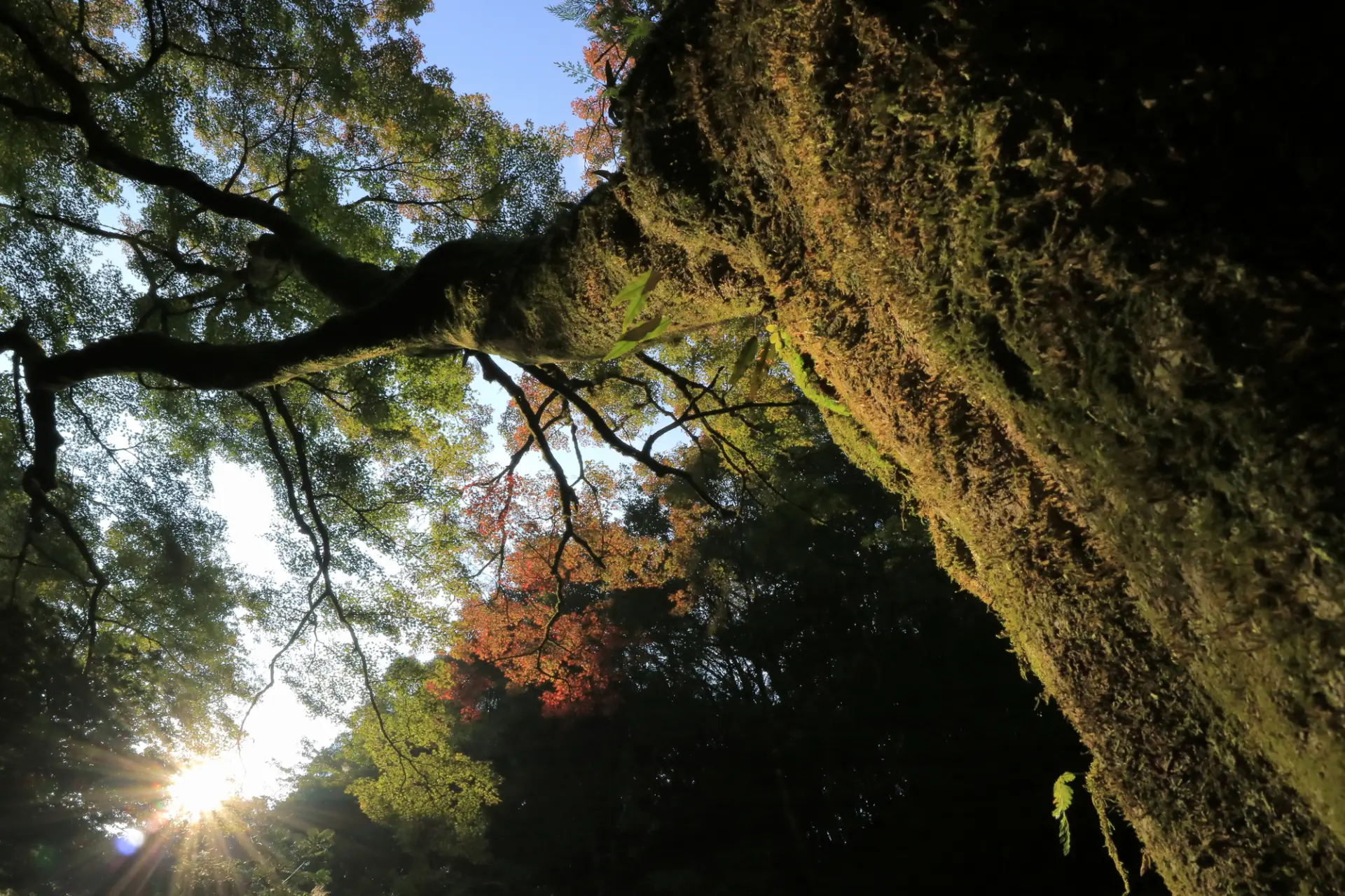
The Iroha Maple of Kitago Town in Kitago Town, Nichinan City, Miyazaki Prefecture, is a giant tree standing quietly deep in Tsukinokawachi Gorge.
Estimated to be Approx. 200 years old and Approx. 20 meters tall, this iroha maple turns its entire huge canopy a blazing crimson when it reaches its best season.
When sunlight filters through, the leaves shine even more vividly, and the changing atmosphere depending on the time of day is also part of its charm.
- Best Time to See Autumn Leaves (Average Year)
- early November–mid-November
5. Gokase Gorge
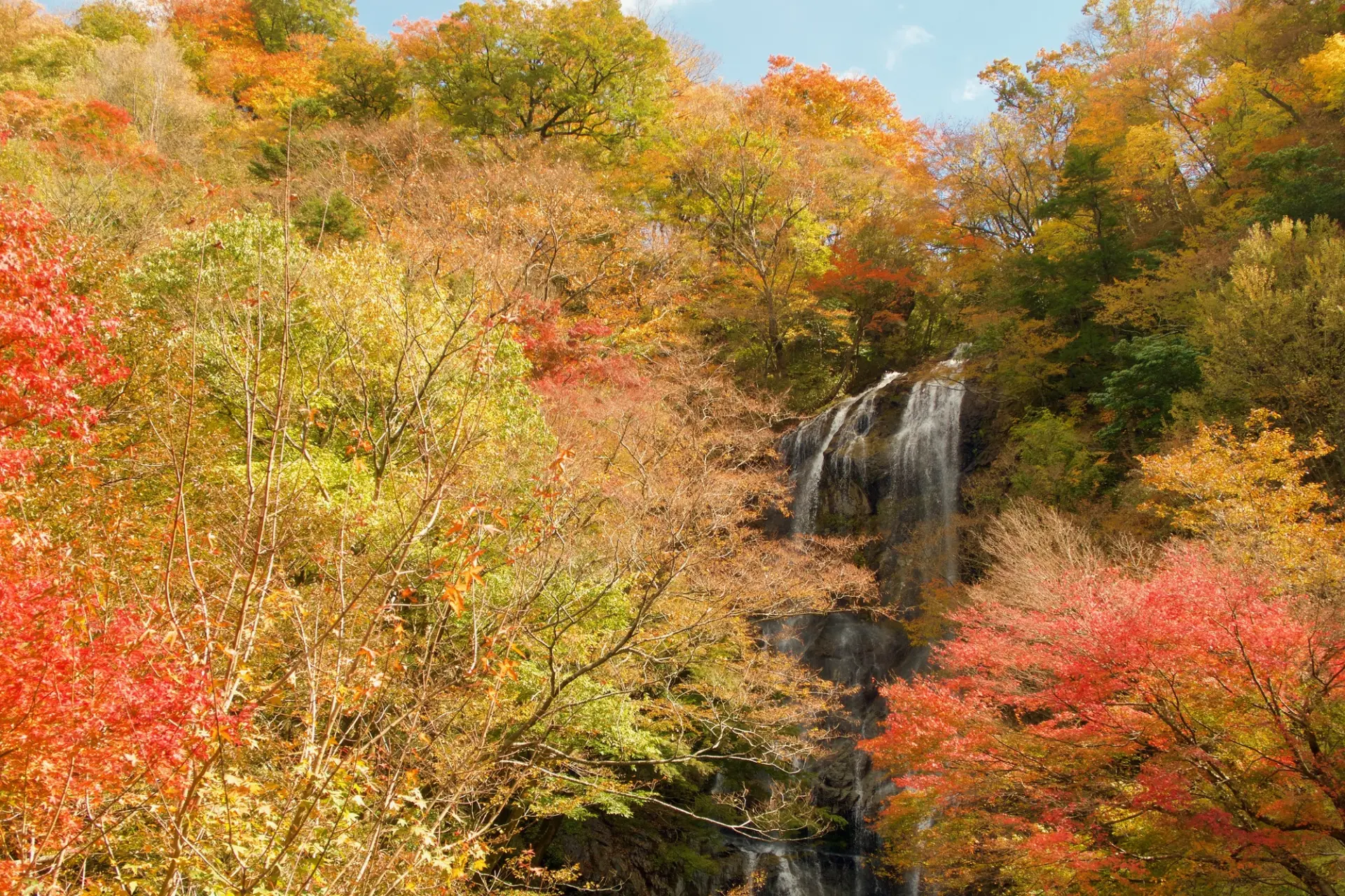
Gokase Gorge in Gokase Town, Nishiusuki District, Miyazaki Prefecture, is a beautiful gorge in the upper reaches of the Gokase River.
It lies within Kyushu Chuo Sanchi Quasi-National Park and still preserves a great deal of untouched nature.
In autumn, the maples along the gorge turn color all at once, creating magnificent scenery.
The view from the suspension bridge spanning the gorge is especially spectacular, with a beautiful contrast between the mountains dyed red and yellow and the clear stream below.
Gokase Town is one of the coldest areas in Kyushu, which is said to make the autumn colors especially vivid.
- Address
- Kuraoka, Gokase Town, Nishiusuki District, Miyazaki 882-1201
- Best Time to See Autumn Leaves (Average Year)
- late October–early November
Enjoy Autumn by Lakesides and Sacred Peaks! 5 Best Places to See Autumn Leaves in Kagoshima
Kagoshima is home to grand active volcanoes such as Sakurajima and the Kirishima mountain range.
Its rich natural surroundings reveal many different expressions of autumn leaves when fall arrives.
From foliage enjoyed with the steam of hot spring towns to leaves standing out against the vermilion shrine buildings of historic shrines, Kagoshima offers scenery unique to the region. Giant ginkgo trees over 1,000 years old are also not to be missed.
Here, we introduce five autumn foliage spots where you can fully enjoy fall in Kagoshima.
1. Miyauragu
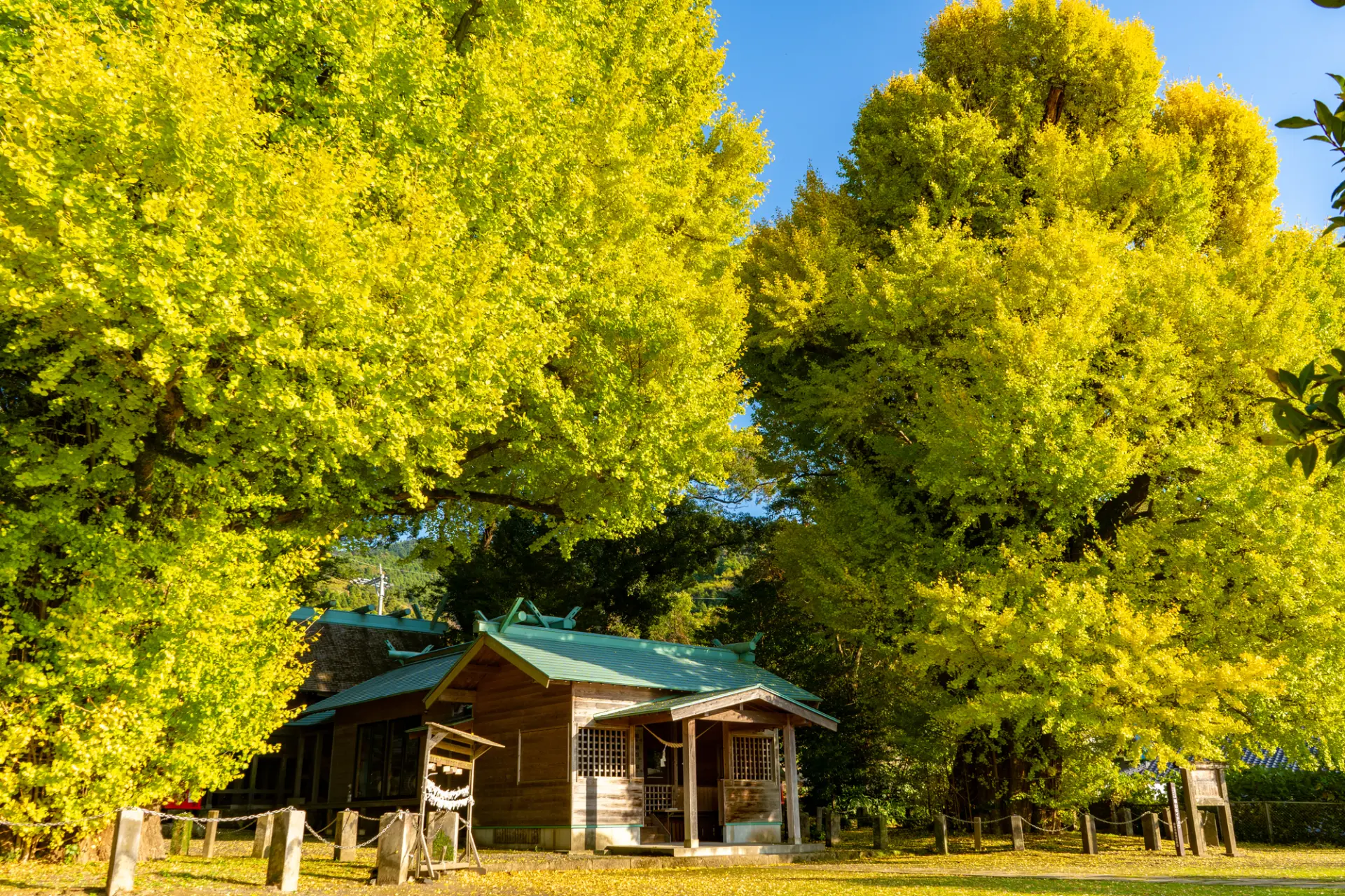
Miyauragu in Fukuyama Town, Kirishima City, Kagoshima Prefecture, is a shrine with a long history.
Within the grounds stand two giant ginkgo trees, said to be over 1,000 years old, growing close together as if leaning on one another.
Because of their appearance, they are affectionately known as the “Meoto Icho,” or “married couple ginkgo trees.”
In autumn, the huge ginkgo trees shine gold and overwhelm all who see them.
When the leaves begin to fall, the shrine grounds are covered in a yellow carpet, creating a magical scene.
In the shrine’s sacred atmosphere, you can enjoy the autumn colors of these giant ginkgo trees that evoke the passage of eternal time.
- Best Time to See Autumn Leaves (Average Year)
- late November–early December
2. Kanmuridake
Kanmuridake in Ichikikushikino City, Kagoshima Prefecture, is a mountain that has long been worshipped as a sacred peak.
In the mountains are places such as Kanmurigakuen, a Chinese-style garden, and Kanmuridake Shrine, giving the area a unique atmosphere where history and nature are in harmony.
In autumn, the maples and ginkgo trees around Kanmurigakuen and elsewhere on the mountain turn vivid colors.
The scenery combining Chinese-style pavilions and gardens with Japanese autumn leaves is especially rare and not easily found elsewhere.
Walking paths are also well maintained, so visitors can enjoy a leisurely foliage stroll while feeling the area’s history.
- Best Time to See Autumn Leaves (Average Year)
- late November–early December
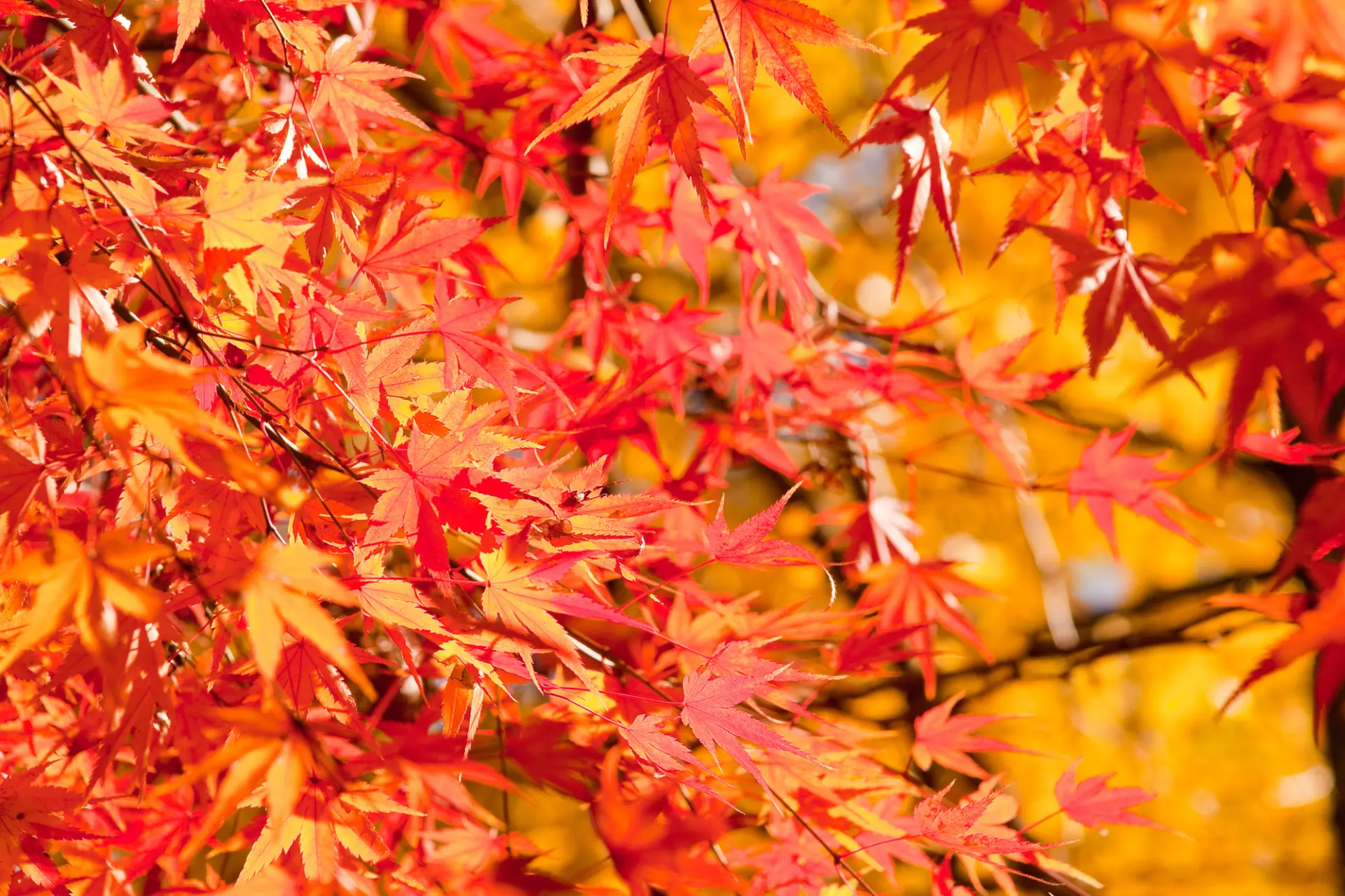
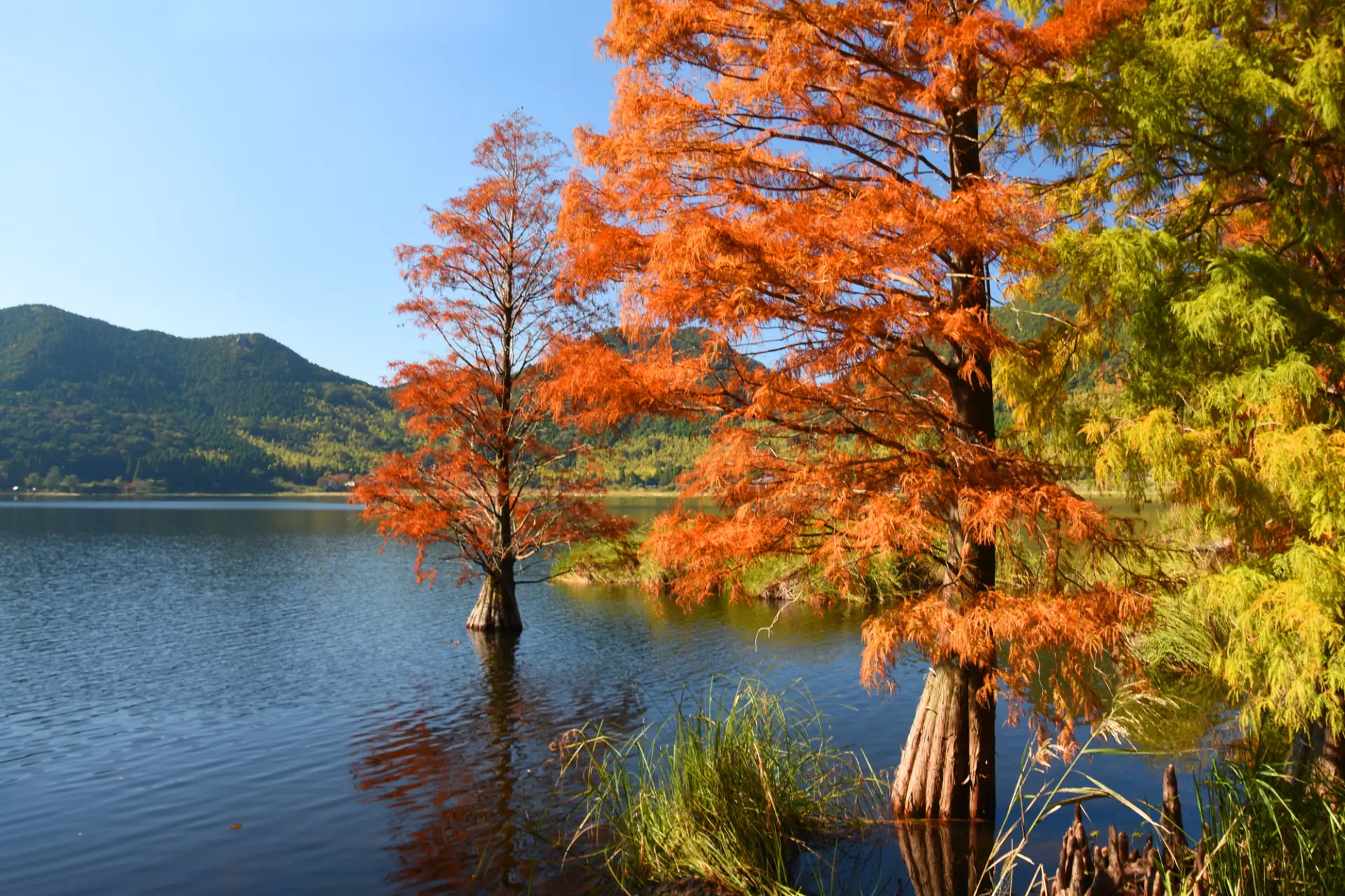
3. Imutaike Prefectural Natural Park
Imutaike Prefectural Natural Park in Satsumasendai City, Kagoshima Prefecture, is a park centered around Imutaike, a beautiful crater lake.
Because it is home to valuable aquatic plant communities, it is also registered under the Ramsar Convention.
In autumn, maples, bald cypresses, and other trees planted around the lake turn color, reflecting their beautiful 모습 on the calm water surface.
The Approx. 3.3-kilometer lakeside path is also maintained as a cycling road, so it is recommended to enjoy the autumn leaves while riding a bicycle.
You can spend a relaxing autumn day here together with the peaceful scenery of waterbirds playing on the lake.
- Best Time to See Autumn Leaves (Average Year)
- mid-November–late November
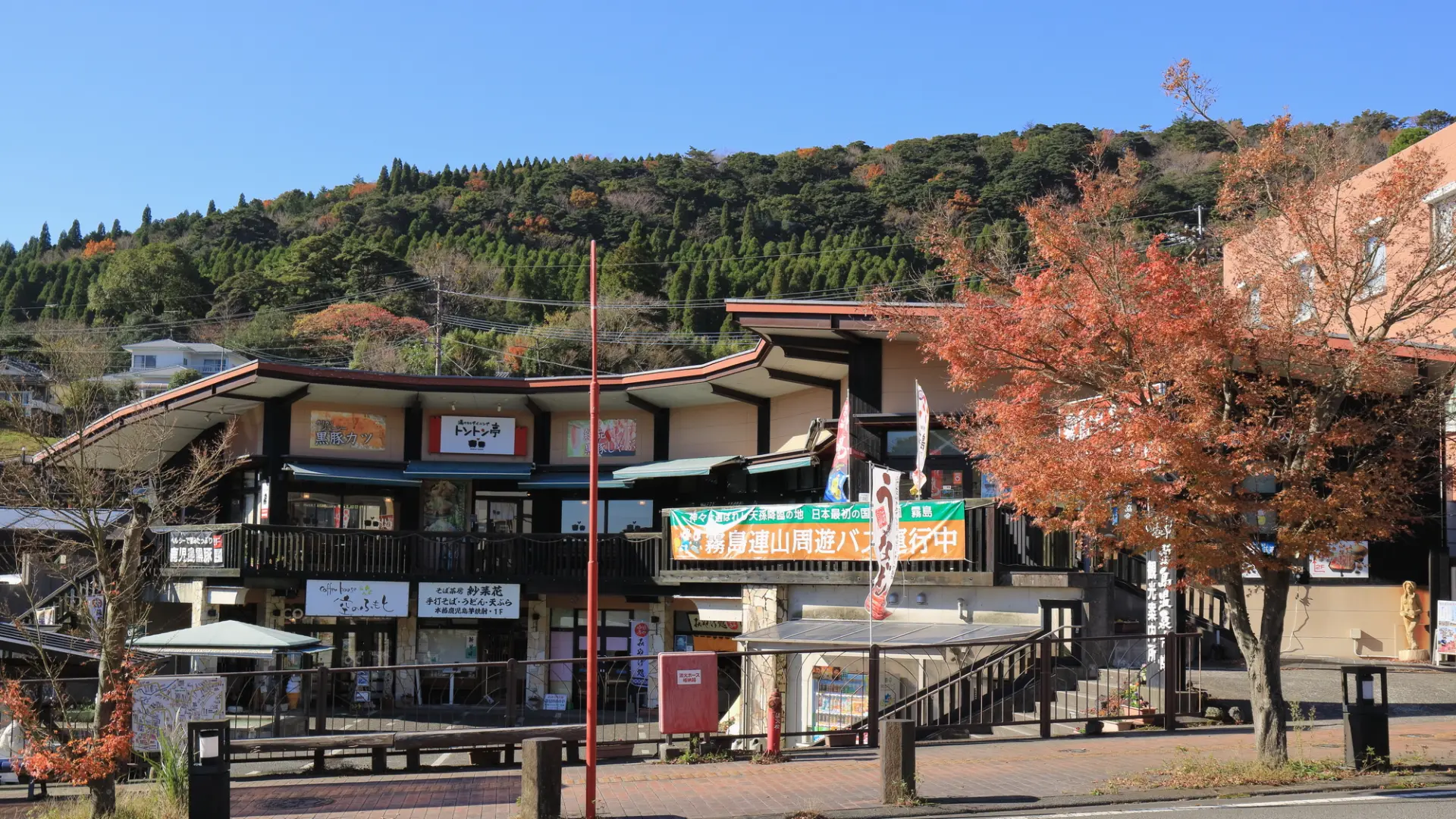
4. Kirishima Onsenkyo
Kirishima Onsenkyo is the collective name for the hot springs scattered across the southwestern part of the Kirishima mountain range at elevations of 600 to 850 meters, where you can enjoy different spring qualities and health benefits depending on the hot spring.
The central area of Kirishima Onsenkyo is Maruo Onsen, lined with large hotels and ryokan inns. The sight of steam rising from all around town gives it exactly the atmosphere you would expect from a hot spring resort.
In autumn, the mountains around the hot spring area turn red and yellow, creating a magical landscape woven together with rising steam.
The autumn leaves around Maruo Falls are especially beautiful, and the view from the observation deck is exceptional.
National Route 223, selected as one of Japan’s 100 Best Roads, becomes a tunnel of autumn leaves, making it perfect for a scenic drive.
This is a luxurious spot where you can enjoy autumn leaves while soothing your travel fatigue in the hot springs.
- Best Time to See Autumn Leaves (Average Year)
- mid-November–late November
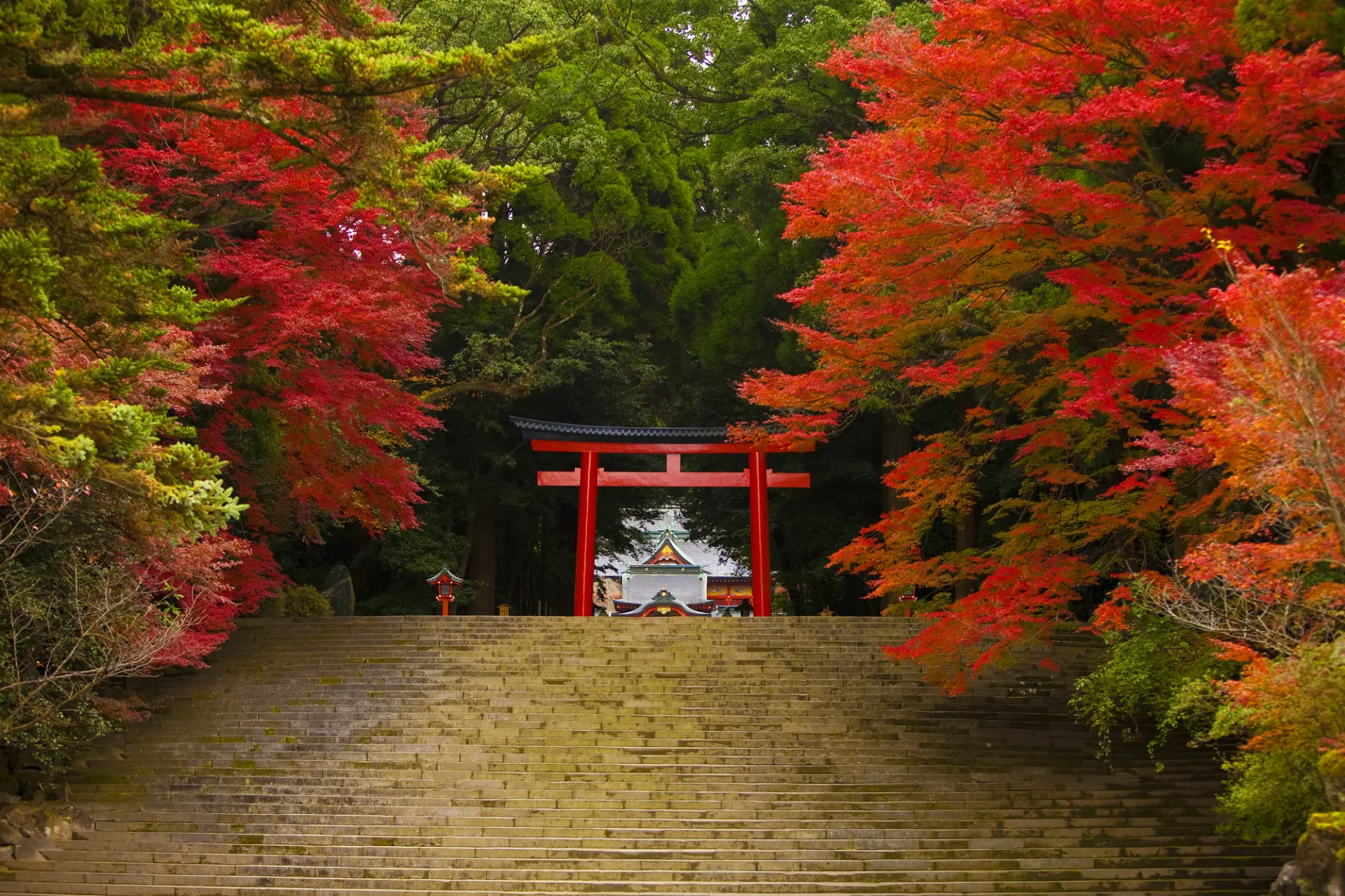
5. Kirishima Jingu Shrine
A shrine representing southern Kyushu, with a long history dating back to the 6th century.
Highlights include the sacred cedar tree said to be Approx. 800 years old and considered the ancestor of cedars in southern Kyushu, as well as the “Sazare-ishi” stone, also mentioned in Japan’s national anthem “Kimigayo,” formed when small stones merge over a long period into one large rock mass.
In autumn, the maples and other trees along the approach and within the grounds turn color all at once, adding beautiful hues to the lavish vermilion shrine buildings designated as a National Treasure.
The autumn leaves along the approach from the great torii gate to the second torii gate are especially impressive.
In the sacred and solemn atmosphere, visitors can enjoy a scene unique to autumn in Japan, where historic architecture and fall foliage are in perfect harmony.
- Best Time to See Autumn Leaves (Average Year)
- mid-November–early December
FAQ about Kyushu’s Best Autumn Leaves Spots
Q
When is the best time to see autumn leaves in Kyushu?
They usually begin to change color in late October and reach their peak from mid-November to early December.
Q
Which areas in Kyushu have many famous autumn leaves spots?
Every prefecture has appealing famous spots, but especially many spectacular places are found in valleys and mountainous areas.
Summary
Autumn leaves in Kyushu offer a variety of charms depending on the location, from dynamic scenery shaped by grand nature to atmospheric landscapes harmonizing with historic architecture.
Why not use this article as inspiration and head out on a trip to Kyushu wrapped in beautiful fall colors?
If you would also like to learn more about autumn foliage spots not only in Kyushu but across Japan, please check out the article below as well.