
A 3-Day Journey from Kudoyama to Koyasan|Walk the World Heritage Choishimichi Pilgrimage Route
Walking the World Heritage Choishimichi Pilgrimage Route to Koyasan, copying Buddhist sutras, and enjoying shojin ryori, or Buddhist vegetarian cuisine, may sound satisfying enough, but the town of Kudoyama at the foot of the mountain has far more to offer. Once known as “Women’s Koya,” the town supported the Koyasan faith and is filled with attractions, including Jison-in Temple and Niukanshofu-jinja Shrine at the starting point of the Choishimichi Pilgrimage Route, historical sites associated with the samurai warlord Sanada Yukimura, local cuisine, and traditional culture rooted in the community. This article introduces a three-day model course that begins in Kudoyama, follows the Choishimichi Pilgrimage Route to Koyasan, and returns to explore Kudoyama Town’s history, culture, and culinary attractions.
How Do You Get to Kudoyama?
Kudoyama Town is easily accessible from central Osaka and Kansai International Airport via Nankai Electric Railway.
From Nankai Namba Station, take the Nankai Koya Line, transfer at Hashimoto Station, and continue to Kudoyama Station. The journey takes approximately 1 hour and 5 minutes. In April 2026, the new sightseeing train GRAN TENKU made its debut, connecting Namba Station with Gokurakubashi Station, the gateway to Koyasan. Because it also stops at Kudoyama Station, passengers can enjoy the journey itself while experiencing the nature and culture along the railway line.
From Kansai International Airport, first take the Nankai Airport Line to Tengachaya Station, then transfer to the Nankai Koya Line and travel via Hashimoto Station to Kudoyama Station. The journey takes approximately 40 minutes from the airport to Tengachaya Station and another hour from there to Kudoyama Station. The route is relatively easy to follow, even for travelers arriving from overseas.
Luggage Delivery Service for a Lighter Mountain Hike
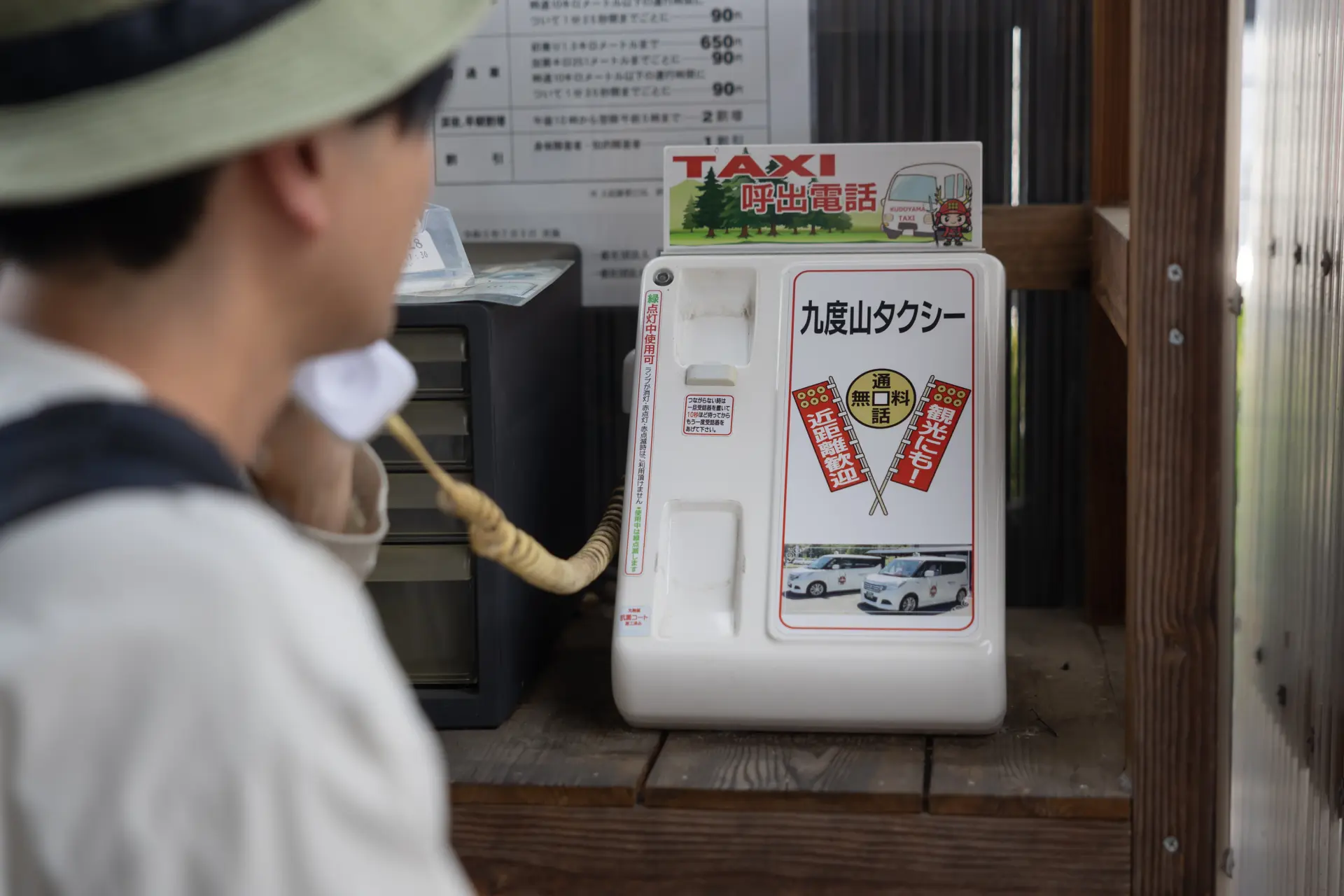
When walking the Choishimichi Pilgrimage Route to Koyasan, Kudoyama Taxi’s Luggage Delivery Service is well worth using before setting out. Your luggage can be delivered to your shukubo, or temple lodging, in Koyasan, allowing you to walk without carrying a large suitcase or travel bag.
A delivery vehicle comes to Kudoyama Station, making the process straightforward. Luggage checked in by 1:00 pm will be delivered to your temple lodging by that evening. This convenient service makes the long pilgrimage route much more comfortable to walk.

DAY 1: Climb the Historic Choishimichi Pilgrimage Route to Koyasan
Pick Up Lunch at Kakinoha Sushi Kuwaraku on the Way to the Choishimichi Pilgrimage Route
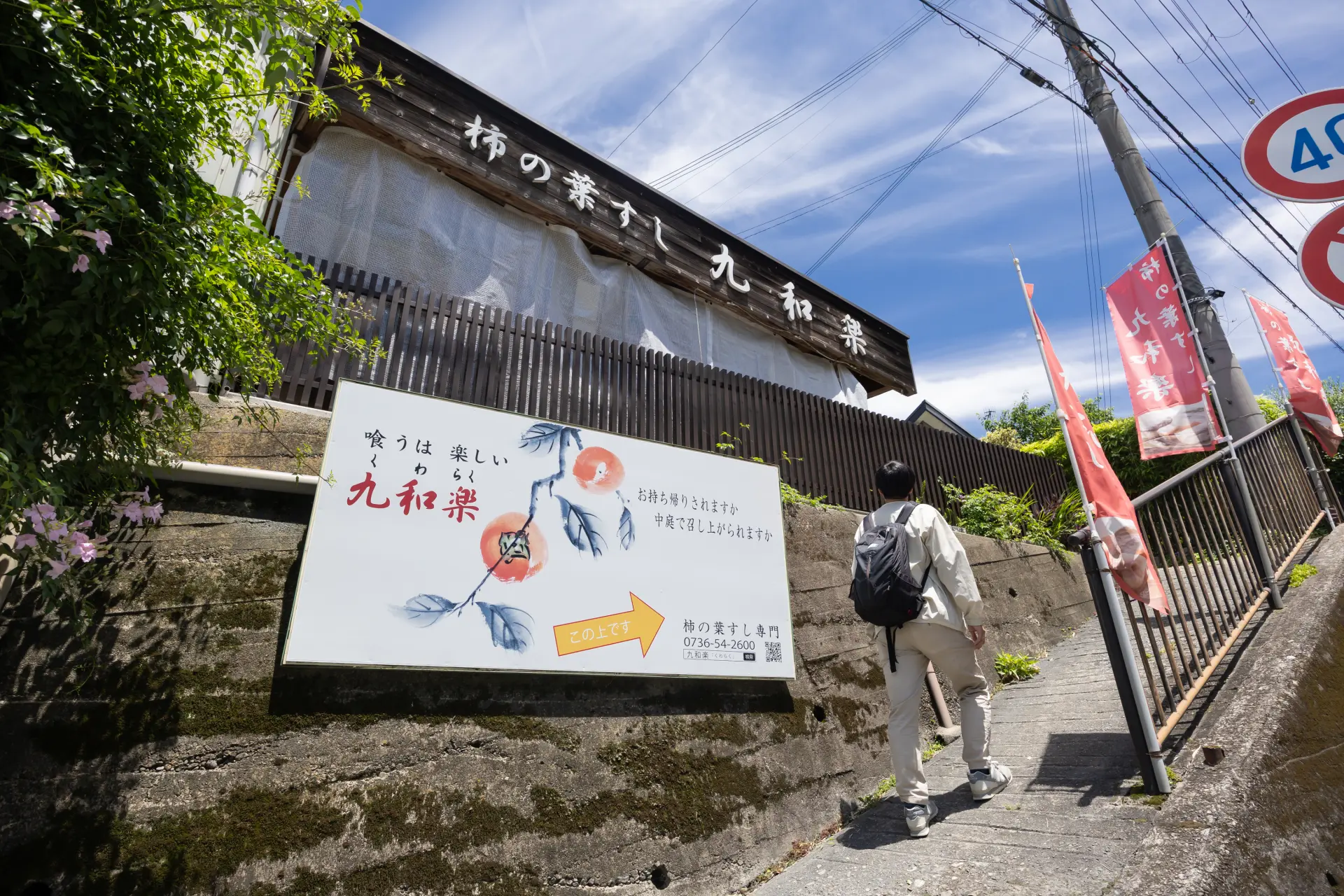
The first place to visit is Kakinoha Sushi Kuwaraku. When walking the Choishimichi Pilgrimage Route to Koyasan, it is recommended to buy kakinoha sushi, or sushi wrapped in persimmon leaves, to enjoy for lunch along the way.
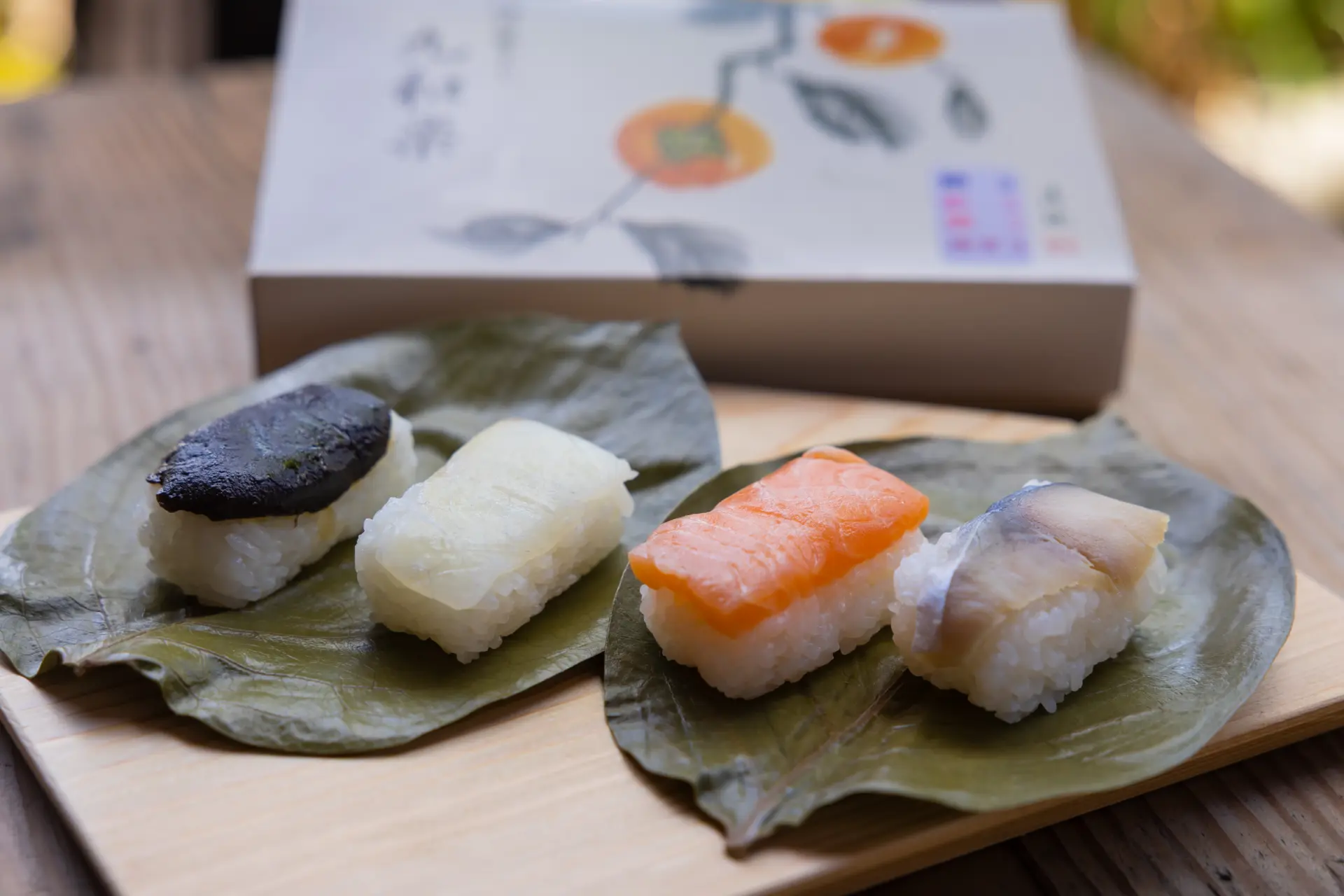
Kakinoha sushi is a regional dish passed down across southern Nara Prefecture and northern Wakayama Prefecture. It originated as a way of preserving fish in mountainous areas far from the sea, with fish and vinegared sushi rice wrapped in persimmon leaves and left to rest so that the flavors blend together. Kuwaraku offers four classic varieties: mackerel, salmon, sea bream, and shiitake mushroom. The shop carefully selects its ingredients, using mackerel from Yaizu, sea bream from Ehime, and shiitake mushrooms from Wakayama. Seasonal varieties made with vegetables such as bamboo shoots and red turnips are also available for limited periods.
- Japanese Name
- 柿の葉寿司 九和楽
- Postal Code
- 648-0101
- Address
- 1353 Kudoyama, Kudoyama-cho, Ito-gun, Wakayama Google Maps
- Telephone
- 0736-54-2600
- Closed
- Mondays and Thursdays, or the following day when either falls on a national holiday
- Hours
- 8:00 am - 2:00 pm, or until sold out
- Access
- Approximately five minutes on foot from Kudoyama Station on the Nankai Koya Line
- Credit Cards
- Accepted
Offer a Prayer at Jison-in Temple before Setting Out on the Choishimichi Pilgrimage Route
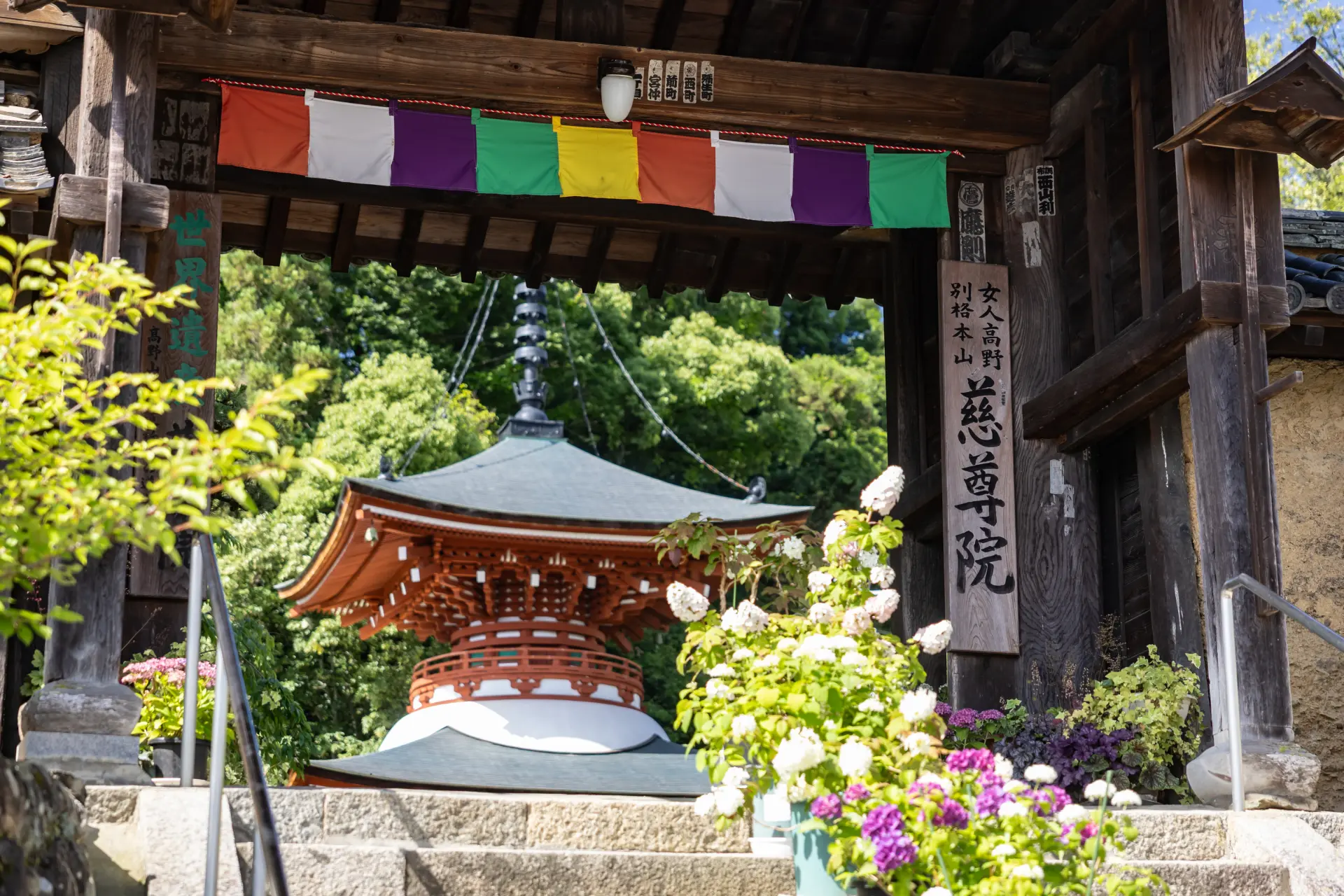
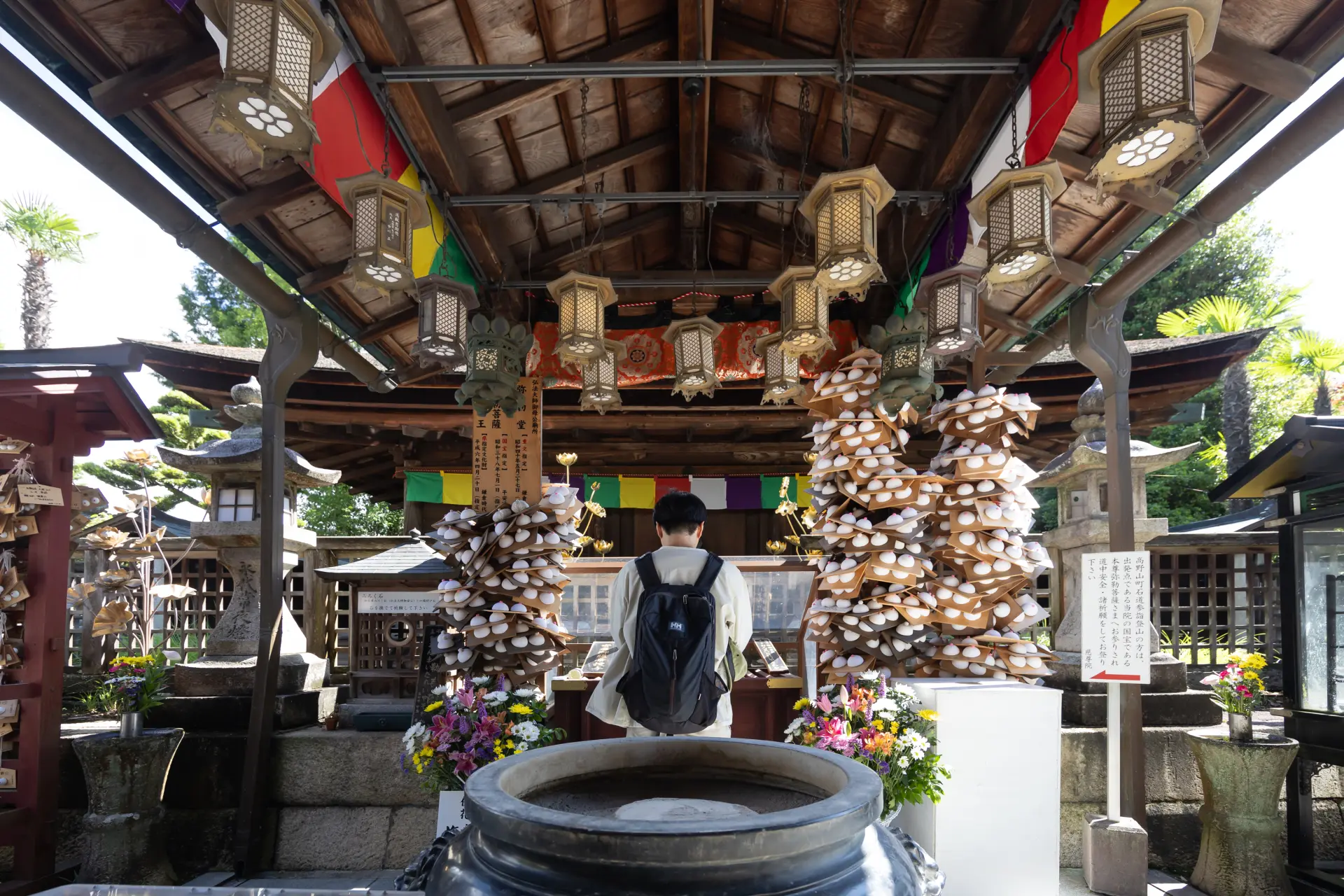
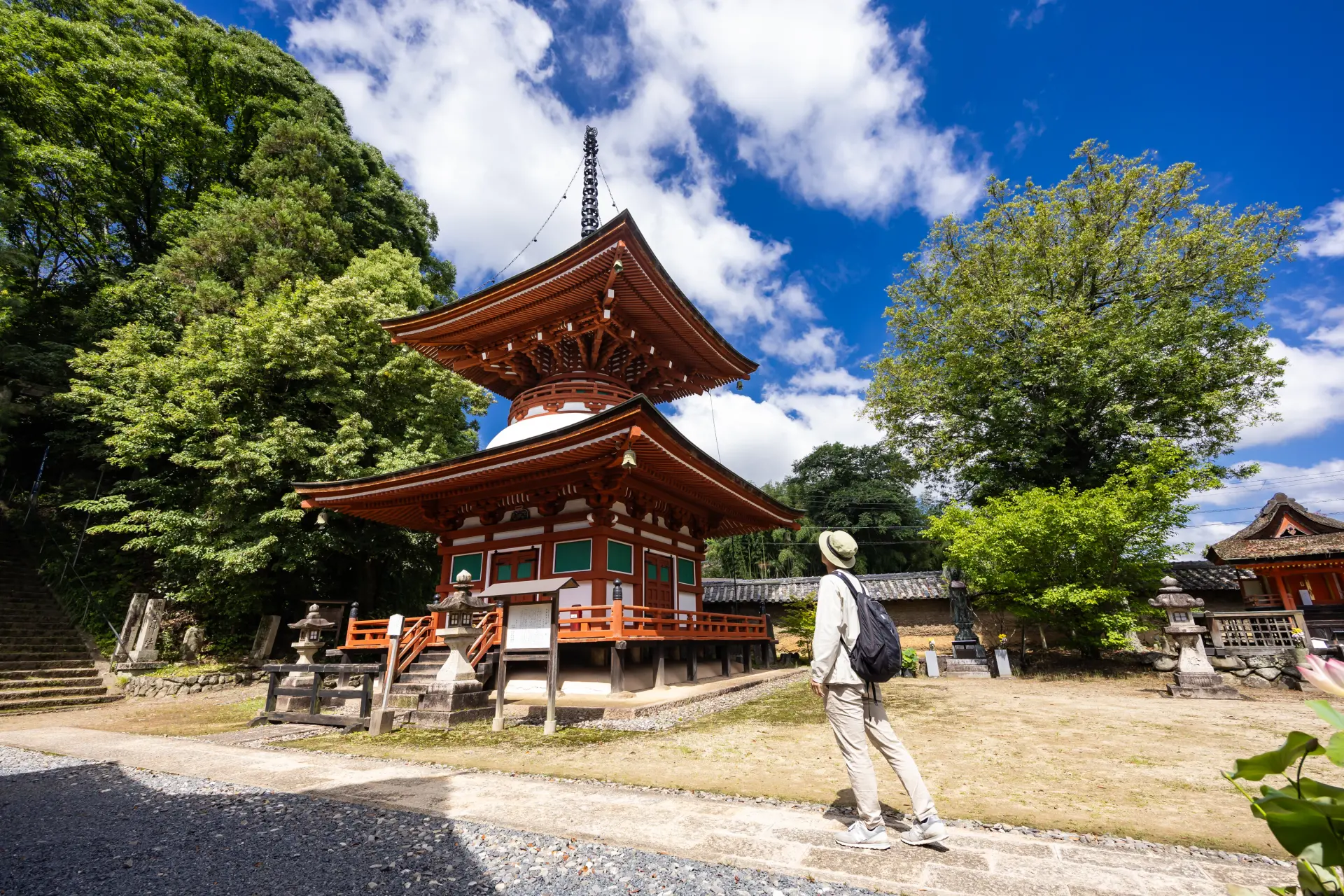
After walking approximately 20 minutes from Kakinoha Sushi Kuwaraku, Jison-in Temple, the starting point of the Choishimichi Pilgrimage Route, comes into view. This historic temple stands at the foot of Koyasan, which was founded by Kobo Daishi (Kukai), and is one of the component sites of the World Heritage Site Sacred Sites and Pilgrimage Routes in the Kii Mountain Range. It has long been cherished as the starting point for pilgrimages to Koyasan, and pilgrims are said to have prayed here and prepared themselves physically and spiritually before heading up the mountain.
The temple is also known as the place where Kukai’s mother lived. During the period when women were prohibited from entering Koyasan, it served as a center of faith for female worshippers. Because of this history, it became known as “Women’s Koya,” and many people continue to visit to pray for safe childbirth, fertility, and a good match. The temple grounds include Miroku-do Hall, which houses the National Treasure Seated Wooden Statue of Maitreya Bodhisattva and bears witness to the temple’s long history.
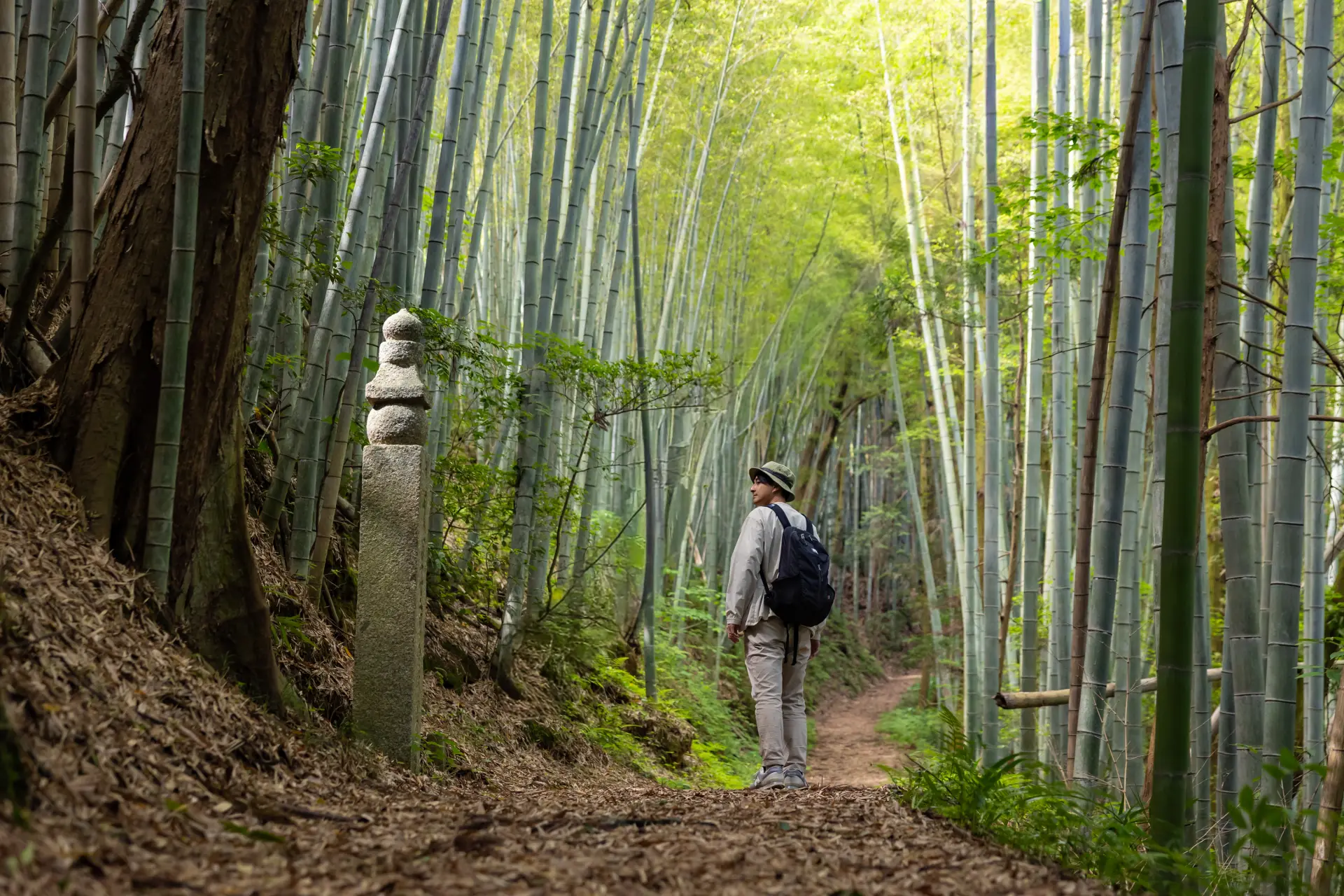
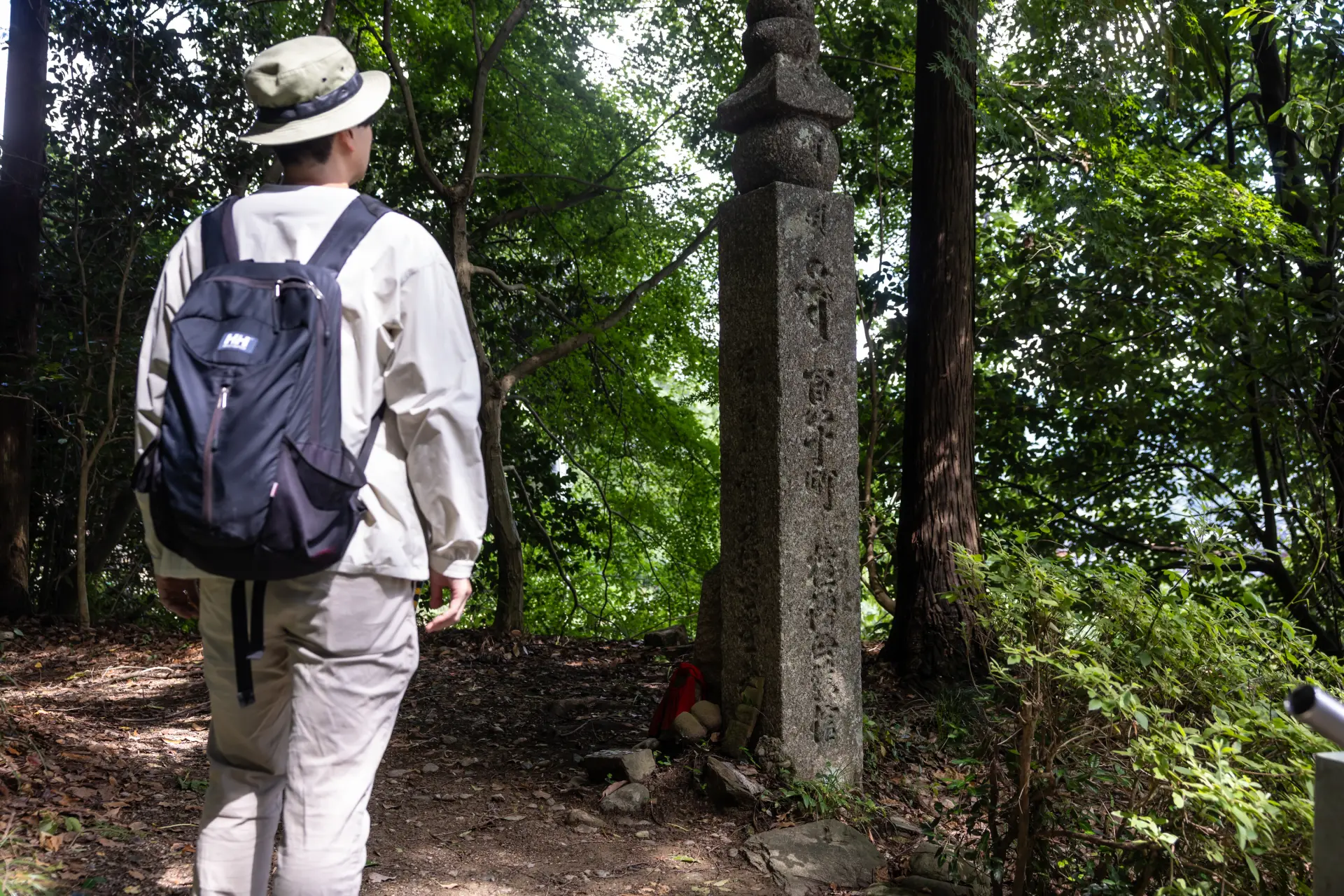
The Choishimichi Pilgrimage Route is more than an ordinary mountain trail. Following the choishi stone markers lining the route and walking the path of prayer leading to Koyasan is itself part of the pilgrimage experience. Reflect on the pilgrims of the past as you begin your journey toward Koyasan one step at a time.
- Japanese Name
- 慈尊院
- Postal Code
- 648-0151
- Address
-
832 Jison-in, Kudoyama-cho, Ito-gun, Wakayama
Google Maps - Telephone
- 0736-54-2214
- Closed
- Open year-round
- Hours
- 8:00 am-5:00 pm
- Admission
- Free
- Access
- Approximately 20 minutes on foot from Kudoyama Station on the Nankai Koya Line
- Credit Cards
- Not accepted
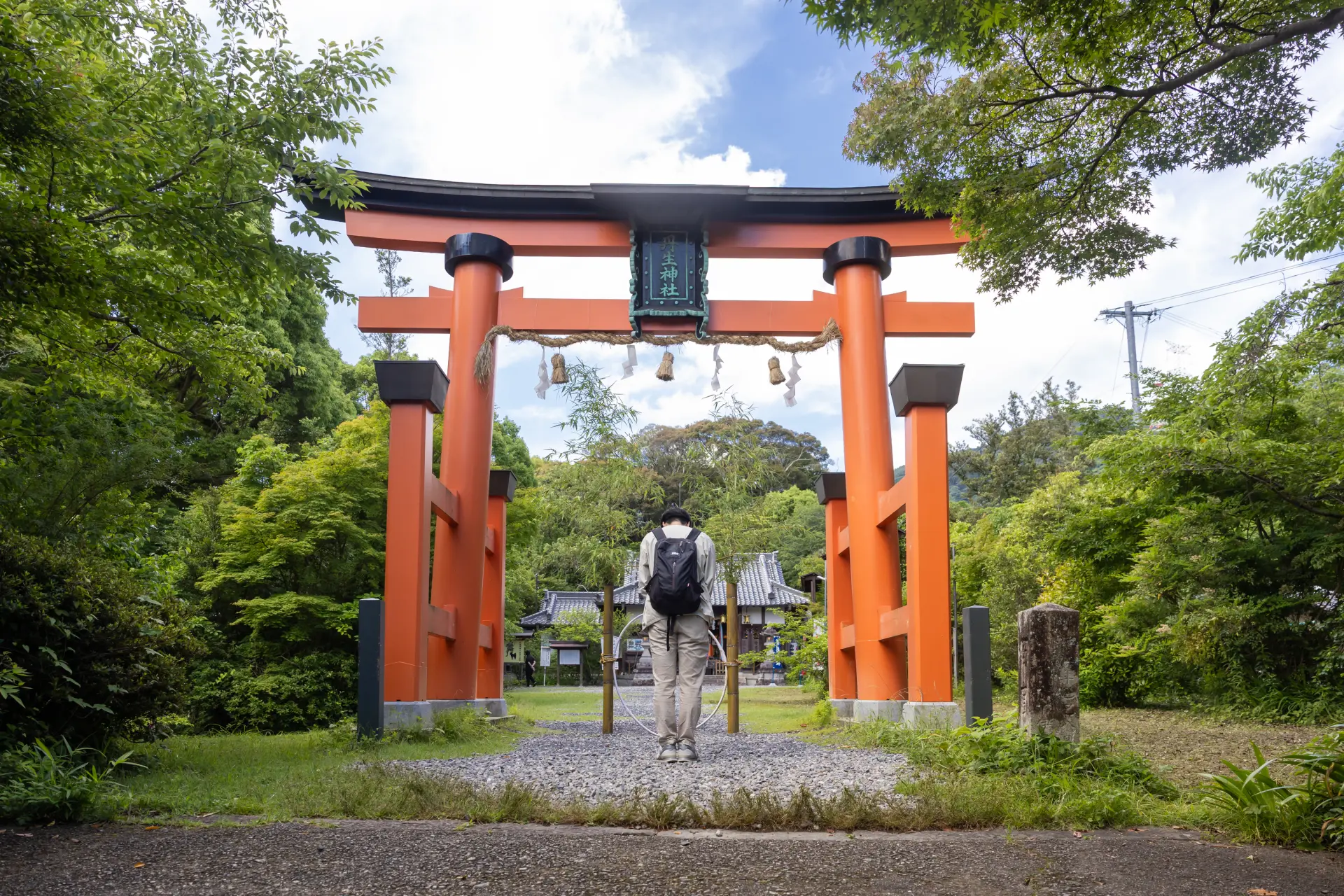
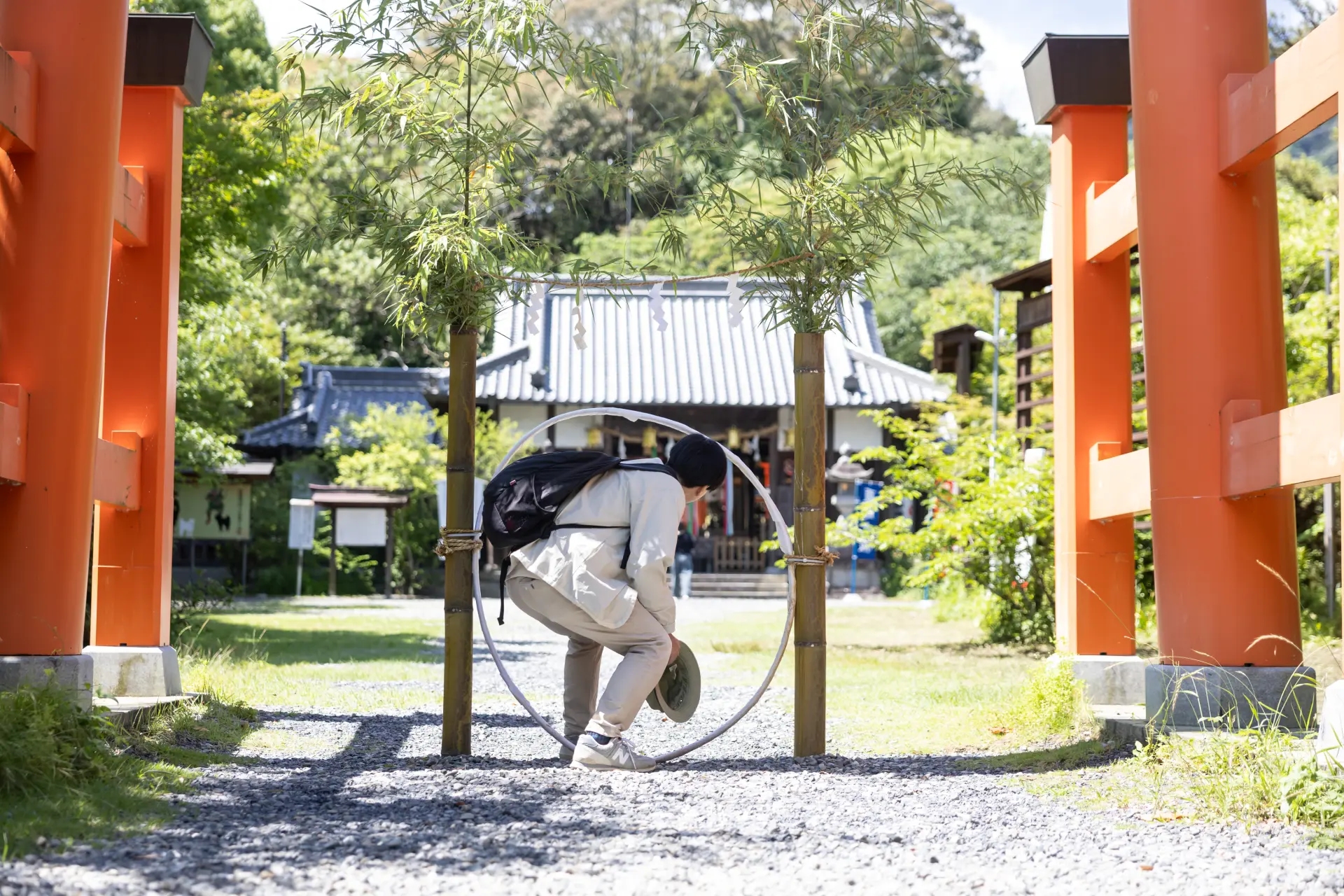
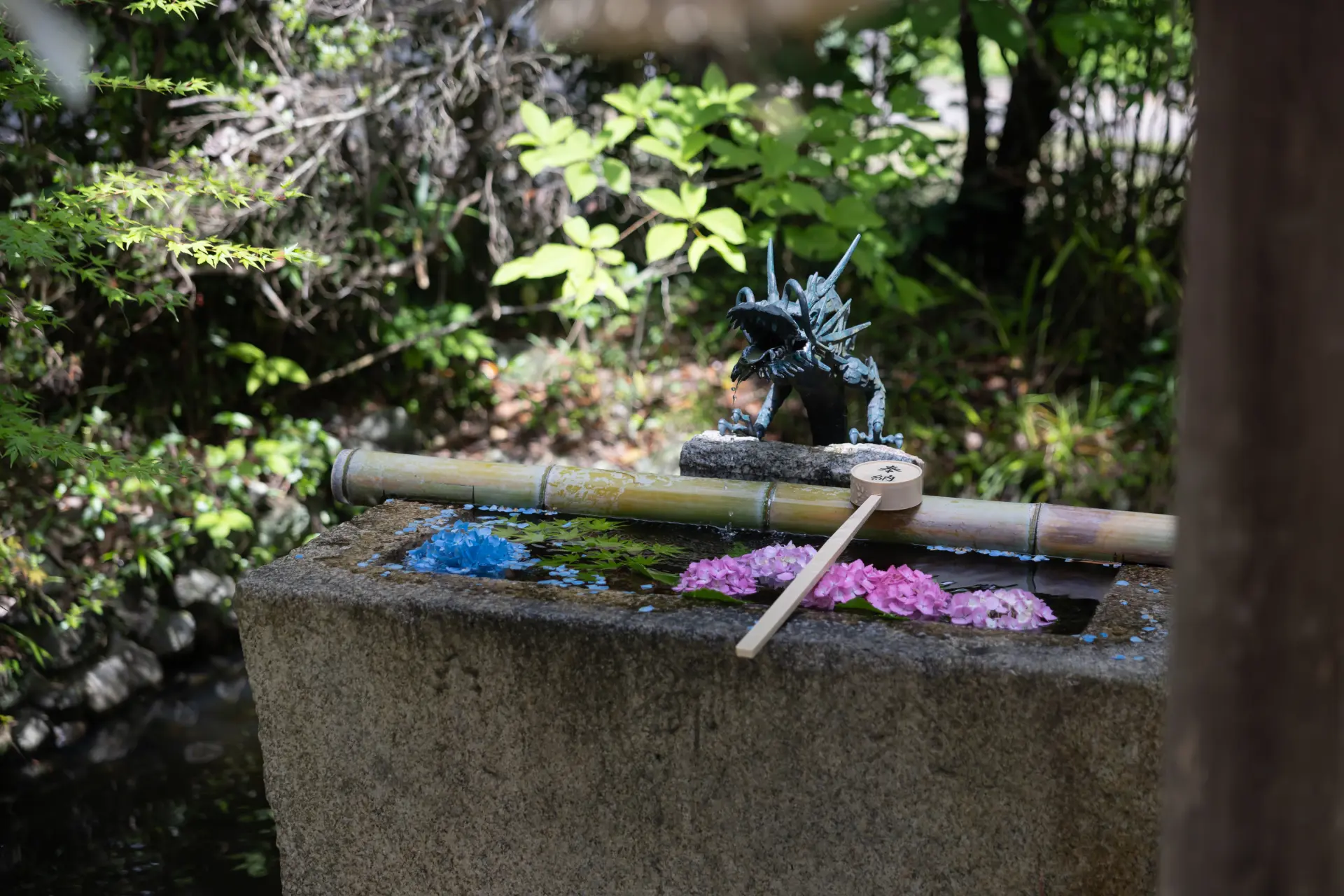
Pray for a Safe Pilgrimage at Niukanshofu-jinja Shrine
After praying at Jison-in Temple, climb the steps within the temple grounds to Niukanshofu-jinja Shrine. Known for enshrining the guardian deities of Koyasan, the shrine was another place where pilgrims prayed for a safe journey before continuing up the mountain.
According to a legend associated with the shrine, while Kobo Daishi (Kukai) was searching for sacred land on which to establish Koyasan, a hunter accompanied by two dogs, one white and one black, guided him there. The hunter is believed to have been an incarnation of Takanomiko no Okami and is enshrined at this site.
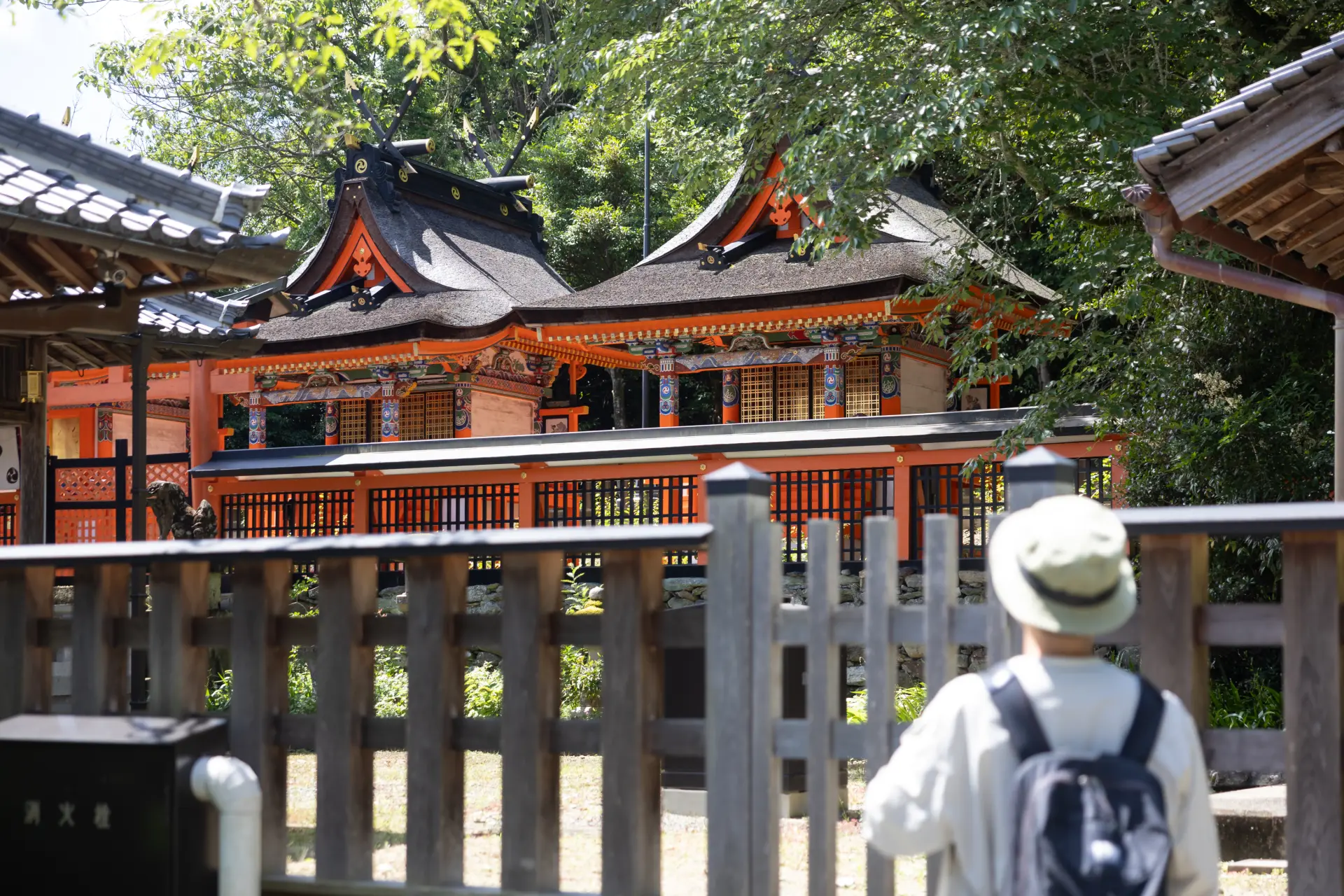
Three main sanctuary buildings designated as Important Cultural Properties remain within the shrine grounds, which also feature details such as tomoe crests on the roofs and chidori gables. Koyasan can be seen from the grounds, which are also known as a place where women who were once prohibited from entering the sacred mountain worshipped it from afar.
- Name in Japanese
- 丹生官省符神社(にうかんしょうぶじんじゃ)
- Postal Code
- 648-0151
- Address
-
835 Jison-in, Koyasan-cho, Ito-gun, Wakayama
Google Maps - Phone
- 0736-54-2754
- Closed on
- Open for worship at all times
- Hours
- Open for worship at all times (Shrine office: 9:00am–5:00pm)
- Admission
- Free
- Access
- 25 minutes on foot from Kudoyama Station (Nankai Koya Line)
- Official website
- Official website (Japanese)
Follow 180 Choishi Stone Markers along the Choishimichi Pilgrimage Route
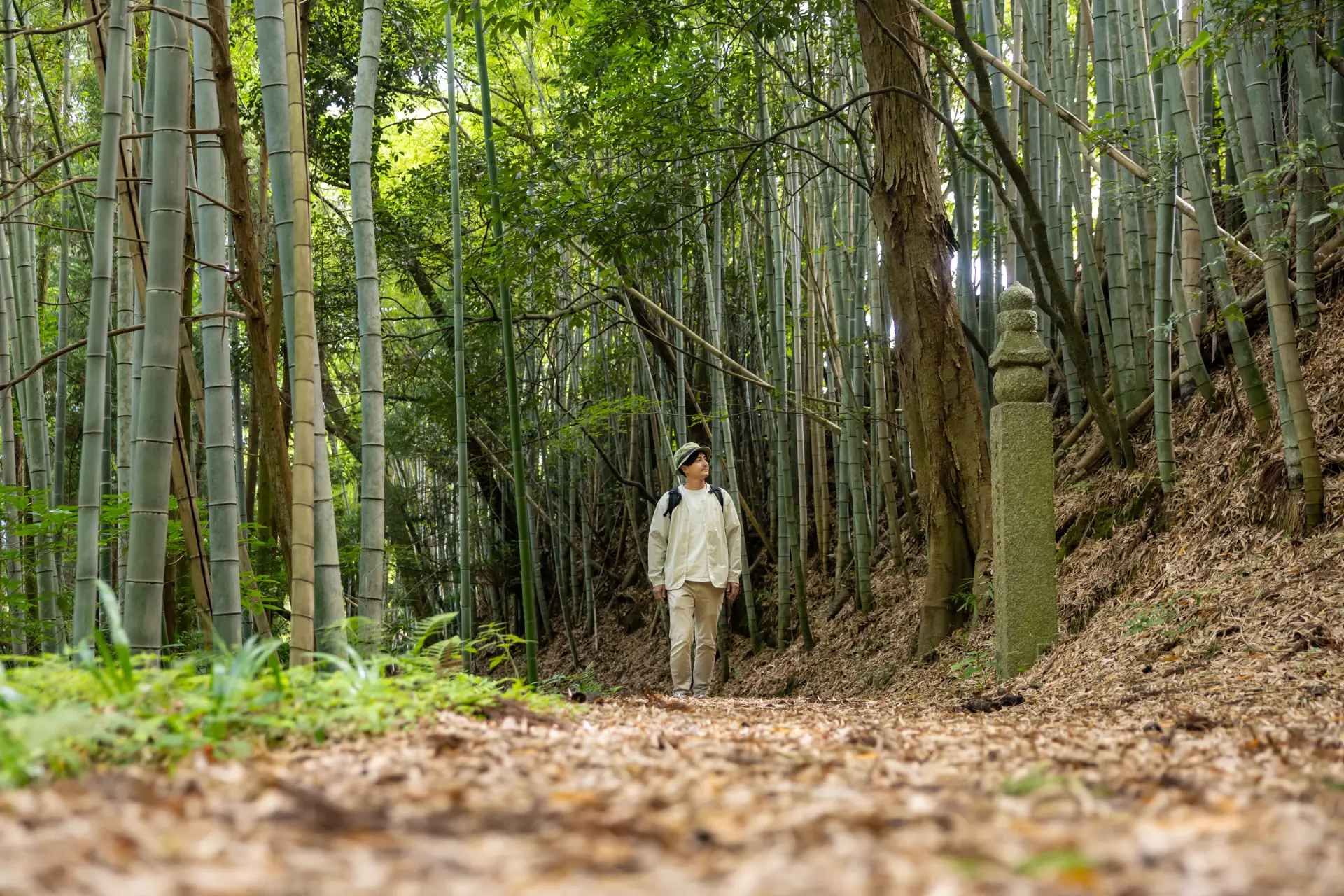
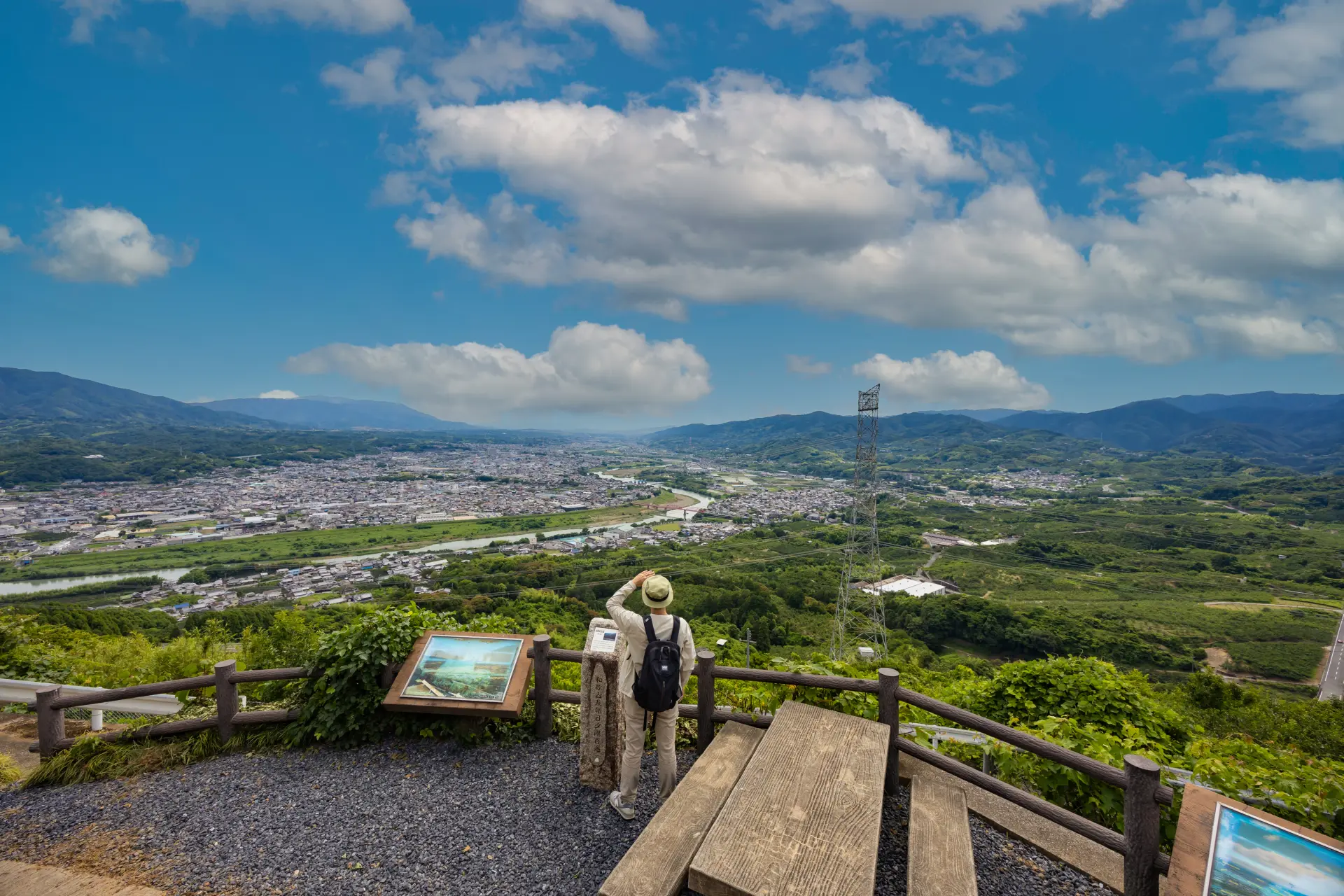
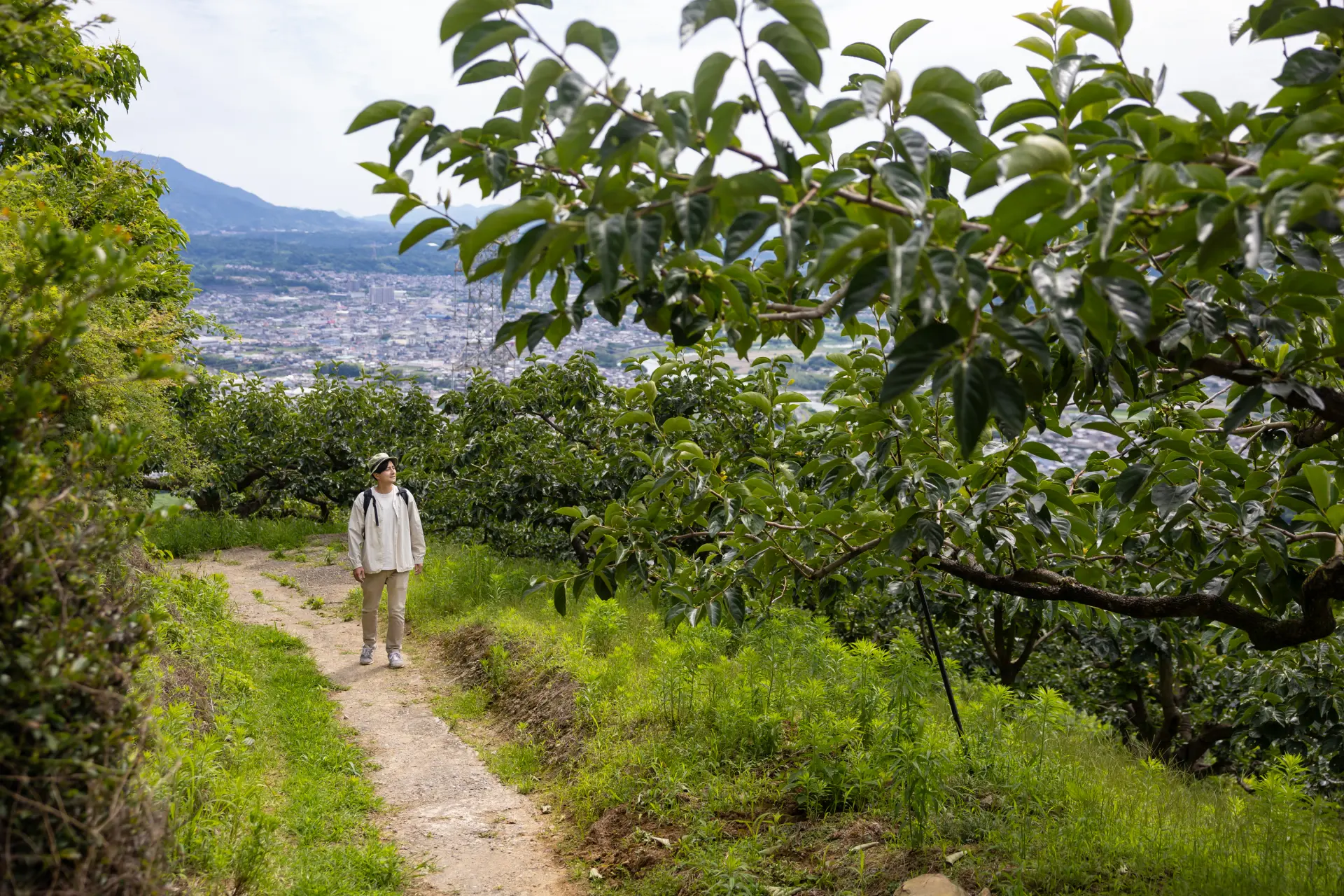
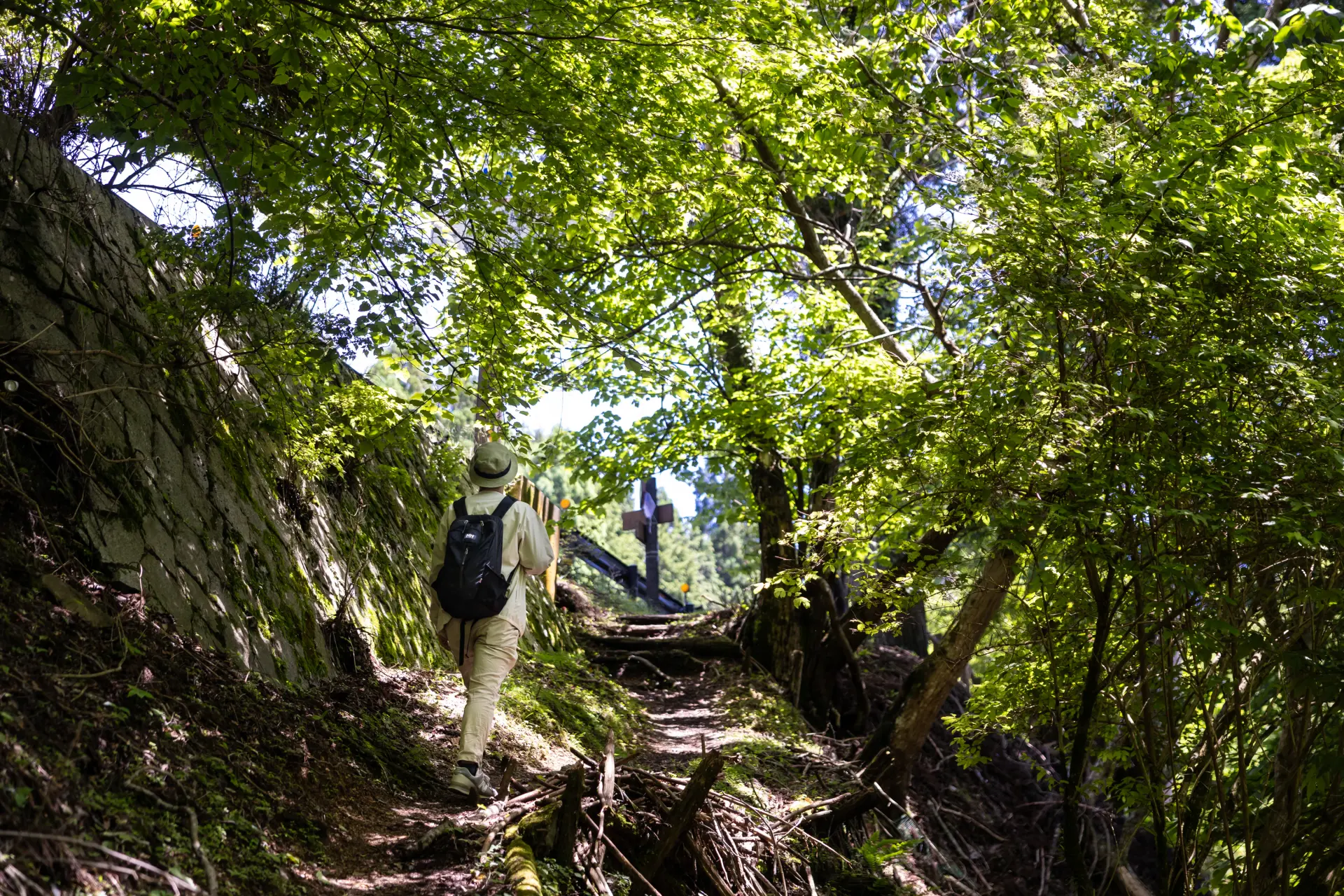
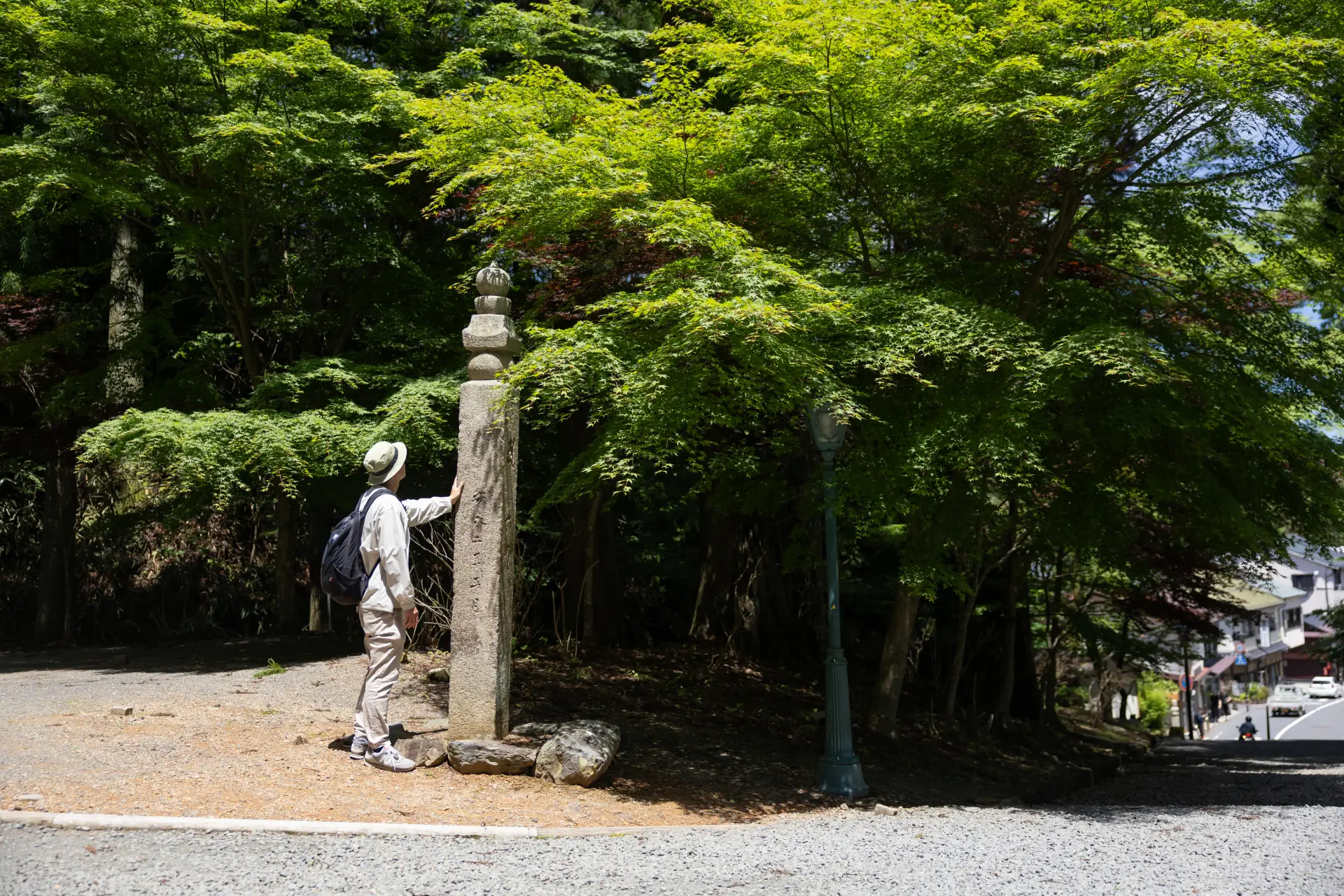
After learning about the history of the Koyasan faith at Niukanshofu-jinja Shrine, the climb along the Choishimichi Pilgrimage Route begins in earnest. The most distinctive sights along the way are the choishi stone markers erected at intervals of approximately 109 meters. A total of 180 markers stand between Jison-in Temple and Konpon Daito Pagoda in Koyasan, each engraved with Siddham characters representing a Buddhist deity. Pilgrims once used these markers as guides while making their way up the mountain.
As you begin walking, a varied series of landscapes unfolds, including peaceful settlements, rural scenery, and dense bamboo groves. The changing air and scenery as you approach Koyasan are part of what makes this route special. The changing seasons, including fresh greenery in spring and colorful foliage in autumn, add further beauty to the journey.
Be Moved by Dai-mon Gate at the End of the Long Pilgrimage Route!
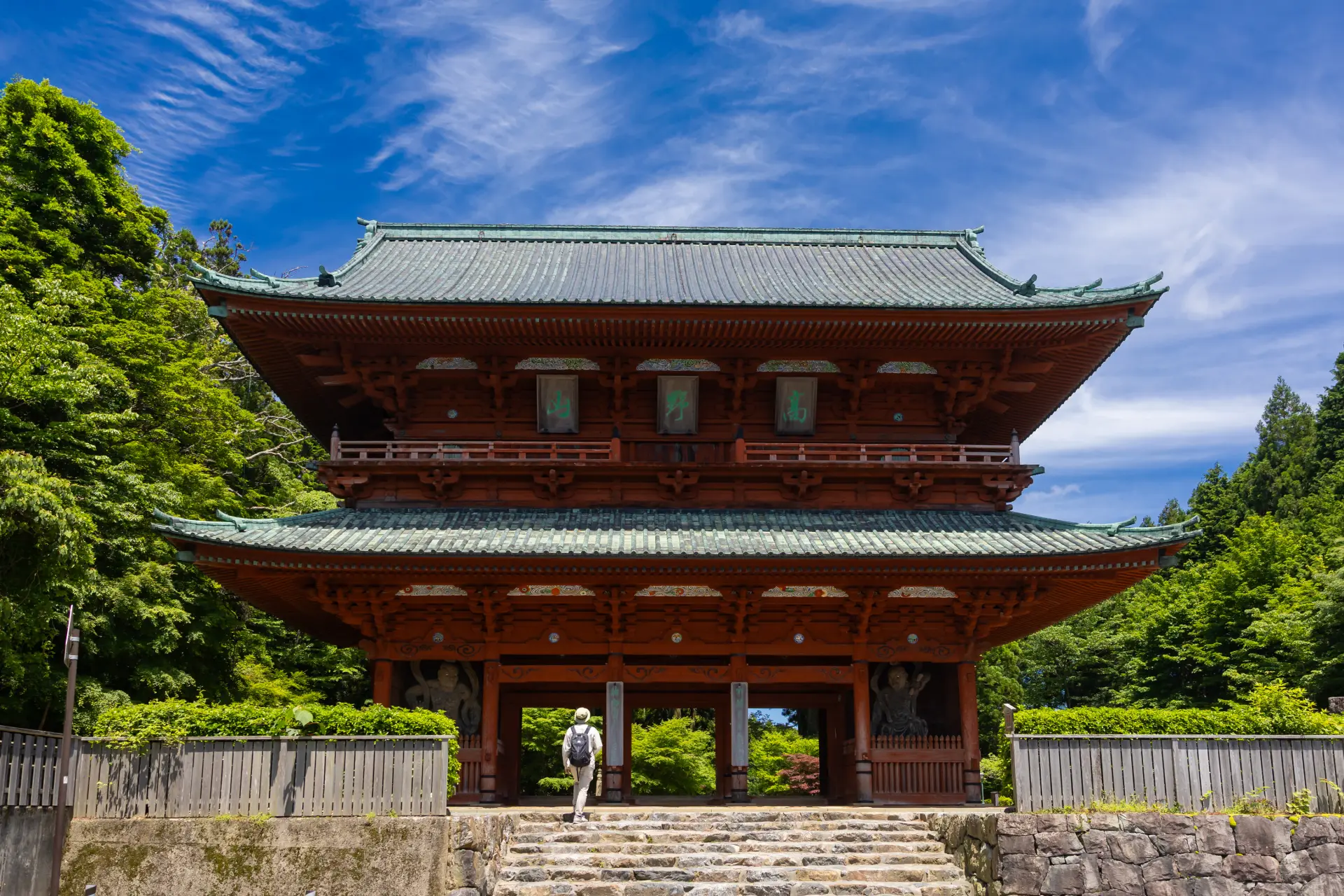
After walking approximately 20 km along the Choishimichi Pilgrimage Route, Dai-mon Gate, the main gateway to Koyasan, welcomes you at the end of the long pilgrimage. This imposing vermilion gate stands at the entrance to Koyasan, and the current structure was rebuilt in 1705. Rising approximately 25 meters high, it is a powerful symbol that makes visitors truly feel they have arrived at the sacred mountain.
Discover the World of Konpon Daito Pagoda at the End of the Trail
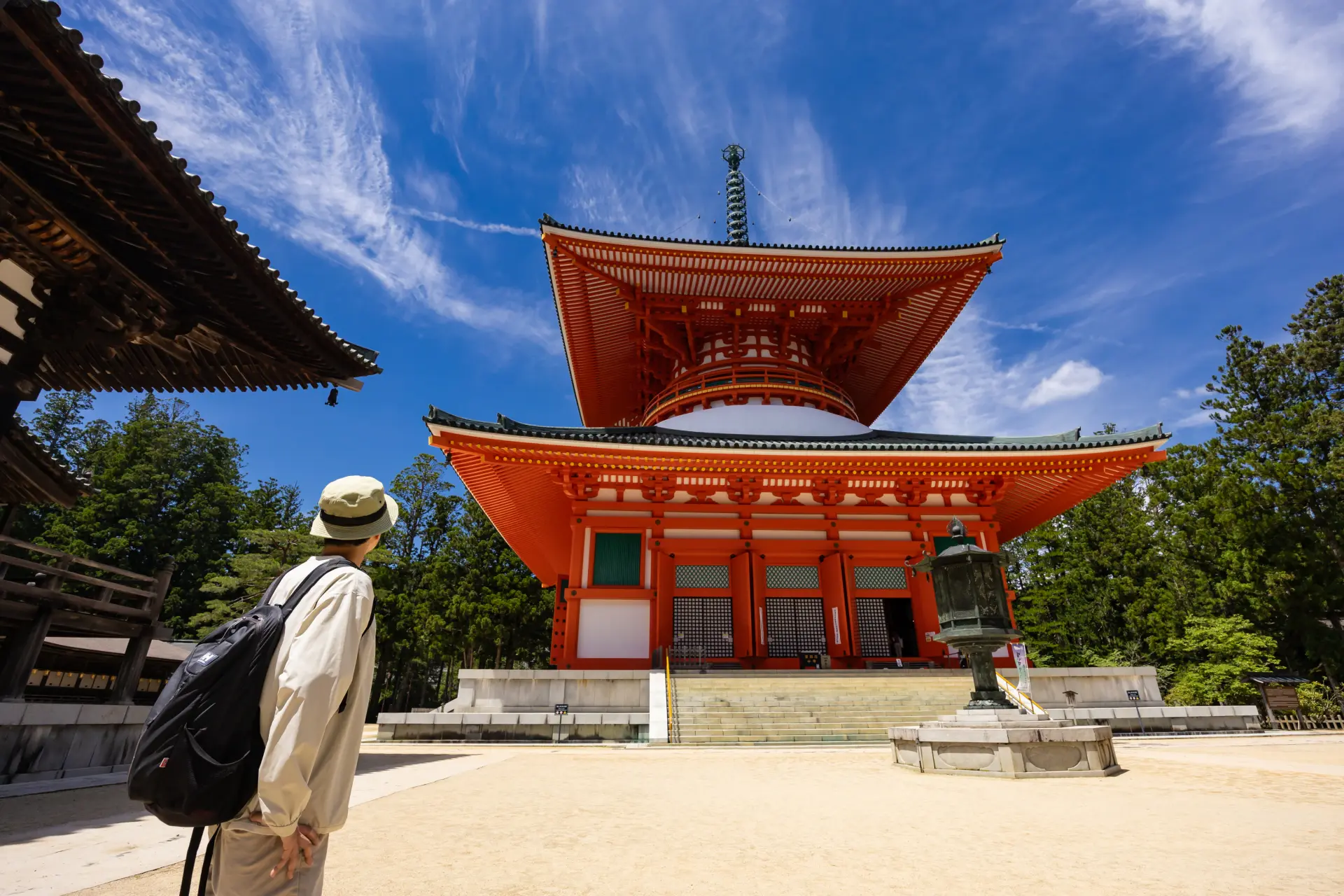
Konpon Daito Pagoda is a symbol of Koyasan and the final destination of this route. Standing at the center of the Danjo Garan Sacred Temple Complex, this approximately 48.5-meter-high vermilion pagoda is considered an important structure expressing the worldview of Shingon Esoteric Buddhism envisioned by Kobo Daishi (Kukai).
Inside, various Buddhist deities are arranged around Dainichi Nyorai, the Great Sun Buddha, creating a three-dimensional mandala. After reaching it at the end of the long pilgrimage route, its magnificent interior is sure to leave an even deeper impression.
Experience a Koyasan Shukubo Temple Stay and Feel Like a Monk
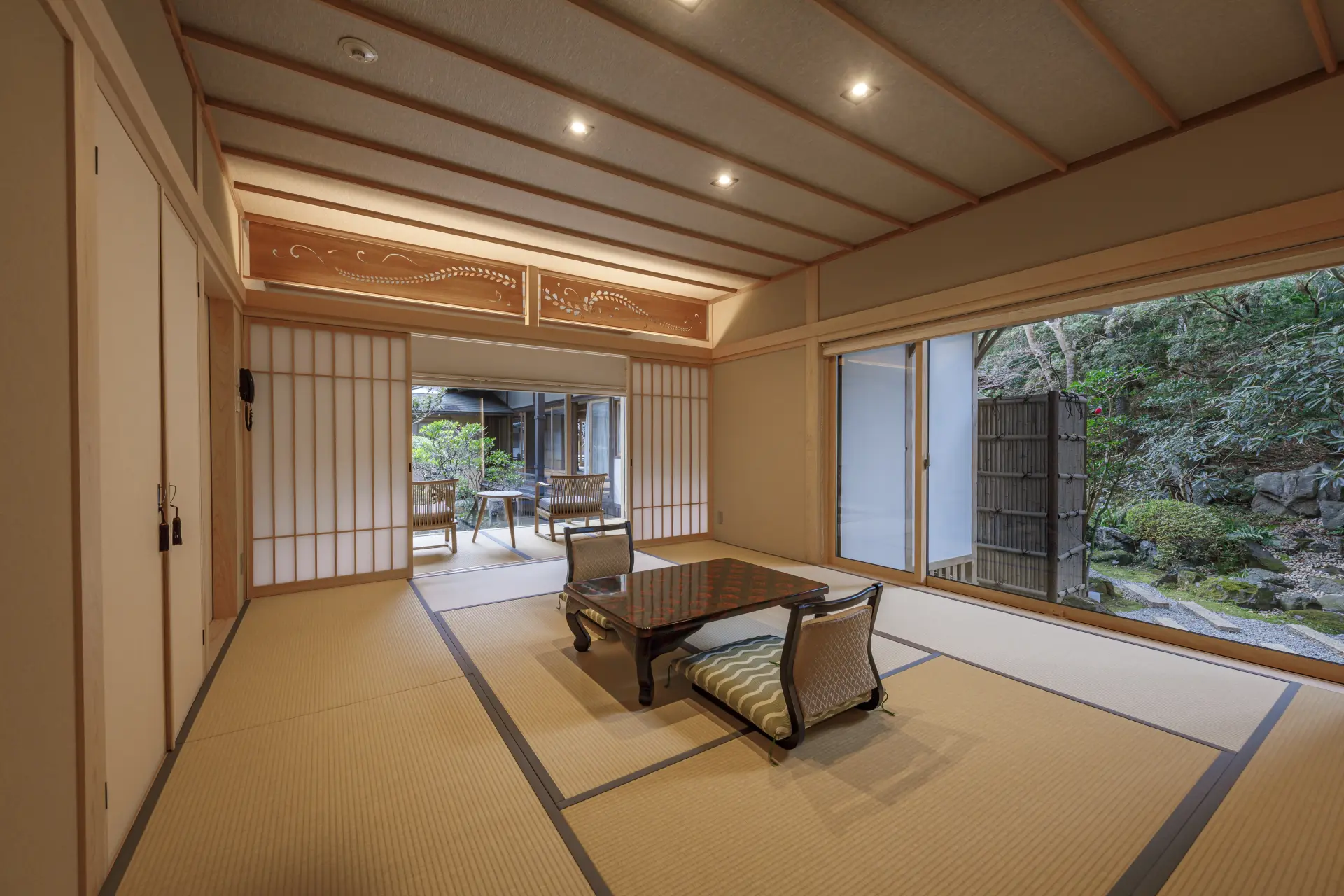
After completing the Choishimichi Pilgrimage Route, stay at one of Koyasan’s distinctive shukubo, or temple lodgings, and take time to recover from the journey. Shukubo originally developed as accommodation for monks and pilgrims, but today they are also open to travelers.
Koyasan has more than 50 temple lodgings, where guests can admire historic architecture and gardens and experience shojin ryori, or Buddhist vegetarian cuisine, and morning prayer services. Each has its own history and character, allowing guests to experience Koyasan’s culture and faith through their stay.
DAY 2: Explore Koyasan and Stay at a Rare Railway Station Hotel
Explore Koyasan and Encounter the World of Esoteric Buddhism
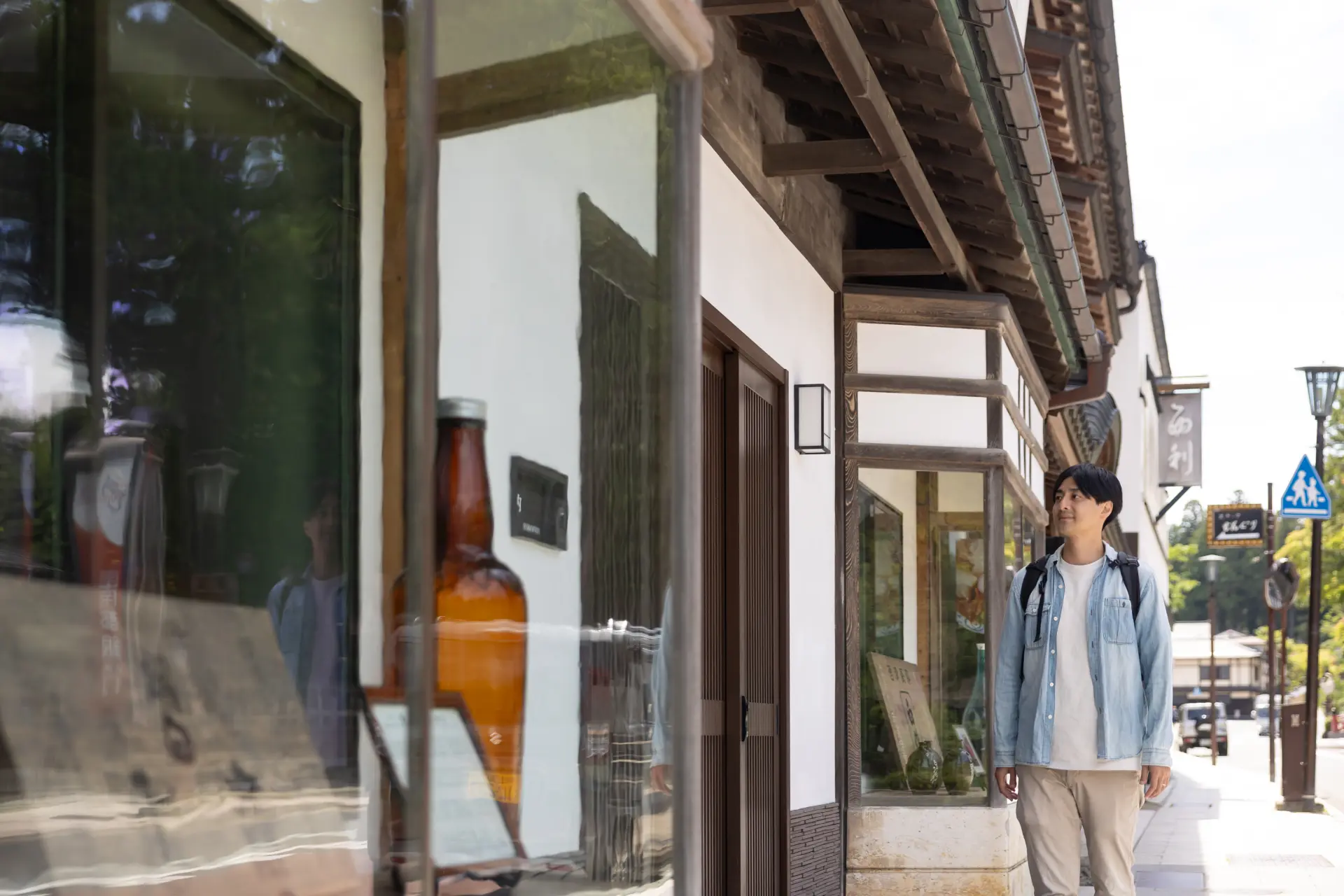
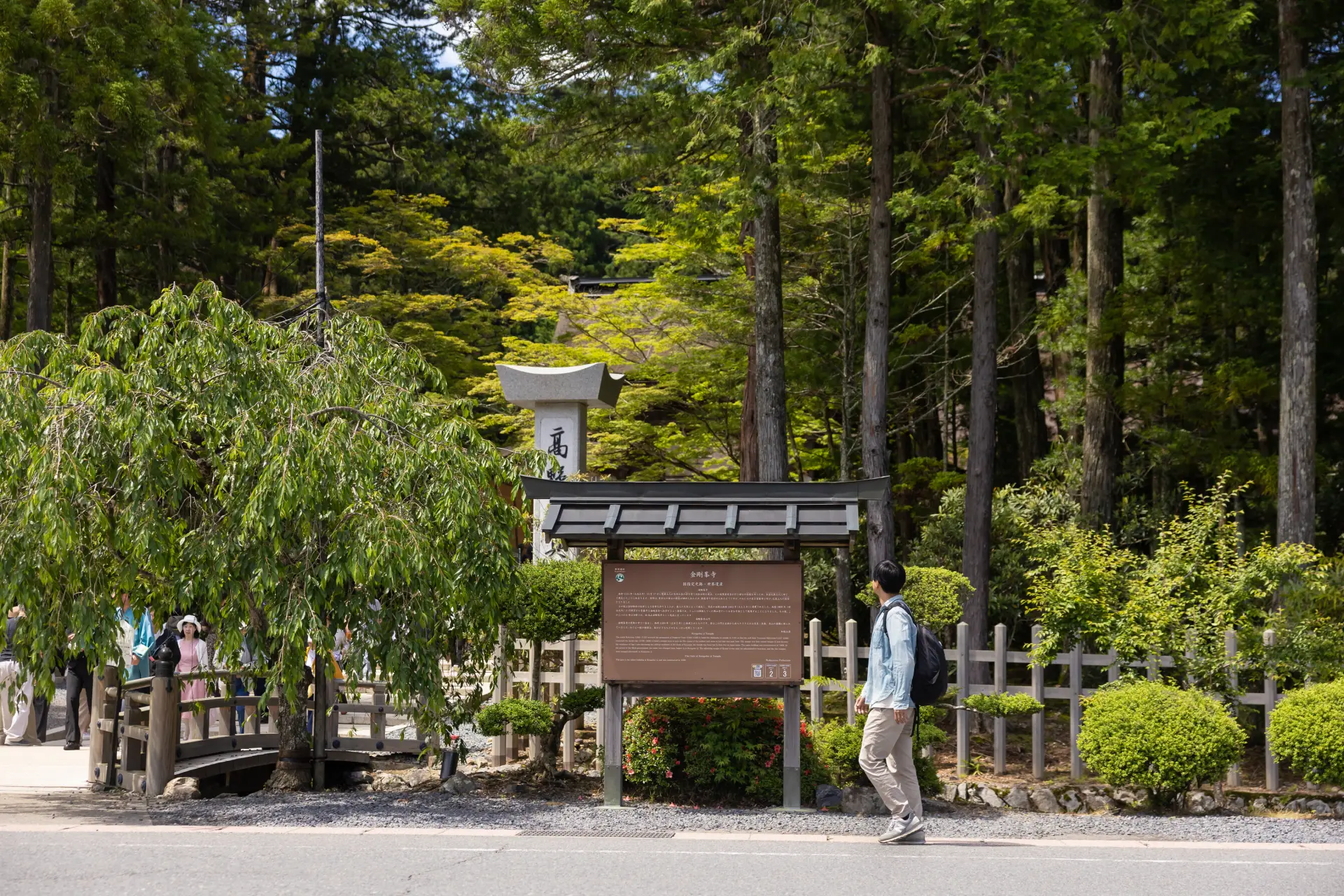
On the second day, explore the World Heritage Site of Koyasan. The whole of Koyasan is regarded as the temple grounds of Kongobu-ji Head Temple, and more than 100 subtemples are scattered throughout the mountain. Numerous cultural treasures, including historic buildings, Buddhist statues, and scriptures, have been preserved here.
The appeal of Koyasan lies not only in visiting its temples but also in experiencing Buddhist culture firsthand. Visitors can participate in Buddhist practices such as Ajikan meditation, Buddhist sutra copying, and jukai, or receiving the Buddhist precepts, while some temples also allow visitors to observe goma fire rituals. Exploring the sacred mountain that lies at the end of the Choishimichi Pilgrimage Route walked the previous day will deepen your understanding of the Koyasan faith. Begin with Kongobu-ji Head Temple and Okuno-in, two of Koyasan’s most iconic sites.

Spend the Night Watching Trains at The Railway Hotel Koyasan Pilgrimage Railway
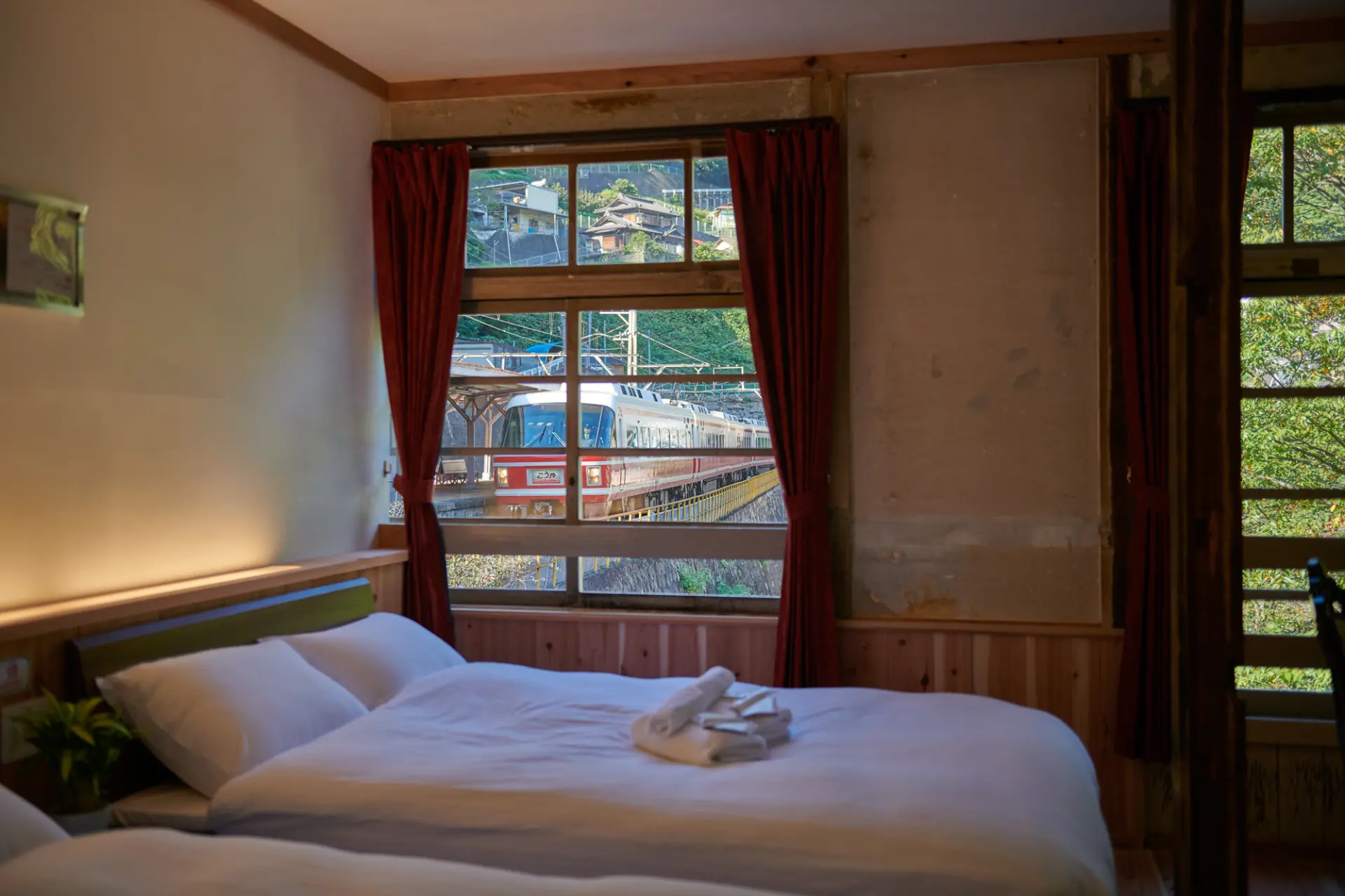
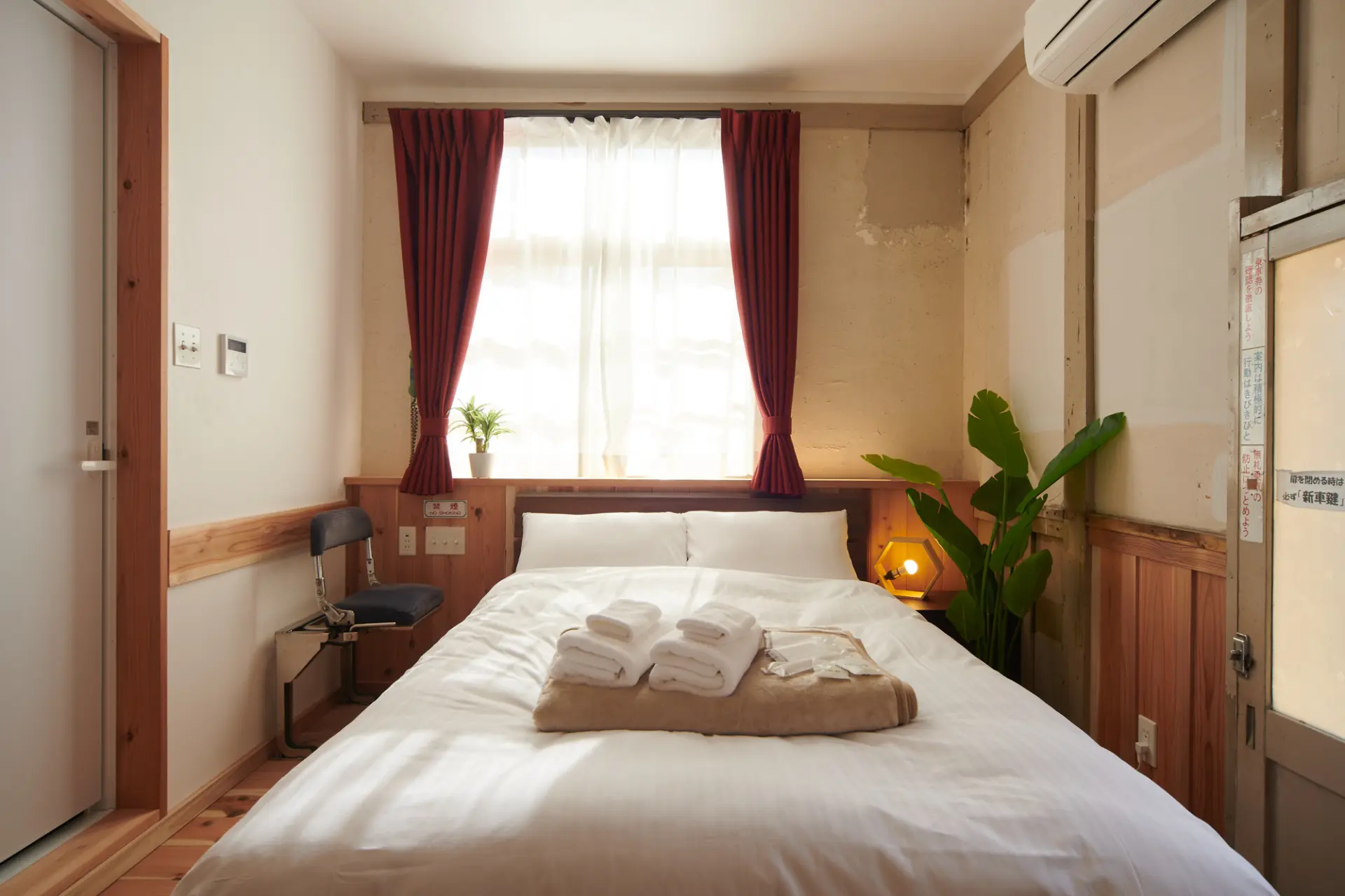
After exploring Koyasan, take the Koyasan Cable Car from Koyasan Station to Gokurakubashi Station. Transfer to a Nankai Electric Railway train and head to The Railway Hotel Koyasan Pilgrimage Railway at Koyashita Station. This distinctive accommodation occupies a wooden station building constructed in 1925 and allows guests to experience the romance of railway travel.
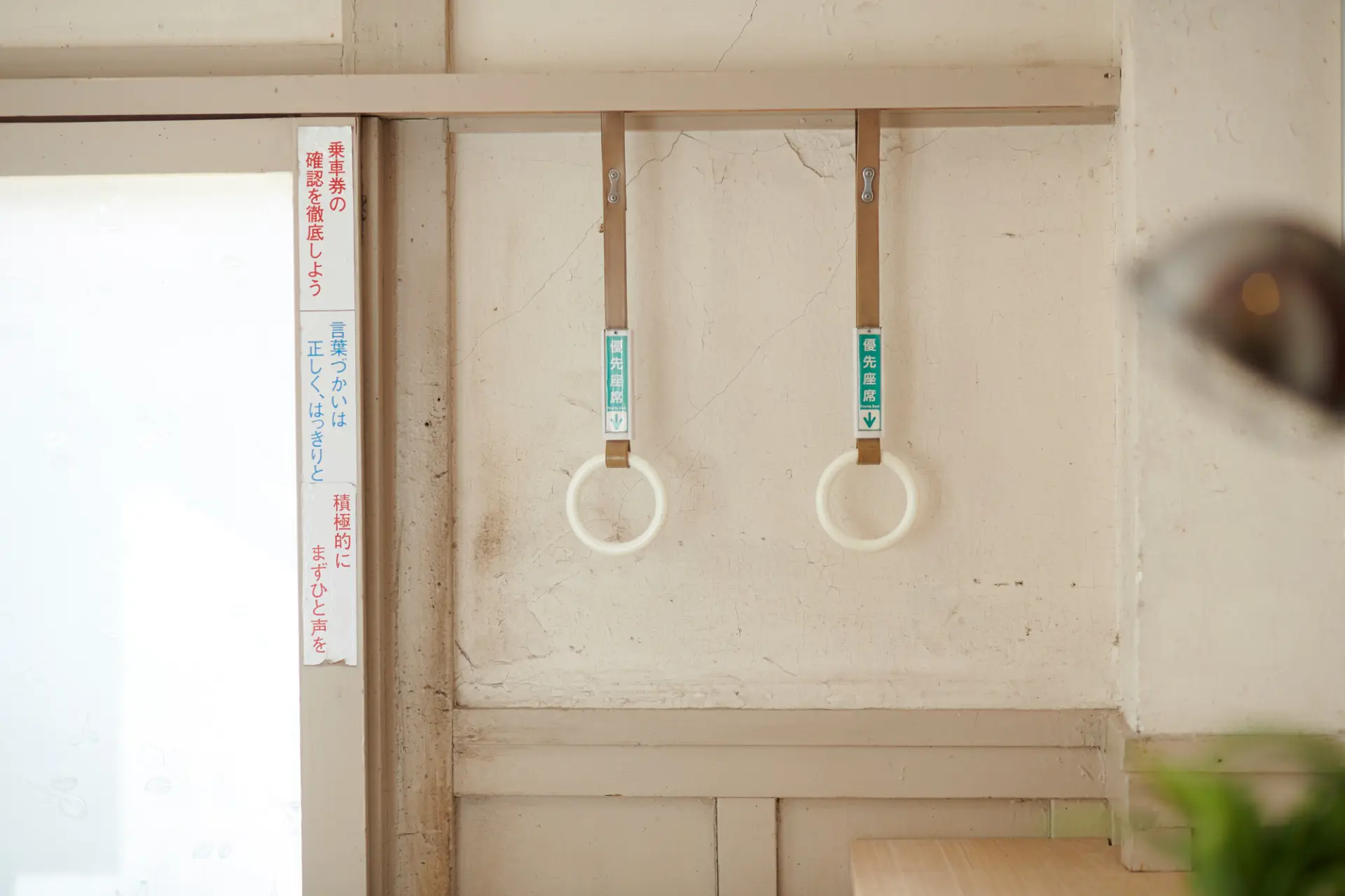
There are only two guest rooms. They were renovated from spaces once used as station staff sleeping quarters and a train crew waiting room, and columns and fittings retaining the atmosphere of the period can be seen throughout. Chairs, luggage racks, destination signs, and other items once used in actual railway cars are displayed inside, creating an irresistible space for railway enthusiasts. Guests can watch trains coming and going along the platform from their room windows and enjoy a stay unique to a station building that remains in active use.

- Name in Japanese
- The Railway Hotel 高野山 参詣鉄道
- Postal Code
- 648-0141
- Address
-
8-1 Shiide, Kudoyama-cho, Ito-gun, Wakayama
Google Maps - Telephone
- 050-1808-9157
- Check-in
- 4:00 pm
- Check-out
- 10:00 am
- Accommodation Rates
- From 7,500 yen per room
- Access
- Inside Koyashita Station on the Nankai Koya Line
- Credit Cards
- Accepted
- Official Website
- Official Website (Japanese)
Authentic Pizza at Pizza House Mieux, Where Tomatoes Come First
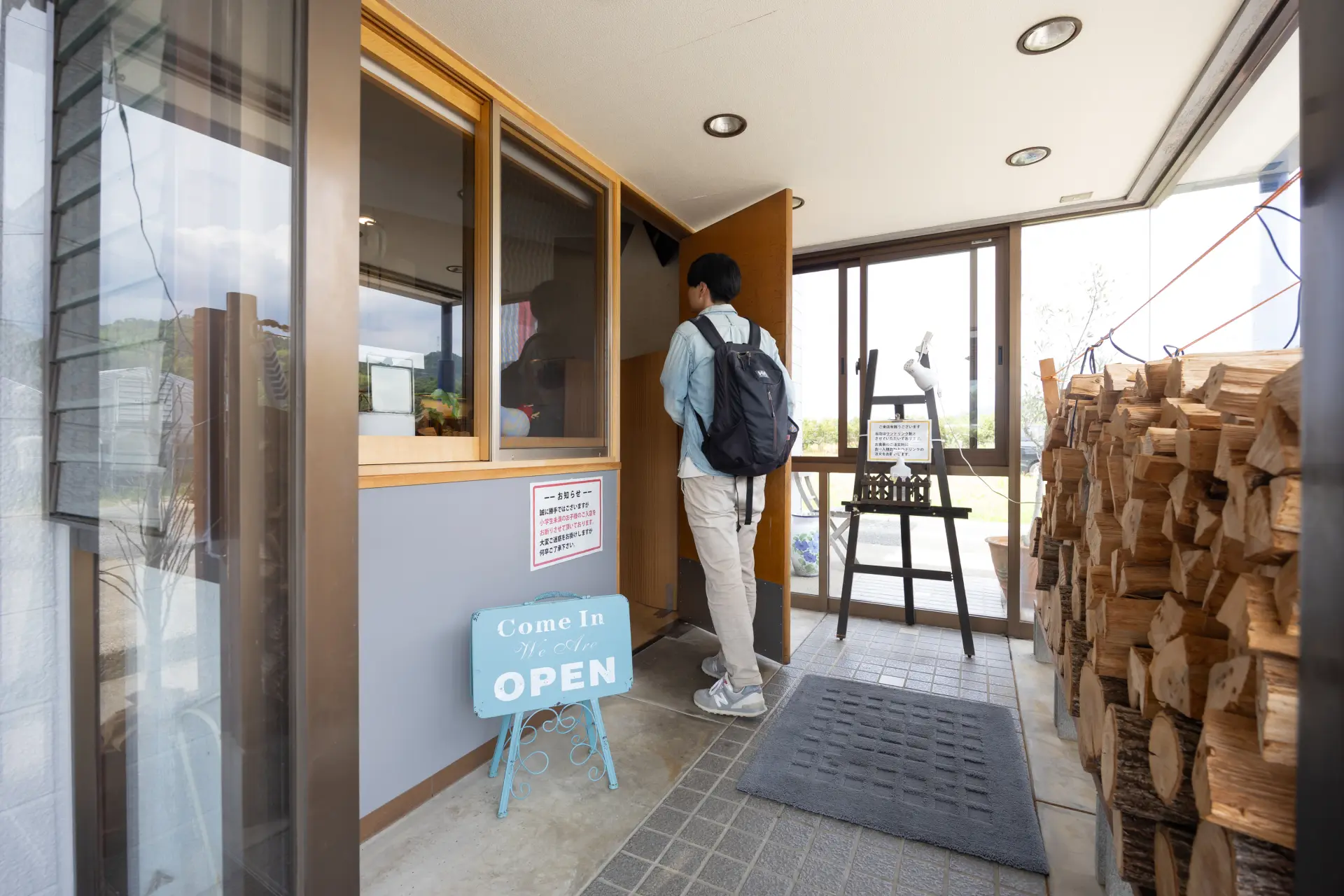
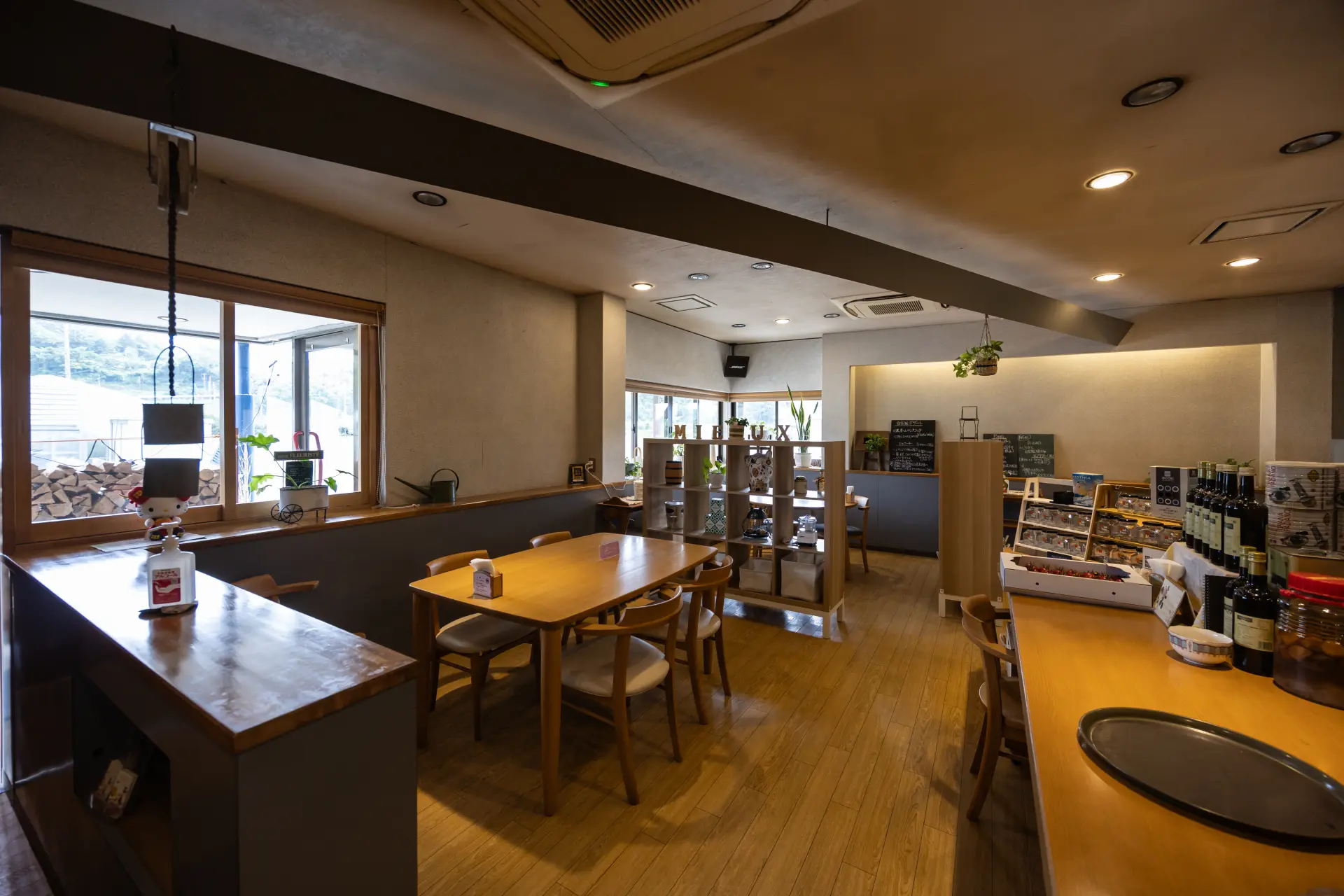
After taking a break at the railway station hotel at Koyashita Station, arrange a taxi and head to Pizza House Mieux, a restaurant that has long been loved by the local community. It is known for authentic pizza baked in a wood-fired oven imported from Naples. For its signature Margherita pizza, the restaurant places the highest priority on the quality of the tomatoes and may temporarily stop serving it when tomatoes meeting its standards are unavailable. At the time of the interview, a rare tomato variety grown at a farm in Kinokawa City was being used.
The dough is made with a proprietary blend of Italian wheat flour, while the buffalo mozzarella and olive oil are also imported from Italy. Each pizza is carefully baked using a combination of authentic Italian ingredients and seasonal produce from Wakayama.
The restaurant is also popular for its salads piled high with fruit and vegetables and its homemade gelato made with local fruit. End the second day by enjoying dishes filled with the distinctive flavors of both Wakayama and Italy.


- Japanese Name
- ピザハウス Mieux
- Postal Code
- 648-0101
- Address
- 360-4 Kudoyama, Kudoyama-cho, Ito-gun, Wakayama Google Maps
- Telephone
- 0736-54-3787
- Closed
- Mondays and Tuesdays, or the following weekday when either falls on a national holiday; the restaurant may also close temporarily
- Hours
- 11:00 am-2:00 pm (last order: 1:30 pm), 5:00 pm-8:00 pm (last order: 7:00 pm); closes when the dough runs out
- Access
- Approximately 15 minutes on foot from Kudoyama Station on the Nankai Koya Line
- Credit Cards
- Not accepted
DAY 3: Explore Sites Connected to Sanada Yukimura
Start the Day with Kamado-Cooked Rice at Omusubi Stand Kudo
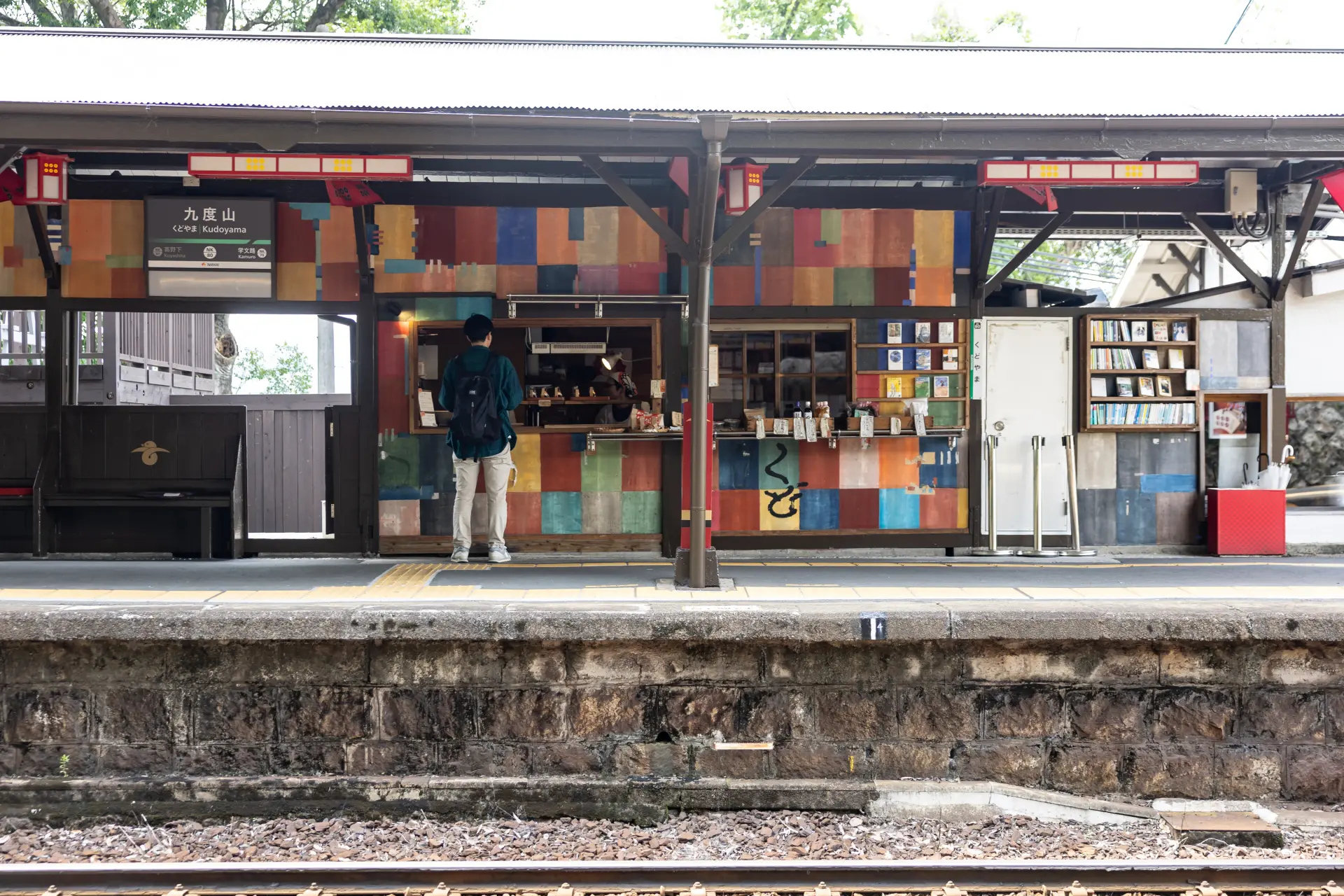
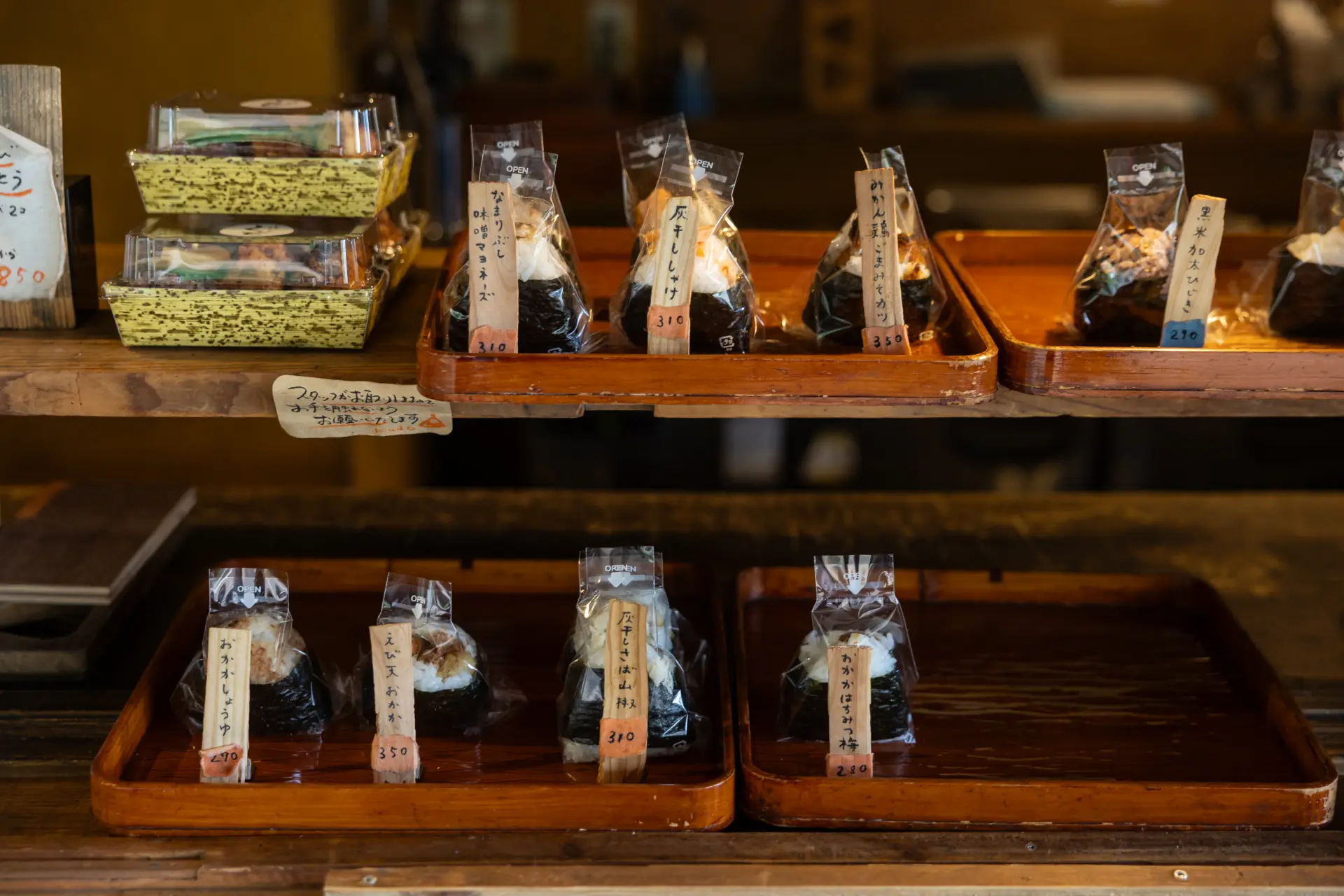
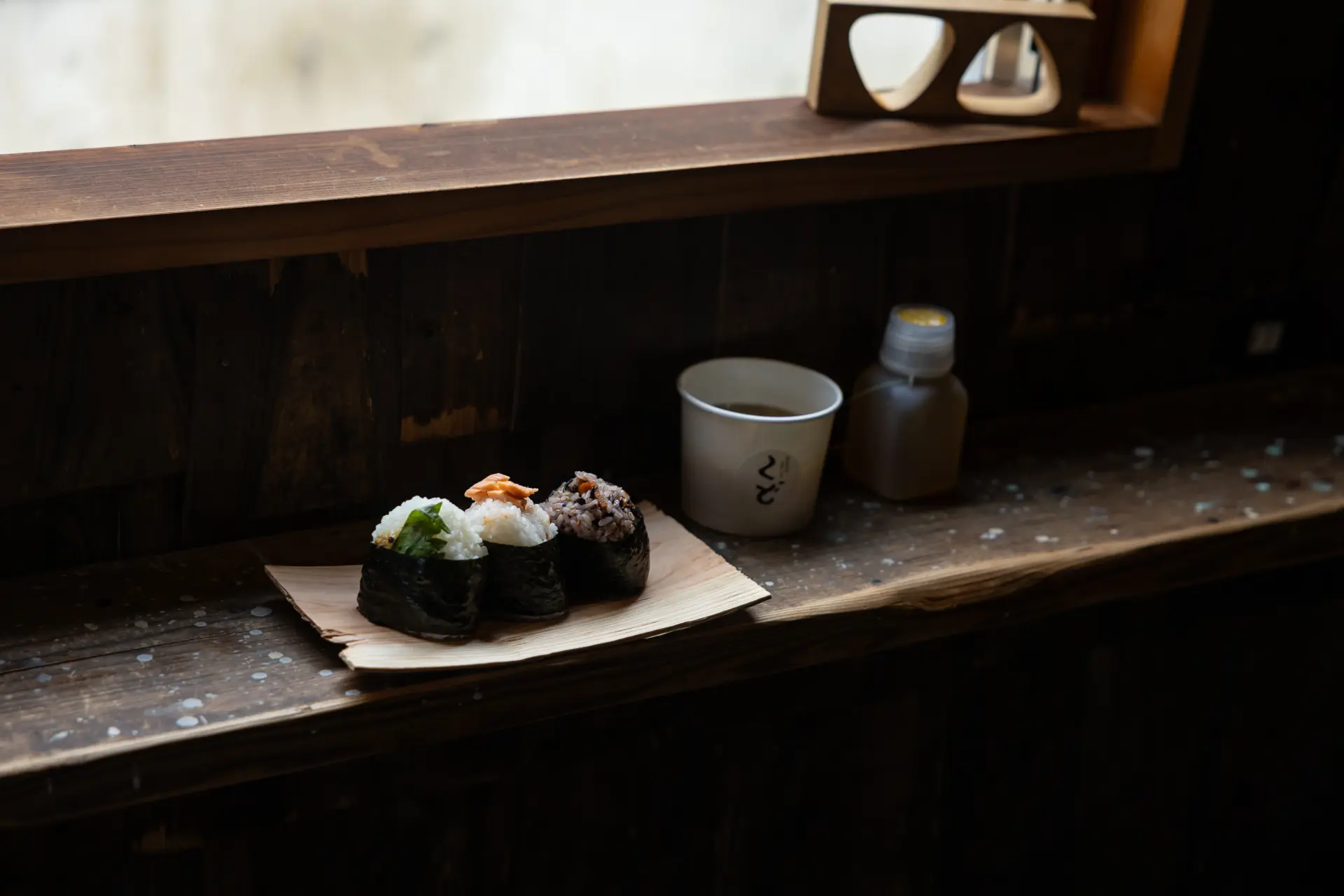
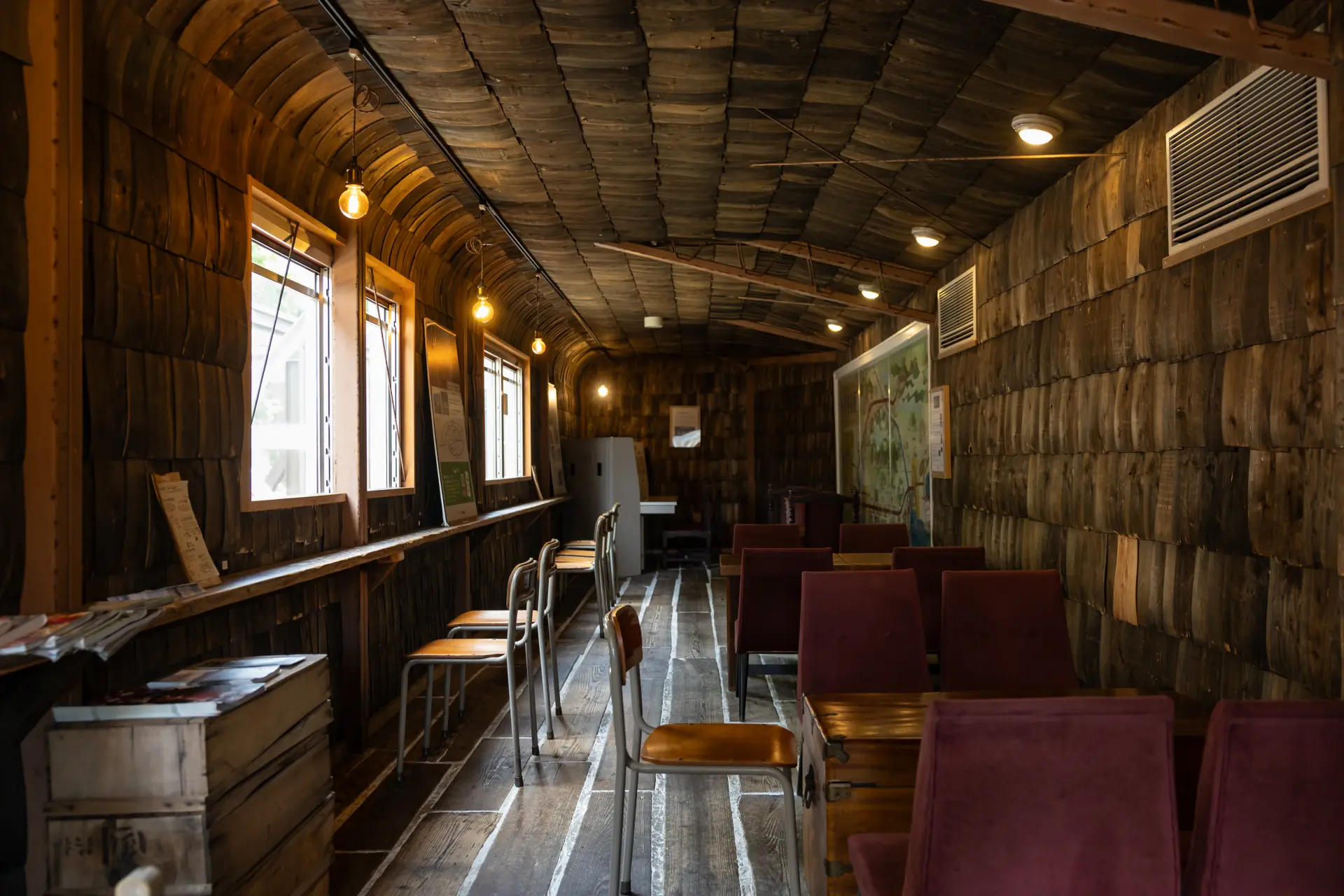
On the third day, take the train back to Kudoyama Station. Before exploring the town’s history and culture, visit Omusubi Stand Kudo inside Kudoyama Station. It is a popular shop visited not only by local residents but also by people who travel from farther away specifically to eat there.
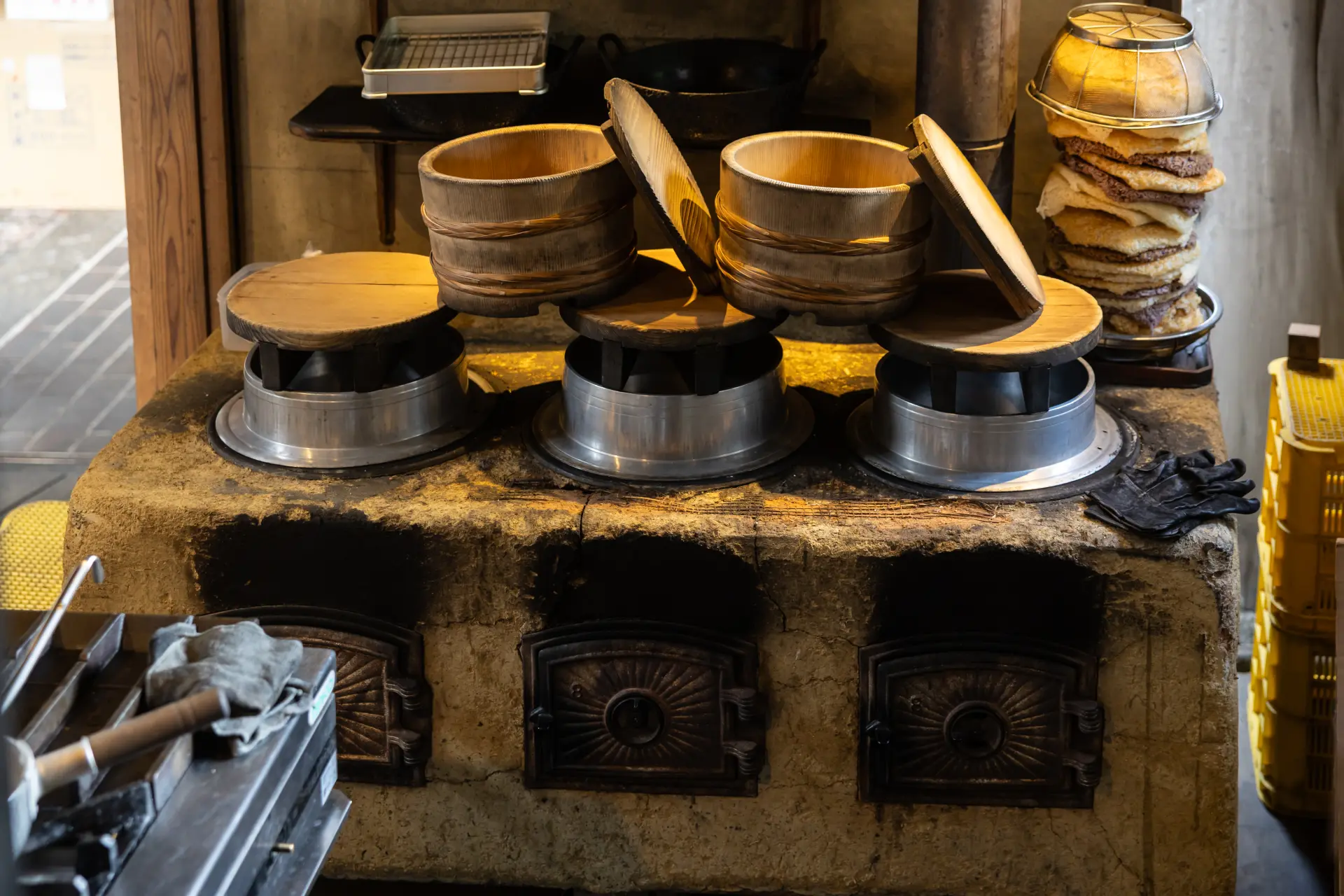
The rice is cooked in an okudosan, or traditional Japanese cooking hearth, which also inspired the shop’s name. The shop mainly uses rice harvested in Kudoyama and also serves omusubi rice balls made with ancient-grain rice from the Hosokawa district of the town. Cooking the rice over a wood fire enhances its sweetness and roasted aroma while producing a light, fluffy texture.
Another attraction is the seasonal selection of omusubi made with seasoned mixed rice, including bamboo shoots in spring, corn in summer, and mushrooms in autumn. Begin your day in Kudoyama with an easy introduction to the area’s local food culture.
- Name in Japanese
- おむすびスタンド くど
- Postal Code
- 648-0101
- Address
-
Inside Kudoyama Station, 123-2 Kudoyama, Kudoyama Town, Ito District, Wakayama Prefecture
Google Maps - Phone
- 0736-20-7553
- Closed on
- Mondays (or the next weekday if Monday is a public holiday)
- Hours
- Opens at 10:00 AM; 9:00 AM on Saturdays, Sundays, and public holidays. Closes when the rice runs out.
- Access
- Inside Kudoyama Station on the Nankai Koya Line
- Credit Cards
- Accepted
- Official website
- Official website (Japanese)
Try a Sanada Himo Weaving Experience on a Foot-Operated Loom
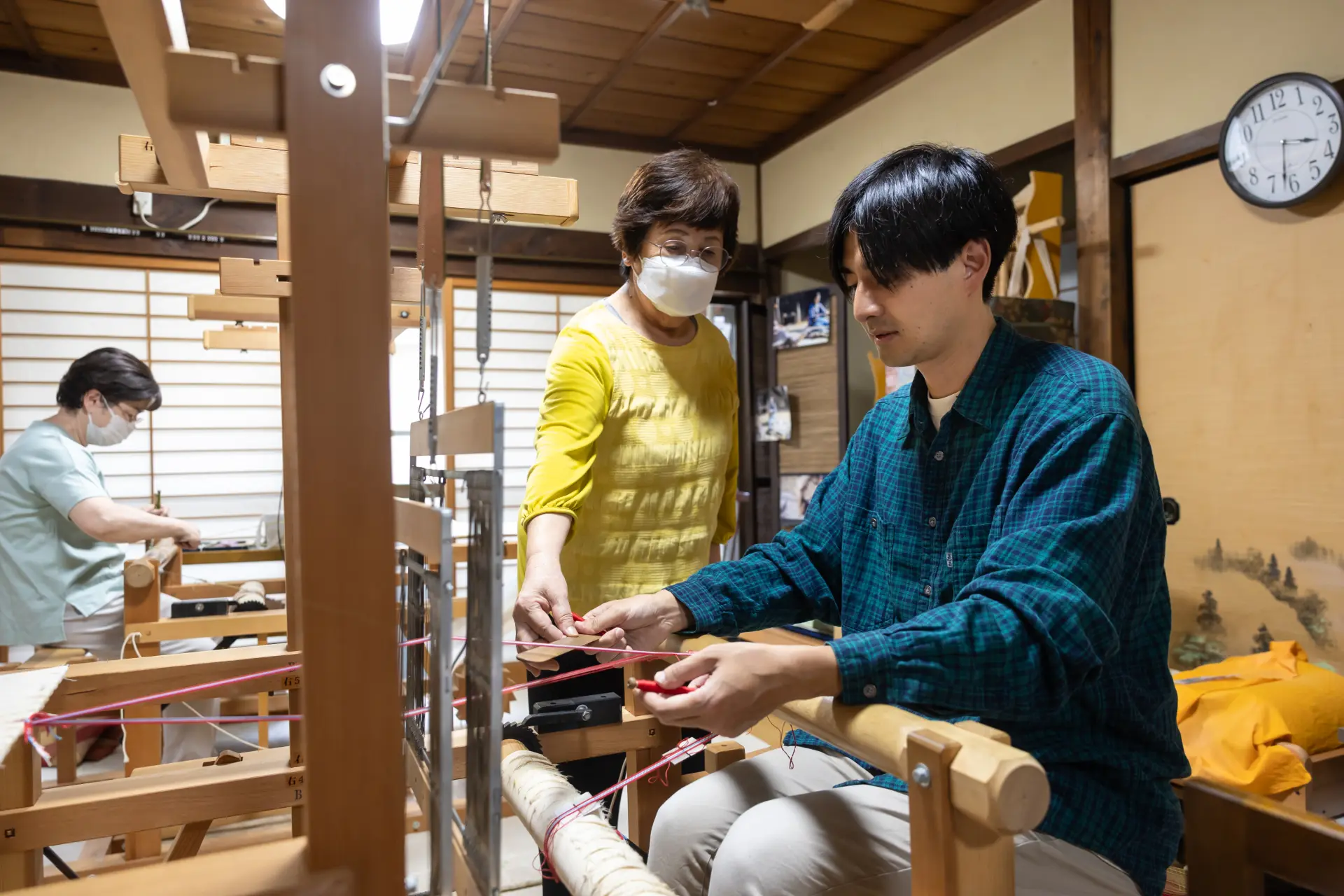
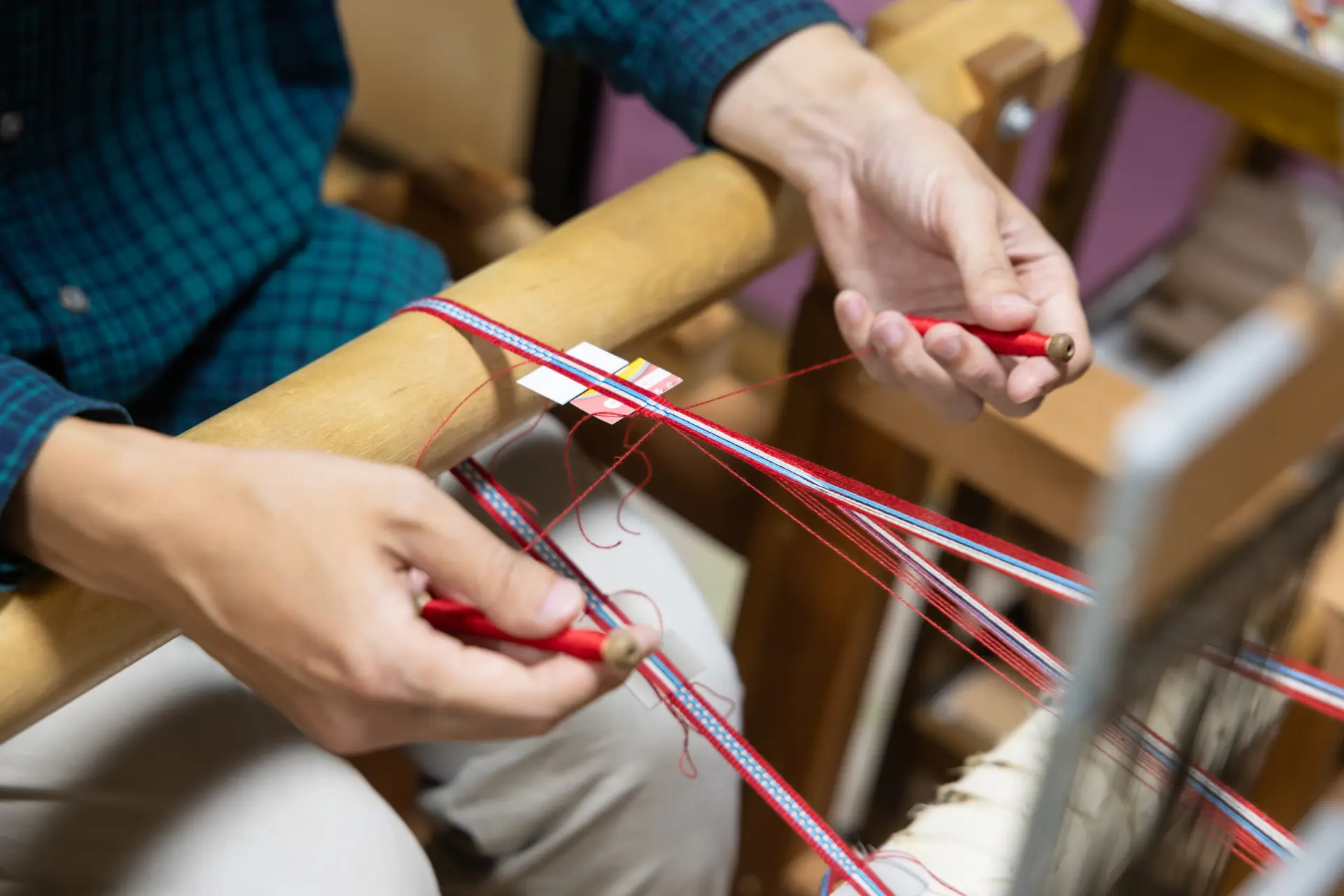
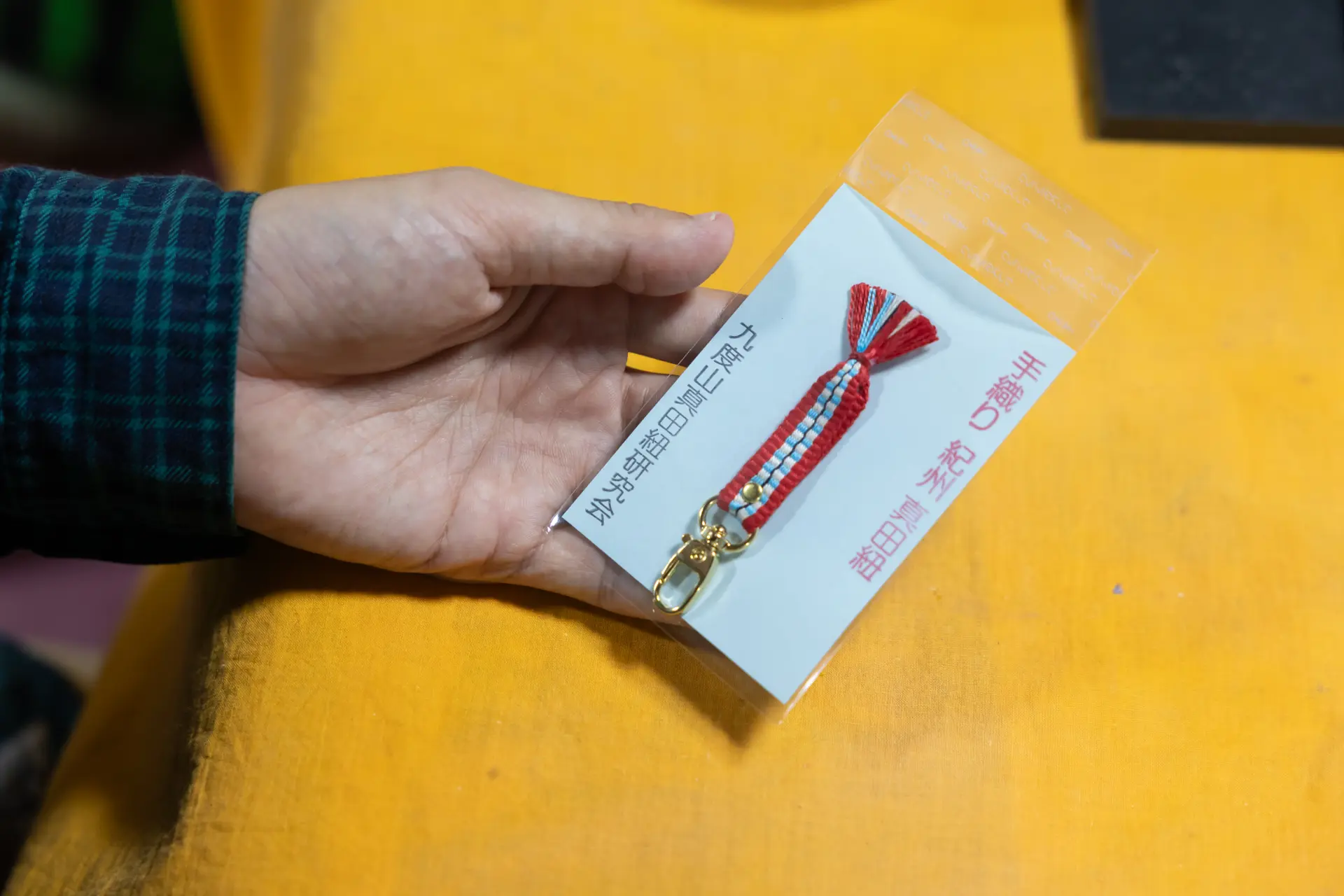
After breakfast, head to the Sanada Himo Workshop to experience weaving Sanada himo. Sanada himo is a traditional narrow woven cord made by interlacing warp and weft threads, and it is known for being strong and resistant to stretching and twisting. It was once used as a practical cord for binding luggage and later became valued for tying the wooden boxes used to store tea utensils.
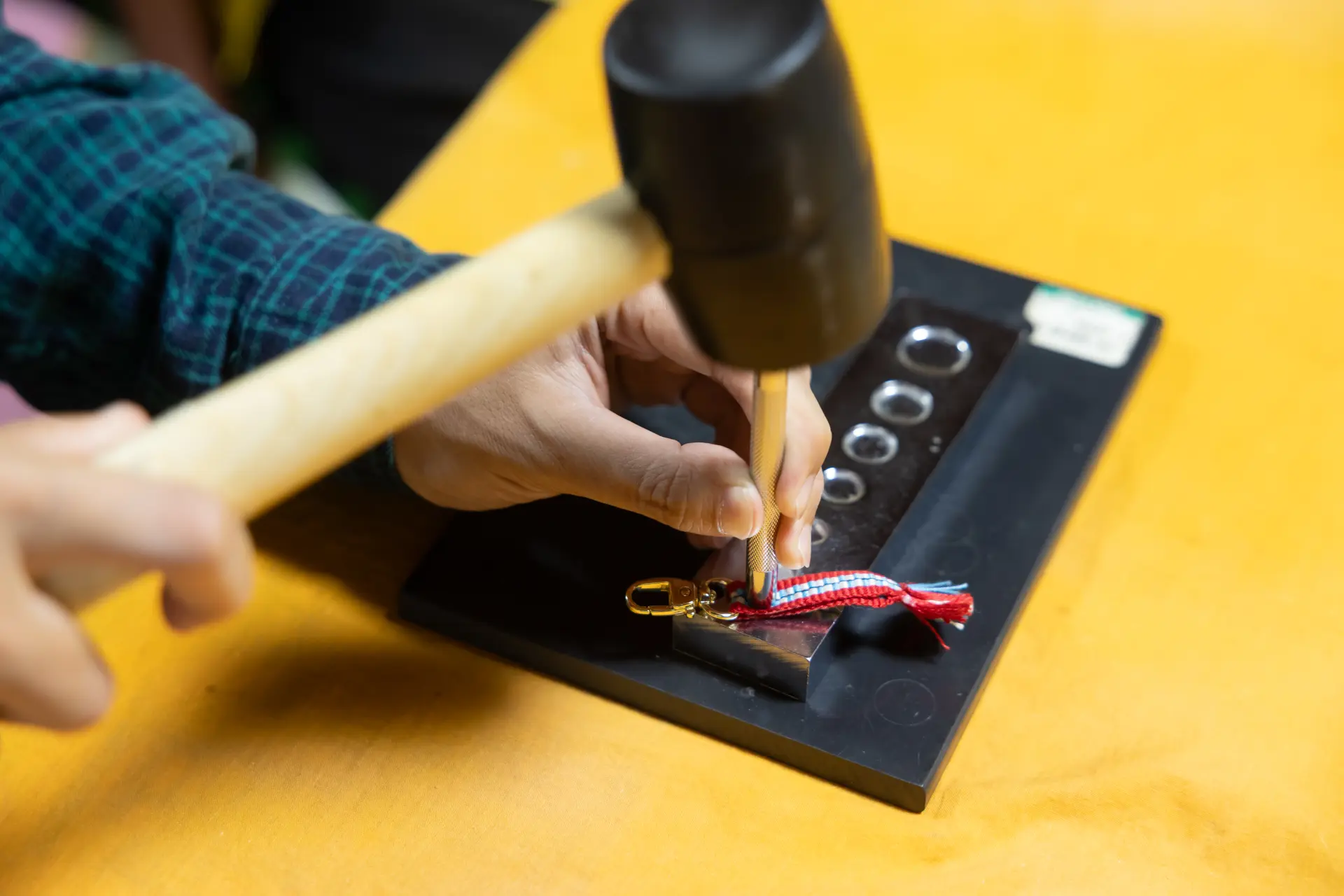
During this experience, which requires an advance reservation, participants weave Sanada himo on a foot-operated loom that has already been threaded. Passing the weft thread while operating the pedals to raise and lower the warp threads and weaving one row at a time is simple but requires a surprising amount of concentration. Watching the pattern gradually appear is also enjoyable and reveals the unique appeal of traditional handcrafting.
- Name in Japanese
- 真田紐工房
- Postal Code
- 648-0101
- Address
-
1390 Kudoyama, Kudoyama Town, Ito District, Wakayama Prefecture
Google Maps - Contact
- 0736-54-2019 (Kudoyama Town Central Community Center). Inquiries in Japanese only.
- Open
- Tuesdays (with a reservation, the experience is available outside regular opening days and hours)
- Hours
- 1:30–5:00 p.m.
- Admission
- Strap-making experience: 2,000 yen. Reservations required by phone or email.
- Access
- About a 7-minute walk from Kudoyama Station on the Nankai Koya Line
- Credit Cards
- Not accepted
- Official website
- Official website (Japanese)
Visit Sanada-an Hermitage, Where Sanada Yukimura and His Father Once Lived
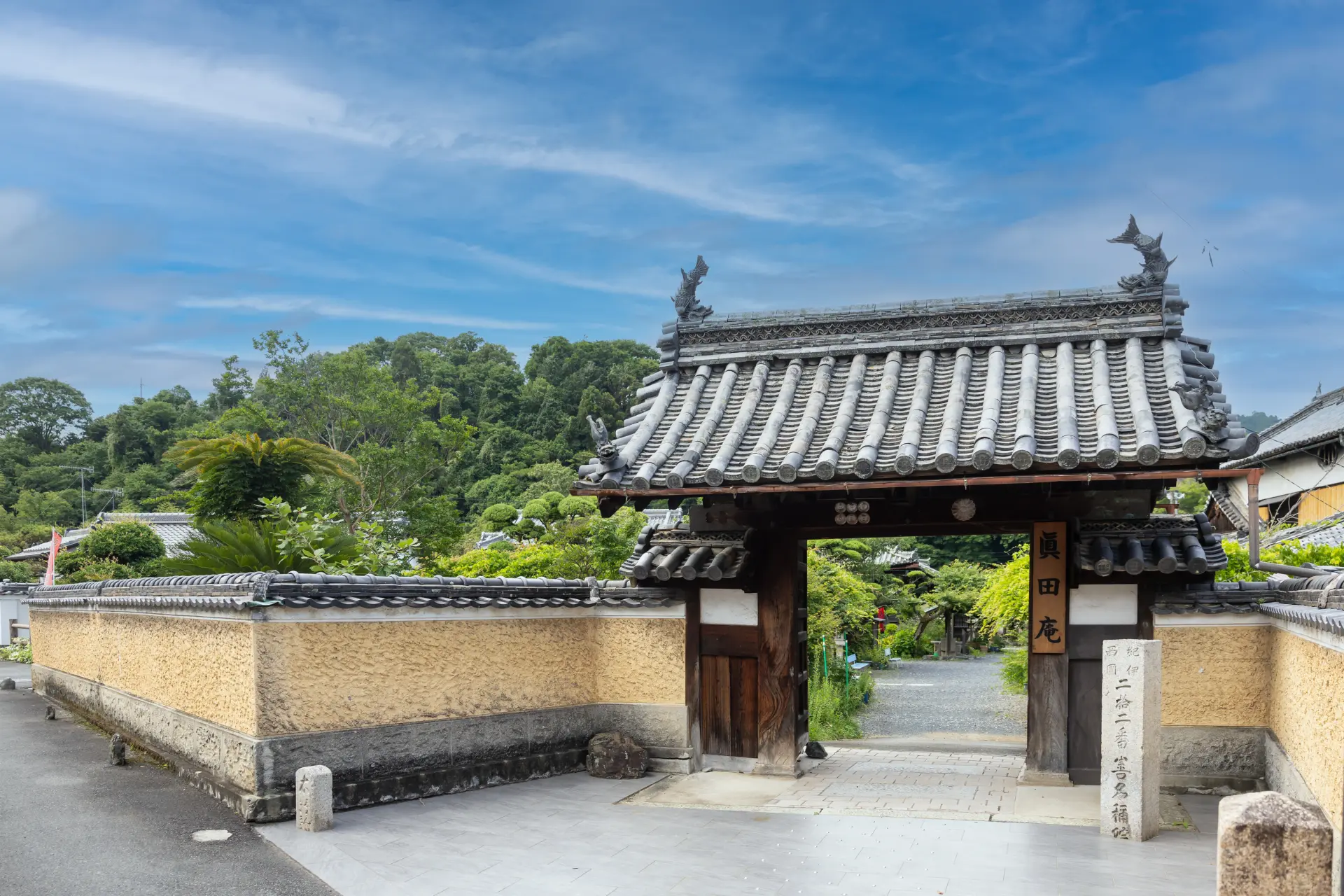
Located just a short walk from the Sanada Himo Workshop, Sanada-an Hermitage is a temple built on the site of the former residence of Sanada Yukimura, one of the best-known samurai warlords of the Warring States period, and his father. Sanada Yukimura is known for having lived in Kudoyama with his father, Masayuki, after the Battle of Sekigahara.
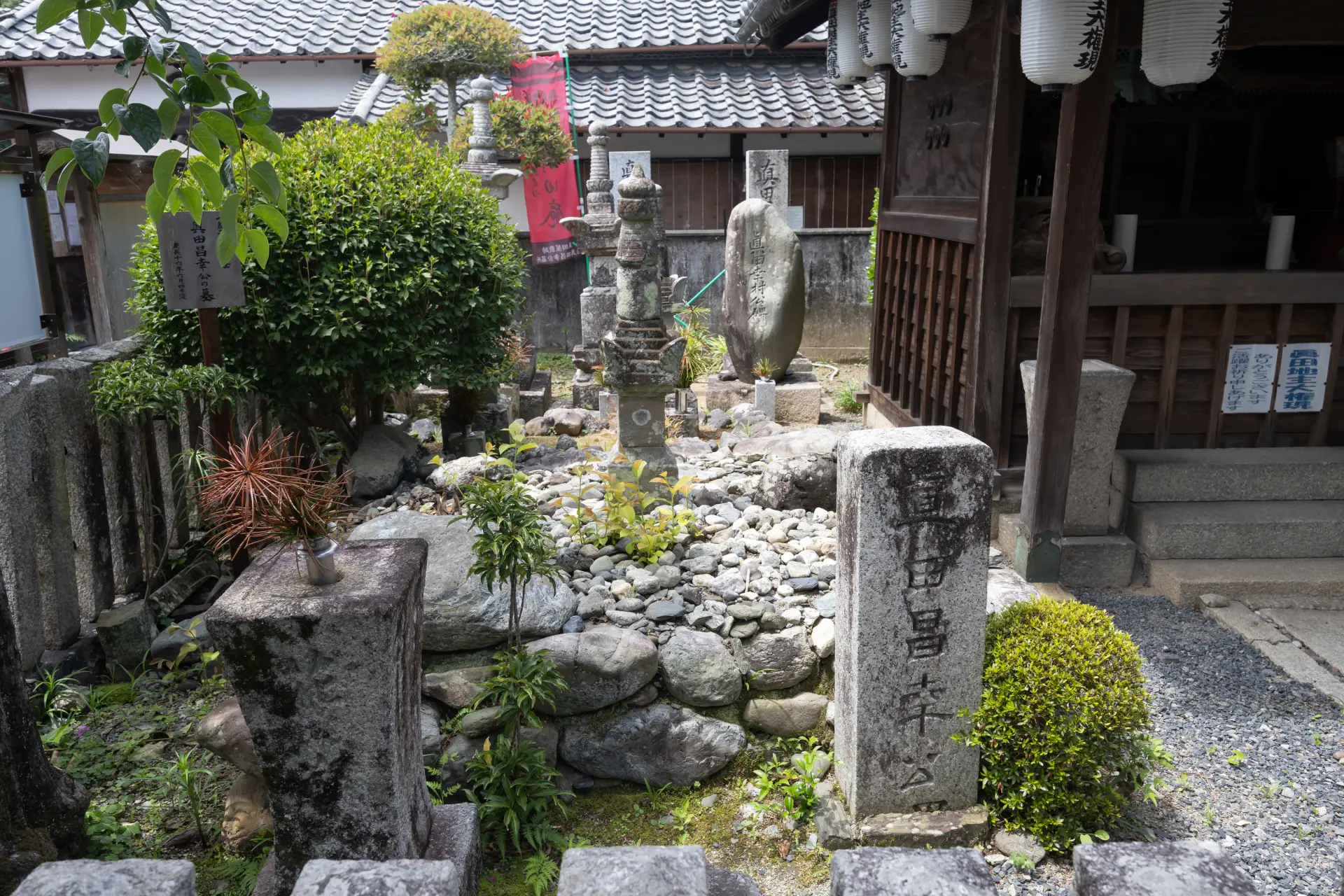
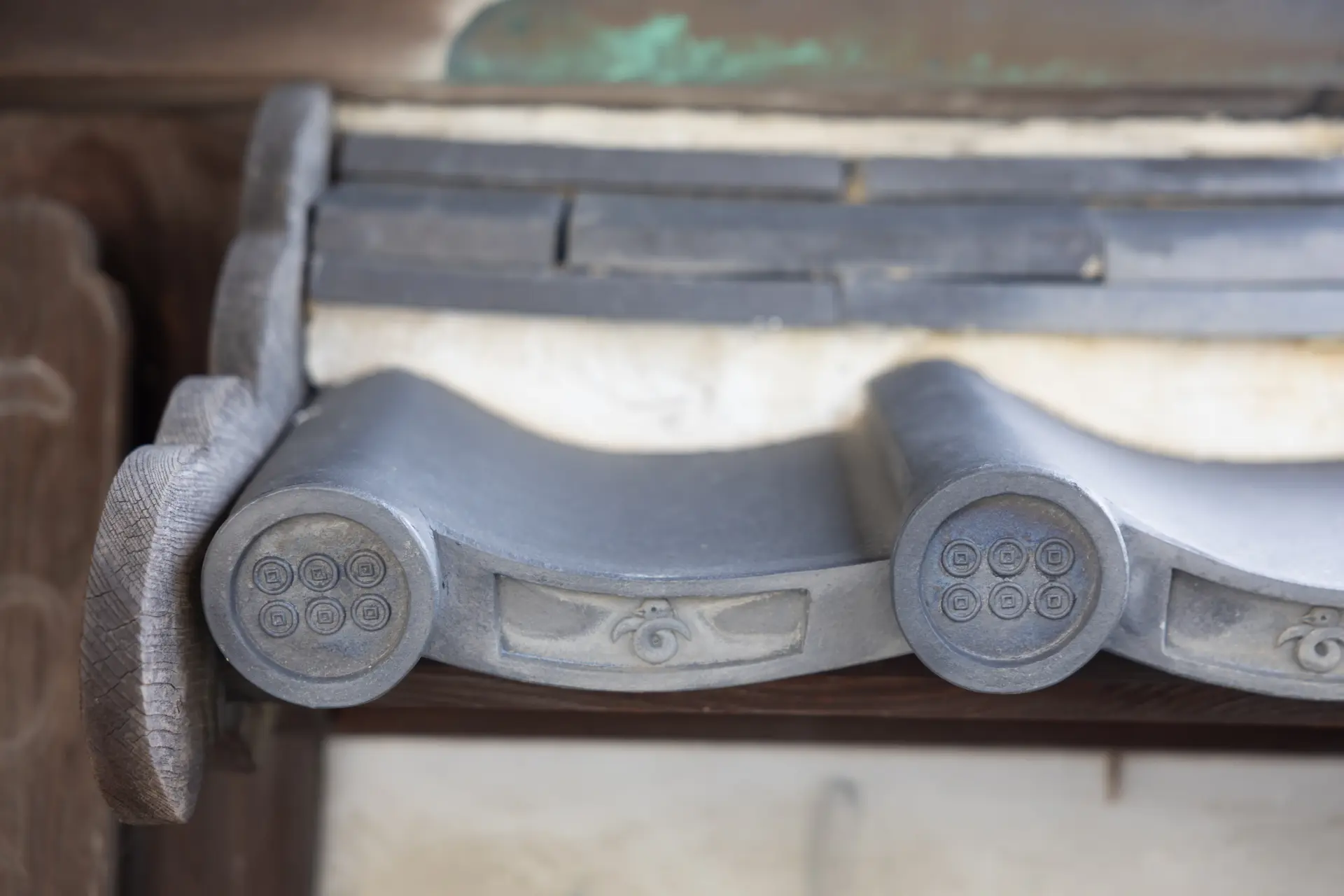
The temple was not actually built during the period when the Sanada clan lived here but was established in the mid-Edo period to protect and memorialize graves connected with the family. The grounds contain several sites associated with the Sanada clan, including a pine tree said to have been planted as a marker for Masayuki’s grave and a well connected to a legend that Yukimura sealed lightning inside it.
- Japanese Name
- 真田庵
- Postal Code
- 648-0101
- Address
-
1413 Kudoyama, Kudoyama-cho, Ito-gun, Wakayama
Google Maps - Telephone
- 0736-54-2218 (Sanada-an)
- Closed
- Grounds open year-round
- Hours
- 8:00 am-4:00 pm
- Admission
- Grounds free; museum: 200 yen
- Access
- Approximately 10 minutes on foot from Kudoyama Station on the Nankai Koya Line
- Credit Cards
- Not accepted
Trace the History of the Sanada Clan at the Kudoyama-Sanada Museum
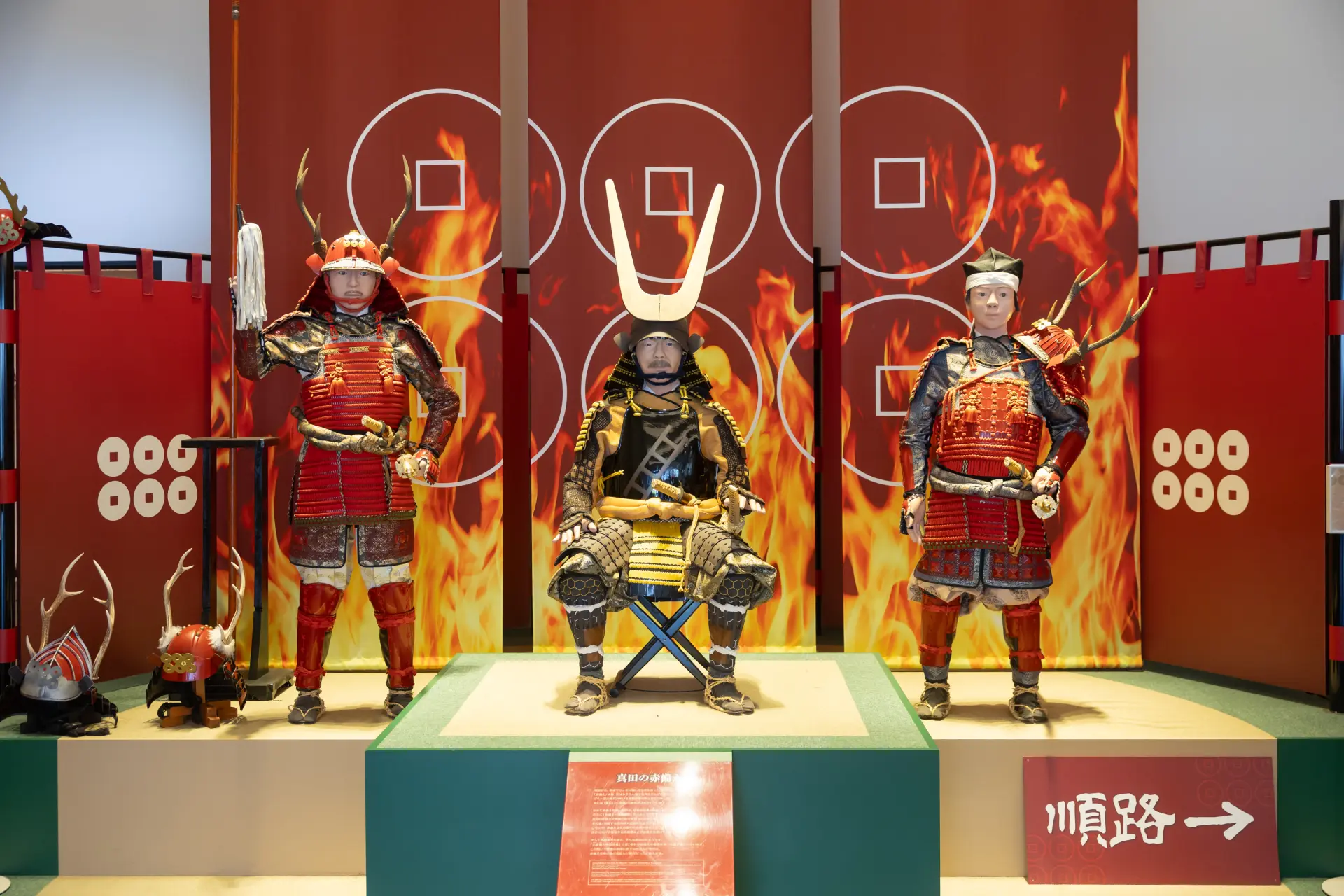
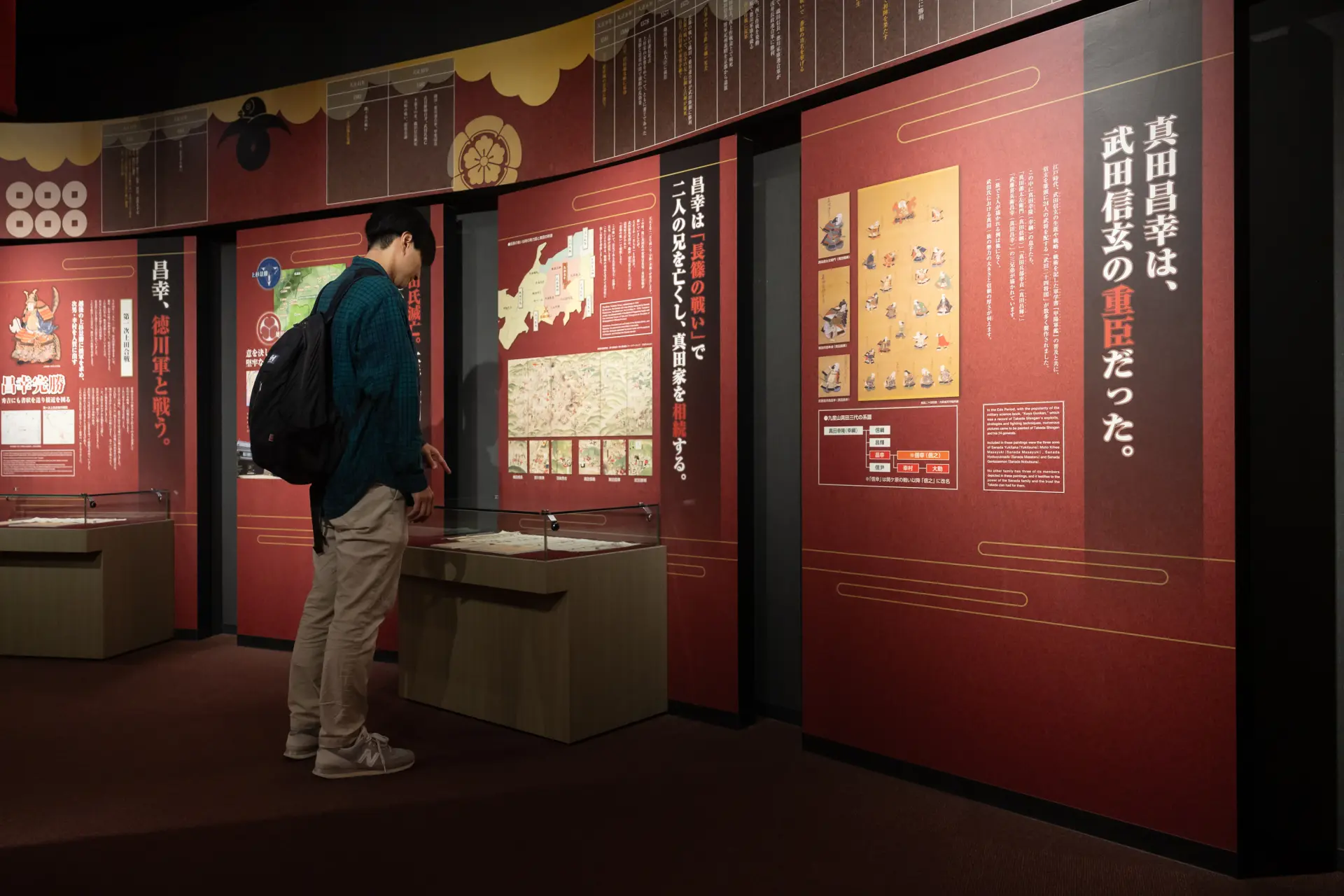
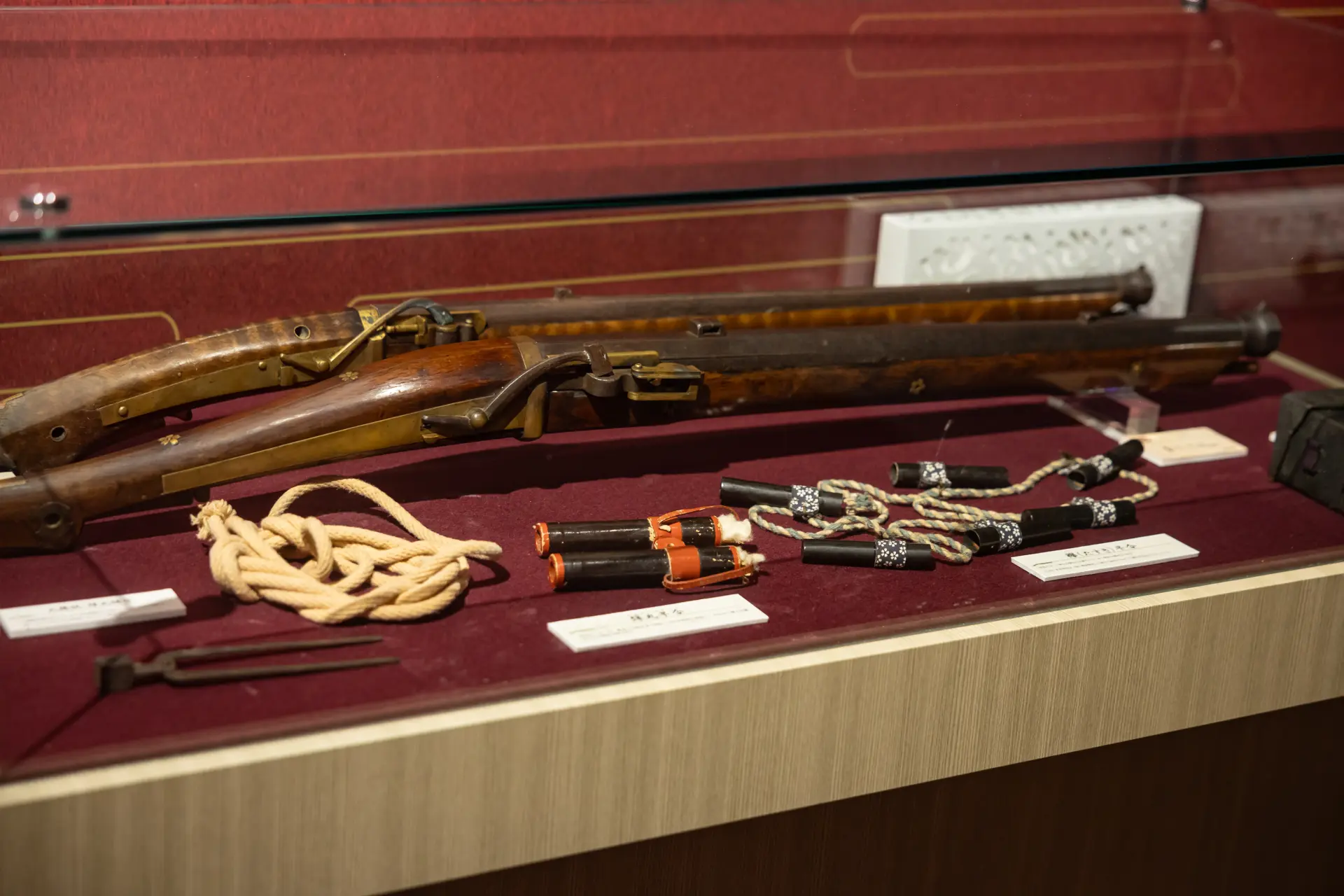
After exploring historical sites associated with the Sanada clan at Sanada-an Hermitage, head to the Kudoyama-Sanada Museum to deepen your understanding. Opened in 2016, the museum traces the clan’s history from Ueda in Shinshu, its place of origin, through the years Masayuki and Yukimura spent in Kudoyama and on to the Siege of Osaka.
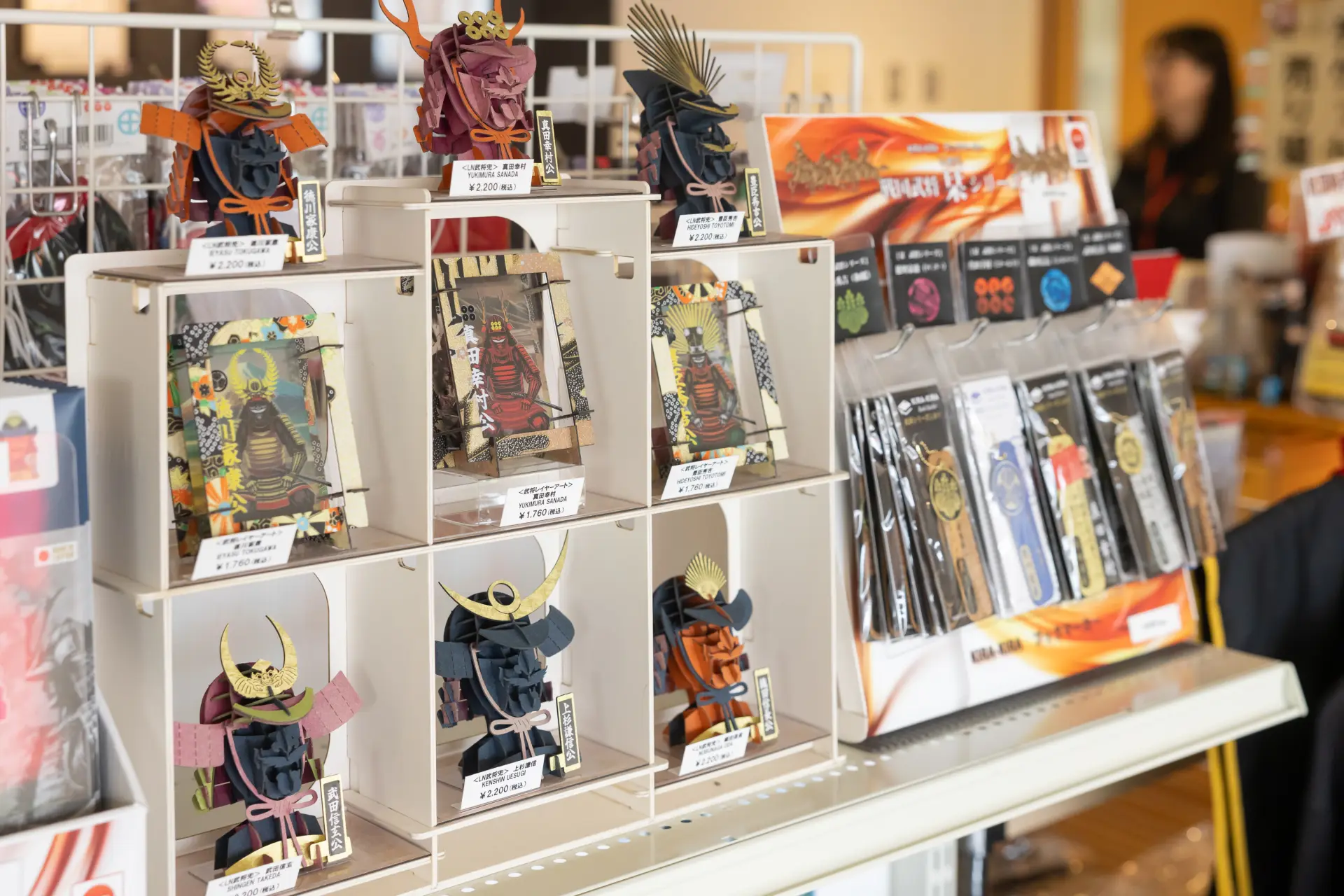
The museum focuses not only on Sanada Yukimura but also on his father, Masayuki, and his elder brother, Nobuyuki, presenting the family’s history in chronological order. Exhibition spaces recreating life in Kudoyama at the time include features resembling concealed rooms and escape tunnels, providing engaging ways to learn. There is also a section introducing Sanada legends preserved throughout Japan, making the museum accessible not only to history enthusiasts but also to children and travelers from overseas.
- Name in Japanese
- 九度山・真田ミュージアム
- Postal Code
- 648-0101
- Address
-
1452-4 Kudoyama, Kudoyama-cho, Ito-gun, Wakayama
Google Maps - Telephone
- 0736-54-2727
- Closed
- Mondays and Tuesdays (open on national holidays and closed the following non-holiday weekday)
- Business Hours
-
9:00 am-5:00 pm (last admission: 4:30 pm)
500 yen for adults and high school students; 250 yen for elementary and junior high school students - Access
- Approximately 10 minutes on foot from Kudoyama Station on the Nankai Koya Line
- Credit Cards
- Not accepted (PayPay is accepted); merchandise purchases are cash only
- Official Website
- Official Website (Japanese)
Finish the Journey with Souvenir Shopping at Kaki-no-Sato Kudoyama Roadside Station
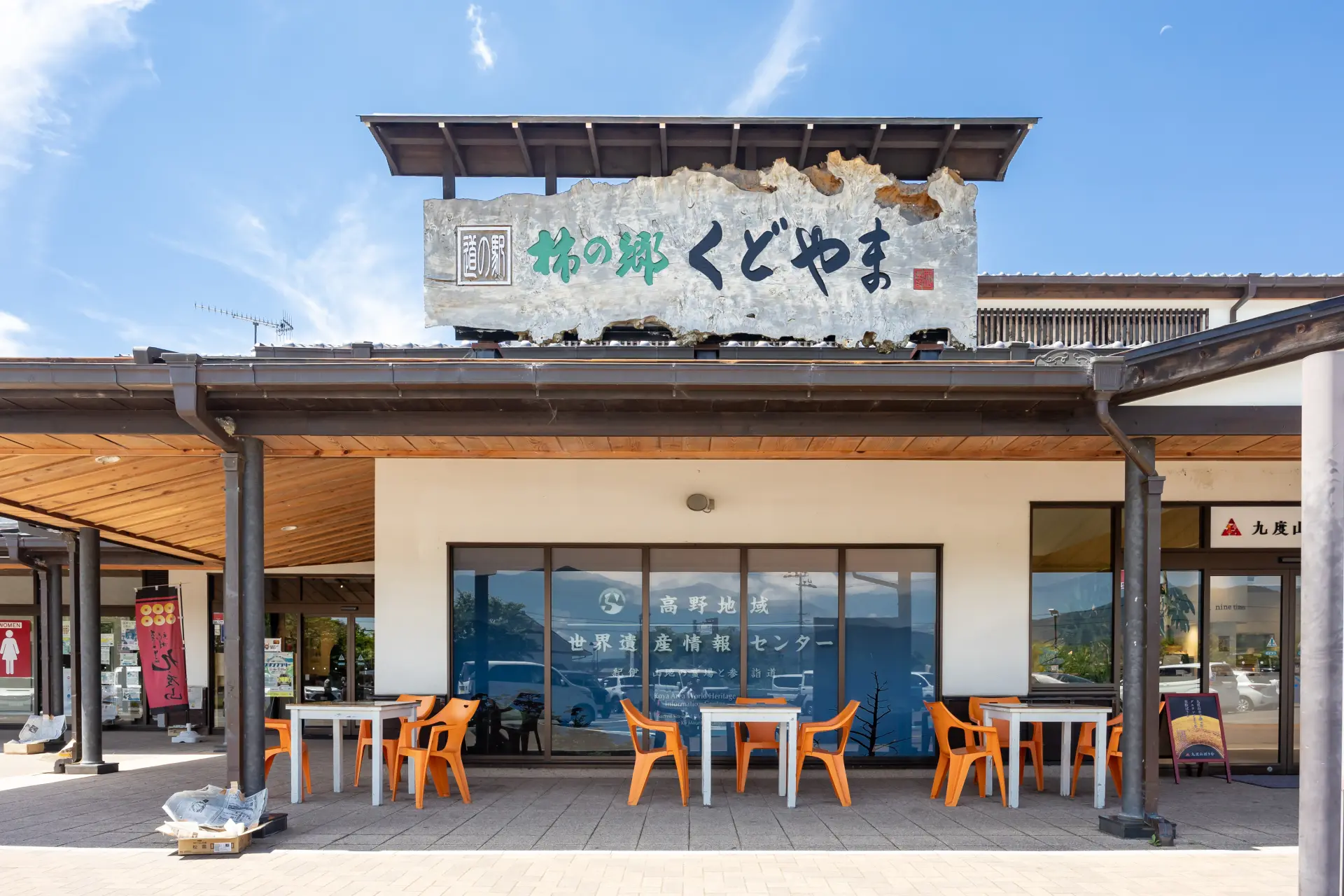
Conclude the three-day journey through Kudoyama with a visit to Kaki-no-Sato Kudoyama Roadside Station.
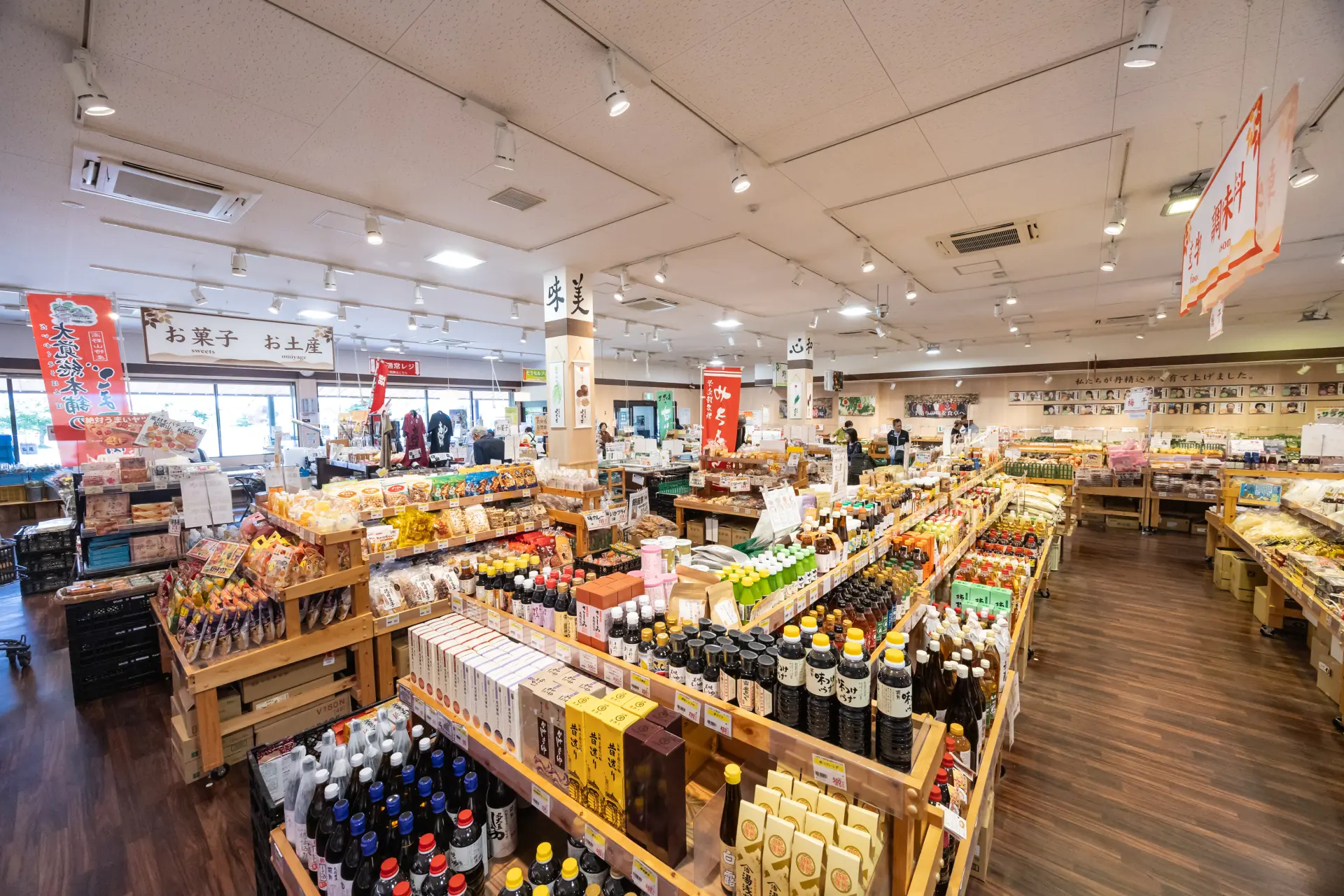
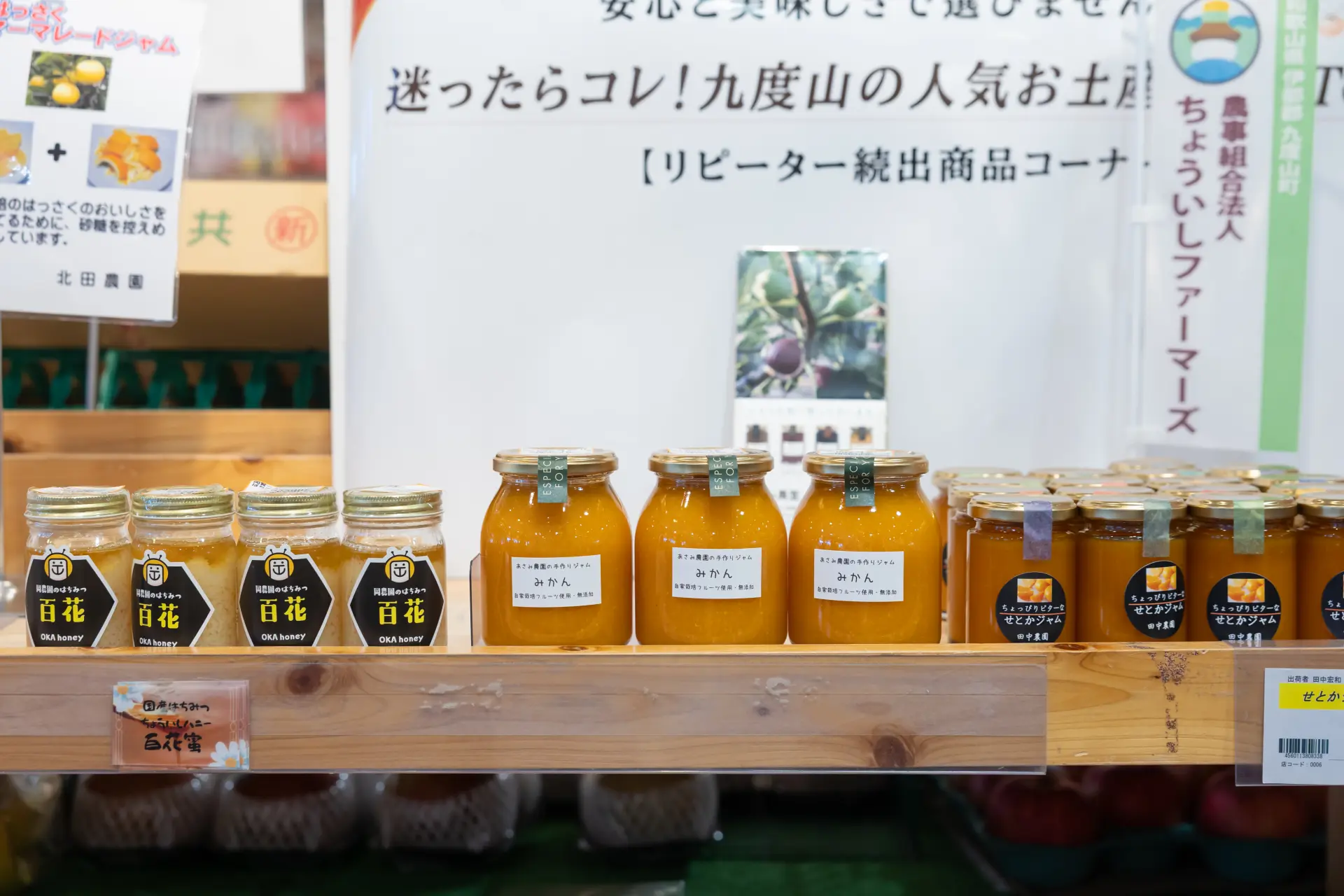
The local produce market is filled with agricultural products and regional specialties harvested and produced throughout Wakayama Prefecture. Seasonal fruits include persimmons in autumn, as well as mandarins, strawberries, peaches, and grapes, while the wide selection of souvenirs also includes umeboshi, or pickled plums, and other processed food products. A visit at the end of the journey allows you to take home the flavors of Kudoyama and Wakayama.
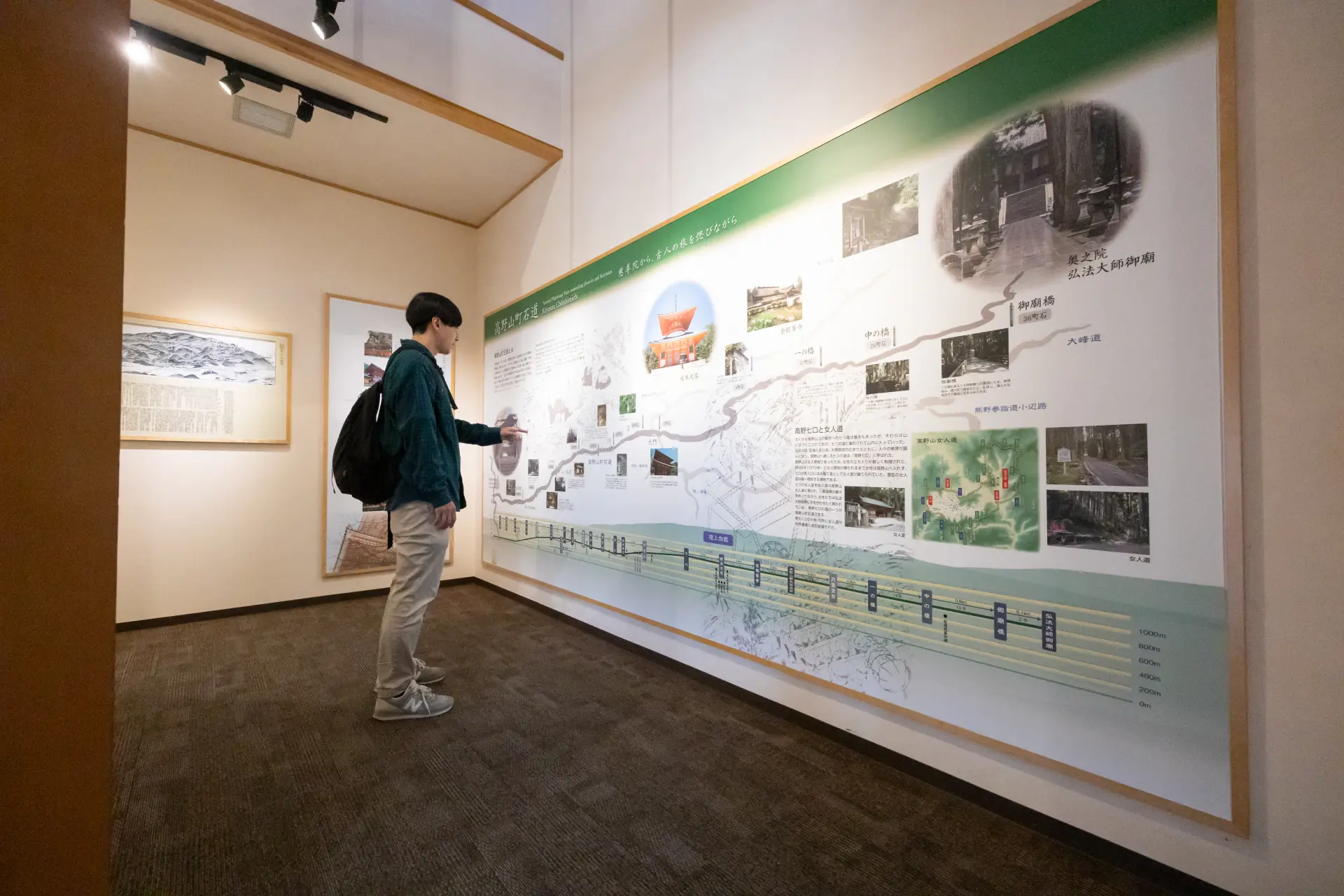
The facility also includes a World Heritage Information Center. Exhibits and brochures introduce attractions such as Koyasan, the Choishimichi Pilgrimage Route, Jison-in Temple, and Niukanshofu-jinja Shrine, allowing visitors to collect useful sightseeing information. Although this model course visits the facility near the end of the journey, it is also recommended to stop here before walking the Choishimichi Pilgrimage Route to check the route and information about the surrounding area. It is a dependable sightseeing base in Kudoyama, whether visited at the beginning or end of a trip.
- Name in Japanese
- 道の駅 柿の郷くどやま
- Postal Code
- 648-0161
- Address
-
5-5 Nyugo, Kudoyama, Ito District, Wakayama Prefecture
Google Maps - Phone
- 0736-54-9966
- Closed on
- January 1–3
- Hours
- World Heritage Information Center: 9:00 a.m.–5:30 p.m.; Yottette farmers' market: 9:00 a.m.–6:00 p.m.; Bakery Cafe Persimmon and Kudoyama Baum: 9:30 a.m.–4:30 p.m.
- Access
- About a 15-minute walk from Kudoyama Station on the Nankai Koya Line
- Credit Cards
- Accepted at some shops
- Official website
- Official website (Japanese)
Kudoyama and Koyasan 3-Day Sample Itinerary
DAY 1: Climb the Historic Choishimichi Pilgrimage Route to Koyasan
- Pick Up Lunch at Kakinoha Sushi Kuwaraku on the Way to the Choishimichi Pilgrimage Route
- Offer a Prayer at Jison-in Temple before Setting Out on the Choishimichi Pilgrimage Route
- Pray for a Safe Pilgrimage at Niukanshofu-jinja Shrine
- Follow 180 Choishi Stone Markers along the Choishimichi Pilgrimage Route
- Be Moved by Dai-mon Gate at the End of the Long Pilgrimage Route!
- Discover the World of Konpon Daito Pagoda at the End of the Trail
- Experience a Koyasan Shukubo Temple Stay and Feel Like a Monk
DAY 2: Explore Koyasan and Stay at a Rare Railway Station Hotel
- Explore Koyasan and Encounter the World of Esoteric Buddhism
- Spend the Night Watching Trains at The Railway Hotel Koyasan Pilgrimage Railway
- Authentic Pizza at Pizza House Mieux, Where Tomatoes Come First
DAY 3: Explore Sites Connected to Sanada Yukimura
- Start the Day with Kamado-Cooked Rice at Omusubi Stand Kudo
- Try a Sanada Himo Weaving Experience on a Foot-Operated Loom
- Visit Sanada-an Hermitage, Where Sanada Yukimura and His Father Once Lived
- Trace the History of the Sanada Clan at the Kudoyama-Sanada Museum
- Finish the Journey with Souvenir Shopping at Kaki-no-Sato Kudoyama Roadside Station
Summary
Walk the World Heritage Choishimichi Pilgrimage Route, experience the culture of prayer in Koyasan, and spend quiet moments at a shukubo temple lodging. Then return to the foot of the mountain and explore Kudoyama, where historical sites associated with the Sanada clan, traditional culture, and distinctive local flavors are still very much alive. Although Koyasan and Kudoyama each have their own attractions, they have been closely connected throughout their long history. Visiting both places therefore offers an even deeper understanding of the region’s faith, history, and culture. For your next journey to Koyasan, consider enjoying a three-day story that begins in Kudoyama and returns there once again.
Author
Editor / Writer
Oji
An editor who brews beer on Awaji Island and wraps up the day at a super sento.