
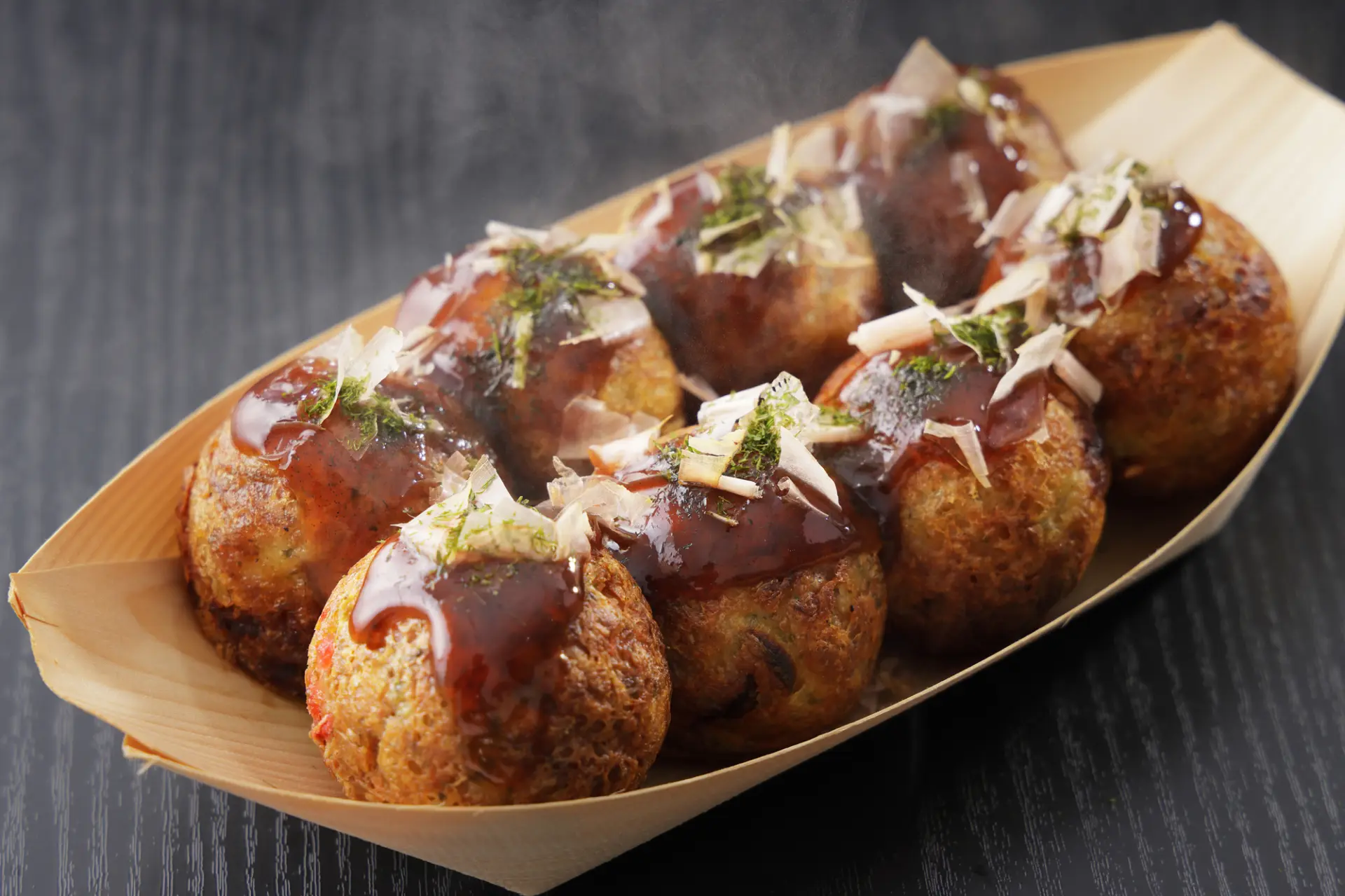
The Complete Guide to Takoyaki, Osaka’s Soul Food
Takoyaki is a soul food beloved by the people of Osaka. This konamon dish is made by pouring a flour-based batter mixed with dashi stock and eggs into a special griddle with round molds, adding chunks of octopus, and cooking each piece into a ball. It is often said that every household in Osaka owns a takoyaki maker, showing just how familiar this local specialty is to the city’s residents. Dotonbori, one of Osaka’s busiest entertainment districts, is lined with numerous specialty takoyaki shops. Among them is an interactive facility where visitors can not only eat freshly made takoyaki but also learn directly from skilled takoyaki chefs and make their own. It is currently attracting attention from visitors both within Japan and abroad.
In this article, we introduce the history of takoyaki, explain how it is made, and explore this interactive facility. Read on before your trip to Osaka, then try making authentic takoyaki for yourself and enjoy it piping hot!
What Is Takoyaki?
Takoyaki is commonly sold at festival stalls and on street corners. It is one of Osaka’s best-known examples of konamon, a food culture centered on flour-based dishes. Konamon refers to dishes made primarily with flour, with takoyaki and okonomiyaki among the most prominent examples.
Takoyaki is made by adding octopus and other ingredients to a flour batter mixed with dashi stock and eggs, cooking it into balls, and topping it generously with sauce and mayonnaise. Easy to eat as either a snack or a meal, it is loved by people of all ages. It could be described as Osaka’s version of fast food. Although takoyaki originated in Osaka, it is now eaten throughout Japan. The number of takoyaki shops is said to have begun increasing from the late 1950s through the early 1960s. At the time, octopus was caught in large quantities in Osaka Bay and was relatively inexpensive. It may not be an exaggeration to say that this abundant supply helped takoyaki become so widespread. Here, we introduce the history of takoyaki and explain how it is made.

The History of Takoyaki
Takoyaki is thought to have its roots in choboyaki and radioyaki, which were popular from the Meiji period through the early Showa period. Choboyaki and radioyaki were made by pouring flour batter mixed with water into a copper or iron griddle with semicircular molds, similar to a modern takoyaki griddle. Ingredients such as konjac, green onions, and red pickled ginger were added along with soy sauce before cooking. Sold at traditional candy stores and similar establishments, they were popular snacks for children. Choboyaki and radioyaki were essentially the same food, and the name apparently varied by food stall. A turning point came in 1933. A radioyaki stall in Osaka’s Imazato district began selling its product with small pieces of beef seasoned with soy sauce. Although most customers had previously been children, the new version reportedly attracted more adults. Two years later, a customer suggested using octopus as the filling. Small pieces of octopus replaced the beef, and the batter was flavored with a soy sauce-based dashi stock. This is believed to mark the beginning of modern takoyaki.
How Takoyaki Is Made
Here is a basic overview of how to make takoyaki. Takoyaki is cooked on a distinctive copper or iron griddle with semicircular molds. The batter is poured into these molds and cooked.
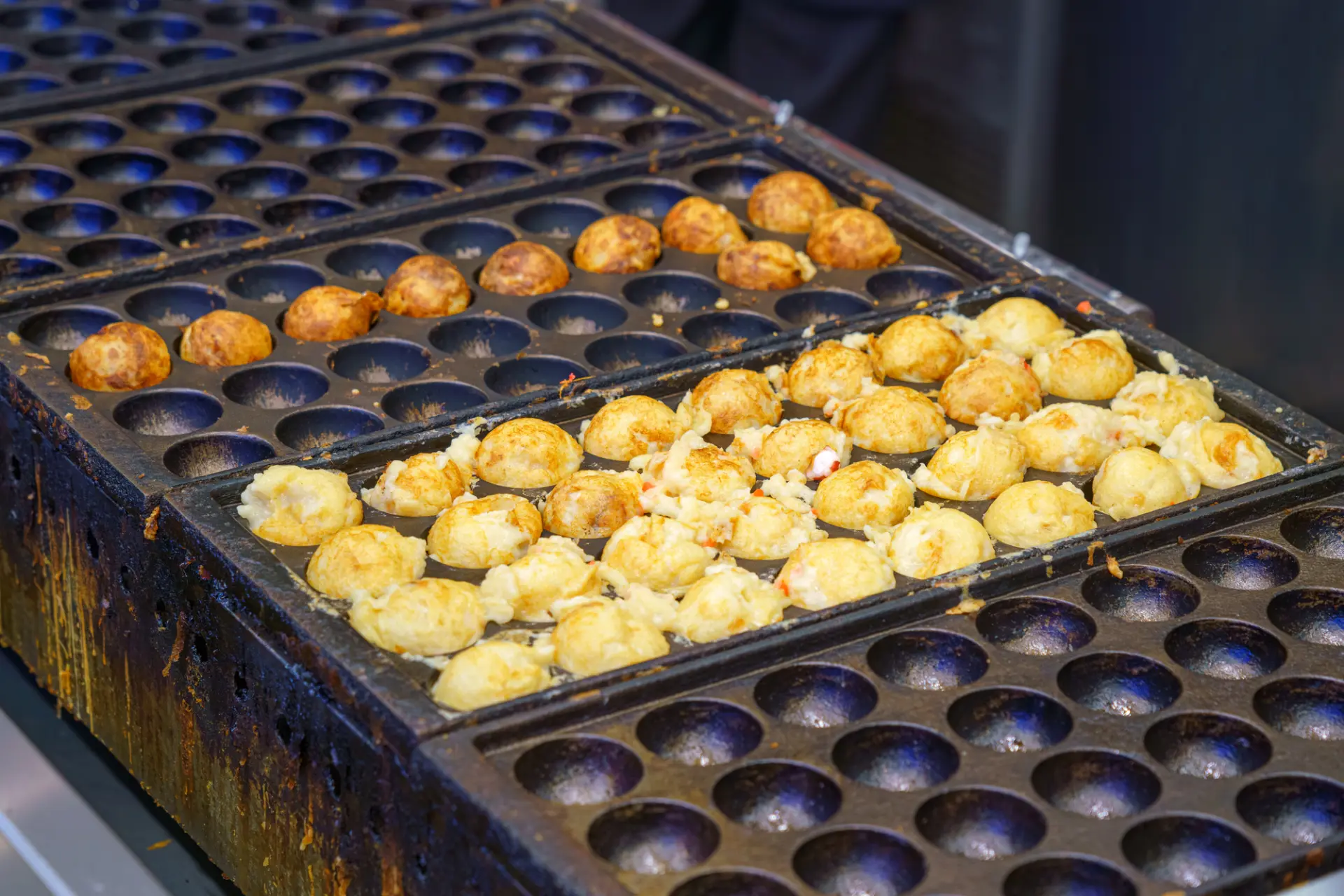
(1) Make the Batter
Mix flour, eggs, dashi stock, soy sauce, and other ingredients to make a thin, runny batter. Unlike okonomiyaki batter, it should not be thick.
(2) Add the Fillings
Oil the takoyaki griddle and pour in the batter, then add ingredients such as octopus, green onions, tenkasu tempura bits, and red pickled ginger.
(3) Cook Them into Balls
Once the batter begins to set around the edges, use a bamboo skewer or pick to turn each piece as it cooks. Rotating them little by little creates neatly shaped balls.
(4) Add the Finishing Touches
Once cooked, place the takoyaki on a plate and top it with sauce, mayonnaise, bonito flakes, and aonori seaweed. In addition to the classic combination of sauce and mayonnaise, salt, ponzu citrus sauce, and dashi soy sauce are also recommended.
Takosen is another popular children’s snack. Freshly made takoyaki is placed on a thin, crispy, traditional shrimp cracker made with flour and other ingredients, topped with sauce, mayonnaise, and aonori seaweed, then sandwiched with another cracker.
The Difference Between Takoyaki and Akashiyaki
Akashiyaki is another octopus dish that looks similar to takoyaki, but its batter and the way it is eaten are entirely different. Here, we explain the differences.
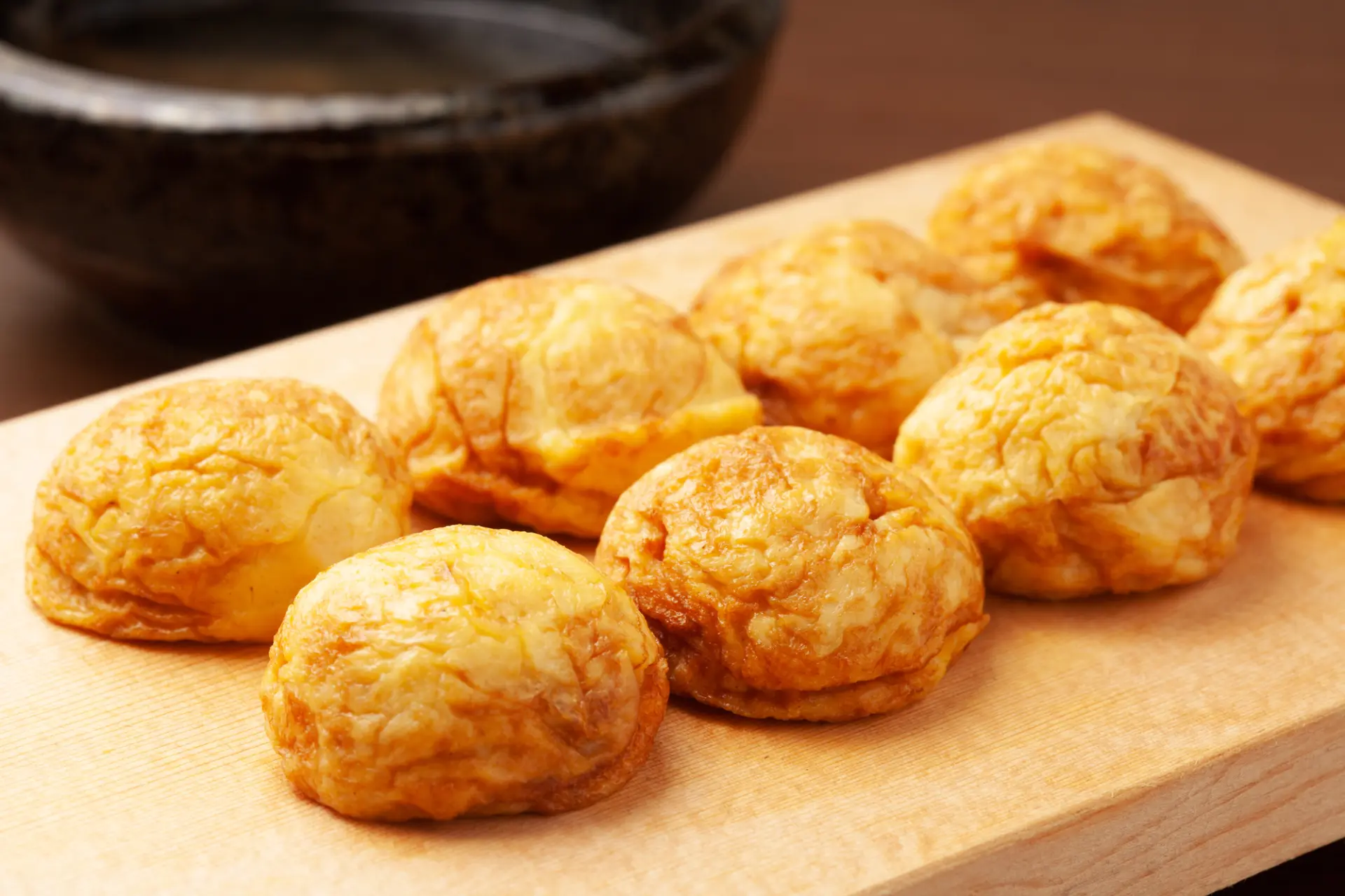
The biggest difference is the amount of egg used in the batter. Akashiyaki contains more egg than takoyaki, giving the batter a yellowish color and producing a soft, fluffy texture when cooked. As its name suggests, akashiyaki originated in Akashi, Hyogo Prefecture, and is believed to have been created near the end of the Edo period. It is made with octopus from Akashi, known for its thick, strong tentacles developed in the area’s fast-moving currents.
It is also eaten differently. While takoyaki is served with sauce and mayonnaise, akashiyaki is dipped into warm dashi broth made from kombu kelp and bonito.
Akashiyaki is said to have originated from Akashi-dama, artificial coral ornaments produced as a local industry in Akashi from the end of the Edo period through the Taisho period. Because egg whites were used to make Akashi-dama, large quantities of yolks were left over during production. Akashiyaki is said to have been created by combining those egg yolks with octopus caught in the waters off Akashi. Although takoyaki and akashiyaki look similar and use many of the same ingredients, their flavors and textures are entirely different. Try both and compare them for yourself.
Learn from the Experts: Make Your Own Takoyaki!
Would you like to do more than simply eat takoyaki and try making it yourself? Osaka has a facility where you can learn directly from skilled takoyaki chefs with more than 20 years of experience. If you are visiting Osaka, be sure to try cooking takoyaki yourself. You may discover that it is more difficult and nuanced than it looks.
Try It at Takoya Dotonbori Kukuru’s Dotonbori Konamon Museum
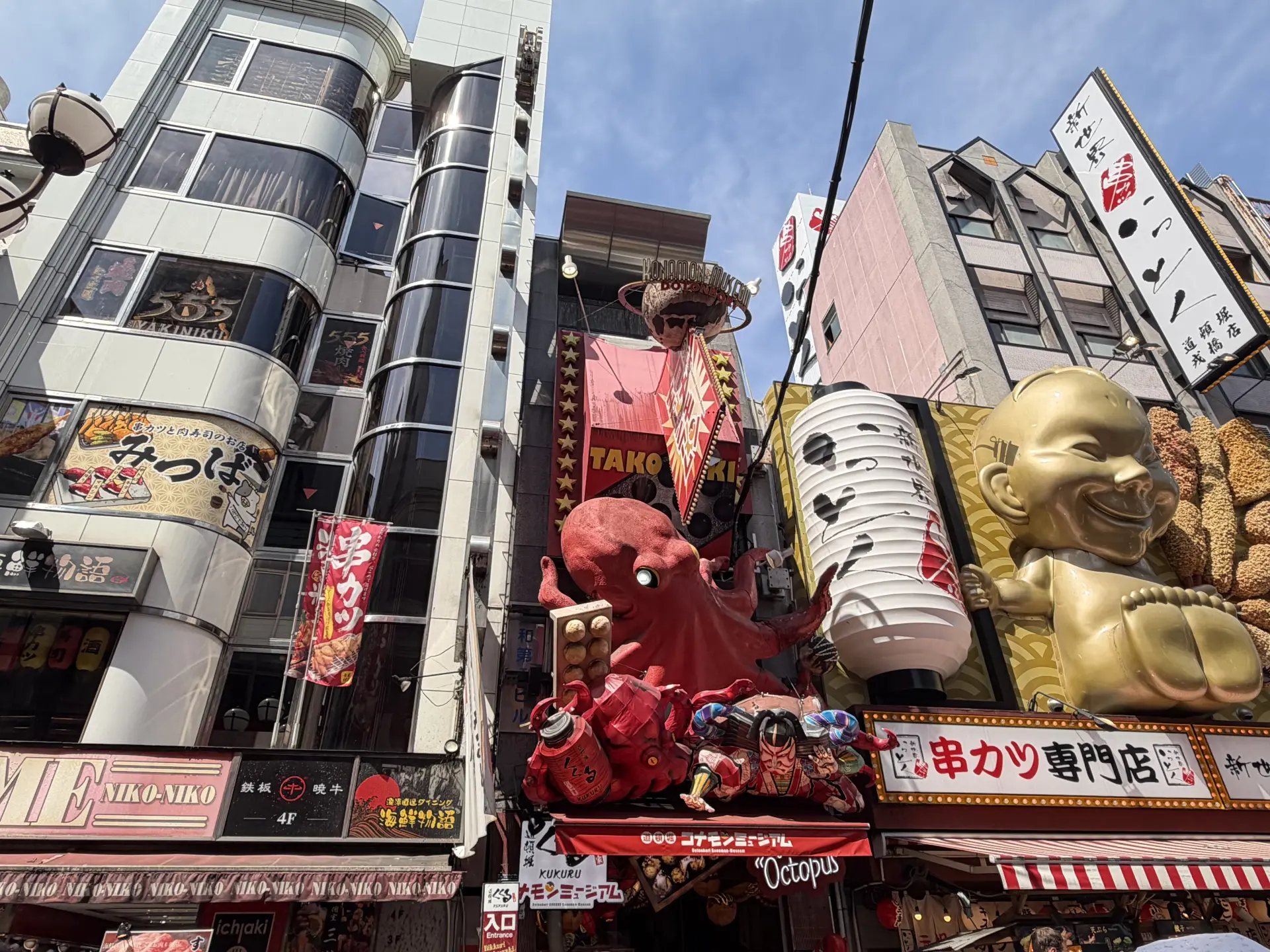
Kukuru has been serving takoyaki in Dotonbori since 1985. Today, more than 20 takoyaki shops compete for customers in the area. Kukuru is operated by Shirohato Food Corporation. When Kukuru first opened, there were reportedly very few takoyaki shops in Dotonbori. In 1973, Shirohato Food Corporation began selling Akashiyaki under the Shirohato brand at the Sogo department store in Shinsaibashi, near Dotonbori. This was the predecessor of Kukuru. Three years later, the company began selling takoyaki. Wanting customers to discover new ways to enjoy it, the company developed 20 inventive takoyaki varieties, an unusual concept at the time. These reportedly included takoyaki made with fruit, pickles, and chocolate. The business later evolved into the present-day Kukuru in Dotonbori. Its desire to introduce takoyaki to even more people grew stronger, leading the Dotonbori Konamon Museum location to offer exhibits on takoyaki history and classes where visitors can make their own. Look for the enormous three-dimensional octopus sign outside. With around 50 locations across Japan today, Kukuru is one of the country’s best-known takoyaki chains.
- Name in Japanese
- 道頓堀くくるコナモンミュージアム
- Postal Code
- 542-0077
- Address
-
1-6-12 Dotombori, Chuo-ku, Osaka City, Osaka
Google Maps - Tel
- 06-621-6678
- Holiday
- Open every day
- Business Hours
-
Weekdays 11:00am - 9:00pm, Weekends and Holidays 10:00am - 9:00pm
【Reception hours of food sample making experience】 Weekdays 11:30am - 7:15pm, Weekends and Holidays 10:30am - 7:15pm
*The schedule is subject to change without notice.
* Reception will end as soon as the number of people reaches the limit.
*You need to come to the 3rd floor of "Dotonbori Konamon Museum" 5 minutes before the reserved time. - Admission
- Free
- Directions
- Walk 5 min from Namba Station on Osaka Metro Midosuji Line.
- Credit Cards
- Accepted
- Official Website
- OfficialWebsite(Japanese)
Fluffy, Creamy Takoyaki with Large Pieces of Octopus and Location-Exclusive Dishes
In addition to its signature dishes, Dotonbori Kukuru offers a wide selection of items available only at particular locations, making it tempting to visit multiple Kukuru shops.
“Takoyaki with Large Pieces of Octopus”
The most popular item is, without question, the Takoyaki with Large Pieces of Octopus. It offers a true taste of Osaka, with a fluffy exterior, a creamy interior, and large, springy pieces of octopus that make each serving especially satisfying. The secret is said to be a splash of white wine added at the end of cooking. This enhances both the soft, creamy texture and the flavor. The takoyaki is served with plenty of Kukuru’s secret sauce and mayonnaise.
“Signature Akashiyaki with Secret-Recipe Flavor”
Another option is the exceptionally fluffy Signature Akashiyaki with Secret-Recipe Flavor, made with an egg-rich house batter. Dip it in dashi broth for a juicy, melt-in-your-mouth bite.
“Freshly Cooked Tako Meshi”
Freshly Cooked Tako Meshi is one of the restaurant’s octopus dishes other than takoyaki. This popular dish combines springy pieces of octopus with chewy black-purple rice.
“Yakisoba”
Yakisoba is another of Osaka’s soul foods, alongside takoyaki and okonomiyaki, and is also a popular choice. Dotonbori Kukuru’s version features springy pieces of octopus, just as you would expect from a takoyaki specialist. It is stir-fried in Kukuru’s secret sauce and also offers the rich flavor of Berkshire pork.
There are many other location-exclusive dishes, each offering a distinctive and inventive take on takoyaki. Visit different Kukuru locations and find your favorite!
Learn Directly from a Professional and Make Your Own Takoyaki!
The Dotonbori Konamon Museum offers a highly popular hands-on takoyaki-making program.
The experience takes place on basement level 1.
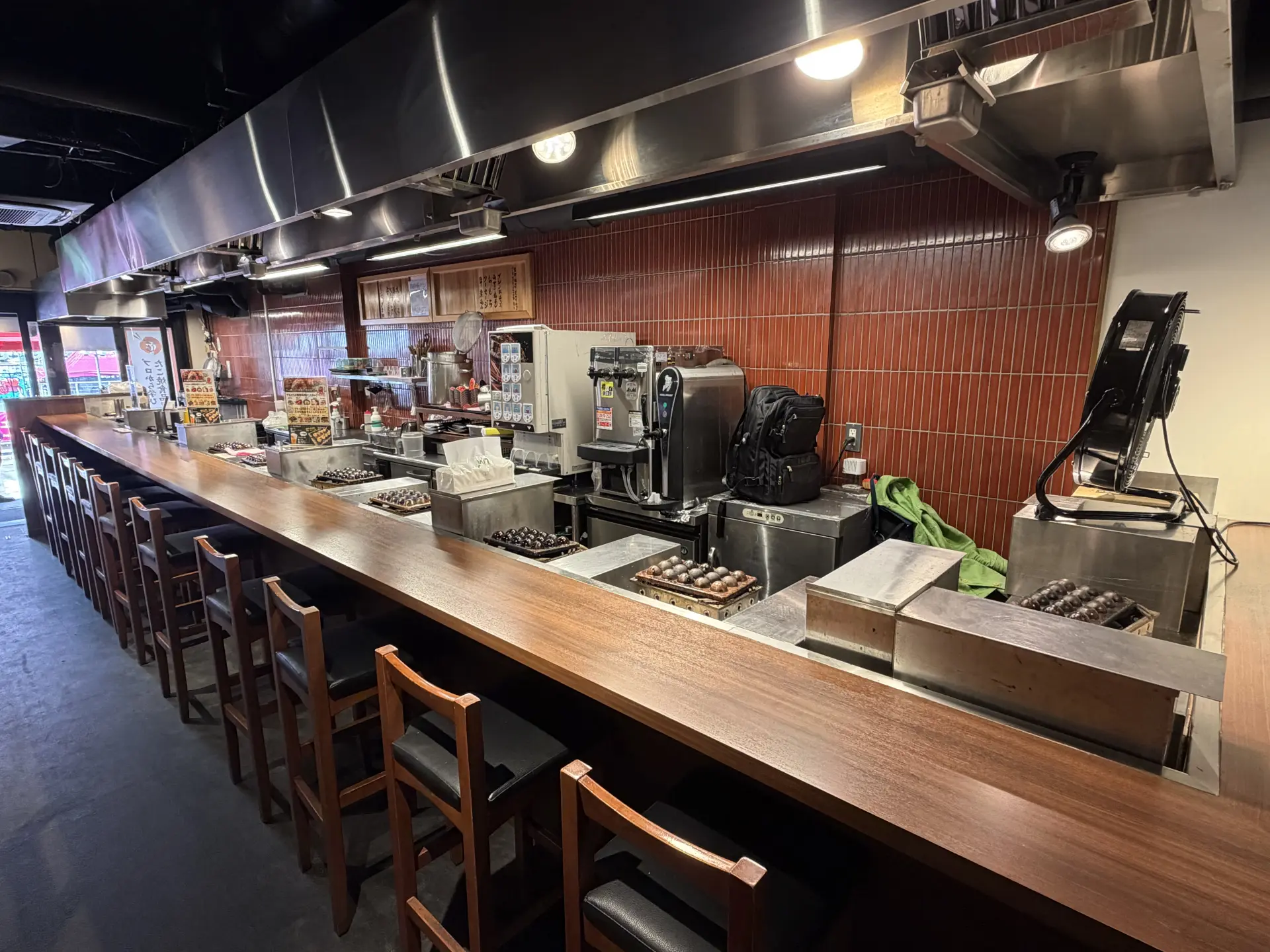
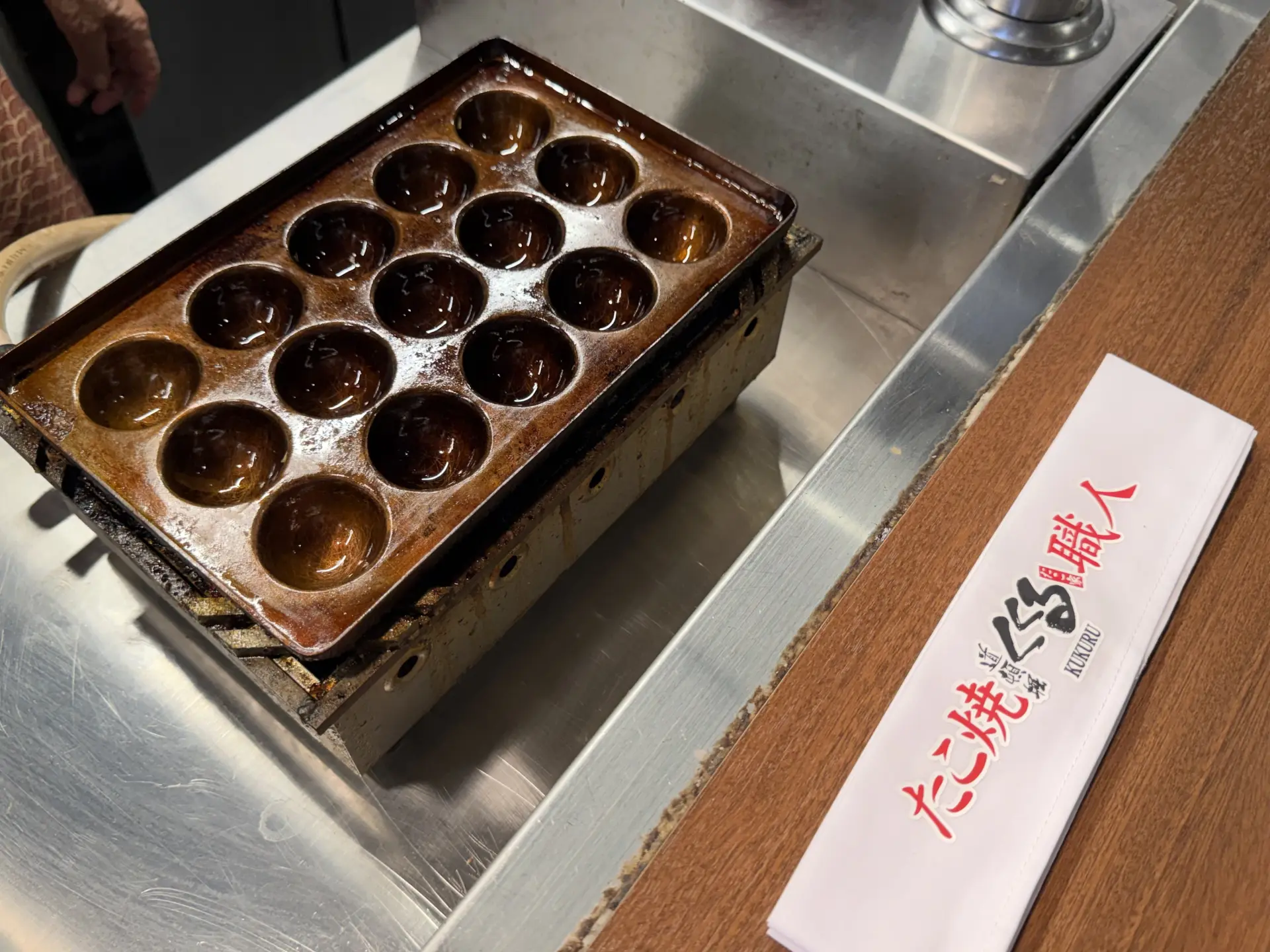
Each counter seat has its own takoyaki griddle. There are 10 in total, allowing up to 10 people to participate at once. A headband is also placed in front of each griddle. Tie it around your head to look and feel like a takoyaki chef, then get ready to begin.
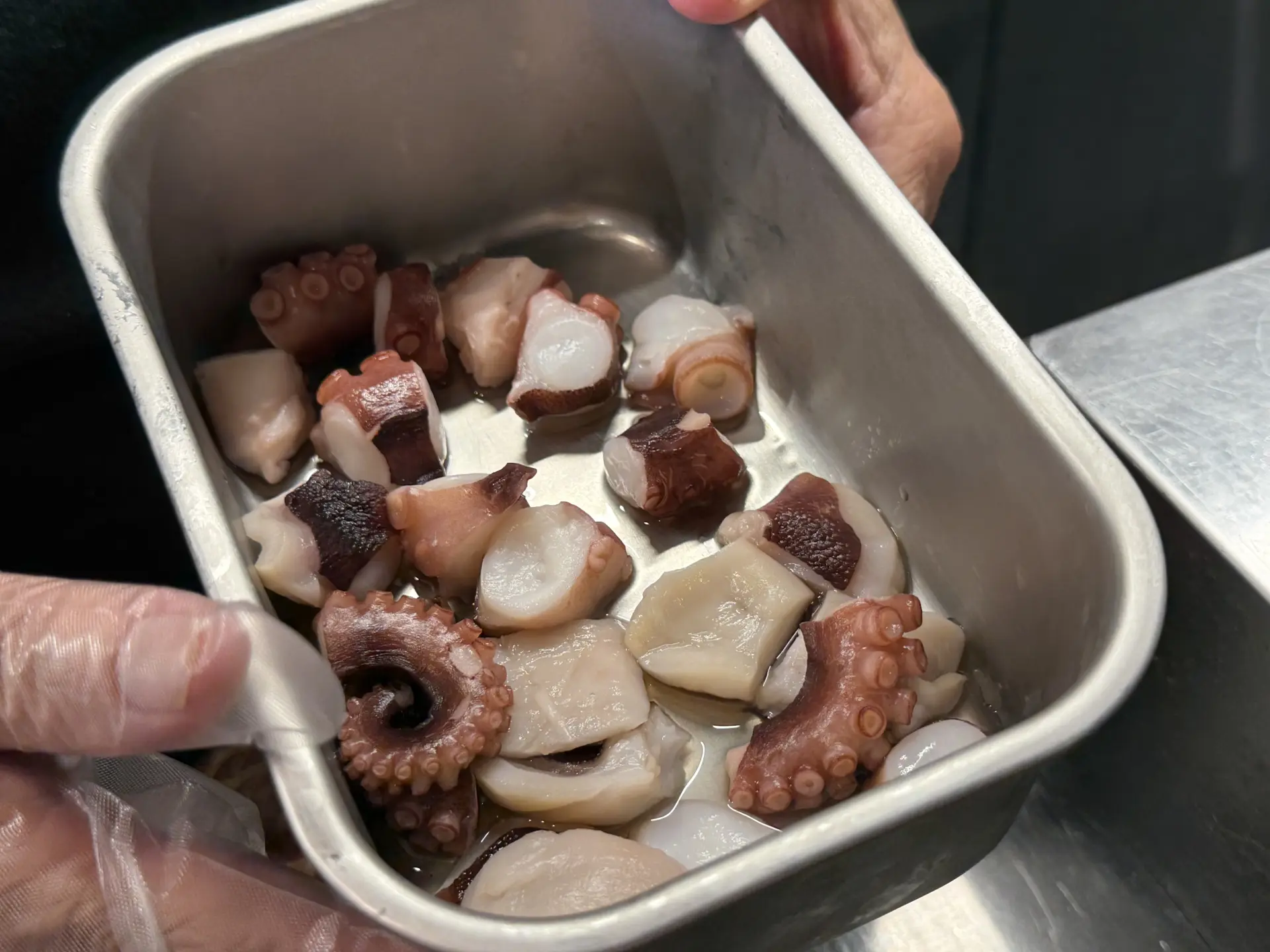
During this experience, you can choose which fillings to put inside your takoyaki. There are five options: the classic large piece of octopus, mentaiko spicy cod roe, cheese, mochi, and bacon. The octopus is common octopus, known for its tender texture. It does not shrink much when cooked, so the pieces remain large.
Mentaiko adds a pleasant popping texture similar to sesame seeds. Cheese and mochi give the takoyaki an extra gooey consistency. Bacon, a filling rarely found elsewhere, creates a more Western-style flavor. You can, of course, use only octopus, but this is also an opportunity to try different combinations. Choose three of the five fillings. For an additional ¥50, you can also add enough premium filling for two takoyaki. Options include Surprise Octopus, featuring an octopus tentacle so large that it sticks out of the takoyaki; Surprise Crab, with a crab claw protruding from the top; plump shrimp; stretchy cheese; and beef tendon, a popular ingredient in Osaka. Take this opportunity to try a variety of fillings.
For this session, we selected the classic large octopus, mentaiko, and cheese. Green onions, tenkasu tempura bits, and red pickled ginger are added to the batter along with the fillings to give the takoyaki extra flavor.
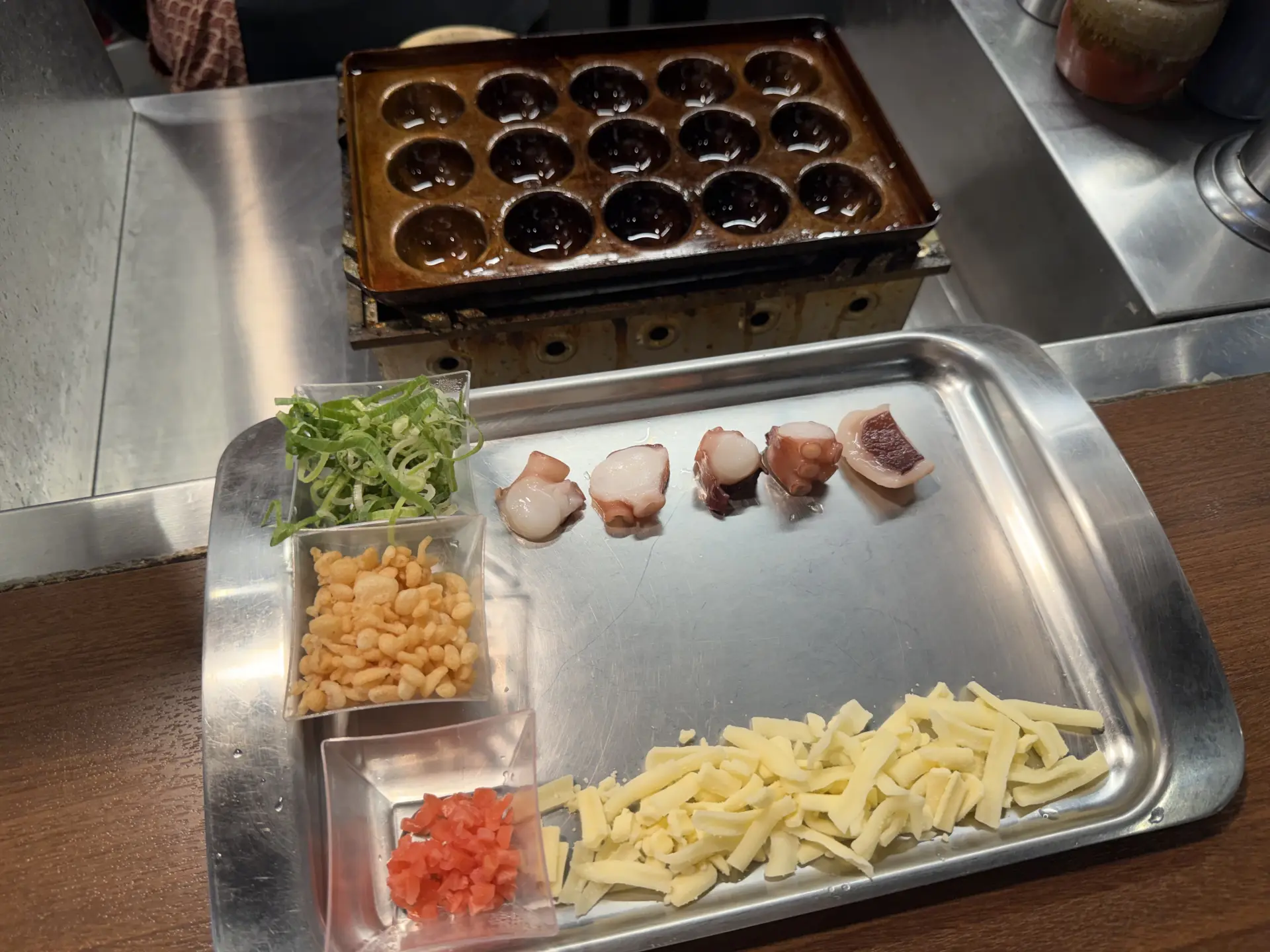
You will make 15 takoyaki during the experience. The griddle is made of copper, which heats quickly and is said to produce an especially fluffy texture. The copper surface bears the marks of repeated use, suggesting just how many delicious batches of takoyaki have been cooked on it. The copper griddles are professionally cleaned on a regular basis, but apparently a freshly cleaned, gleaming griddle causes the batter to stick and makes the takoyaki difficult to cook properly. One of the highlights of the experience is learning more about takoyaki while talking with the skilled chefs.
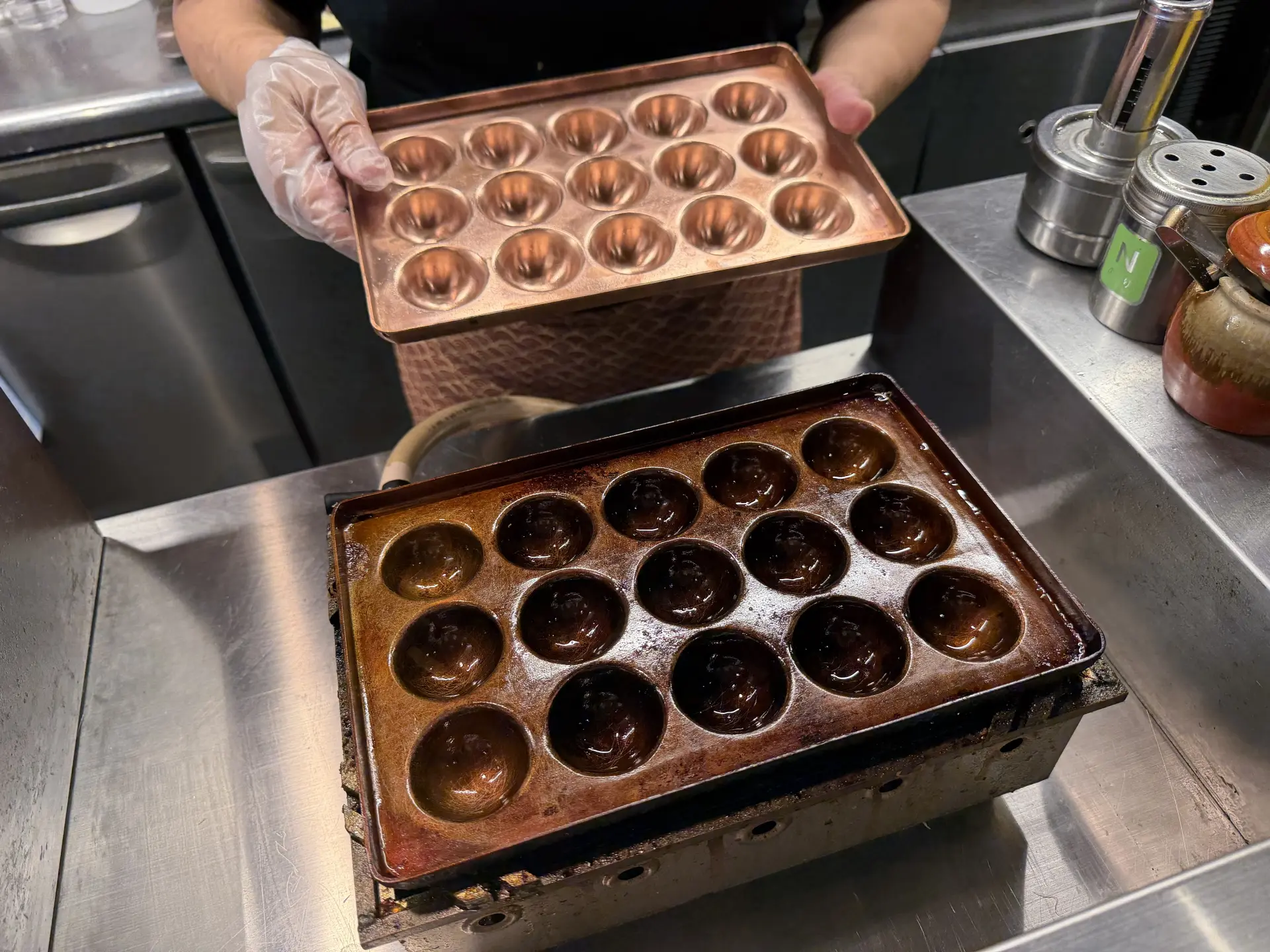
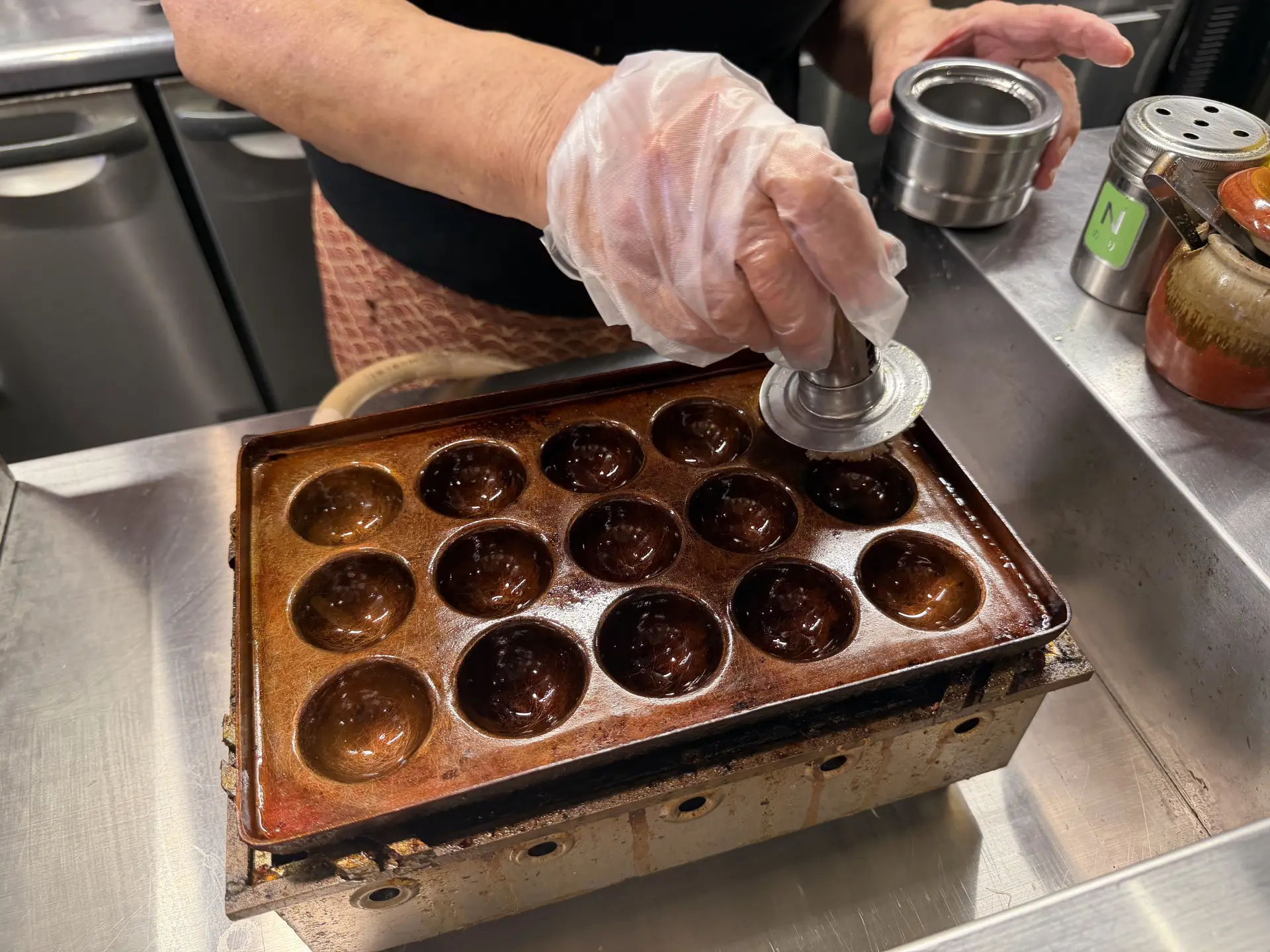
Now it is time to start making takoyaki! Copper conducts heat well, but the batter also tends to stick to it. Apply a generous amount of oil across the entire surface. Because the batter will later be poured in until it nearly overflows, oil not only the molds but also the flat areas around them.
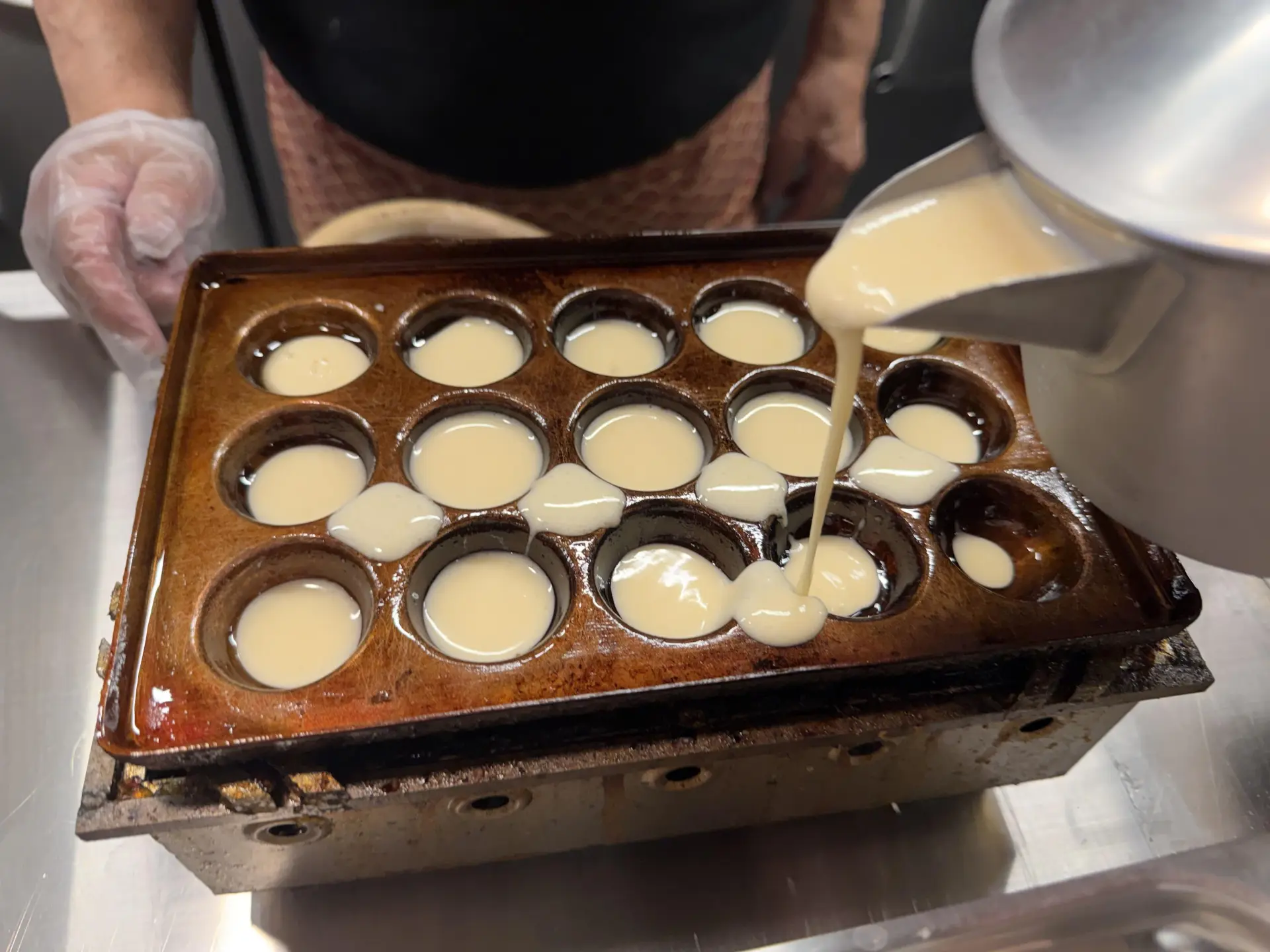
The batter is poured in two stages. Before turning on the heat, fill each mold about halfway.
Next, turn on the heat and add the fillings. You can place one of the three selected fillings into each mold, or combine ingredients such as mentaiko and cheese in a single piece. Arrange them however you like. This time, we decided to make four varieties: octopus only, mentaiko only, cheese only, and mentaiko with cheese.
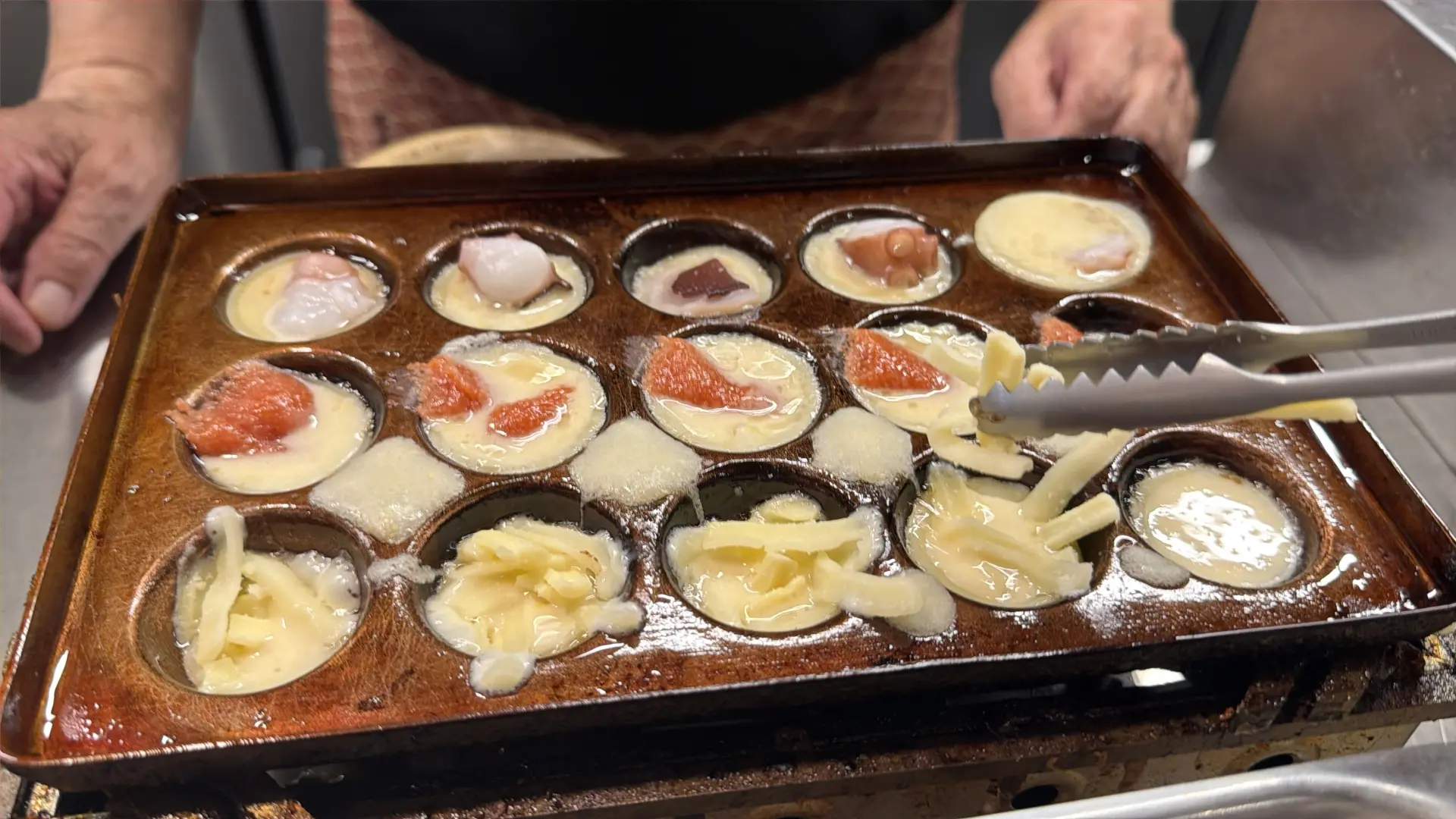
As you add the fillings, the copper griddle heats up and begins making an appetizing sizzling sound. Once you have quickly placed all the ingredients, pour in the batter again. This time, pour it over the fillings like a lid. It is fine to add enough batter to completely cover them. Covering the ingredients rather than limiting the batter to the molds is said to produce large, perfectly round takoyaki.
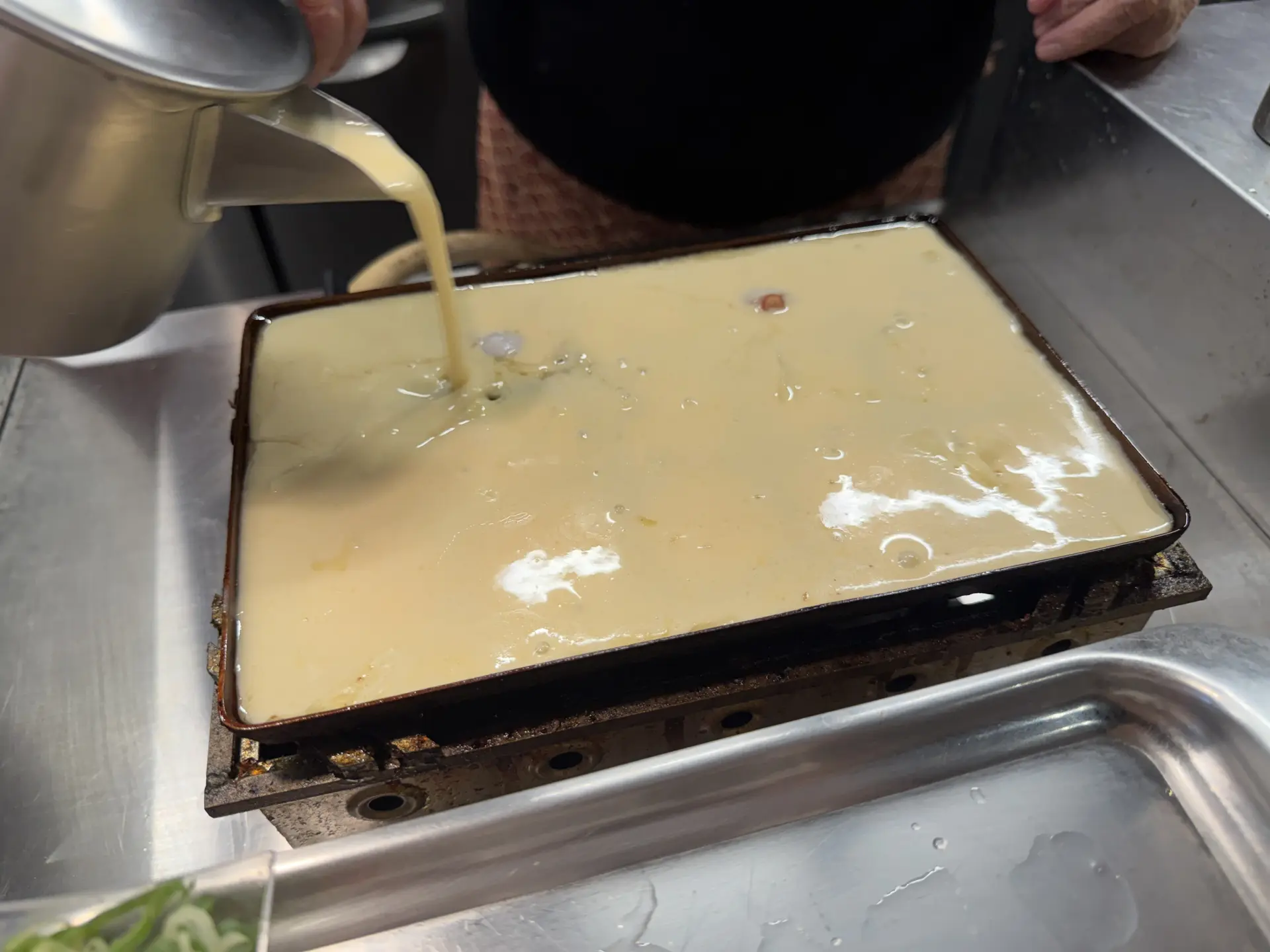
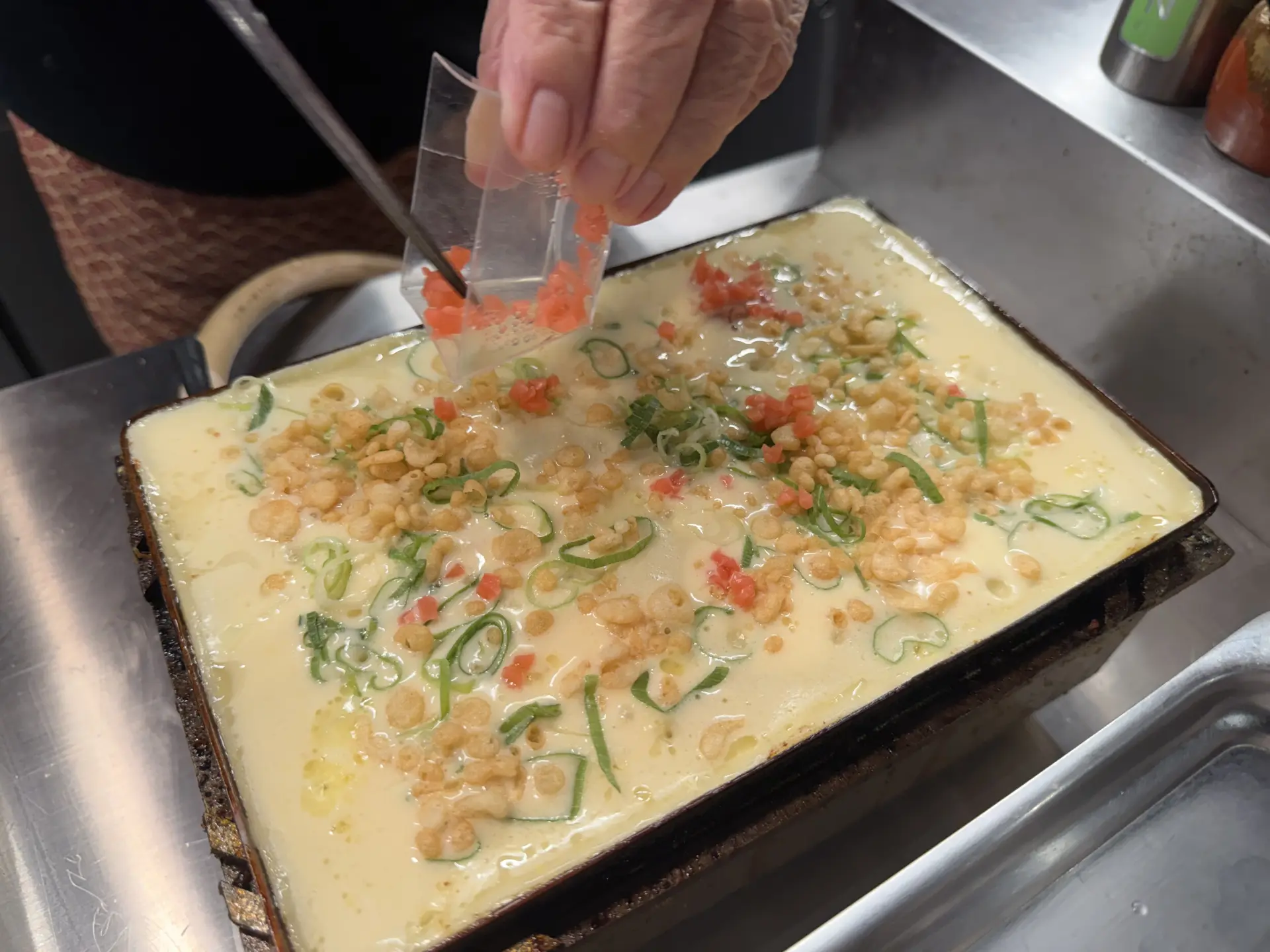
After pouring in the batter, scatter green onions, tenkasu tempura bits, and pickled ginger over the entire surface.
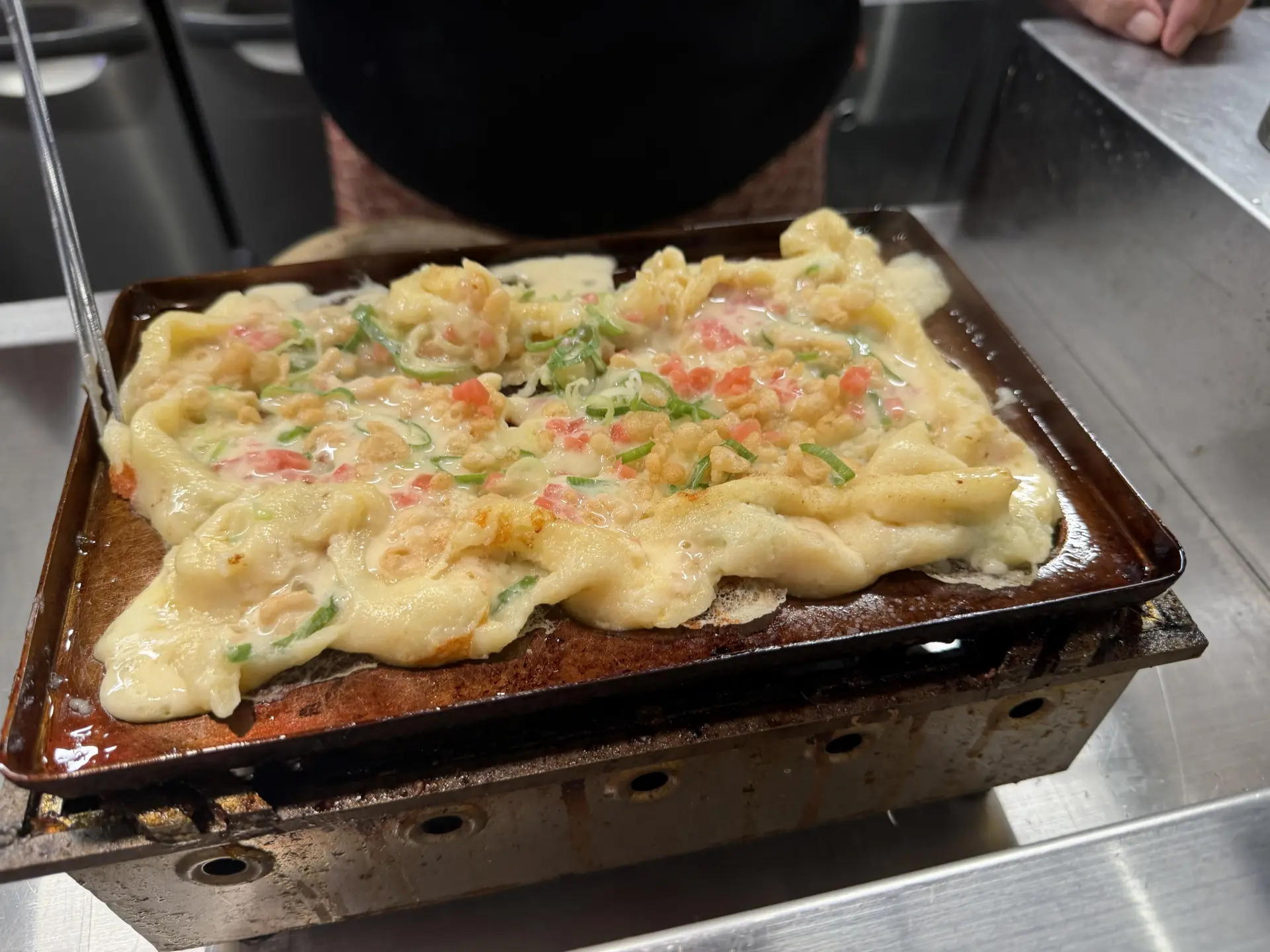
By this point, the batter will have begun to cook lightly. Loosen the batter around the edges and fold it inward.
Using two picks, separate the overflowing batter and tuck it into the molds, then rotate and flip each takoyaki. Be careful not to pierce the takoyaki itself with the picks. If you do, it may not cook into a round shape. Rest the picks gently against the surface rather than stabbing it. Think of using the two picks like chopsticks to lift each piece. It is not easy, but keep trying until you get the hang of it.
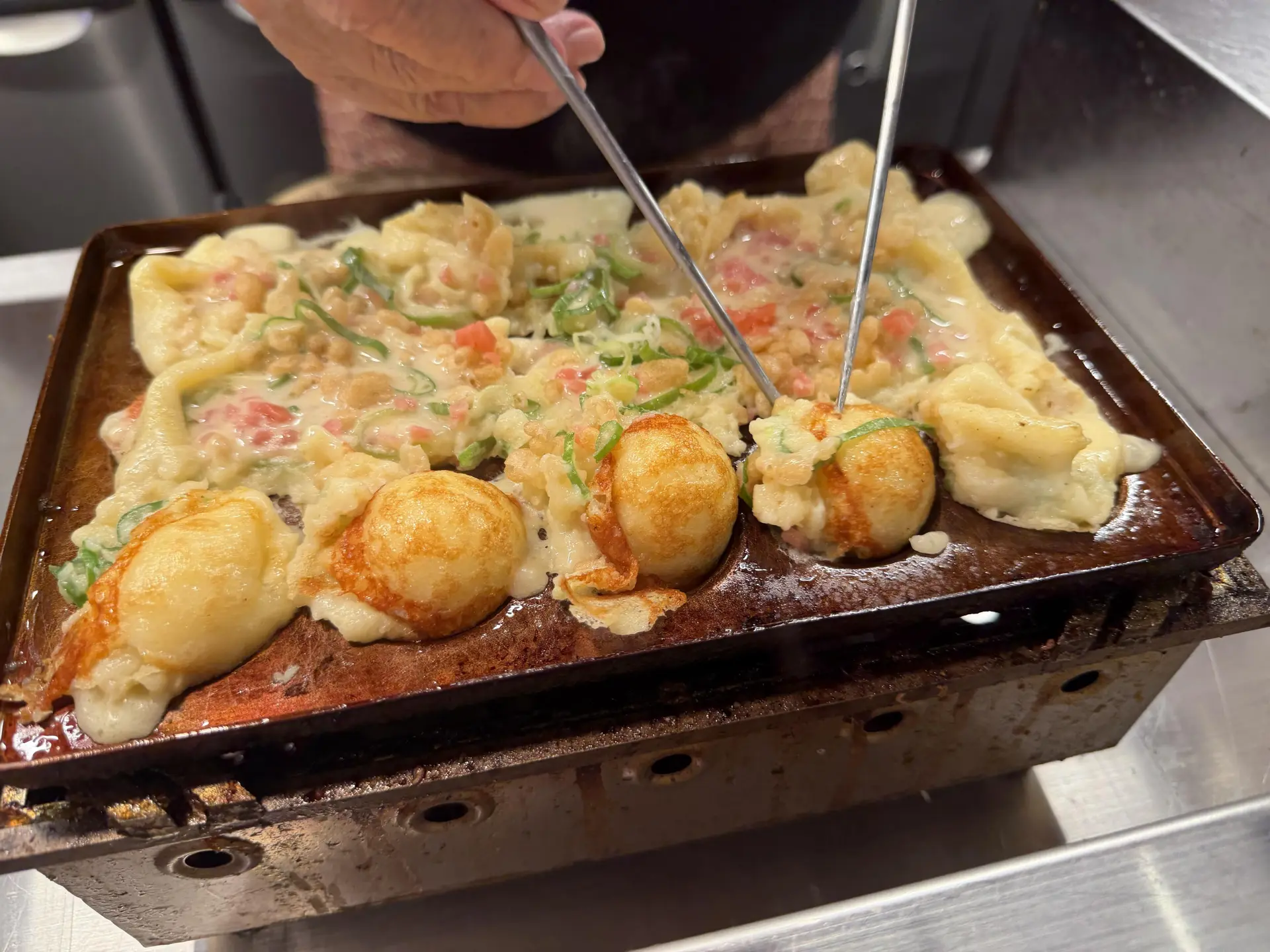
After turning all the takoyaki over, they will still have uneven surfaces, so continue shaping them into balls. Using the picks without piercing the surface, rotate each piece so that the uneven areas face downward. Keep turning them to smooth out the bumps. Repeating this process creates beautifully round takoyaki.
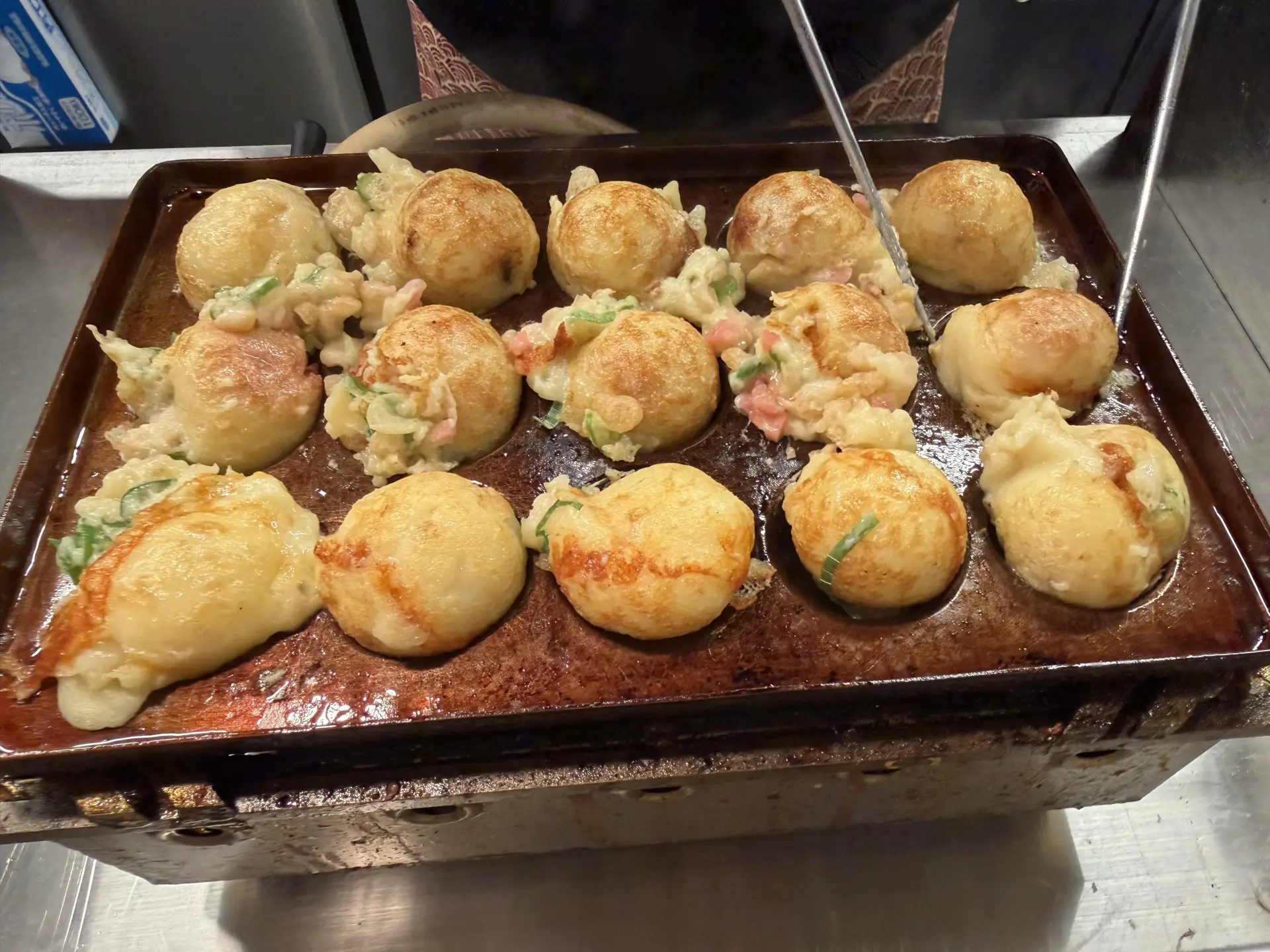
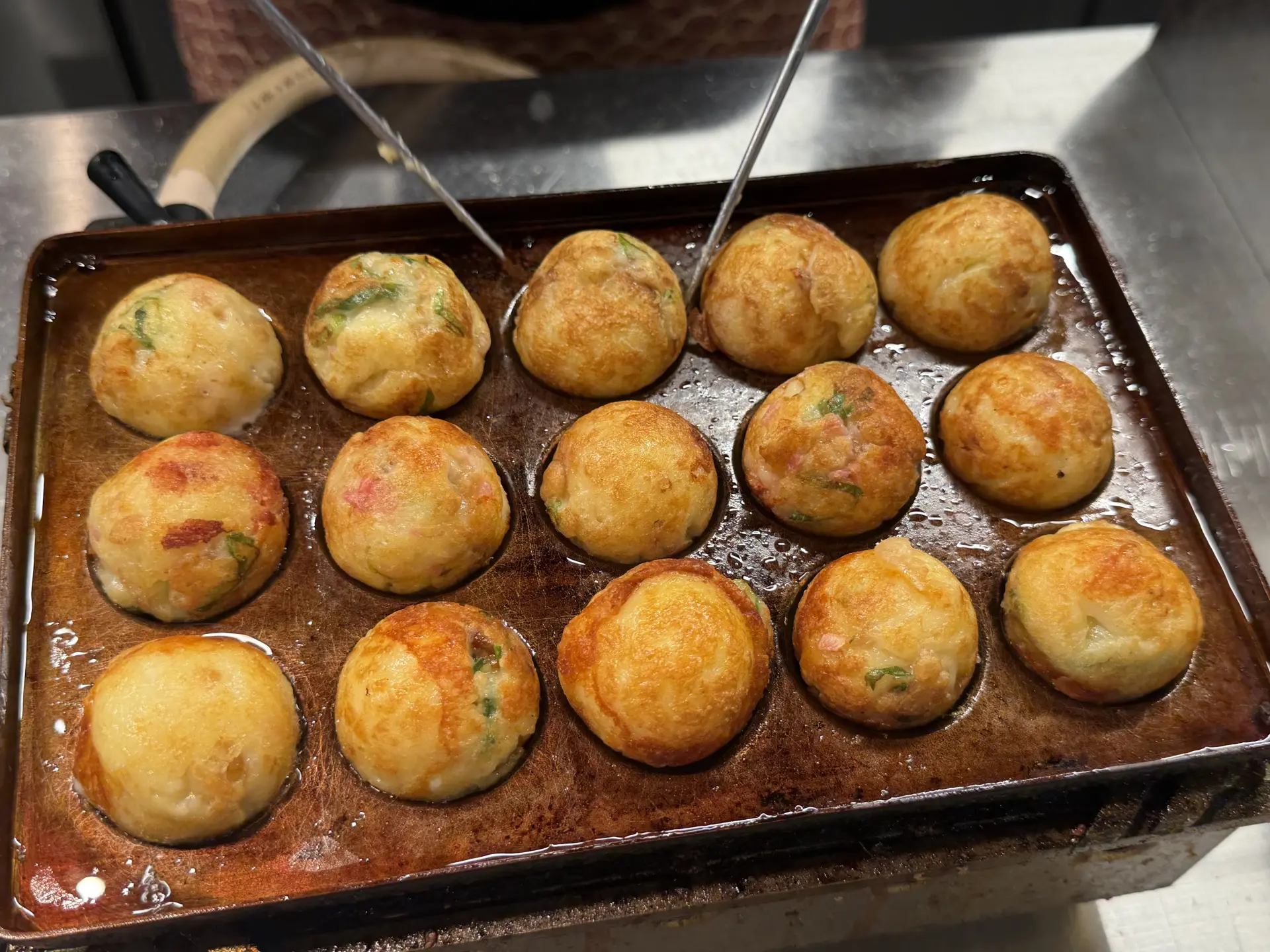
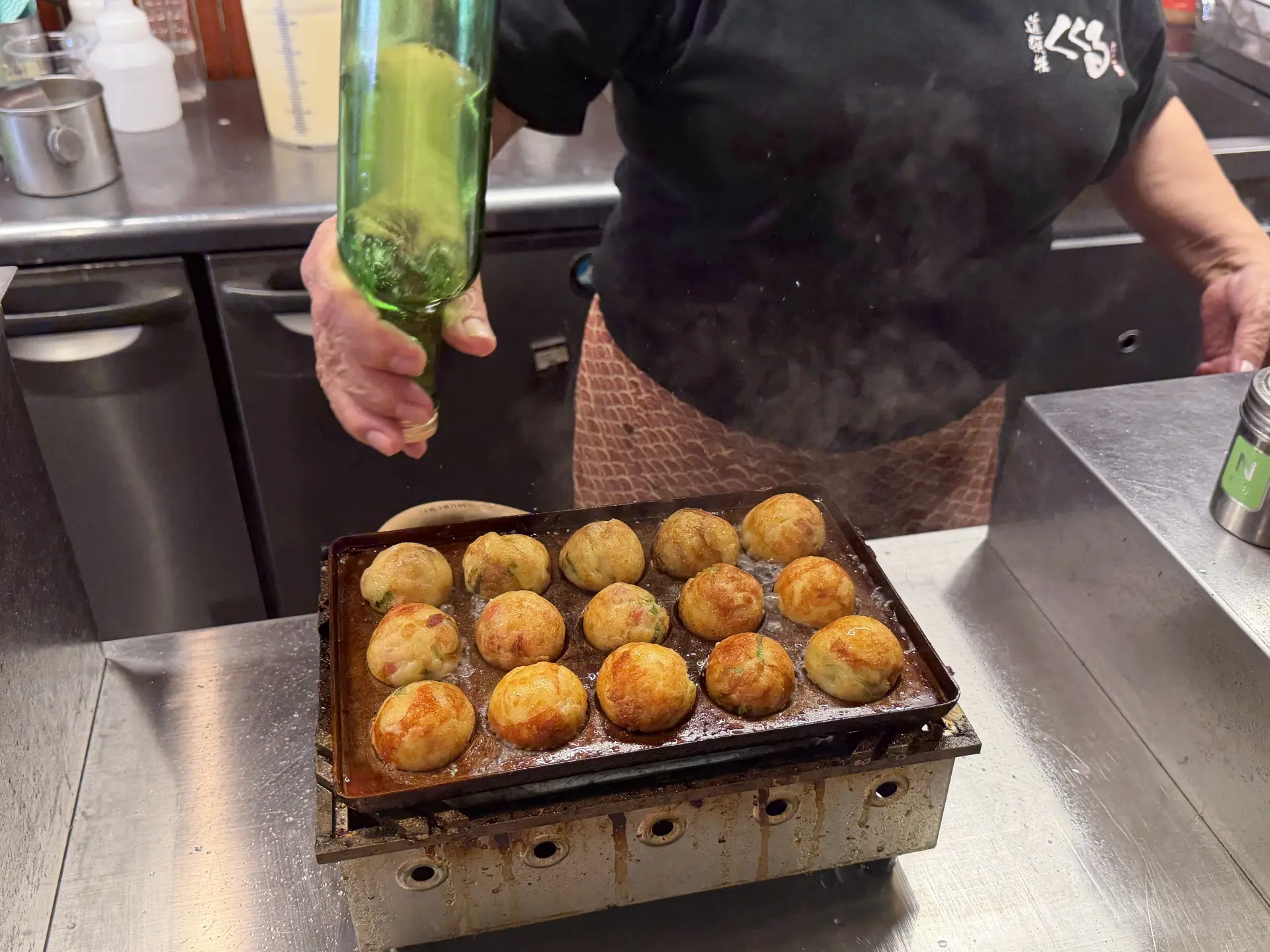
Finally, sprinkle white wine over the takoyaki to release a wonderfully savory aroma. The white wine further enhances the soft, creamy texture. This is also the final step used by the professional chefs when making takoyaki.
They are ready! The takoyaki look plump and delicious. Top them generously with Kukuru’s secret sauce, mayonnaise, aonori seaweed, and bonito flakes, then dig in!
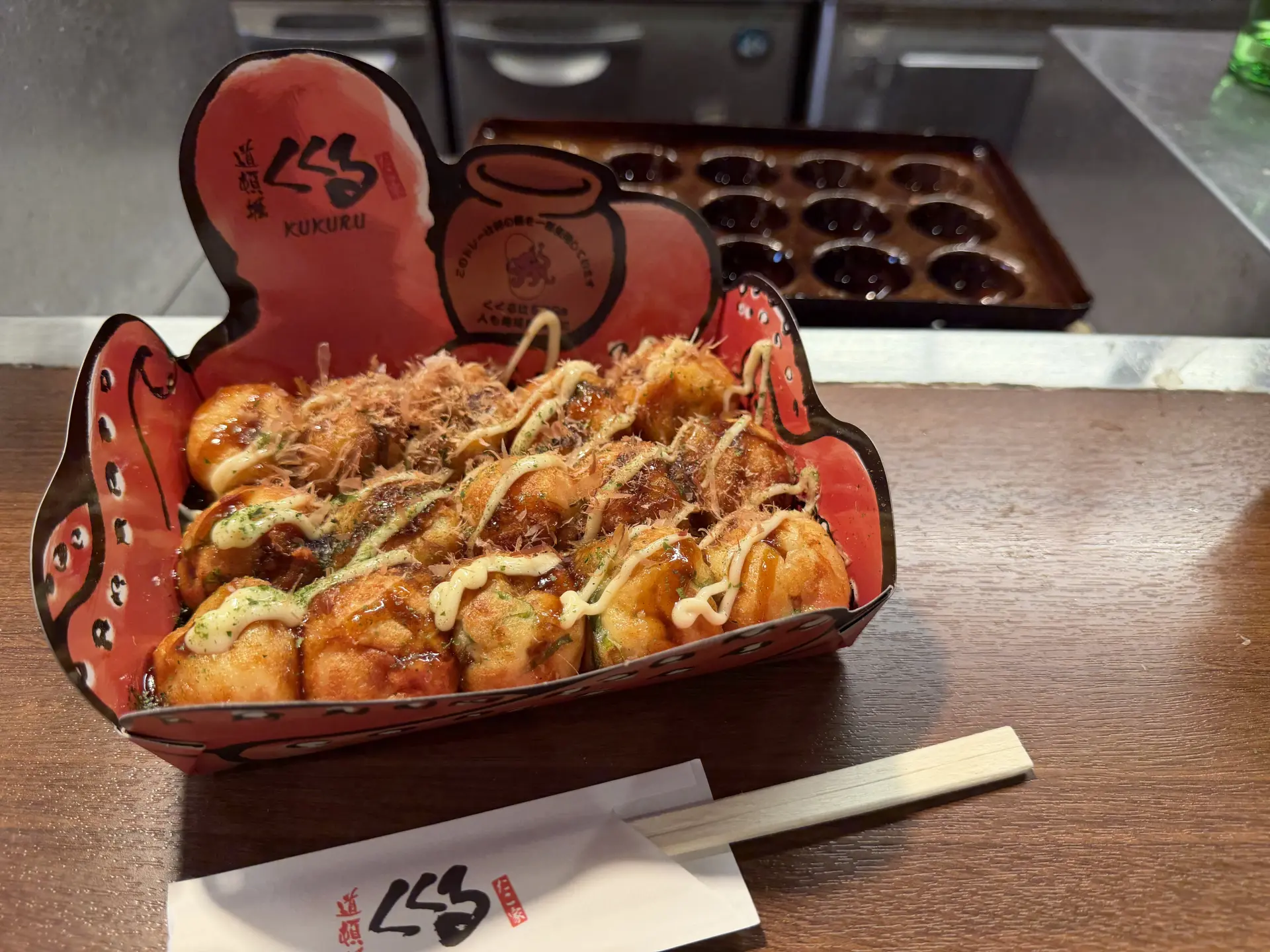
Fresh from the griddle, they are piping hot! The texture is exceptionally fluffy. The savory secret sauce pairs deliciously with the slight sweetness of the batter. I was surprised that the large pieces of octopus really had not shrunk during cooking. They were tender yet pleasantly springy, with plenty of octopus flavor. It was easy to understand why this is the classic and most popular filling. The takoyaki with mentaiko had a bold, concentrated flavor and an enjoyable popping texture. Adding cheese to the mentaiko gave the takoyaki extra richness. I thought the seasoning would pair especially well with beer, a whisky highball, or another alcoholic drink. The cheese-only takoyaki had a Western-style flavor that children would probably enjoy. The melted cheese was gooey and delicious.
You will also receive two takoyaki made by a professional chef.
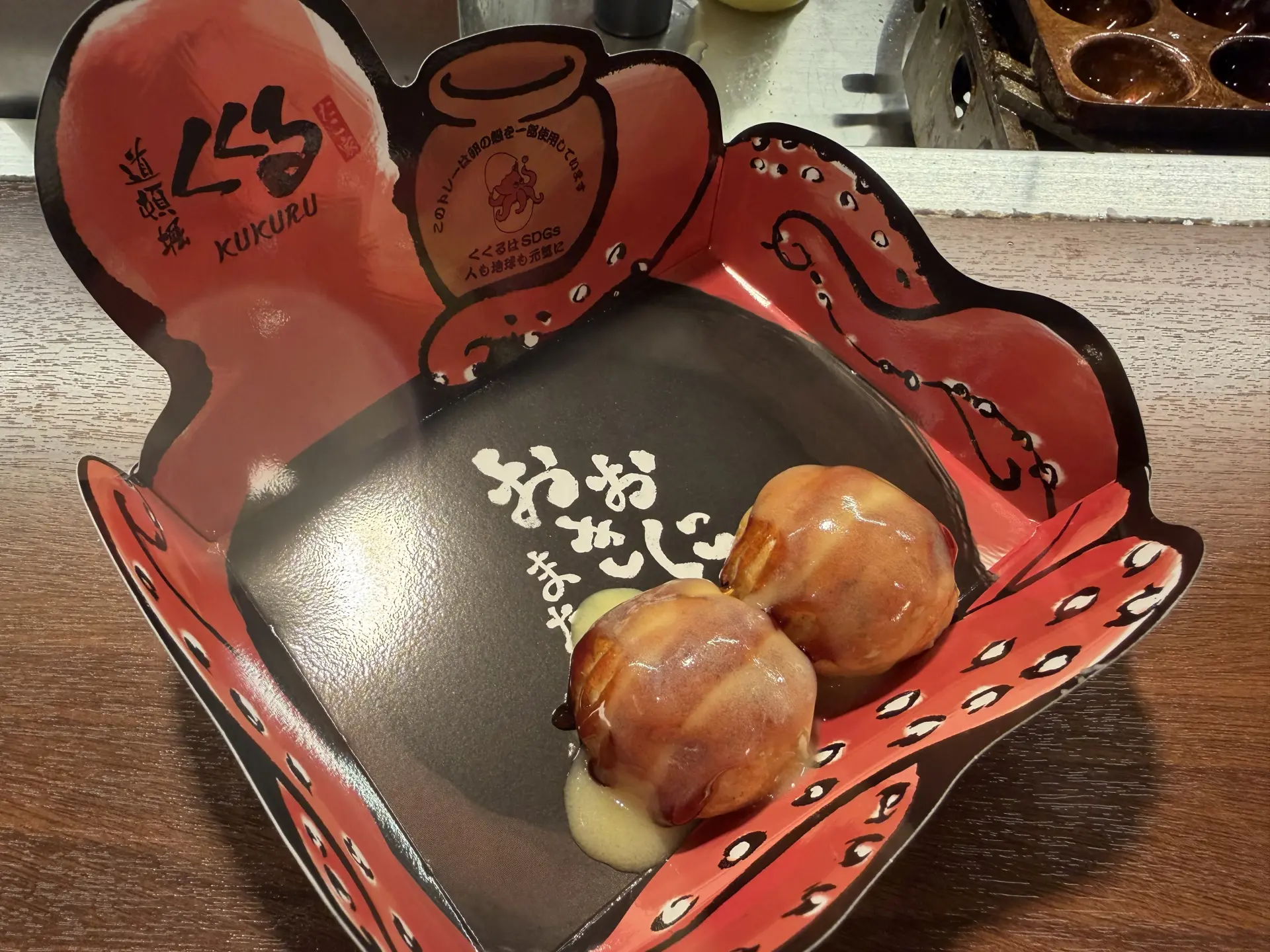
You can choose from four toppings: sauce and mayonnaise, cheese, mentaiko mayonnaise, or butter soy sauce. I tried butter soy sauce for the first time and found that butter pairs extremely well with takoyaki. This was another flavor that seemed ideal with an alcoholic drink.
The class also includes one soft drink. Options include Calpis, orange juice, cola, melon soda, and oolong tea. For an additional ¥300, you can upgrade to beer, a lemon sour, or another alcoholic drink.
Trying the Takoyaki-Making Experience
I had made takoyaki many times on an electric takoyaki maker at home since childhood. However, this was my first time making authentic takoyaki on a copper griddle like those used by professionals. The finished pieces were fluffy and beautifully round, impressing even a Kansai native accustomed to making takoyaki. I learned that the key is to use a highly conductive copper griddle and turn each piece without piercing it with the picks. I was delighted by how delicious my own takoyaki tasted, but the chef’s takoyaki was on another level. Comparing the two and rediscovering just how fluffy professionally made takoyaki can be is an experience unique to this program. I plan to remember the tips I learned from the professionals the next time I make takoyaki at home.
Takoyaki-Making Experience Plans
There are two plans available for the takoyaki-making experience: the Basic Course and the Complete Konamon Course.
The Basic Course costs ¥3,850, including tax, and includes 15 takoyaki made by you, two takoyaki made by a professional chef, an original headband, and one soft drink.
The Complete Konamon Course costs ¥7,480, including tax. In addition to everything in the Basic Course, it includes a takoyaki food replica-making experience and a six-item takoyaki ingredient set.
Reservations through the website are recommended. Sundays are especially busy, so plan accordingly.
*Experience plan details and prices are based on information available at the time of reporting in September 2026.
Takoyaki Food Replica-Making Experience
At the Konamon Museum, you can make a realistic takoyaki food replica on the third floor. You can take your finished replica home as a souvenir. This experience is particularly popular with children and couples.

Learn About the History of Takoyaki
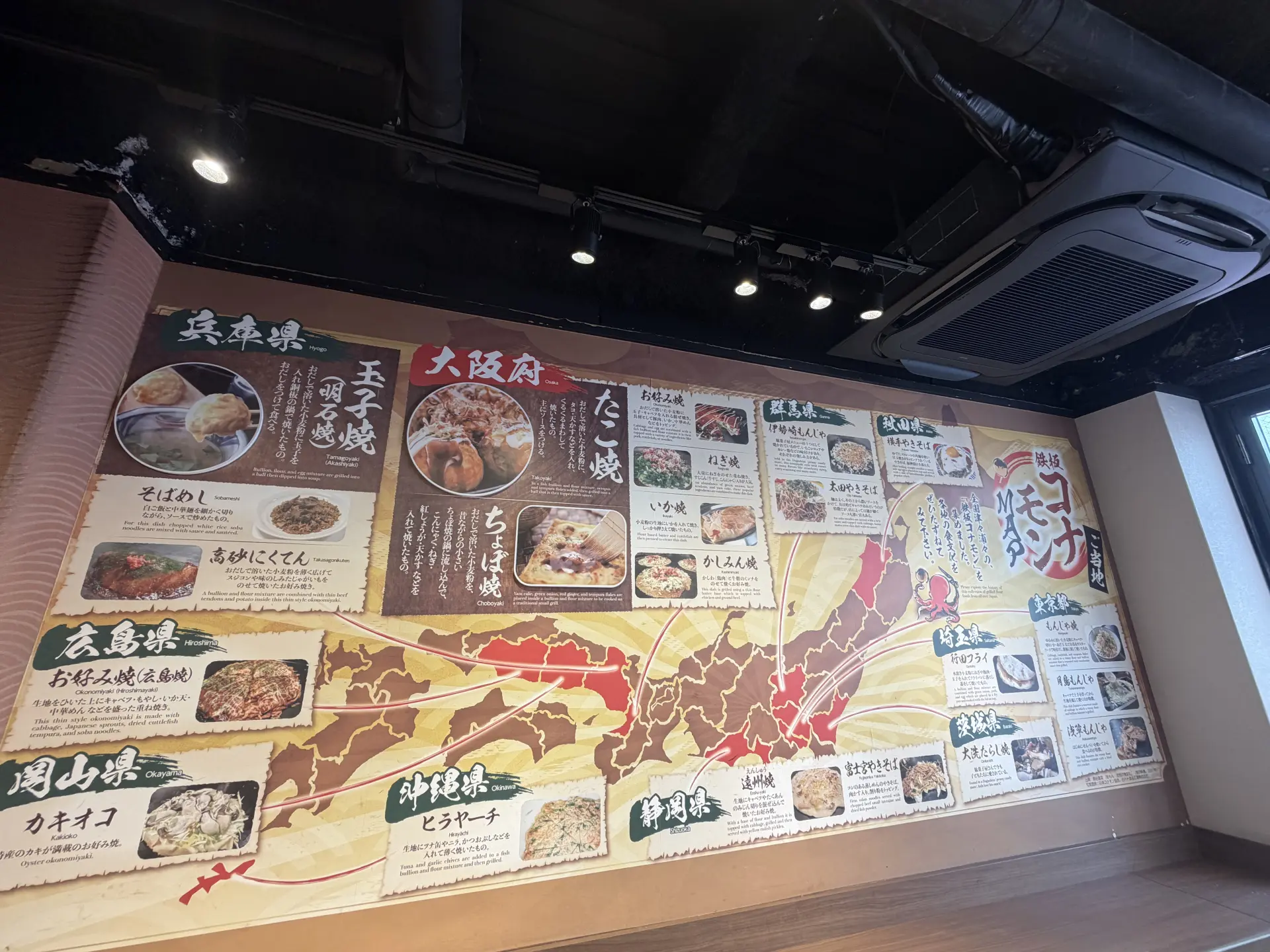
A map covering an entire wall on the second floor introduces regional konamon dishes from across Japan, allowing you to learn about the distinctive flour-based specialties found in each area.
Next to it is a diagram explaining the history and development of konamon, including takoyaki. You can eat takoyaki prepared by a skilled chef, learn professional cooking techniques and make your own, create a food replica, or study takoyaki history while enjoying the real thing. The facility offers a full range of experiences centered on takoyaki.
Shop for Souvenirs
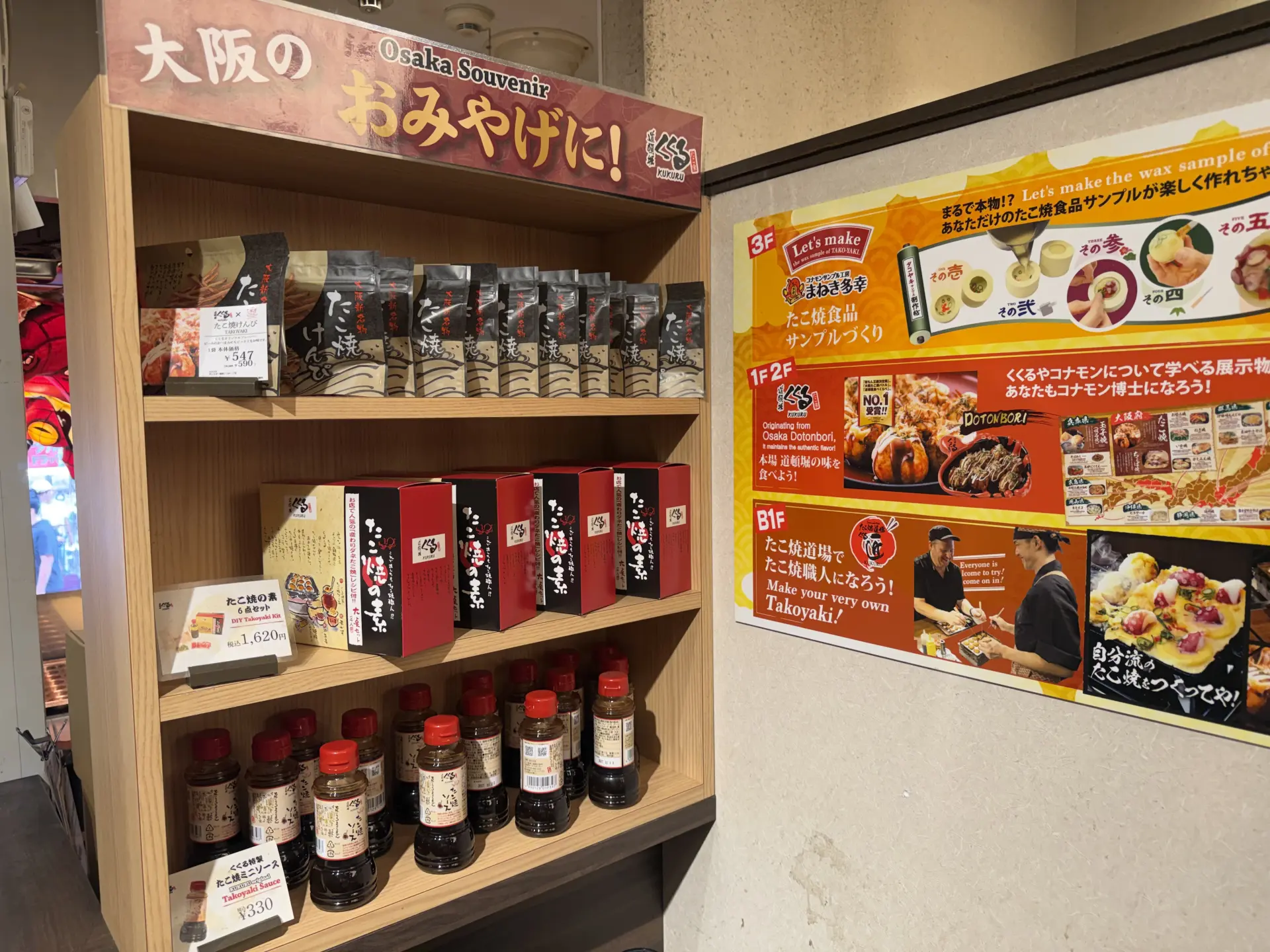
Before leaving the facility, take a look at the Osaka souvenirs on offer. In addition to the six-item takoyaki ingredient set, the shop sells Kukuru’s special miniature bottles of takoyaki sauce and Takoyaki Kenpi, sweet potato sticks flavored like takoyaki. Takoyaki Kenpi, in particular, is an original Kukuru product unlike anything else. Be sure to check it out.
Summary
Takoyaki is one of Osaka’s signature foods. Eating delicious takoyaki prepared by professionals while sightseeing is certainly worthwhile, but if you have come all the way to Osaka, why not learn how to make it from an expert? You will discover cooking techniques and ways to eat takoyaki that even many Osaka residents may not know. Once you can make perfectly round, fluffy takoyaki, you may be more of a takoyaki master than the locals themselves.

Author
Freelance Announcer
Sayaka Motomura
Focused on sharing insights related to traditional culture, performing arts, and history.