
A Guide to Toka Ebisu Shrine in Hakata: Pray for Business Success and Meaningful Connections
Toka Ebisu Shrine has long been part of life in Hakata, Fukuoka, and is cherished as a place to pray for business prosperity and meaningful connections.
Locals and visitors from across Japan come to this spiritual site to seek success in business and good relationships. This article introduces the shrine’s history and highlights, distinctive sacred items, and notable festivals. Experience the faith traditions that live on in Hakata, and offer a prayer for good fortune on your travels and new connections.
What Is Toka Ebisu Shrine? More Than 400 Years of History in Hakata
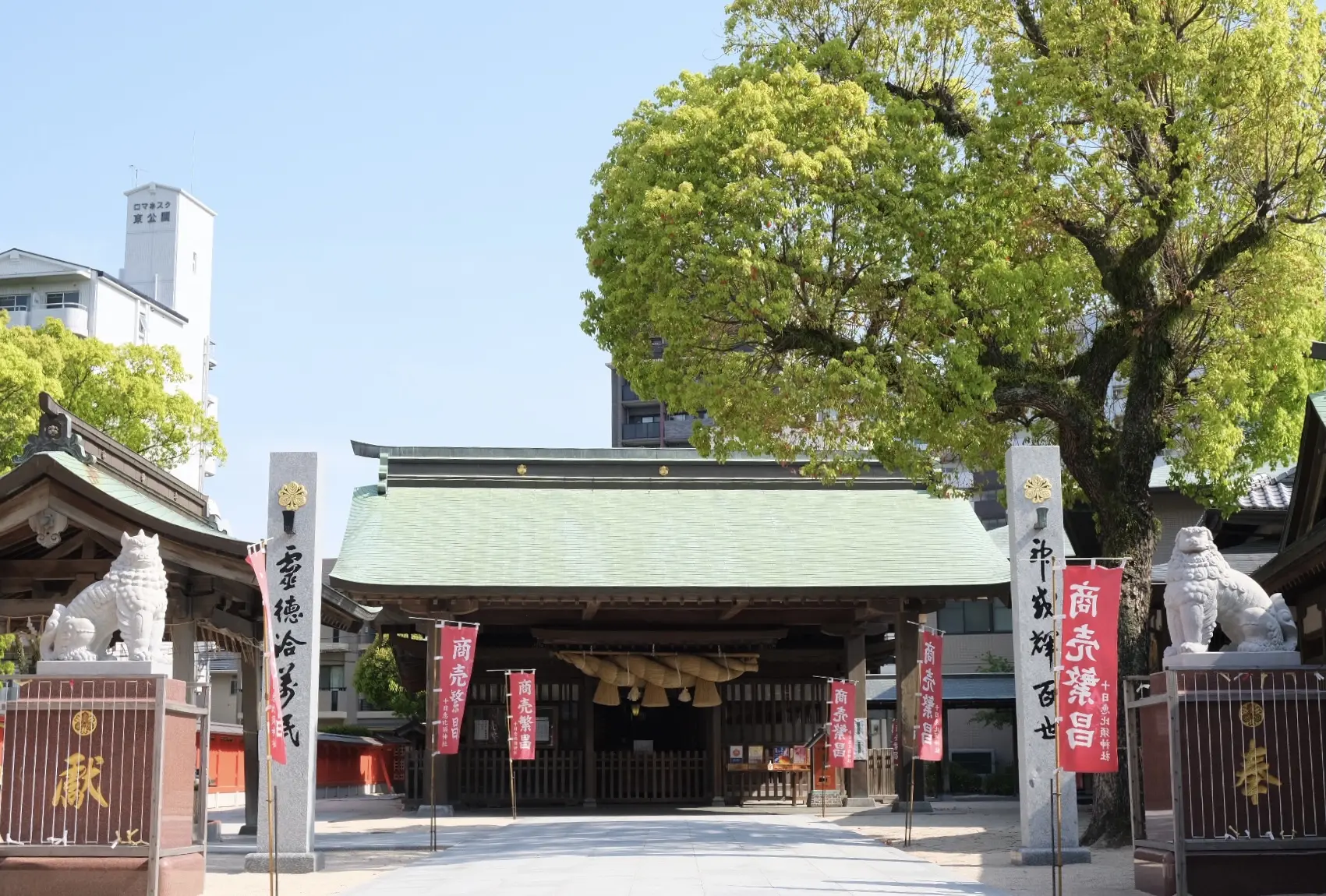
Founded in 1592, Toka Ebisu Shrine has a history spanning more than 400 years and stands in Higashikoen, Hakata Ward, Fukuoka City. Its origins are said to date back to when Heijuro Takeuchi, a member of a family of priests at Kashii-gu Shrine, found a sacred statue of Ebisu on a beach and enshrined it in his home. As the number of worshippers grew, the shrine buildings were rebuilt. The shrine was relocated to Higashi Park in 1879 and moved to its present site in 1929. It has long been woven into the lives and faith of Hakata’s people. Today, it enshrines two deities, Ebisu and Daikoku, and welcomes visitors from the local community and across Japan. Its New Year’s Grand Festival, held annually from January 8 to 11, is a particularly lively tradition that attracts many worshippers. Next, let’s explore the origins and traditions associated with the two deities enshrined here.
Toka Ebisu Shrine: Honoring the Deities of Business Prosperity and Meaningful Connections
Toka Ebisu Shrine enshrines Ebisu, the god of business prosperity, and Daikoku, the god of meaningful connections and good fortune. One of the shrine’s distinctive features is that these two deities are father and son. Here is a closer look at their stories and the blessings associated with them.
Ebisu, the God of Business Prosperity
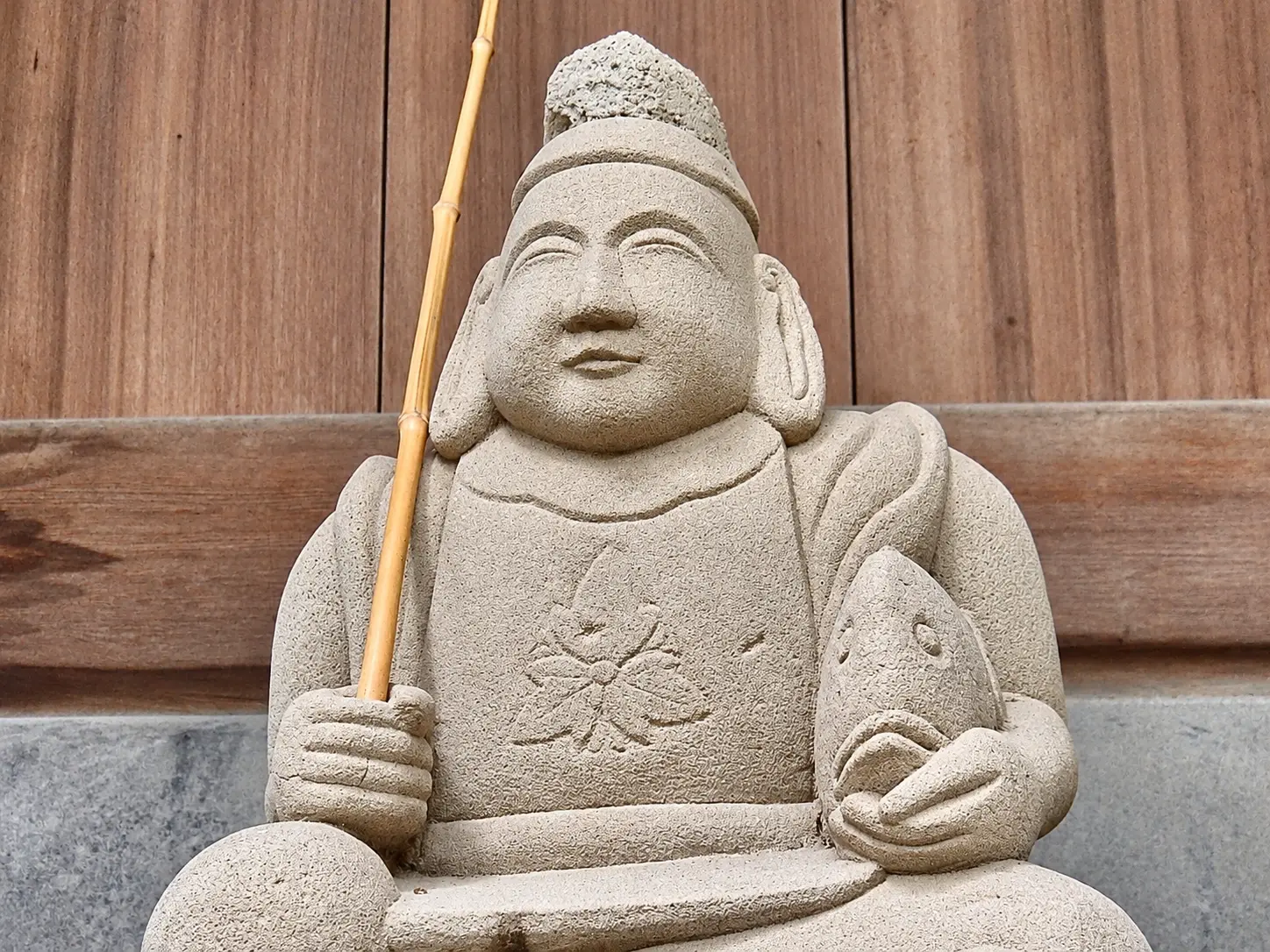
Ebisu’s formal divine name is Kotoshironushi-no-Okami. He is said to have helped his father, Okuninushi-no-Okami, develop the land and its industries. He is widely revered as a guardian of business prosperity, fishing, and safety at sea. A myth describes him enjoying fishing, which is reflected in his familiar image holding a fishing rod and a sea bream. Regarded as an auspicious fish, the sea bream also appears as a motif on sacred items at Toka Ebisu Shrine, so look out for it during your visit.
Daikoku, the God of Meaningful Connections
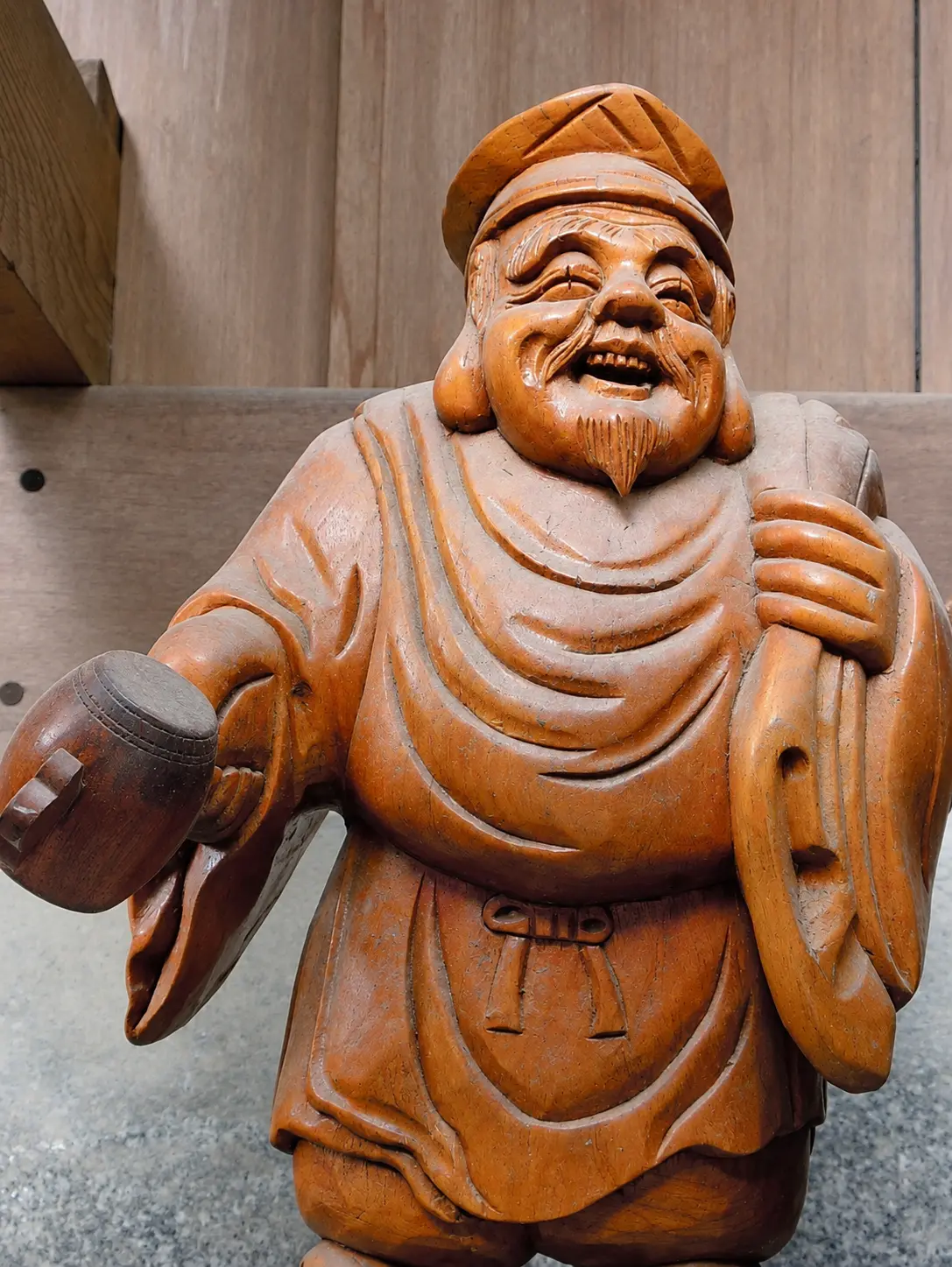
Okuninushi-no-Okami, affectionately known as Daikoku, is known in Japanese mythology for his role in building the nation. He is revered for forging many kinds of connections. In 1952, a portion of his divine spirit was brought from Izumo Taisha Shrine and enshrined here. As he is Ebisu’s father, the shrine is distinctive for honoring both father and son. In addition to bringing people together, Daikoku is believed to bestow prosperity in business. Quietly join your hands in prayer for future happiness, from new encounters to success at work.
Places to Explore around the Grounds of Toka Ebisu Shrine
The grounds feature motifs associated with Ebisu and places where you can pause to offer your wishes. Exploring them as part of your visit offers a deeper connection with the shrine’s faith and culture, adding another dimension to your trip. Here are some highlights to look out for.
A Unique Purification Pavilion with a Stone Sea Bream Fountain
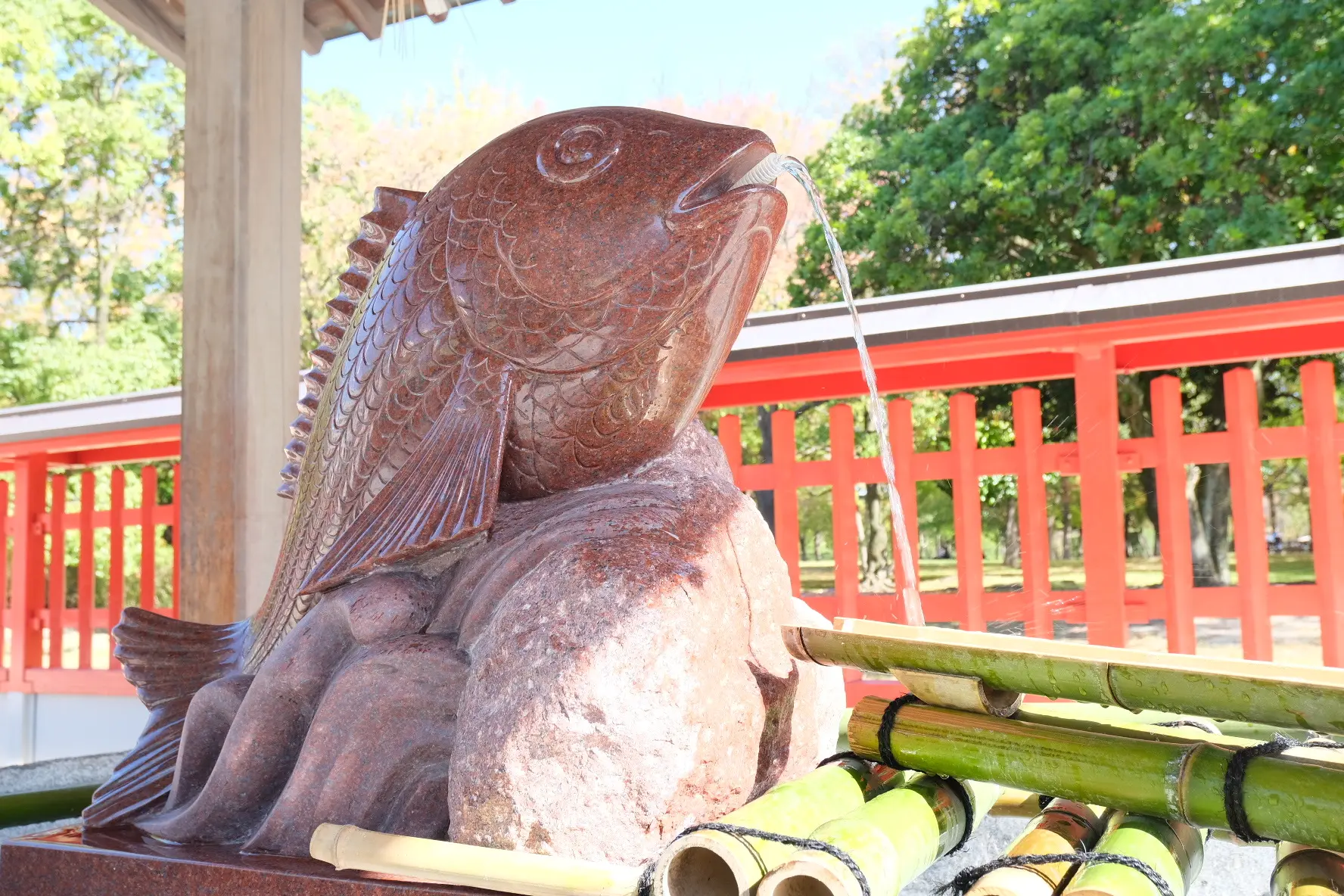
After you pass through the torii gate, one of the first things to catch your eye is the temizuya, or ritual purification pavilion, featuring a sea bream motif. Water flows from the mouth of the stone fish, a familiar symbol of Ebisu, in a design distinctive to Toka Ebisu Shrine. The pavilion is a place to cleanse your hands and rinse your mouth before worship. Admire the striking fish sculpture as you purify yourself and approach the shrine feeling refreshed. It is another reminder of the shrine’s connection with Ebisu, the god of business prosperity.
A Large Rack Filled with Colorful Sea Bream-Shaped Ema
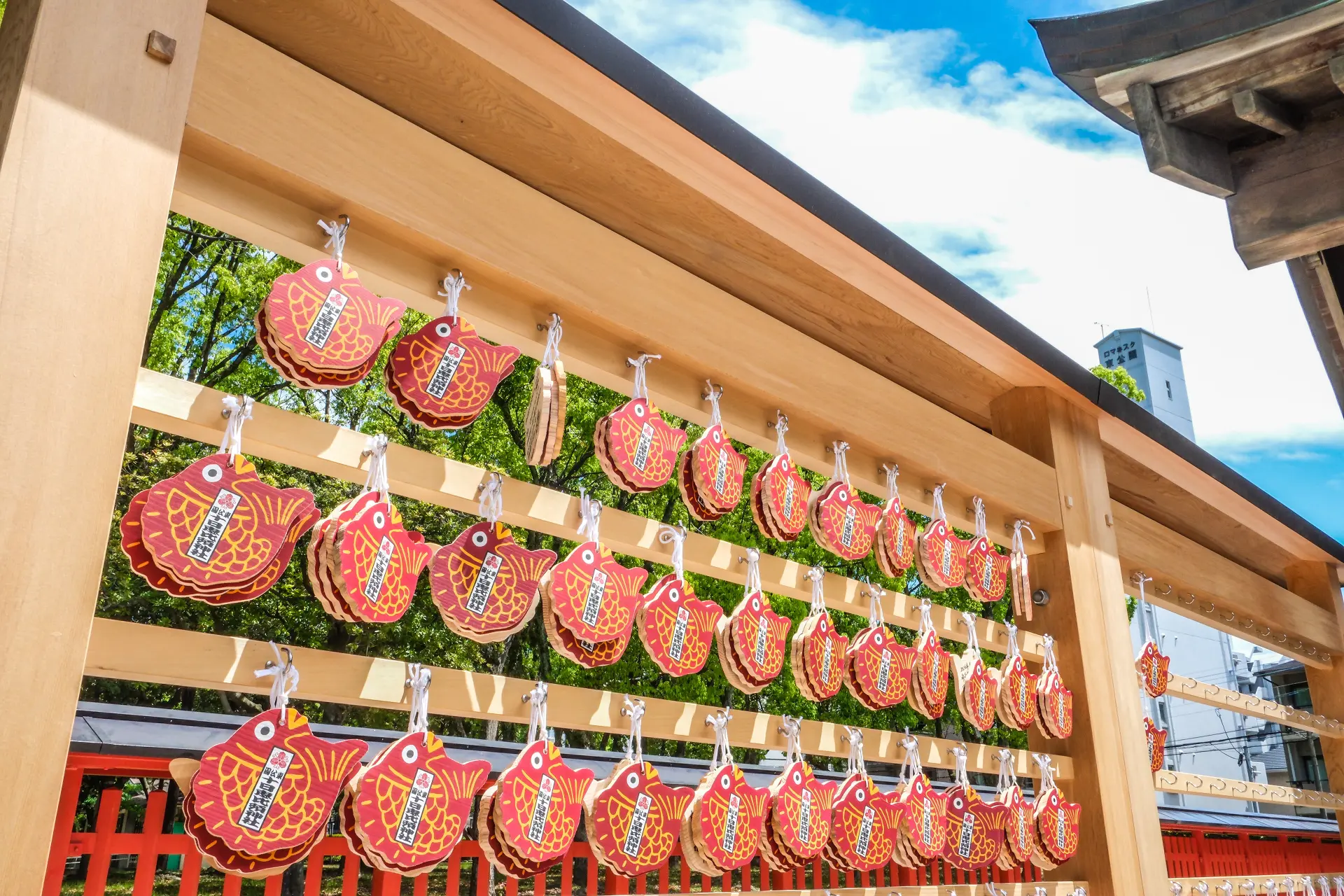
Beside the purification pavilion stands a large ema rack, another highlight of the grounds. Rows of colorful wooden votive plaques shaped like sea bream brighten the space. Each bears a visitor’s wishes, from prosperity in business to good relationships. Take in the display while noticing the sea bream motif associated with Ebisu. It is also a great spot for a commemorative photo.
Connect with the Gods of Good Fortune: 7 Sacred Items at Toka Ebisu Shrine
The charm and talisman counter offers a variety of sacred items associated with Ebisu and Daikoku, each connected with hopes for good fortune. Alongside protective charms for business prosperity and good relationships, you will find fortune slips, ema, and commemorative shrine seals called goshuin. Taking your time to choose is part of the experience. Here are seven items to consider as mementos of your visit.
1. Fukuokoshi Omikuji: A Fortune Slip for Good Luck (Offering: 300 yen)
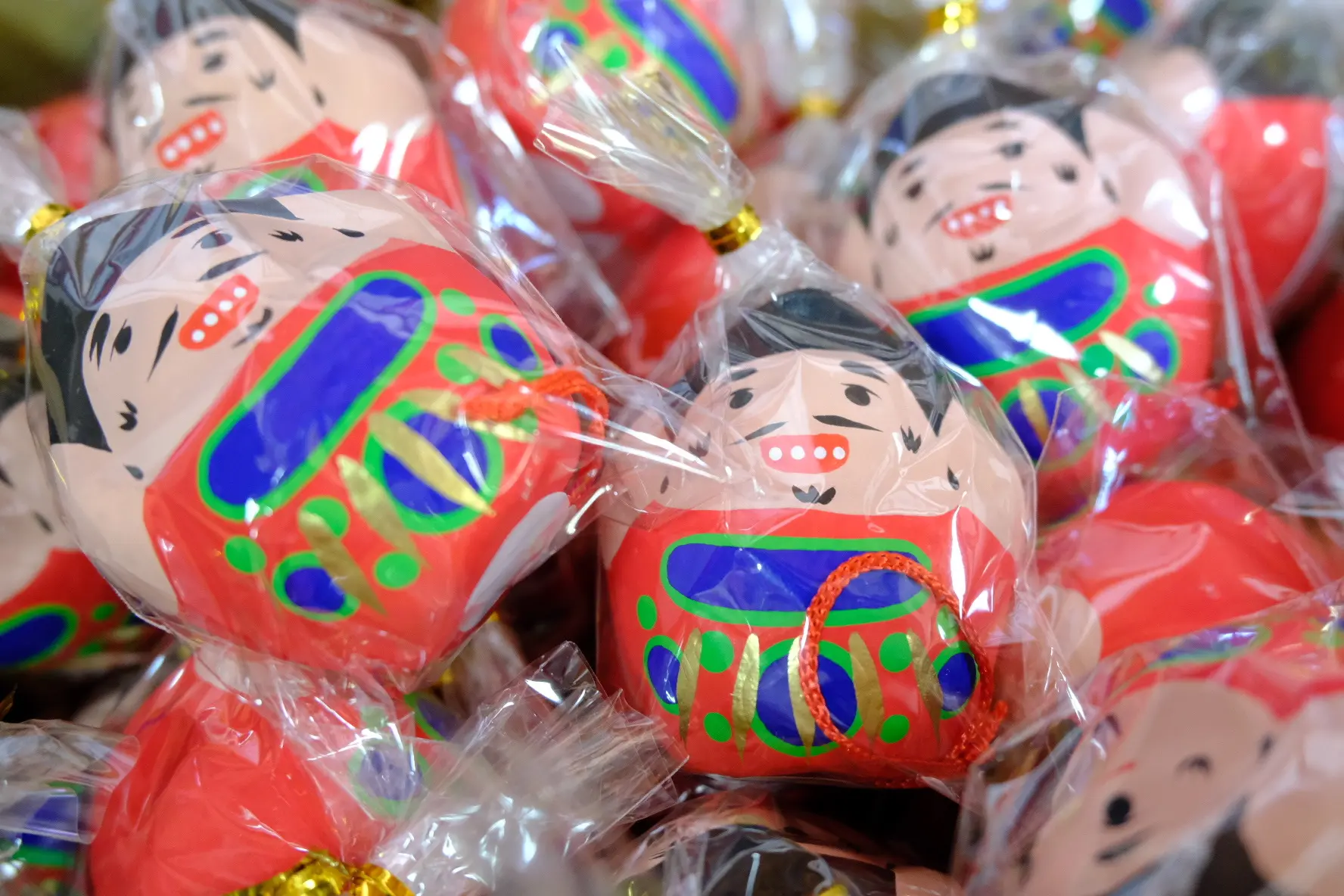
Fukuokoshi Omikuji contains an omikuji fortune slip inside a palm-sized, Ebisu-themed daruma figure. It is modeled after Fukuokoshi, an auspicious ornament awarded in the New Year’s Grand Festival lucky draw. Discover your fortune with this charming little figure and welcome good luck.
2. Academic Success Charm: For Success in Your Studies (Offering: 1,000 yen)
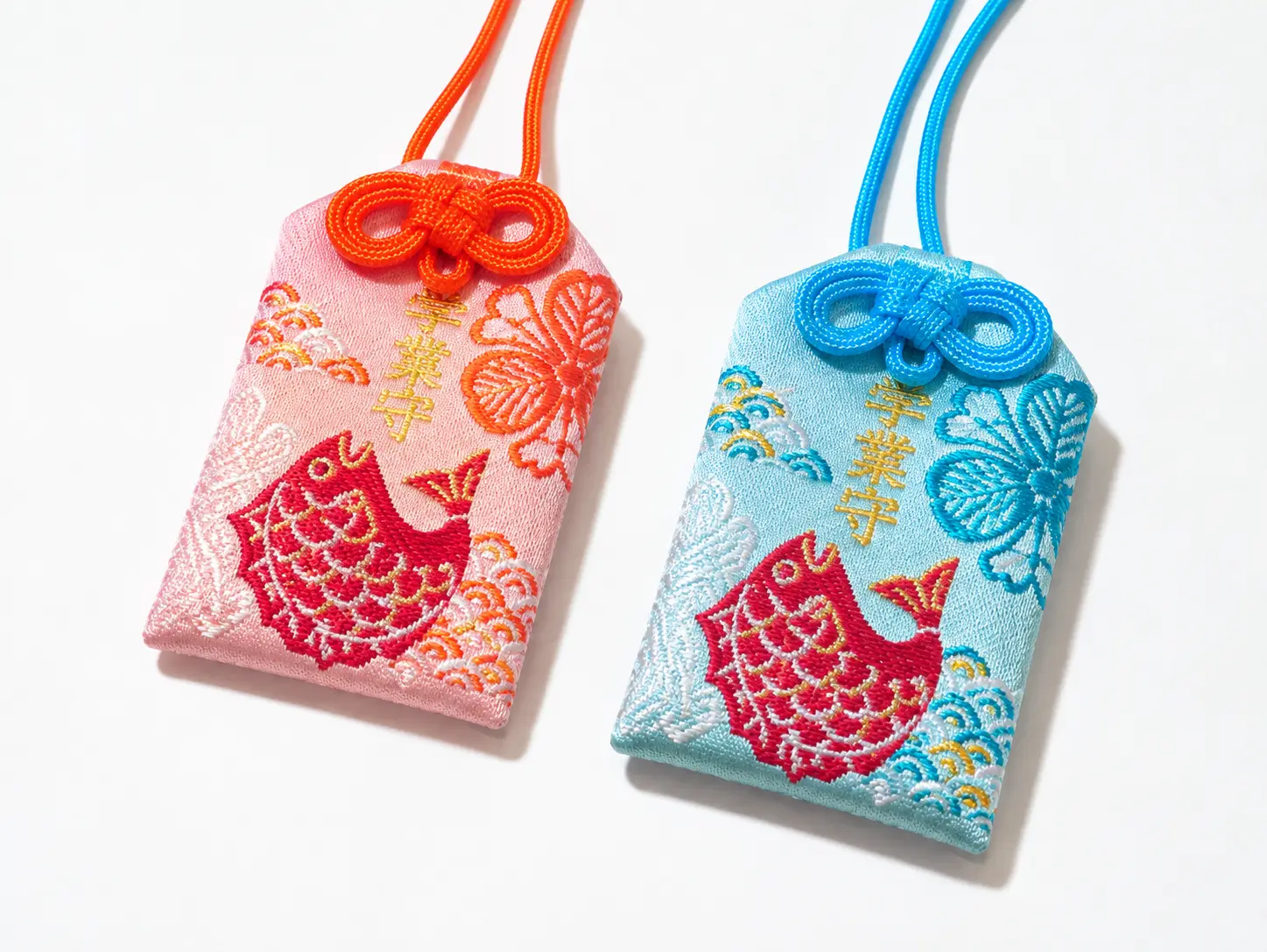
The Academic Success Charm is embroidered with a sea bream leaping energetically upward. This auspicious “leaping sea bream” represents prayers for academic achievement and progress in learning. It is a reassuring charm for anyone preparing for an important challenge, from school entrance exams and professional certification exams to promotion exams.
3. Choun Mamori: For Those Hoping to Take a Leap Forward (Offering: 1,000 yen)
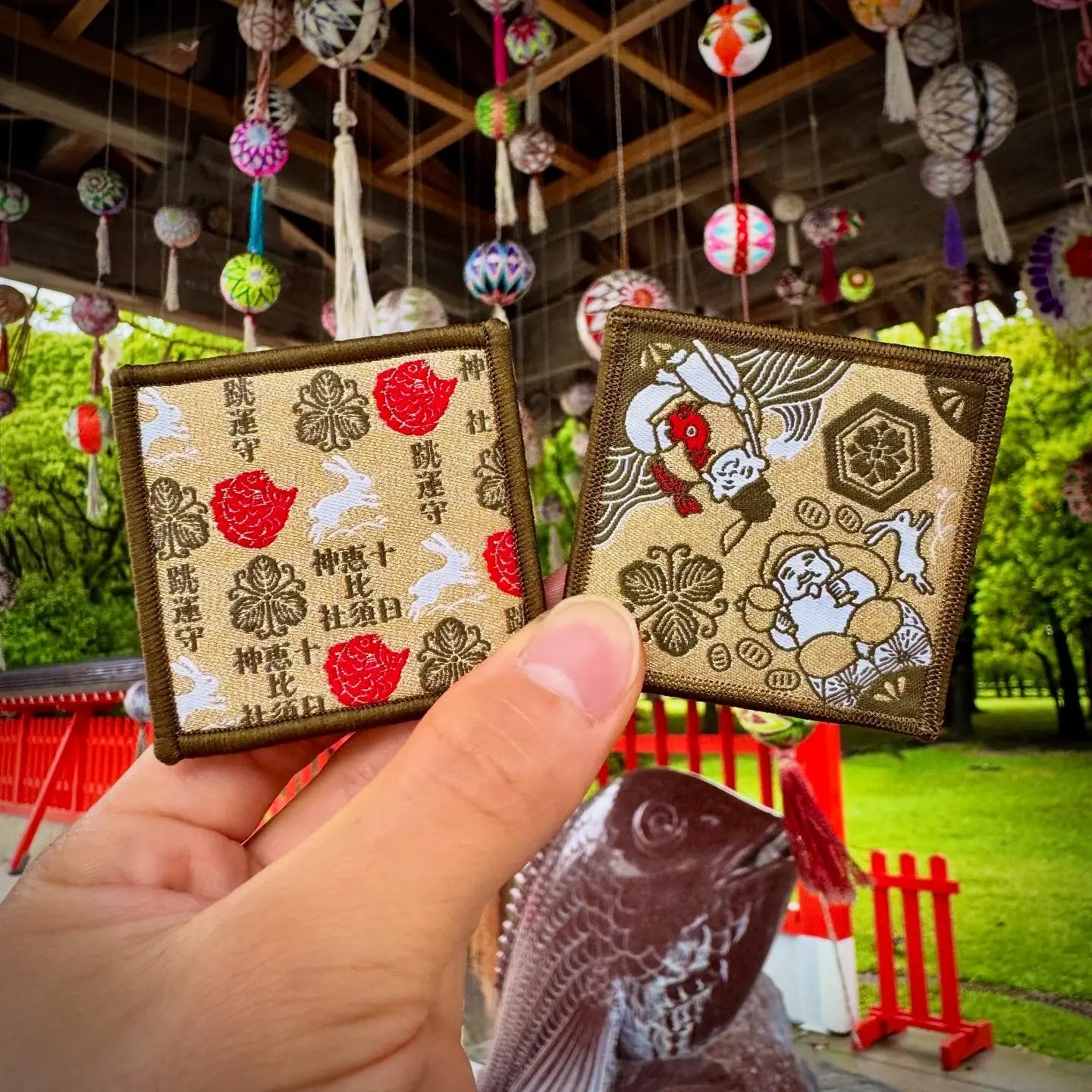
Choun Mamori carries a prayer that your efforts and the connections you make will bear fruit and lead to greater achievements. It is embroidered with Ebisu’s sea bream and Daikoku’s white rabbit. This charm is a fitting companion for anyone working toward a goal, whether in their career, studies, or sports.
4. Extra-Large Business Prosperity Charm: About 20 Times the Standard Size (Offering: 5,000 yen)
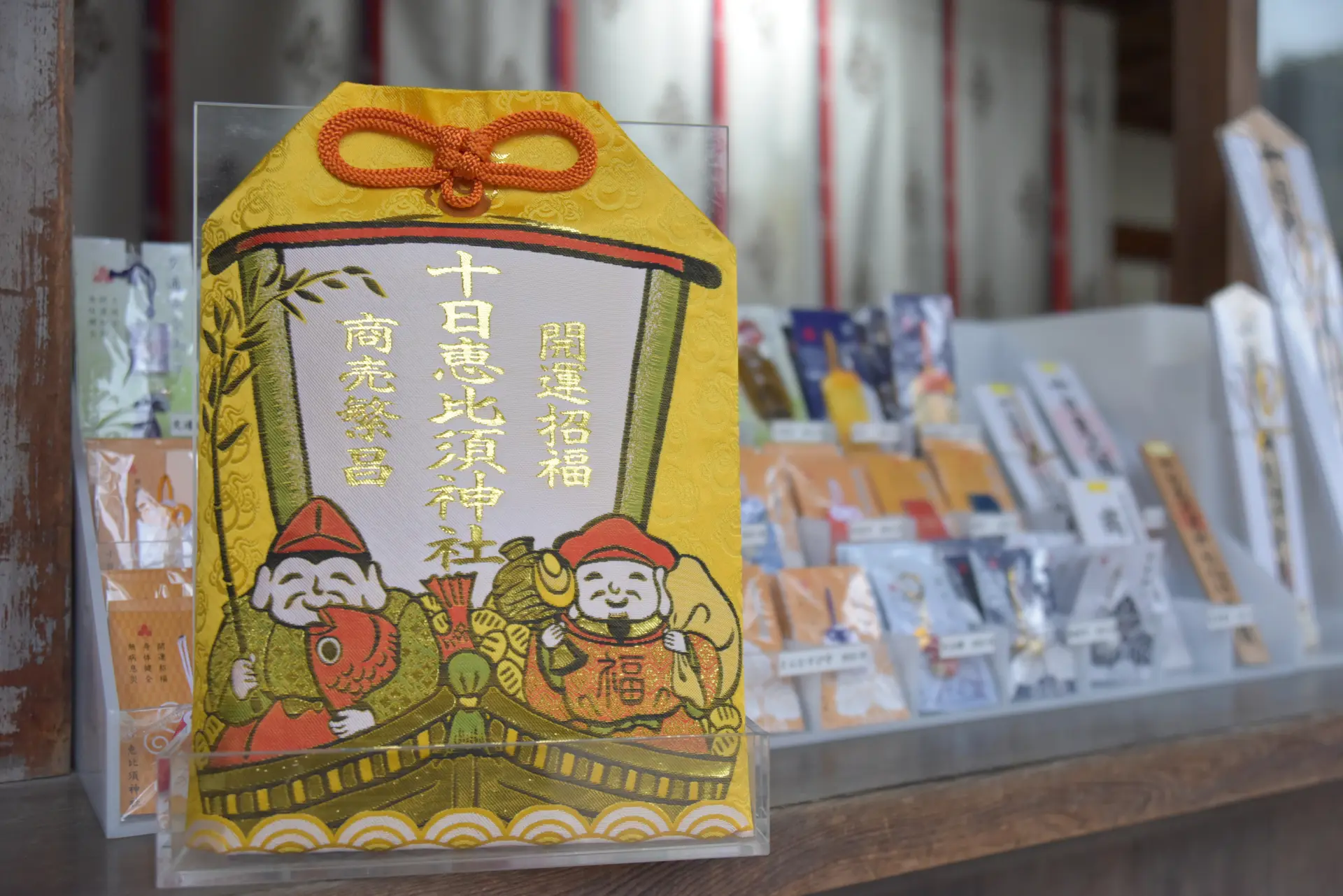
About 20 times the size of the regular Business Prosperity Charm, this oversized amulet is one of Toka Ebisu Shrine’s distinctive offerings and a popular choice among visitors. A pocket on the back can hold a household account book or other items, giving it a practical side as well.
Displayed in your room, the charm stands out for its impressive size, inspiring hopes for an equally generous measure of good fortune.
5. Large Wooden Business Prosperity Talisman: A Specially Made Offering for Success (Offering: 3,000 yen)
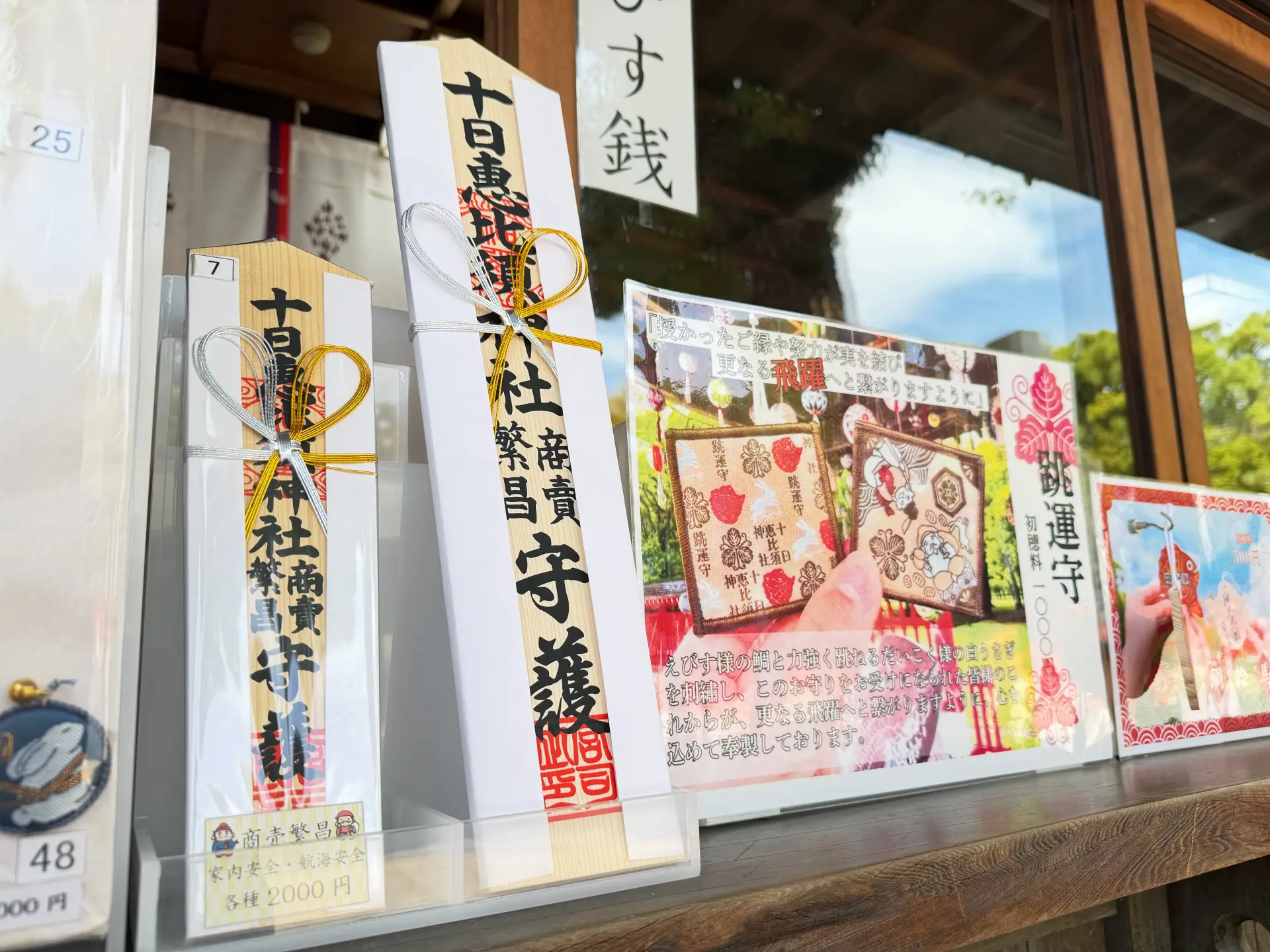
The Large Wooden Business Prosperity Talisman is offered with prayers to Ebisu for business growth and success at work. Specially made by Toka Ebisu Shrine, it stands about 50 cm tall and has an impressive presence. Ofuda are traditional Japanese sacred talismans enshrined in homes, shops, and offices with prayers for divine protection. If you do not have a kamidana, or household Shinto altar, place it respectfully in a clean location above eye level, with its front facing outward. Like the Extra-Large Business Prosperity Charm, it makes a striking impression and is also a good option if the oversized charm is no longer available.
6. Medetai Ema: Write Your Wishes on a Sea Bream-Shaped Plaque (Offering: 500 yen)
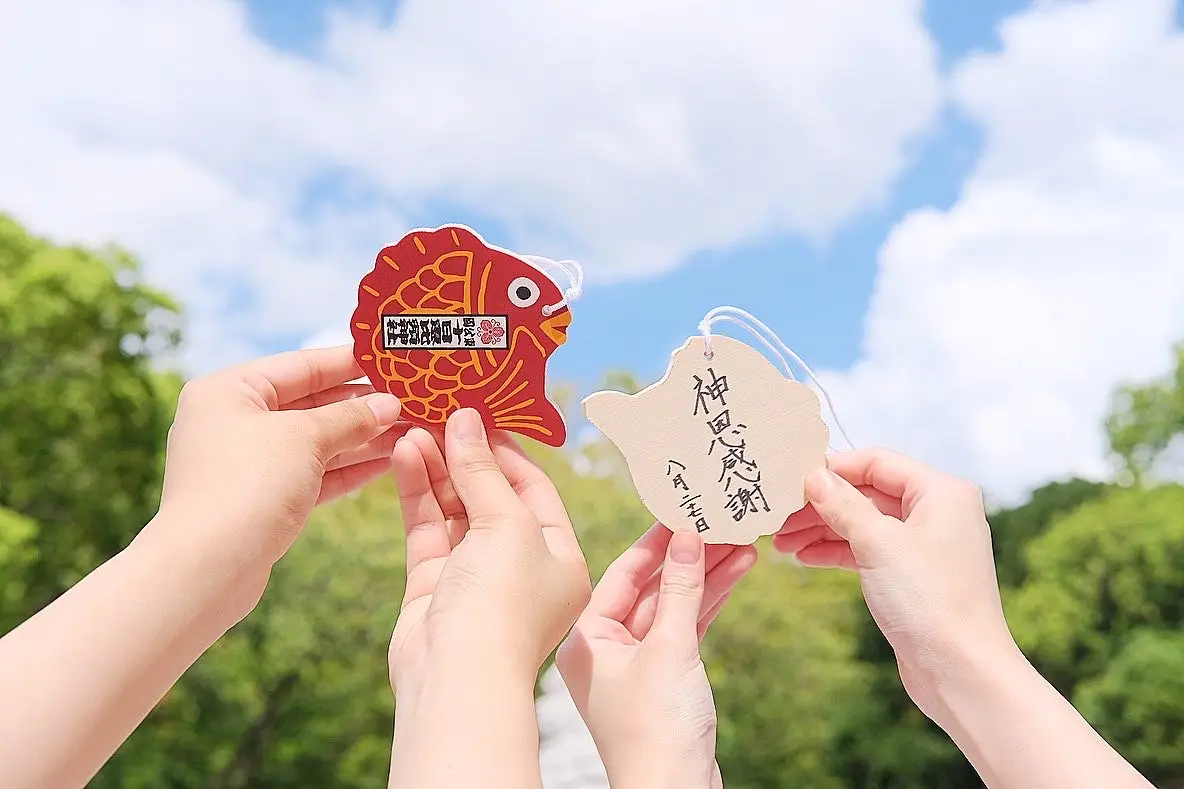
Medetai Ema are the shrine’s original wooden votive plaques, shaped like the sea bream carried by Ebisu. Their appealing fish shape and vivid colors make them distinctive. Write your wishes for business prosperity, safety at home, or good relationships, then hang the plaque on the ema rack as an offering. It is a way to share your hopes with the deities while creating a memory of your trip.
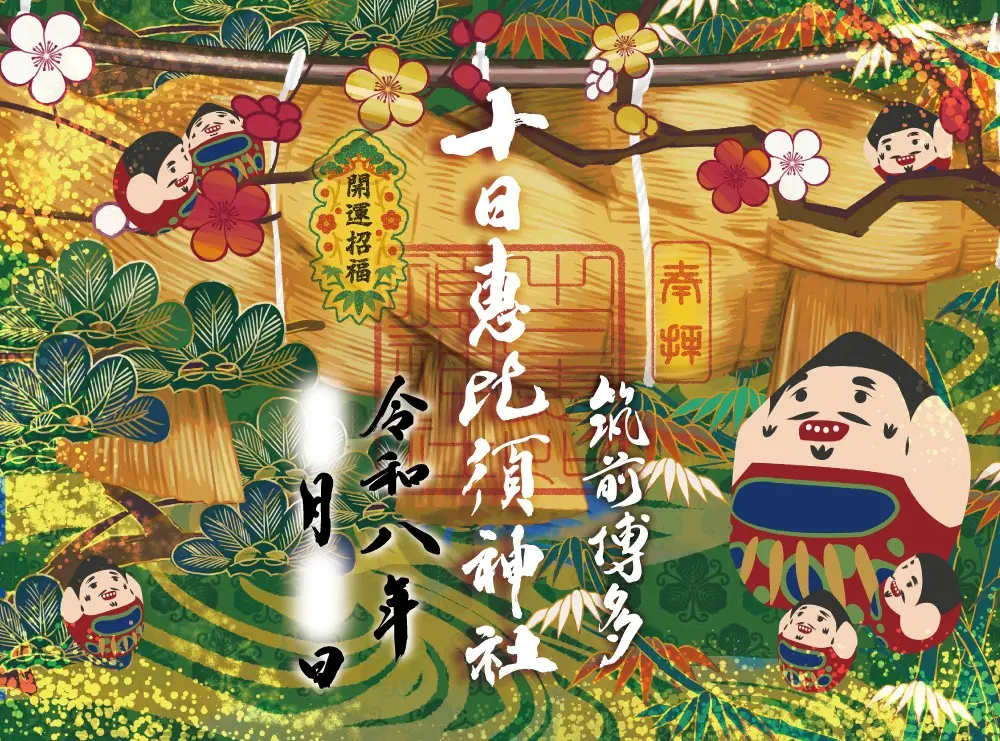
7. Monthly Limited-Edition Goshuin: A Memento of the Month You Visit (Offering: 1,000 yen)
These commemorative shrine seals feature a different design each month, making them a special reminder of your visit. Illustrations of Ebisu and Daikoku incorporate seasonal events and imagery. January, for example, traditionally brings a festive design associated with the New Year’s Grand Festival, while October features motifs inspired by the autumn harvest. Each month’s design is available only while supplies last, so consider visiting early.
Seasonal Prayers for Good Fortune: Festivals at Toka Ebisu Shrine
A variety of rituals and festivals take place throughout the year, giving Toka Ebisu Shrine a different character in each season.
The purpose of each event and the atmosphere of the grounds vary with the time of year. Learning about the wishes behind these occasions offers a deeper understanding of the faith and culture passed down at the shrine. Here, we introduce the popular New Year’s Grand Festival and two autumn events, the Autumn Grand Festival and Daikoku Festival. Keep them in mind when planning your visit.
Welcome Good Fortune in the New Year at the New Year’s Grand Festival
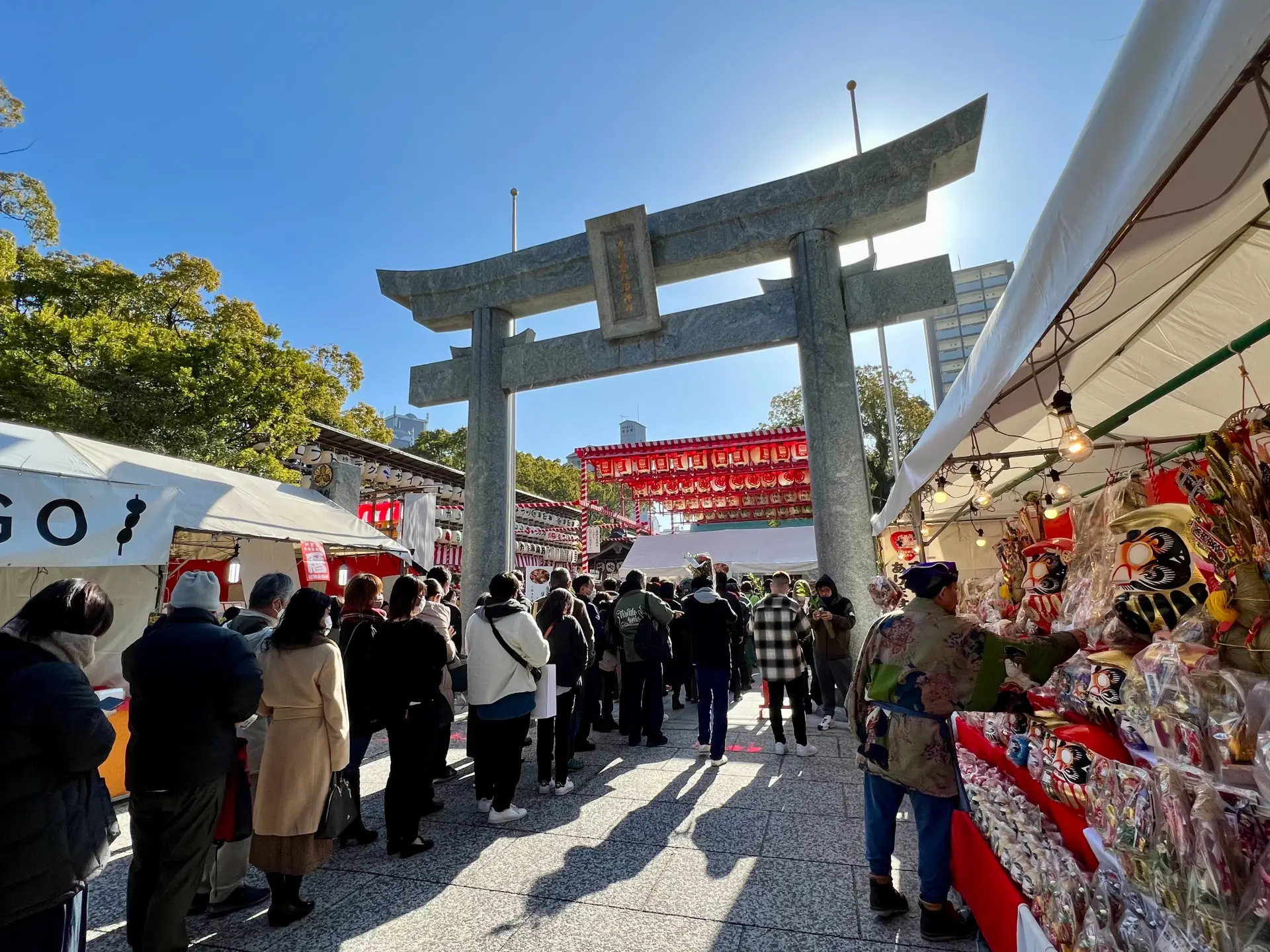
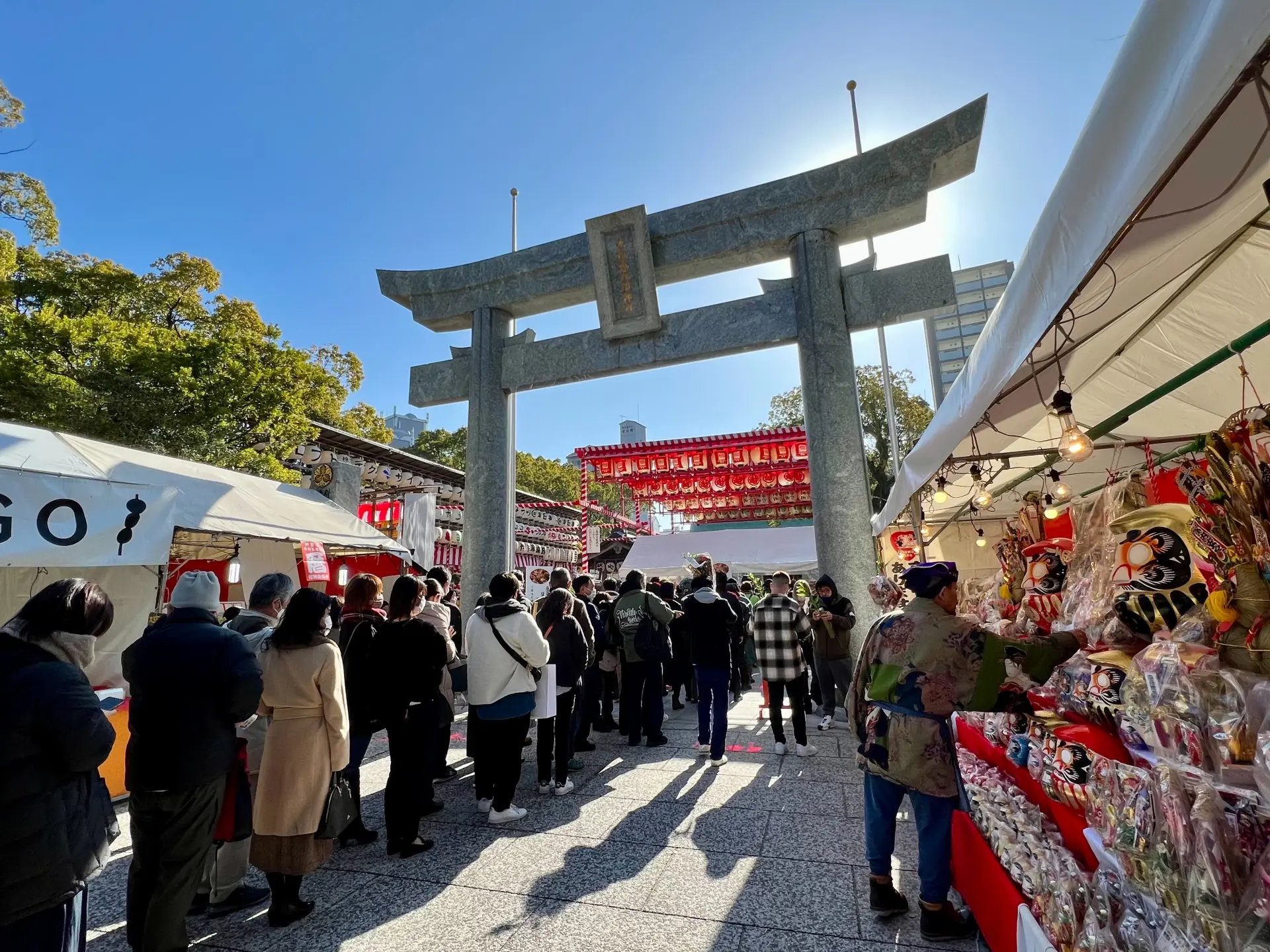
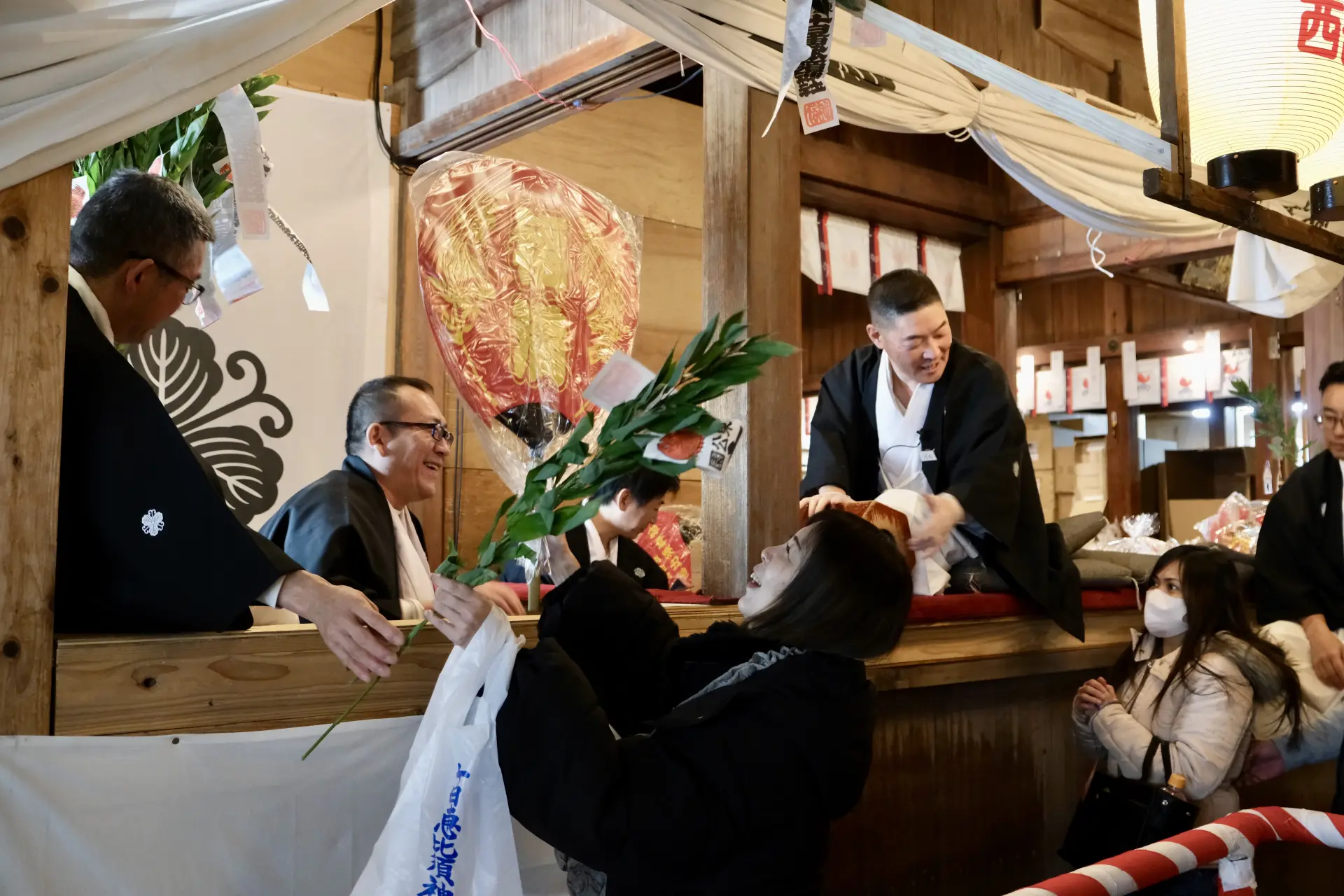
Held annually from January 8 to 11, the New Year’s Grand Festival is Toka Ebisu Shrine’s signature celebration of the new year. As the saying goes, “Hakata’s new year begins with Toka Ebisu.” Around a million people visit to pray for business success and prosperity for their families. About 400 stalls line the approaches, while long lines form inside the grounds for a lucky draw in which every ticket wins a prize. On January 9, Hakata geigi (geisha) visit the shrine in elegant kimono for Kachi-mairi, a procession on foot. Many people gather for a glimpse of them. Bringing together people hoping for good fortune, this tradition is an essential part of the new year in Hakata.
The Autumn Grand Festival: A Solemn Celebration of Traditional Rituals
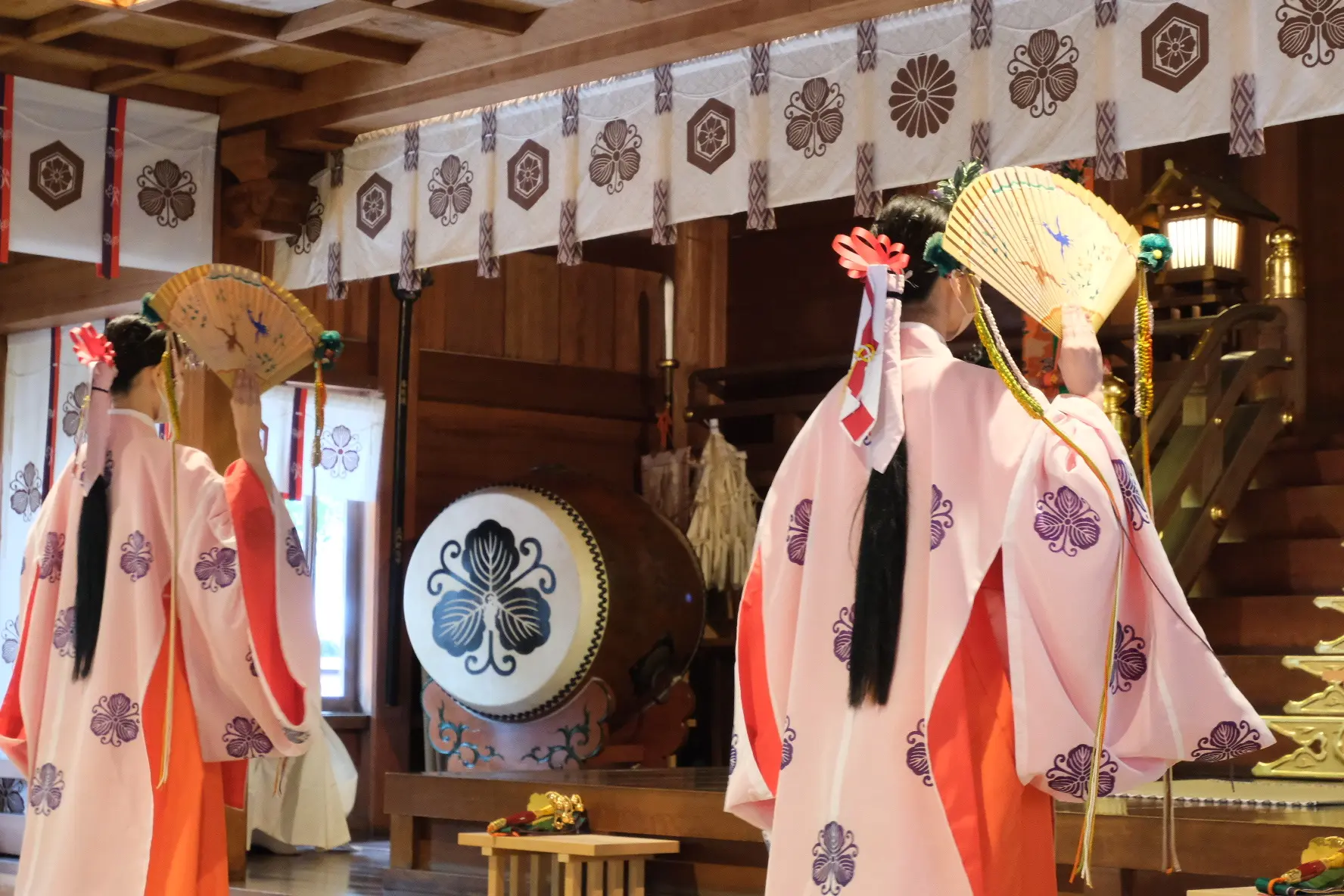
This traditional Shinto festival takes place over two days, October 9 and 10, each year. It commemorates the arrival of a portion of Daikoku’s divine spirit from Izumo Taisha Shrine in October 1952. During the festival, the doors of the main sanctuary are opened. In the solemn atmosphere, worshippers give thanks for Daikoku’s blessings and quietly pray for safety and health in daily life.
Daikoku Festival: A New Autumn Celebration for All the Senses
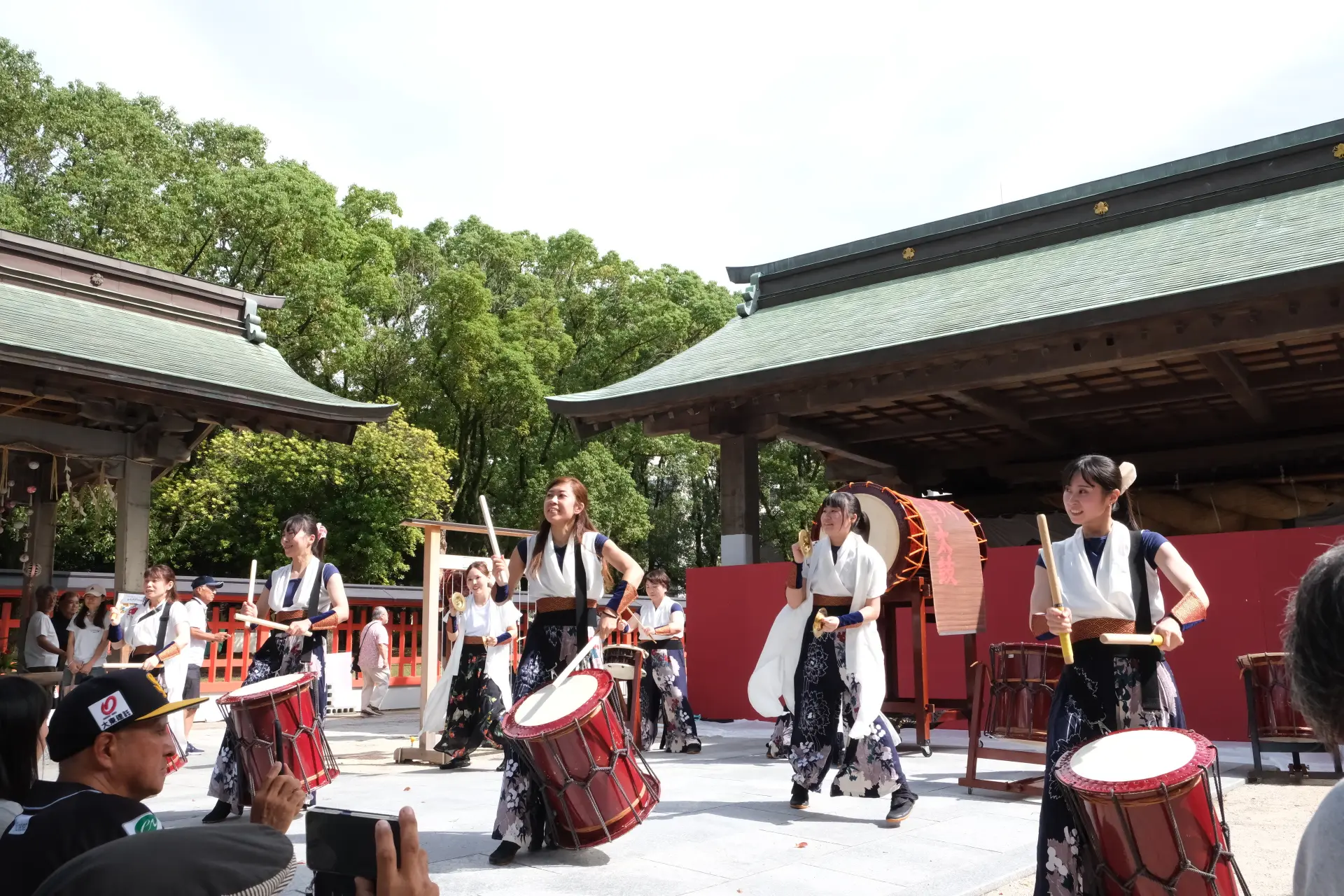
Created to coincide with the Autumn Grand Festival season, this lively cultural festival aims to help more people experience Daikoku’s blessings for bringing people together. Held mainly on weekends in early October, it fills the shrine grounds and Higashi Park with food trucks and booths serving local Fukuoka specialties. Performances offered to the deities include dynamic calligraphy, taiko drumming, and Hakata Odori dances by Hakata geigi. An area where children can try traditional games adds to the atmosphere, creating a lively autumn celebration that engages all five senses and appeals to all ages.
Access to Toka Ebisu Shrine
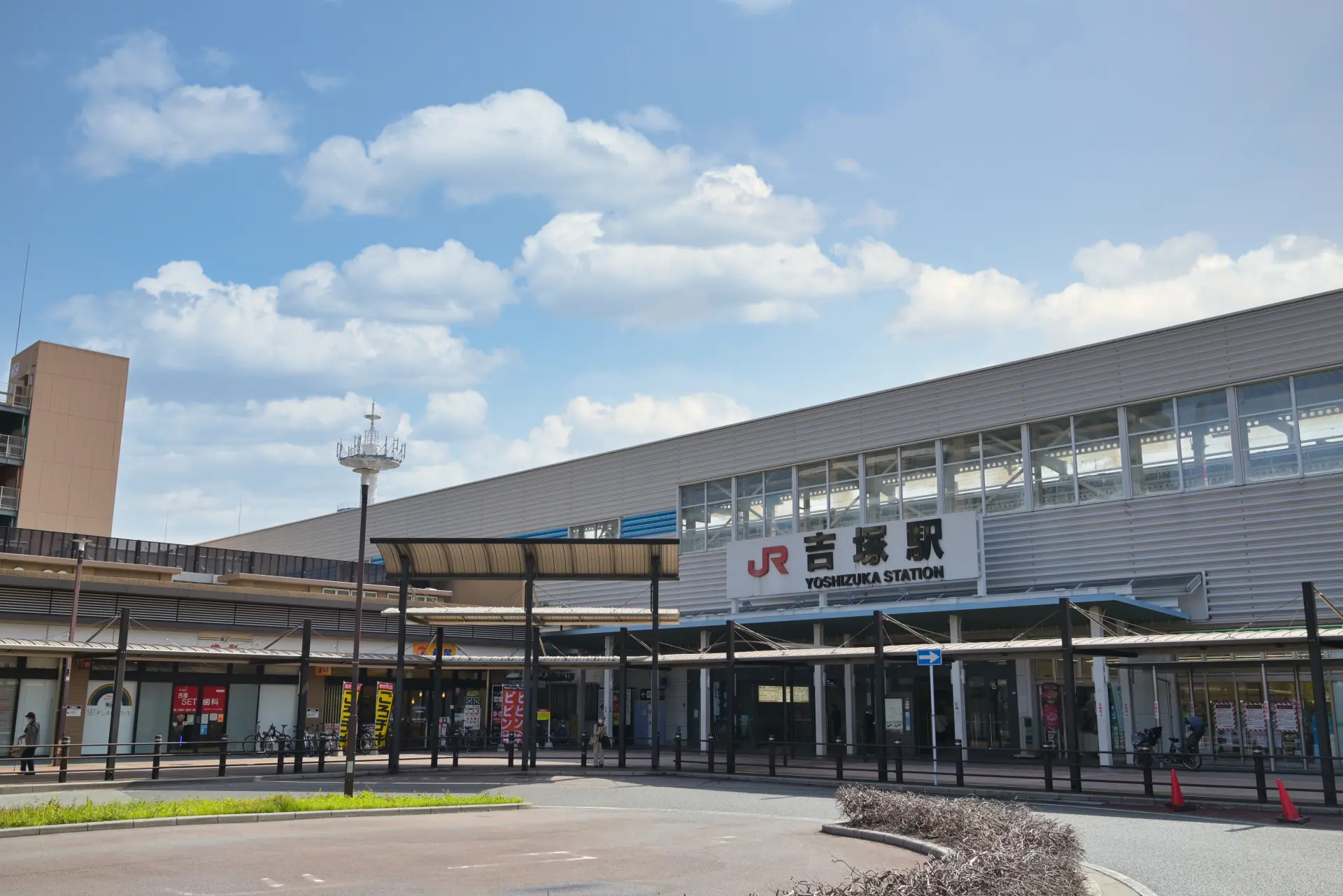
Beside leafy Higashi Park, Toka Ebisu Shrine is easy to reach from central Fukuoka. It is about a five-minute walk from either JR Yoshizuka Station or Chiyo-Kenchoguchi Subway Station, making public transportation a convenient option.
From Hakata Station
Take the JR Kagoshima Main Line to Yoshizuka Station, a journey of about three minutes, then walk about five minutes from the West Exit.
From Fukuoka Airport
Take the subway Airport Line to Nakasu-Kawabata Station, then transfer to the Hakozaki Line for Chiyo-Kenchoguchi Station. The subway journey takes about 15–20 minutes in total. From Exit 7, walk about five minutes.
Frequently Asked Questions about Toka Ebisu Shrine
Q
How much time should I allow for a visit?
Allow around 20–30 minutes to pray and explore the highlights of the grounds. The New Year’s Grand Festival draws large crowds, so allow extra time during that period.
Q
When can I receive charms and goshuin?
They are available outside festival periods as well. Limited-edition goshuin feature a different design each month and are available only while supplies last.
Q
Can I visit outside the New Year’s Grand Festival period?
Yes. You can visit outside the January 8–11 festival period as well. On ordinary days, take your time exploring features such as the sea bream-themed purification pavilion and ema rack while enjoying a leisurely shrine visit.
Summary
Toka Ebisu Shrine has been a place of worship in Hakata, Fukuoka, for more than 400 years. Enshrining Ebisu, the god of business prosperity, and Daikoku, the god of meaningful connections, it welcomes visitors who come with their hopes and wishes. Alongside its sea bream-themed purification pavilion and ema rack, the shrine offers a variety of sacred items associated with good fortune and seasonal festivals worth experiencing.
Take your time exploring the grounds, offer a prayer for good fortune, and discover the faith and culture rooted in Hakata.
Author
Writers & Editors
GOOD LUCK TRIP Editors
Sharing lesser-known ways to experience Japan with the world!