
First-Time Guide to Nakasu Yatai Street: Classic Foods, Popular Stalls, and Budget Tips
When people think of sightseeing in Fukuoka and Hakata, many picture yatai food stalls.
Among them, Nakasu Yatai Street, located in Nakasu—one of Kyushu’s leading entertainment districts—is known as one of the areas that symbolizes yatai culture.
With its distinctive atmosphere where locals and travelers mingle, it offers the feel of both a tourist spot and everyday local life.
This article provides a comprehensive guide to Nakasu Yatai Street, including an overview, average prices, classic foods, and a sample route for first-time visitors.
Read to the end to make the most of your yatai experience.
What Is Nakasu Yatai Street Like?
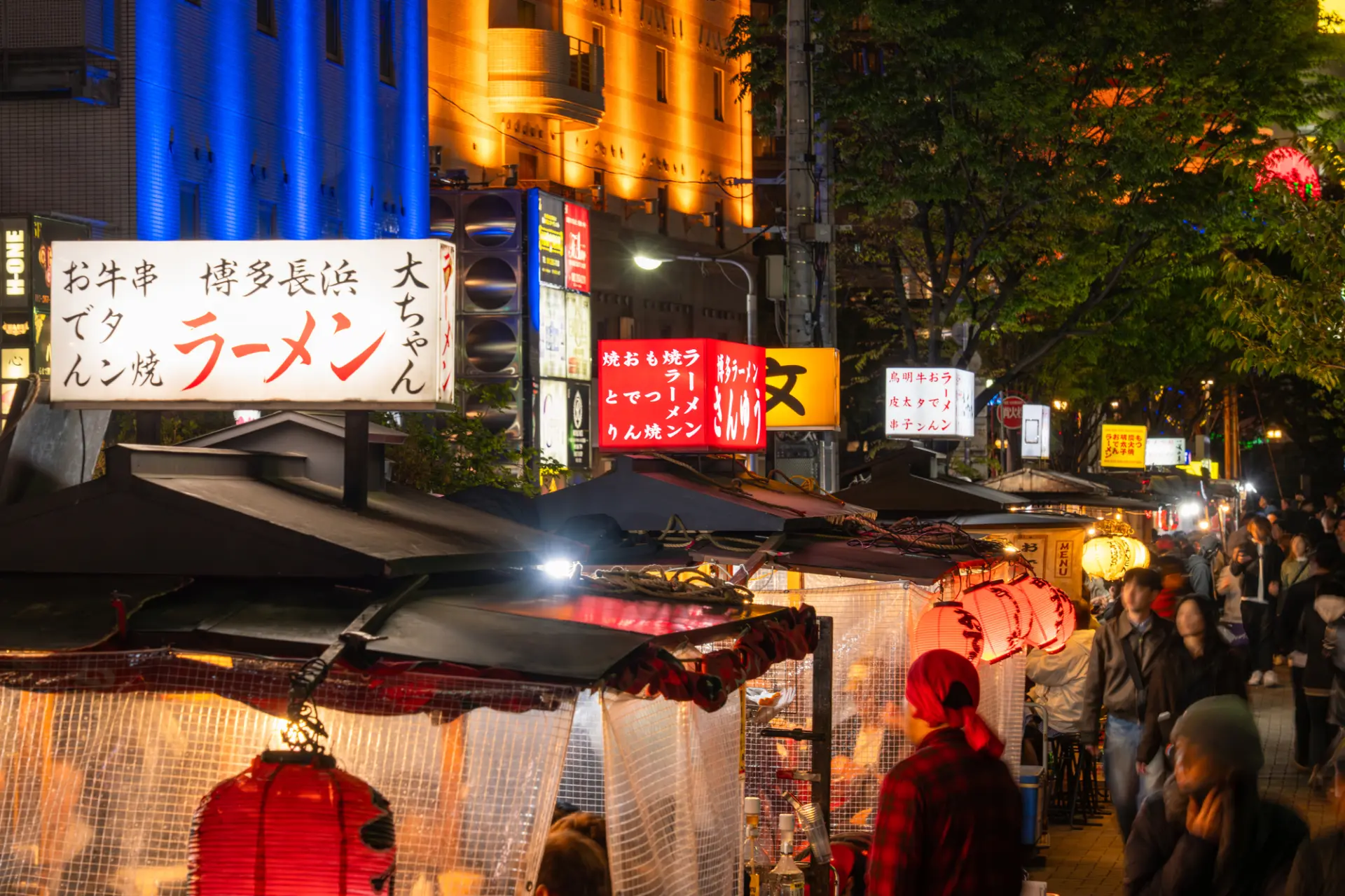
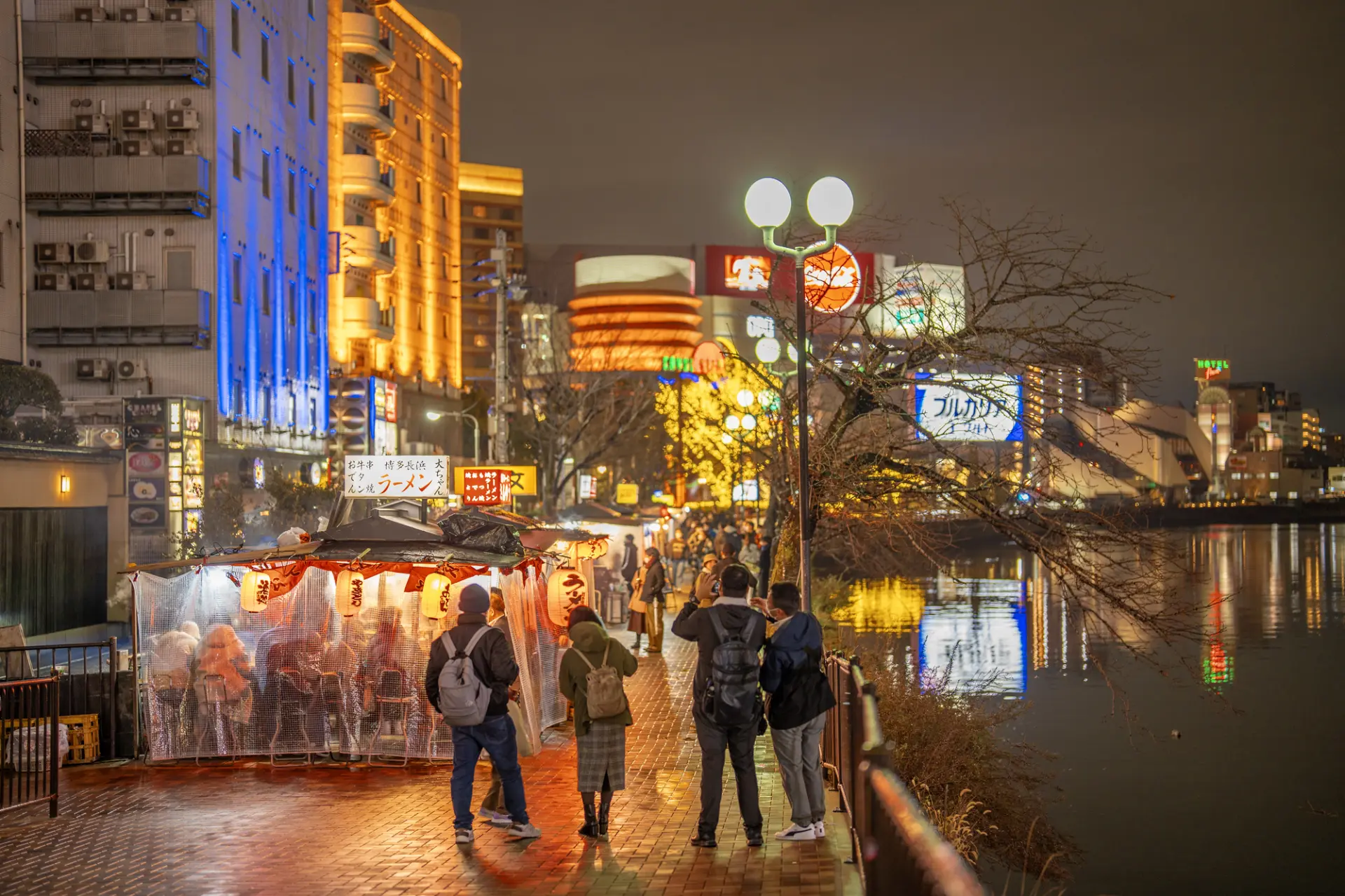
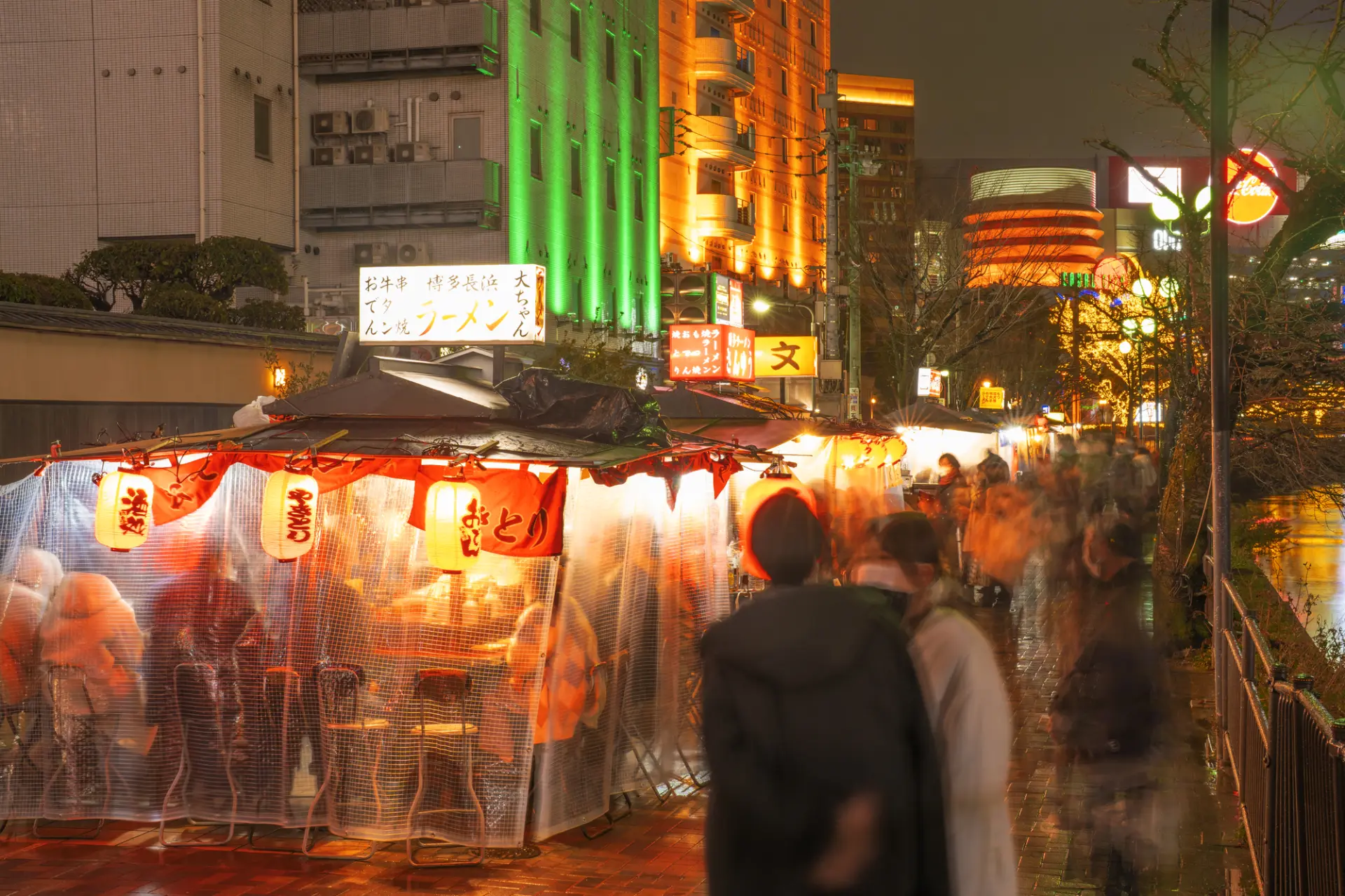
Stretching along the Naka River in Nakasu, one of Kyushu’s leading entertainment districts, Nakasu Yatai Street is a signature Hakata spot.
It is known as a representative place where Fukuoka’s postwar yatai culture lives on. As evening falls, food stalls begin lining the streets, and the area transforms into a lively nighttime district.
The night view created by neon lights reflected on the river and the glow of the yatai is also one of Nakasu Yatai Street’s highlights.
Its greatest feature is that you can experience Hakata’s food culture and interact with locals at the same time.
In addition to classic dishes such as ramen and oden, you can try creative dishes that show each stall’s personality, while conversations with stall owners and neighboring customers let you feel the area’s warm hospitality.
It is also a great place to visit at the end of your trip, as it offers a different side of Fukuoka from the daytime.
The History and Cultural Background of Nakasu Yatai Street
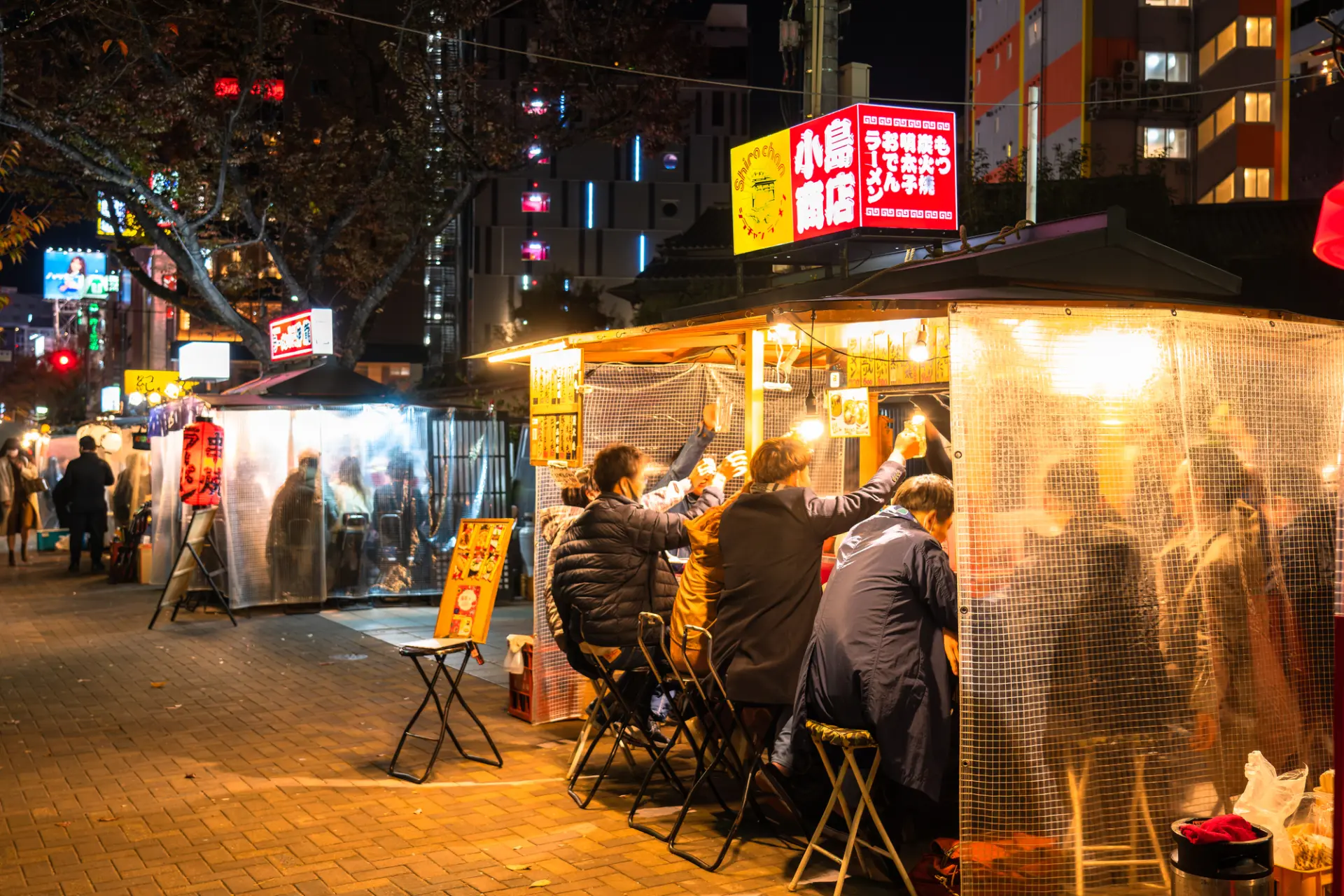
The history of Nakasu Yatai Street has developed together with Fukuoka’s yatai culture, which began in the chaotic period after World War II.
Food stalls started by war victims and repatriates seeking a way to make a living grew to more than 400 stalls across Fukuoka City during their peak in the 1960s.
Later, amid tighter regulations and urban redevelopment, they faced the threat of being completely abolished, but yatai operators continued working with the local government to preserve them.
In 2013, Fukuoka City enacted Japan’s first “Fukuoka City Yatai Basic Ordinance,” and in 2017, a public application system for new entrants was launched, further advancing the protection of this culture.
Although the number of stalls has decreased today, they are regarded as a tourism resource that creates Fukuoka’s lively atmosphere and opportunities for interaction.
How It Differs from Tenjin Yatai Street and Nagahama Yatai Street
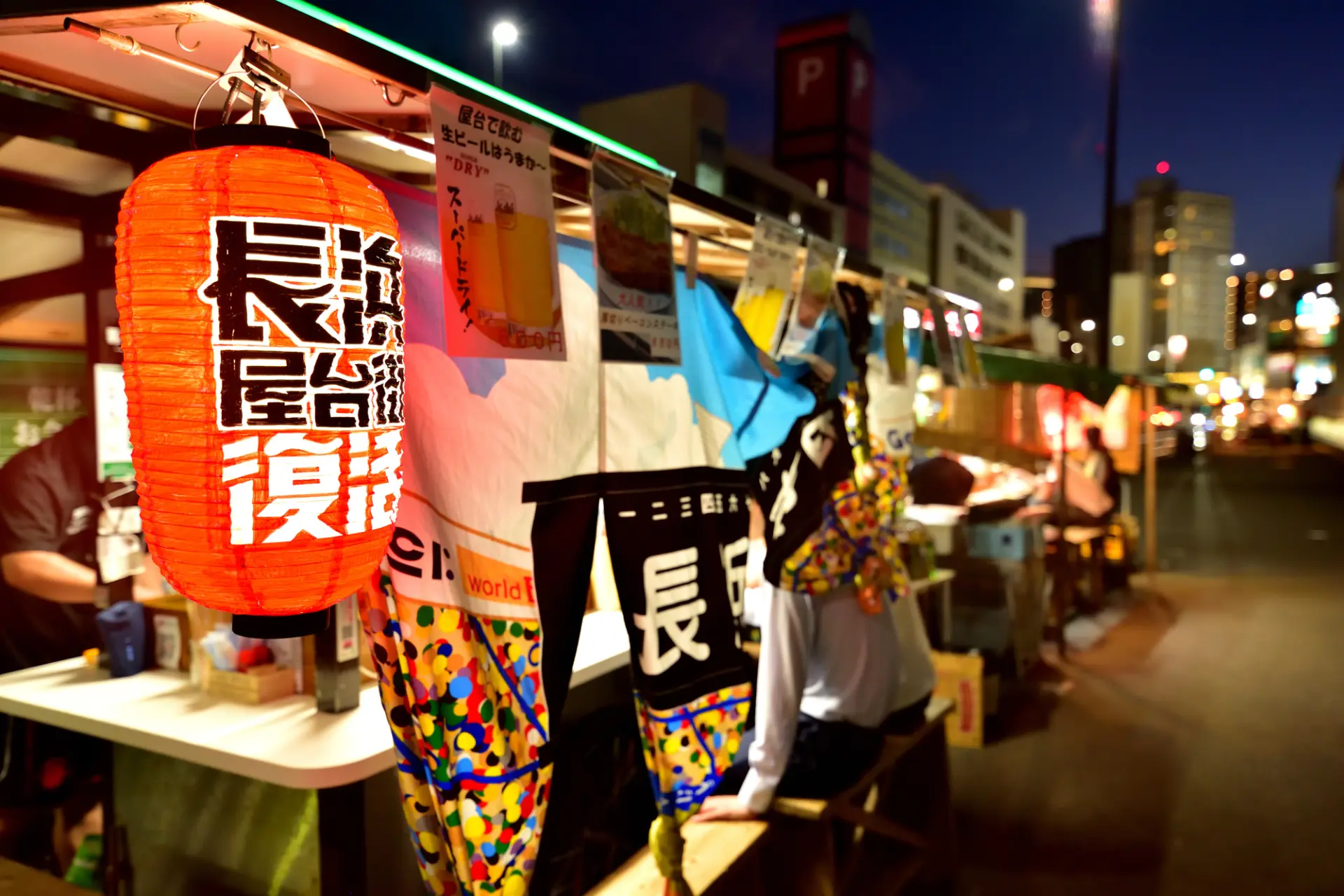
Fukuoka’s yatai are mainly concentrated in three areas: Nakasu, Tenjin, and Nagahama, each with its own atmosphere and features.
Use the comparison table below as a reference and choose the area that best fits your purpose and preferences.
If you have time, visiting multiple yatai areas will let you experience the culture more deeply.
| Location | Along the Naka River in Nakasu, Hakata Ward | Around Tenjin, Fukuoka City’s central downtown area | Nagahama area, Chuo Ward, Fukuoka City |
|---|---|---|---|
| Atmosphere | A lively, energetic atmosphere under bright neon lights | A stylish, grown-up atmosphere where locals and tourists mingle | A local atmosphere where it is easy to feel traditional yatai culture |
| Appeal | You can fully enjoy a night scene that feels distinctly Fukuoka | Easy to access, with meals you can enjoy while taking in Tenjin’s cityscape | You can experience the food culture of an area known for Nagahama ramen |
| Recommended for |
・First-time visitors to Fukuoka ・People who want to feel like they are sightseeing |
・People who want to try a variety of dishes ・People planning to drink alone |
・People with a strong interest in food ・People who want to experience local yatai culture |
How to Get to Nakasu Yatai Street
The nearest stations to Nakasu Yatai Street are Nakasu-Kawabata Station on the Fukuoka City Subway Airport Line and Kushida Shrine Station on the Nanakuma Line.
From either station, it takes about 5 to 10 minutes on foot.
Below are routes starting from Hakata Station and Fukuoka Airport, the main gateways for sightseeing in Fukuoka.
It is also about a 15-minute walk from Tenjin Station, so you can visit after sightseeing or shopping.
| Starting point | Route | Travel time |
|---|---|---|
| Hakata Station | Take the Fukuoka City Subway Airport Line from Hakata Station, get off at Nakasu-Kawabata Station, and arrive | About 10 minutes |
| Fukuoka Airport | Take the Fukuoka City Subway Airport Line from Fukuoka Airport Station, get off at Nakasu-Kawabata Station, and arrive | About 20 minutes |
Nakasu Yatai Street Hours and Regular Closures
Many yatai are open from around 6:00 PM to around 2:00 AM, allowing you to enjoy Fukuoka’s night at a relaxed pace.
Regular closing days and hours vary by stall, so it is best to check social media or official websites in advance.
Because they operate outdoors, stalls may close temporarily in bad weather such as heavy rain or strong winds.
Also, popular stalls tend to get crowded from around 7:00 PM to 10:00 PM, when more tourists are out.
If you want to shorten your wait, visit relatively soon after opening, around 6:00 PM.
Nakasu Yatai Street Pricing and Average Budget
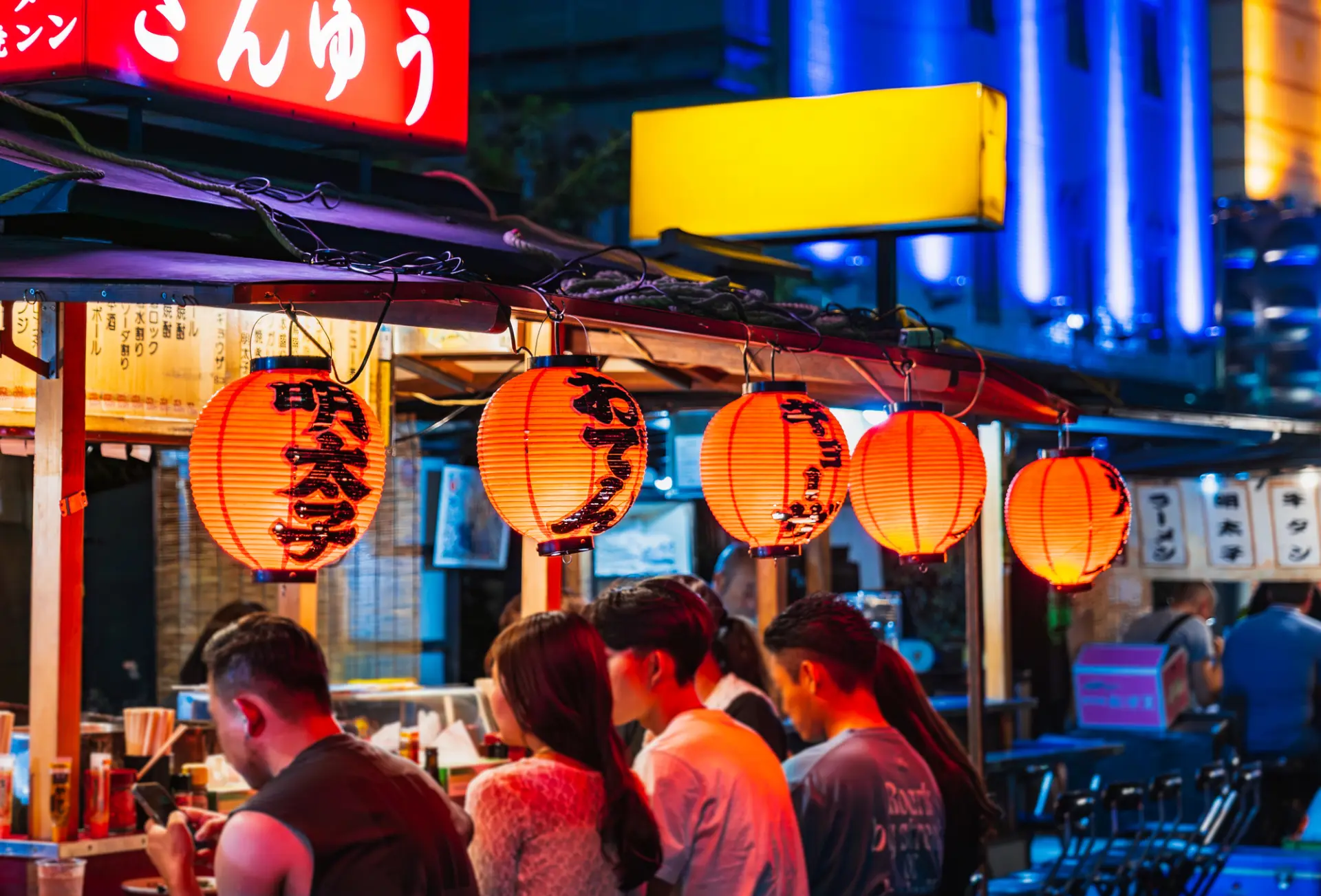
There is no admission fee for Nakasu Yatai Street; you generally pay for the food and drinks you order, plus an appetizer or seating charge at some stalls.
Thanks to Fukuoka City’s rules, more stalls now display prices, making them easier for first-time tourists to use.
Many stalls are transparent about pricing, and there is little need to worry about being overcharged. If prices are not listed on the menu, simply ask before ordering.
A budget of about ¥2,000 to ¥3,000 per stall is a good guideline. If you plan to visit multiple yatai, expect to spend around ¥5,000 in total.
Cashless payments have become more common in recent years, but some stalls still do not accept them, so it is safest to bring cash.
Essential Tips Before Visiting Nakasu Yatai Street for the First Time
Here are some things to know before visiting Nakasu Yatai Street.
Yatai have manners and points of caution so that everyone can enjoy their time, and consideration for those around you is important.
Because yatai differ from ordinary restaurants in some ways, keep these points in mind before you go.
Basic Manners to Know
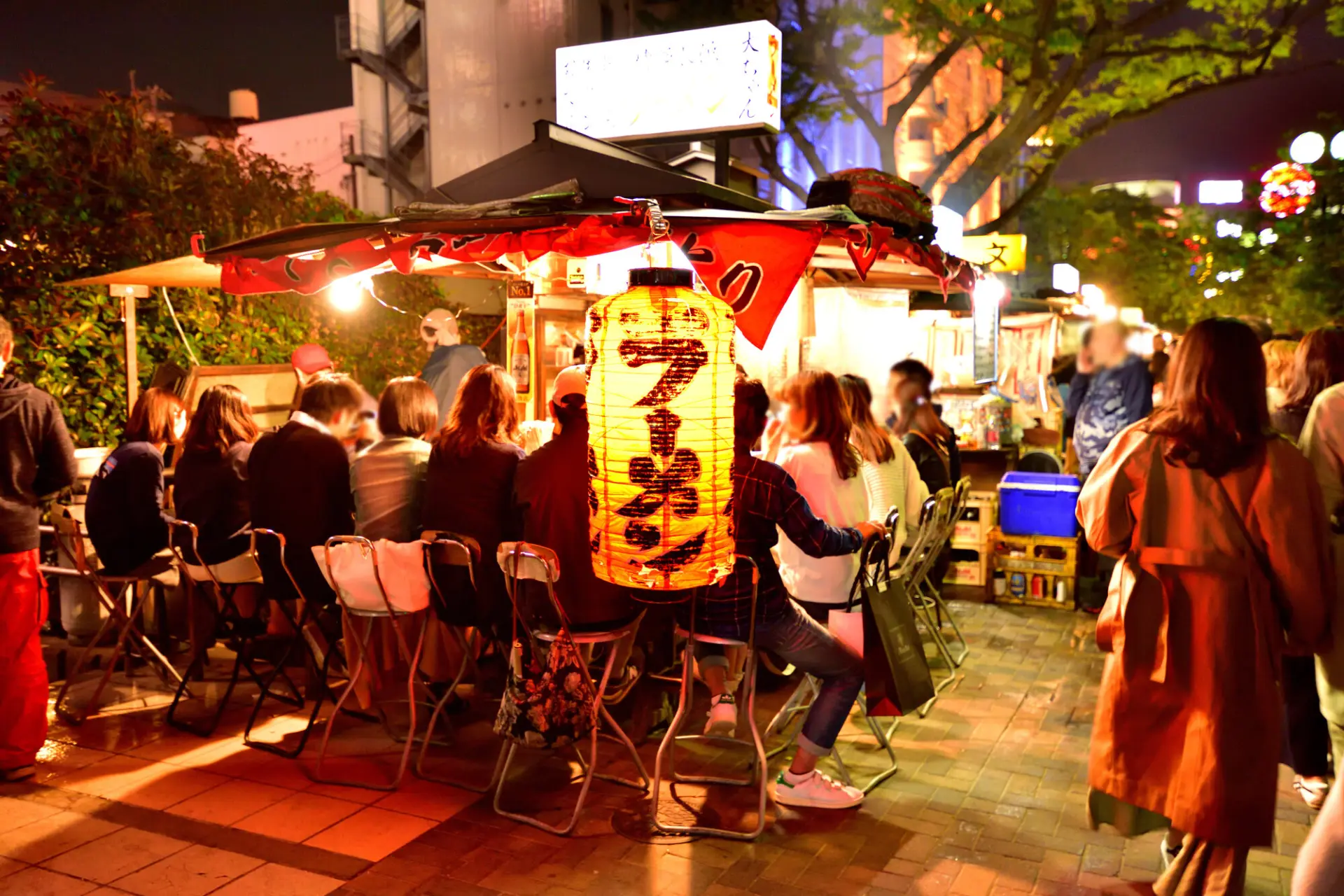
Yatai have limited seating, so it is easier to visit if you leave large luggage such as suitcases at your hotel or in a coin locker and come light.
When entering, the basic manner is to speak to the owner first and follow their guidance.
Seating procedures vary by stall, so even if you see an open seat, it is best to check first.
Note that bringing in outside food or drinks and standing to drink outside the stall are generally prohibited.
Also, be sure to remember the rules of ordering at least one item per person and not staying too long.
Shared seating is common and the distance between people is close, so enjoy yourself while being considerate of those around you.
Tips for Getting the Most Out of Your Visit
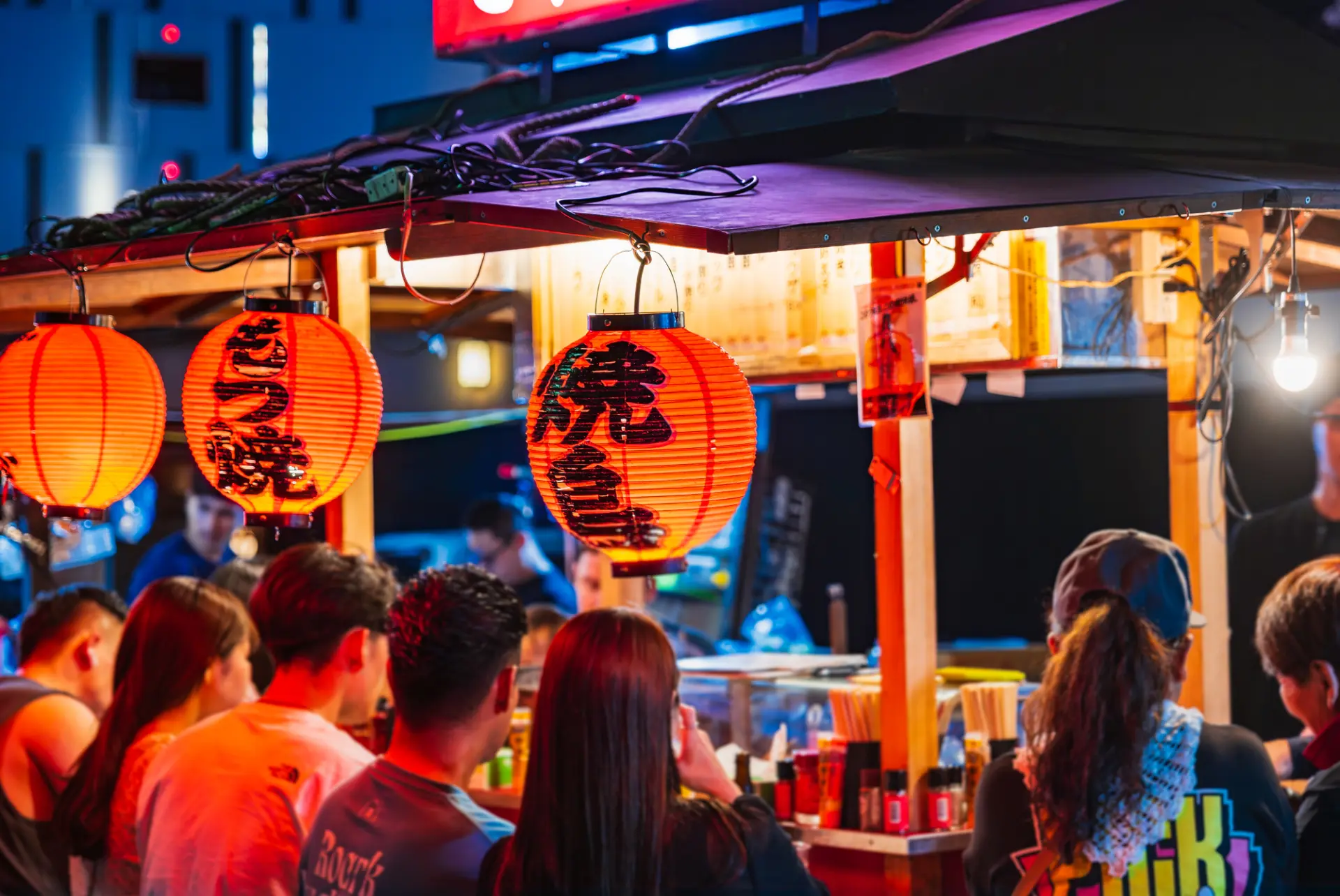
On Nakasu Yatai Street, popular stalls fill up early, so visiting around 6:00 PM to 7:00 PM, when it is relatively less crowded, is recommended.
You can avoid crowds, have easier conversations with the owner and other customers, and experience the atmosphere that is unique to yatai.
Another classic way to enjoy the area is to visit several yatai in a “hopping” style. Ordering lightly at each stall often makes the experience more satisfying.
Since you can try local specialties and many other dishes, it can also be fun to choose by instinct while checking out each stall’s personality.
Recommended Seasons to Visit Nakasu Yatai Street
Nakasu Yatai Street has different charms in each season, making it enjoyable whenever you visit.
Among them, spring and fall are especially recommended because the weather is mild and comfortable.
In spring, the season overlaps with cherry blossoms, so you can enjoy city sightseeing and hanami during the day, then taste Hakata food at the yatai area at night.
In fall, the night breeze along the Naka River feels pleasant, and the lights of the yatai stand out even more.
Combined with the season of good appetite, the food may taste even better.
3 Classic Foods to Try on Nakasu Yatai Street
Nakasu Yatai Street offers many foods, but first-time visitors may wonder what to eat.
Here are three classic items you should be sure to try.
Each one lets you easily feel the yatai culture and is popular both as a meal and as something to enjoy with drinks.
1. Tonkotsu Ramen and Yaki Ramen
Among the many yatai foods, Hakata specialties tonkotsu ramen and yaki ramen are not to be missed.
Both stand out for the live atmosphere and aroma unique to yatai, offering a different appeal from specialty restaurants that draws many people in.
Tonkotsu ramen features a cloudy white soup packed with umami and thin, straight noodles with a firm bite.
It is not as heavy as it looks, with a clean finish, and is loved as a final bowl at the end of the night.
The chance to experience Hakata’s proud kaedama culture—ordering extra noodles—is another reason to recommend it.
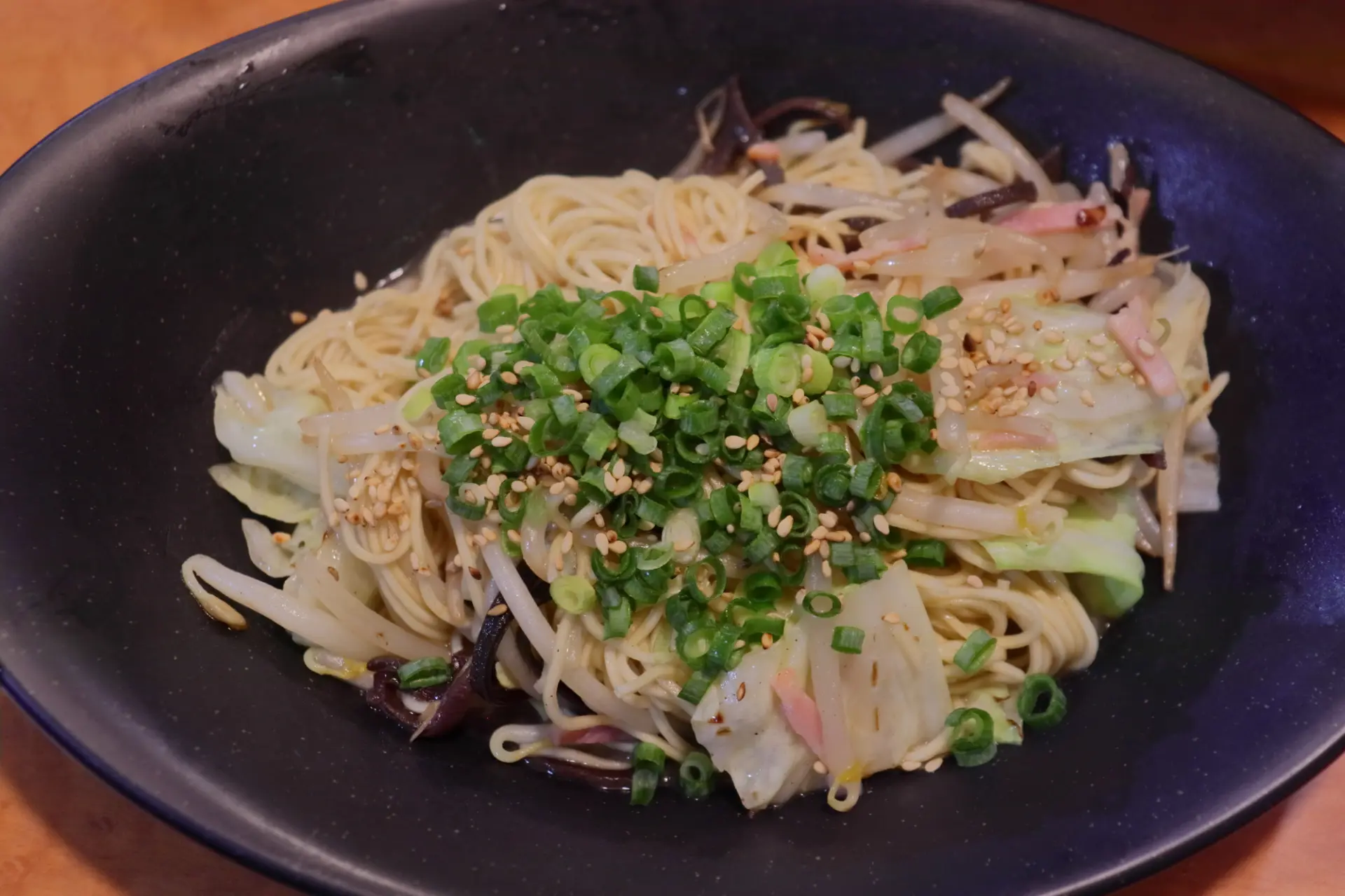
Meanwhile, yaki ramen, which originated in Hakata, is a Fukuoka soul food made by stir-frying noodles on a griddle and mixing them with tonkotsu soup or sauce.
You can savor its distinctive flavor, somewhere between ramen and yakisoba.
Today, many stalls add their own twists, making it a popular menu item that shows each stall’s personality.
2. Oden
Simple yet full of depth, oden is a dish that conveys the warmth of yatai culture.
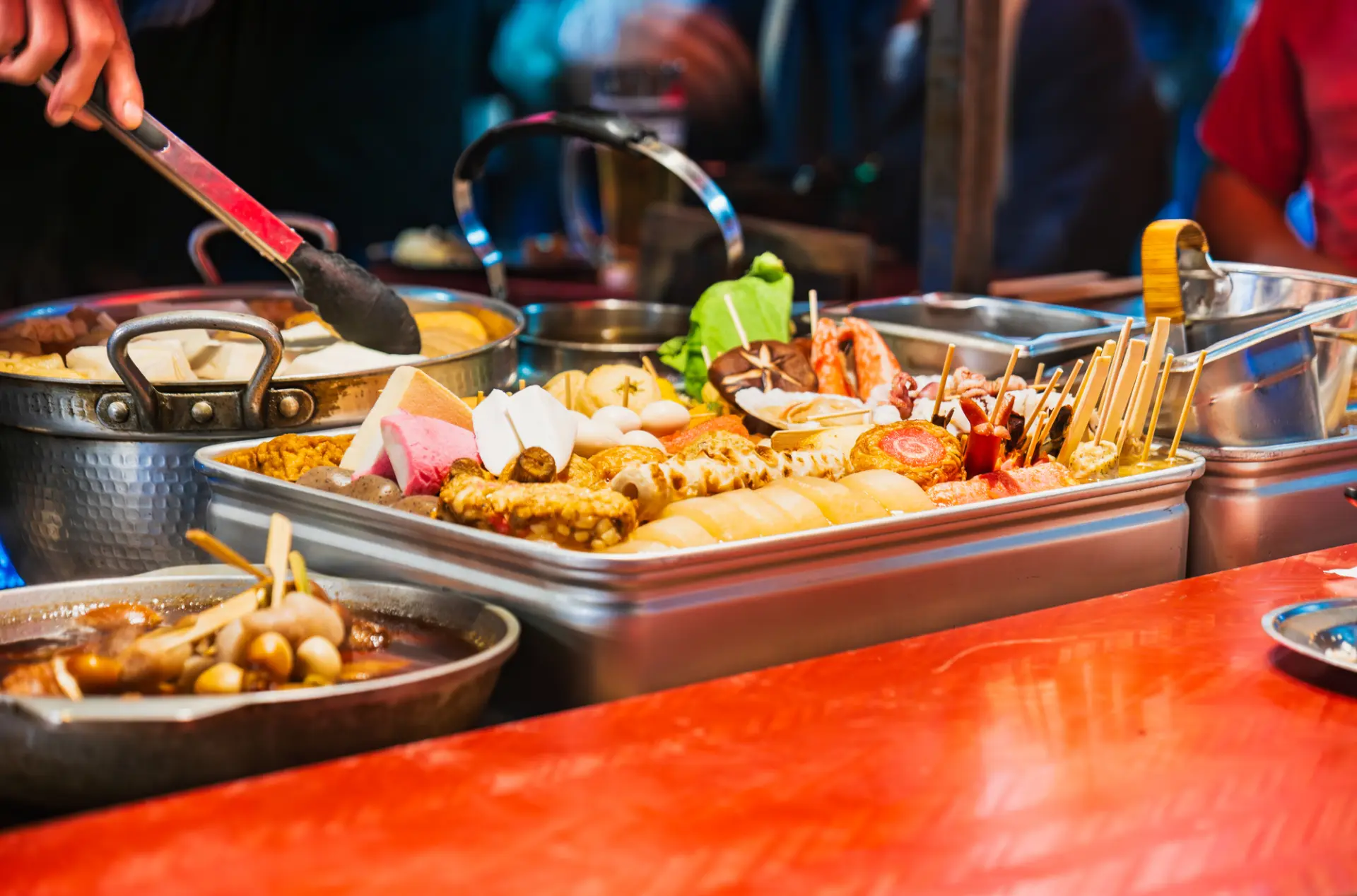
You can savor ingredients slowly simmered in broth based on kombu and bonito, with each stall adding its own touches.
In addition to classics such as daikon radish, eggs, konjac, and beef tendon, you may also find Kyushu-style ingredients such as goboten fish cake and gyoza rolls.
Many stalls serve it with yuzu kosho as a condiment, adding a refreshing aroma and spicy accent.
It goes well not only in the cold season but also on spring and fall nights with a pleasant breeze, and the sight of steam rising over the yatai counter has become a seasonal scene of Nakasu.
It also pairs easily with main dishes such as tonkotsu ramen and teppanyaki, making it perfect for those who want to enjoy a light drink.
3. Yakitori
Yakitori is a dish that lets you feel the appeal of yatai culture in a simple way.
When you pass near a stall, the heat of the yatai, the night breeze of Nakasu, and the fragrant aroma of charcoal-grilled skewers come together, likely making you want to stop.
A major appeal is the live feeling of ordering one skewer at a time and tasting freshly grilled skewers on the spot.
It goes perfectly with alcohol and can be enjoyed in many ways, from a light snack to a more filling meal.
Because you are close to the owner, it is also easy to ask about grilling preferences or recommendations.
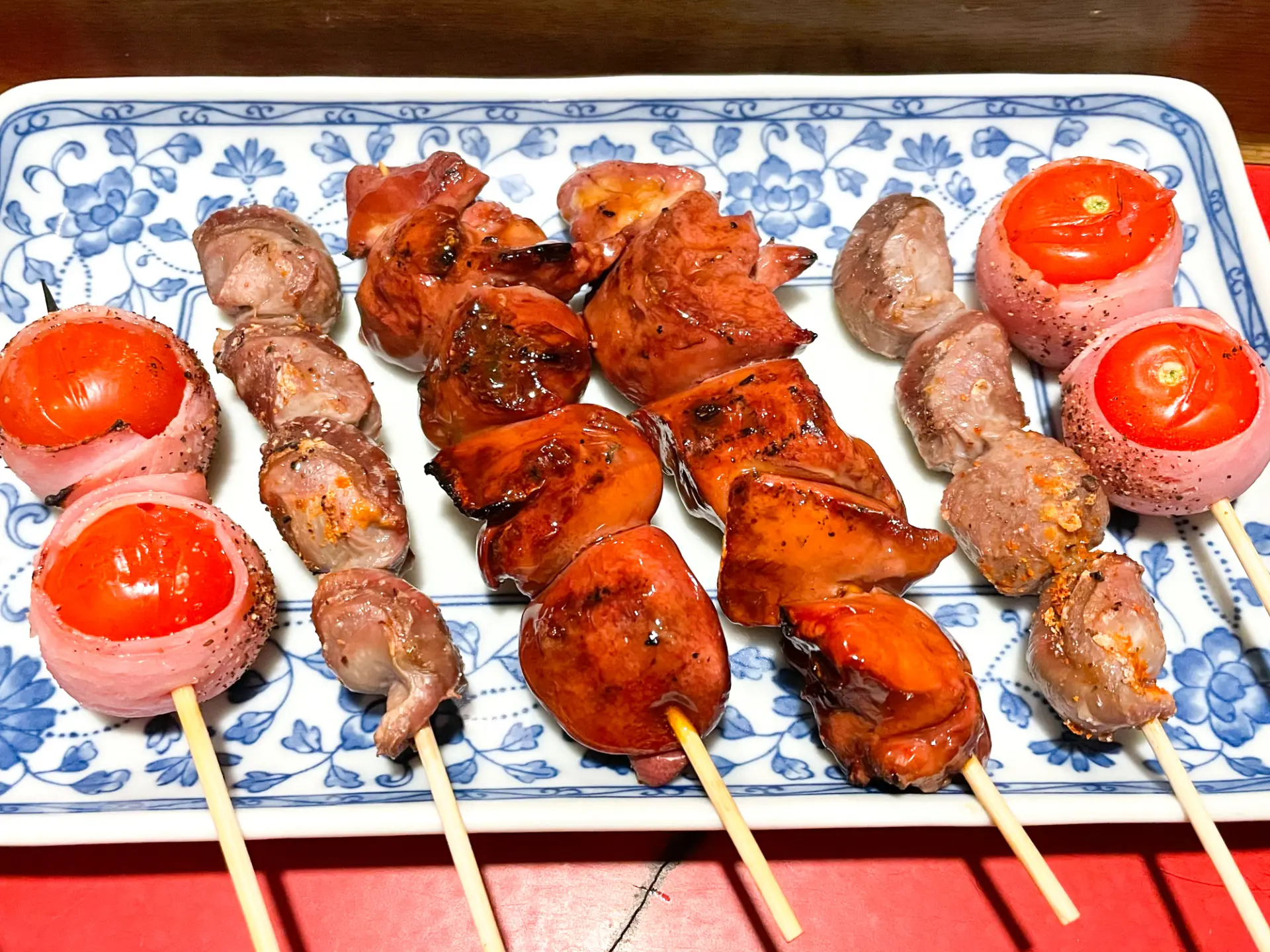
Common classics include thigh, negima, chicken skin, and gizzard, but in Fukuoka, pork belly is a popular menu item.
It is crisp and fragrant on the outside, juicy inside, and full of rich flavor from the ingredients, so be sure to order it.
6 Popular Nakasu Yatai Street Stalls by Purpose
Next, here are 6 popular stalls on Nakasu Yatai Street.
To help you choose based on your tastes or mood, we have picked yatai with different features by purpose.
All of them offer distinctive dishes, and their close distance to the owner and other customers lets you experience the lively atmosphere unique to yatai.
If you are unsure where to go, consider visiting one of these stalls.
1. Easy for First-Timers to Enter: Takechan fr Tsukasa
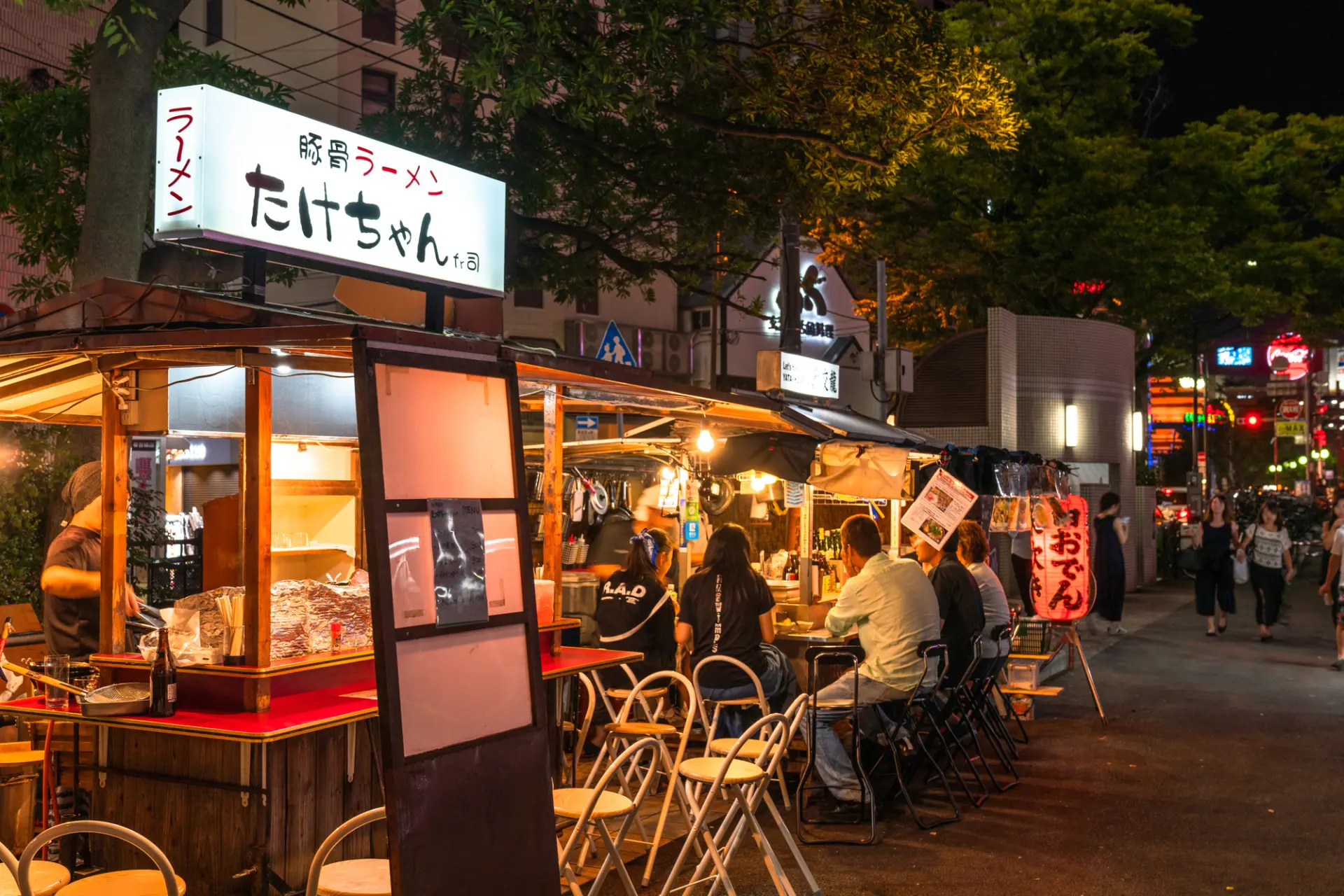
Located in Seiryu Park, Takechan fr Tsukasa is a popular stall based on the concept of a “low-threshold yatai for beginners.”
Although it is in a lively area, it is highly rated for the friendly owner’s service and carefully prepared dishes.
In addition to its welcoming atmosphere, it offers clear pricing, no seating charge or appetizer charge, cashless payment options, and is child-friendly, making it easy for first-time yatai visitors to enter with confidence.
The menu has a wide lineup, but the recommended items are Hakata tonkotsu ramen, yaki ramen, and tonkotsu dashimaki mentaiko omelet.
All are excellent dishes that let you enjoy the flavors of Hakata.
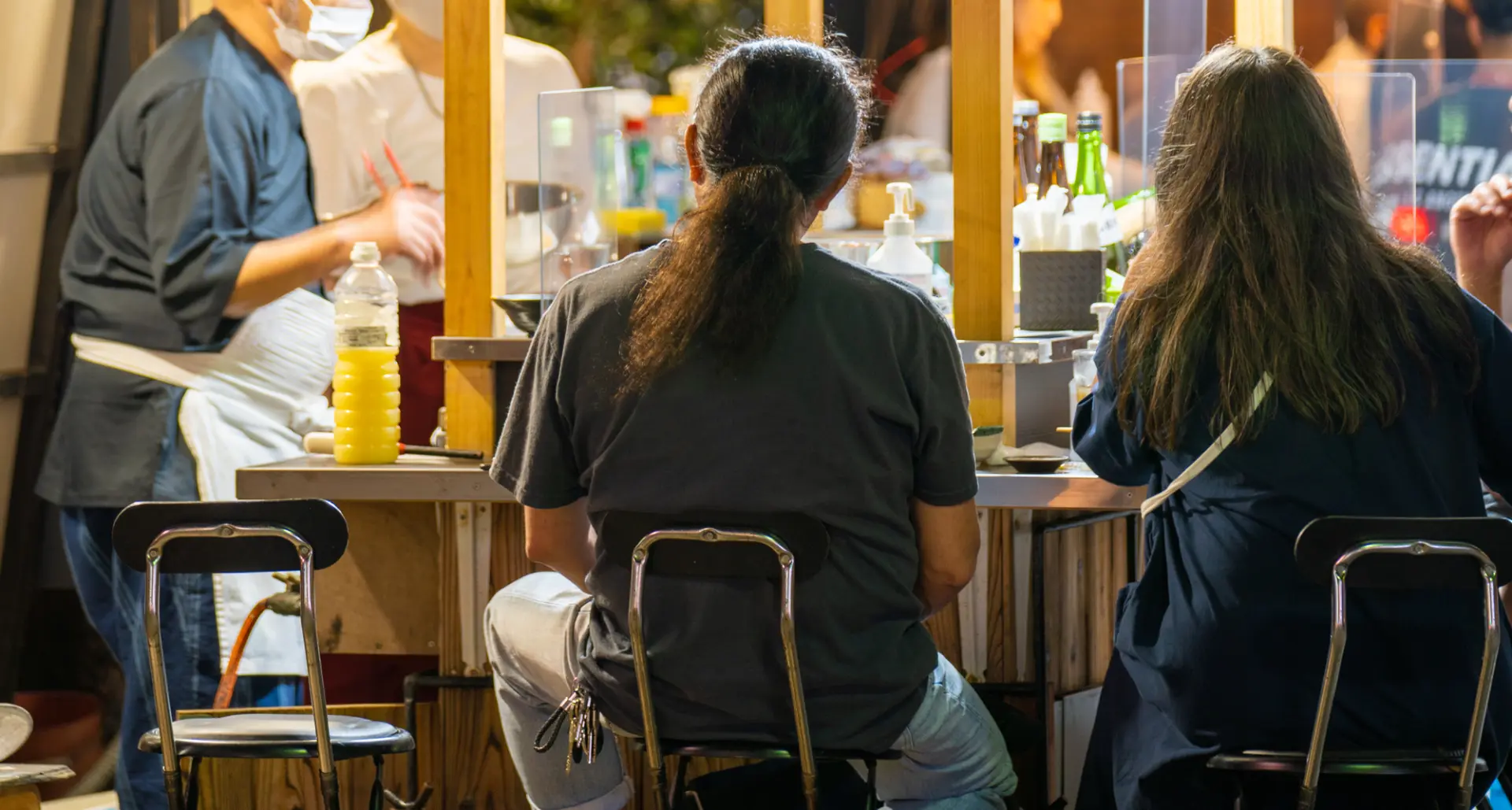
2. A Comfortable Atmosphere: KENZO
KENZO is located in Nakasu 5-chome, with the Hakata River flowing right nearby.
It is a well-known stall loved by both tourists and locals, and it is popular for its comfortable atmosphere created by the owner’s cheerful service.
Its signature dish is yaki ramen, made with great care by checking the flavor every day, to the point that it may not be served if the owner is not satisfied with the soup.
With a fried egg on top and Baby Star Ramen adding a textural accent, it has an addictive flavor unlike other stalls and receives high praise in reviews.
There are also plenty of appealing dishes, including plump horumon-yaki made with domestic offal, fragrant grilled thick-fried tofu from Itoshima, and the playful “Cha-su.”
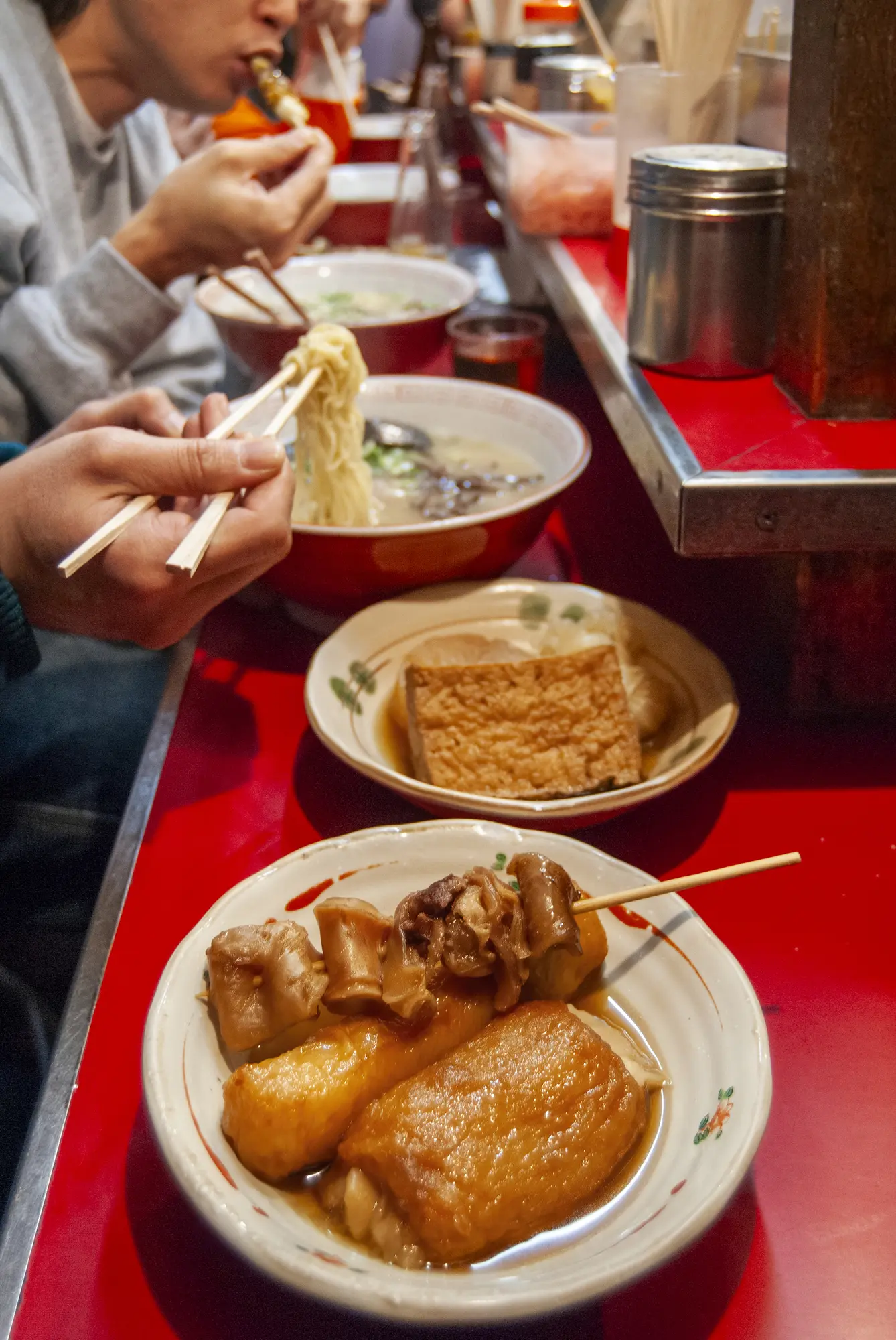
3. Perfect for Yakitori Lovers: Furaikenbo
Furaikenbo is a long-established yatai located along Showa-dori Street near Nakasu-Kawabata Station.
With a history of more than 40 years, it is run as a family business by a mother and her son.
Inside, the seats are arranged in a U-shape around the cheerful mother, and her lively conversation fills the time between dishes, creating a warm atmosphere that never gets boring even while drinking together.
Later in the evening, whether with regulars or tourists, the mother focuses on conversation and drinks while leaving the cooking to her son. This division of roles is a scene unique to the stall.
The menu includes classic dishes such as ramen and oden, as well as the most popular item, thick-cut beef tongue.
There are also many unusual items, including charcoal-grilled yakitori variations such as sausage and “minchi-bo,” as well as ume jellyfish and whale nanban.
4. Experience the Local Atmosphere: KUROchan
KUROchan is the long-awaited yatai opened in 2017 by an owner who gained experience at well-known stalls in Nakasu.
The lively interior is crowded with regulars, giving you a feel for the local atmosphere.
Although the owner runs the 12 seats alone, he is known for good service and conversation, so tourists can feel at ease.
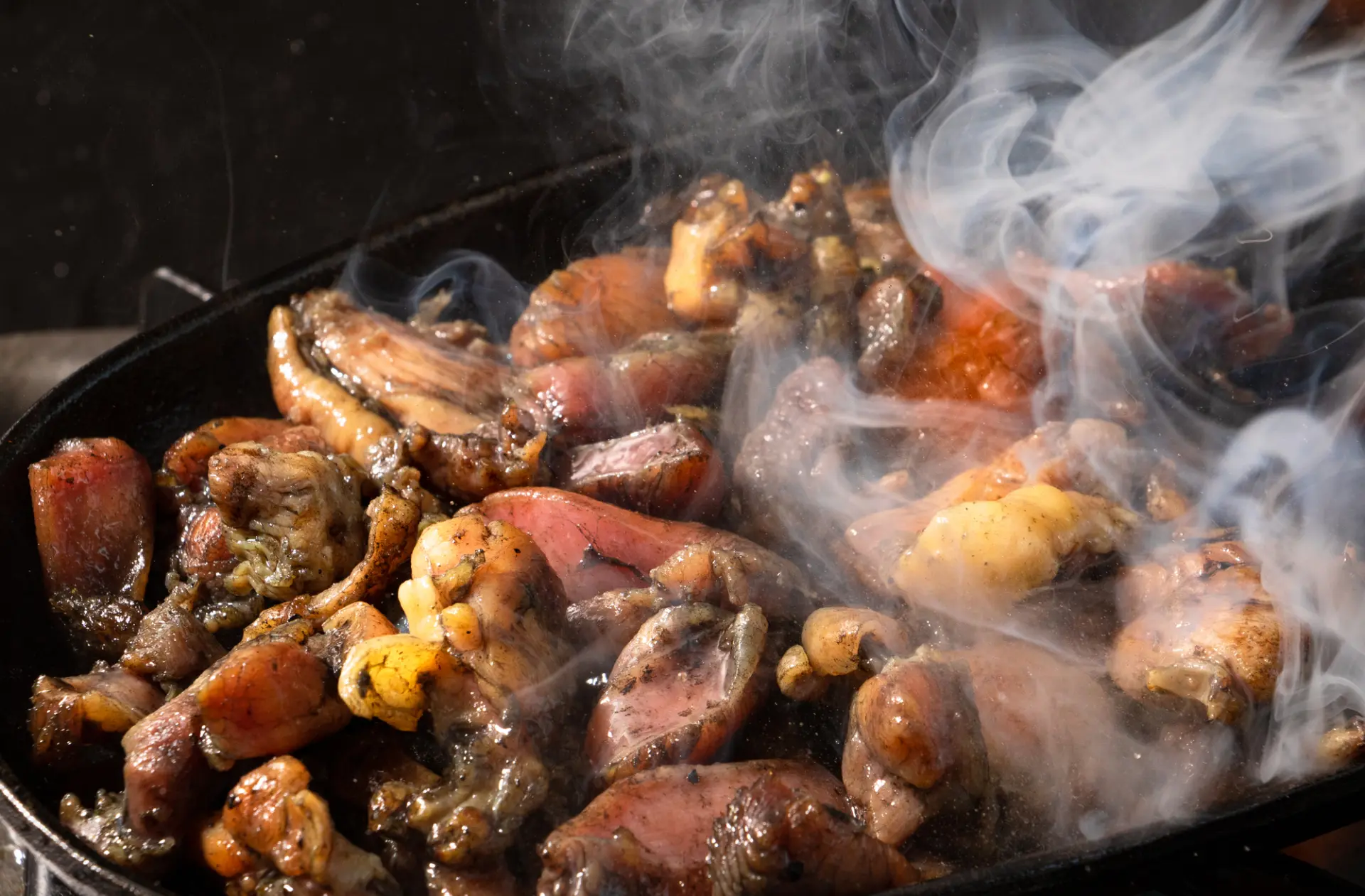
The specialty is charcoal-grilled local chicken, made with red chicken thigh from Itoshima, boldly grilled over charcoal and served on a sizzling hot iron plate.
It is an authentic dish with a strong charcoal aroma and umami that spreads the more you chew.
Try it with spicy yuzu kosho, and it is so good you may find yourself groaning with delight.
Other popular dishes include the owner-recommended meltingly tender stewed pork belly cartilage and a light tonkotsu ramen.
5. Experience Fukuoka’s Yatai Culture and Famous Oden at Agodashitei Kisaichi
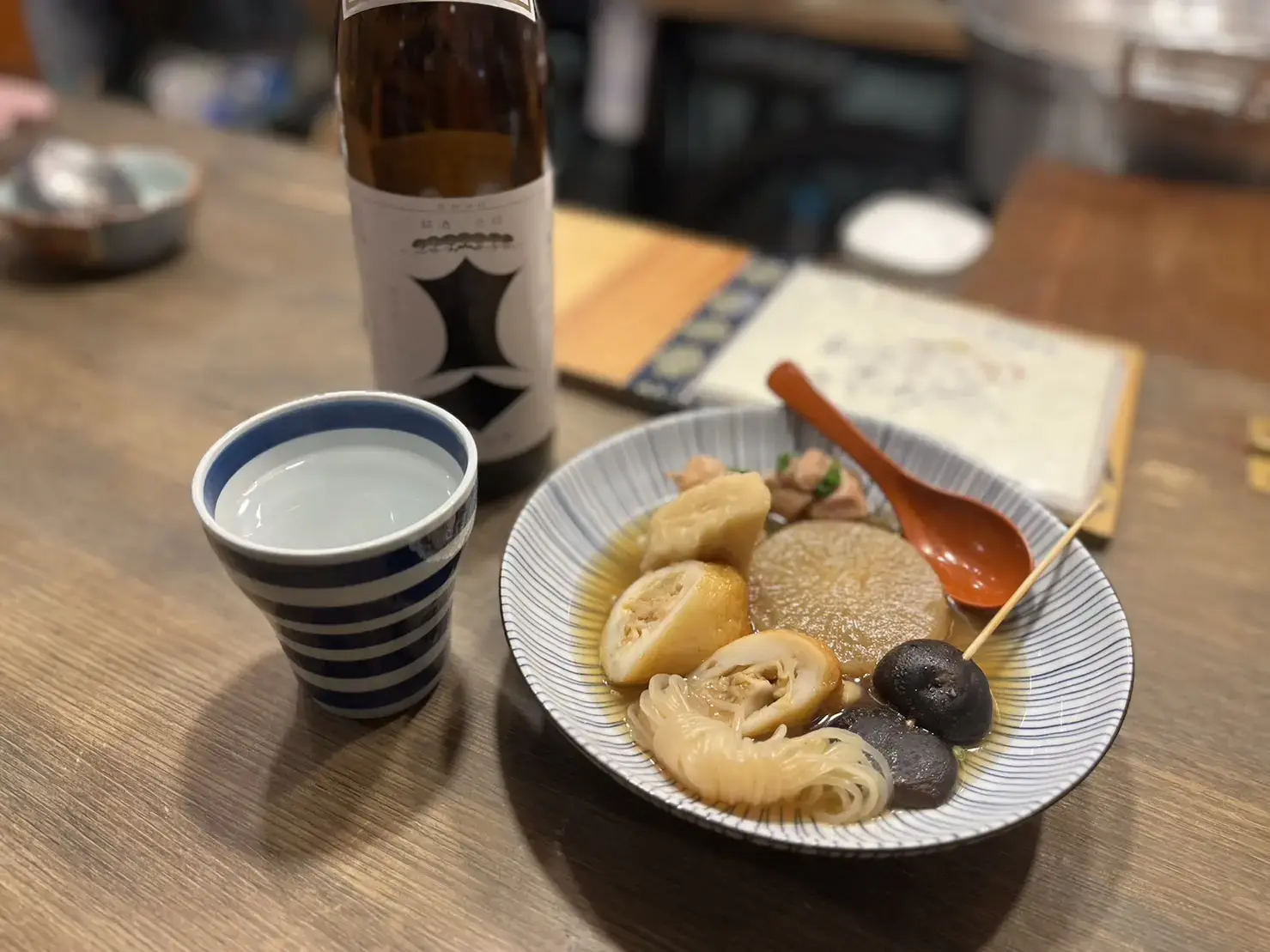
Located in Fukuoka City’s Tenjin yatai district, this food stall is known for its creative dishes and oden featuring flying fish broth.
Its signature clear broth is carefully prepared from grilled flying fish, with a rich aroma and refined umami that brings out the best in classic oden ingredients such as daikon radish, eggs, and beef tendon, as well as original creations found only here, including Hakata pork belly rolls and seasonal shellfish oden. The stall’s open, inviting atmosphere offers a casual way to experience Fukuoka’s yatai culture.
6. Enjoy Hakata Foods to the Fullest: Hakata Yatai Tsunatsuna
Hakata Yatai Tsunatsuna is a new yatai that opened in 2023 in the Nakasu Nakashimamachi area.
It is a welcoming stall run by Fukuoka’s youngest yatai owner, created with the idea of making it easy even for young people who have never visited a yatai before to enter.
As its concept suggests—a place where people connect with people, experiences, and places—it has a warm atmosphere that brings visitors together.
With no seating charge or appetizer charge and service available in foreign languages, it is also recommended for international visitors to Japan.
Another appeal is the range of Hakata foods and wide variety of alcoholic drinks.
Among them, the signature dishes are wagyu motsu-yaki and wagyu motsu-nikomi, made generously with fresh offal.
With many types such as small intestine, omasum, and hatsumoto, you can enjoy a variety of textures and rich umami.
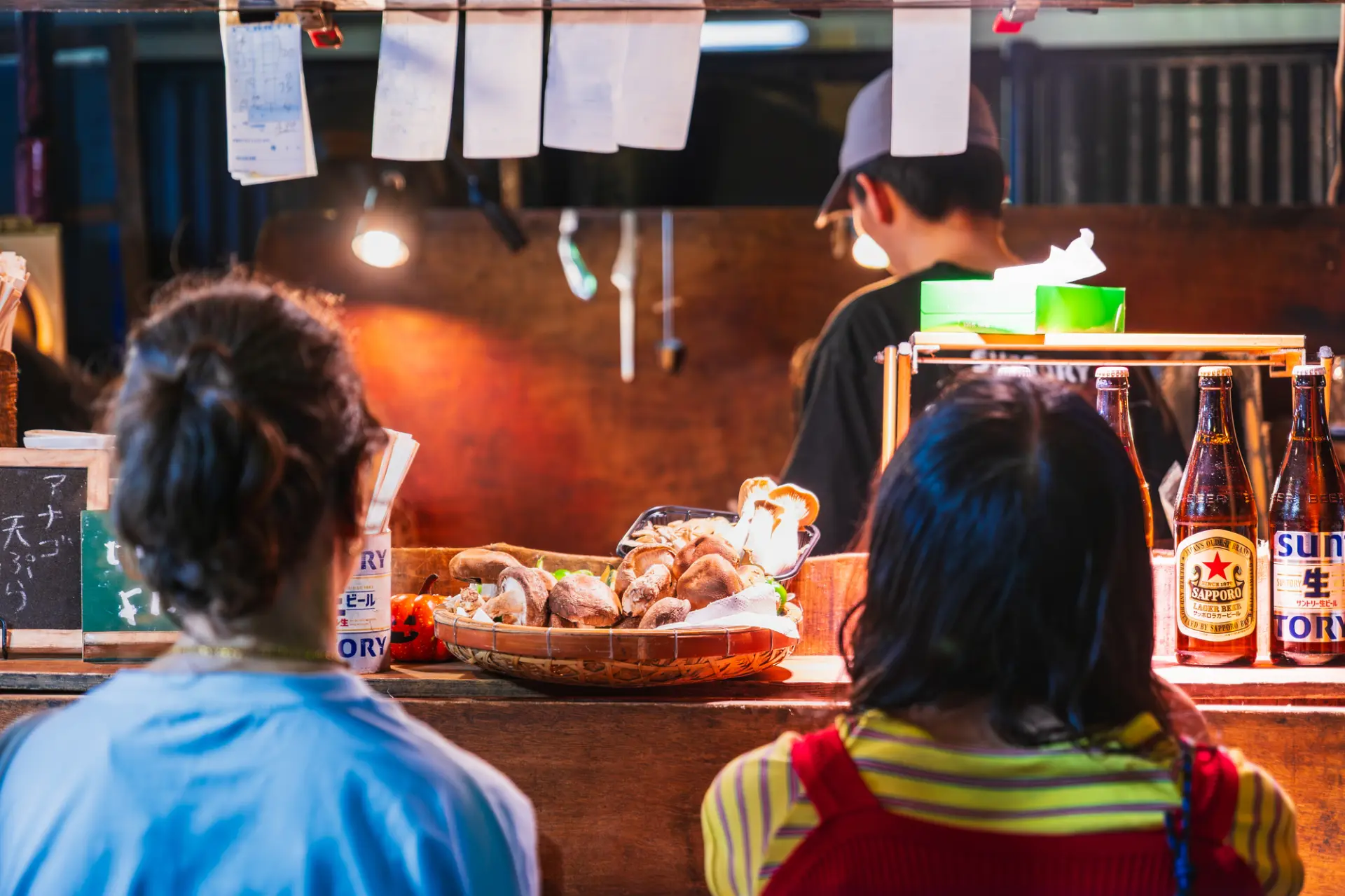
A Recommended Nakasu Yatai Street Sample Route for First-Time Visitors
Based on the information so far, here is a classic sample route for Nakasu Yatai Street.
Designed especially for first-time visitors, the plan focuses on three things: experiencing yatai culture, tasting Fukuoka specialties, and enjoying Nakasu’s night views.
Plan for a budget of about ¥5,000 to ¥8,000, and instead of getting full at one stall, visit two or three to make the most of the experience.
During the day, it is recommended to enjoy sightseeing nearby and work up an appetite.
| Time (approx.) | Itinerary | Overview |
|---|---|---|
| 5:30 PM | Nakasu-Kawabata Station | Use the restroom in advance and head to the yatai area. It is reassuring to have cash ready. |
| 5:45 PM | Along the Naka River | Before it gets crowded, walk along the Naka River and check out yatai that catch your eye. The dusk scenery as the neon lights begin to glow is also a highlight. |
| 6:15 PM | First stall | Enter a yatai that suits your taste and enjoy Fukuoka specialties. If it is your first time, a stall with classic menu items such as yaki ramen or oden is recommended. |
| 7:00 PM | Along the Naka River | After eating, take a stroll while enjoying the neon lights and yatai glow reflected on the surface of the Naka River. |
| 7:30 PM | Second stall | Try a different kind of food from the first stall and, if possible, enjoy interacting with the owner or neighboring customers. |
| 8:30 PM | Third stall | Finish with Hakata’s famous tonkotsu ramen. If you still have room, try kaedama extra noodles as well. |
| 9:00 PM | End | Enjoy the night view as you cool down on the way back to your hotel. |
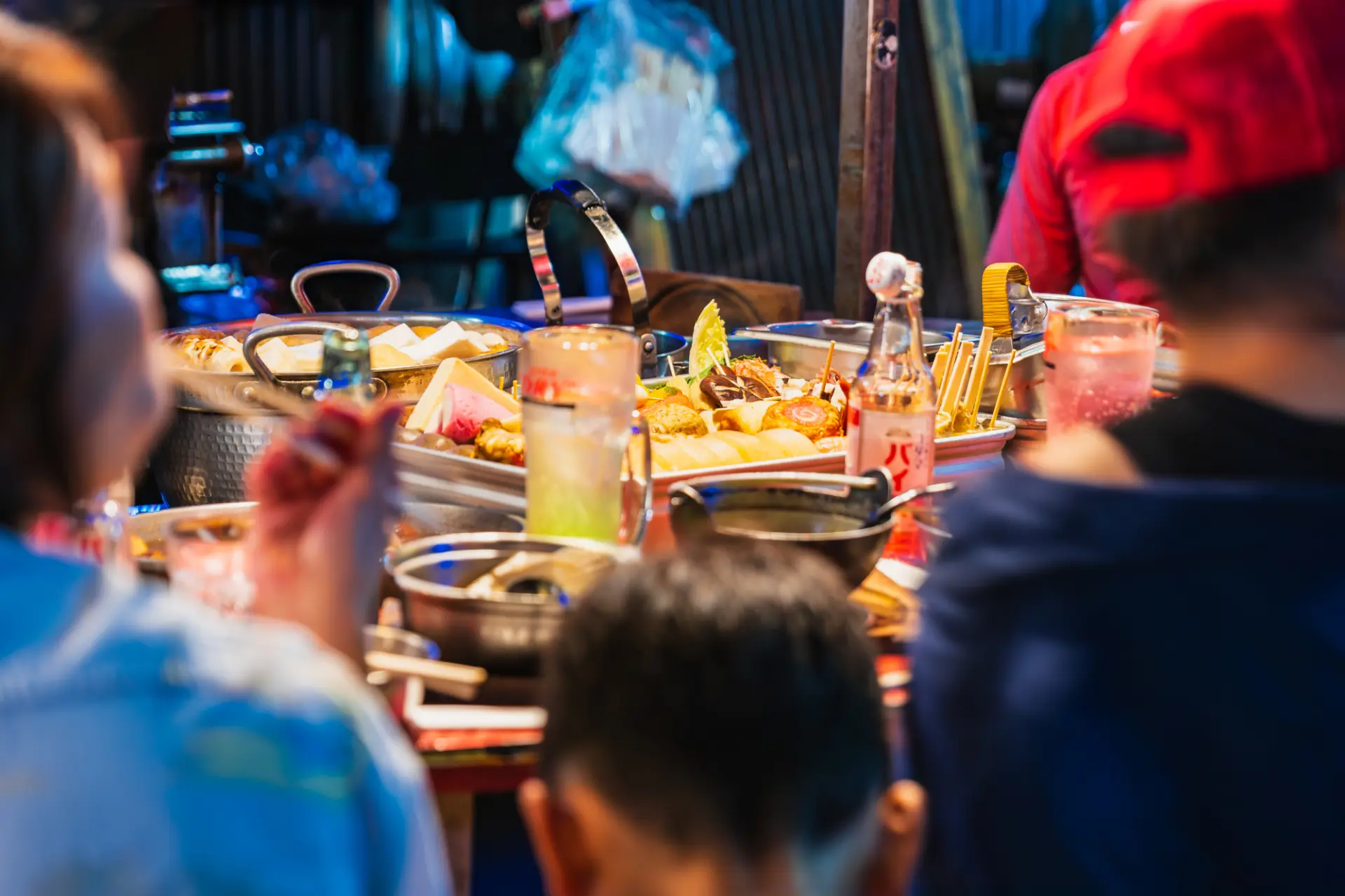
3 Popular Spots Near Nakasu to Visit Before or After the Yatai
Finally, here are popular sightseeing spots around Nakasu Yatai Street.
Each has its own appeal and offers a concentrated taste of Hakata in a short time.
They are also photogenic and enjoyable even just for a walk, so be sure to stop by before or after visiting the yatai.
1. Canal City Hakata
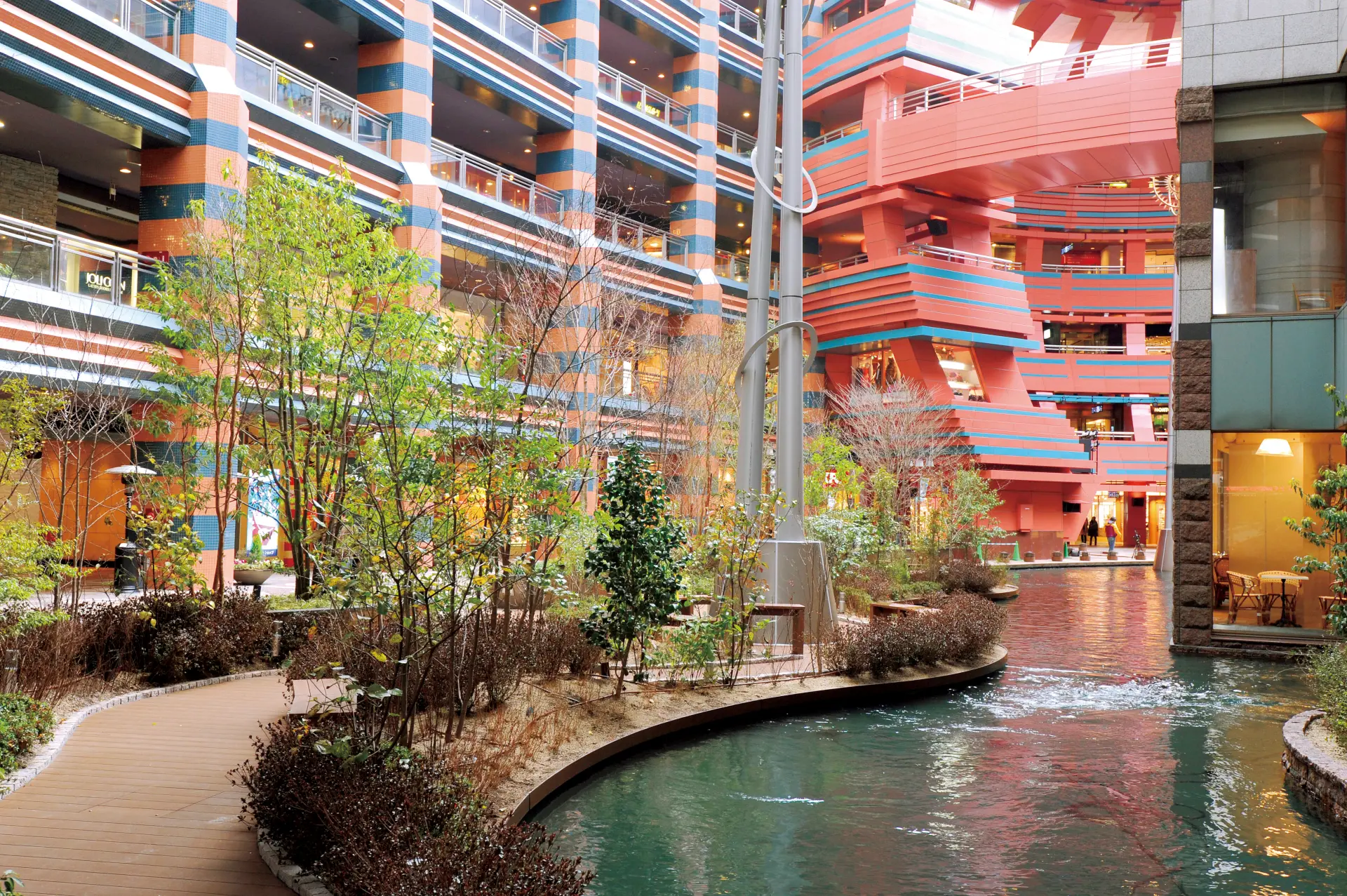
This complex brings together a shopping mall, movie theater, theater, amusement facilities, two hotels, and more on a vast site of about 43,500 square meters. Its symbol is a canal about 180 meters long that flows through the center of the colorful buildings.
Canal City Hakata is known not only for shopping and entertainment, but also for being enjoyable simply to spend time in. Benches are placed along the waterside canal, making it a place to take a break.
2. Kushida Shrine
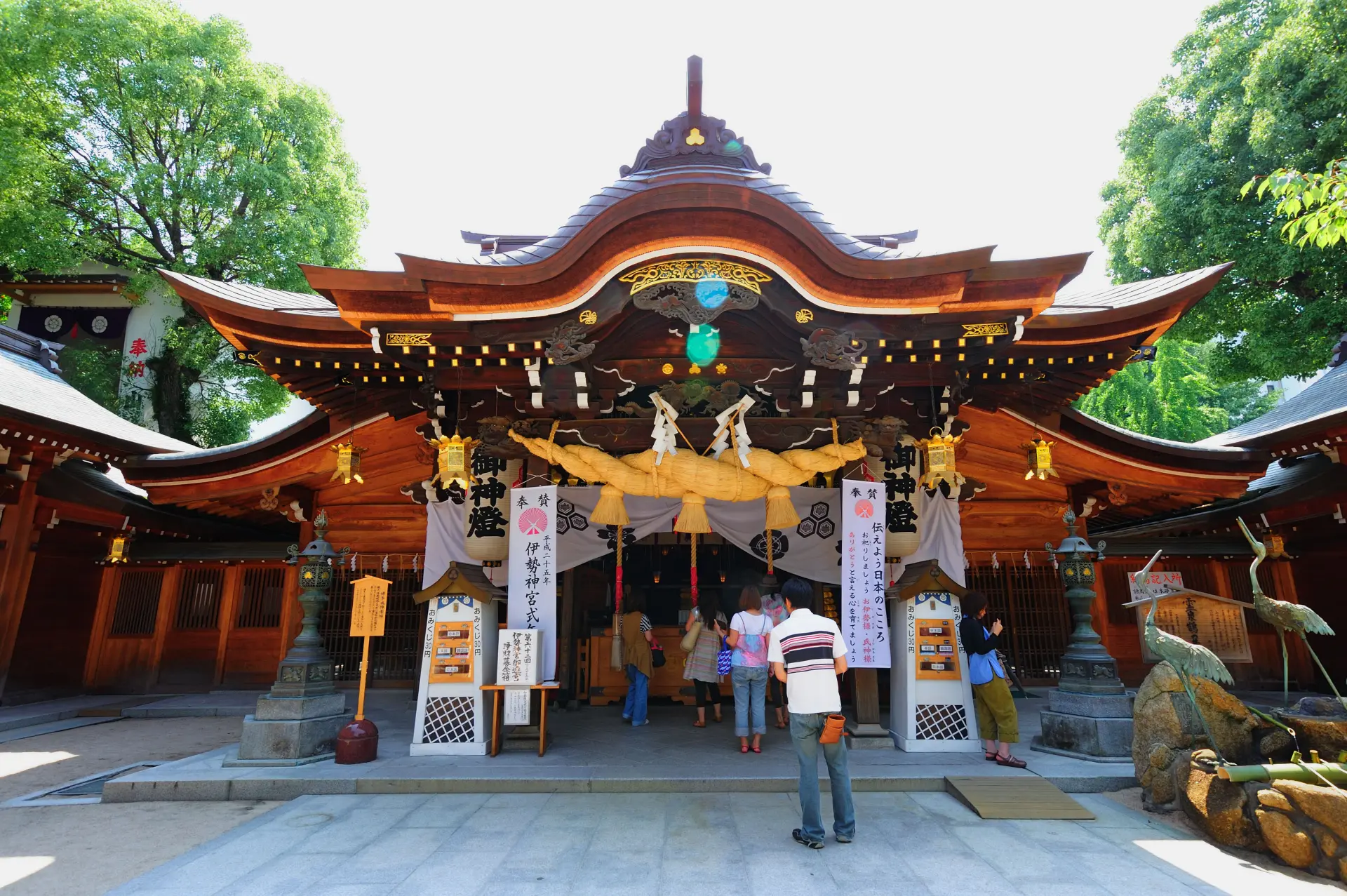
Said to have been founded in the Nara period, this is Hakata’s guardian shrine and is affectionately called “Okushida-san” by the people of Hakata. Hakata Gion Yamakasa, the festival held every July that announces the arrival of summer in Hakata, is dedicated to this shrine. Within the grounds, you can see a powerful kazariyama float year-round, except in June.
The enshrined deities are Ohatanushi no Mikoto (Kushida-gu), Amaterasu Omikami (Daijingu), and Susanoo no Mikoto (Gion-gu). It is thought to have been established by inviting the deity from Kushida Shrine in Matsusaka, Ise. In Tensho 15 (1587), when Toyotomi Hideyoshi worked to restore Hakata, he donated the construction of the current shrine buildings.
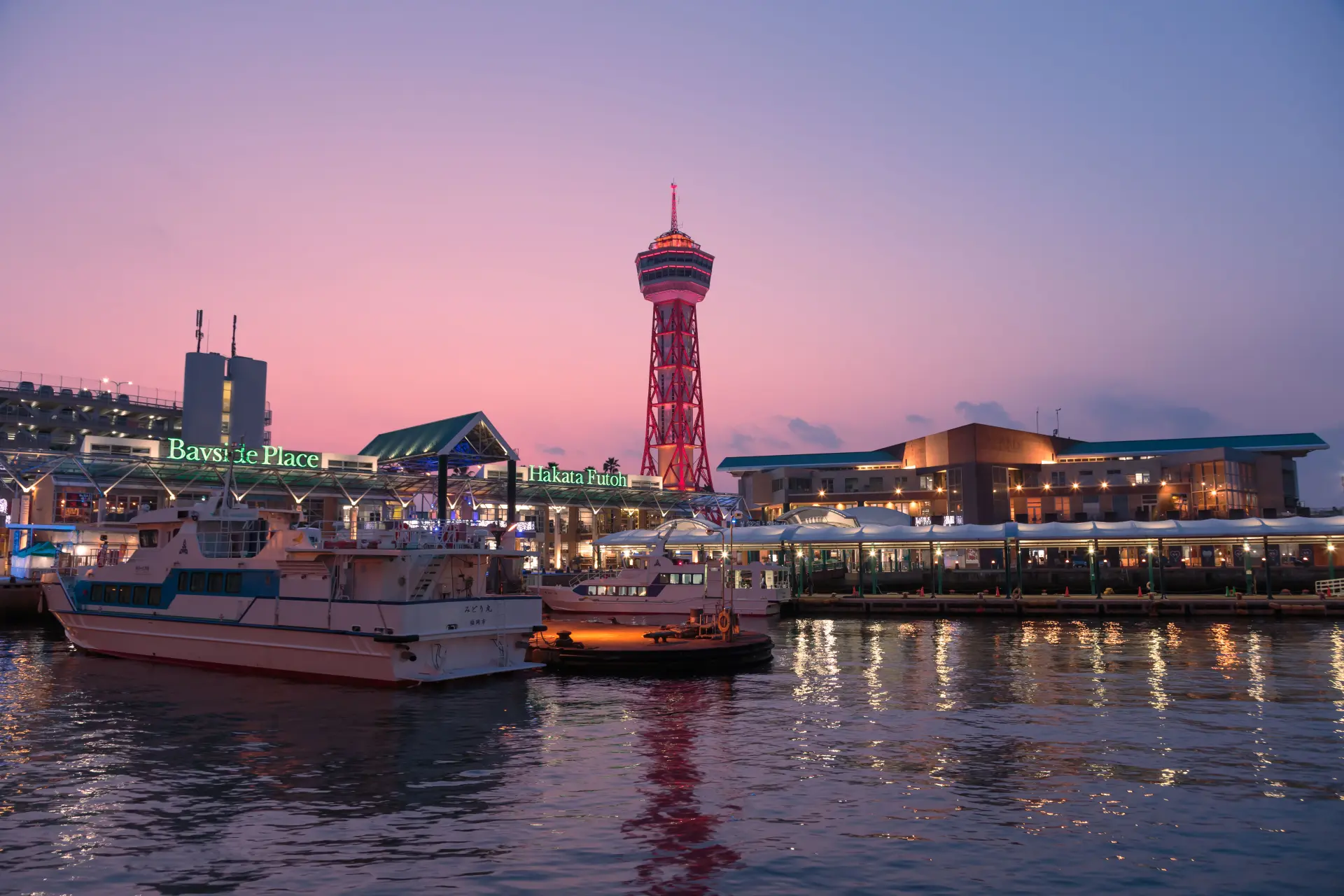
3. Bayside Place Hakata
Facing Hakata Wharf, this port complex combines the open feel of the seaside with a variety of things to enjoy. Inside the spacious glass-walled building, you will find restaurants and cafés where you can dine while looking out at the sea, a market selling fresh seafood and local vegetables, and a variety of shops.
Its greatest feature is its location. The sea breeze and scent of the tide, unique to a bayside setting, fill the area and create a refreshing space. Inside the facility is the Bayside Aquarium, a cylindrical large tank about 8 meters tall and about 9 meters in diameter, where you can observe sea turtles and saltwater fish swimming up close.
Frequently Asked Questions About Nakasu Yatai Street
Q
Is Nakasu Yatai Street unsafe?
Nakasu Yatai Street is one of Fukuoka’s representative spots, and it is relatively safe because it is lively at night with many tourists and locals. However, be careful of pickpockets, touts, and overcharging.
Q
Are the yatai on Nakasu Yatai Street open on rainy days?
Many yatai open in light rain, but they may close in bad weather such as typhoons, strong winds, or heavy rain. Check official websites for the latest information.
Q
Are there yatai that accept reservations?
Most stalls generally do not accept reservations and seat customers in order of arrival, but some may take reservations by phone or through social media.
Q
Can I use credit cards or electronic money?
Cashless payments have become more common in recent years, but many stalls still accept cash only. It is safer to bring cash.
Q
Can families with children and women enjoy the yatai?
More stalls now have an atmosphere that is easy for women traveling together and families to enter, so they can enjoy the experience. Yatai are small and get crowded at night, so visiting earlier in the evening is recommended.
Summary
We have introduced Nakasu Yatai Street, including its overview, points to note, and recommended stalls.
If Nakasu Yatai Street’s appeal could be summed up in one phrase, it would be a place where you can casually enjoy Hakata food.
From tonkotsu ramen and yaki ramen to yakitori, each yatai offers distinctive menus, and part of the fun is eating your way around while hopping from stall to stall.
The night view where riverside neon overlaps with the lights of the yatai is pleasant even just for a walk, and first-time visitors can easily enjoy the area, so be sure to visit.
Also check out this article, which gathers helpful information for planning your trip.