
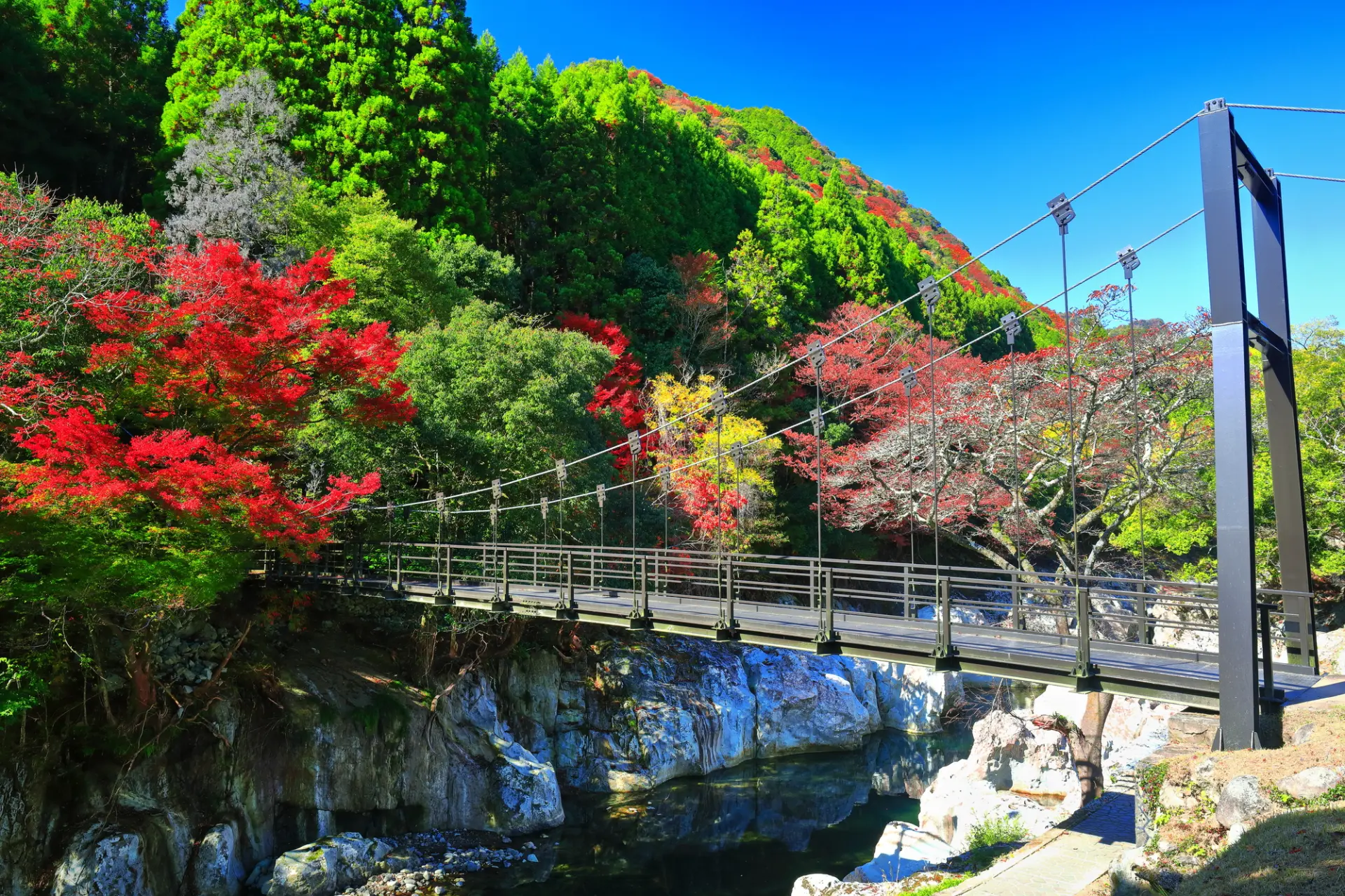
7 Recommended Places to Visit in Yabakei: Scenic Views, Fall Foliage, and a Sample Itinerary
Yabakei, one of Oita Prefecture’s best-known scenic areas, is rich in nature, with unusual rock formations, cliffs, and valleys shaped over countless years. Attractions are scattered mainly along the Yamakuni River and its tributaries. In addition to magnificent scenery, visitors can explore historic temples, stone bridges, and the region’s distinctive food culture. Yabakei is also renowned for its fall foliage and offers a different landscape in every season.
This article covers essential information about Yabakei, recommended attractions, and a sample sightseeing itinerary. It has been compiled with first-time visitors in mind, so read on to help plan your trip.
What Is Yabakei Like?
Centered around Nakatsu City in northwestern Oita Prefecture and extending into Kusu Town, Yabakei is a scenic area along the upper and middle reaches of the Yamakuni River and its tributaries. The valleys were formed as the Yamakuni River and other waterways eroded a lava plateau, creating an area approximately 36 km from east to west and 32 km from north to south, filled with cliffs, caves, and unusual rock formations. The name is said to originate from the phrase “No mountains under heaven compare with Yabakei,” written in Yabakei Zukanki by the Confucian scholar Rai Sanyo after visiting the area in 1818.
Yabakei is part of Yaba-Hita-Hikosan Quasi-National Park, is recognized as one of the New Three Views of Japan, and was designated a National Place of Scenic Beauty in 1923. The region is divided into areas such as Hon-Yabakei, Shin-Yabakei, Ura-Yabakei, Oku-Yabakei, and Tsutami-Yabakei, each with its own distinctive attractions.
Spectacular views can be found throughout the region, with the most representative landscapes known collectively as the “66 Scenic Views of Yabakei.” Alongside scenery where magnificent nature, history, and daily life exist in harmony, visitors can also discover historic sites, hot springs, and deeply rooted local traditions.
How to Get to Yabakei
JR Nakatsu Station on the Nippo Main Line is the gateway to sightseeing in Yabakei.
A tourist information center at the station’s south exit provides bus information and sightseeing brochures. Local buses from the station travel to Ao-no-Domon Tunnel in approximately 30 minutes and toward Keisekien Garden in approximately one hour, but services are infrequent.
Because Yabakei’s attractions are spread across a wide area, renting a car is recommended for efficient sightseeing. Below are directions from Oita Station and Beppu Station, two convenient bases for travel in Oita.
| Departure Point | Route | Travel Time |
|---|---|---|
| Oita Station | Take the JR Sonic limited express from JR Oita Station and get off at Nakatsu Station | Approximately 50 minutes |
| Beppu Station | Take the JR Sonic limited express from JR Beppu Station and get off at Nakatsu Station | Approximately 40 minutes |
When Is the Best Time to Visit Yabakei?
Yabakei attracts visitors throughout the year, but fall, when the area is covered in colorful foliage, is especially recommended.
Known as one of Japan’s three great fall foliage destinations, alongside Nikko in Tochigi Prefecture and Arashiyama in Kyoto Prefecture, Yabakei is typically at its best from late October to mid-November, when its maples and ginkgo trees turn red and yellow. Viewing spots are scattered throughout the region, offering scenery in which colorful foliage complements the unusual rock formations and valleys.
At night, illuminations are also held at Hisashi Momiji near Hitome Hakkei and at Keisekien Garden, creating an atmospheric scene different from the daytime landscape. Because the timing of the changing leaves varies with the weather, check the latest information shortly before your visit.
7 Recommended Attractions in Yabakei
Yabakei is dotted with attractions where visitors can experience its abundant nature and regional history and culture. Each area has a different landscape, with scenery that changes throughout the seasons. Here are seven popular attractions in Yabakei.
1. Ao-no-Domon Tunnel and Kyoshuho Cliff
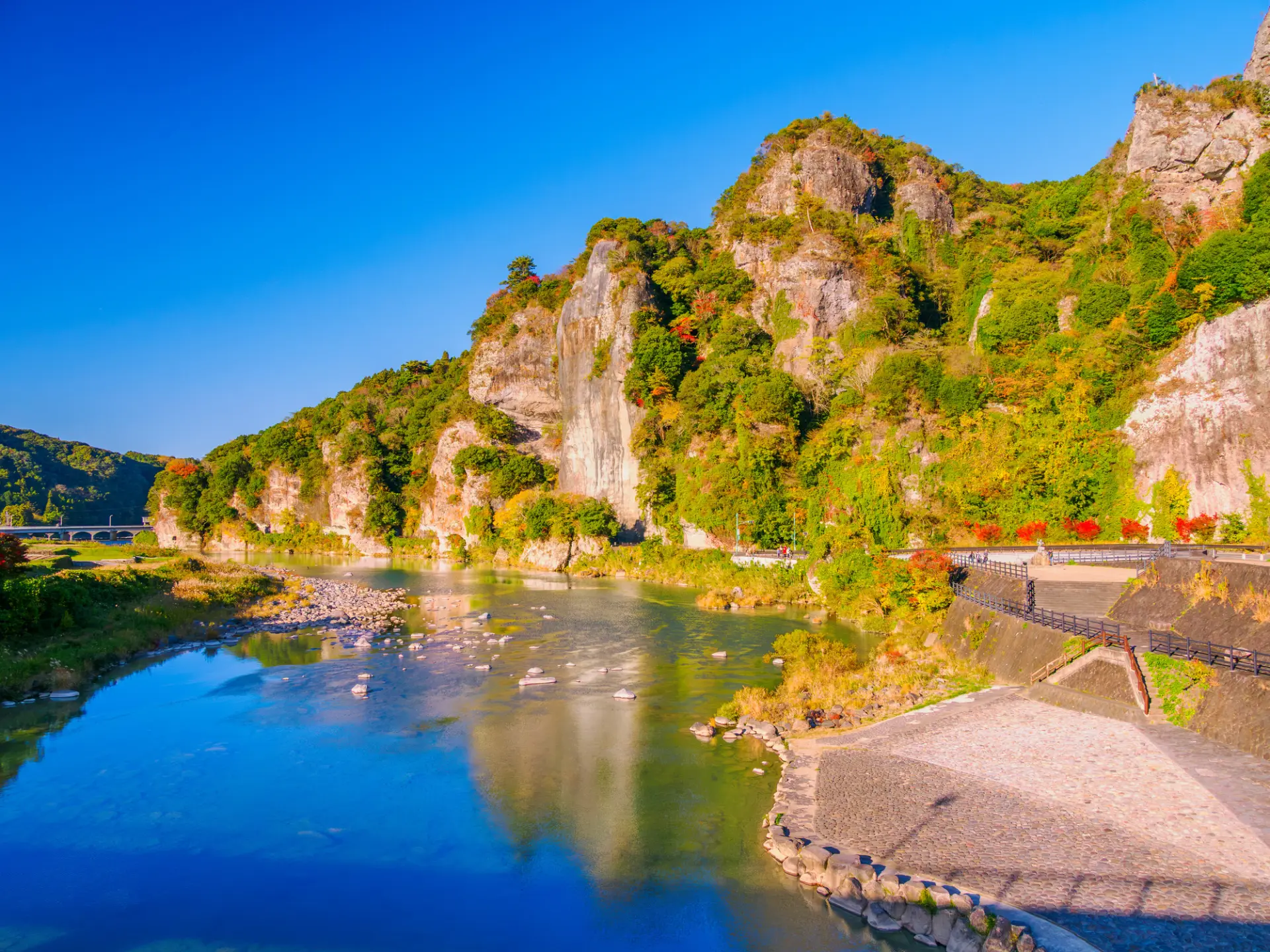
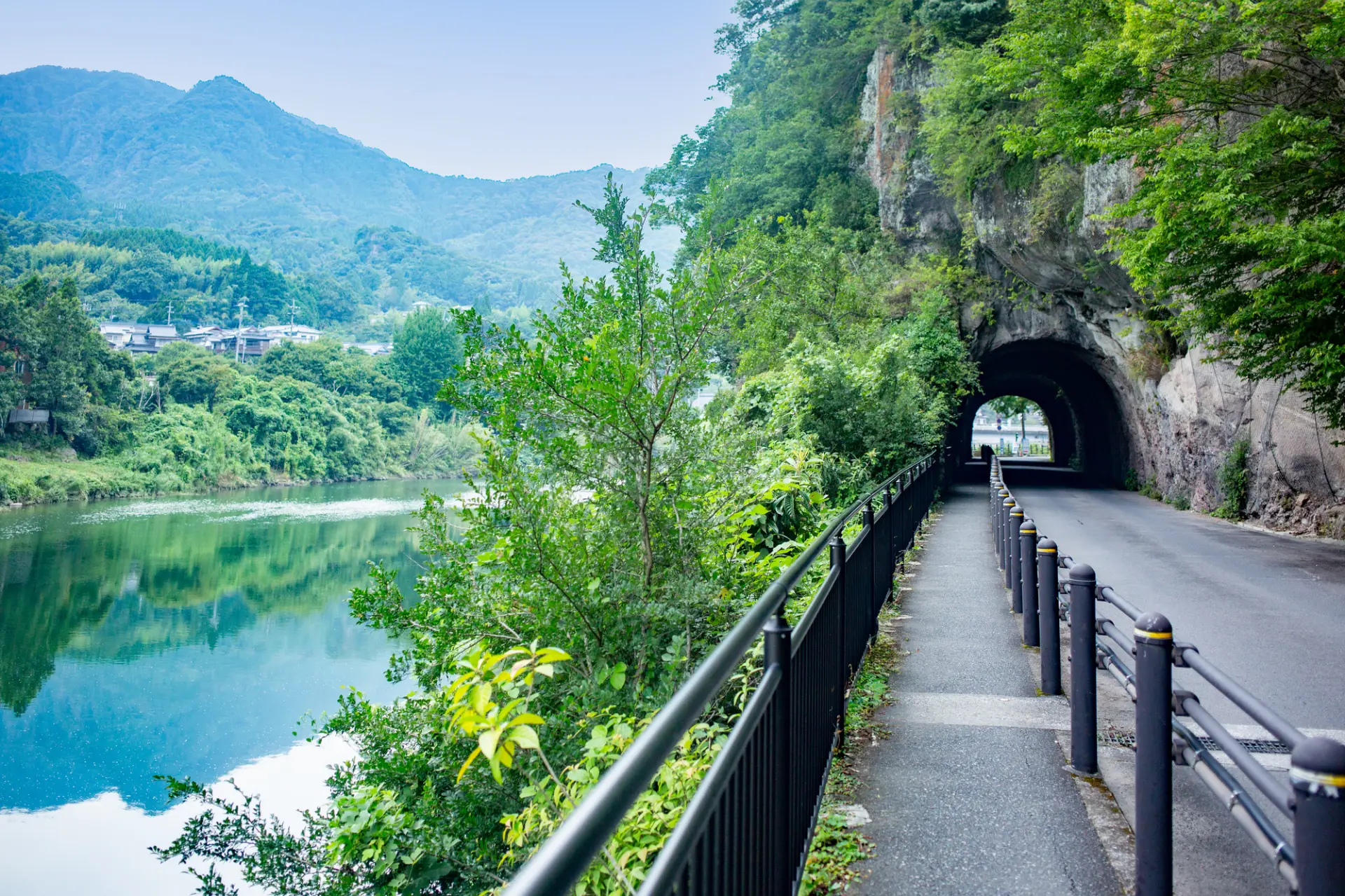
Kyoshuho Cliff consists of rocky peaks rising along approximately 1 km of the Yamakuni River, while Ao-no-Domon Tunnel lies at their base. Together, they form one of Yabakei’s most representative attractions, combining magnificent natural scenery with a history closely connected to the lives of local people.
Kyoshuho is characterized by a line of rocky peaks resembling standing folding screens. Nemophila flowers bloom in the fields across the river in spring, while fall foliage colors the rocky mountains in autumn. Yukichi Fukuzawa, who had ties to Nakatsu, is also known for purchasing land in the area and working to preserve its scenery.
Ao-no-Domon is a tunnel whose excavation was begun by the Buddhist monk Zenkai during the Edo period (1603–1868). It took more than 30 years to complete as an alternative to a dangerous chain crossing where both people and horses had previously lost their lives. Although renovations have removed much of the tunnel’s original form, some hand-carved chisel marks and windows that let in natural light remain inside, conveying the immense effort involved in its construction.
2. Yabakei Bridge (Oranda Bridge)
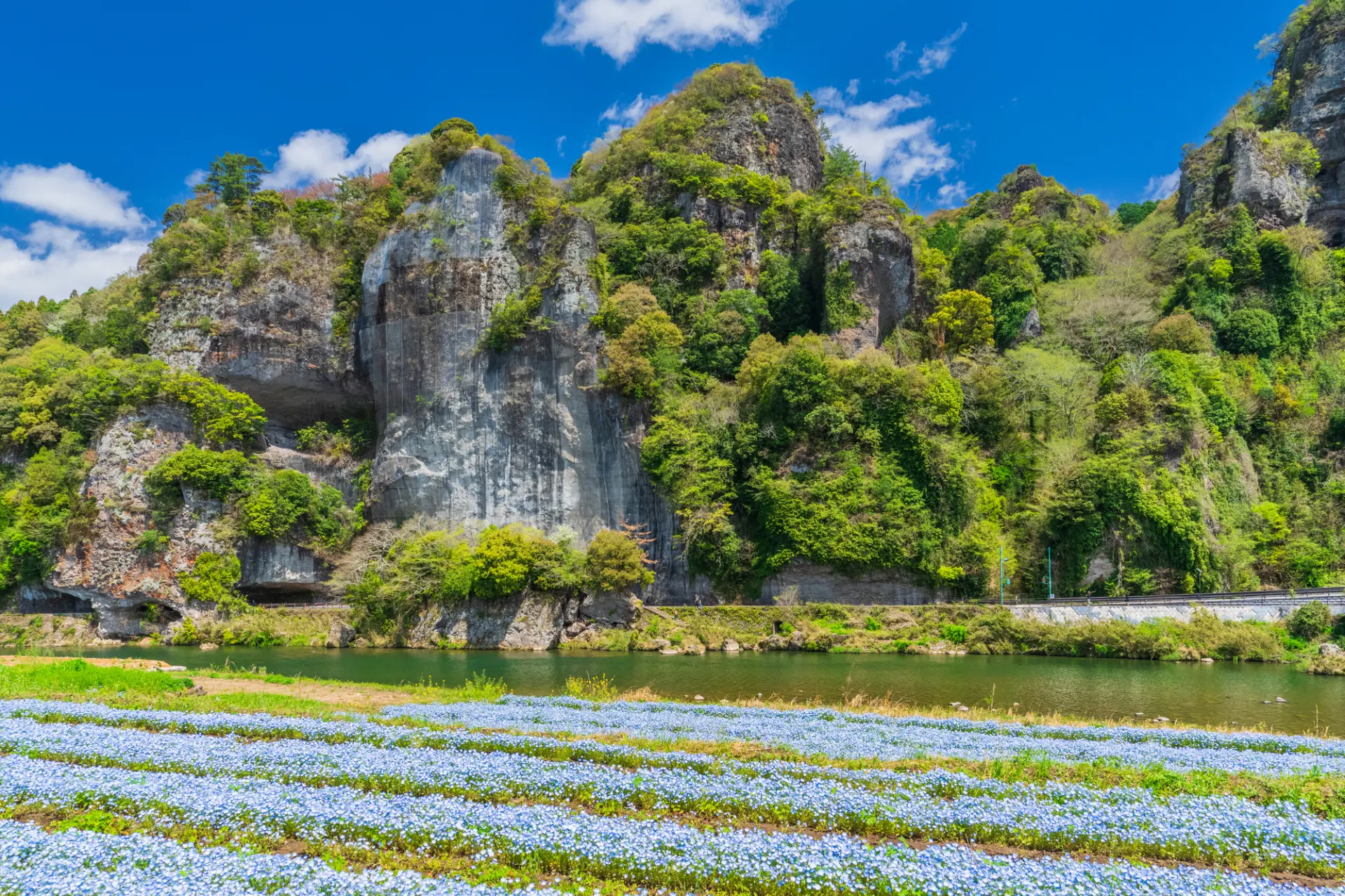
Yabakei Bridge spans the Yamakuni River approximately 500 meters downstream from Ao-no-Domon. Because it was built using a stone masonry technique commonly found in Nagasaki Prefecture, it eventually became known by the nickname “Oranda Bridge,” meaning “Dutch Bridge.” Completed in 1923, it is approximately 116 meters long and is known as the only surviving stone arch bridge with eight consecutive arches. It was designated an Important Cultural Property of Japan in 2022.
Its intricate stonework and graceful series of arches blend so naturally into the valley scenery that visitors may find themselves stopping to admire it during a walk. Viewing the entire bridge from the riverside provides an even clearer appreciation of its elegant design.
3. Rakanji Temple
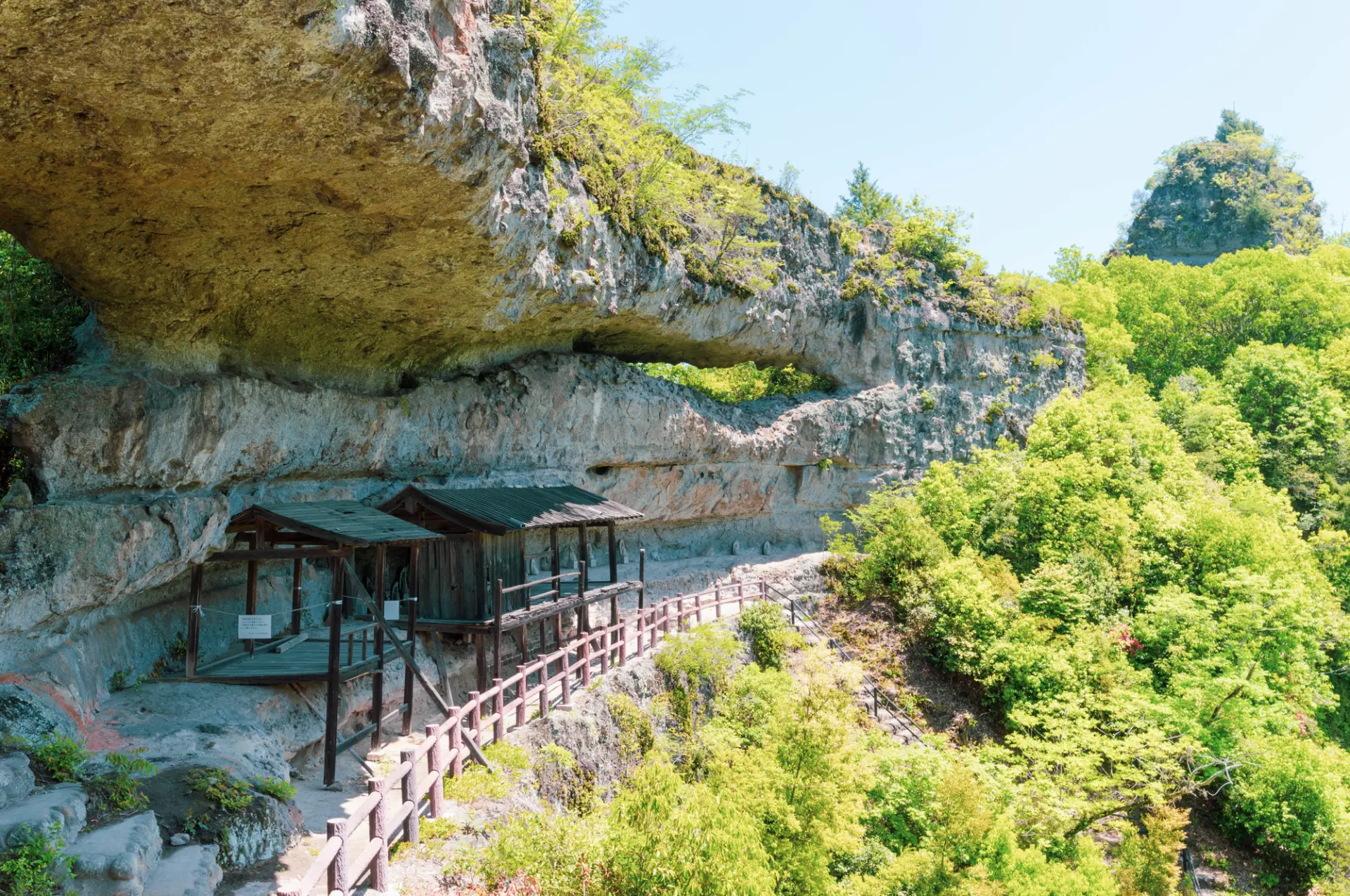
Rakanji Temple is a historic Soto Zen temple built into the rocky cliffs halfway up Mount Rakan. According to temple tradition, it was founded by the ascetic Hodo in the 7th century, although the temple’s effective establishment is attributed to the Zen monk Engan Shokaku in 1338.
Its most distinctive feature is the unusual landscape in which the rocky mountain and religious site appear as one. The Murokutsu Cave contains Japan’s oldest stone statues of the 500 arhats, along with groups of stone Buddhist figures depicting the Shakyamuni Triad and the Ten Great Disciples. Collectively designated as the Rakanji Stone Buddhas, they are an Important Cultural Property of Japan. Other highlights include the rock peaks and caves lining the approach and the views of Yabakei’s mountains from the temple grounds.
The temple may close during severe weather or maintenance work. Photography is prohibited on the temple grounds.
4. Hitome Hakkei
Hitome Hakkei, located in the heart of Shin-Yabakei, is one of Yabakei’s best-known scenic areas. Its name, meaning “Eight Views at a Glance,” comes from the eight distinctive rock peaks visible at once, including Gunenzan, Meoto-iwa, Eboshi-iwa, Sennin-iwa, and Shoenzan.
The observation deck offers a magnificent panorama of unusual rock formations and valleys stretching along the Yamautsuri River. Bright green foliage surrounds the area from spring through summer, while in fall, red and yellow maples create a striking contrast with the exposed rock faces. Visitors can also stop at one of the soba restaurants near the observation deck and take a break over the local specialty, yamakake soba topped with grated yam.
5. Sarutobi Sentsubo Gorge
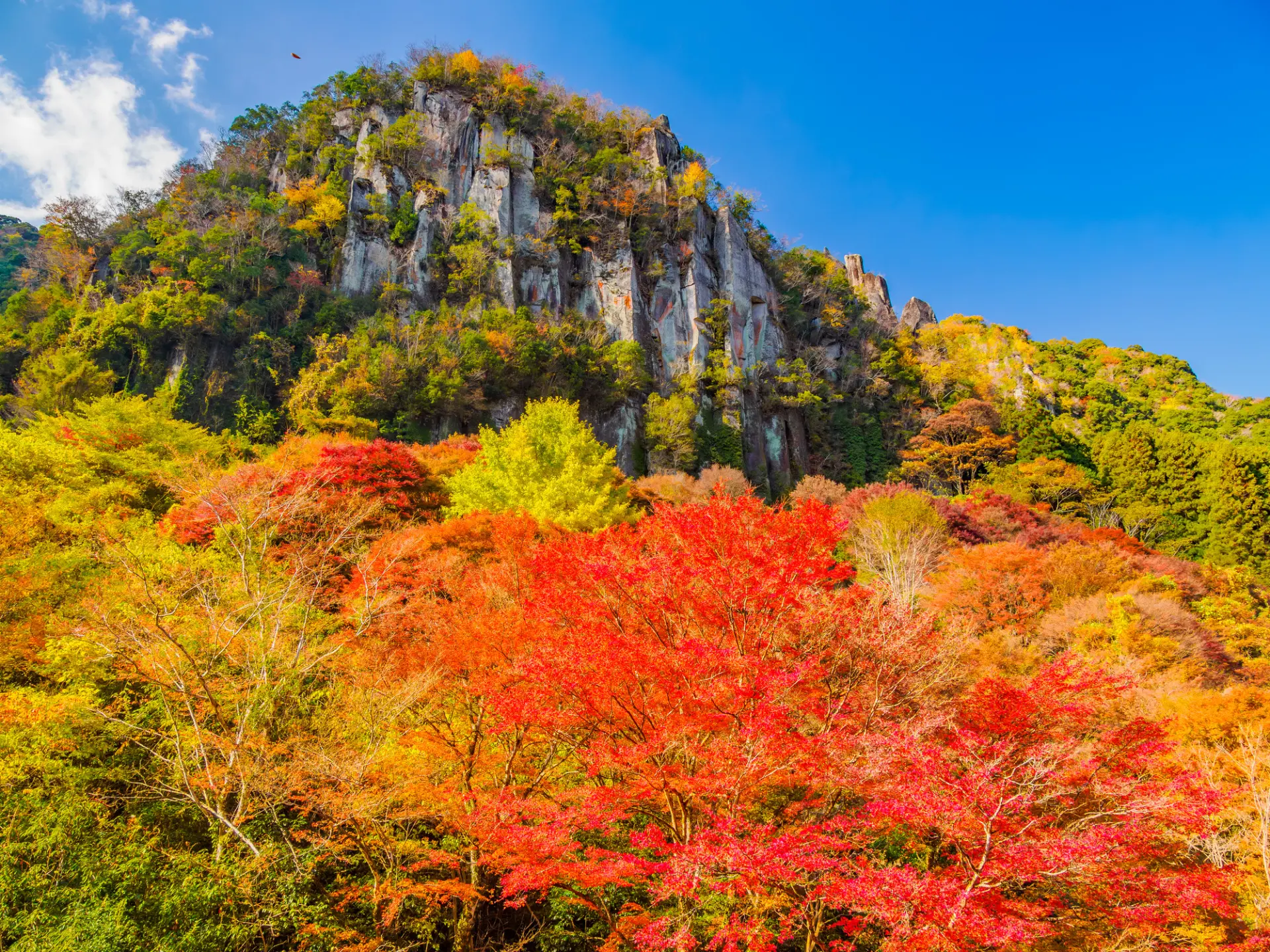
Sarutobi Sentsubo Gorge in Oku-Yabakei is a valley carved by the Yamakuni River, which originates on Mount Hiko. Countless potholes of various sizes extend for approximately 2 km along the riverbed. They were formed over many years by the interaction of altered andesite, small stones, and powerful currents. Known collectively as the Yabakei Sarutobi Potholes, they were designated a Natural Monument of Japan in 1935.
The contrast between the white rock surfaces and clear water is another highlight. A riverside walking trail offers close-up views of the valley while crossing stone and suspension bridges. Visitors can also continue downstream to Moringa Gorge and take their time exploring its varied scenery.
6. Yabakei Dam Memorial Park Keisekien Garden
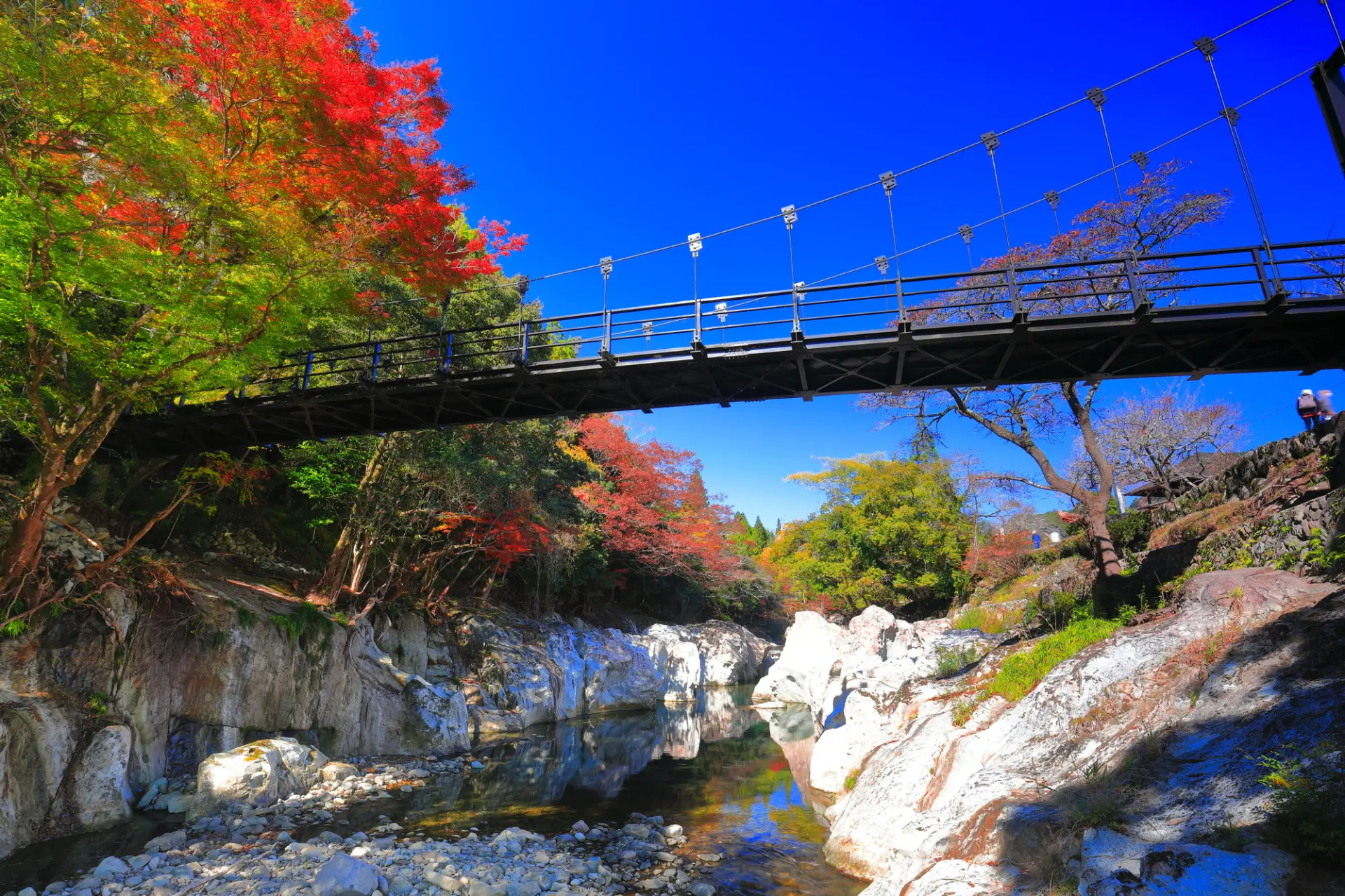
This approximately 20,000-square-meter Japanese garden was created in 1987 to commemorate the completion of Yabakei Dam. Tens of thousands of stones and water from the dam are used to recreate the streams of Yabakei, with ponds, rocks, and waterfalls arranged throughout the garden. More than 20,000 trees representing 50 species have also been planted, allowing visitors to appreciate seasonal scenery accompanied by the gentle sound of flowing water.
During the fall foliage season, the brightly colored trees transform the garden. Streams and waterfalls lined with tens of thousands of stones, along with colorful leaves reflected on the water, create a different autumn scene at every turn. Visitors can take a leisurely walk through a landscape that seems to capture the natural beauty of Yabakei in one place.

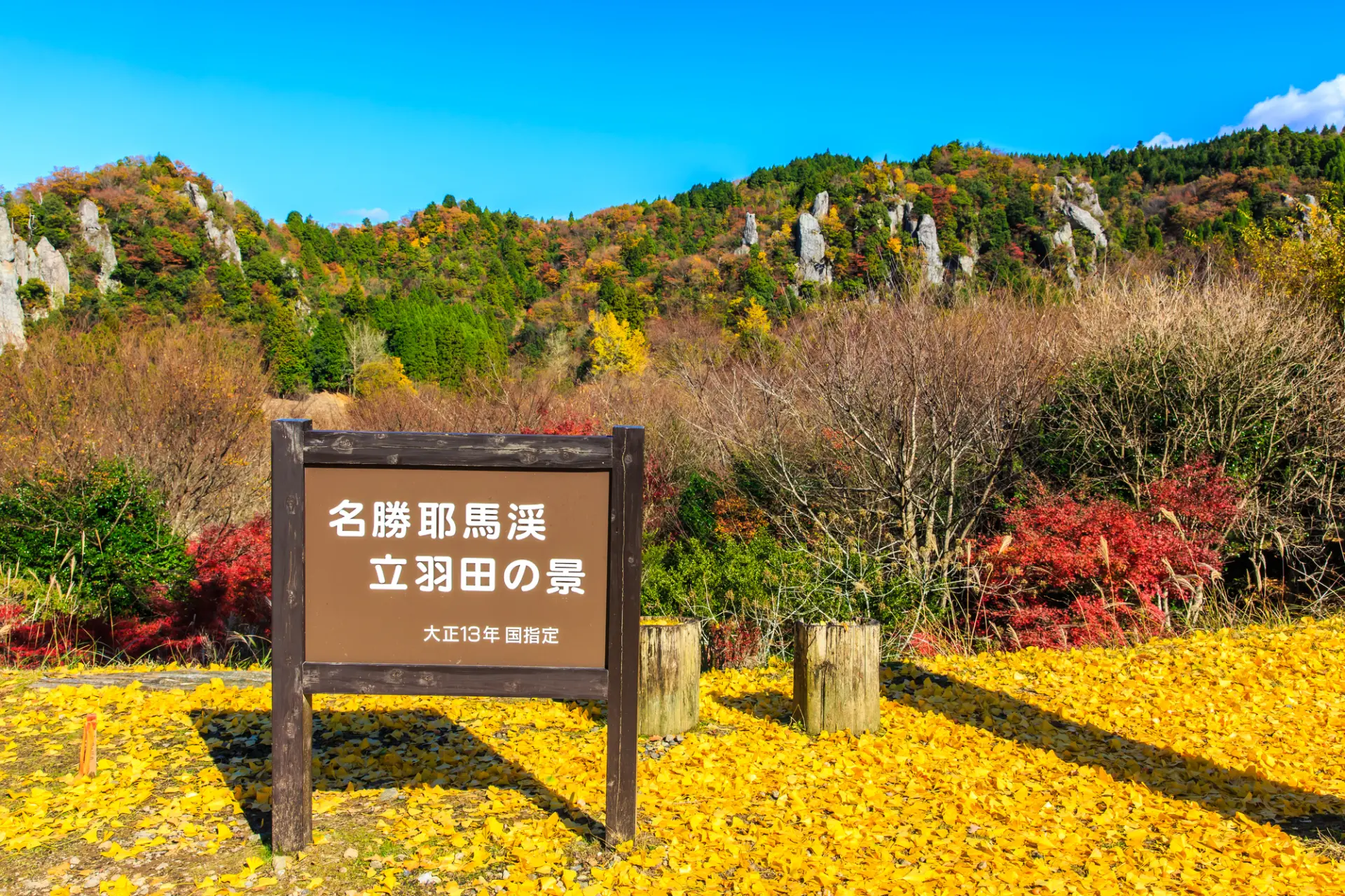
7. The Scenery of Tatehata
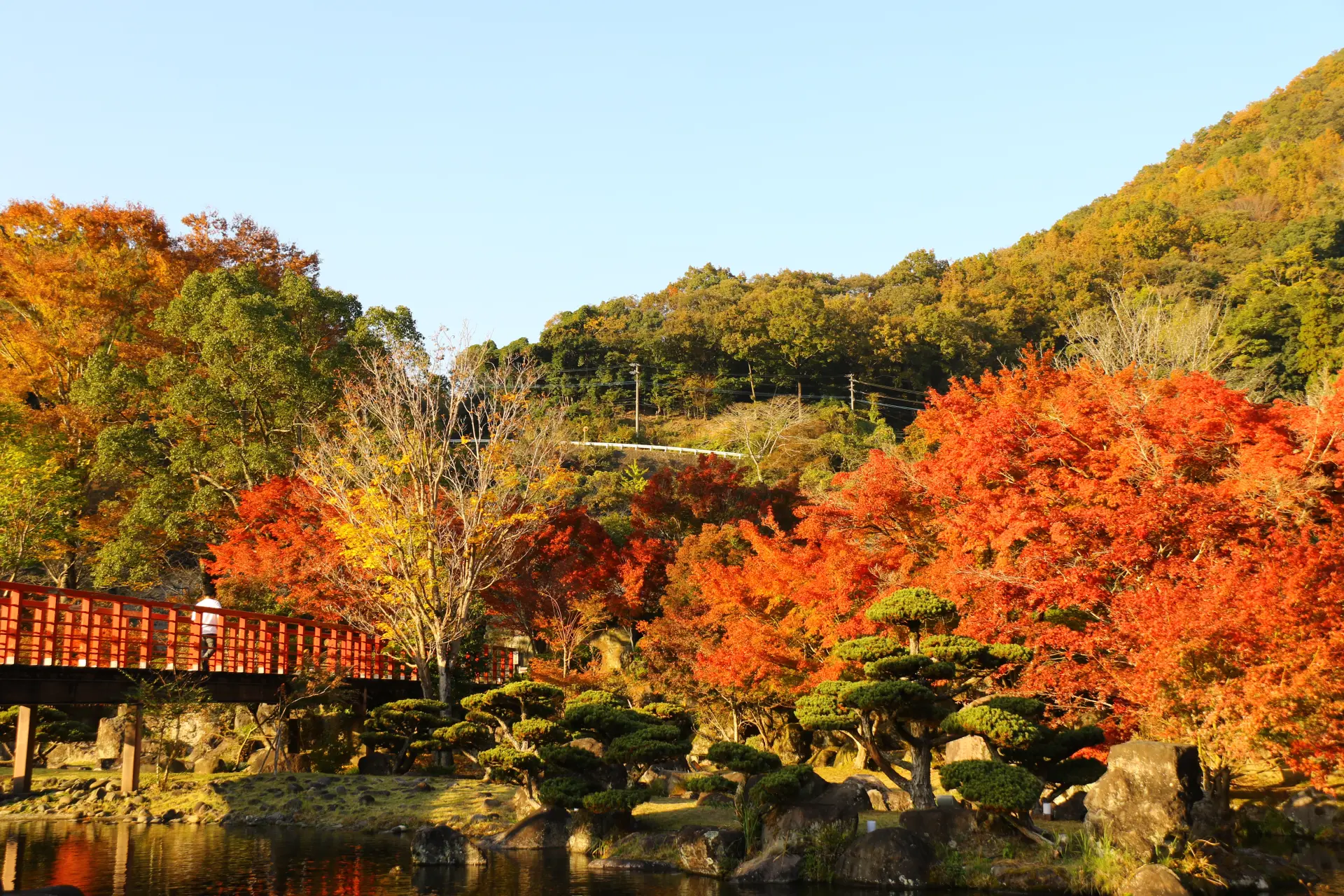
The Scenery of Tatehata is a representative scenic destination in Ura-Yabakei, located in Kusu Town. It lies along Prefectural Route 43 and is also known as Higurashi Pass.
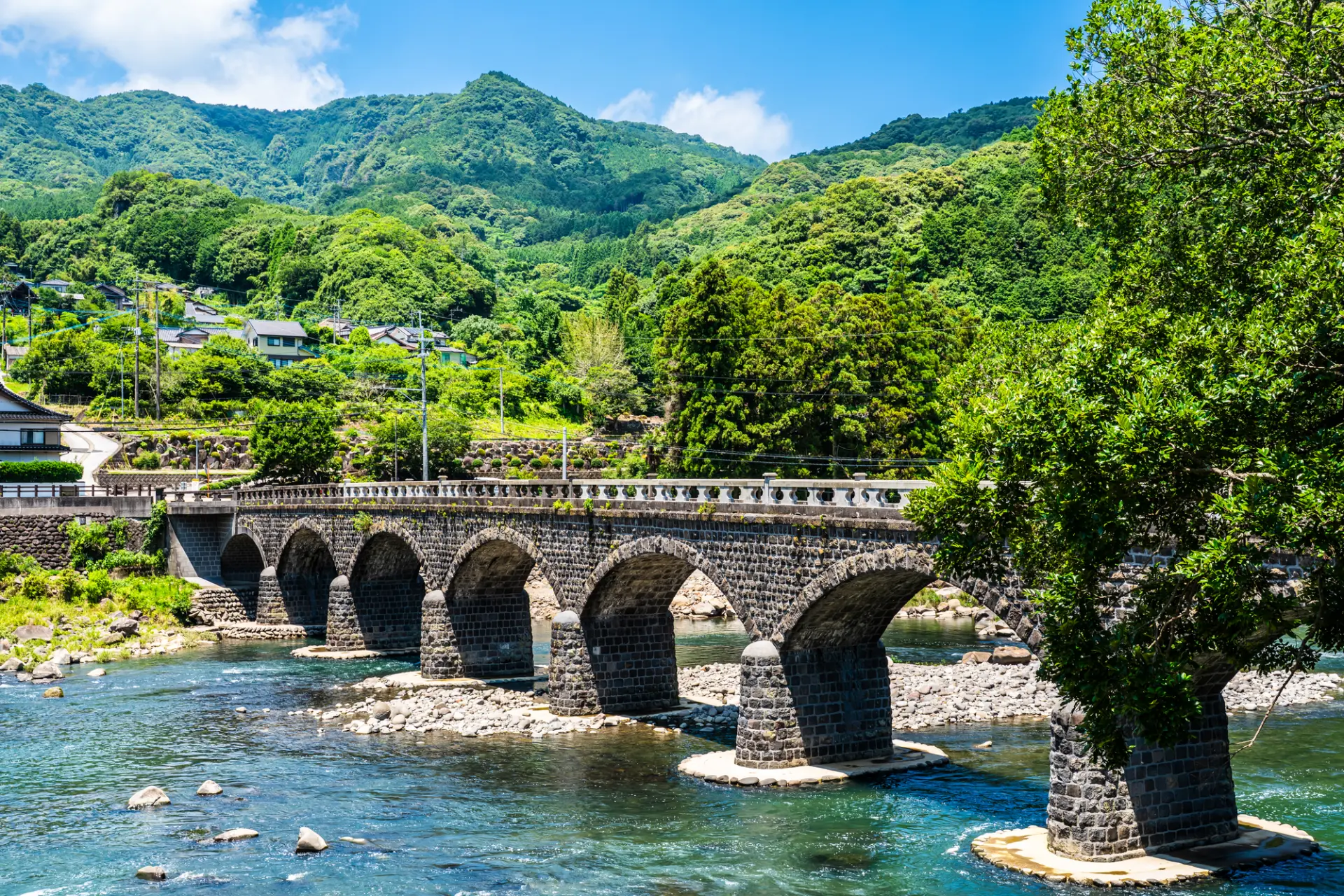
Its most distinctive feature is a series of unusual rocky peaks stretching for approximately 1 km. These peaks were formed as Yabakei welded tuff—hardened deposits from pyroclastic flows produced by volcanic activity—was eroded over countless years. The towering rock formations, vines covering the exposed rock faces, fields at the foot of the mountains, and surrounding rural landscape come together to create a peaceful scene reminiscent of an illustrated folktale.
The area is picturesque not only during the fall foliage season, when the mountainsides turn red and yellow, but also in winter, when the rock peaks are covered in snow.
Local Food and Hot Springs to Enjoy During Your Yabakei Trip
Along with touring Yabakei’s spectacular valleys, make time for its local food and hot springs.
Yamakake soba, a local favorite, consists of soba noodles served with grated Japanese yam or wild mountain yam. At Roadside Station Yabatopia near Ao-no-Domon, visitors can try dishes made with soba grown in Hon-Yabakei. At Mangetsu Waterwheel Restaurant in Shin-Yabakei, yamakake soba and soba manju buns are available.
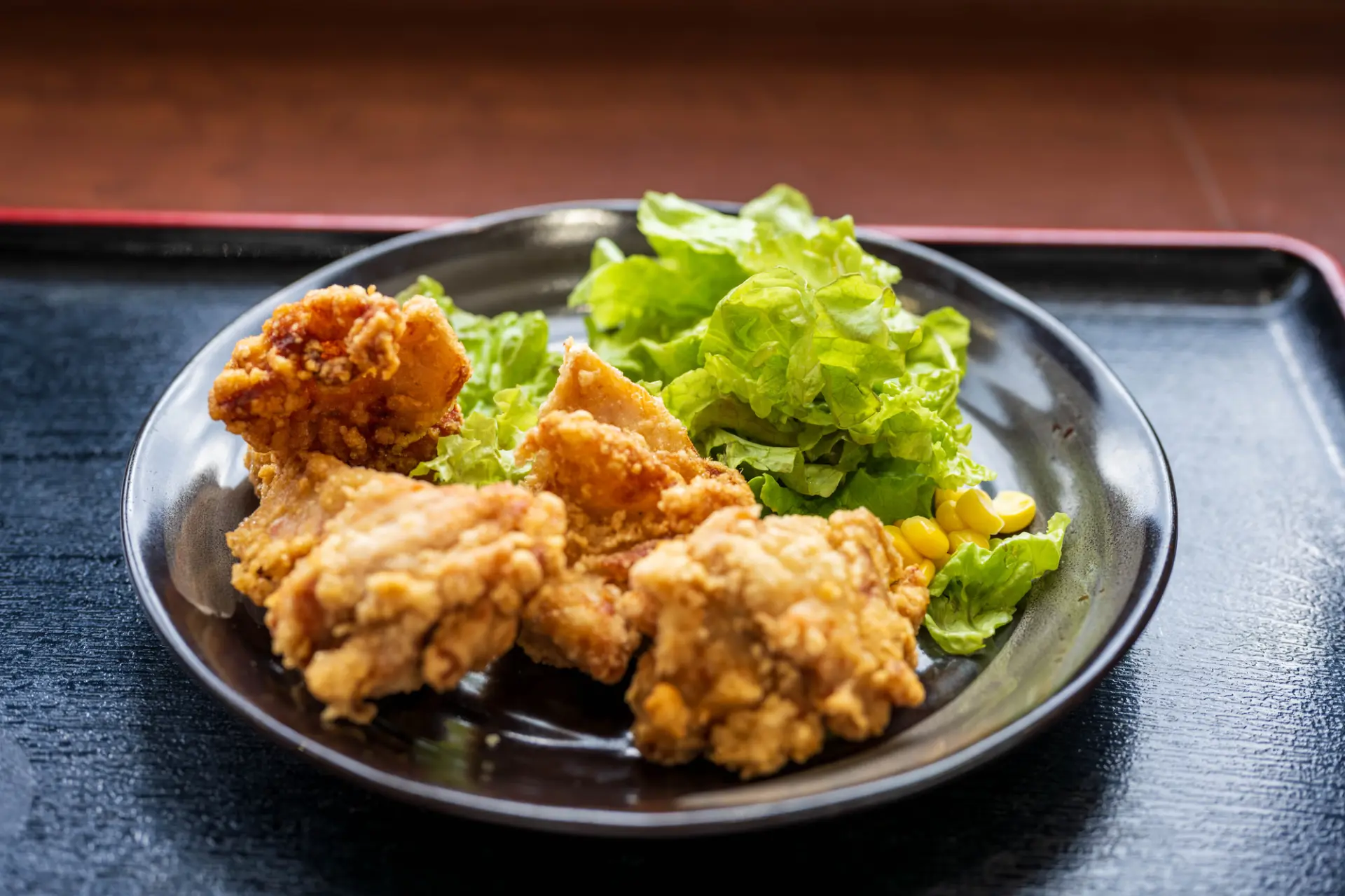
Nakatsu is also famous for Nakatsu karaage fried chicken. The city has numerous specialty karaage shops, each offering its own seasoning based on soy sauce or salt and flavored with ingredients such as garlic and ginger.
Momiji-no-Yu, a day-use hot spring facility scheduled to close on March 31, 2027, and Tororo-no-Yu are also recommended. A relaxing soak offers a refreshing break for both body and mind.
Sample Yabakei Sightseeing Itinerary
Based on the information above, the following is a sample day-trip itinerary for Yabakei. Because its attractions are spread across a wide area, planning with travel times in mind will help you explore more efficiently. This itinerary assumes that you will be traveling by car, so rent one around Nakatsu Station before beginning your sightseeing trip.
- 10:00 AM Depart by car from the Nakatsu Station area for a drive through Yabakei’s natural scenery
-
10:30 AM
Visit Ao-no-Domon Tunnel and Kyoshuho Cliff to see the hand-carved tunnel and the imposing rocky peaks lining the Yamakuni River
Be aware of sections closed to vehicle traffic and follow local instructions regarding parking and detours - 11:15 AM Admire the eight-arched stone Yabakei Bridge, also known as Oranda Bridge, and the surrounding scenery
- 11:40 AM Visit Rakanji Temple to see the 500 stone arhat statues and the temple nestled against the rocky cliffs
- 1:15 PM Have lunch at a restaurant in the Hon-Yabakei area and try soba or other local dishes
- 2:35 PM Stroll through the Japanese garden at Yabakei Dam Memorial Park Keisekien, with its ponds, waterfalls, and carefully arranged rocks
- 3:50 PM View the valley scenery created by unusual rock formations from the Hitome Hakkei observation deck
- 4:30 PM Return toward Nakatsu Station, drop off the rental car, and begin your journey home. Plan to arrive at the station at around 5:30 PM
Travel times are estimates and may vary depending on the time spent at each attraction and traffic conditions.
Frequently Asked Questions About Yabakei
Q
How long does it take to explore Yabakei?
Allow approximately half a day, or three to four hours, to explore mainly the Hon-Yabakei area, including Ao-no-Domon Tunnel, Kyoshuho Cliff, and Yabakei Bridge. Be sure to account for crowds during the fall foliage season.
Q
Are there fall foliage illuminations?
Illuminations are held at Keisekien Garden and Hisashi Momiji. The dates and times vary each year, so check the official information from Nakatsu City before visiting.
Q
Can I explore Yabakei without a car?
You can take a local bus from Nakatsu Station to visit the area around Ao-no-Domon Tunnel, Kyoshuho Cliff, and Yabakei Bridge. However, because Yabakei covers a large area and bus services are limited, renting a car is recommended.
Summary
This article has introduced Yabakei’s main attractions and distinctive appeal.
With unusual rock formations, valleys, and local life coming together in one landscape, Yabakei is one of Kyushu’s leading scenic destinations. Attractions are scattered across a broad area, and each season reveals a different side of the region, from fresh green foliage to autumn colors and snowy landscapes. Between sightseeing stops, try local specialties such as yamakake soba and Nakatsu karaage, or take a relaxing break at a day-use hot spring.
Start by choosing the places you would most like to visit, then use the sample itinerary to plan your trip.
If you are also exploring other destinations in Oita Prefecture, take a look at the following article for more travel-planning ideas.

Author
Writers & Editors
GOOD LUCK TRIP Editors
Sharing lesser-known ways to experience Japan with the world!