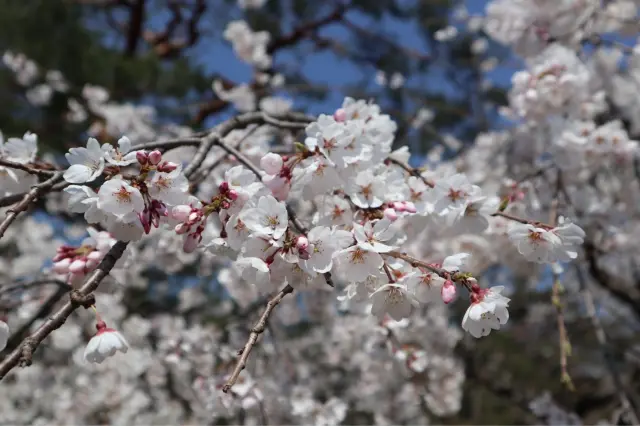
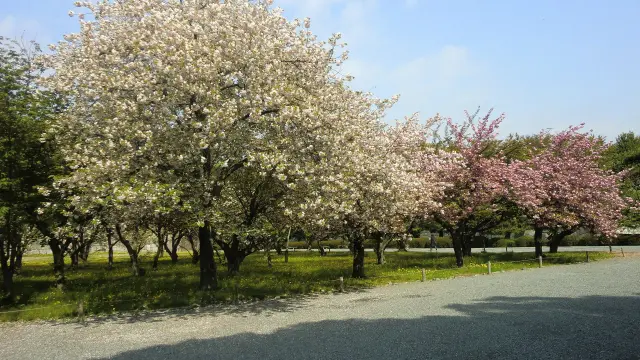
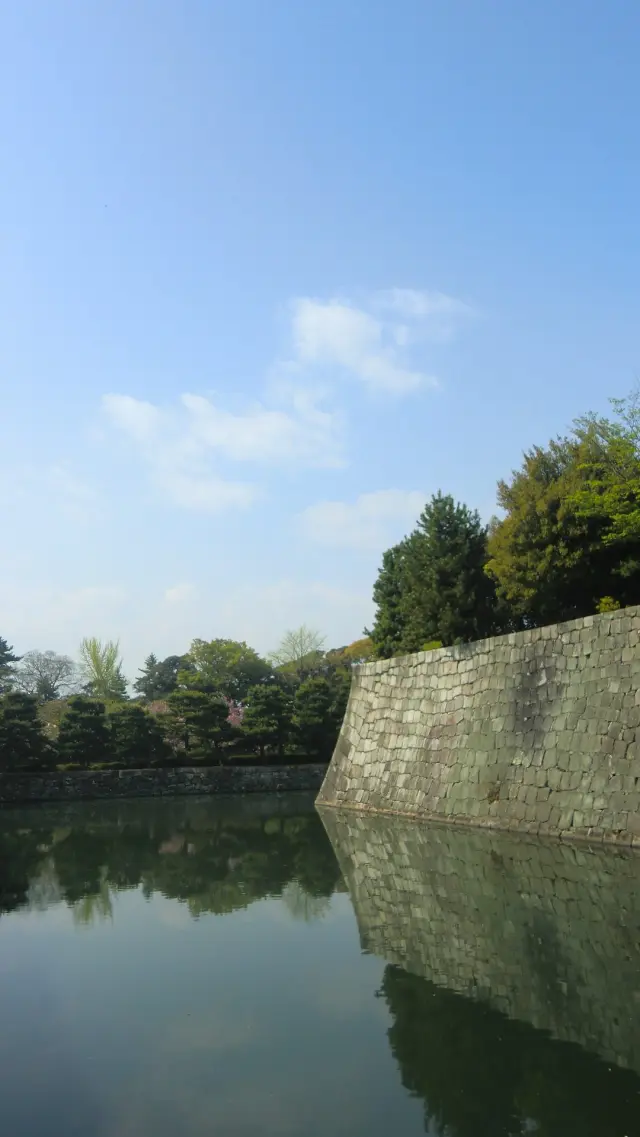
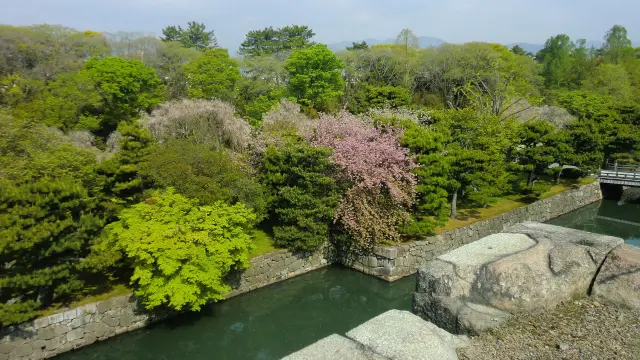
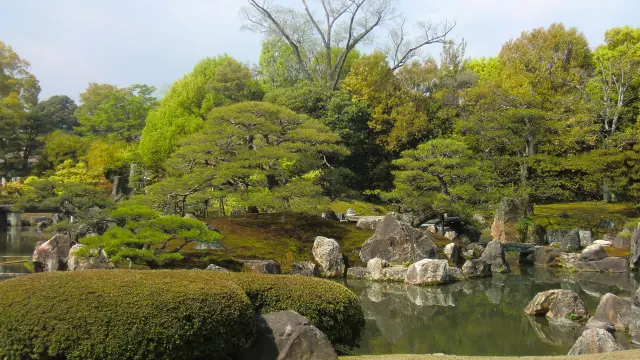
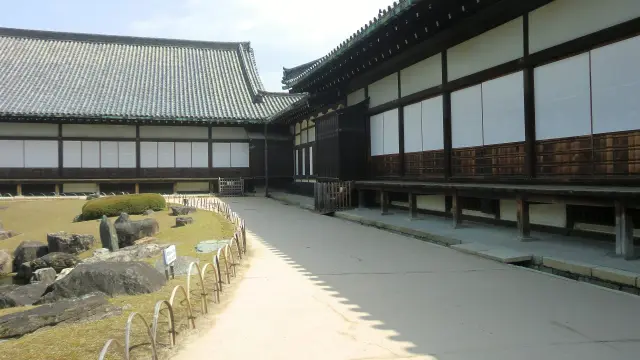
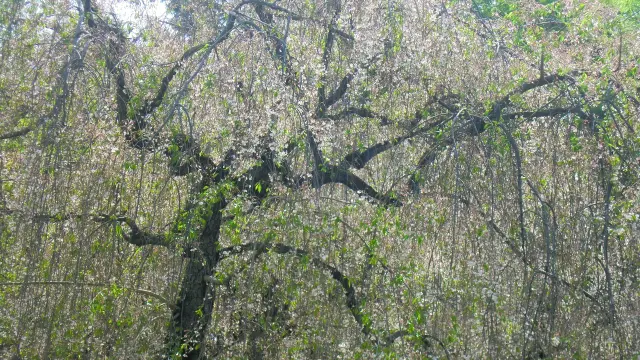
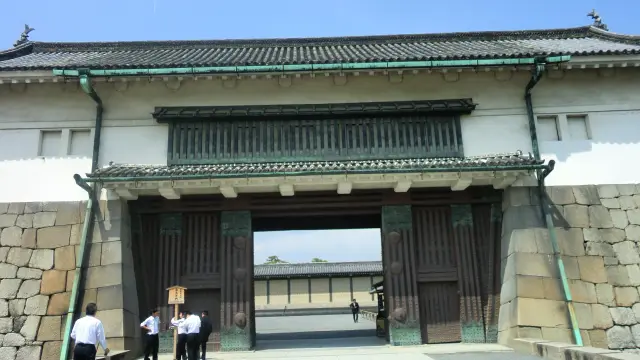
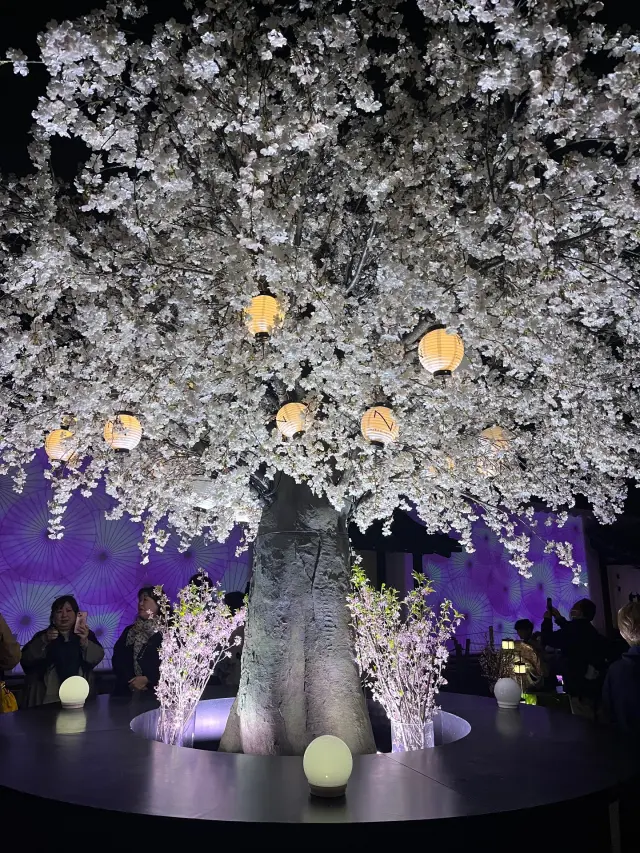
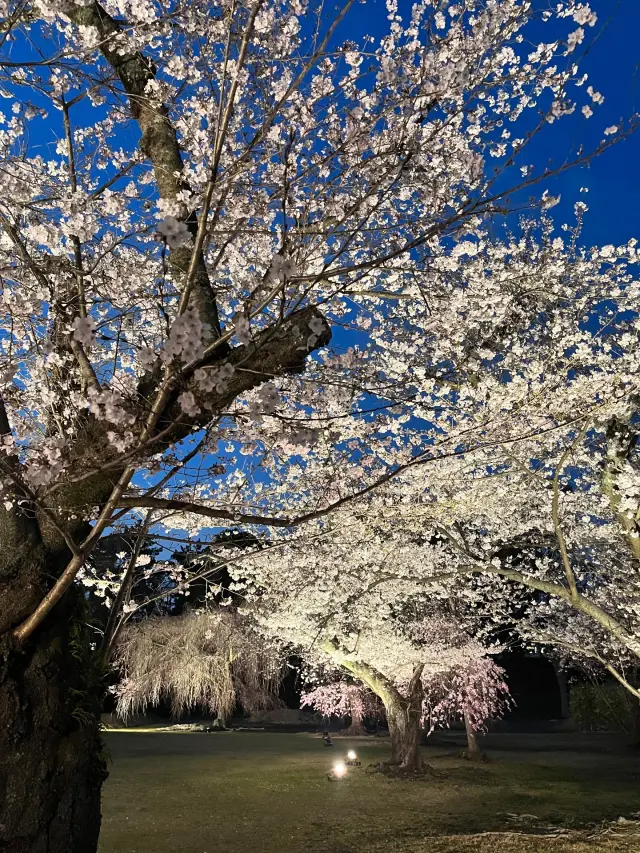
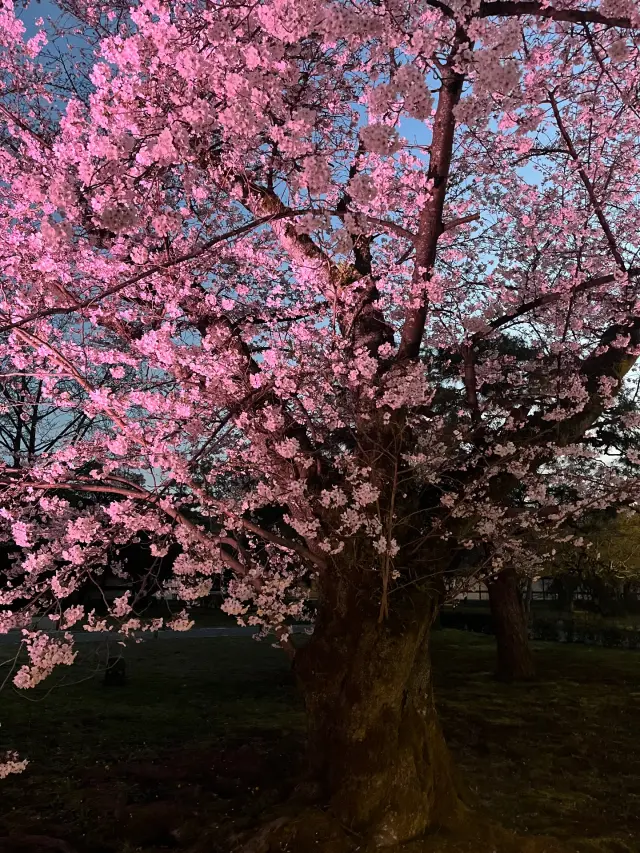
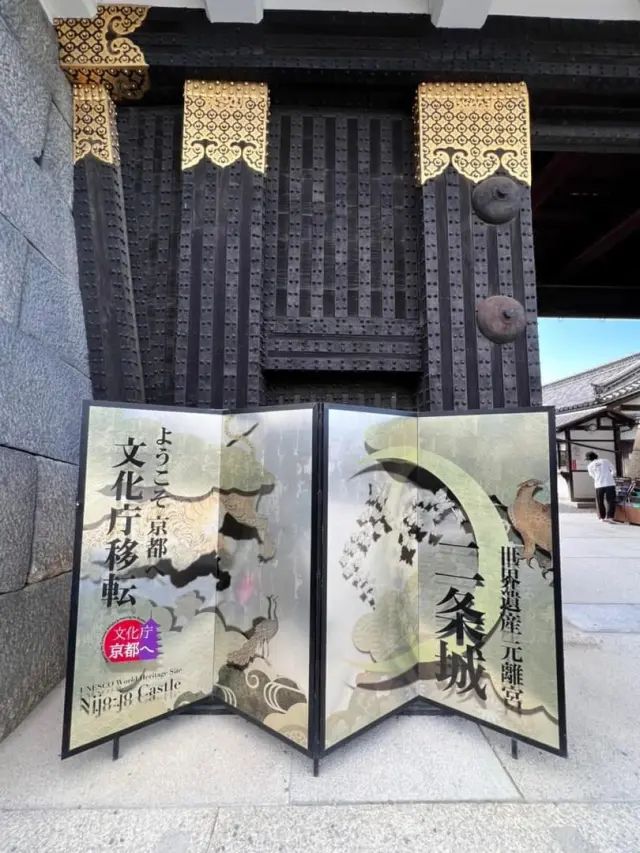
Nijo-jo Castle is very famous for its cherry blossoms. There are many varieties inside the castle grounds, from early-blooming to late-blooming ones, so the viewing season lasts longer than at places with only one variety. The Nijo-jo Castle Cherry Blossom Festival and nighttime illuminations are also held every spring. Although I visited near the end of cherry blossom season, luckily I still saw quite a few trees in full bloom.
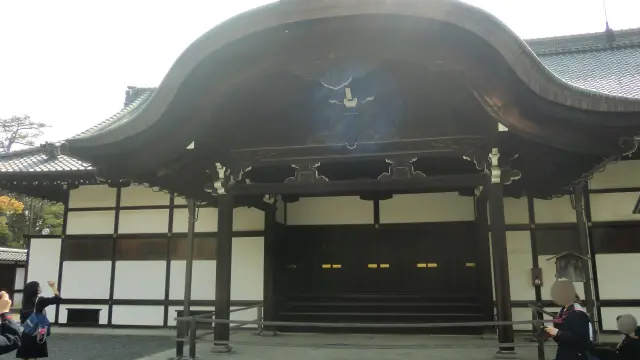
Nijo-jo Castle is also very important in Japan’s modern history. It was at Ninomaru Palace that the 15th shogun, Tokugawa Yoshinobu, asked for opinions on returning political authority to the emperor. He later formally returned power to the imperial court, symbolizing the end of Tokugawa shogunate rule. Today, when visiting Ninomaru Palace, you can also see mannequins in the Great Hall recreating this historical scene.
Another interesting feature of Ninomaru Palace is the corridor commonly known as the “nightingale floor.” It makes a sound when you walk on it. I tried really hard to see if I could cross without making any noise, but it was simply impossible. As soon as you put any weight on it, it chirps.
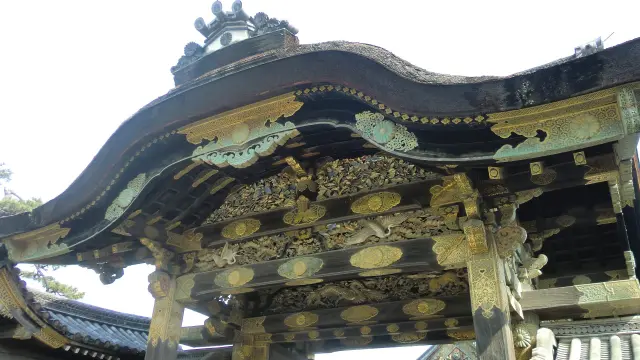
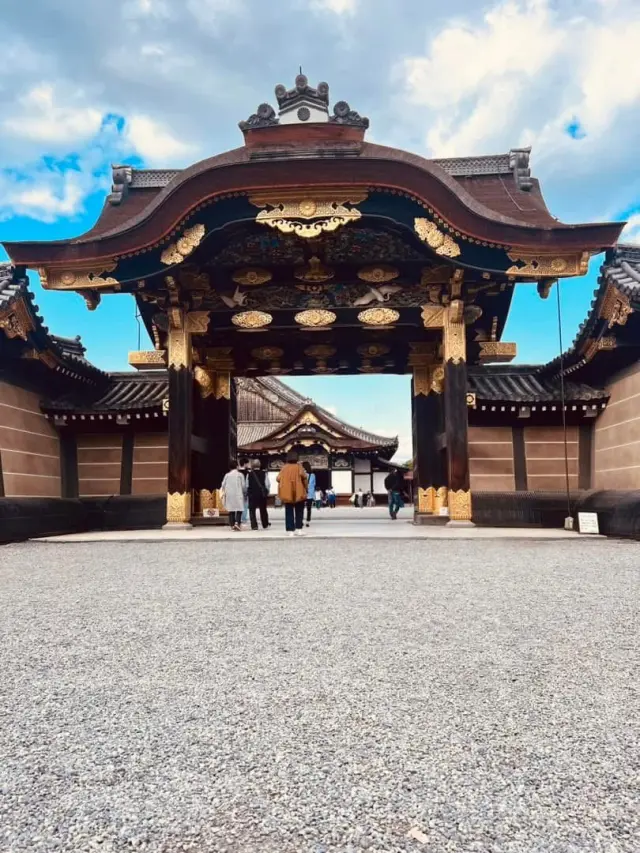
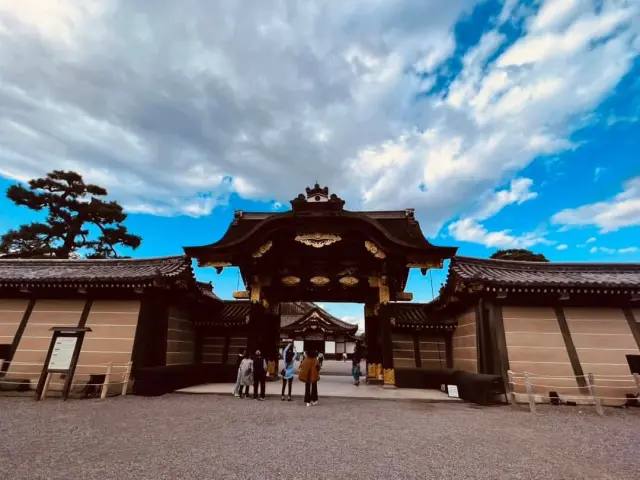
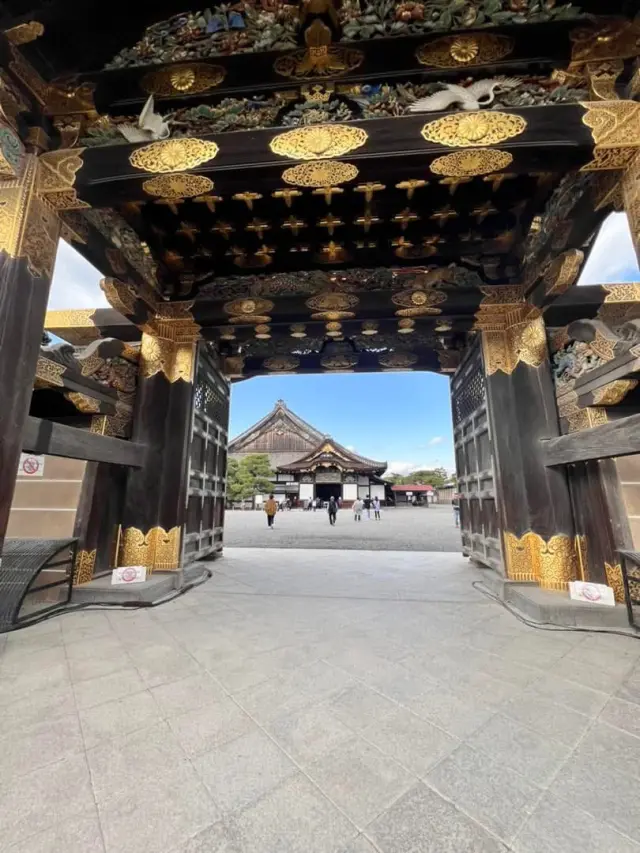
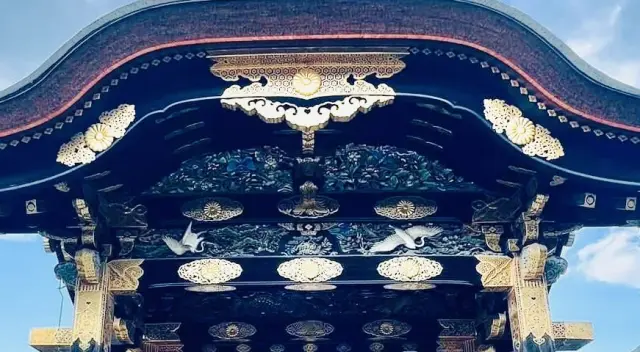
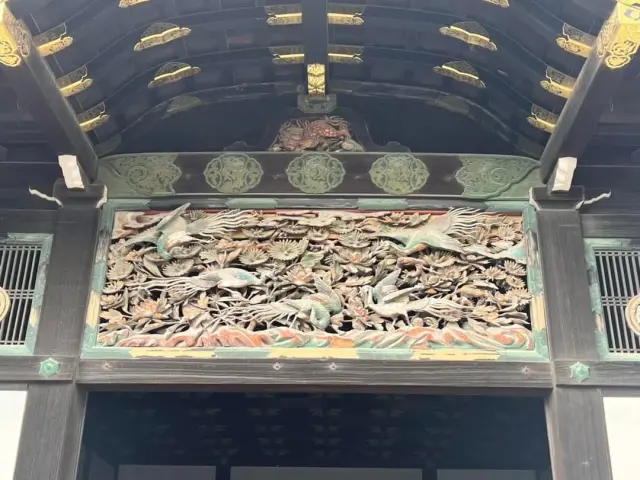
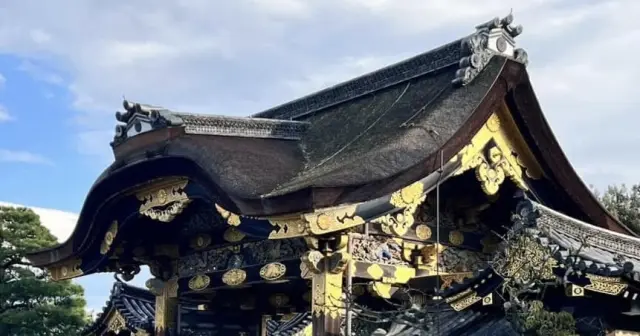
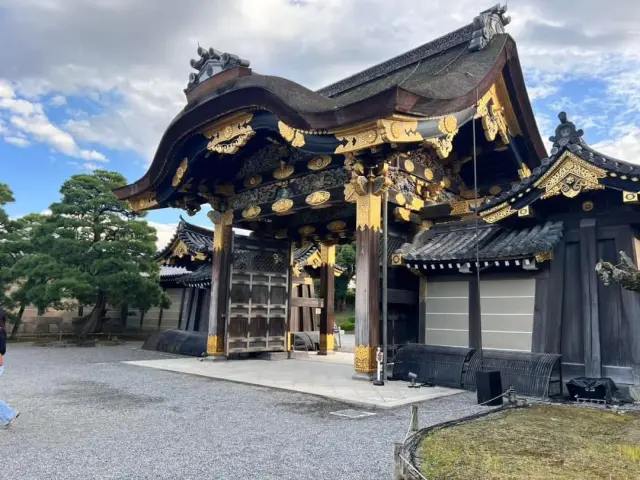
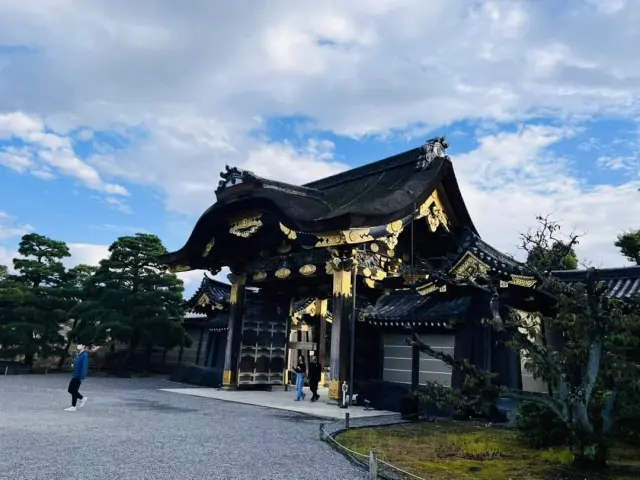
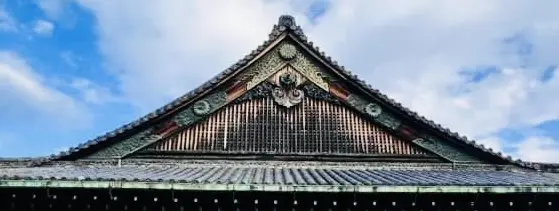
My personal favorite is still the Karamon Gate before entering Ninomaru Palace. The cypress-bark roof has karahafu gables on both the front and back, and the gate is covered in vividly colored carvings of pine, bamboo, plum blossoms, cranes, Chinese guardian lions, and more. It’s truly magnificent. Many traditional buildings in Kyoto tend to have a more understated feel, but the Karamon gates at Nijo-jo Castle and Toyokuni Shrine take a completely different approach. Just looking at them, you can really feel the difference that comes with being in power.
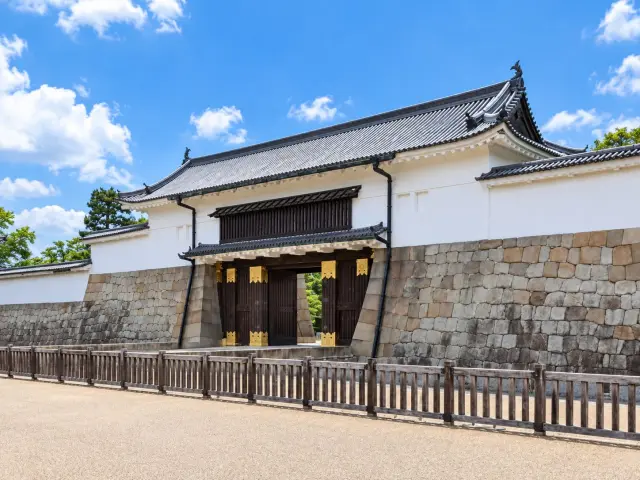
Nijo-jo Castle originally also had a five-story keep, said to have been relocated from Fushimi Castle, but it burned down after being struck by lightning in 1750 and was never rebuilt. Today, you can only climb the former keep’s stone base to see the ruins and surrounding scenery, which feels a little unfortunate. But from another perspective, the truly valuable part of Nijo-jo Castle isn’t the keep, but the fact that Ninomaru Palace has survived. Most of the original palaces at Edo Castle, Osaka Castle, and Nagoya Castle have disappeared, and Nagoya Castle’s Honmaru Palace was only recently reconstructed based on historical records. Although part of Kawagoe Castle’s Honmaru Palace remains, it is no longer a complete palace complex. Nijo-jo Castle’s Ninomaru Palace, however, has been preserved intact, along with its Kano school wall paintings, transoms, and decorative metal fittings. This is what truly makes it irreplaceable among Japanese castle architecture.