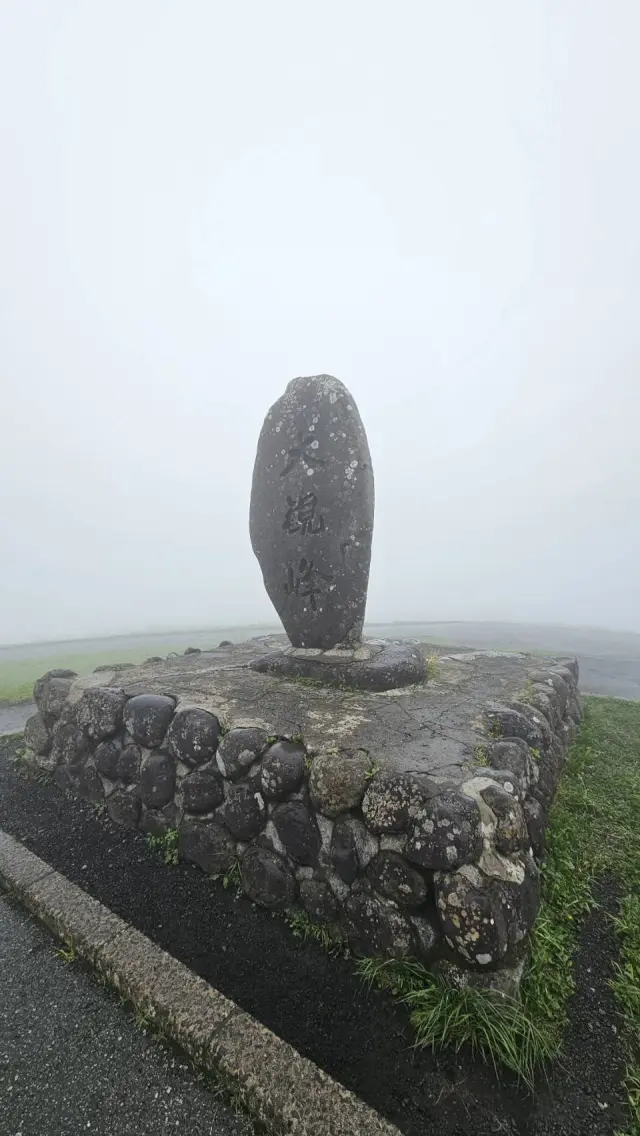
After Typhoon Mekkhala passed, we visited Daikanbo, a famous spot in Aso, Kumamoto. We had been looking forward to the sweeping, majestic views of Mount Aso’s outer rim that we’d seen in travel guides. Instead, we were greeted by thick fog so dense we could barely see in front of us.
The clouds and mist draped over the mountaintop like a light veil, with the scenery appearing and disappearing before our eyes. For a moment, it was hard to tell whether we were at Qingtiangang in Taipei or Daikanbo in Kumamoto, Japan.
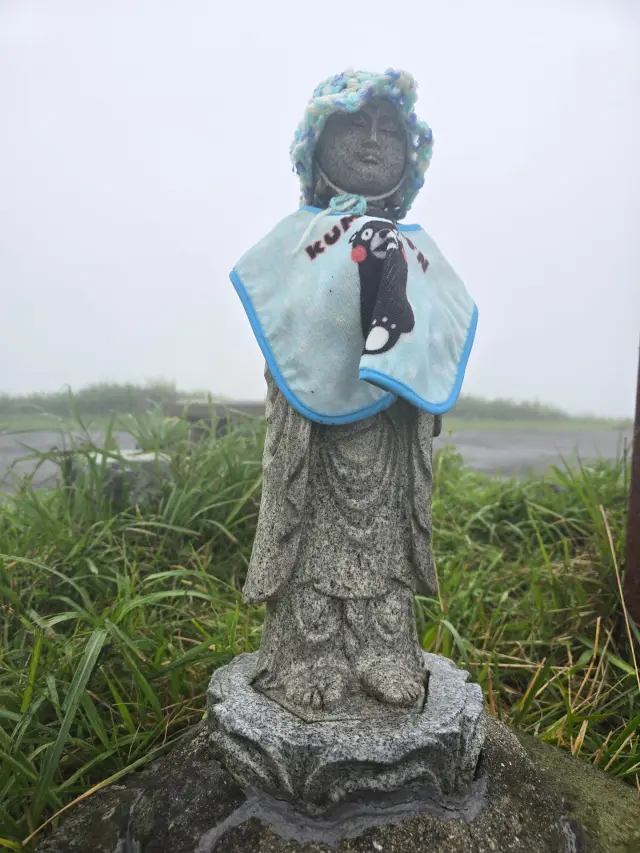
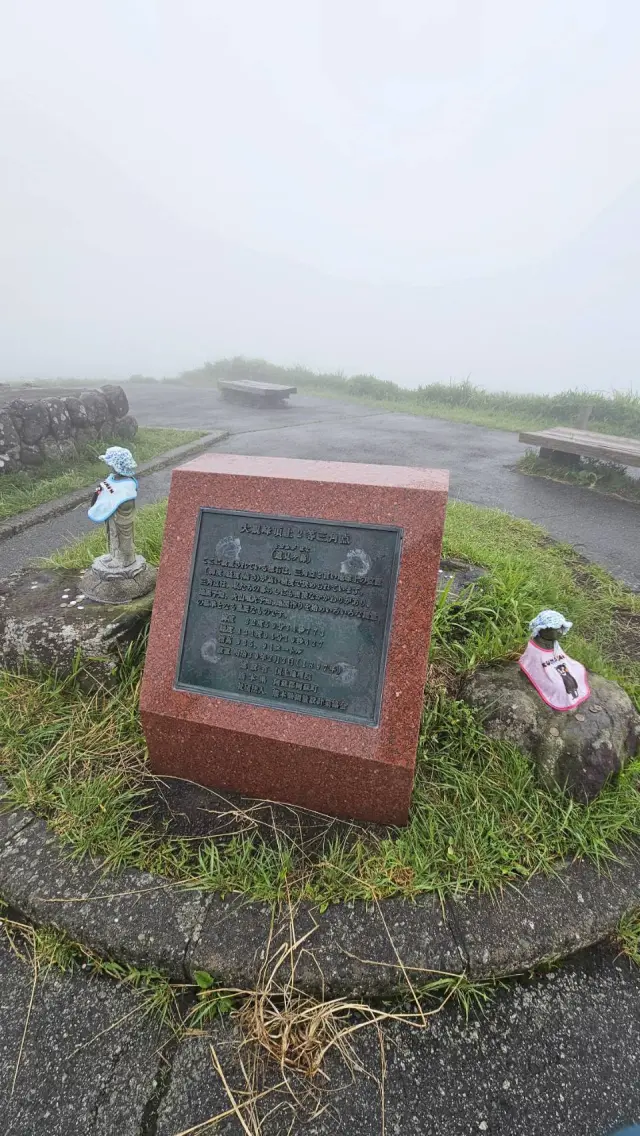
A fine drizzle was falling, so we quickened our pace from the parking lot to the observation deck. Although we couldn’t see the grand mountains and grasslands, we experienced a different kind of quiet, mysterious atmosphere. At the viewpoint, two deity statues were wearing cute Kumamon scarves, as if silently watching over every traveler who had come from afar. They added a touch of warmth and surprise to the rainy journey.
Perhaps the most charming thing about Daikanbo is not only its wide-open views under clear skies, but also the completely different faces it shows in different weather. The blend of thick fog, light rain, and a gentle breeze gave this trip an unexpected sense of wonder, making it one of my most memorable Kumamoto landscapes.
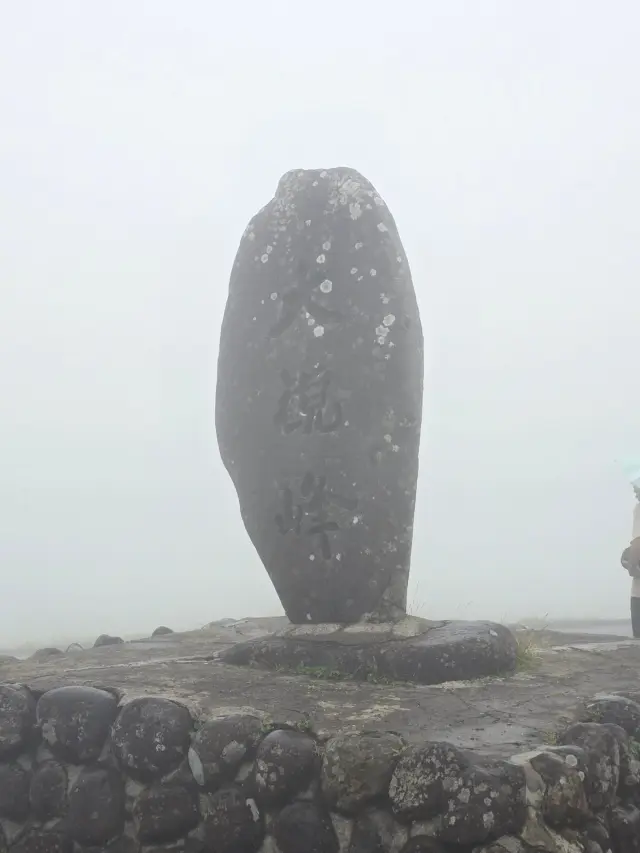
Daikanbo | Review by 陳泰任
Other Reviews by 陳泰任
-
Aso Shrine (Kumamoto)
The master god who has created Aso, Takei Watatsu no Mikoto, and 12 of his family gods are enshrined here. As the head of Higo Province, this is ranked top over nearly 500 branch Aso Shrines nationwide. Its history goes back more than 2000 years. Its faith is fused with volcano worship that believes Mt. Aso to be a god.
I visited Shirakawa Spring Shrine in Minami-Aso, Kumamoto, Japan. The crystal-clear spring water flows year-round, and the cool water instantly washed away the summer heat. It also made me slow down and soak in the quiet afternoon, enjoying nature’s purest kind of healing.
Just as we were about to leave, we happened to notice a roadside vendor’s map marking the “Great Stone Footprint of Aso Daigongen.” Curious, we followed our phone map and set off along a country road for about 20 minutes, beginning an unexpected little adventure.
The fields along the way were peaceful, with only the sound of wheels and the wind breaking the silence. When we arrived, a massive rock stood quietly before us. According to Aso mythology, it is said to be the sacred footprint left by Takeiwatatsu-no-Mikoto, also known as Aso Daigongen. Local residents later rediscovered this sacred site through references in old records, giving the huge stone an even deeper sense of history and faith.
There are no big crowds here, and there aren’t many tourist facilities. Because it’s remote and not easy to access, tour groups rarely visit. But that is exactly why it has kept such an authentic, untouched atmosphere.
For travelers who enjoy independent trips and love exploring hidden places, this mysterious giant stone near Shirakawa Spring is more than just a natural wonder shaped by the Aso volcano. It is also an unforgettable travel memory worth savoring slowly. -
-
Takachiho Gorge
Takachiho Gorge is a narrow v-shaped chasm made over thousands of years by the Gokase River’s erosion of Mt. Aso’s volcanic rock. This spectacular place is surrounded by cliffs that average 80 meters in height (reaching up to 100 meters) and extend along for 7 kilometers. Takachiho Gorge has been designated as a National Place of Scenic Beauty.
Takachiho Gorge in the wind and rain had its own poetic charm.
On 20260627, after being greeted by a rare morning rainbow over Kumamoto Castle, my very first trip to Kyushu, Japan began. Following the journey, I arrived at Takachiho Gorge in Miyazaki Prefecture. Although the area was under the outer circulation of Typhoon Mitag, with a steady drizzle along the way, it made the mountains and forest look even more lush. Mist drifted through the gorge, like an ink-wash landscape painting. The rushing stream surged past. I couldn’t get close to Manai Falls, and I also missed the chance to take a leisurely boat ride through the gorge. Still, the rain and mist created a different kind of quiet beauty and emotion.
Travel doesn’t always go exactly as planned, but the wind and rain made the experience even more meaningful. It also made this Kyushu memory feel even more precious and unforgettable. -
-
Kumamoto Castle
Kumamoto Castle is the famous castle built by Kiyomasa Kato in 1607. It was built using the latest, cutting edge techniques at the time and was the setting of many important moments in Japan’s history.
During a rare vacation, after overcoming all kinds of obstacles, I finally set off on my long-awaited trip to Kyushu on June 26, 2026. It was also my first time visiting Japan.
Before departure, Typhoon Mikla swept across Japan, adding a sense of uncertainty and nervousness to the trip. With both anxiety and excitement, I flew to Kumamoto.
After arriving safely, the next morning, a brilliant rainbow stretched across the sky above Kumamoto Castle. It felt as if it were blessing the land after the storm and opening the most beautiful chapter of this brief journey.
Seeing a rainbow after the wind and rain was not only a rare and beautiful sight, but also a symbol of hope and good fortune. It made this trip to Kumamoto one of the most unforgettable and precious travel memories of my life. -