Kanazawa Station's Drum Gate is truly impressive! The enormous wooden gate was inspired by traditional Noh drums, and its design is distinctly Kanazawa. Paired with the transparent glass Hospitality Dome, it beautifully blends tradition and modernity.
On this visit to Kanazawa Station, I especially enjoyed taking photos in front of the Drum Gate. It feels different from every angle. During the day, sunlight shining on the glass roof gives it a modern look, while at night, the lights add a romantic atmosphere. It's a great place to take travel photos.
Kanazawa Station isn't just a place to catch a train; it's like a work of architecture worth admiring in its own right. After visiting in person, I felt Kanazawa's unique cultural charm from the moment I arrived at the station, and the city left a deep impression on me.
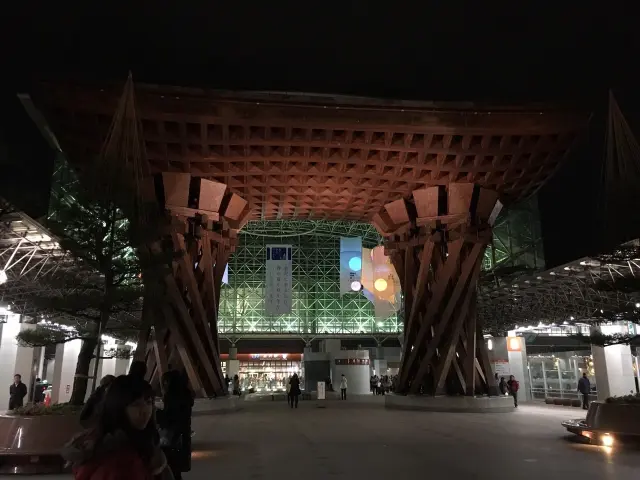
Drum Gate and Hospitality Dome (Kanazawa Station) | Review by Gina C
Other Reviews by Gina C
-
Hakodate Bugyosho
Hakodate Magistrate’s Office faithfully recreates the Edo Shognate’s security base around Japan’s northern territory. It is built at the original location in the former Goryokaku (the star-shaped fort), using as much similar skills and provisions as those in the Edo Period, such as pine beams, Bingo tatami mats or sliding doors with hand-made paper.
The Hakodate Magistrate’s Office is located in Goryokaku Park. It was an important administrative institution of the Edo shogunate in Hokkaido and is also a representative attraction for learning about Hakodate’s history. The traditional wooden architecture combined with the scenery of Goryokaku makes you feel as if you’ve stepped into a time tunnel through Japanese history.
This time, I went inside the Hakodate Magistrate’s Office and saw the tatami mats, wooden corridors, and traditional rooms. It really had the distinctive features of ancient Japanese architecture. Through the exhibits and explanations, I also learned more about the history of the shogunate in Hokkaido at the time, as well as stories related to the Battle of Hakodate. -
-
Goryokaku Park
Goryokaku, a Western-style fortress, was built in 1866 and served as the political capital of Hokkaido until the new Meiji government took over. It later became a popular tourist attraction after it was opened to the public as "Goryokaku Park" in 1914 and was designated as a national special historic site.
Goryokaku Park is one of Hakodate’s most iconic historical attractions. What makes it especially unique is that from above, you can see the star-shaped fortress, which is very impressive. The entire park is surrounded by green trees, creating a beautiful contrast with the surrounding cityscape and making you want to take photos to remember it.
This time, I visited Goryokaku Park in person and took a leisurely walk along the paths of the star-shaped fortress, enjoying the moat and natural scenery while taking in the historic atmosphere of the site. Walking through the spacious grounds was very pleasant, and I could also experience Hakodate’s unique cultural charm. -
-
Shurijo Castle Park
Shurijo is a proud Okinawan icon whose brightly-painted vermillion walls also make it the only red castle in Japan. The castle served as the esteemed seat of politics, trade and culture for the Ryukyu Kingdom that existed during the 450 years between 1429 and 1879.
Shurijo Castle Park is one of Okinawa’s most iconic historical attractions. As soon as you enter the grounds, you can feel the strong culture of the Ryukyu Kingdom. The red gates and traditional architecture are very distinctive and quite different from typical Japanese castles. There are beautiful photo opportunities all along the way.
This time, I visited in person and took a leisurely walk through the castle ruins, admiring the vermilion buildings and surrounding scenery while also learning quite a bit about the history of the Ryukyu Kingdom. Although some buildings are being reconstructed, you can still sense Shurijo Castle’s former splendor and importance. -