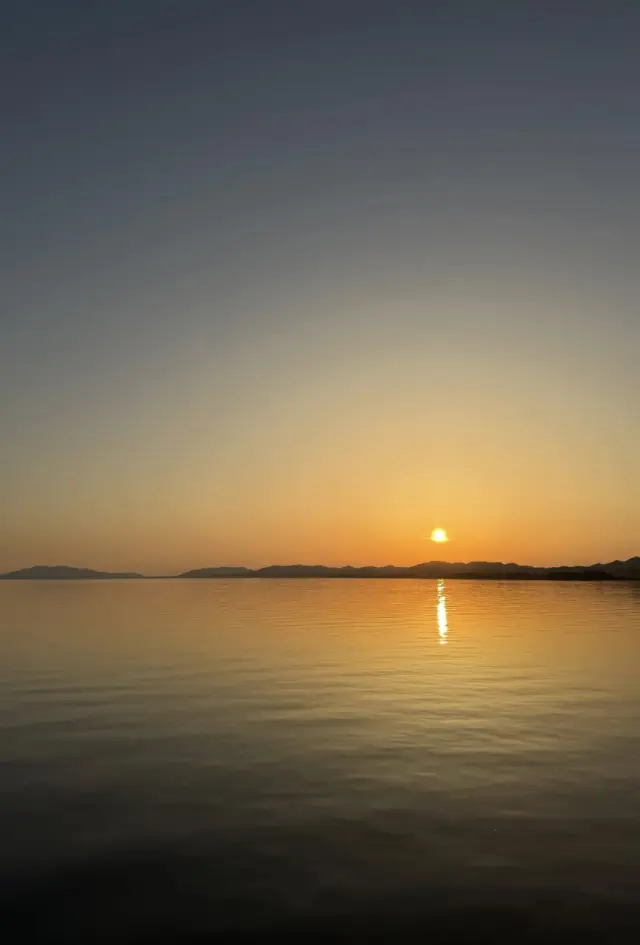
If you come to Matsue, Shimane, without seeing the sunset over Lake Shinji, then this trip really feels like it’s missing half its soul! As the sun slowly begins to sink in the evening, the entire sky shifts from a faint grayish blue into warm honey gold and soft orange. The gradient is so clear and luminous that you simply can’t look away—it’s breathtakingly beautiful!
The round sunset looks like a glowing golden egg yolk suspended above the silhouettes of the rolling mountains in the distance, its harsh light softening into the gentlest orange-yellow afterglow. The most incredible part is the reflection on the lake. A light breeze creates layer after layer of incredibly delicate ripples, while the sunset stretches a straight, shimmering shaft of golden light across the water. It looks as though countless flecks of gold have been scattered over the calm lake. Whether you see it with your own eyes or capture it through a camera lens, the scene is as beautiful as a natural watercolor painting!
The waters of Lake Shinji truly have an incredible kind of magic. The surroundings are wide open, with the water meeting the sky, and the lakeside air carries a touch of moisture and a cool breeze that lets you completely relax. Standing on the shore, listening to the waves gently lap against it, you’re surrounded by travelers and local residents also waiting for the sunset. Everyone quietly watches the sun sink little by little, as though the whole world has been switched to slow motion. All your worries and the exhaustion of rushing through your itinerary are instantly washed away by the orange-gold scenery of the lake and mountains.
Lake Shinji is not only renowned as one of Japan’s 100 best sunset views, but its local specialty, the “Seven Delicacies of Lake Shinji,” is also famously excellent. After taking in such a spectacular and soothing sunset, head straight for a steaming bowl of rich, flavorful shijimi clam soup or some fragrant grilled eel. With your mouth full of savory flavor and your eyes full of the sunset’s afterglow, the combined visual and culinary pleasure reaches its absolute peak!
From the magical moment when the sky changes from blue to gold, to the golden sunset casting a gorgeous shaft of light across the lake, and finally to the ultimate tranquility of the distant mountains blending with the water, twilight at Lake Shinji has a romantic charm that stays with you for a lifetime after seeing it just once. Slowing down and casually waiting by the lake in silence for nature to work its magic is definitely one of the most luxurious and deeply restorative pleasures of a leisurely road or rail trip through the San’in region!
Other Reviews by Jk
-
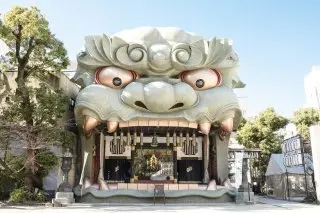
Namba Yasaka Shrine
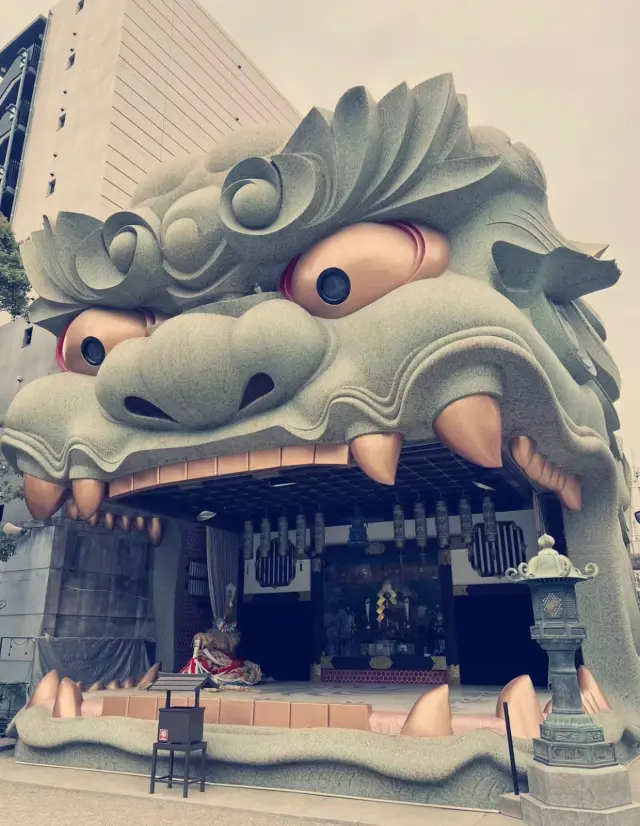
”Namba Yasaka Shrine”, located in the Namba area of Minami in Osaka, is a historic shrine said to have been founded during the reign of Emperor Nintoku (313-399).
Tucked away in the quiet residential backstreets of Osaka’s Namba area, the moment you enter the grounds of Namba Yasaka Shrine and look up, the enormous Lion Hall will definitely startle you wide awake! This lion head statue, standing 12 meters tall and 11 meters wide, has a fierce, cavernous mouth and huge, glaring eyes, giving the entire hall an overwhelmingly powerful presence. Legend has it that this giant lion’s mouth possesses boundless divine power, “swallowing up” all the misfortune, bad luck, and evil around it in one bite, while drawing in endless good luck, success, and prosperity! Whether you’re praying to pass your exams, get promoted at work, or achieve business prosperity, standing before this imposing lion with your hands together in prayer gives you an incredible sense of security and strength. Take a few low-angle photos with it, and the dramatic effect is so intense that it’s incredibly satisfying to see!
-
-
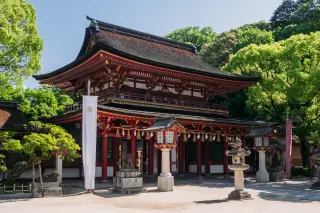
Dazaifu Tenmangu Shrine
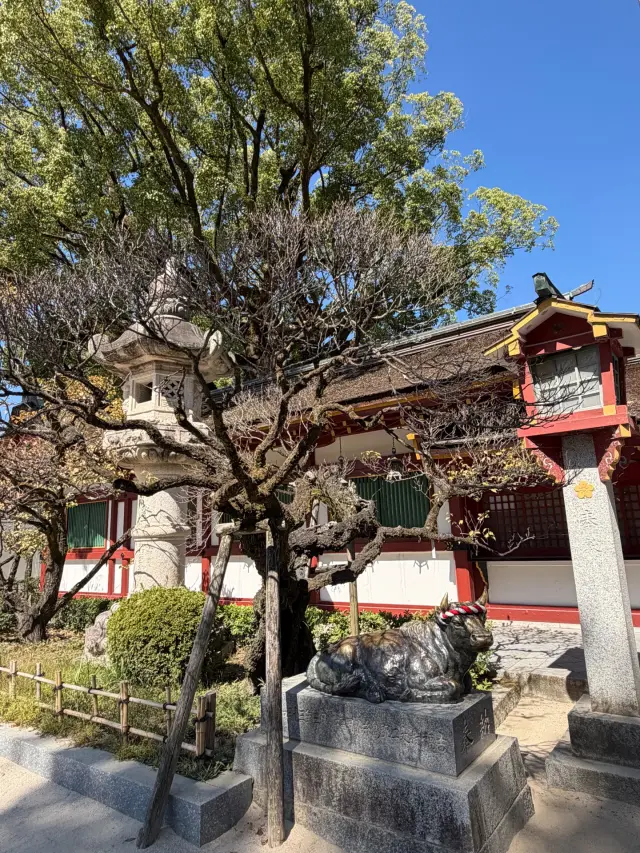
Dazaifu Tenmangu is the head shrine of 10,000 different shrines across Japan dedicated to the spirit of Sugawara Michizane. Sugawara was an acclaimed scholar who was deemed innocent posthumously after being exiled to Dazaifu by Kyoto’s Imperial Court. The main hall was built over his grave and has been preserved as a sacred site of Tenjin worship for over 1100 years.
As soon as you step out of Nishitetsu Dazaifu Station and make your way through the lively Omotesando to Dazaifu Tenmangu Shrine, it instantly feels like you’ve entered a Japanese garden filled with scholarly energy and classical poetry! This is the head shrine of more than 10,000 Tenmangu shrines across Japan and enshrines Sugawara Michizane, the god of learning. Every year, countless students preparing for major exams and travelers praying for success in their careers come here to draw fortunes and pray for blessings. Upon entering the shrine grounds, the first things you see are the three red arched Taiko Bridges spanning Shinji Pond. They represent the past, present, and future. As you cross the red bridges step by step toward the main sanctuary, shaded by green trees on both sides with reflections shimmering on the water, even a restless heart gradually becomes calm.
The first thing you have to do here is touch the sacred ox statues throughout the grounds, which have been polished to a shine by countless visitors! Legend says that if you touch the sacred ox’s head and horns and then touch your own head, you can absorb the wisdom of the god of learning, sharpen your mind, and improve your studies. More than 6,000 tobiume and other plum trees are planted throughout the shrine. When the plum blossoms bloom in early spring, the garden fills with a subtle fragrance, and the mix of pink and white is beautiful beyond words. After praying, walk back along the path to Omotesando and grab a freshly baked, crispy, piping-hot Umegae mochi stamped with a plum blossom design. The outside is slightly crisp, while the red bean filling is warm and soft. Paired with a sip of hot tea, the entire pilgrimage feels soothing and satisfying! -
-

Kumamoto Castle
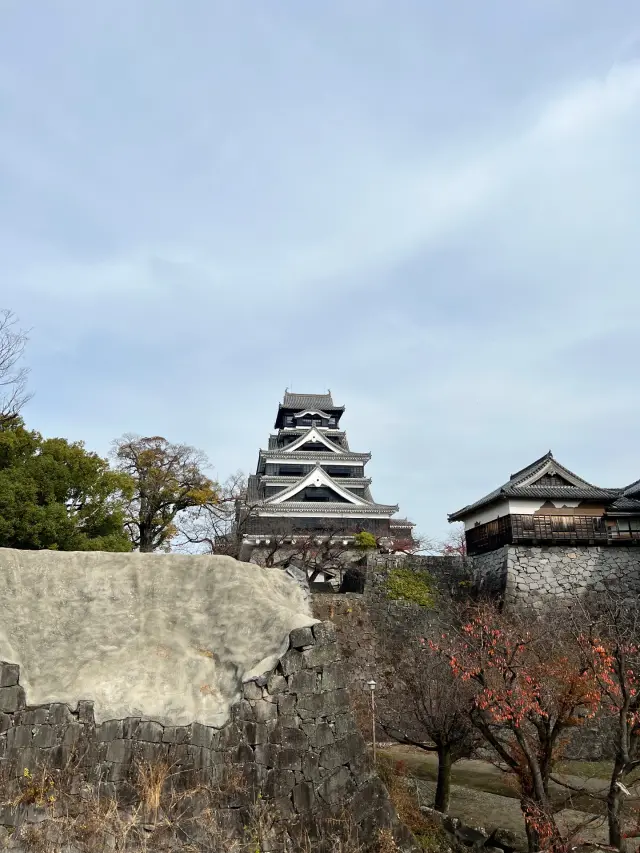
Kumamoto Castle is the famous castle built by Kiyomasa Kato in 1607. It was built using the latest, cutting edge techniques at the time and was the setting of many important moments in Japan’s history.
Kumamoto Castle, one of Japan’s three great castles, instantly overwhelms you with the imposing power of a top-tier military stronghold from the Warring States period as you look up at its massive, jet-black main keep standing tall and commanding! Personally designed by the castle-building genius Kato Kiyomasa, this legendary castle’s most astonishing feature is undoubtedly the ingeniously curved “musha-gaeshi” stone walls. The base looks gently sloped and easy to climb, but it gets steeper the higher you go, becoming almost completely vertical at 90 degrees near the top. Even the most agile ninja or samurai would only end up hopelessly sliding back down halfway! The entire castle suffered devastating damage from powerful earthquakes, but today its main and secondary keeps have risen again through an impressive combination of modern engineering and traditional craftsmanship. The black wooden exterior walls and pure white accents look incredibly striking in the sunlight. Walking along the newly built accessible elevated viewing walkway to the top floor of the main keep, you can take in sweeping views of downtown Kumamoto and the distant Aso mountain range. Its resilient, indomitable spirit truly fills you with deep respect the longer you look!
-