

The endless rows of torii gates are really spectacular. You'll need good stamina if you want to climb the whole mountain.
Fushimi Inari Taisha | Review by Liao Jun
Other Reviews by Liao Jun
-

Aiduya LaLaport EXPOCITY
Founded in 1933, this renowned takoyaki shop has been in business for over 90 years. The founder originally sold rajio-yaki made with beef tendon and konjac, but is said to have created takoyaki by adding octopus after taking inspiration from Akashiyaki in Hyogo Prefecture. The shop is also famous as the birthplace of takoyaki. Its batter is seasoned with Japanese-style dashi, so the takoyaki is traditionally eaten without sauce, mayonnaise, or aonori seaweed.
The special thing here is they don’t use sauce or mayo.
It’s all about the flavor of the batter itself, which makes it feel really light and not heavy at all.The takoyaki are on the smaller side, perfect bite-size.
Super easy to eat one in a single bite.
The outside is slightly crisp, the inside is soft and tender, and it goes down really smoothly. -

Shirakidani Plum Grove
A famous plum blossom spot spread across the mountains of Yahatanishi Ward, Kitakyushu City. Along the forest road running parallel to the Kusaki River, Approx. 500 plum trees have been planted, including red and white varieties such as Shirakaga and Satsuma Kobai. Buds begin to appear in January, and the trees usually bloom all at once from late February to late March. Surrounded by soft colors and a rich fragrance, time spent here feels deeply relaxing.
Shirakidani Plum Grove is absolutely beautiful. When all the plum blossoms are in bloom, it looks like pink snow falling everywhere.
-
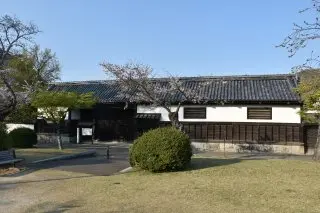
Kagawa Family Nagayamon Gate
The front gate of the former Kagawa family residence, whose members served for generations as chief retainers of the Iwakuni Domain during the Edo period. Believed to have been built in the Genroku era in the late 17th century, it still retains much of its original appearance. Counted among the oldest buildings in Iwakuni, it was designated a Tangible Cultural Property of Yamaguchi Prefecture in 1966. Measuring 23.29 m wide and 4.85 m deep, it features an irimoya (hip-and-gable) roof with traditional hon-kawara tiles.
A lot of the shops inside keep the original old-house layout—wooden doors, sliding doors, tile roofs… the aged feel is super strong. It’s a slow, relaxing place to wander, and you’ll want to keep taking photos.
Some shops sell little goods, and some are cafés. Overall it’s kind of artsy and mellow—perfect for a walk and a small snack.